
Table of Contents
- Overall Rating: 10/10 (🌕🌕🌕🌕🌕)
- Quick Summary:
- The ultimate First Class experience on a single-deck aircraft
- Flight Route:
- JL12, Tokyo Haneda Airport, Japan (HND) → Dallas/Fort Worth International Airport, USA (DFW)
- 10:55 Departure → 08:40 Arrival
- Flight Time: 11 hours 45 minutes
- Aircraft Type: A350-1000 (Delivered in Dec 2023, 10-month-old)
- Ticket Price & Booking: American Airlines AAdvantage 80,000 miles + $44.50 in taxes
- Seat: 1K, First Class, Window Seat
- Check-in & Baggage Allowance
- Departure Lounge
- Boarding Process
- Cabin & Seat Detail
- In-flight Service
- Amenities & Lavatory
- Food & Beverage
- In-flight Entertainment & Wi-Fi
- Landing & Immigration
- What Could Be Better
- Final Thoughts & Conclusion
7. Check-in & Baggage Allowance
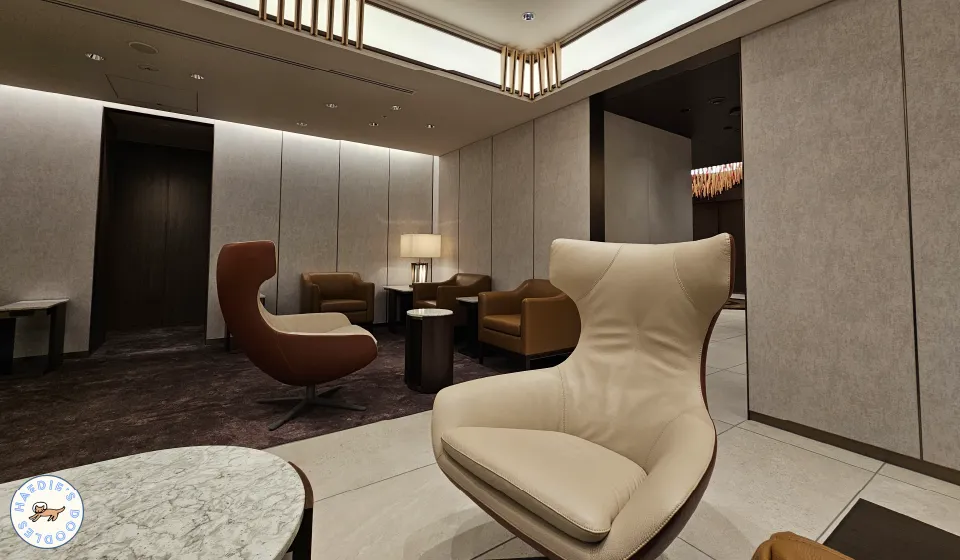
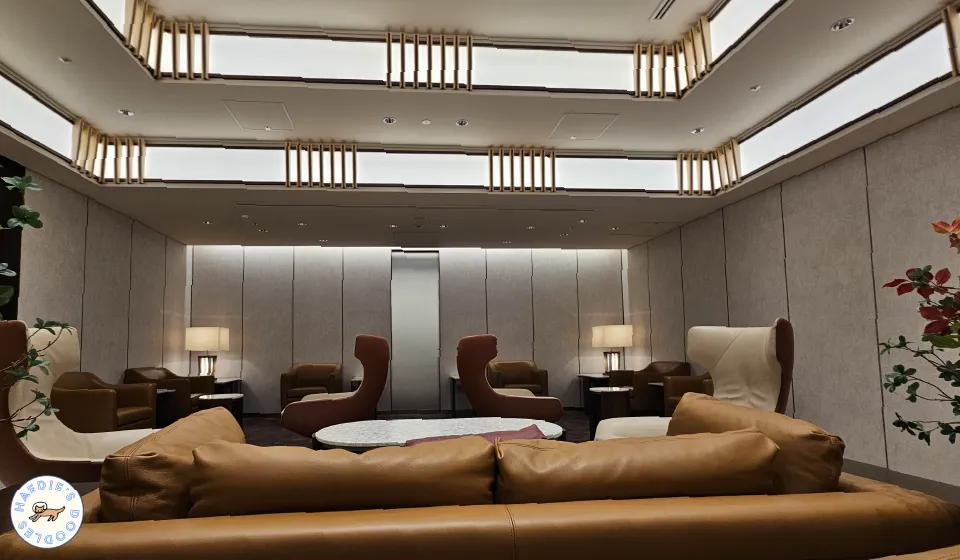
JAL First Class Check-in Lounge Seating Area at Haneda Airport
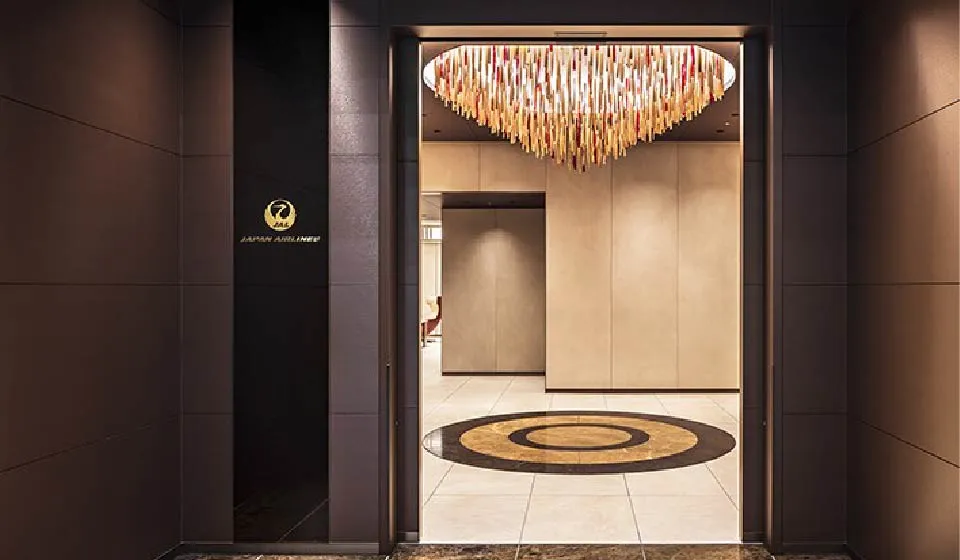
Entrance to JAL First Class Check-in Lounge at Haneda Airport, image courtesy of JAL
Entrance to JAL First Class Check-in Lounge at Haneda Airport, image courtesy of JAL
Japan Airlines operates out of Terminal 1 for domestic flights and Terminal 3 for international flights at Haneda Airport. International First Class passengers check in at the dedicated First Class Check-in Lounge located near Counter H. Just to the left of the main security checkpoint, you will find a dark-finished doorway which leads directly into the lounge. You can enter through this door directly, or show your ticket at the First Class entrance at the end of Counter H to be guided inside. The lounge is a clean, tranquil space designed for relaxation. Upon entry, staff will verify your ticket and take care of your baggage. While you relax in a comfortable chair, the staff completes the check-in process and delivers your boarding passes to you. I spent about 10 minutes here due to a minor delay, which gave me time to appreciate the high-quality finishes and textures of the furniture. My only minor disappointment was the lack of light refreshments or snacks, which would be a nice touch for passengers who end up waiting longer. The greatest advantage of First Class check-in is the private security checkpoint. Directly outside the lounge is a dedicated security lane for First Class passengers, allowing you to breeze through without any queue. After security, you proceed to passport control, which is shared with other passengers, but the automated gates made the process quick and effortless. Overall, it was an excellent check-in experience. Checking in three bags, each packed to almost 30 kg (approx. 66 lbs), was entirely stress-free since the staff handled everything directly from the cart.
8. Departure Lounge
JAL First Class Lounge Seating Area at Haneda Airport
JAL First Class Lounge Seating Area at Haneda Airport

JAL First Class Lounge Salon Area with Yamazaki Whisky
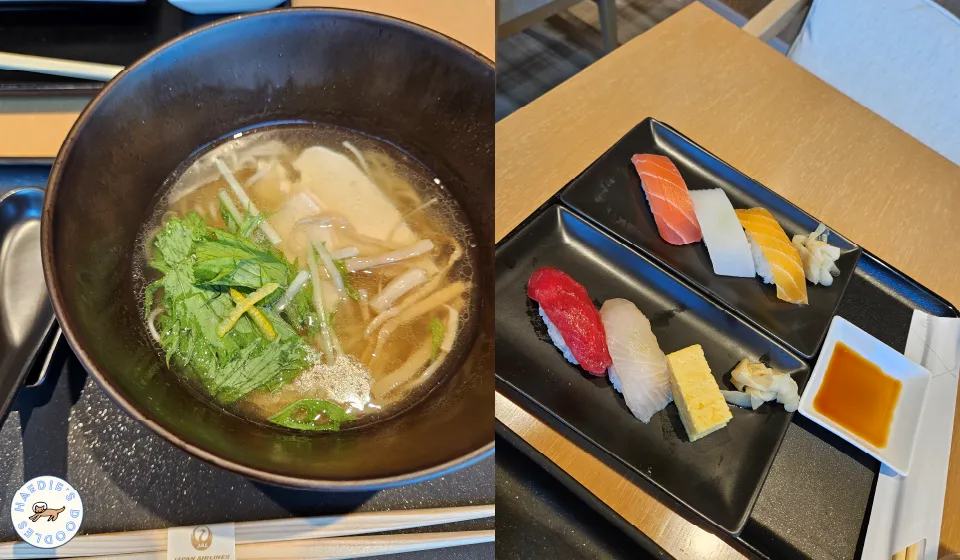
International First Class passengers on Japan Airlines have access to the JAL First Class Lounge in Terminal 3. Haneda Airport’s First Class Lounge is consistently excellent, though it can get somewhat crowded due to the high volume of JAL elite members (Oneworld Emerald equivalents). However, compared to the Sakura Lounge, it is incredibly quiet. When visiting the First Class Lounge, I always head to the left section, which is typically less crowded. After storing my carry-on luggage in the lockers on the 4th floor, I had a meal and then went up to the 5th floor salon to enjoy some drinks and tea before boarding. For the first time, I tried the vegetarian sushi, which was an interesting experience. It featured tomato resembling salmon, red bell pepper for tuna, and konjac for squid, though the taste differences among them were subtle. The texture was slightly jelly-like, and because it lacked fat, the yuzu and wasabi flavors stood out. If I order it again, I would ask for it without wasabi, but I’m not sure if I would choose it over the standard options. The standard sushi set, consisting of yellowtail, tuna, and egg, was delicious—easily matching the high quality expected of JAL’s lounge dining. The highlight of the meal was the AFURI Yuzu Shio Ramen. The light broth paired with a hint of yuzu was fantastic. I also enjoyed the Japanese set meal, which came with JAL’s signature thick, flavorful seaweed. For drinks, I paired my meal with draft beer and champagne, then moved to the 5th floor salon for a glass of Yamazaki 12-Year-Old. While Yamazaki is always good, I still feel it is somewhat overpriced. I skipped the Hibiki to save room for in-flight drinks and wrapped up with a warm cup of Hojicha.
9. Boarding Process
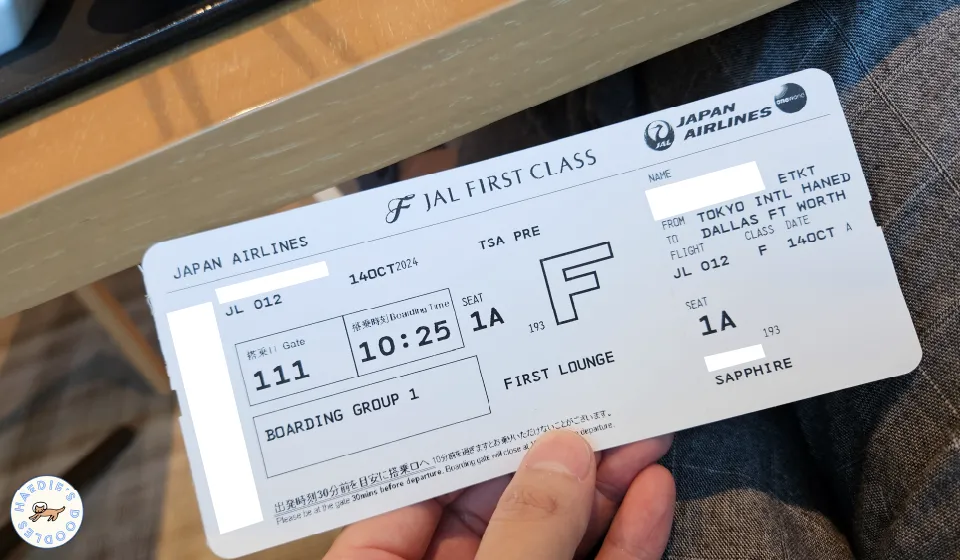
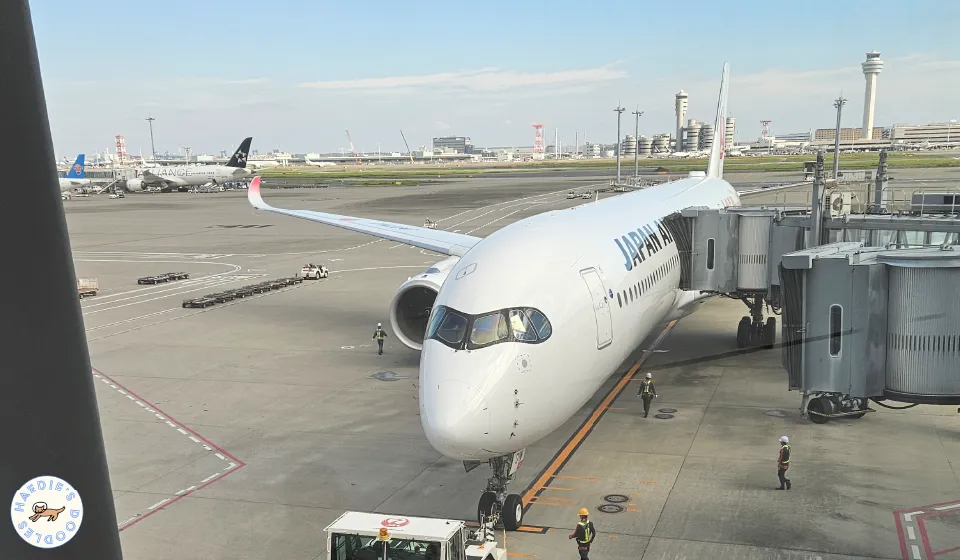
JAL First Class Boarding Gate 111 at Haneda Airport
The JAL First Class Lounge is located near Gate 112, and it seems most flights operated by JAL’s flagship aircraft depart from gates nearby. Since my flight departed from Gate 111, I headed over to the gate at boarding time. Similar to other Japanese carriers, JAL has a high concentration of top-tier status members, meaning the Group 1 line was already quite long when I arrived. While I personally don’t mind waiting, passengers paying a premium for a First Class ticket might expect a more exclusive boarding experience. I feel that international flights should prioritize First Class passengers before boarding top-tier status members. I was also surprised to see only a single jet bridge attached to the Airbus A350-1000. Although JAL’s A350-1000 has a lower seat capacity than smaller aircraft like the US carriers’ A350-900 or Boeing B787-9, it was still unusual for JAL. I boarded at the end of Group 1, walking through the business class cabin to reach the first class cabin.
10. Cabin & Seat Detail
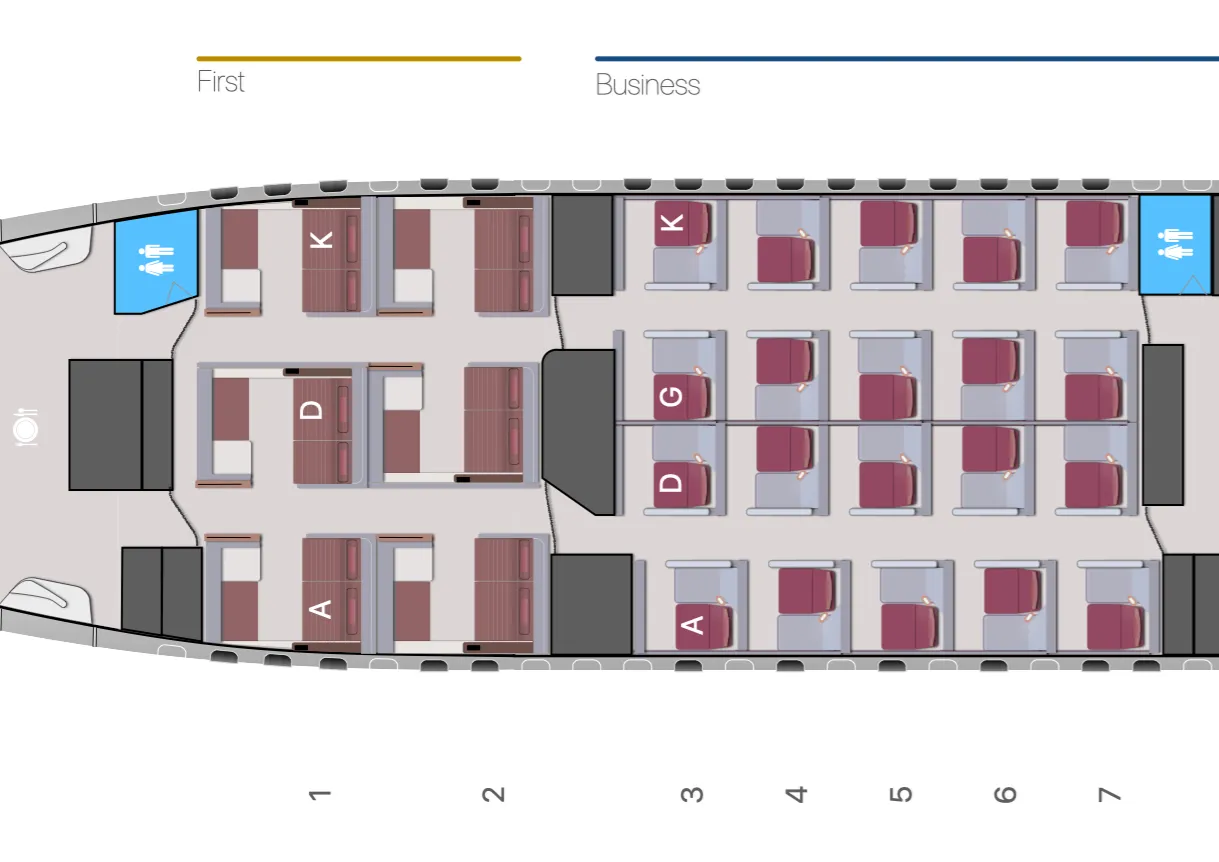
JAL A350-1000 First Class Suite Seat Map, image courtesy of aeroLOPA
JAL A350-1000 First Class Suite Seat Map, image courtesy of aeroLOPA
Seat 1K is typically blocked for selection initially, but if it remains unoccupied, it usually opens up for booking about one to two weeks before departure. If you book Japan Airlines using American Airlines AAdvantage miles, you can manage your seat selection directly on the JAL website. JAL’s A350-1000 First Class features a 1-1-1 configuration with three seats per row. In this layout, window seat 1A and center seat 1D face each other across the aisle, while the other window seat, 1K, has its own dedicated aisle. In row 2, window seat 2A has its own aisle, while center seat 2D and window seat 2K face each other. This means seats 1A, 1D, and 2A share the left aisle (relative to the flight direction), while 1K, 2D, and 2K share the right aisle. If the seat across the aisle is unoccupied, the crew will often convert it into a separate bed for you. Therefore, I highly recommend choosing 1A if 1D is vacant, or 2K if 2D is vacant.

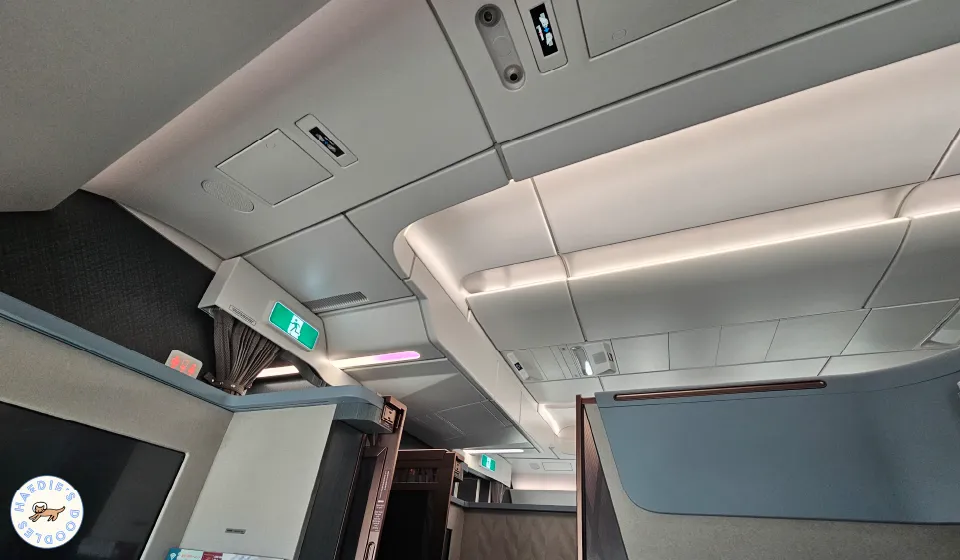
JAL A350-1000 First Class Suite Cabin Overview
My first impression of the JAL Airbus A350-1000 First Class cabin was its sheer spaciousness. The seats themselves were massive, but what really stood out was the open feel. Even though the seat partitions were very high, the cabin did not have overhead bins over the window seats, creating an incredibly airy atmosphere. JAL’s A350-1000 features a 1-1-1 configuration where 1A and 1D share one aisle, and 2D and 2K share the other. For this flight, my seat was 1A. Although premium economy, business class, and economy were almost entirely full, only three of the six First Class suites were occupied. Fortunately, the other two passengers were seated in 1K and 2K, meaning I had my entire aisle to myself. Aside from when we disembarked, I didn’t see another First Class passenger during the entire flight.

JAL A350-1000 First Class Suite Seat Profile
JAL A350-1000 First Class Suite Seat Profile

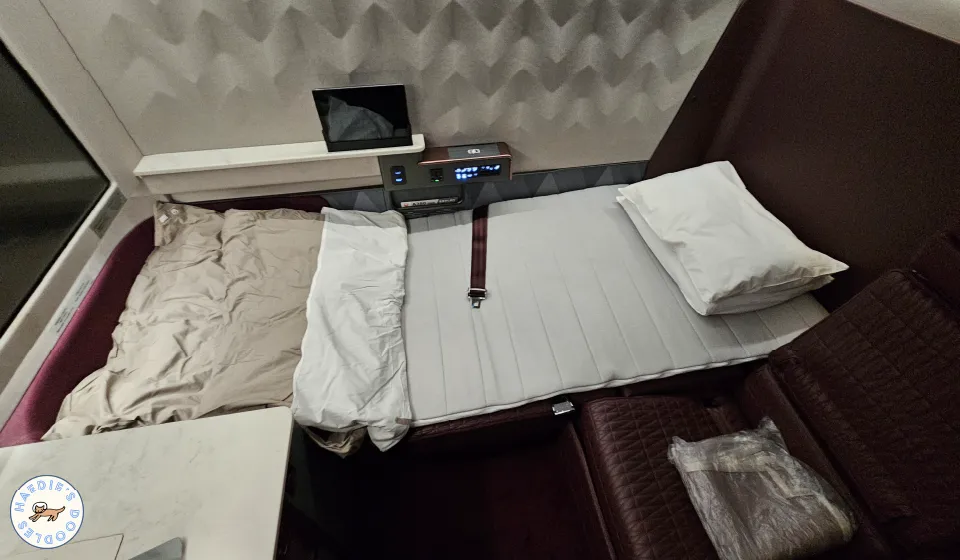
JAL A350-1000 First Class Suite Ottoman and Monitor
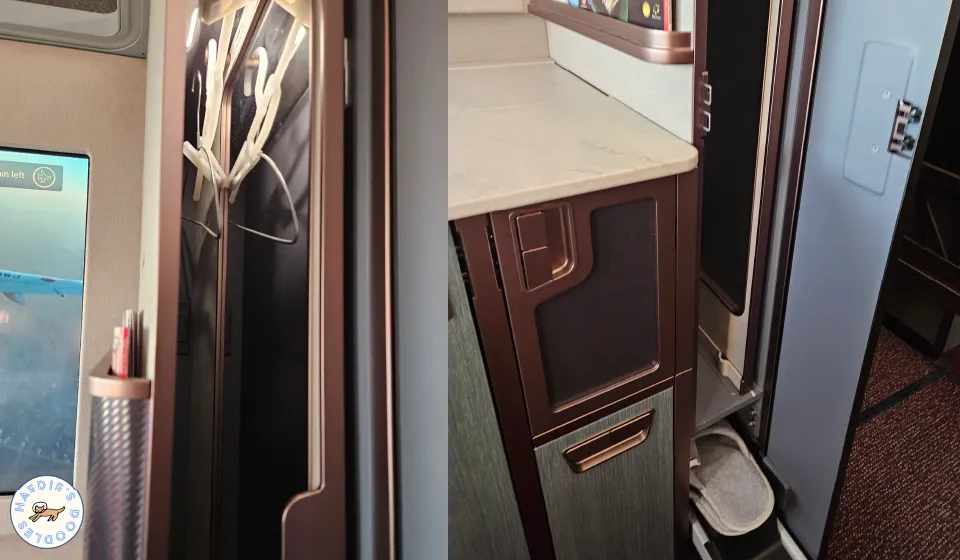
JAL A350-1000 First Class Suite Wardrobe and storage
JAL A350-1000 First Class Suite Wardrobe and storage
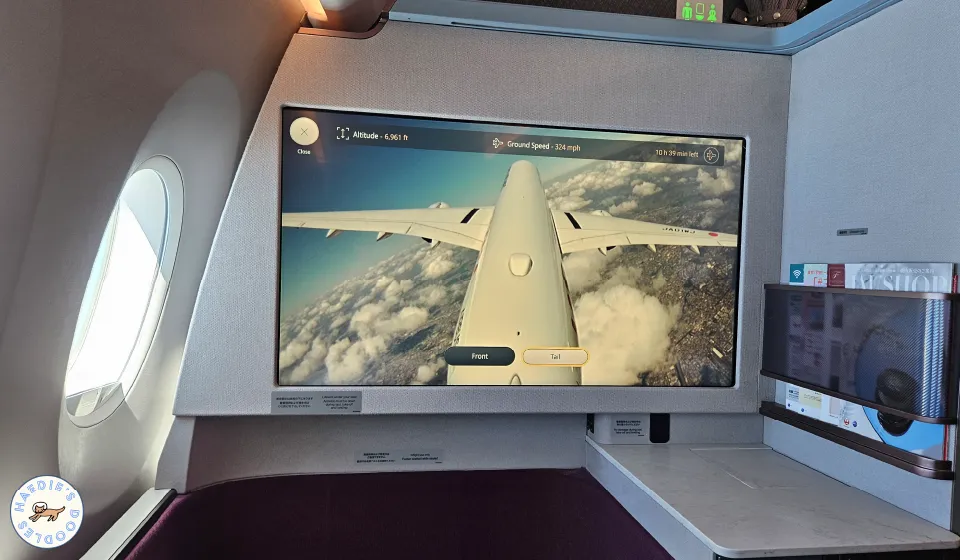
The aircraft for this flight was the Airbus A350-1000, which JAL began operating in early 2024, featuring their brand-new First Class suites. My immediate thought upon seeing the suite was that it was incredibly wide and long. The width felt like a standard 1-2-1 first class seat with an additional premium economy seat attached next to it. The length was so generous that even at 5 feet 11 inches, I could stretch out completely without ever touching the partitions. (The seat length is officially 203 cm, so this makes sense.) Another impressive feature was the 43-inch 4K monitor. While it is the same size as ANA’s The Suite, JAL’s 1-1-1 configuration leaves some open space around the monitor, unlike ANA’s which completely fills the wall. Personally, JAL’s design felt much more spacious and elegant. Below the ottoman, there is a large personal storage space that can easily fit two carry-on suitcases. The door frame also features a wardrobe and shoe storage, similar to Korean Air’s Kosmo Suites 2.0. In terms of space and storage, JAL’s suite is highly competitive—while it may not match the massive apartments of Singapore Airlines or Etihad on the A380, it easily rivals Emirates’ Game Changer and stands out as one of the best first class products on a single-deck aircraft. Since the center seat across my aisle was empty, the crew set up a separate bed there, which is the ultimate luxury of JAL’s 1-1-1 layout. Although the extra seat space (equivalent to a premium economy seat) doesn’t have a mattress, sleeping in it feels like being in a small room rather than a confined suite. The lack of overhead bins also enhances this spaciousness for window seat passengers. While business class focuses on simply having a lie-flat bed, first class provides enough space to turn over comfortably with room to spare. Even without the extra bed, you can sit on the small side seat without folding the bed, as it adjusts independently. However, dining from the side seat when the bed is deployed is difficult due to the limited table space. I’m not quite sure how to manage that situation.

JAL A350-1000 First Class Suite Bed Mode
JAL A350-1000 First Class Suite Bed Mode

JAL A350-1000 First Class Suite Headrest Speaker
JAL A350-1000 First Class Suite Headrest Speaker
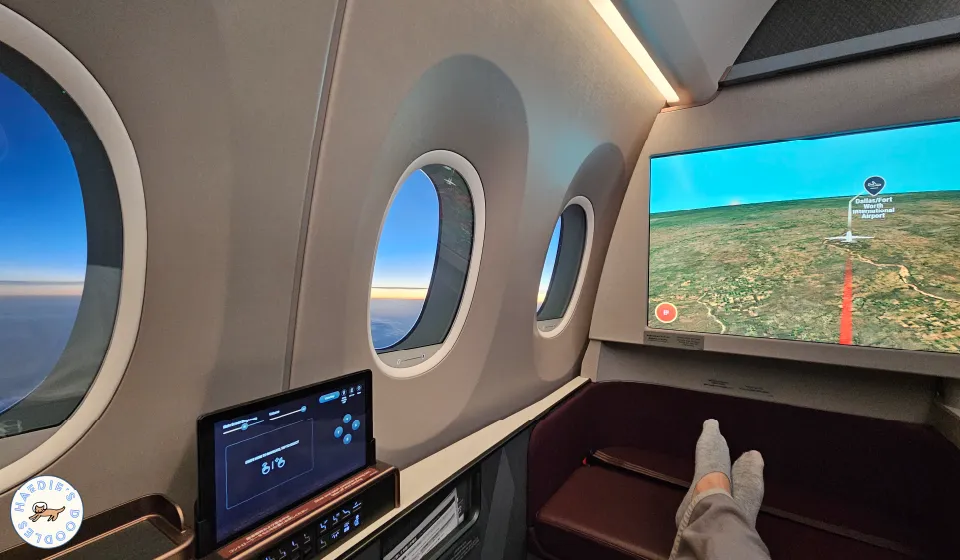
JAL A350-1000 First Class Suite Controller Tablet and Console
Comparing JAL’s new Airbus A350-1000 First Class with their older Boeing 777-300ER product, several key upgrades stand out. The first is the headrest-integrated speakers. This feature was incredibly convenient. As someone who runs warm, wearing headphones for long flights can make my ears sweaty, so not having to wear them was a major plus. While the sound quality isn’t audiophile-grade, it is more than adequate for watching movies. With the volume turned up and the headrest wings folded inward, the sound is clear enough to drown out JAL’s cabin announcements, yet surprisingly, the sound does not bleed out to the rest of the cabin. I was curious to see how this works in business class, where seats are closer together. However, certain audio frequencies do get cancelled out by the engine noise—acting like an accidental noise-cancelling effect. Still, it was a highly satisfying feature. (You can also connect your own Bluetooth headphones to the entertainment system, though I didn’t try this.) The second upgrade is the wireless tablet controller for the in-flight entertainment. The wireless design is very convenient, and the screen is large enough to act as a secondary display. I usually switch back and forth between movies and the flight map, so having the flight map open on the tablet while watching a movie on the main screen was a huge plus. The battery is a 23 Wh unit, which easily lasts through the 12-hour flight with occasional docking. However, the tablet cannot display certain feeds, such as the external landscape cameras, which must be viewed on the main monitor. The third highlight is the auxiliary side seat (equivalent to a premium economy seat size). Folding its backrest forward turns it into a large faux-marble side table. It is much larger than a standard console shelf—acting more like a coffee table—and proved highly useful throughout the flight. The only drawback is that the smooth surface is quite slippery. Even with a napkin underneath, glassware tended to slide, which felt a bit unstable. I ended up placing the leather-bound menu on the table and putting my drinks on top of it. JAL would benefit from providing leather coasters. The new wireless charging pad is also a great addition, though it is best suited for overnight charging since it struggled to keep up with active phone use while connected to the free in-flight Wi-Fi. On the positive side, USB-A, USB-C ports, and universal power outlets are located everywhere around the suite, ensuring you can plug in whether you are sitting, lying down, or resting on the ottoman.
11. In-flight Service
JAL’s long-haul First Class service follows a flow similar to business class. Upon boarding, the flight attendants introduce themselves, serve a welcome drink, and take your meal and beverage orders before takeoff. Once the aircraft reaches cruising altitude, the service begins with an aperitif (or pre-departure drink) and small bites, followed by the main meal course. The Japanese menu consists of appetizers, a warm soup, caviar, a main course, and dessert. After the primary meal service, you can order from the à la carte menu at any time, and the pre-landing meal can also be served whenever you prefer. While JAL’s business, premium economy, and economy cabins have a dedicated duty-free sales period after the first meal, First Class does not have a set time; instead, you can request it whenever you like, and the duty-free attendant will assist you at your suite. For this flight, with three passengers in the six-seat cabin, we had three flight attendants during the main meal services, and one or two during the rest of the flight. The near 1:1 passenger-to-crew ratio made the service significantly more attentive and comfortable compared to business class.
12. Amenities & Lavatory
JAL A350-1000 First Class Suite Cabin Overview
JAL A350-1000 First Class Suite Cabin Overview
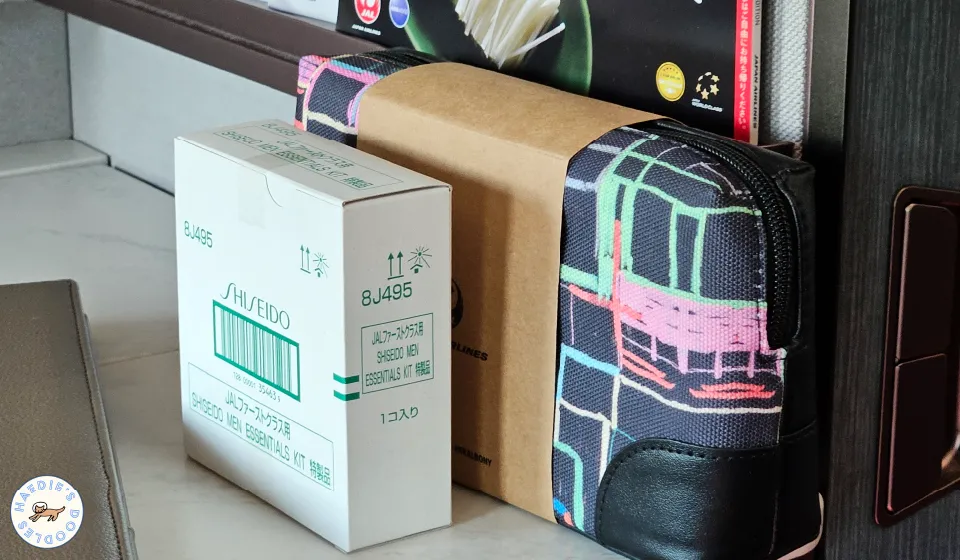

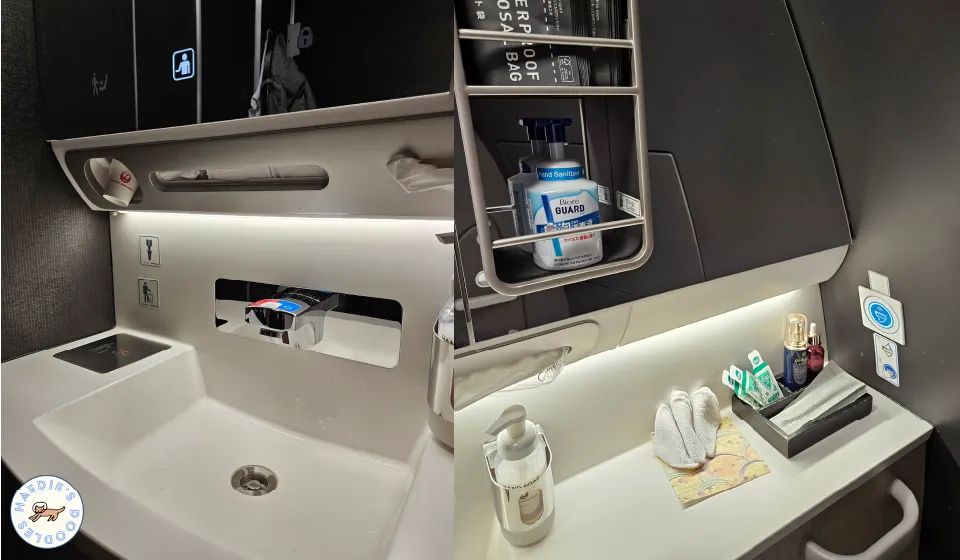
For amenities, JAL provides a slightly upgraded version of their business class kit. The upgrades are subtle—for example, the USB cable in business class is rubber, while the First Class version has a braided fabric sleeve. Along with the amenity bag, JAL provides a Shiseido skin care set, though I didn’t use it since the lavatory was stocked with Clé de Peau Beauté emulsion and essence. Loungewear, slippers, and a choice of hard and soft pillows are also provided. Any additional items not in the suite can be requested from the crew. My only complaint with JAL’s amenities is the toothbrush; the bristles are a bit too stiff for those who prefer soft toothbrushes. The lavatory is quite spacious, though not as large as the shower-equipped bathrooms on the Airbus A380. One of the best perks of flying First Class is that the lavatories are almost always available, and the crew cleans and dries them after every single use. However, I still hesitate to use bidets on airplanes…
13. Food & Beverage
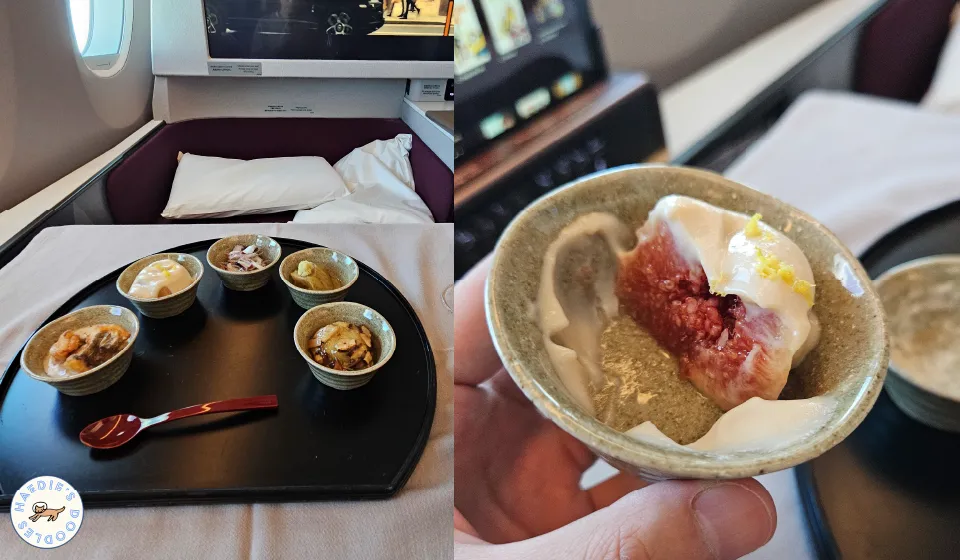
Steamed Fig with White Miso Sauce and Yuzu Zest
Steamed Fig with White Miso Sauce and Yuzu Zest
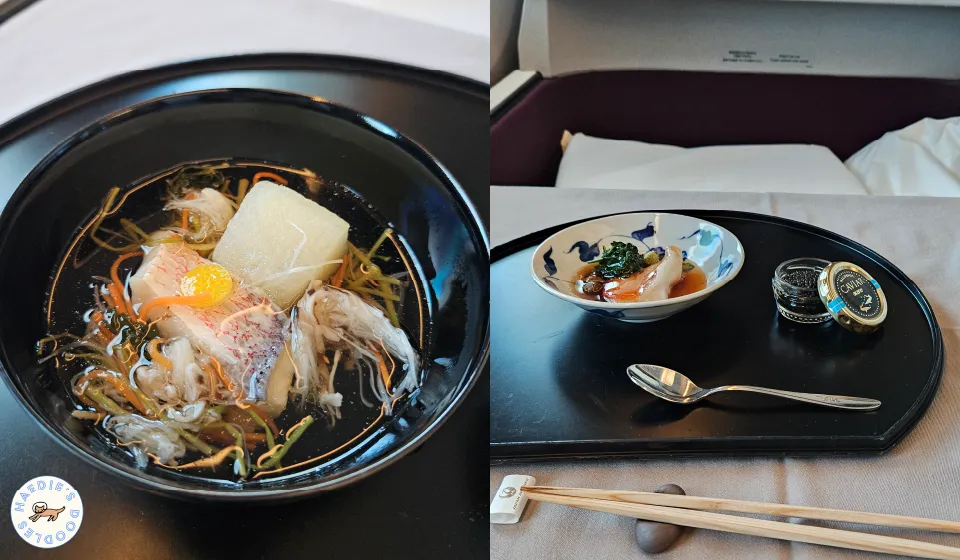
Steamed Fish with Caviar
Steamed Fish with Caviar

Beef Tongue Main Course
Beef Tongue Main Course
Tan Tan Ramen Noodles
Tan Tan Ramen Noodles

Salmon Roe Rice Bowl
Salmon Roe Rice Bowl
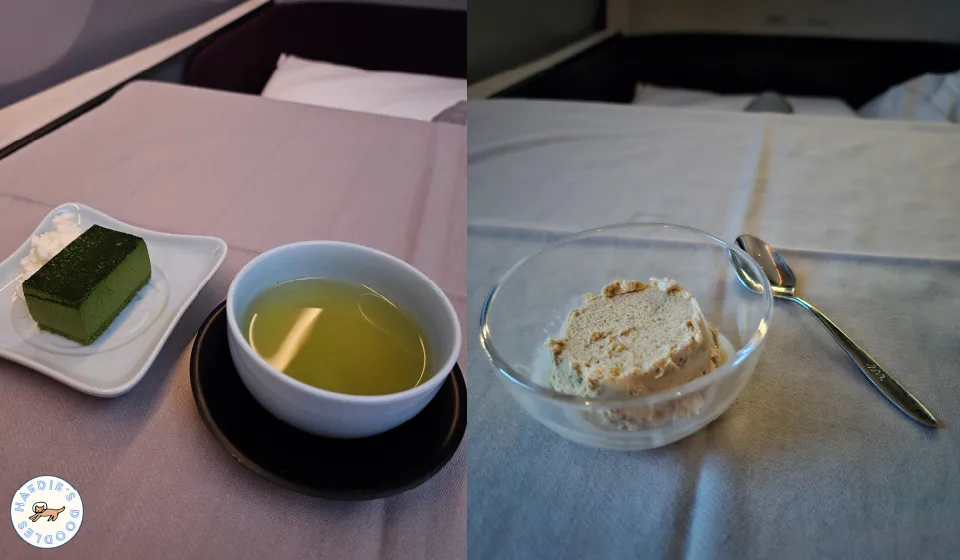
JAL First Class Dessert Course with Häagen-Dazs and Fruit
JAL First Class Dessert Course with Häagen-Dazs and Fruit
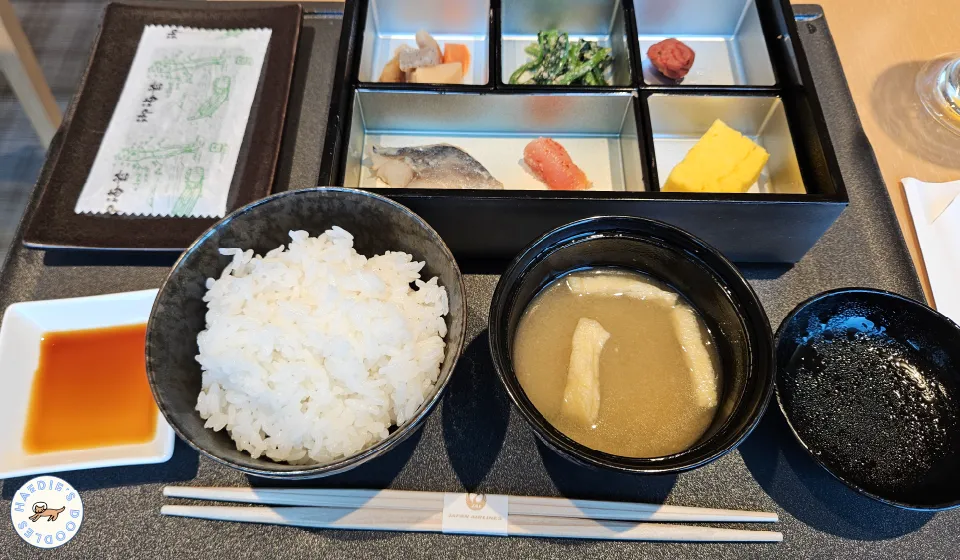
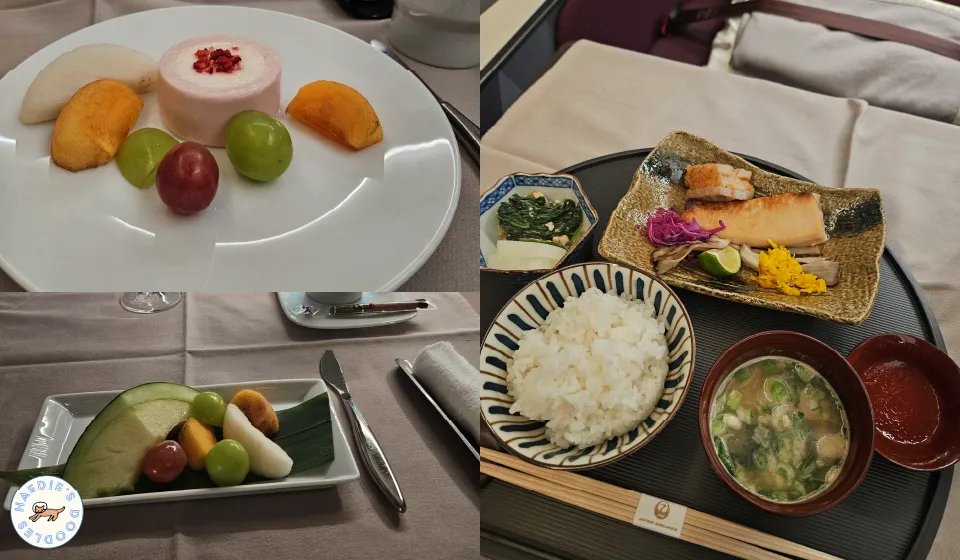
While JAL’s First Class dining lacks the fresh sashimi found on ANA, it is still exceptional. The multi-course meal, snacks, pre-landing dining, and beverage list left absolutely nothing to be desired. I chose the Japanese menu for the main course. The standout dish was the steamed fig topped with a white miso sauce and yuzu zest. Although I am not a big fan of figs, this was outstanding. The bechamel-based sauce enriched with white miso added a wonderful depth of flavor, and using only the center of slightly underripe figs provided a delicate sweetness that paired beautifully with the savory sauce. The hint of fresh yuzu zest was the perfect finishing touch. I definitely plan to recreate this dish at home if I can find quality figs. The appetizers were followed by steamed fish with a light sauce and a generous serving of caviar. Having recently had caviar at the JW Marriott Jeju, I could immediately tell that JAL’s selection featured larger, higher-quality pearls with a much cleaner flavor profile. The beef tongue main course was also excellent, paired with a subtle chrysanthemum sauce and mushroom rice. I highly recommend dining while reading through the menu; it makes the experience much more engaging and enjoyable. I spent an hour and a half over my meal. In business class, that might feel long, but in First Class, it felt just right—though I did have the flight attendants return multiple times thinking I had finished. For snacks, I ordered the tomato-based Tan Tan Ramen and the salmon roe rice bowl, both of which were delicious. The ramen was significantly better than the standard miso-tonkotsu ramen JAL serves in business class, offering a spicy kick that felt like a bridge between Korean and Japanese noodle styles. The salmon roe bowl was also generously topped and very fresh. I was too full to try the JAL curry after those two dishes. It seems JAL lounges and flights always make you crave curry, but my stomach had reached its limit. Dessert consisted of milk tea-flavored Häagen-Dazs (a flavor not available in the US), a no-bake berry cheesecake, and fresh fruit. JAL serves melon, pineapple, and watermelon in business class, but the First Class selection featured premium musk melon, red grapes, Shine Muscat, persimmon, and pear. JAL’s First Class menu has so many appealing options, but limited stomach capacity is always the bottleneck. It is a completely different experience from carriers where the only hot snack option is instant ramen. For my pre-landing meal, I chose the Japanese set menu. A traditional Japanese breakfast is light, nutritious, and comforting. It came with grilled fish, pickled vegetables, side dishes, miso soup, and rice. After landing at 08:00, I was so full that I didn’t eat again until I went to sleep at 20:00.
JAL First Class Champagne Salon 2013 and Louis Roederer Cristal
JAL First Class Champagne Salon 2013 and Louis Roederer Cristal
JAL First Class Premium Beverage Selection including Blue Tea
JAL First Class Premium Beverage Selection including Blue Tea
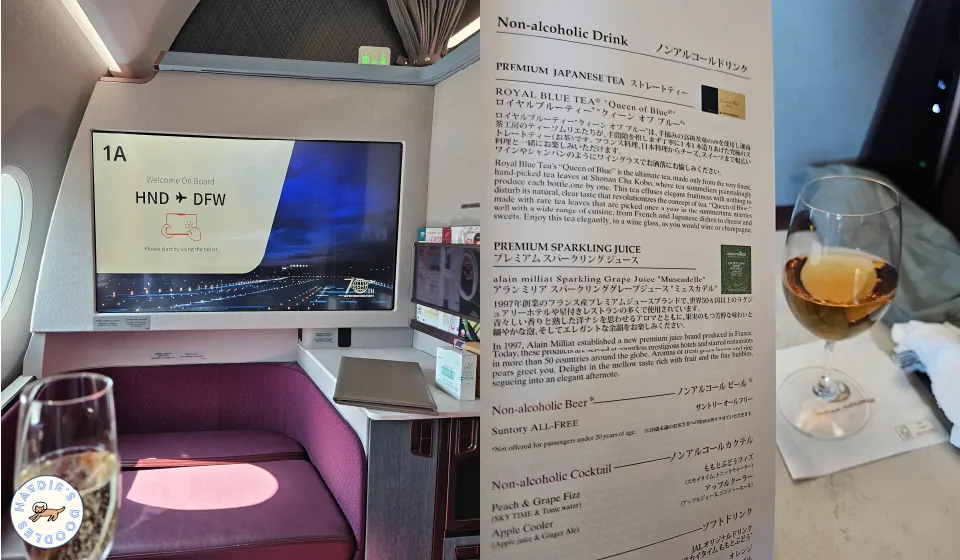
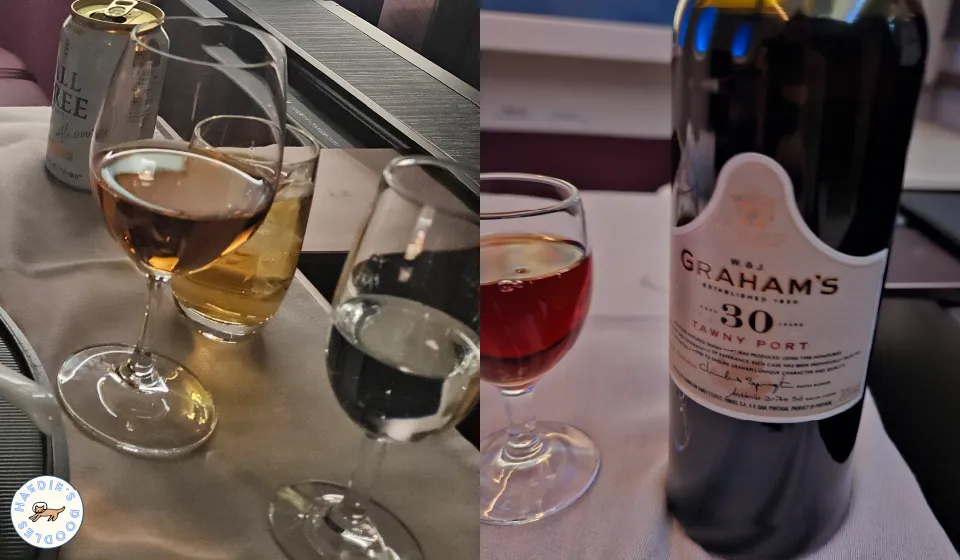
Talking about the beverages, Salon champagne is excellent. Still, I never quite understand why it costs $1,000. Since I don’t drink champagne often, I probably miss the fine, delicate balance that champagne connoisseurs appreciate. To me, any champagne priced over $200 to $300 tastes wonderful. However, the absolute highlight of the beverage list is the Royal Blue Tea. You can purchase a bottle in Japan for about $100, and it seriously tempts me to buy one. Its delicate, subtle, and well-balanced flavor might be due to the quality of the tea leaves, but it is also served pre-brewed, ensuring it is always at the perfect strength. I easily finished a whole bottle on my own, drinking it instead of water. Naturally, the wine and spirits selection in JAL First Class is far superior to business class. It does feel like JAL deliberately enforces this divide, which is a bit disappointing. This flight was my first time trying well-aged tawny port wine, and I highly recommend it if you enjoy port. It has become my absolute favorite. In fact, I bought two bottles of the same brand (10-year and 20-year) right after returning from my trip. I opened the 10-year first, and it is very good. JAL’s sake selection in First Class is also consistently reliable. For non-alcoholic options, JAL offers a premium sparkling grape juice, which is perfect for non-drinkers or those who enjoy the sweet profile of ice wine. It also pairs well with dessert. Additionally, I am a big fan of JAL’s premium sweet potato shochu, Mori-izo. JAL removed it from their duty-free sales in July and August, but moved it to the First Class beverage list instead. I thought it would only be available to drink on board, but JAL reinstated it in the duty-free catalog for September and October. However, it is now exclusive to First Class passengers. Naturally, I ordered a glass on board and bought a bottle to take home. Mori-izo is becoming harder and harder to acquire. Even if it is not Mori-izo, I highly recommend trying sweet potato shochu in JAL Business Class. The gentle sweetness and aroma derived from sweet potato starch are outstanding. JAL First Class serves espresso-based coffee rather than brewed coffee. I had an americano and a cappuccino, and I found JAL’s First Class mugs highly collectible. The cappuccino is served with a cinnamon stick instead of powder. Stirring the cappuccino with the stick reminded me of the classic way of enjoying a dry martini—where you just smell the vermouth rather than pouring it—as I found myself taking a sip and then tasting the foam left on the cinnamon stick. It made me smile.
14. In-flight Entertainment & Wi-Fi
One of the weaker points of JAL is their in-flight entertainment selection, which had very few appealing movie options. Having flown JAL just eight days prior, the options were even more limited, so I ended up watching two Avengers movies back-to-back. However, the flight map on the tablet was highly convenient, and the high-resolution 43-inch screen made for a very satisfying viewing experience. One aspect I do appreciate about JAL’s entertainment system is the music selection; they have a great collection of Studio Ghibli instrumentals and new age music, which is much better than most competitors. While the system allows you to order drinks and snacks directly from the screen between meals, it is often offline or slow, so ordering directly from the crew remains the better option—especially in First Class.
15. Landing & Immigration
Upon arrival in the US, only a single jet bridge was connected to the L2 door. However, the crew announced that First Class passengers would disembark first, and the flight attendants escorted me to the door, allowing me to be the first off the plane. As a side note, immigration at Dallas/Fort Worth (DFW) is generally much faster and smoother compared to West Coast hubs like LAX or SFO. I try to avoid entering the US through West Coast airports for this very reason. This concluded a highly comfortable 12-hour flight.
16. What Could Be Better
Overall, it was a phenomenal experience, representing one of the best long-haul First Class products remaining today in terms of both hard product and soft product. My only minor complaints include the language barrier with the purser, whose English was somewhat limited, though the other flight attendants were fine. This is a common theme with Japanese airlines; English proficiency varies among the crew, so your experience often depends on the specific flight attendant assigned to your aisle. I made sure to note down the name of my main flight attendant to send a commendation email. Additionally, despite the aircraft being in service for some time, the crew still seemed slightly unfamiliar with some of the suite controls. For instance, the dining table requires pressing a hidden button to slide out, which isn’t visible from the aisle, and I had to assist the flight attendant as she tried to pull it out by force. In terms of service, I prefer ordering my drink pairings for the appetizer, main, and dessert all at once rather than ordering mid-meal, but JAL’s crew repeatedly forgot these pairings, requiring me to ask again. While I expect this in business class, it was a bit disappointing in First Class. The single jet bridge and the boarding priority issues also remain minor areas for improvement. Serving caviar without a mother-of-pearl spoon was another small detail—while chopsticks work fine, a proper spoon would elevate the presentation. None of these issues ruined the flight, but they are the small details that distinguish a very good airline from a truly elite one.
17. Final Thoughts & Conclusion
When ANA introduced “The Suite”, I believed they had taken the lead, but JAL’s new Airbus A350-1000 has shifted the balance back in JAL’s favor. ANA’s next flagship product will debut on the Boeing 777X, which faces ongoing delays. However, once the B777X enters service, ANA will likely introduce an even more advanced cabin. Since the B777X has a wider cabin cross-section than the A350, it is highly anticipated. This kind of competition is a win for passengers.
The Editor Behind This Journey: Heejung

Have any questions or similar experiences? Please feel free to share them below.
Share this story to inspire another journey.
More Journeys to Explore
🗓️ Nov 2025 Flight | 💺 Economy | ✈️ A320-200
6/10 (🌕🌕🌕🌑🌑) It was a direct flight but a unique one with a stopover in Rovaniemi. The service was simple, just water and blueberry juice, but thanks to the row 1 bulkhead seats and a crew that carefully prioritized safety, it was an acceptable short-haul European flight with no major inconveniences.
🗓️ Feb 2026 Stay | 🌏 Seoul, South Korea | 🛏️ Standard King with View
8/10 (🌕🌕🌕🌕🌑) This was a well-rounded Courtyard, best known for its views of the Seoul Botanic Park and convenient access to Magongnaru Station. The rooms were spacious and comfortable, breakfast was decent, and Marriott elite benefits made the stay even more rewarding. With only a modest range of facilities, it worked better as a base for exploring the surrounding area than as a destination for a full hotel staycation.
🗓️ Feb 2026 Stay | 🌏 Incheon, South Korea | 🛏️ Standard Single with Shower
7/10 (🌕🌕🌕🌗🌑) The biggest advantage of this Incheon Airport capsule hotel was being able to rest without leaving the airport. While the room was small and the shared bathroom was a limitation, it was a very practical choice for resting a few hours before an early departure or after a late-night arrival.
🗓️ Feb 2026 Flight | 💺 Business Smartium | ✈️ A380-800
7/10 (🌕🌕🌕🌗🌑) Thanks to the A380's signature spaciousness, full-flat Business Smartium seats, and decent food and beverage offerings, it was a comfortable journey. However, the age of the seats and overall service was noticeable, and the fine details fell short of its past reputation.