
Table of Contents
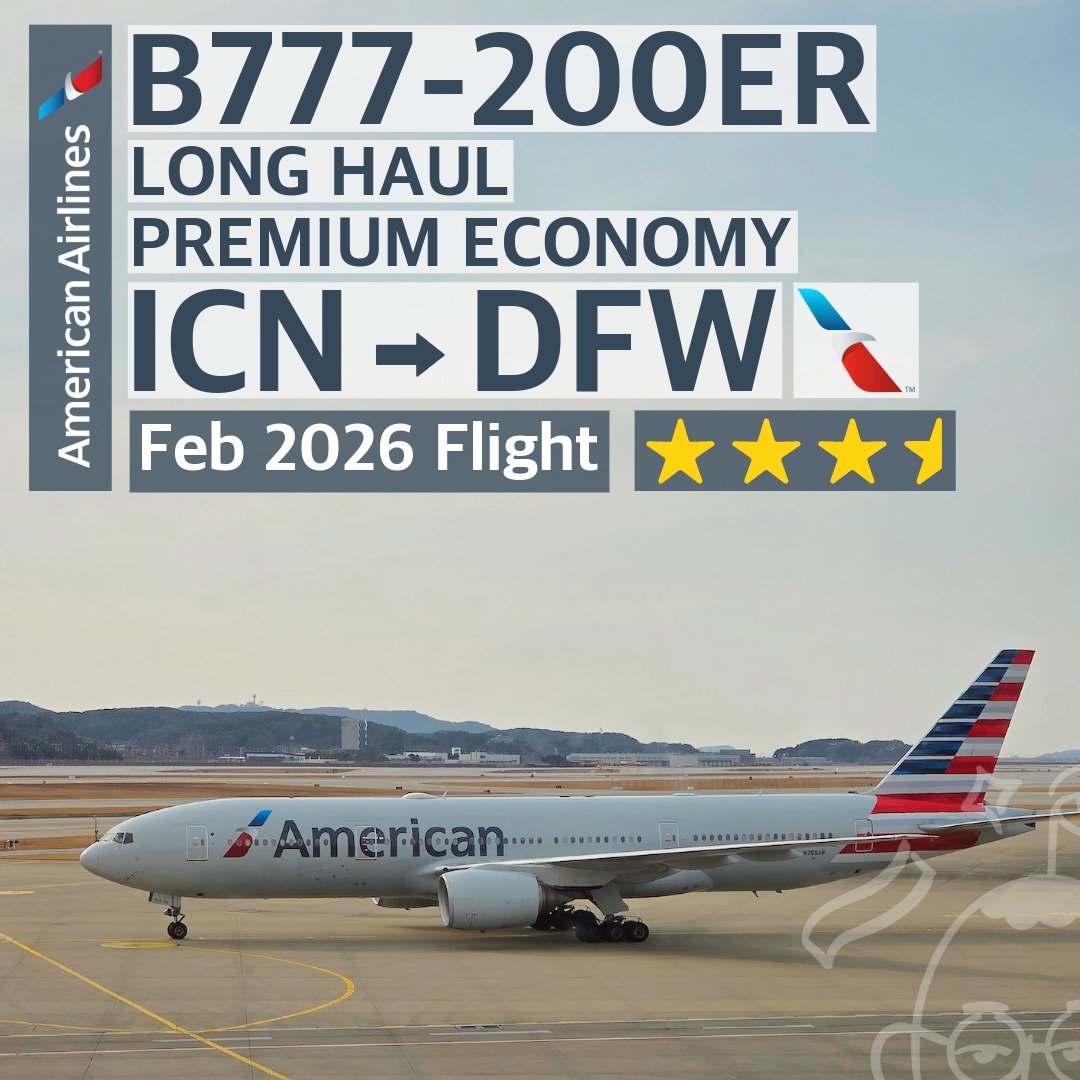
- Overall Rating: 7/10 (🌕🌕🌕🌗🌑)
- Quick Summary:
- The service is not fancy, but the spacious seats and quick cabin service make this a practical premium economy option for a more comfortable long-haul flight.
- Flight Route
- AA280, Seoul Incheon International Airport (ICN) → Dallas Fort Worth International Airport (DFW), Texas, USA
- Departure 17:55 → Arrival 17:15
- Flight time: 13 hours 20 minutes
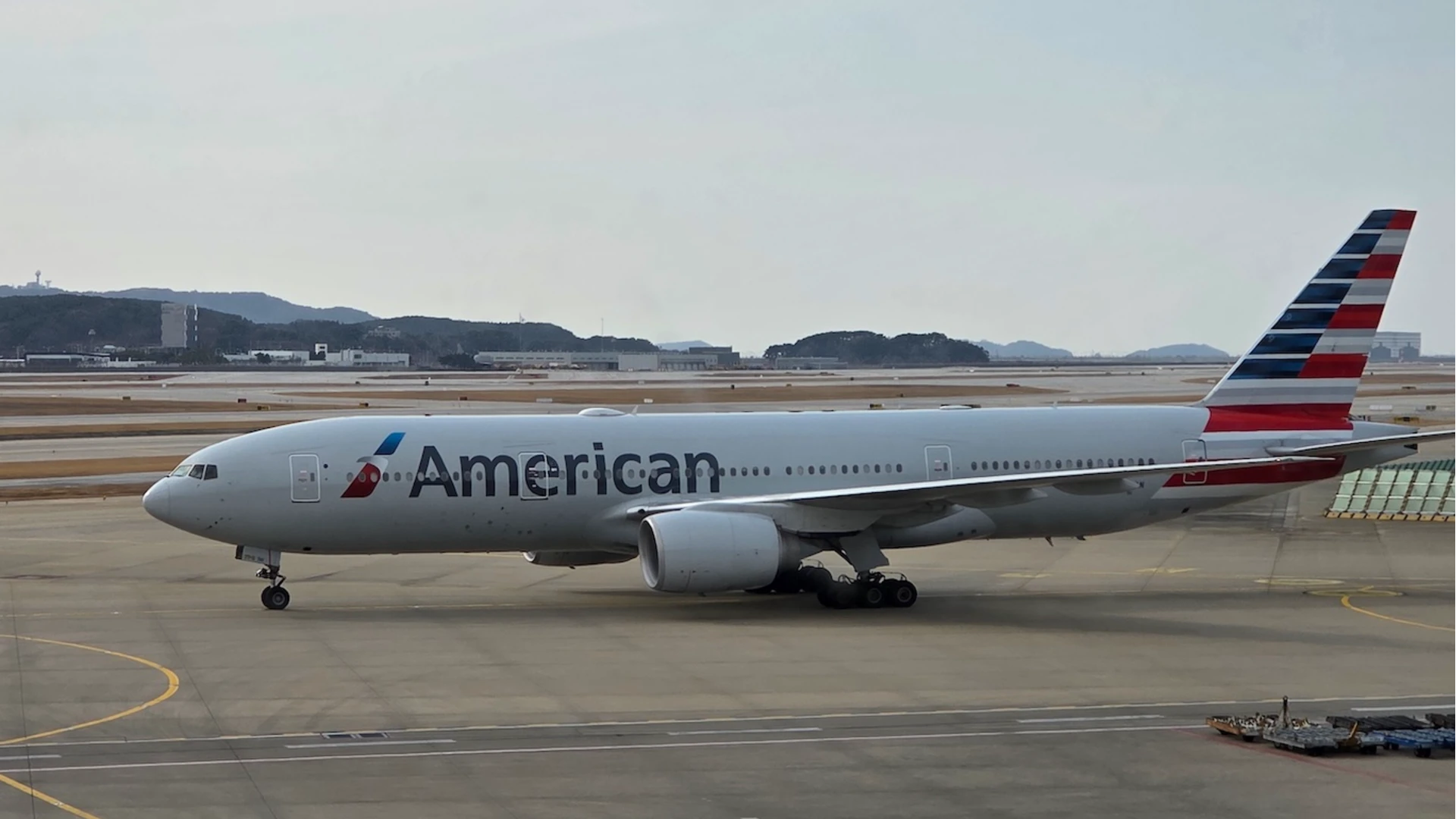
- Aircraft Type: B777-200ER, N788AN (May 2000 delivered, 25.8-year-old)
- Cabin Class & Product: 13H, Premium Economy, aisle seat, bulkhead row
- Ticket Price & Booking
- Check-in & Baggage Allowance
- Departure Lounge
- Boarding Process
- Cabin & Seat Detail
- In-flight Service
- Amenities & Lavatory
- Food & Beverage
- In-flight Entertainment & Wi-Fi
- Landing & Immigration
- What Could Be Better
- Final Thoughts & Conclusion
Ticket Price & Booking
American Airlines AA280 Seoul-Dallas B777 Premium Economy – Ticket Price & Booking 1
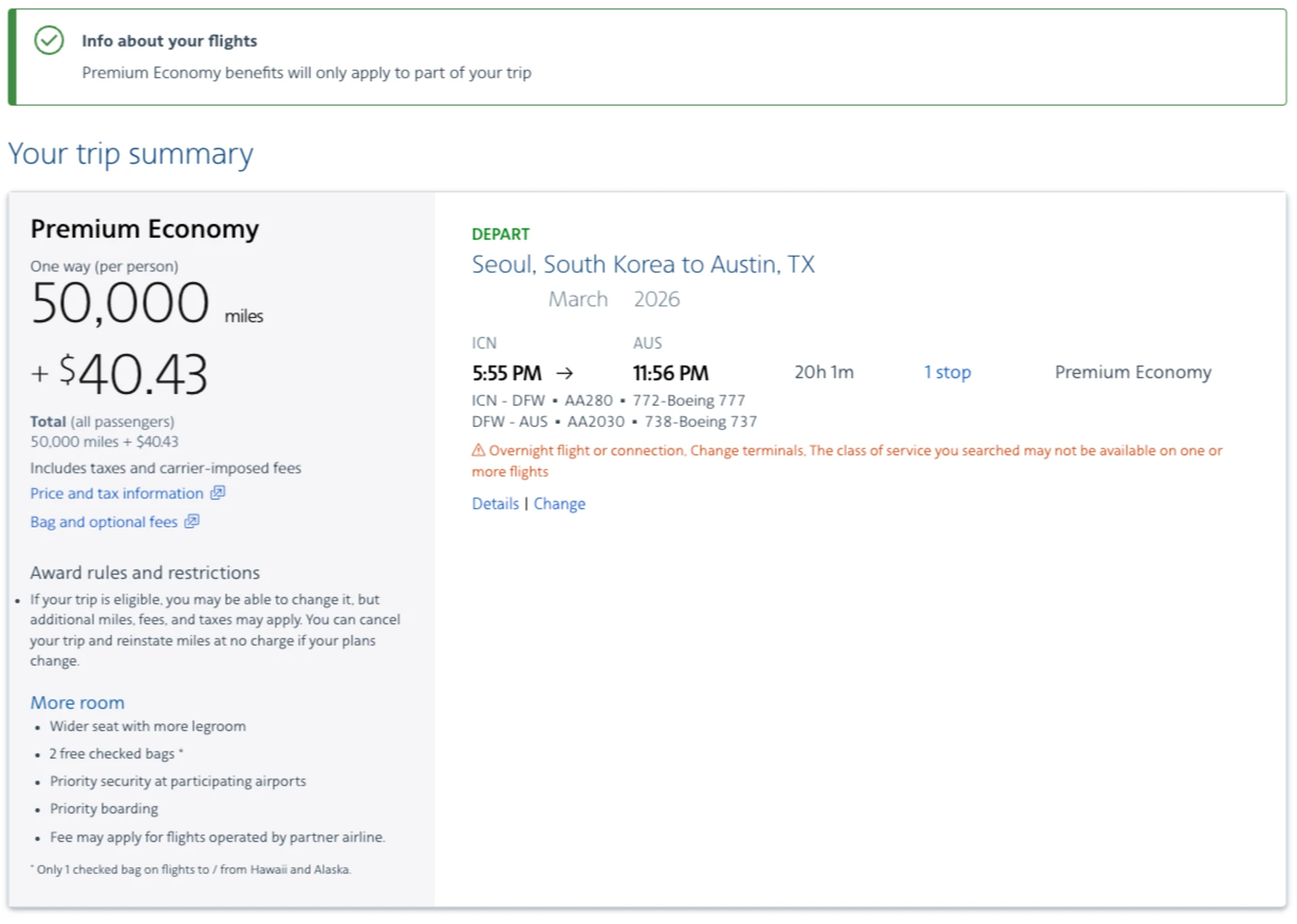
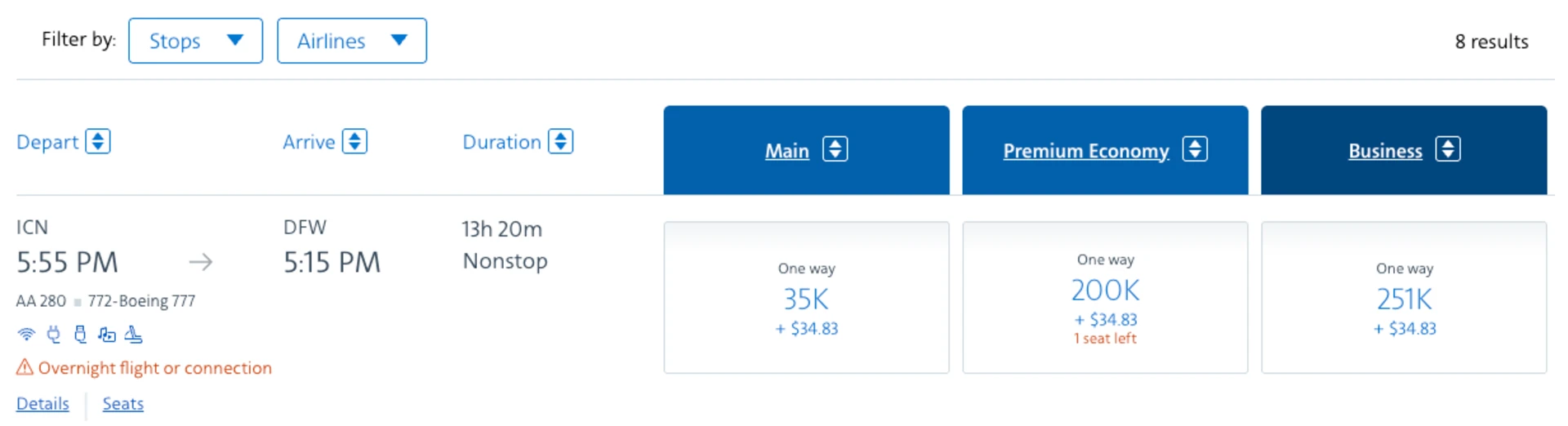
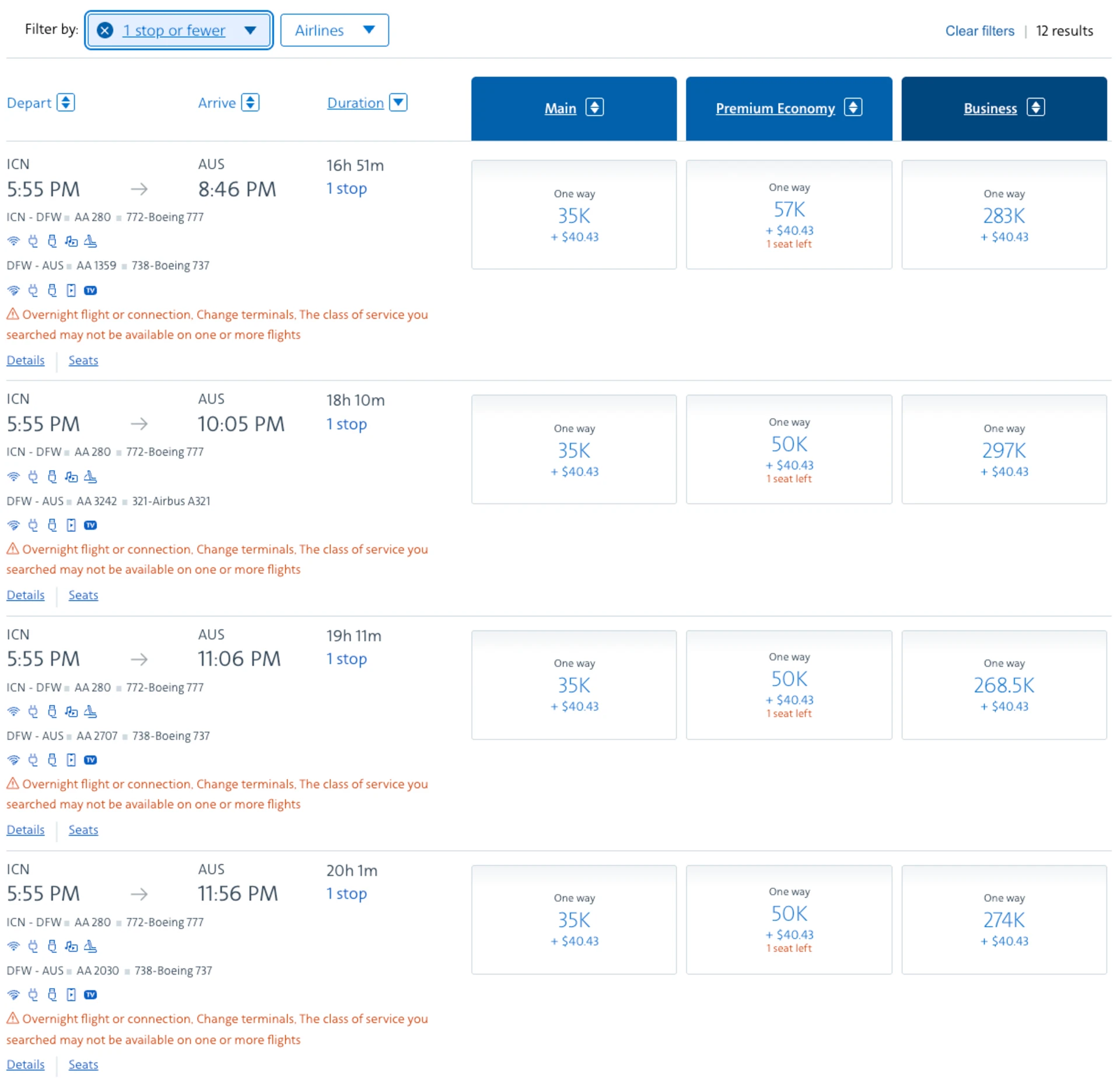
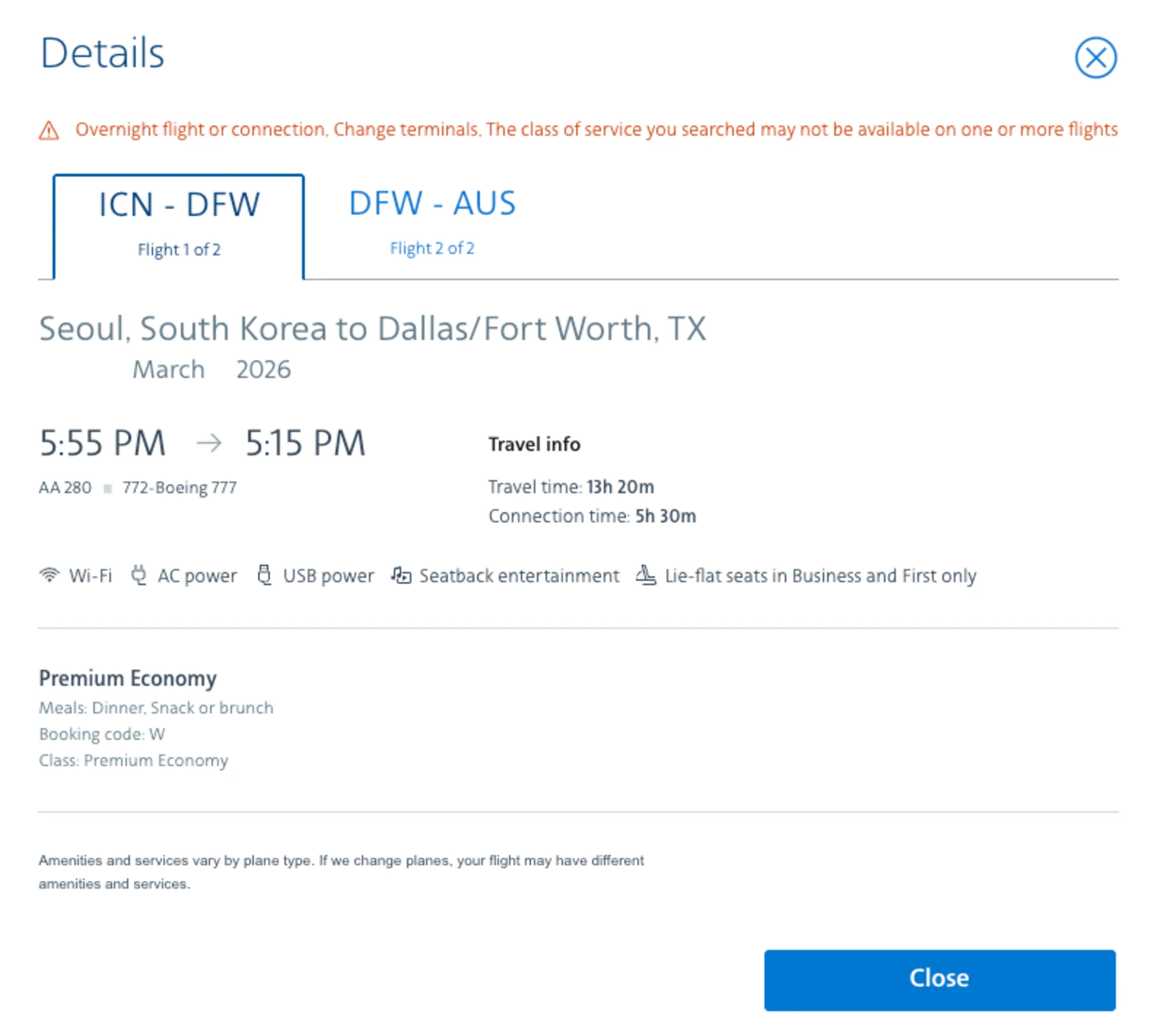
I booked this Premium Economy award ticket on American Airlines AA280 about two weeks before departure. The itinerary was from Incheon International Airport to Austin via Dallas Fort Worth International Airport. I paid 50,000 American Airlines AAdvantage miles plus US$40.43 in taxes and fees. But not every flight was in Premium Economy. The long-haul flight from Incheon to Dallas was in Premium Economy, while the short domestic connection from Dallas to Austin was in economy. During booking, I saw the message, “Premium Economy benefits will only apply to part of your trip.” The Premium Economy benefits only applied to the ICN–DFW flight.
American Airlines AA280 Seoul-Dallas B777 Premium Economy – Ticket Price & Booking 2
American Airlines AA280 Seoul-Dallas B777 Premium Economy – Ticket Price & Booking 3
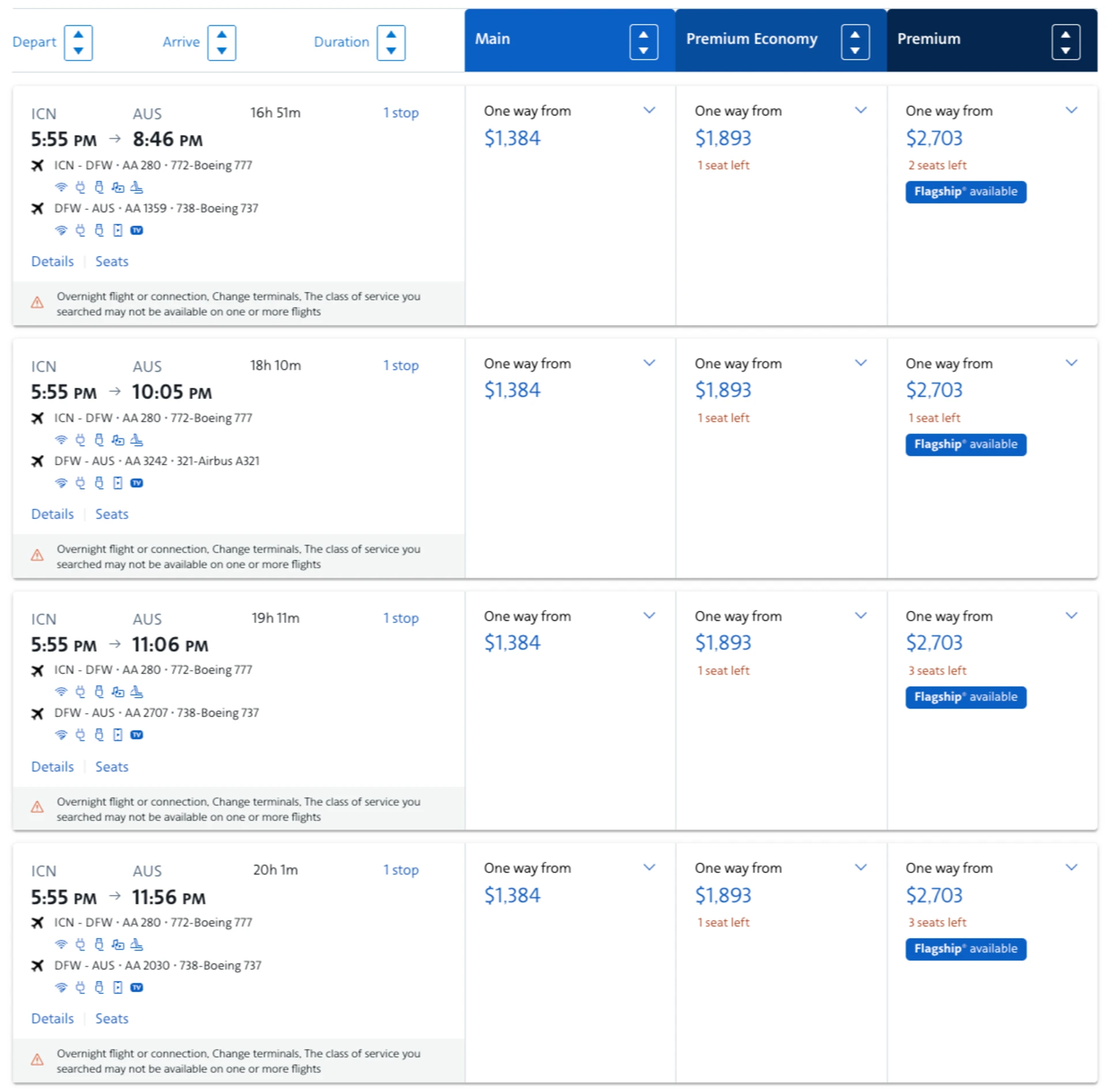
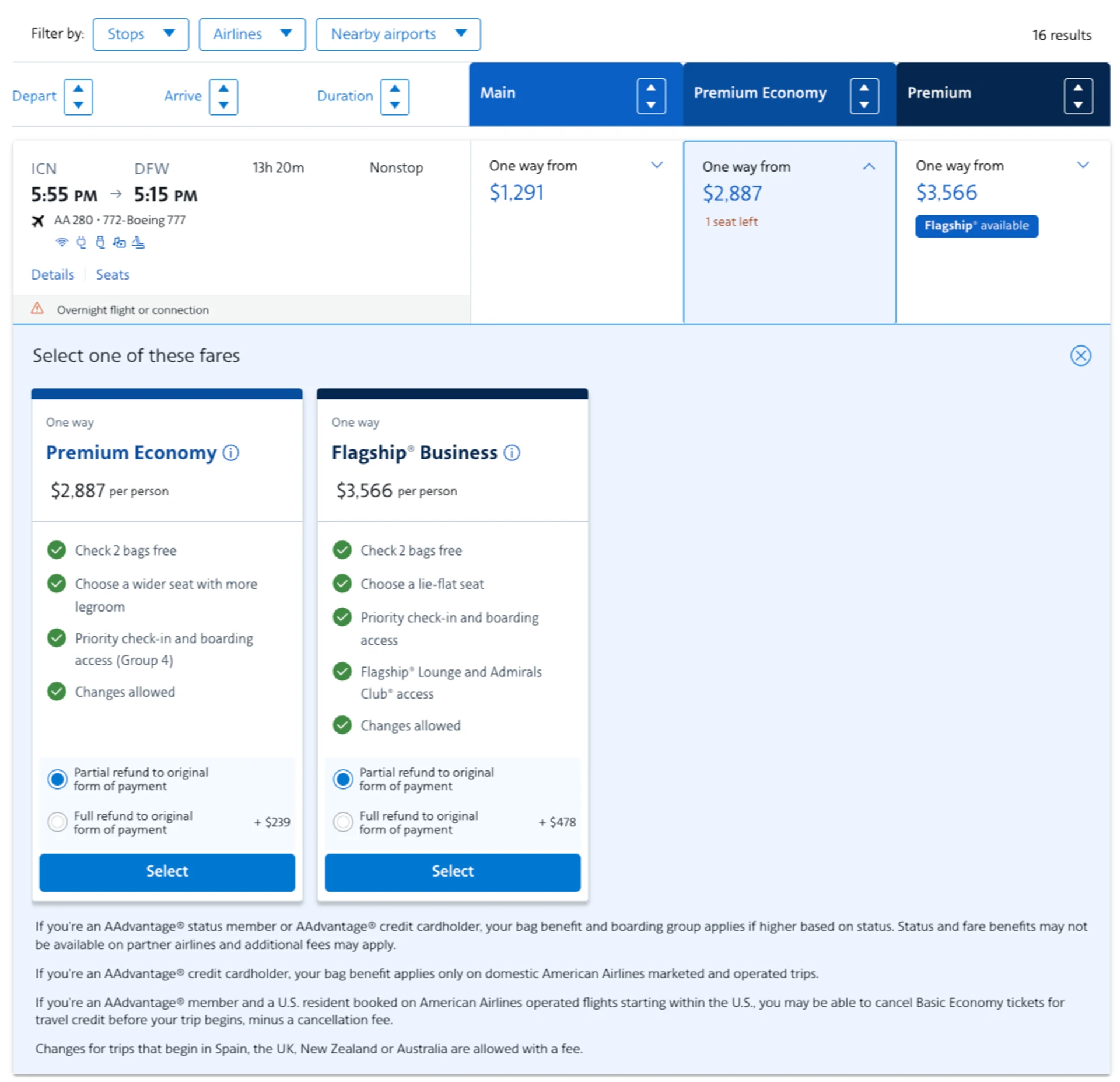
When I booked, one-way cash fares from Incheon to Austin were around US$1,384 in economy, US$1,893 in Premium Economy and US$2,703 in business class. Based on those prices, business class cost about US$800 more than Premium Economy, while the difference between economy and Premium Economy was about US$500. The cash fares for Incheon–Dallas alone were actually higher than for the itinerary I booked. Premium Economy on that flight alone was around US$2,887, and business class was around US$3,566. You might wonder, “Could I just get off in Dallas and skip the next flight?” When entering the US, you normally collect your checked luggage at the first airport, clear customs and then recheck it for your connection. So it would be physically possible to collect your bags in Dallas and not continue to Austin. But this could violate the airline’s fare rules. Repeatedly doing this with the same airline or frequent flyer account could lead to account restrictions, forfeited miles or the loss of elite status. Personally, I would not recommend booking or using a ticket this way.
American Airlines AA280 Seoul-Dallas B777 Premium Economy – Ticket Price & Booking 4
For American Airlines awards from Incheon to Dallas or other destinations in the US, the lowest rates I often saw were around 35,000 miles in economy, 50,000 miles in Premium Economy and 95,000 miles in business class. But American Airlines uses dynamic pricing for award tickets, so these rates are not always available. Peak periods and high-demand dates can require far more miles. On the other hand, itineraries with long connections, less popular schedules or low-season flights close to departure can sometimes be available at lower rates than during peak periods. I booked this ticket about two weeks before departure, so I wondered whether seats had been released near the lowest award rate to fill the remaining space. Taxes and fees for the departure from Incheon were only about US$40.43, with no separate fuel surcharge, so I thought the redemption offered quite good value. Compared with airlines such as Korean Air, which charge fuel surcharges, the low cash payment is a clear advantage of using American Airlines miles on long-haul routes.

American Airlines AA280 Seoul-Dallas B777 Premium Economy – Ticket Price & Booking 5
Overall, I thought this was a good redemption because I could fly the long-haul Incheon–Dallas flight in Premium Economy for 50,000 miles and US$40.43. Cash fares often rise considerably when booking close to departure. But award seats can sometimes become available at relatively low mileage rates one or two weeks before departure as airlines look to fill the remaining seats. So if you need to book a long-haul flight at short notice, I think it is worth checking award availability as well as cash fares.
Check-in & Baggage Allowance
American Airlines AA280 Seoul-Dallas B777 Premium Economy – Check-in & Baggage Allowance 1
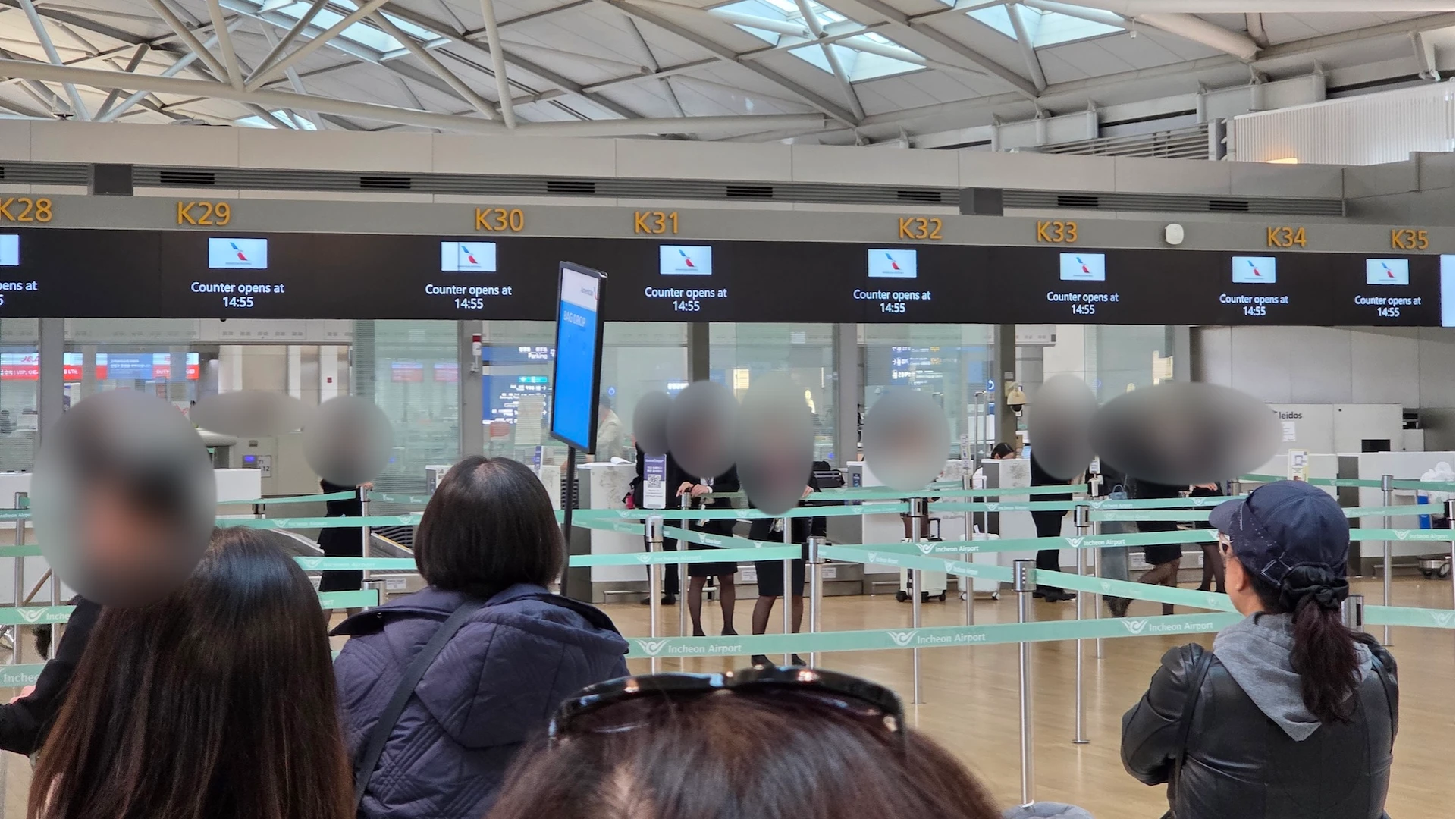
American Airlines uses Terminal 1 at Incheon International Airport. But the check-in counter location can change even within Terminal 1, so it is worth checking before heading there. When I flew this route about three weeks to a month earlier, check-in was at the M counters, but this flight used the K counters. If you are flying American Airlines from Incheon to Dallas, I would recommend checking the counter location on the airport displays or through the airline’s information that day, rather than going straight to the counters you used before.
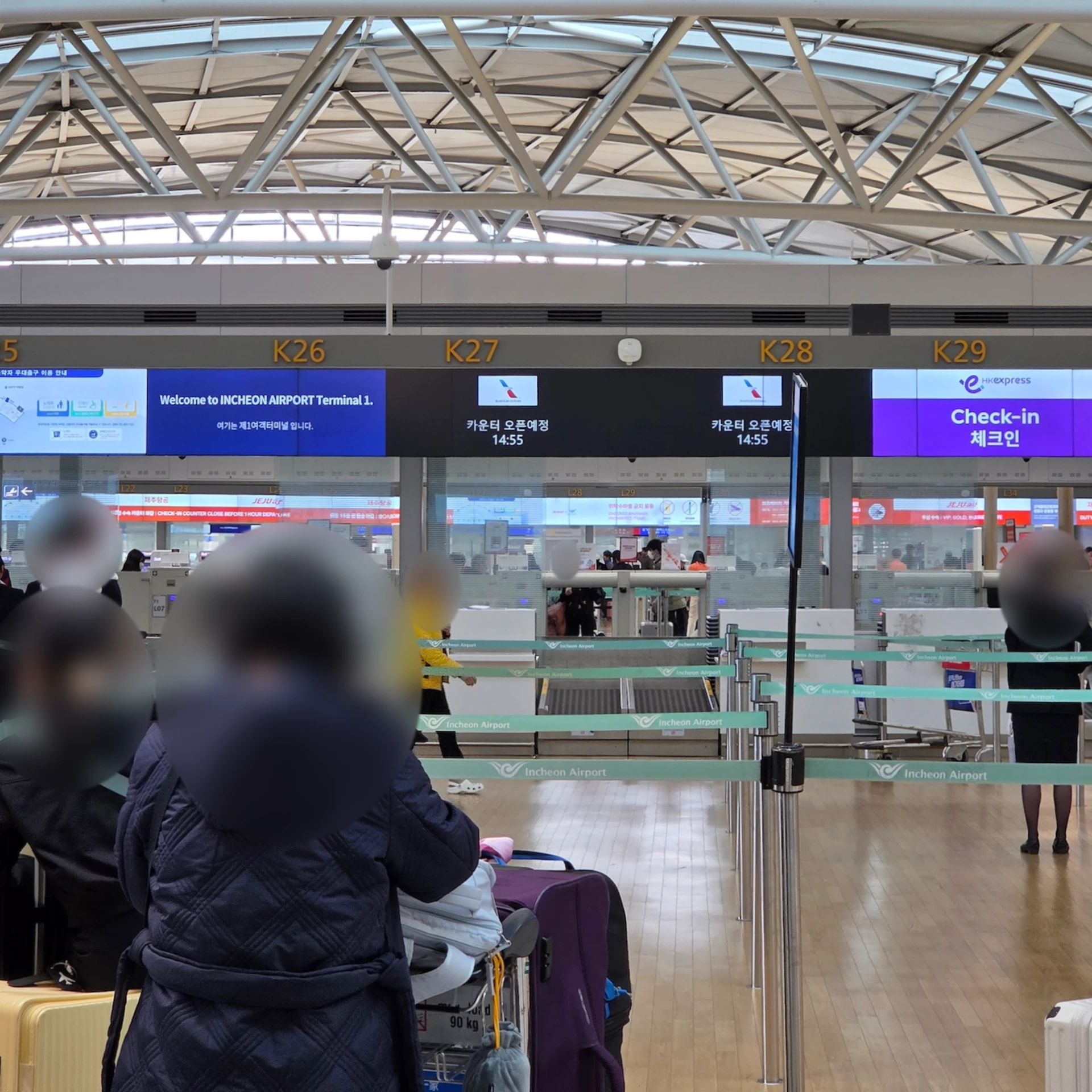
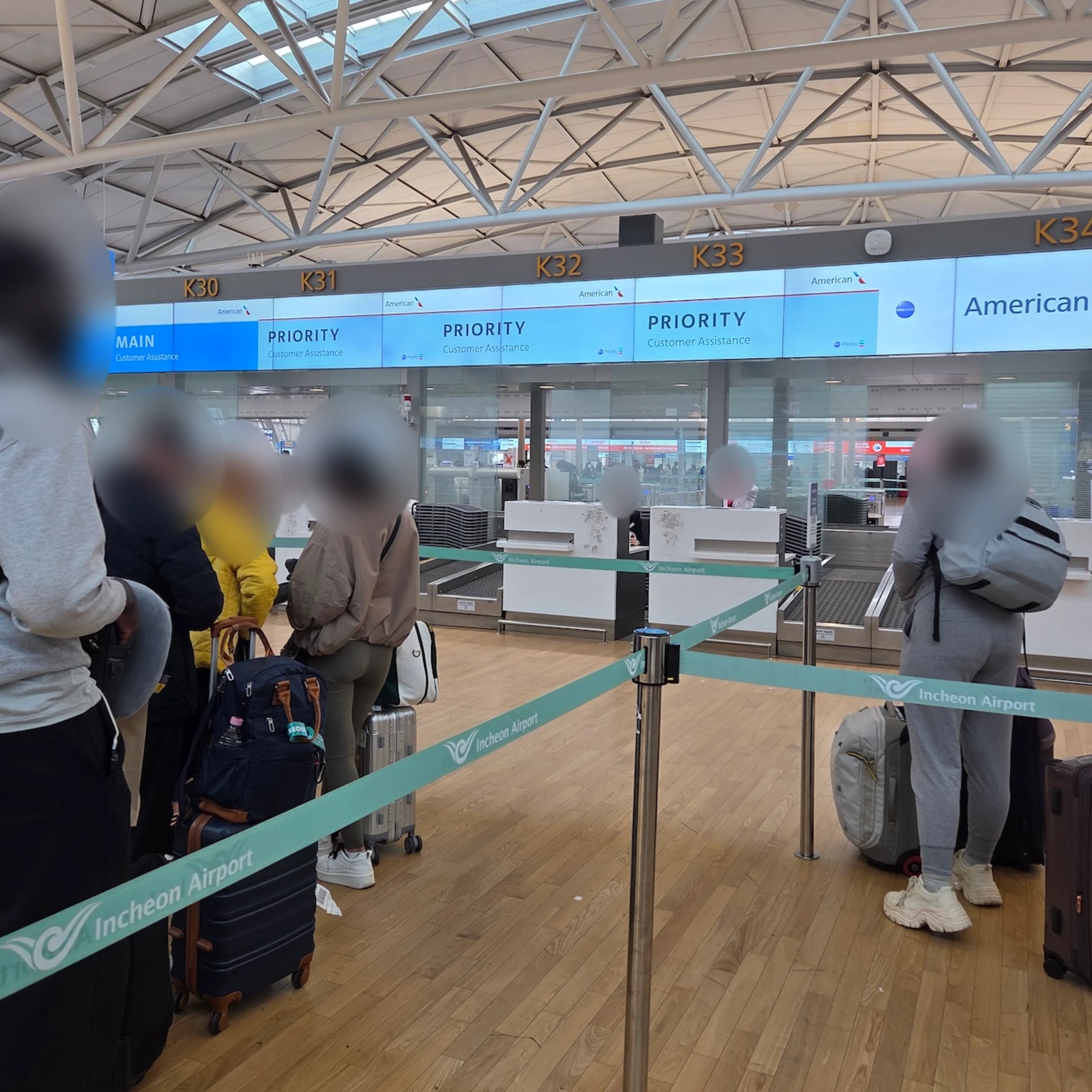
American Airlines AA280 Seoul-Dallas B777 Premium Economy – Check-in & Baggage Allowance 2
For this AA280 flight, the check-in counters opened at exactly 2:55 p.m., three hours before departure. Before opening, though, there were no clear signs showing where to queue, and the waiting area had not been organized. Passengers had formed a single line where they thought they should wait. The staff only came out to organize the line and put up signs about three hours and five minutes before departure. I thought the queue could have been arranged more clearly before the counters opened. American Airlines had counters K27 through K36 assigned that day, but K35 and K36 were not used. Four counters, K31 through K34, were assigned to priority check-in, though K34 was not always open. In practice, it felt as though about three priority counters were operating. There were also two bag-drop-only counters and two Main Cabin counters.
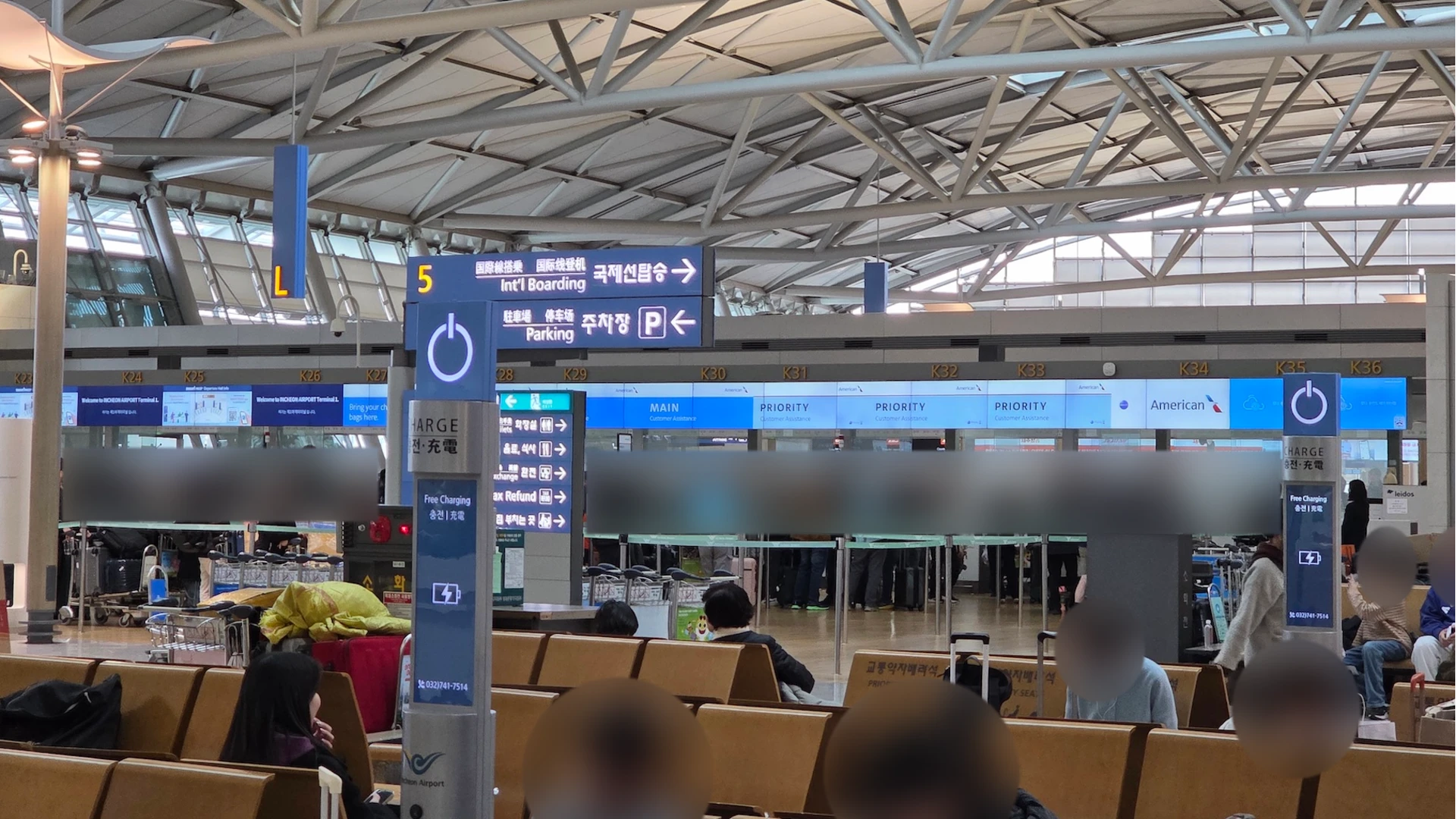
American Airlines AA280 Seoul-Dallas B777 Premium Economy – Check-in & Baggage Allowance 3
Quite a wide range of passengers can use American Airlines’ priority check-in counters. Along with business class passengers, Premium Economy passengers and AAdvantage or oneworld elite members can use them. So despite the name, the priority line was quite busy too. Some priority counters did not begin operating immediately when check-in opened, possibly because of system connection issues. All the counters were supposed to open together three hours before departure, but the delayed opening of some priority counters made the line move slowly at first. Still, I could use priority check-in as a Premium Economy passenger, and there were not too many people ahead of me. I finished check-in about five to ten minutes after the counters opened. In that sense, being able to use priority check-in when flying Premium Economy was a clear advantage.
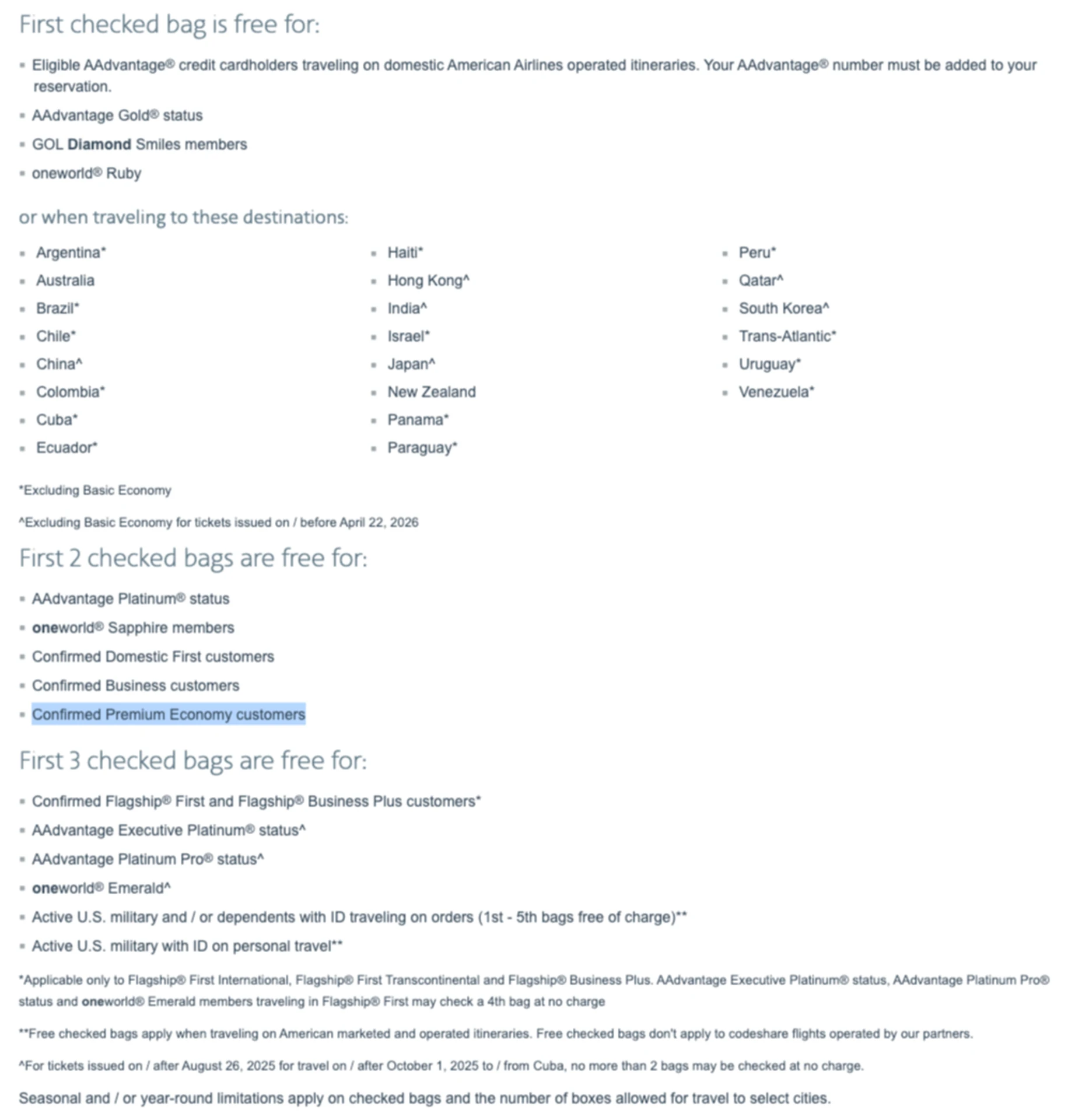
American Airlines AA280 Seoul-Dallas B777 Premium Economy – Check-in & Baggage Allowance 4
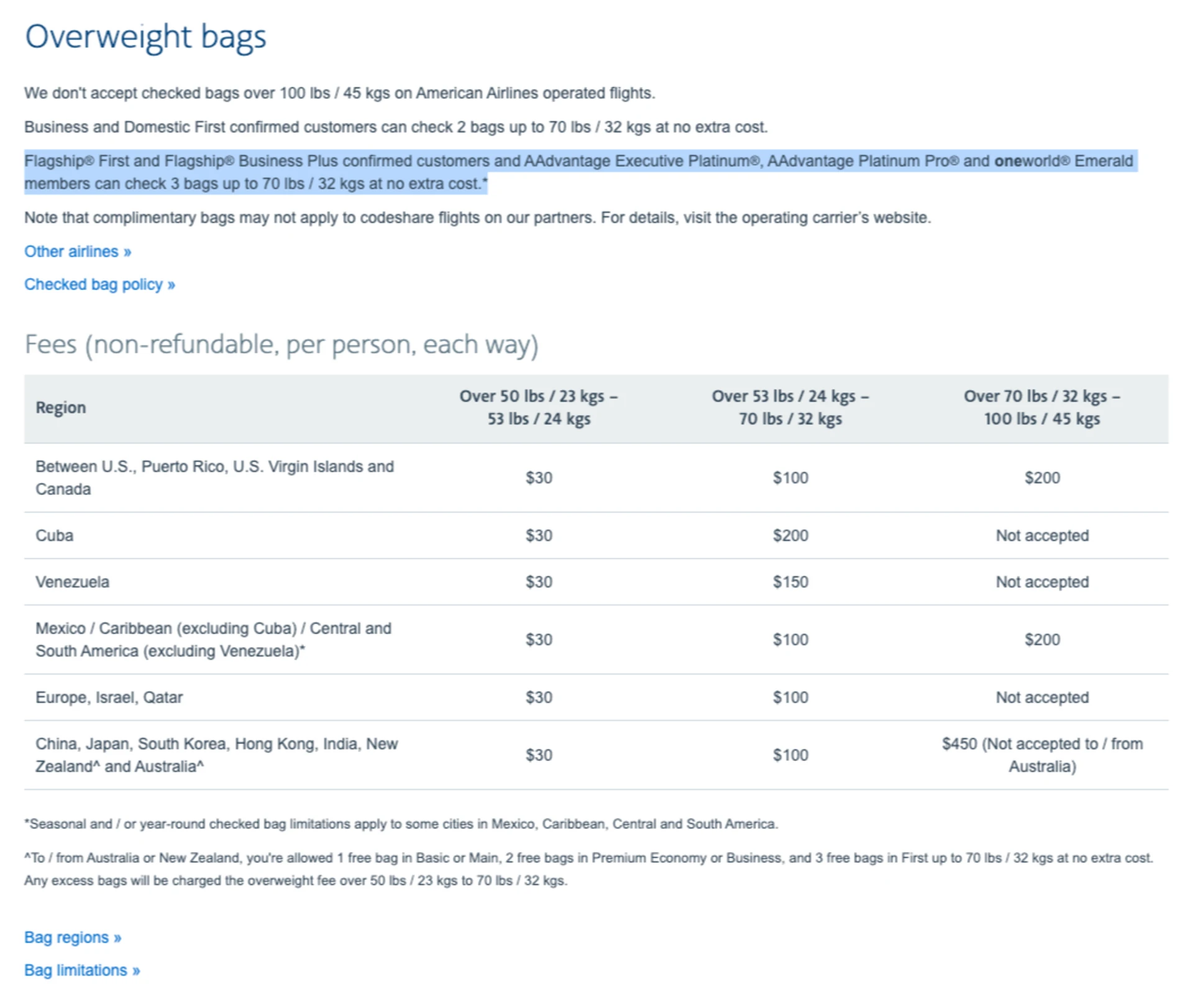
For checked luggage, American Airlines Premium Economy normally includes two free checked bags weighing up to 23 kg, or 50 lb, each. Having two bags included is a practical benefit on a long-haul trip. Additional bags may be included depending on your American Airlines or oneworld elite status, but since Premium Economy already includes two bags, not every elite member receives a third bag free. For Premium Economy, a free third bag is limited to AAdvantage Platinum Pro members and above, oneworld Emerald members and qualifying active-duty military personnel. I held AAdvantage Platinum Pro status at the time, so in theory I could have checked a third bag for free, but I did not actually check three bags.
American Airlines AA280 Seoul-Dallas B777 Premium Economy – Check-in & Baggage Allowance 5
Another point worth noting is the weight allowance. American Airlines’ official overweight baggage information says that AAdvantage Platinum, Platinum Pro and Executive Platinum members, along with oneworld Emerald members, can check bags weighing up to 70 lb, or about 32 kg, without an additional charge under certain conditions. On that basis, my understanding was that an AAdvantage Platinum Pro member flying Premium Economy could check up to three bags weighing no more than 32 kg each. But the staff did not always seem completely familiar with this detail. Answers could vary depending on whom I asked, and even where the written rules seemed to allow it, I was not sure the allowance would be immediately accepted at the counter. Unless you really need to pack each bag up to 32 kg, I personally think it is safer to divide your luggage into bags weighing no more than 23 kg each. Baggage rules on long-haul international trips can vary depending on the cabin, elite status, operating airline and connecting flights, so if you are unsure, it is worth checking the latest rules on the official website before departure.
American Airlines AA280 Seoul-Dallas B777 Premium Economy – Check-in & Baggage Allowance 6
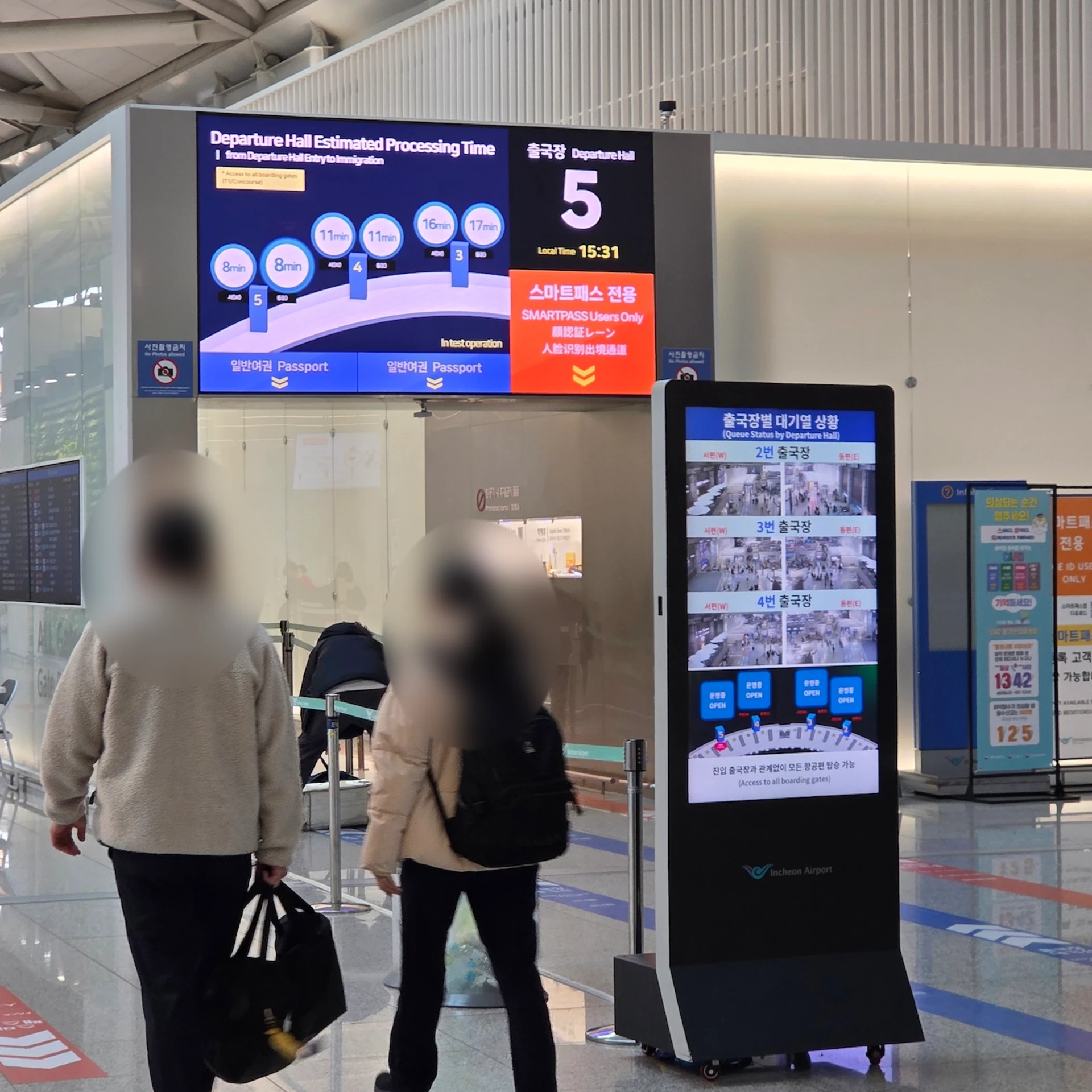
After check-in, security screening and passport control went quickly. AA280 was departing outside the busiest period for departure procedures at Incheon, so it took less than ten minutes to get through both. This meant I could get airside with time to spare after checking in.
Departure Lounge
American Airlines AA280 Seoul-Dallas B777 Premium Economy – Departure Lounge 1
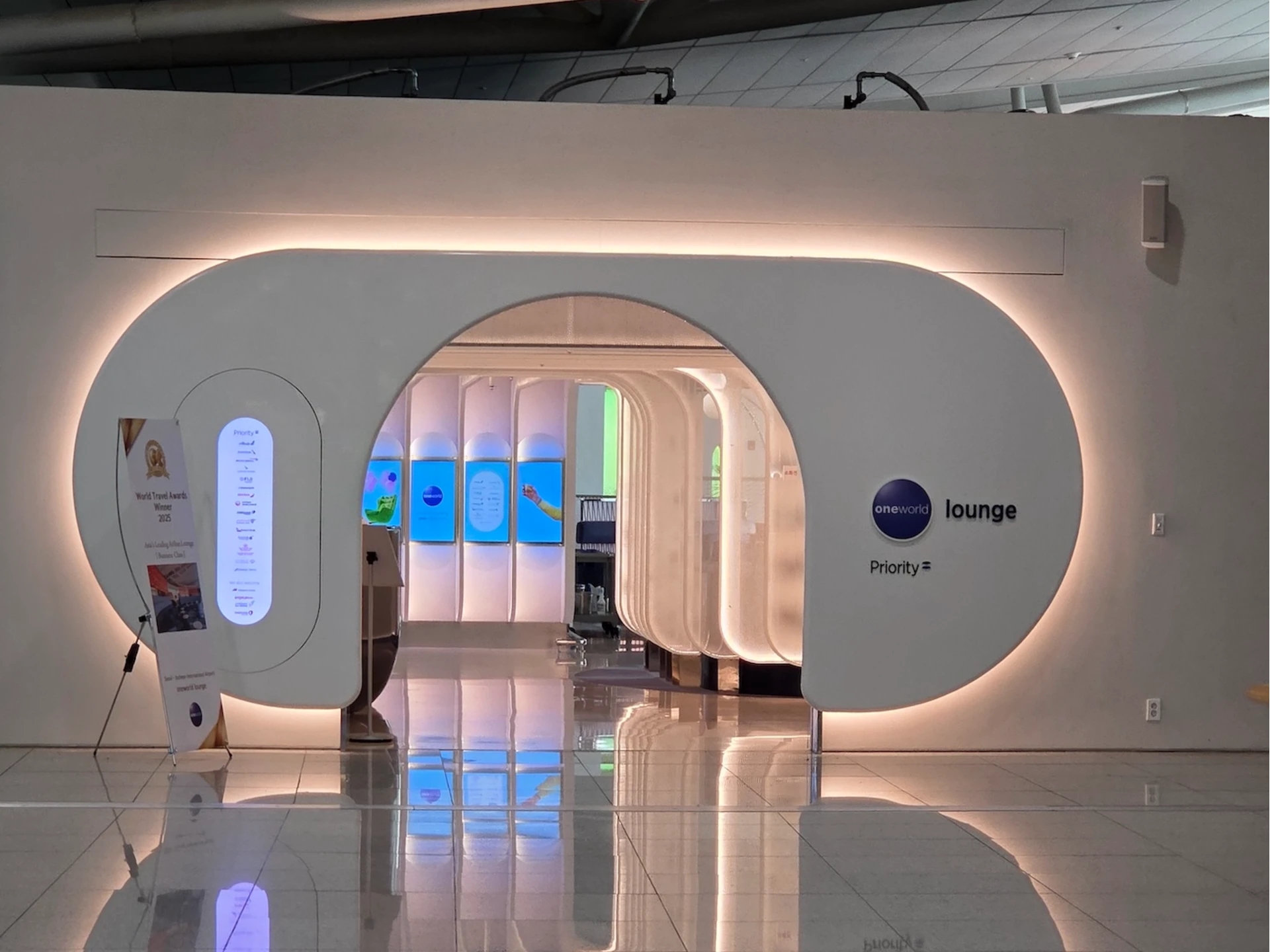
American Airlines uses the oneworld lounge at Incheon Airport. But flying Premium Economy alone does not give you lounge access. You need oneworld Sapphire or Emerald status, or a ticket in business class or above, to enter. At the time, I held American Airlines AAdvantage Platinum Pro status, which is equivalent to oneworld Emerald, so I could use the lounge.
American Airlines AA280 Seoul-Dallas B777 Premium Economy – Departure Lounge 2
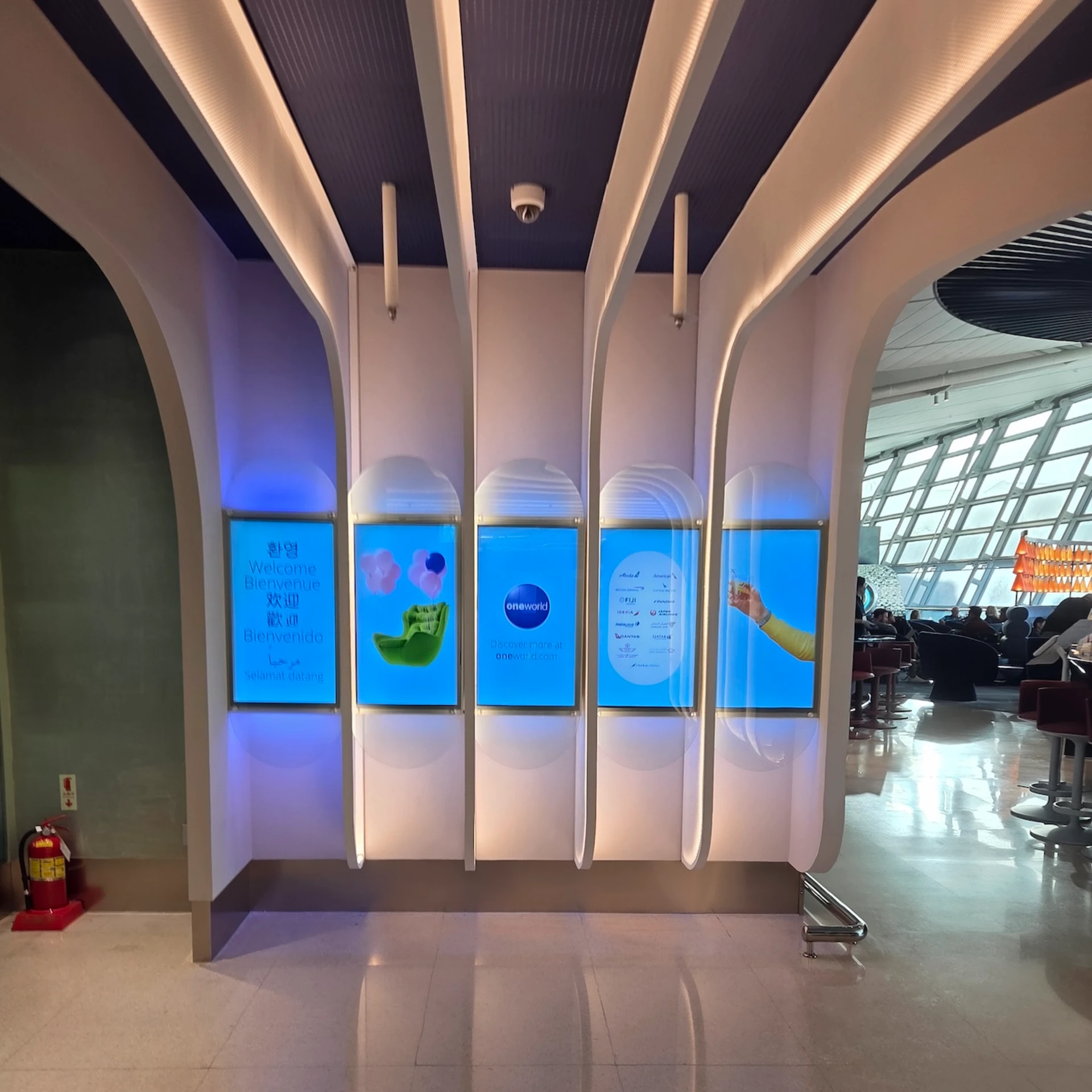
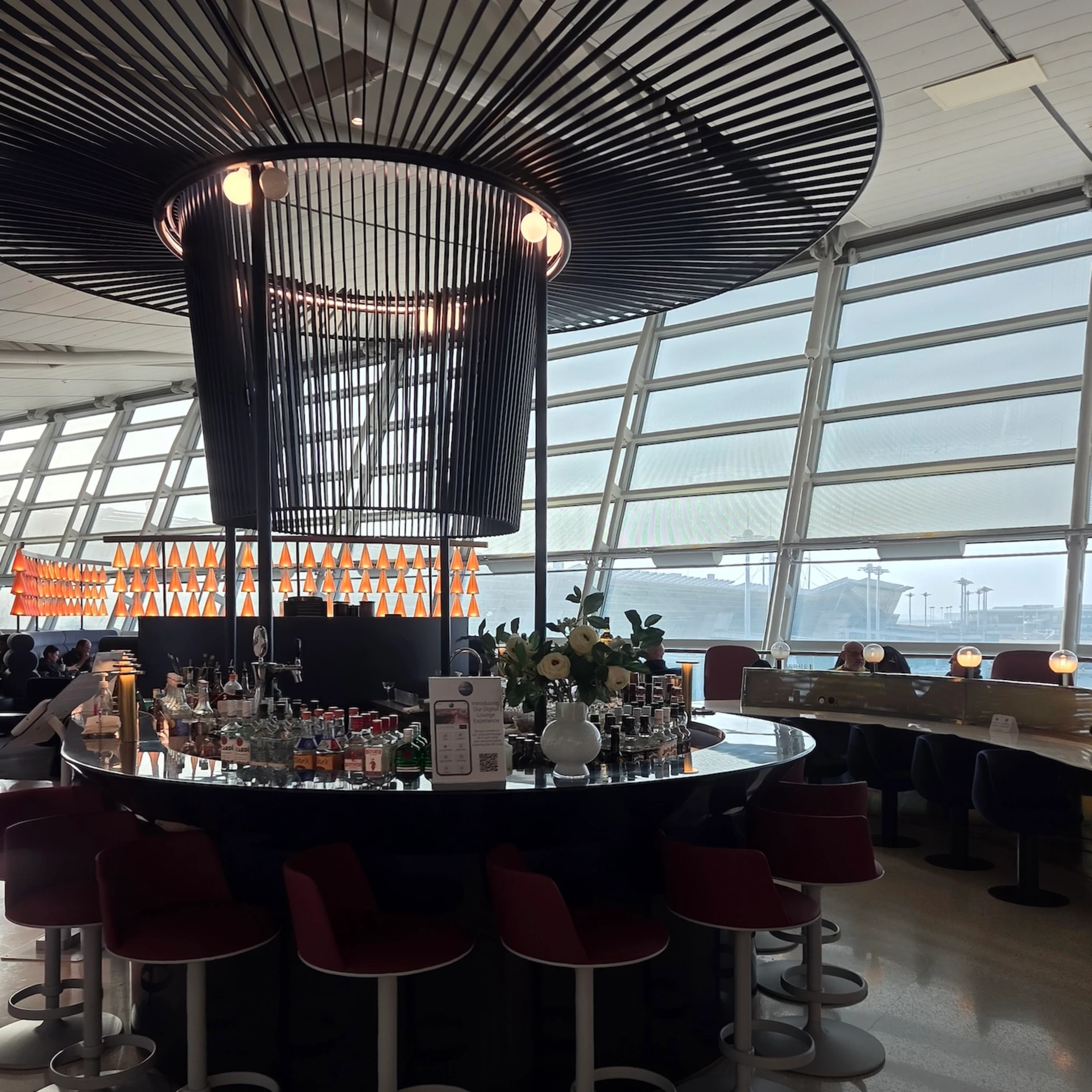
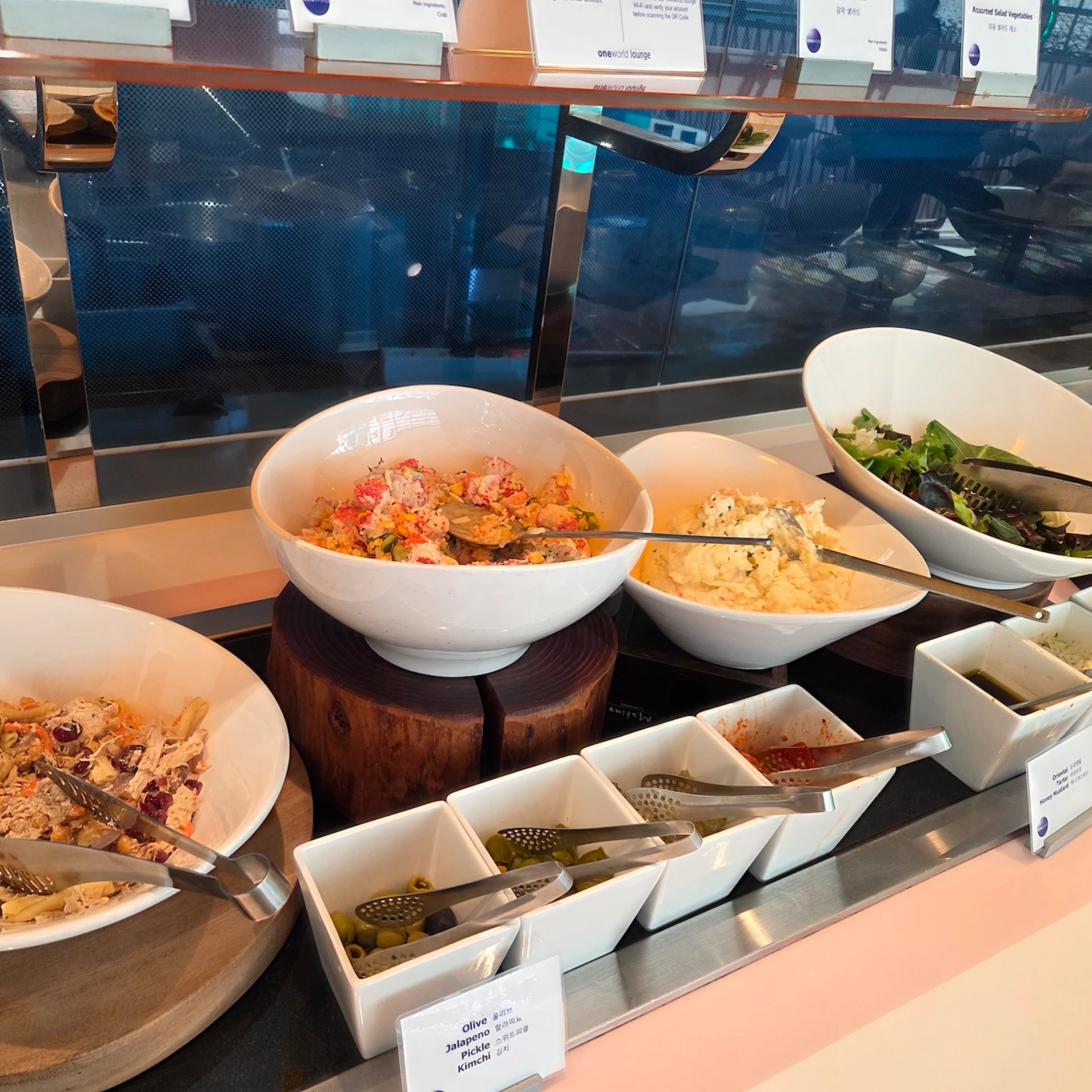
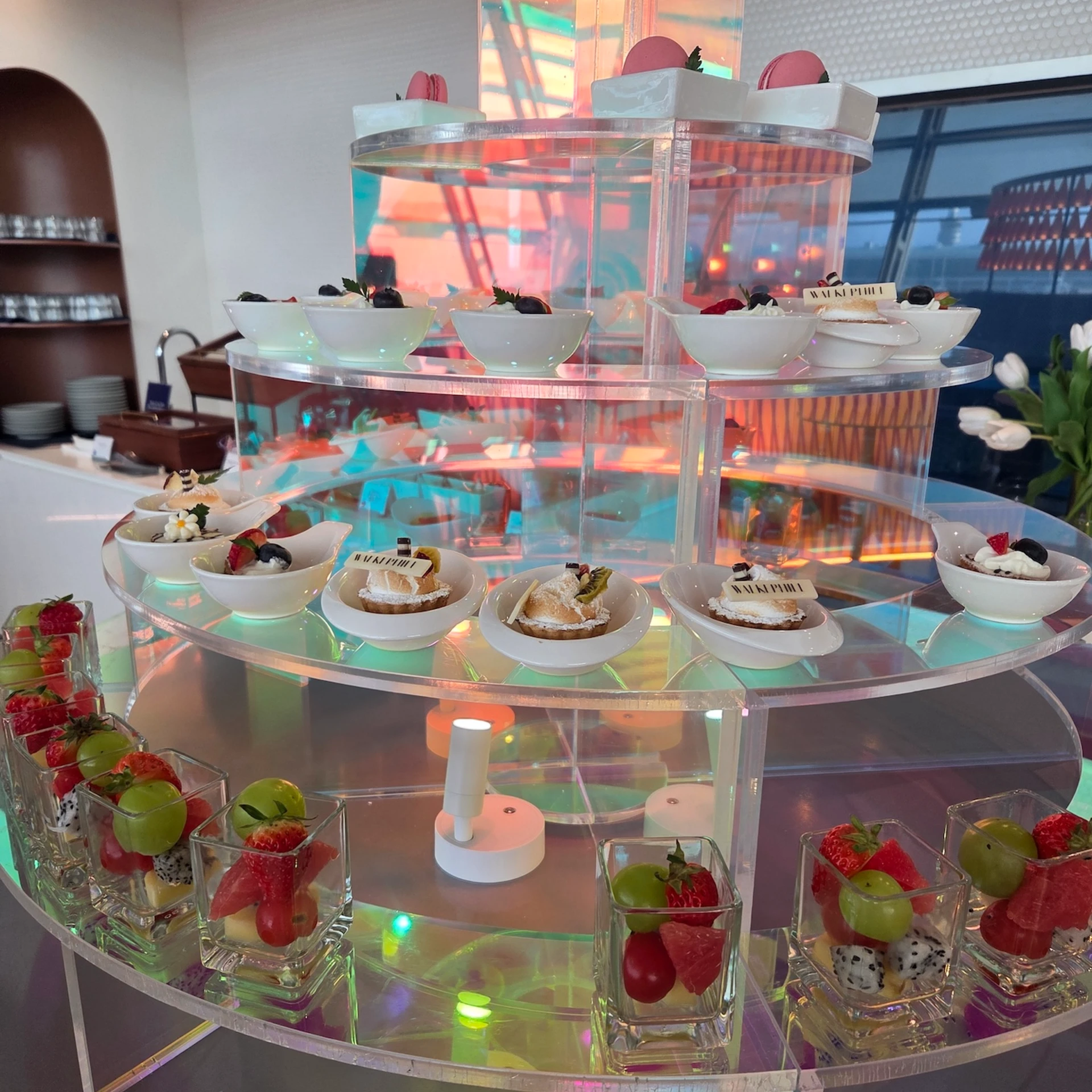
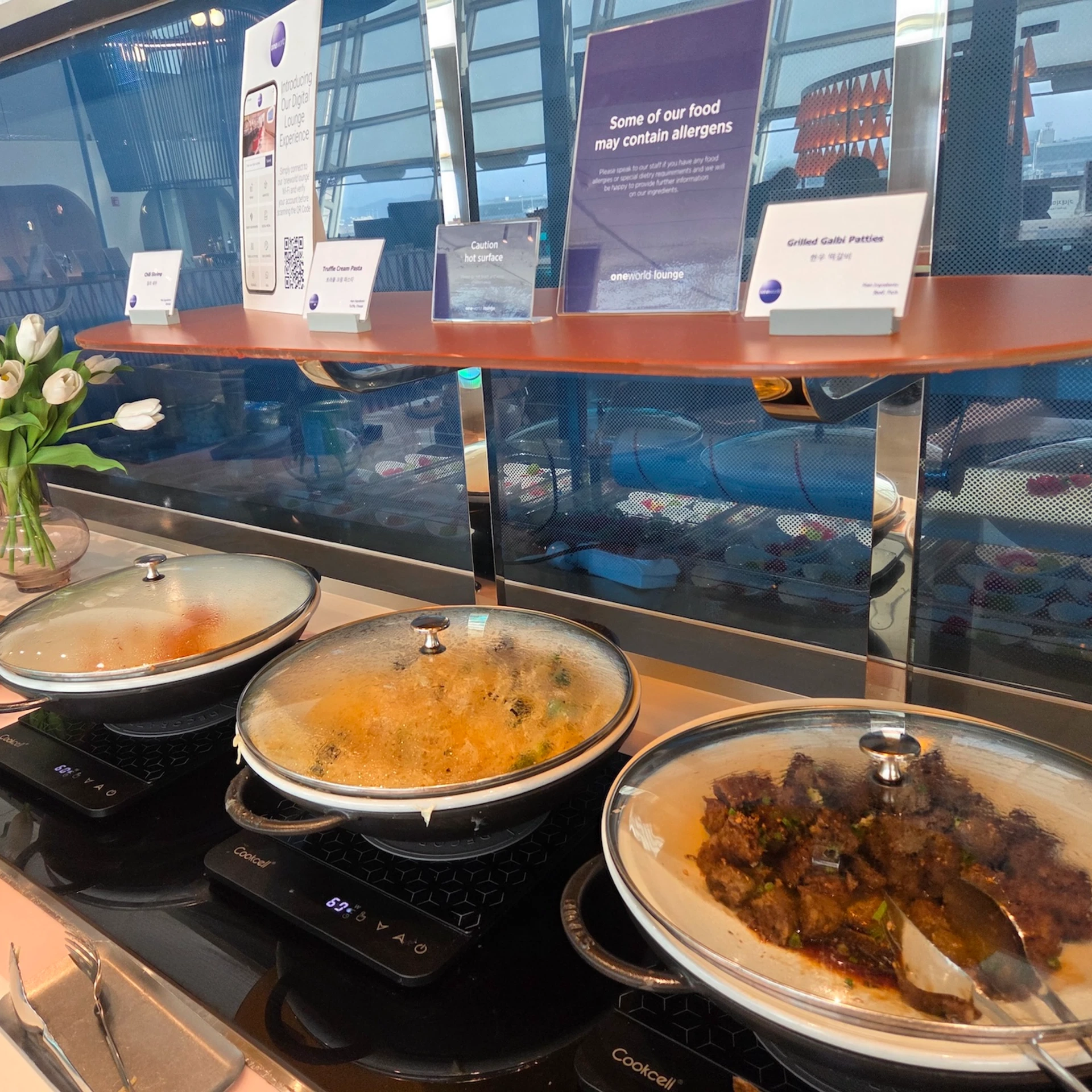
The oneworld lounge is on the fourth floor of Terminal 1’s airside area, near Gate 28. It is not especially large, but since it does not accept credit card lounge benefits or Priority Pass, it tends to be less crowded. The stylish interior and relaxed atmosphere are its main strengths. The food selection was a little limited compared with other lounges at Incheon, but there were hot food, alcoholic drinks, showers and a full-service bar. It was a decent place for a quiet break before departure.
American Airlines AA280 Seoul-Dallas B777 Premium Economy – Departure Lounge 3
The lounge is near Gate 28, toward the center of Terminal 1, while American Airlines and some other oneworld carriers often use gates in the 50s. The walk from the lounge to your gate can take a while, so I would suggest leaving with some time to spare before boarding. You can find more details about the oneworld lounge at Incheon Airport in my separate lounge review.
Boarding Process
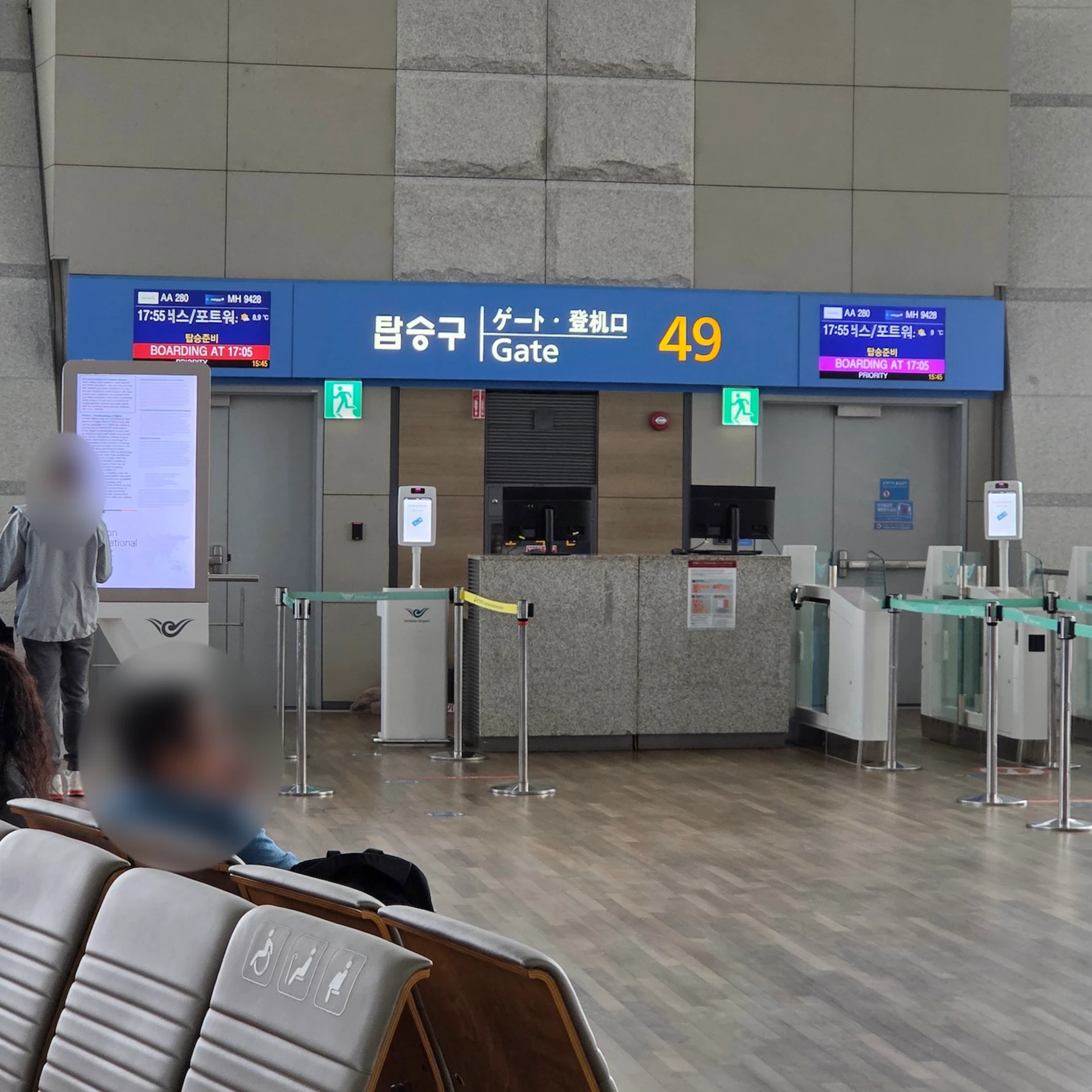
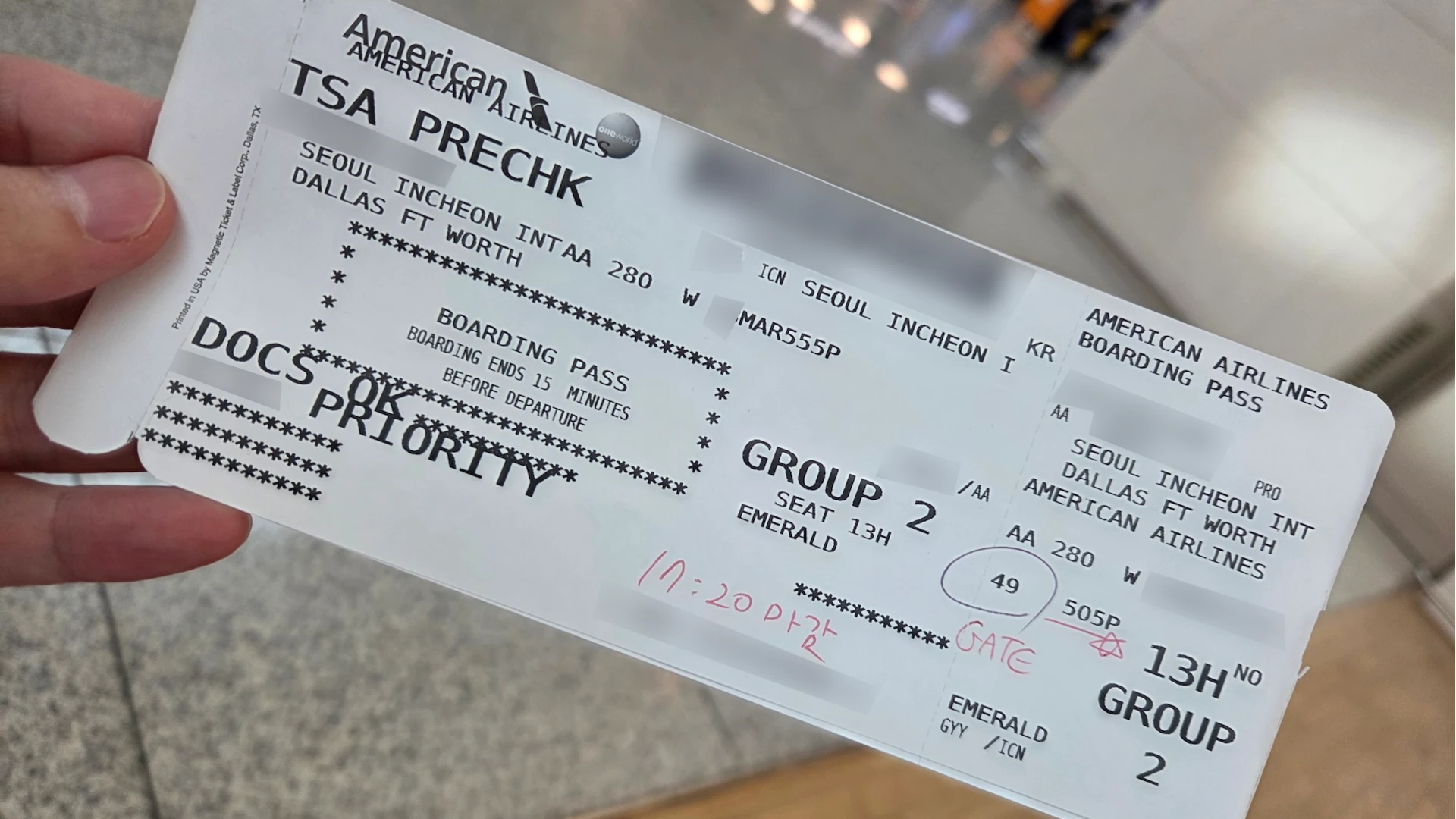
AA280 was scheduled to depart at 5:55 p.m., and my boarding pass showed boarding starting at 5:05 p.m., 50 minutes before departure. At check-in, the staff consistently said that boarding would close at 5:20 p.m. But realistically, it would be difficult for all the passengers on a long-haul international flight to board within just 15 minutes. I would see this more as a warning that arriving late could mean missing the flight, rather than the actual boarding cutoff. American Airlines says that boarding for most flights begins 30 to 50 minutes before departure and closes 15 minutes before departure.
American Airlines AA280 Seoul-Dallas B777 Premium Economy – Boarding Process 1
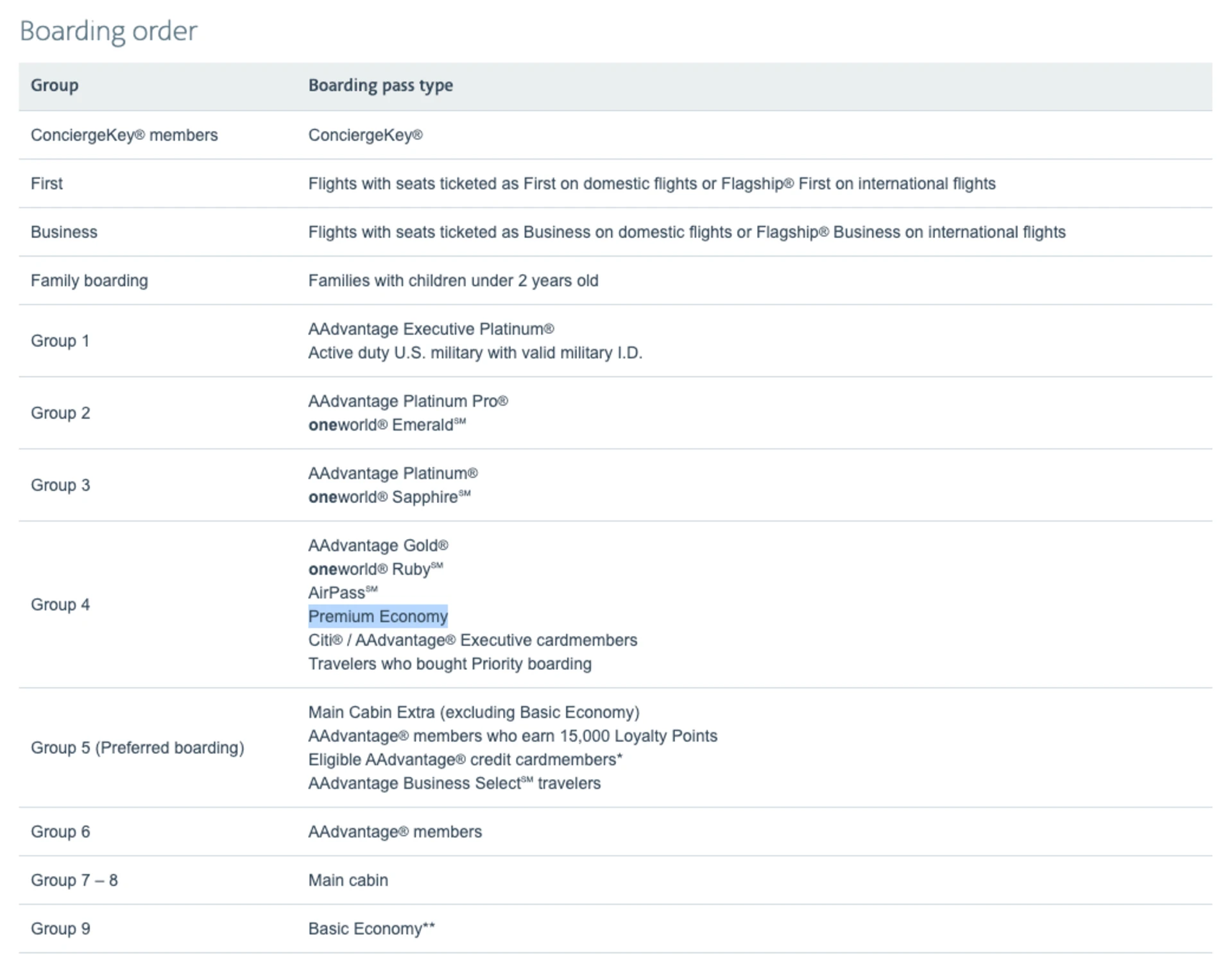
This flight departed from Gate 49 in Terminal 1 at Incheon Airport. Gate 49 is near the western end of the terminal, so it is quite a walk from the central area or the oneworld lounge. Gates 48, 49 and 50 are also close together, which can make the area quite crowded as boarding time approaches. This flight appeared to be almost full, and there were plenty of passengers waiting around the gate. American Airlines uses quite a few boarding groups, as US airlines often do. ConciergeKey members board first. This is AAdvantage’s highest invitation-only tier. They are followed by first class passengers, business class passengers, families traveling with children under two, and then the numbered boarding groups. International Flagship Business passengers board with the business class group. AAdvantage Executive Platinum members are in Group 1, Platinum Pro and oneworld Emerald members in Group 2, and Platinum and oneworld Sapphire members in Group 3. AAdvantage Gold and oneworld Ruby members are in Group 4, and Premium Economy passengers also board in Group 4. So Premium Economy passengers normally board with Group 4, but elite status can let you board earlier.
American Airlines AA280 Seoul-Dallas B777 Premium Economy – Boarding Process 2
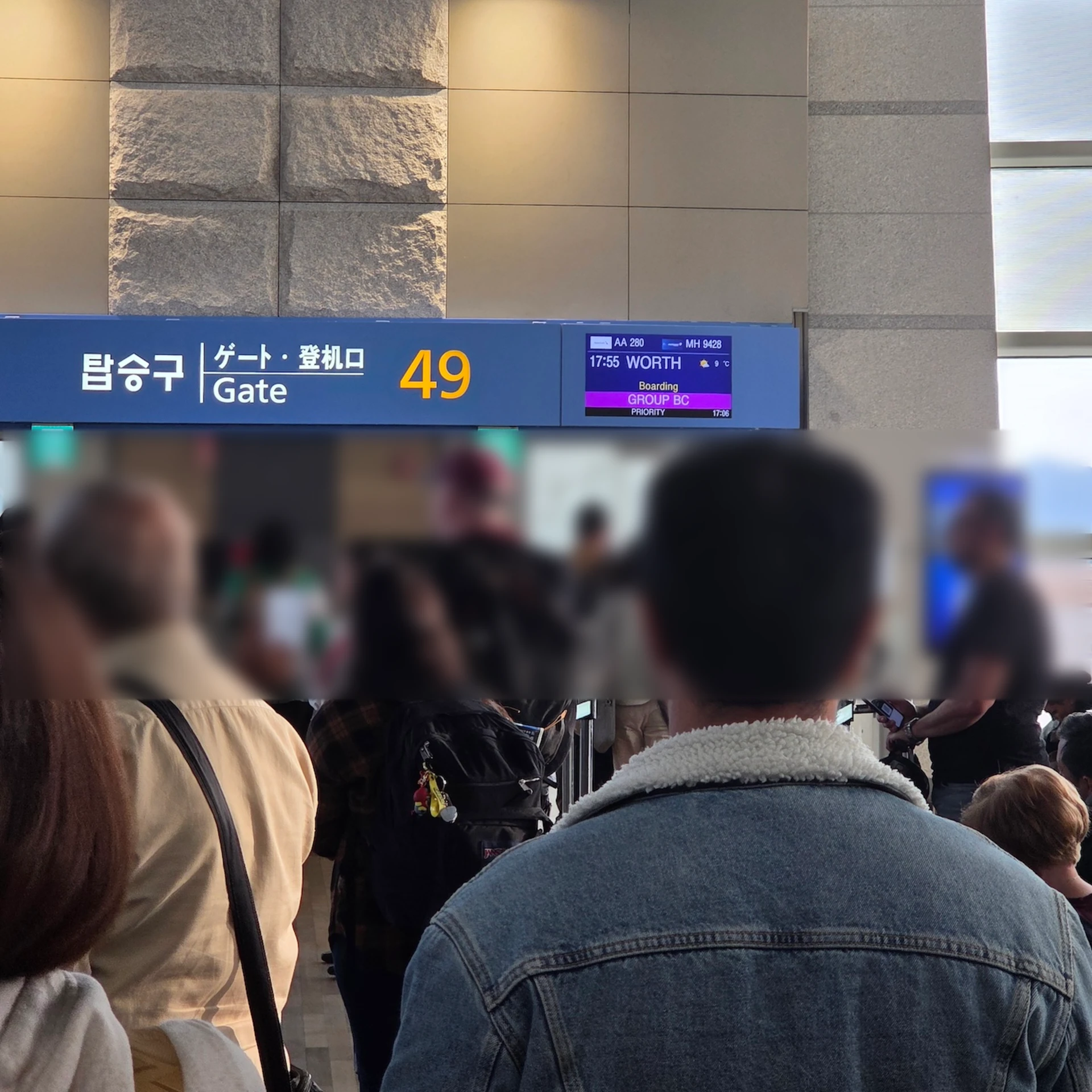
Although my boarding pass showed a 5:05 p.m. start, boarding actually began with ConciergeKey members at around 5:02 p.m. Business class passengers followed at around 5:05 p.m. I held AAdvantage Platinum Pro status at the time, so I was assigned Group 2 and could board relatively early, at around 5:09 or 5:10 p.m. For business class, you may sometimes see “BC” displayed as the group at the gate. It is worth checking the group on your boarding pass rather than only looking for a number.
American Airlines AA280 Seoul-Dallas B777 Premium Economy – Boarding Process 3
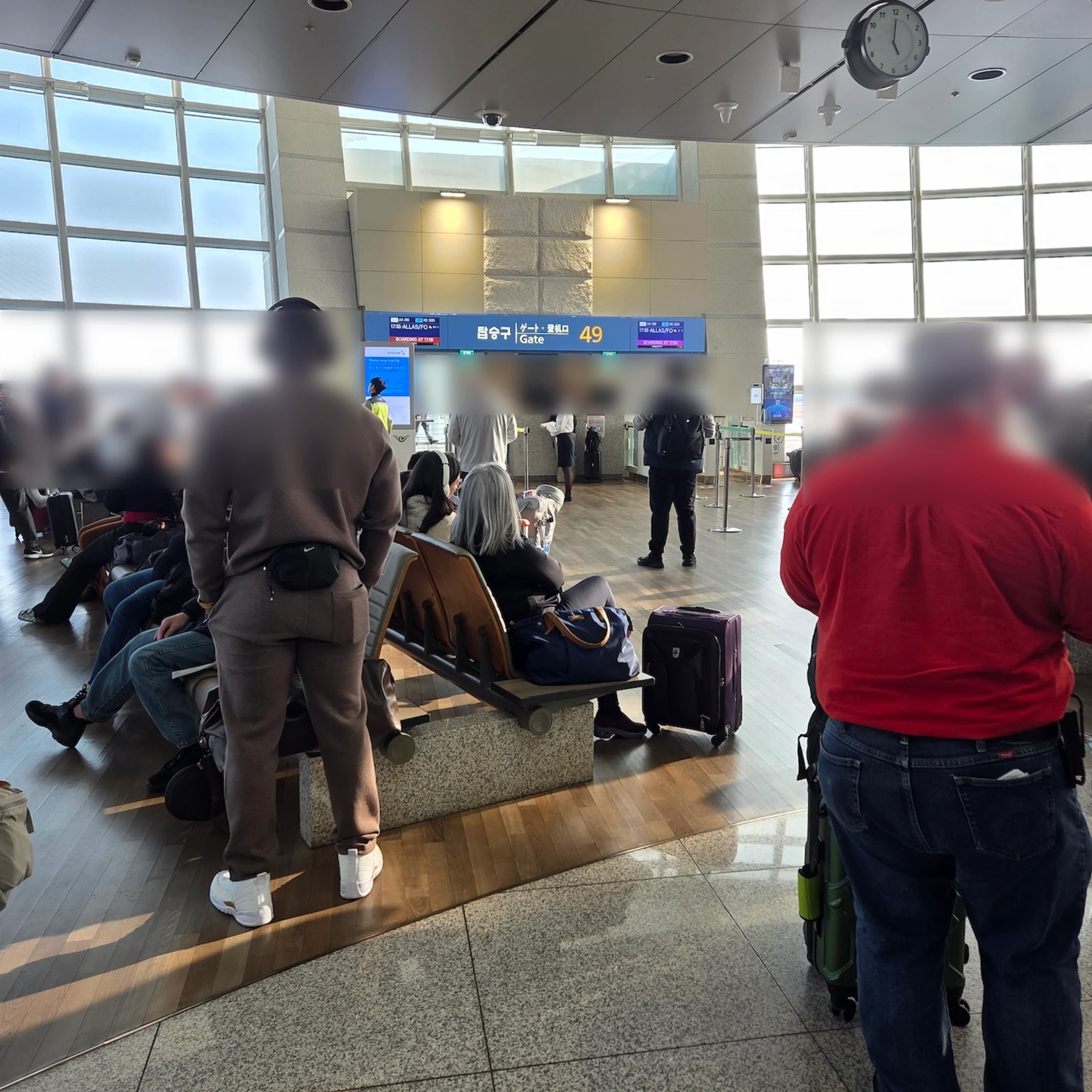
The Premium Economy cabin was still almost empty when I boarded. Premium Economy passengers normally board with Group 4, but my AAdvantage Platinum Pro status, equivalent to oneworld Emerald, let me board much earlier. I used to wonder whether there was any point in getting on early when I would already be sitting on the plane for more than 13 hours. But on this flight, I thought boarding early had a clear advantage. The main reason was the overhead bin space. The seats and some parts of the interior on American’s Boeing 777-200ER had been refurbished, but the overhead bins did not appear to have been replaced with newer, larger ones. There was not a generous amount of space for carry-on suitcases, and as boarding continued, it became more likely that passengers would struggle to find space near their seats. If you need to access your bag during the flight, I would suggest queuing early within your own boarding group.

American Airlines AA280 Seoul-Dallas B777 Premium Economy – Boarding Process 4
After a fair number of Premium Economy passengers had boarded, a flight attendant gave the cabin a short introduction. They explained how to use the Premium Economy seats and cabin, that we could ask for water when needed, and that there was a snack bar in the rear galley. It may seem like a small thing, but I thought it was helpful for passengers who do not fly often. It let them know what they could ask for and which services were available during the flight.
American Airlines AA280 Seoul-Dallas B777 Premium Economy – Boarding Process 5
Boarding finished at around 5:40 p.m., about 15 minutes before the scheduled departure. I thought that was fairly good for a nearly full long-haul international flight. We started pushing back at around 5:57 p.m., close to the scheduled departure time, and the safety video played as pushback began. Taxiing took about 15 minutes, which felt a little long. AA280 took off from Incheon International Airport at 6:15 p.m. and headed for Dallas Fort Worth International Airport.
Cabin & Seat Detail
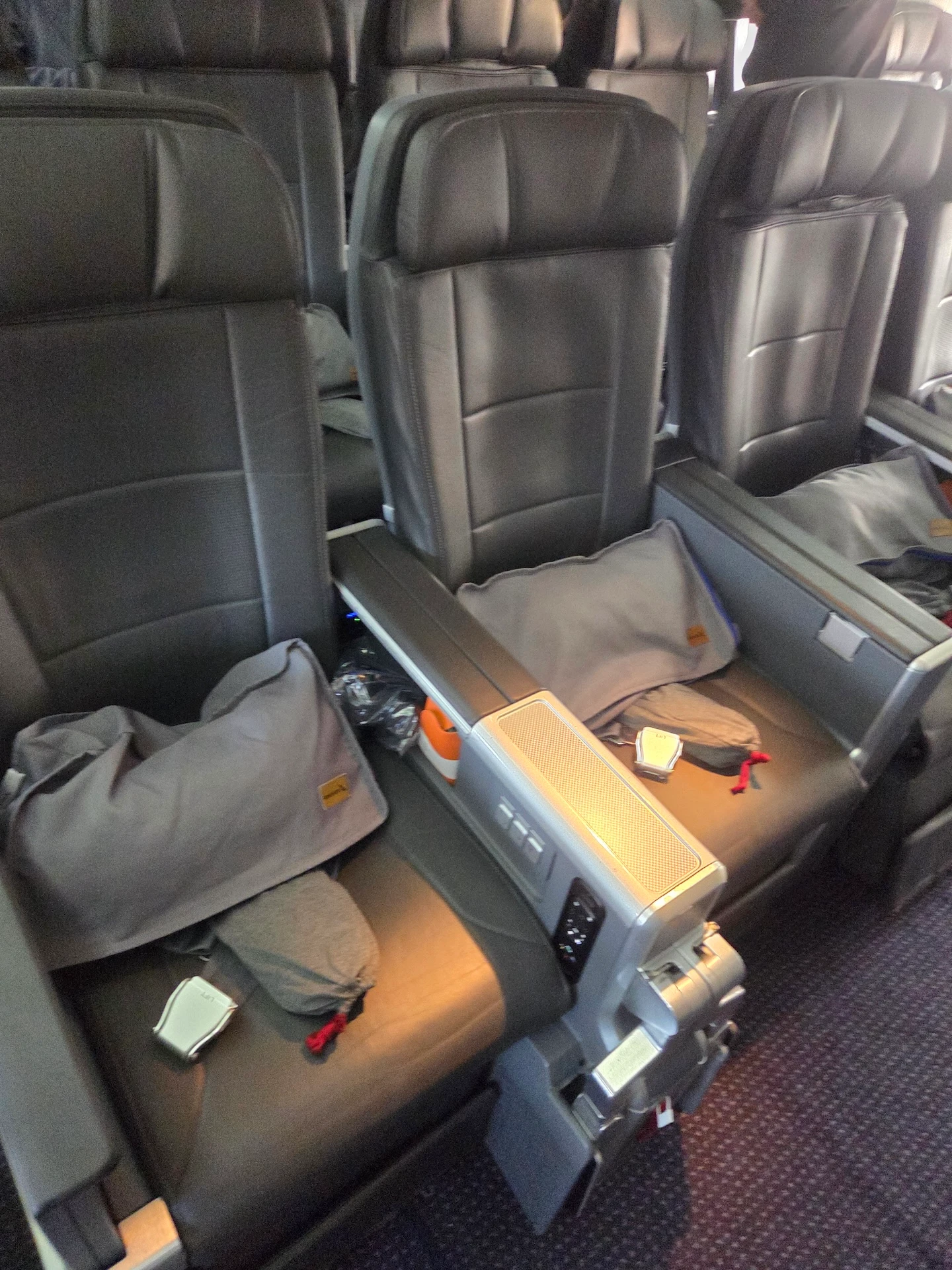
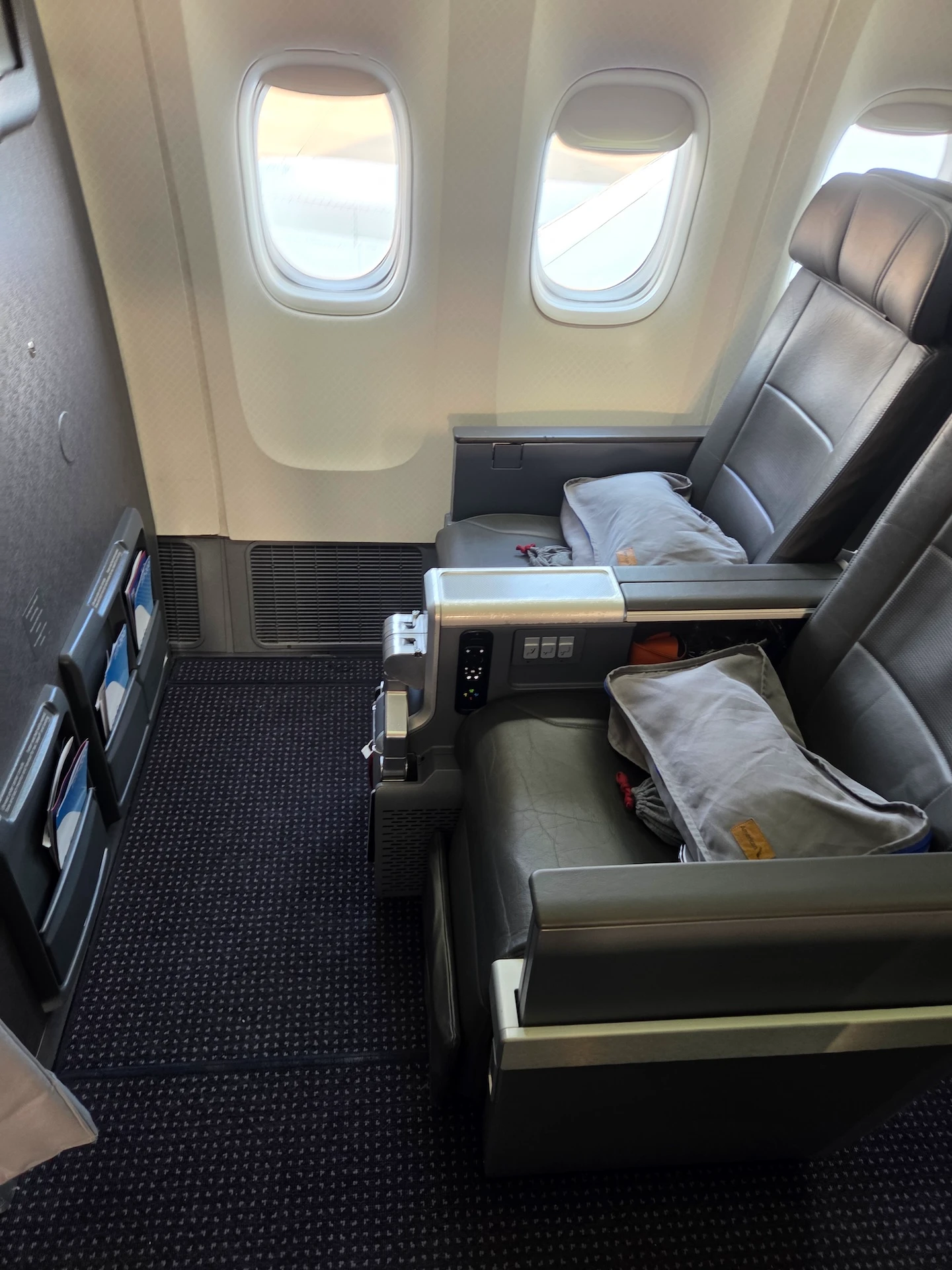
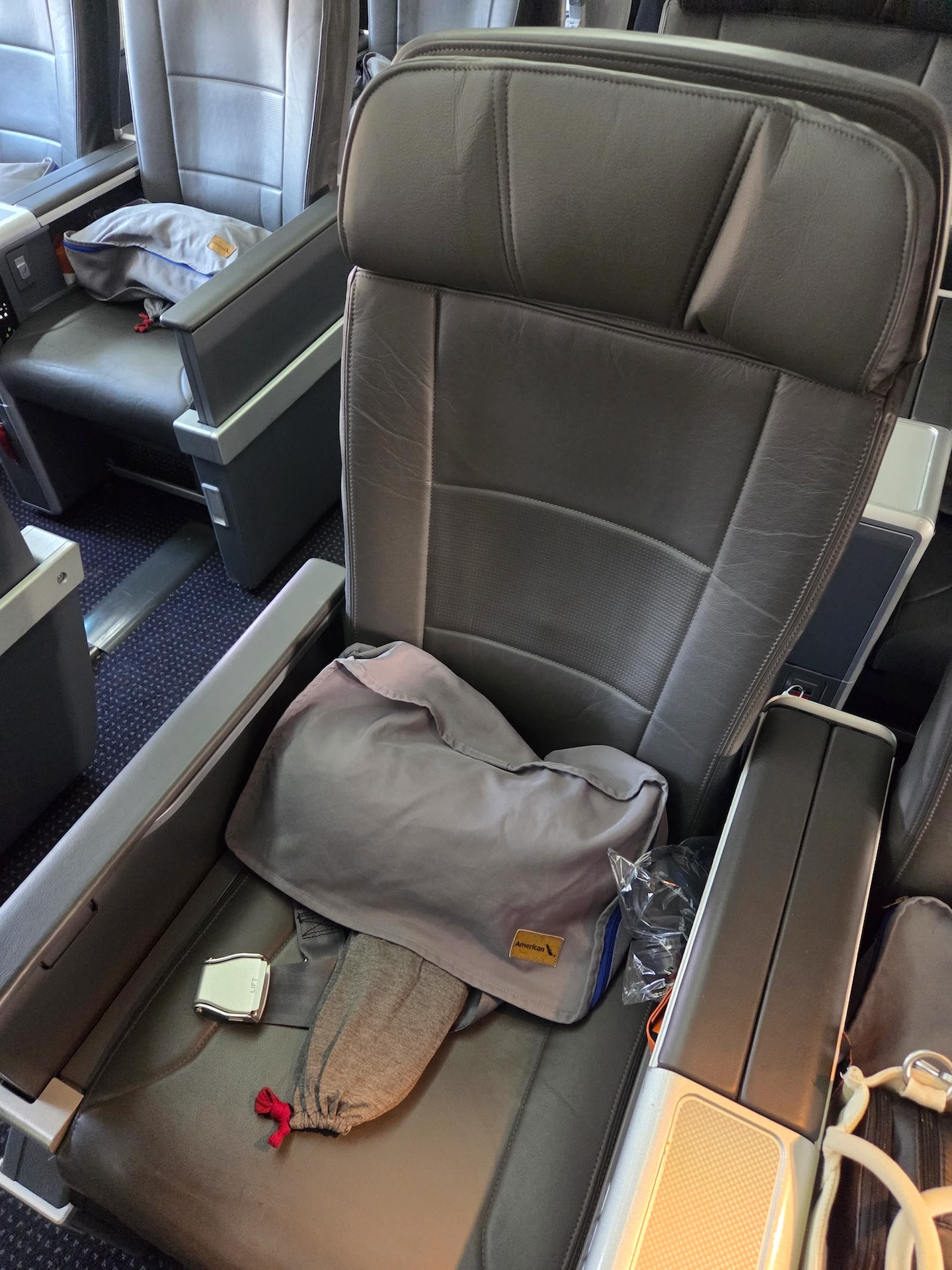
American Airlines has 24 Premium Economy seats on its Boeing 777-200ER. The cabin is in the middle of the aircraft, between Flagship Business and Main Cabin, with three rows in a 2-4-2 layout. The seats are the MIQ model from Collins Aerospace. They are basically the same seats American uses for domestic first class on its narrow-body aircraft. So American’s domestic first class and long-haul international Premium Economy have fairly similar seats.
American Airlines AA280 Seoul-Dallas B777 Premium Economy – Cabin & Seat Detail 1
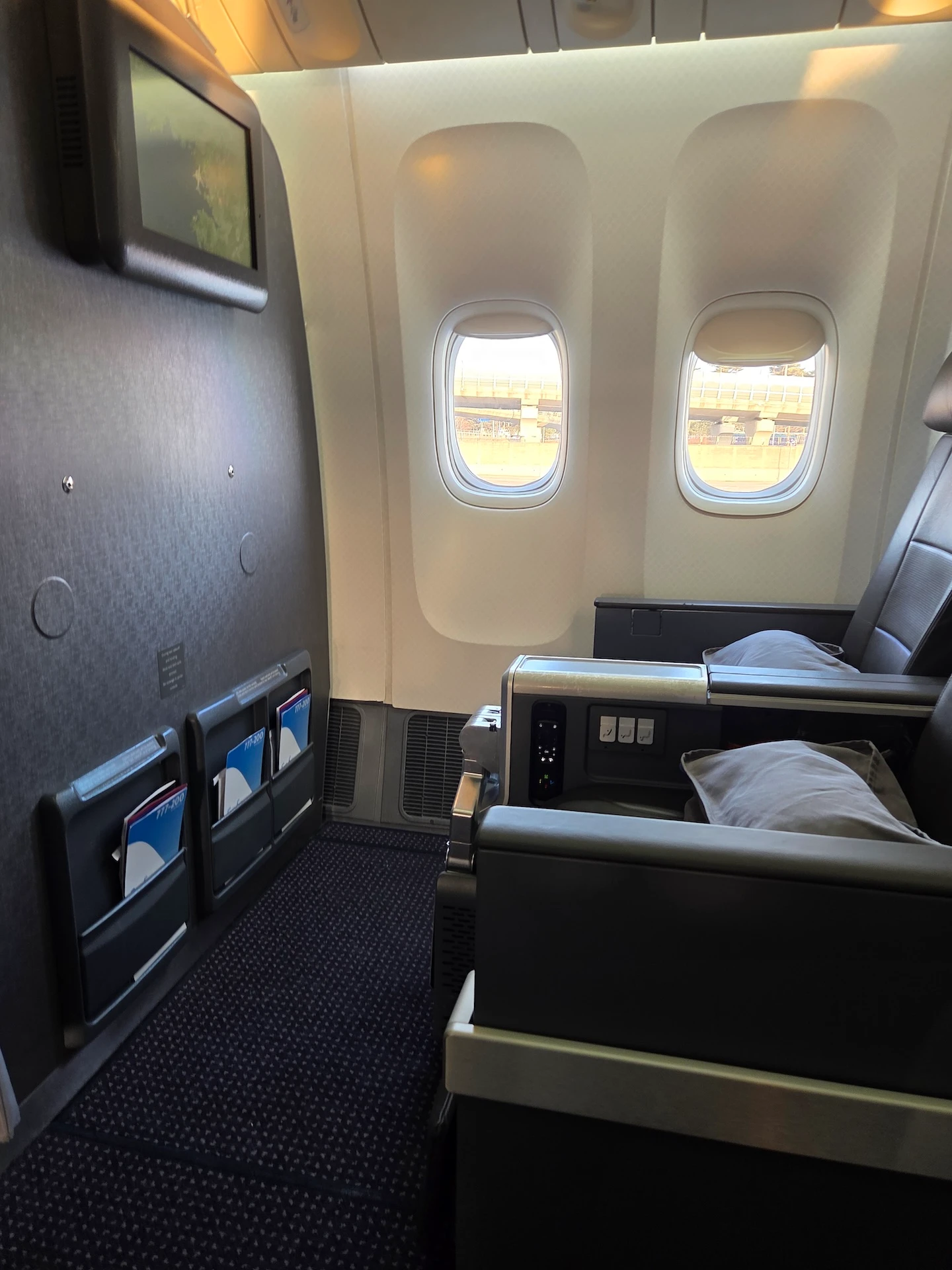
Seat pitch is about 38 inches, and seat width is about 18.5 inches, which is similar to most long-haul Premium Economy seats. The seat reclines up to about 8 inches. Considering that regular Economy seats recline about 3 inches and Main Cabin Extra seats about 4 inches, this gives you a noticeably more comfortable position. I chose 13H, the rightmost seat in the middle block of four in the first row of Premium Economy. It is a bulkhead seat with no seat in front, so there is no underseat storage for personal items or bags during takeoff and landing. Everything has to go in the overhead bins.

American Airlines AA280 Seoul-Dallas B777 Premium Economy – Cabin & Seat Detail 2
But I still prefer bulkhead seats because there is no passenger in front reclining into my space, and the open space ahead feels less cramped. Sitting at the aisle end of the middle block also means I do not have to get up to let the passenger next to me go to the bathroom. This is helpful when I want to sleep or rest without being disturbed. There is a wall in front, but even an adult over 180 cm tall had enough room to stretch their legs forward without much discomfort. Other than not being able to keep a bag at my feet during takeoff and landing, I did not have any major issues with the bulkhead seat.
American Airlines AA280 Seoul-Dallas B777 Premium Economy – Cabin & Seat Detail 3
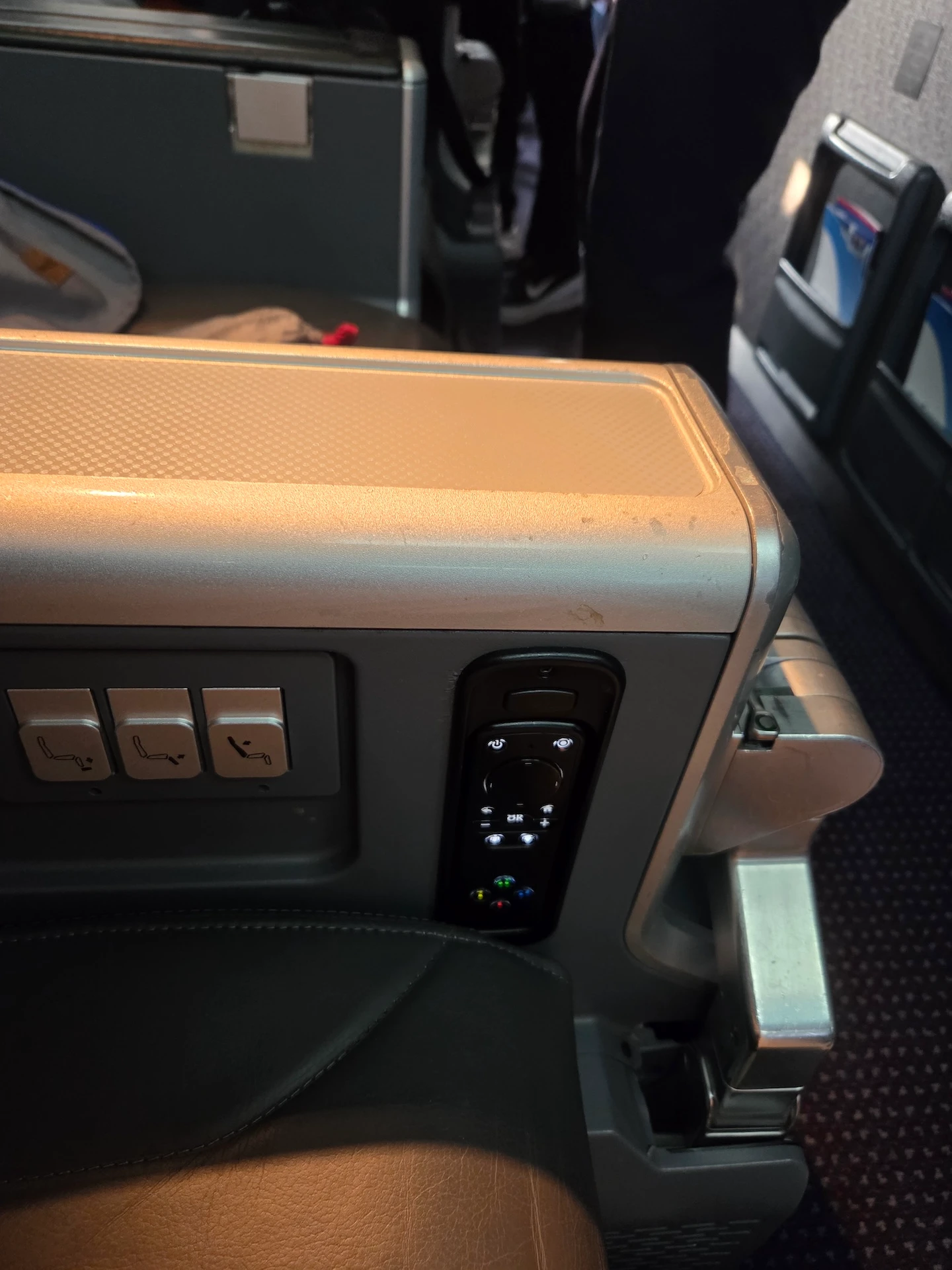
On the left armrest of 13H were the seat controls, the entertainment remote and a small storage compartment. There were three seat control buttons. The front button adjusted the backrest, and the middle button raised and lowered the leg rest. The last button extended or folded away the footrest at the end of the leg rest. Taller passengers may not find that footrest very useful. But the leg rest supporting my calves came up higher than I expected, and it was quite useful on a long flight because I could let my legs relax. The seat does not lie flat, but reclining the backrest and raising the leg rest gave me a much more comfortable position than regular Economy.
American Airlines AA280 Seoul-Dallas B777 Premium Economy – Cabin & Seat Detail 4
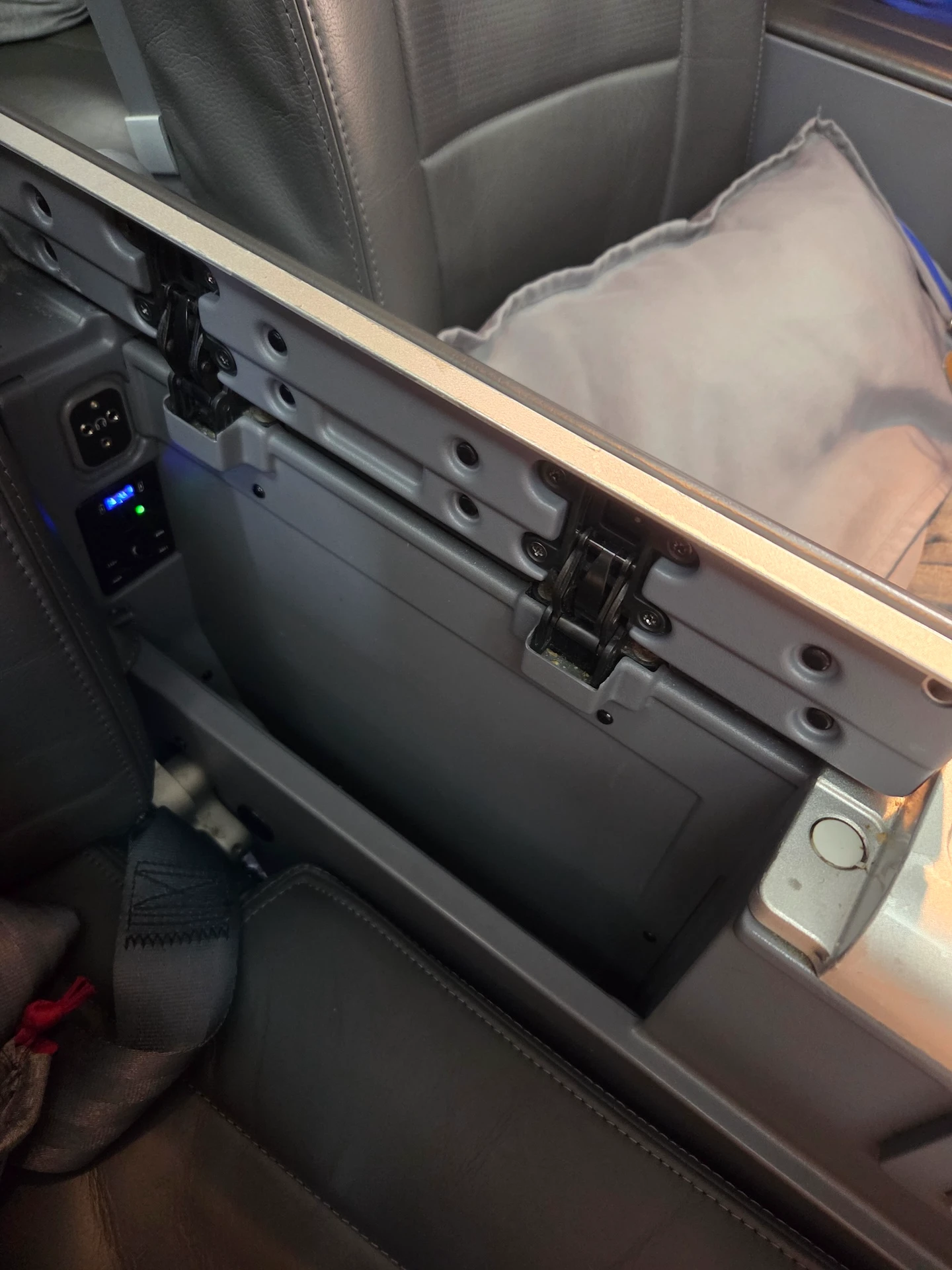
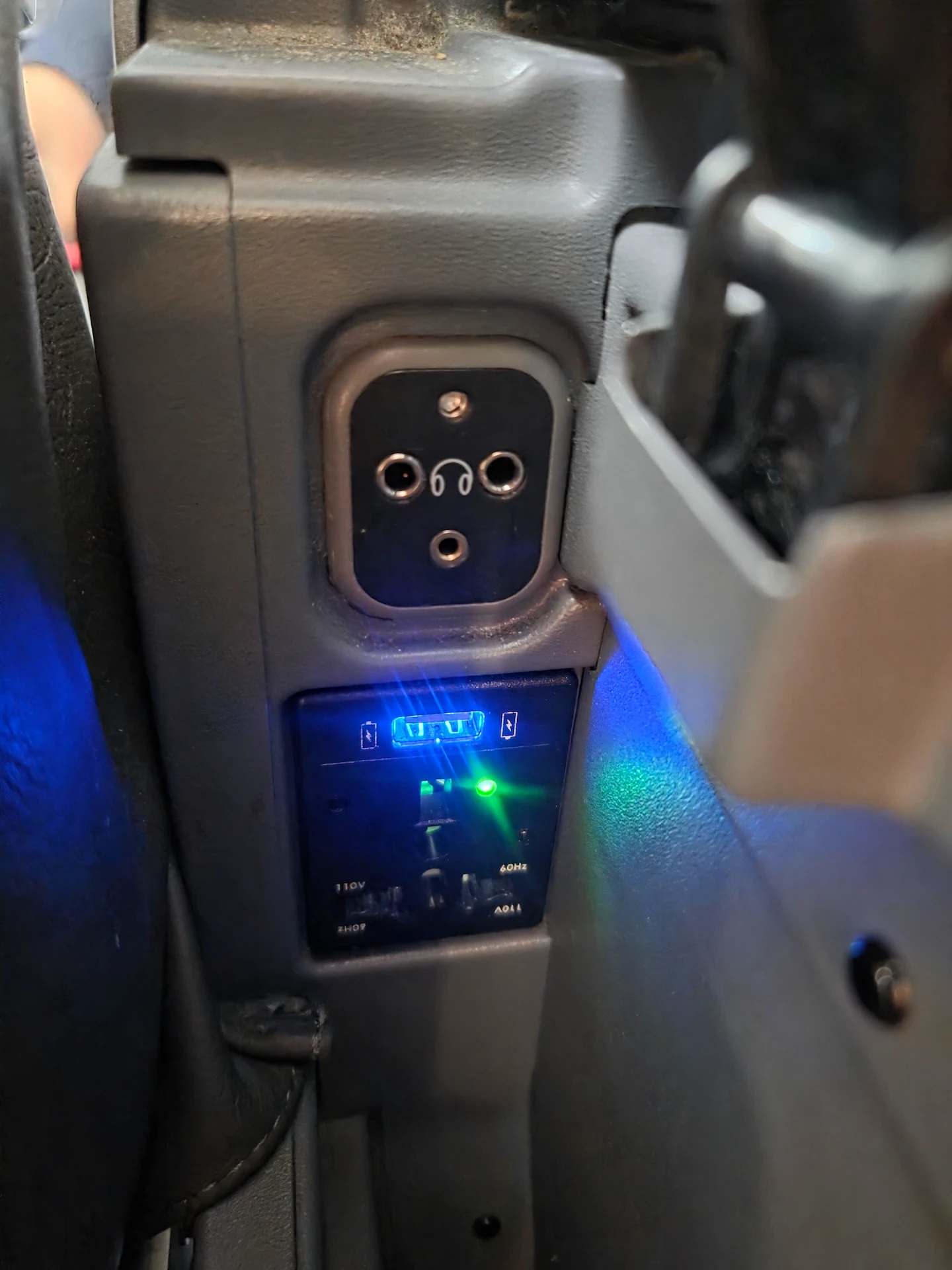
Lifting the top of the left armrest revealed a small personal storage compartment. It was large enough for things I often use during a flight, such as my phone, passport and charging cable. Although I could not keep my bag at my feet during takeoff and landing, putting these items in the compartment beforehand made this less of a problem. Behind the compartment were a USB-A charging port, a universal power outlet and a headphone socket. The USB port did not charge very quickly, but it was useful enough for keeping my phone charged during the flight. The universal outlet accepted Korean 220V plugs, but the actual power supply was 110V. The headphone socket had three holes, but standard headphones with one or two plugs could also be used. I also liked having the socket beside the seat rather than on the front wall or near the screen, as the cable did not run across my body.

American Airlines AA280 Seoul-Dallas B777 Premium Economy – Cabin & Seat Detail 5
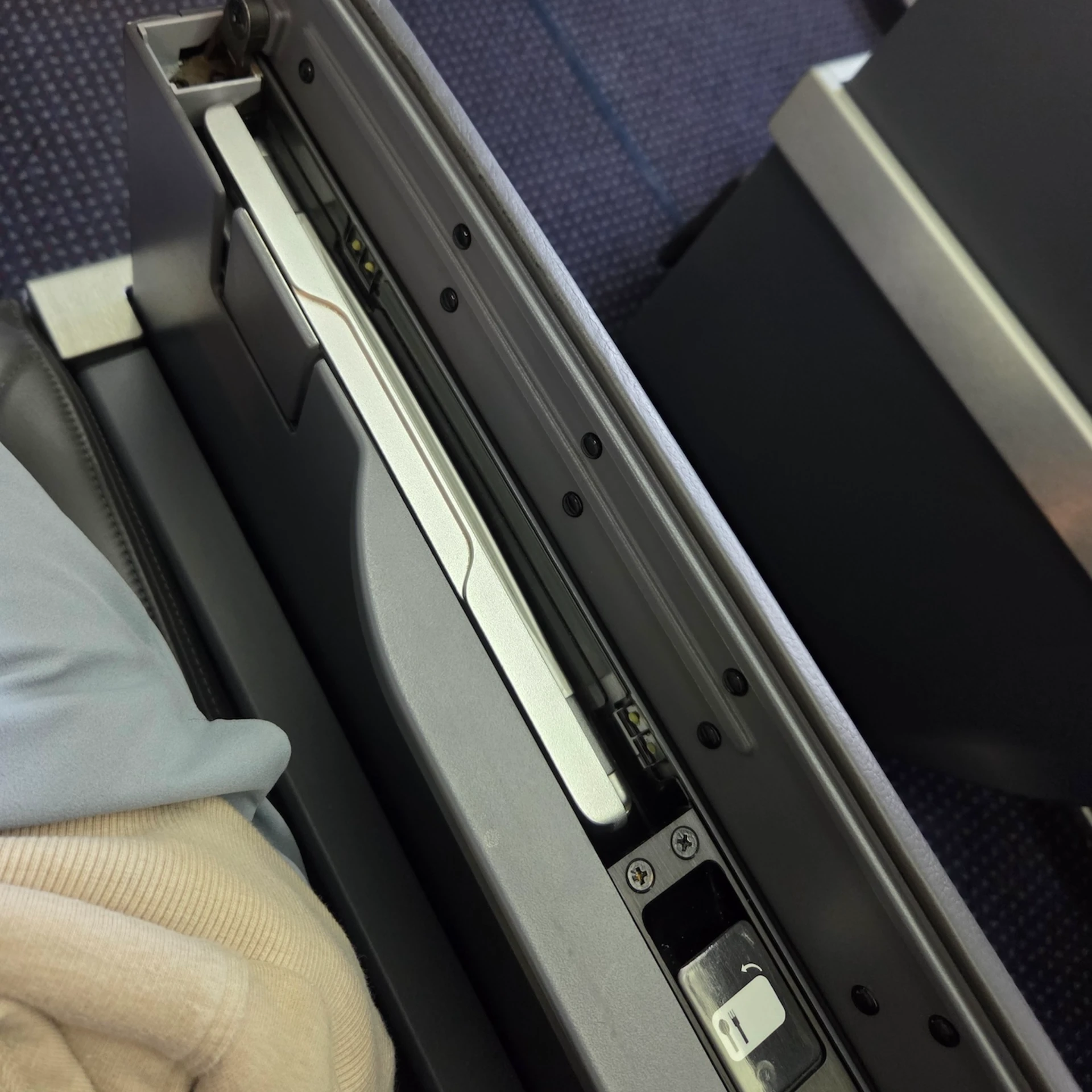
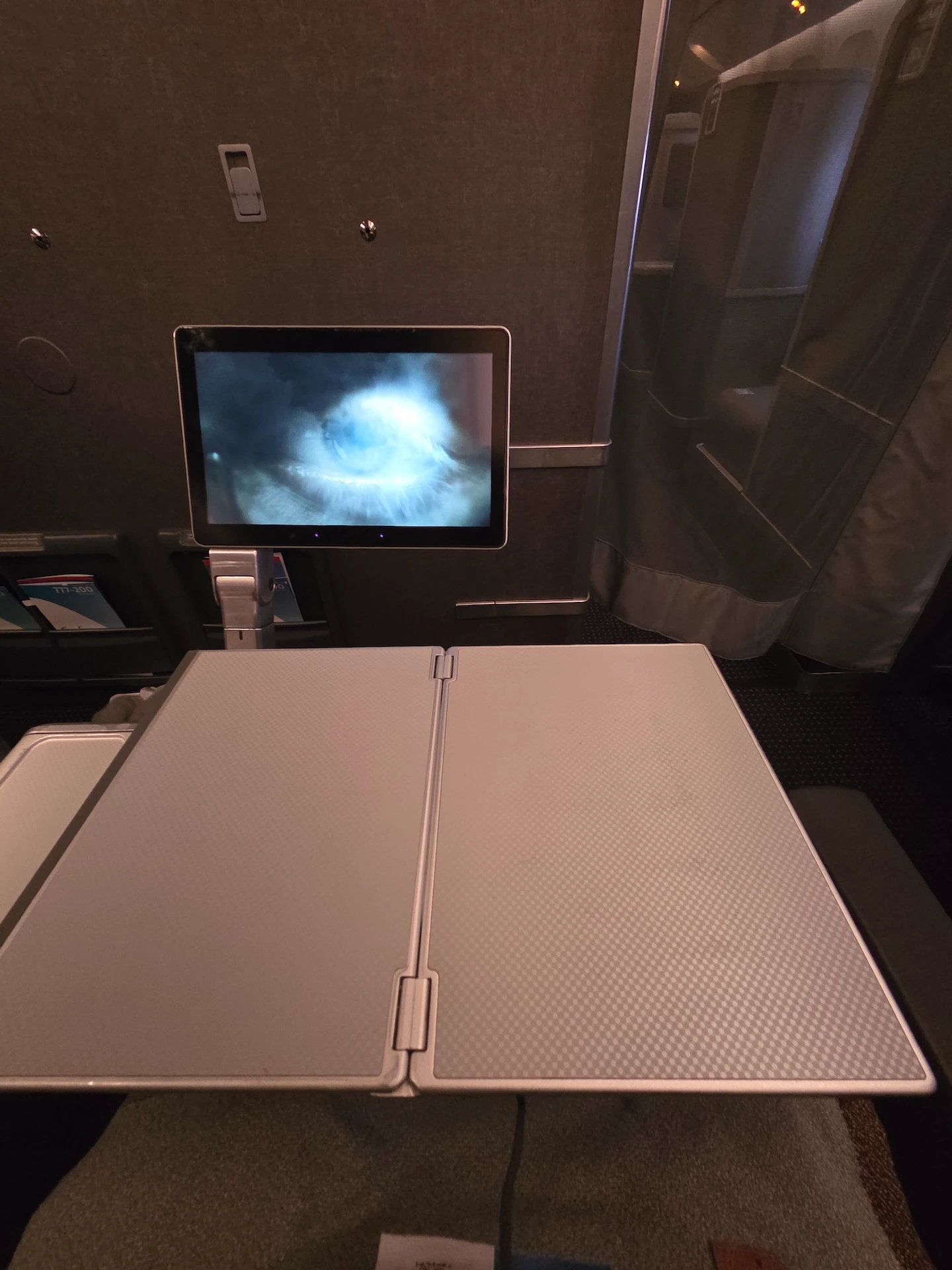
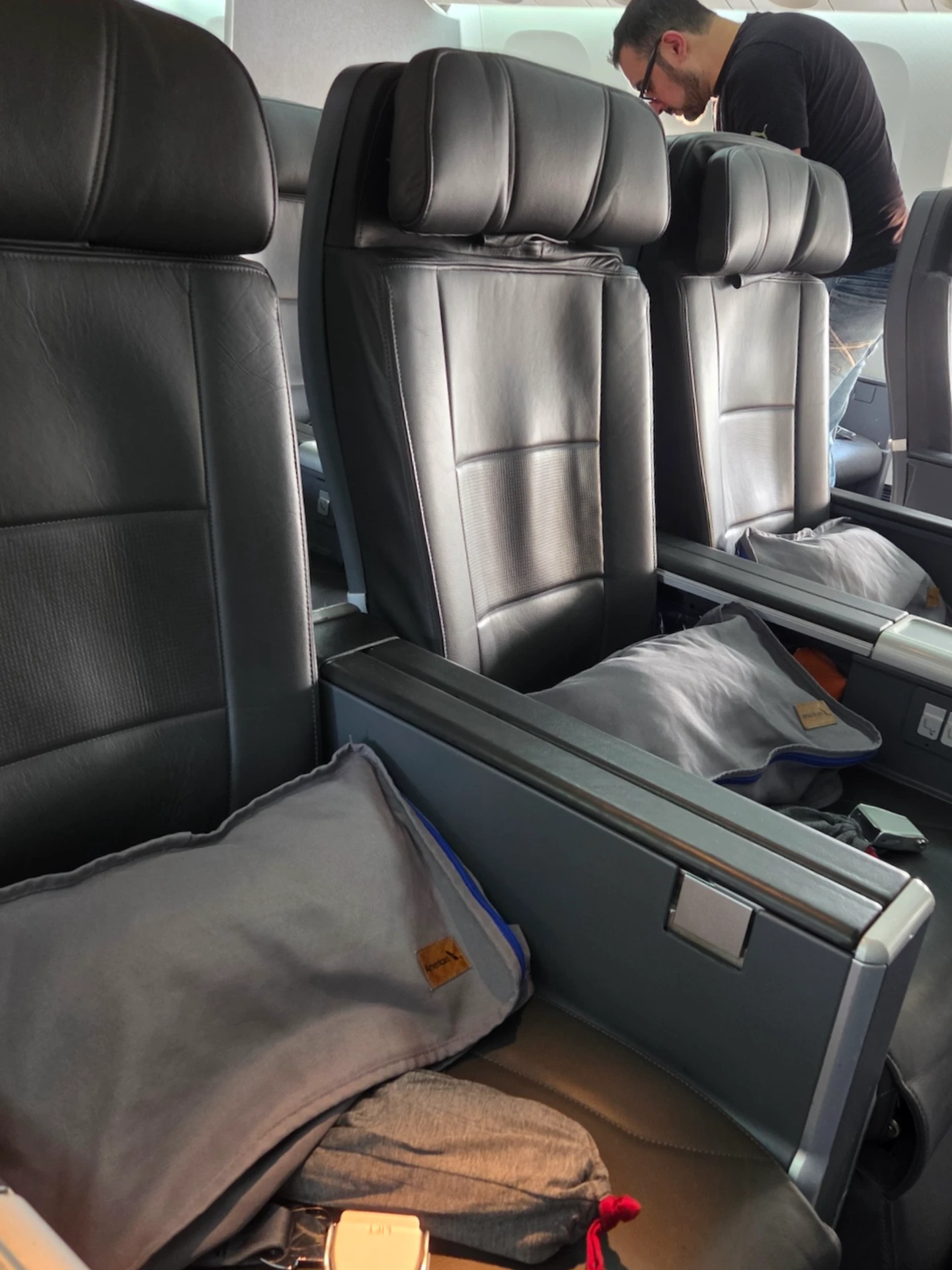
The tray table was stored inside the right armrest. Pulling the release at the back of the armrest let me take it out. The table folded in half, so I could open it fully for meals or use just half for a drink or a small snack. I personally found this more convenient than a fixed table because I could adjust the size as needed. The right armrest could also be lowered, although I was not sure when I would actually need to do this. I could understand lowering a shared armrest to open up the space between two seats. But on 13H, this was the aisle armrest, and the seat was already wide enough, so I did not feel any need to lower it.

American Airlines AA280 Seoul-Dallas B777 Premium Economy – Cabin & Seat Detail 6
The headrest could be moved up and down, and both side wings could be folded inward. It was a little thicker and softer than a regular Economy headrest, so it was comfortable enough to lean against. I especially liked that the side wings helped keep my head from falling sideways while sleeping.
American Airlines AA280 Seoul-Dallas B777 Premium Economy – Cabin & Seat Detail 7
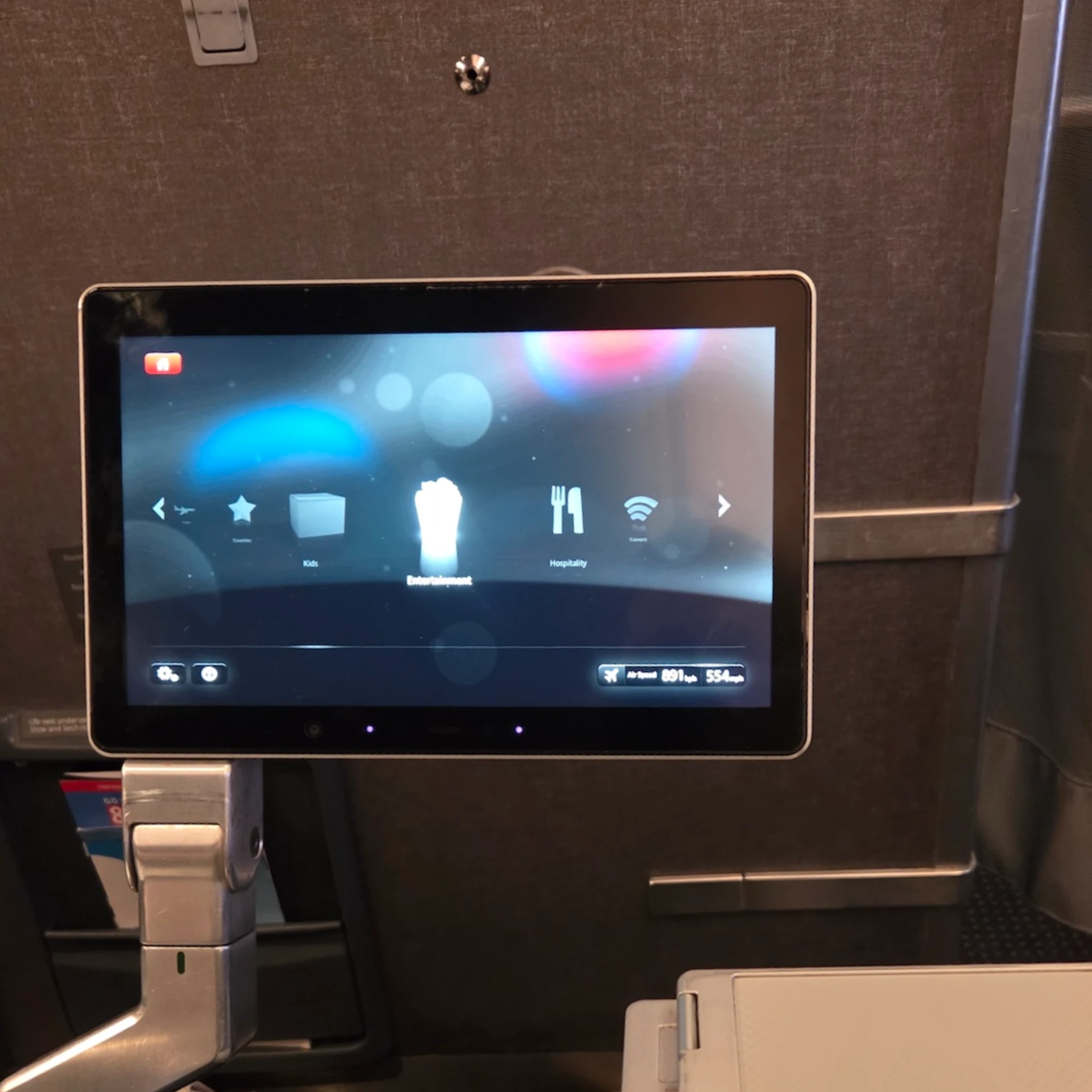
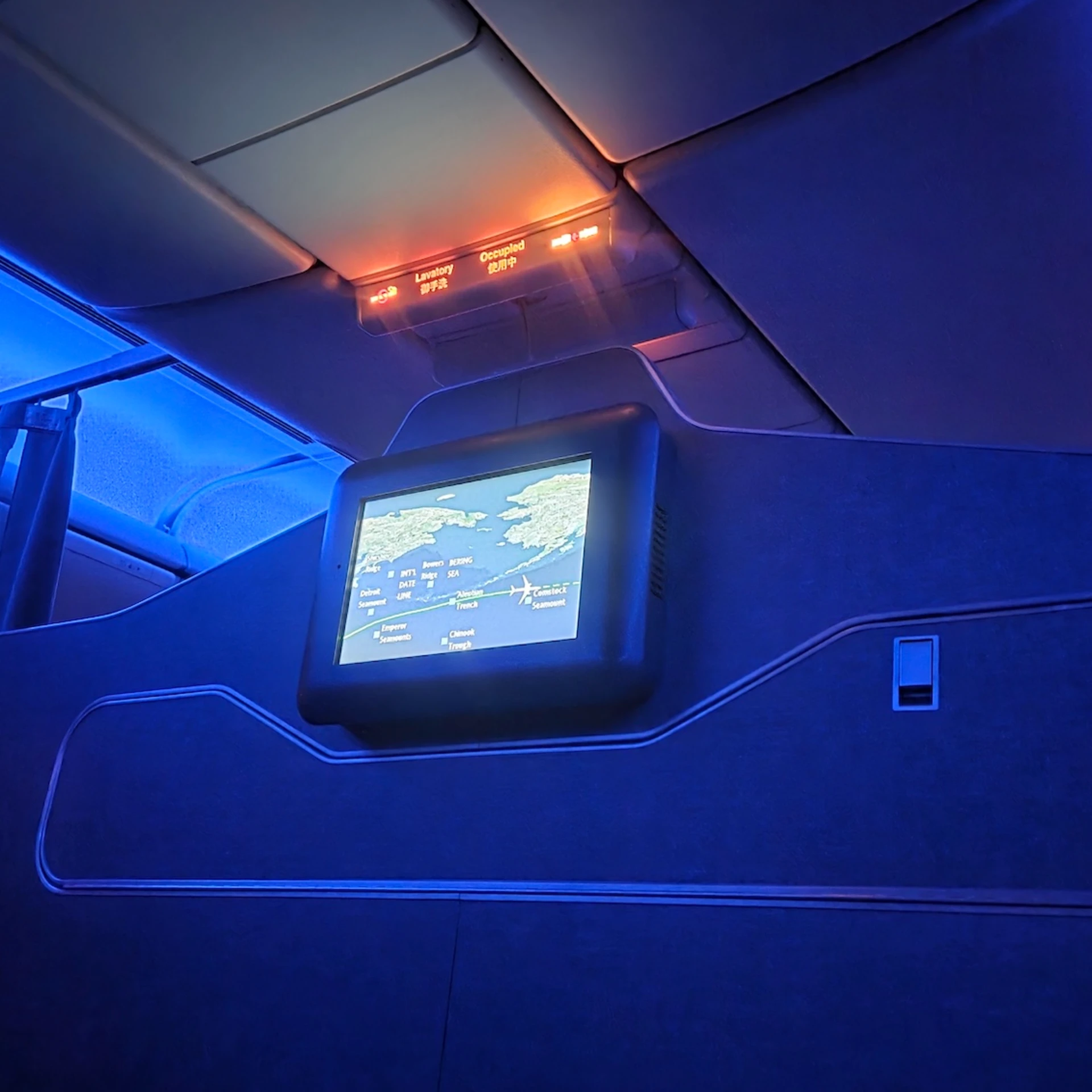
As this was a bulkhead seat, the entertainment screen was stored inside the left armrest rather than on the seatback in front. I had to lift it out and unfold it to use it. It was an approximately 11.5-inch HD touchscreen. The screen was not particularly large or sharp compared with those on newer aircraft, but it was good enough for watching movies and TV shows during the flight. There was also a separate remote beside the seat, but the screen was within easy reach, so I mostly used the touchscreen. Getting into the aisle was a little difficult with both the table and screen fully open. But with the table only half open, I could still get in and out of the seat.
American Airlines AA280 Seoul-Dallas B777 Premium Economy – Cabin & Seat Detail 8
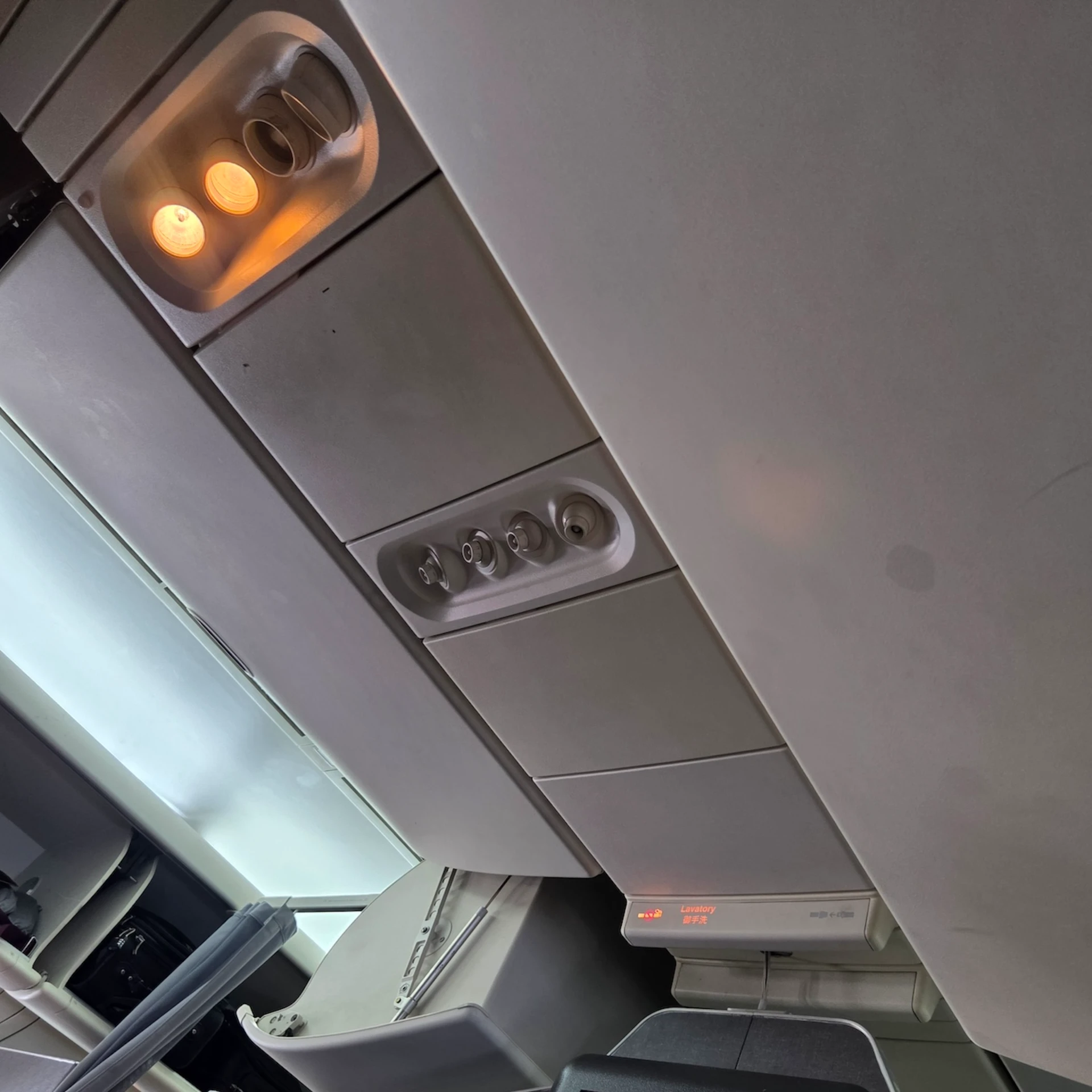
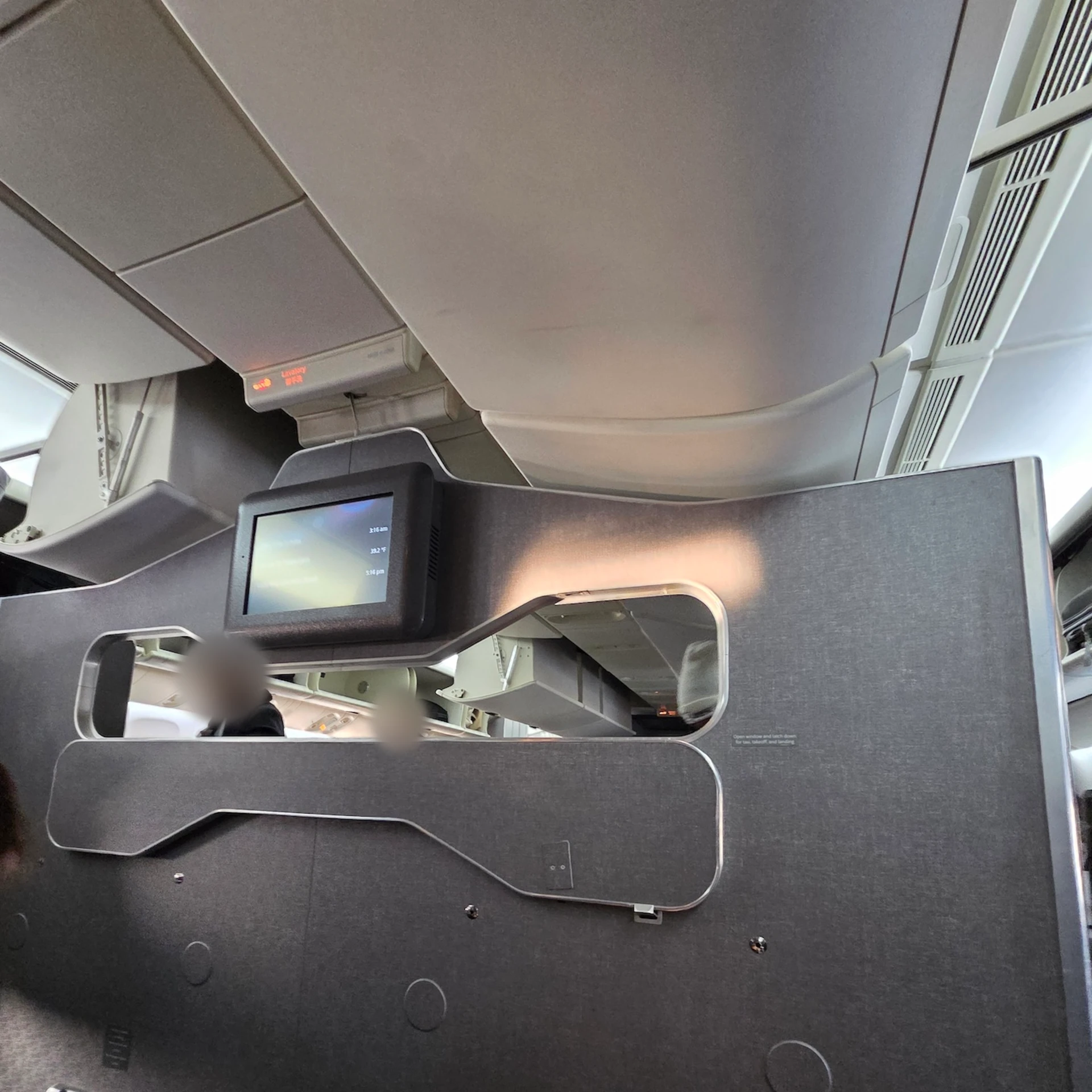
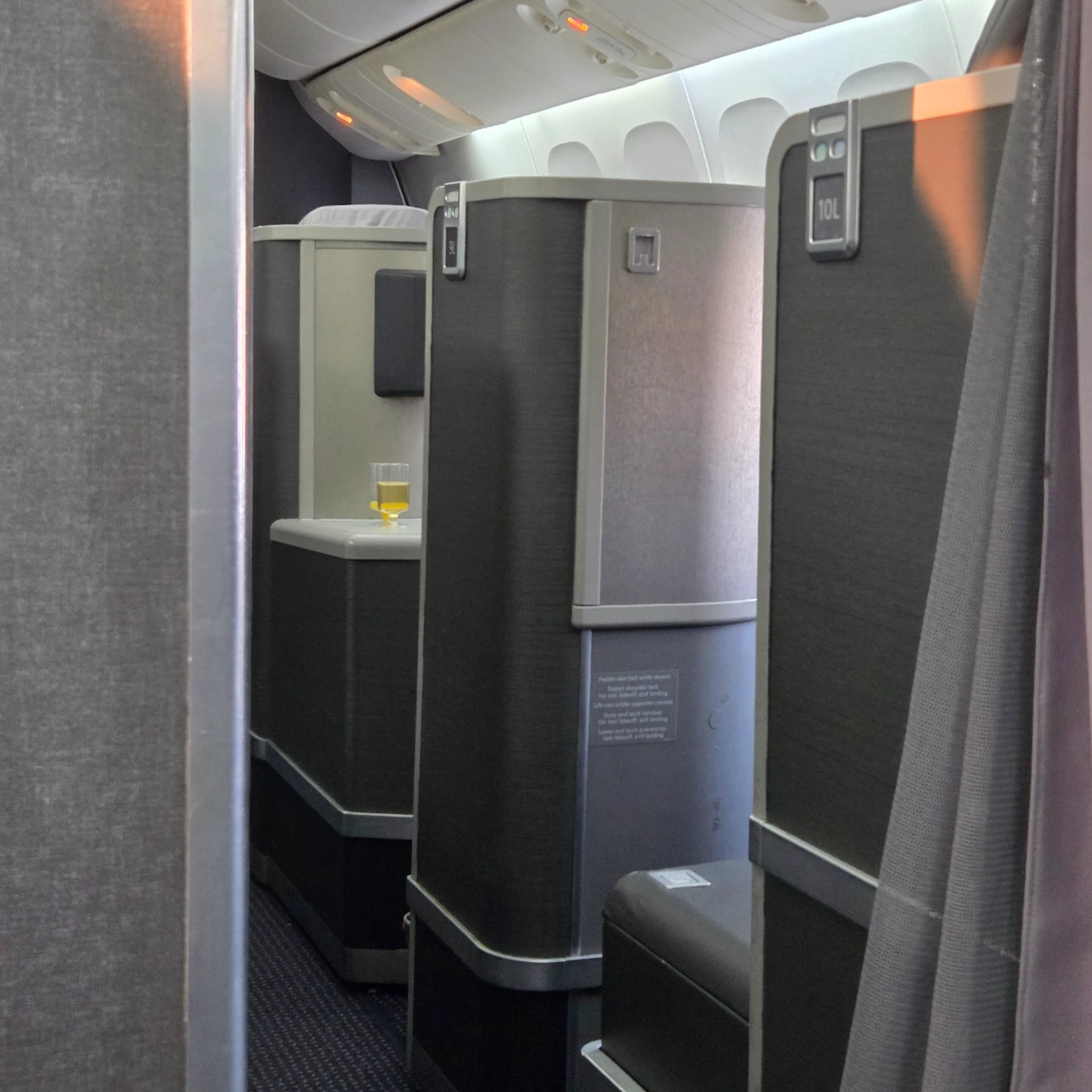
A shared monitor on the bulkhead showed the flight map and flight information during takeoff and landing. There was also a folding divider in the passage leading to Business Class. It was left open during takeoff and landing and closed during the flight to separate the two cabins. Above the seats were overhead bins, individual reading lights and adjustable air vents. Although American’s Boeing 777-200ER had updated seats and some refurbished cabin features, the overhead bins had not been replaced with newer, larger ones. The center bins were particularly small compared with those along the windows. Carry-on suitcases had to be laid flat rather than stored upright. With only 24 seats in Premium Economy, there was enough space early in boarding. But later, the flight attendants also used the remaining space for bags from other cabins. So on a full flight, being in Premium Economy did not necessarily mean there would be plenty of overhead space left.
American Airlines AA280 Seoul-Dallas B777 Premium Economy – Cabin & Seat Detail 9
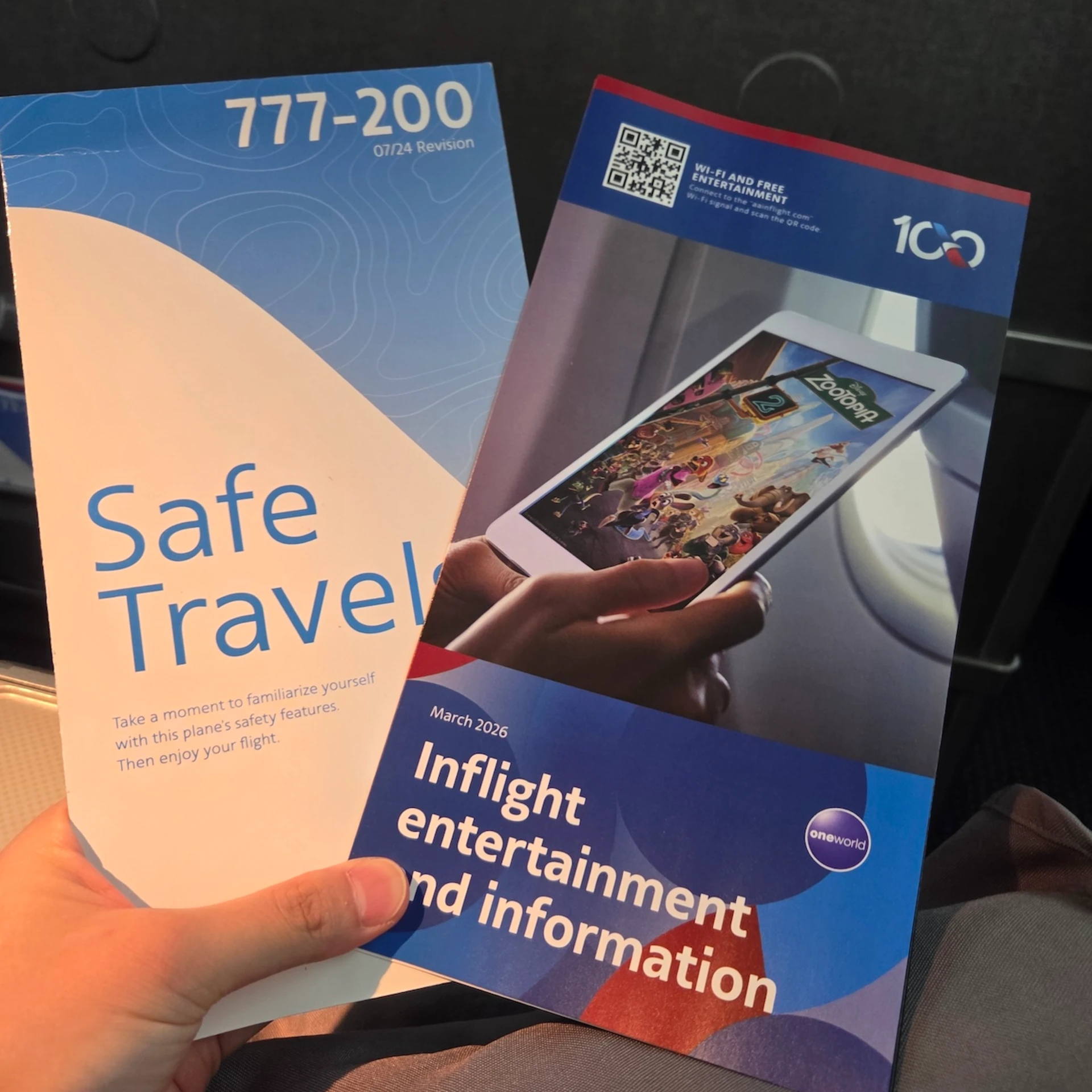
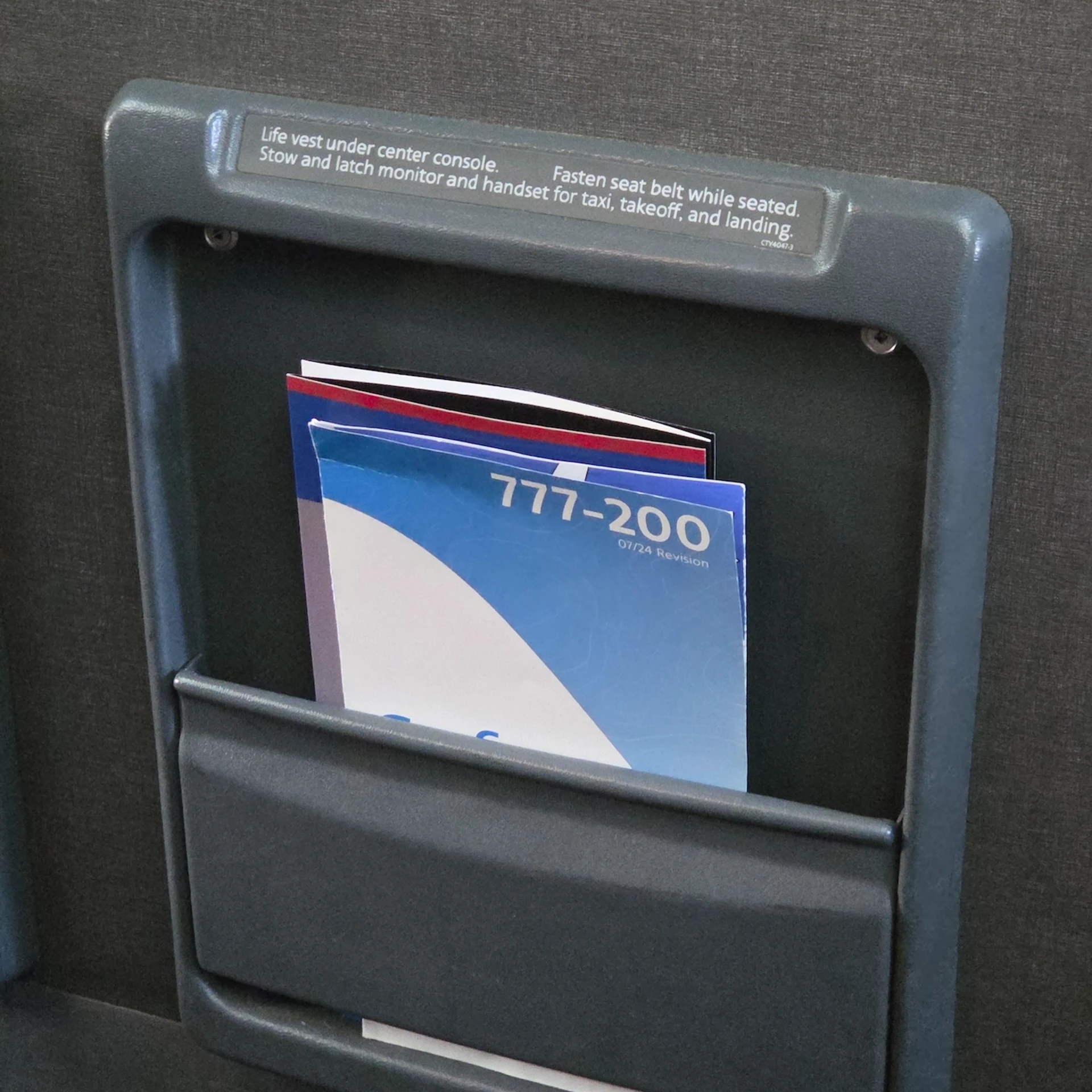
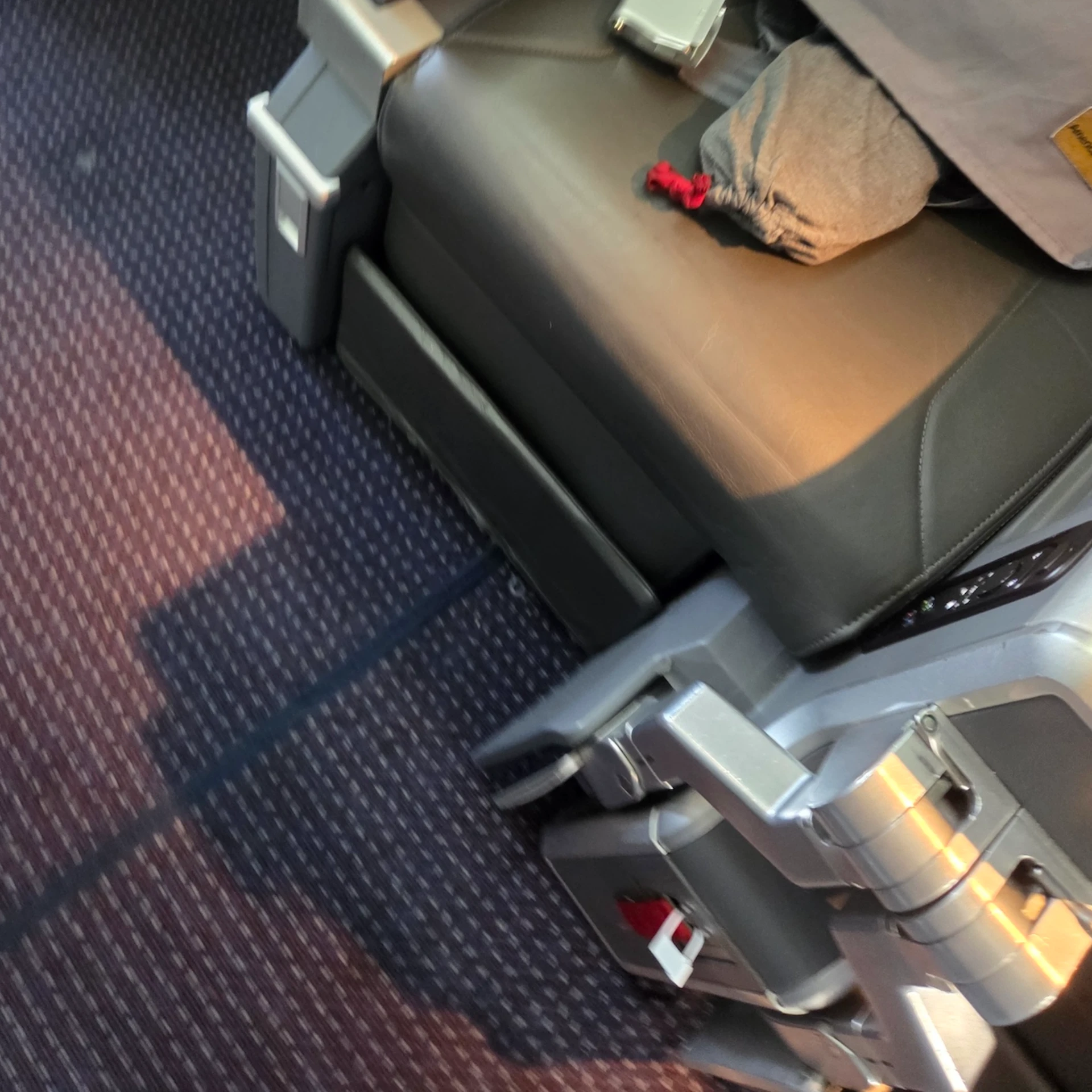
The life vest was also stored inside the left armrest, along with the entertainment screen. It could be accessed by pulling the cover marked in red. The safety card and entertainment guide were in a pocket on the bulkhead in front. Some parts of the entertainment guide seemed more relevant to US domestic flights than to a long-haul international flight.
American Airlines AA280 Seoul-Dallas B777 Business Class & Pajamas
Overall, I thought American Airlines’ Boeing 777-200ER Premium Economy seat was comfortable enough for a long flight. It does not offer the same comfort as a lie-flat Business Class seat, but the difference from regular Economy was quite noticeable. In regular Economy, the limited seat pitch and width can make it feel like you and the passengers around you are constantly sharing the same space. In Premium Economy, I had a much clearer sense of having my own space. The seat was wide enough, and raising the leg rest let me relax my legs. After the long flight, my legs also felt less tired and swollen.

American Airlines AA280 Seoul-Dallas B777 Premium Economy – Cabin & Seat Detail 11
What matters most is how much more it costs than regular Economy. For an award ticket, I think paying an extra 15,000 miles for Premium Economy is well worth it. For a one-way transpacific cash ticket, a difference of around US$300–400 would make it a very good choice. Even at around US$500 more, I would still consider it reasonable for the extra comfort on a long flight.
In-flight Service
I could not confirm the exact number, but there seemed to be about ten flight attendants on this American Airlines Boeing 777-200ER transpacific flight. About half appeared to be looking after Flagship Business, while the others covered both Premium Economy and regular Economy. There was no separate crew assigned only to Premium Economy. But the cabin is ahead of regular Economy, and most service starts from the front, so I did not have to wait long for drinks or meals. The trays were also collected from Premium Economy first. I could feel that the whole service finished sooner than in regular Economy.
As I mentioned in the boarding section, a flight attendant came to the Premium Economy cabin after passengers had boarded and briefly explained how to use the seats and what services were available during the flight. They told us that we could ask for water whenever we needed it and that snacks were available in the rear galley. This separate introduction was a little different from my experience in regular Economy. I thought it was more useful than it might seem, especially for passengers who do not fly often and may not know what they can ask for.
American Airlines AA280 Seoul-Dallas B777 Premium Economy – First Meal
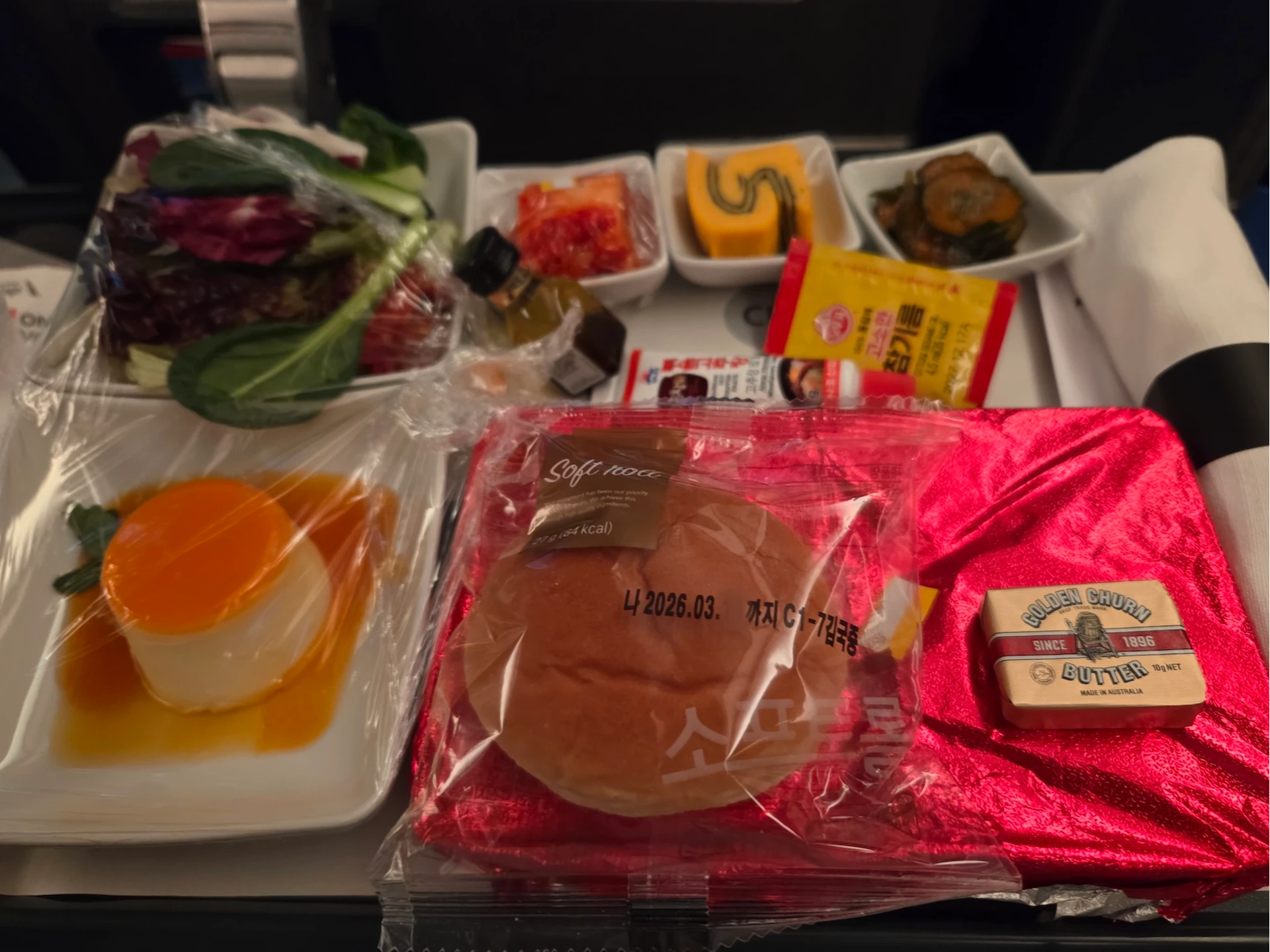
The crew started preparing for service about 15 minutes after takeoff. Drinks came first, about 25 minutes after takeoff, followed by the first meal about 20 minutes later. Premium Economy was served first, so I could start eating fairly soon after takeoff. The whole service, including tray collection, finished about an hour and 15 minutes after takeoff. The cabin lights were then dimmed, and the flight attendants walked through the cabin asking passengers to close their window shades. After that, it was time to rest. Everything from serving the meal to collecting the trays and dimming the lights moved fairly quickly. A mid-flight snack was served about six hours after departure. But the crew did not wake sleeping passengers just to offer it. During the introduction after boarding, the flight attendant had also explained that we could ask for the snack later if we missed it. I thought this worked well for both passengers who wanted to keep sleeping and those who wanted something to eat. The second meal service started about three hours before arrival, roughly ten and a half hours after departure. Again, drinks were served first, followed by the meal.
American Airlines AA280 Seoul-Dallas B777 Premium Economy – Second Meal
I would not say that American Airlines’ Premium Economy service was very different from regular Economy. There was no dedicated crew, and it was not the kind of individual attention you might get in Business Class. The basic service was quite similar to regular Economy. But with only 24 seats in the cabin and service always starting before regular Economy, the shorter wait for drinks and meals and quicker tray collection made a clear difference. On a long flight, many passengers want to finish eating and get to sleep as soon as possible, so this can matter more than you might expect. AA280 departed Incheon in the late afternoon, and I also wanted to finish the first meal quickly and get some rest. So having the service start and finish earlier than in regular Economy was a useful benefit.
Considering that Premium Economy generally combines service closer to regular Economy with a wider seat and better meals, I thought the overall service was decent. It was not fancy or particularly special, but I was satisfied with how quickly and efficiently everything was handled.
Amenities & Lavatory
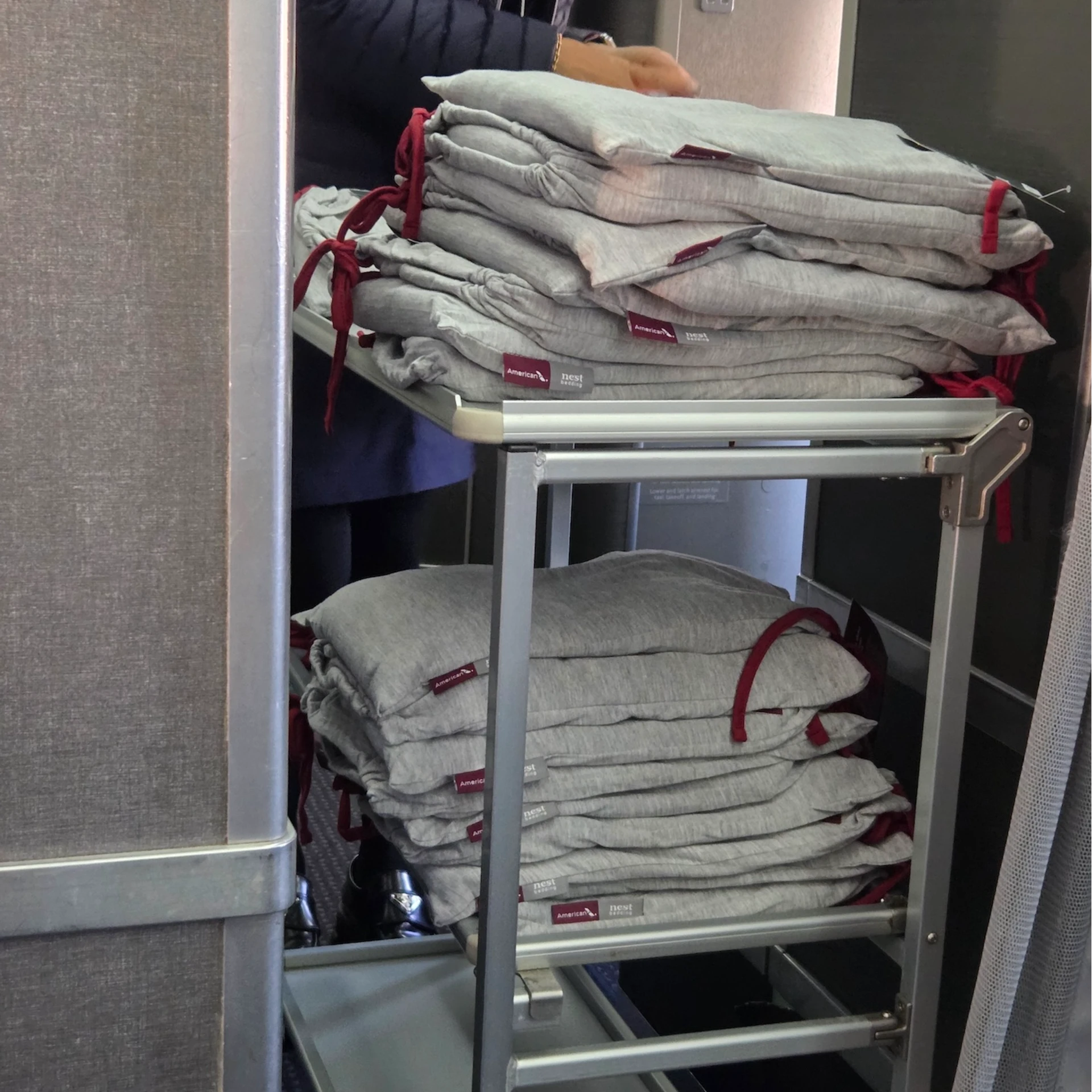
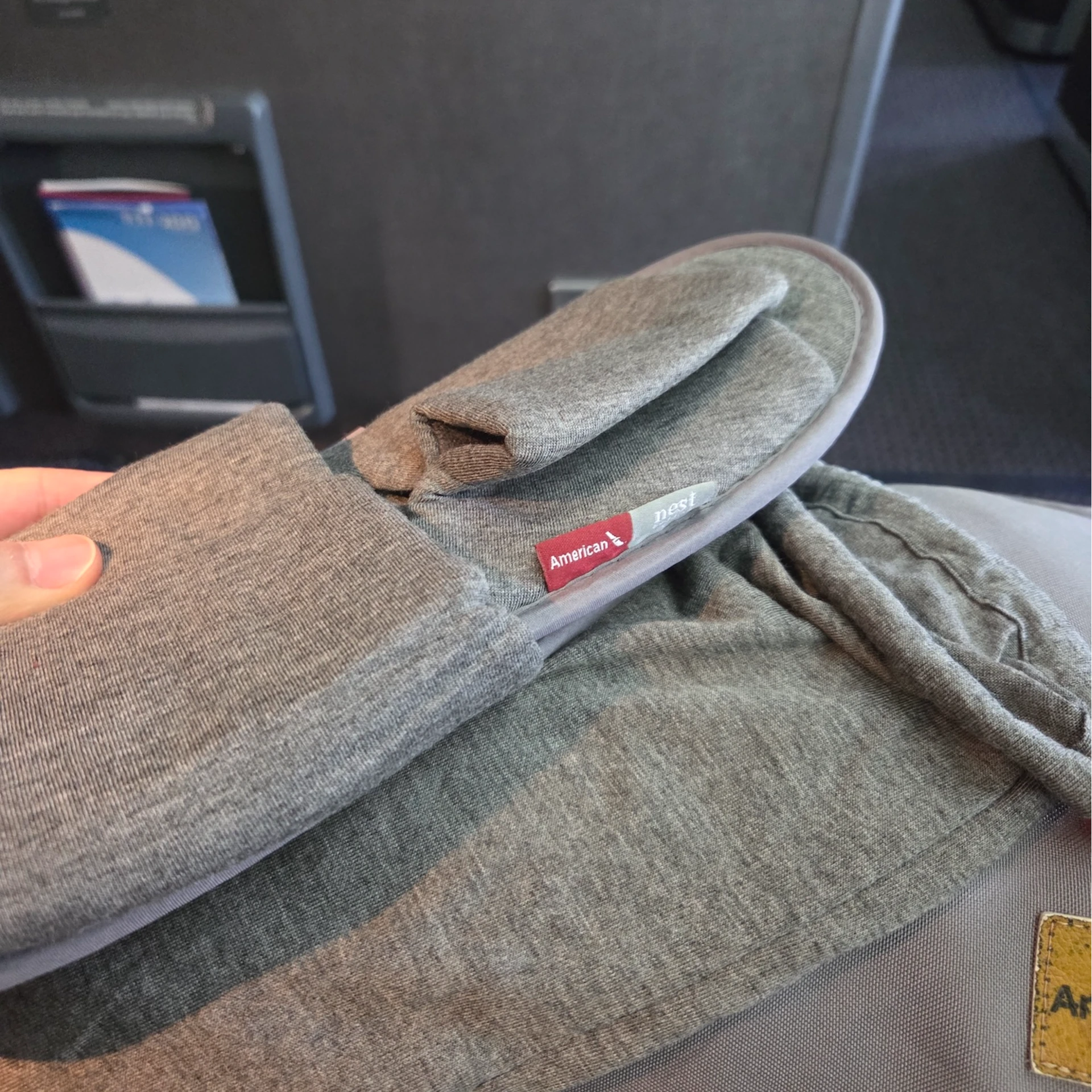
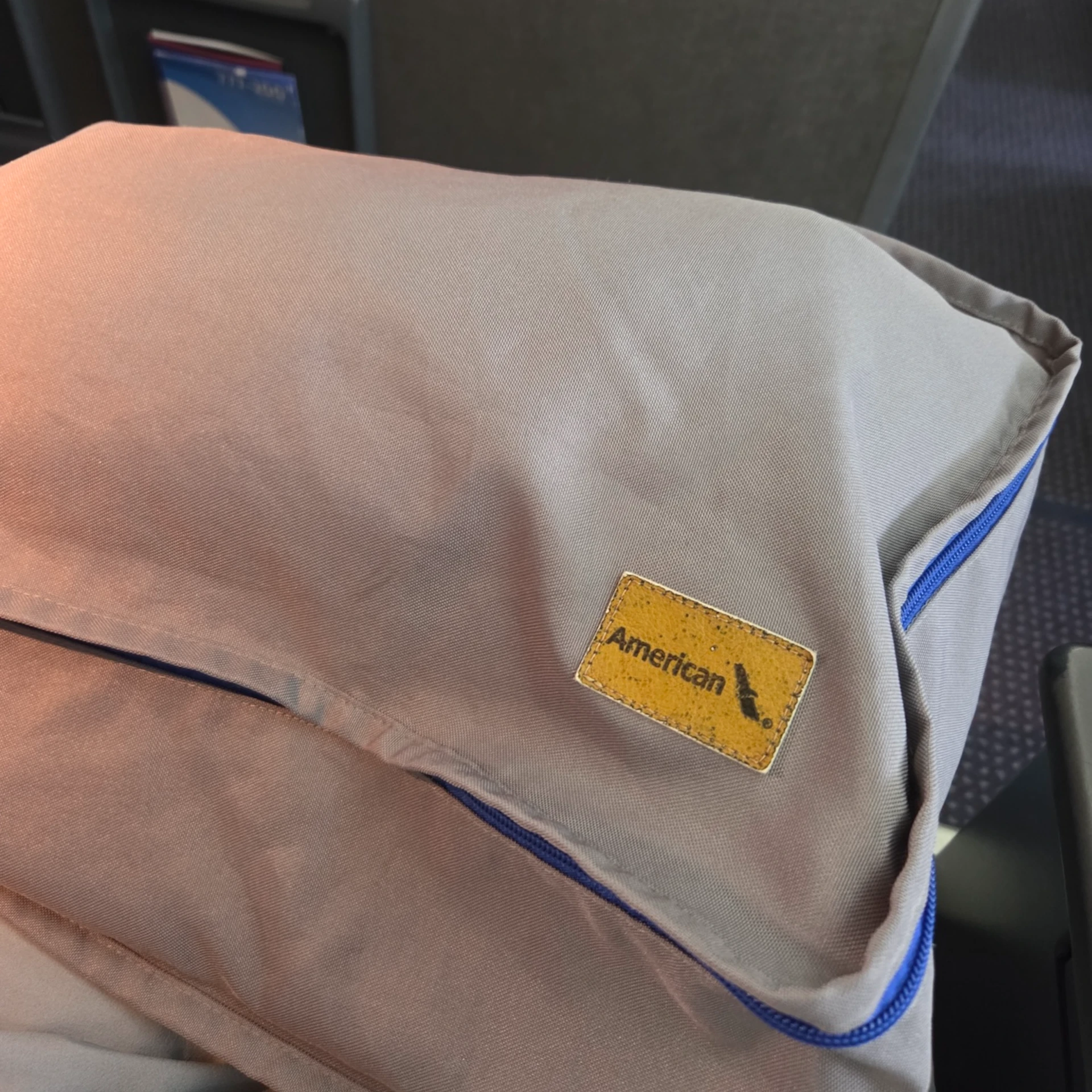
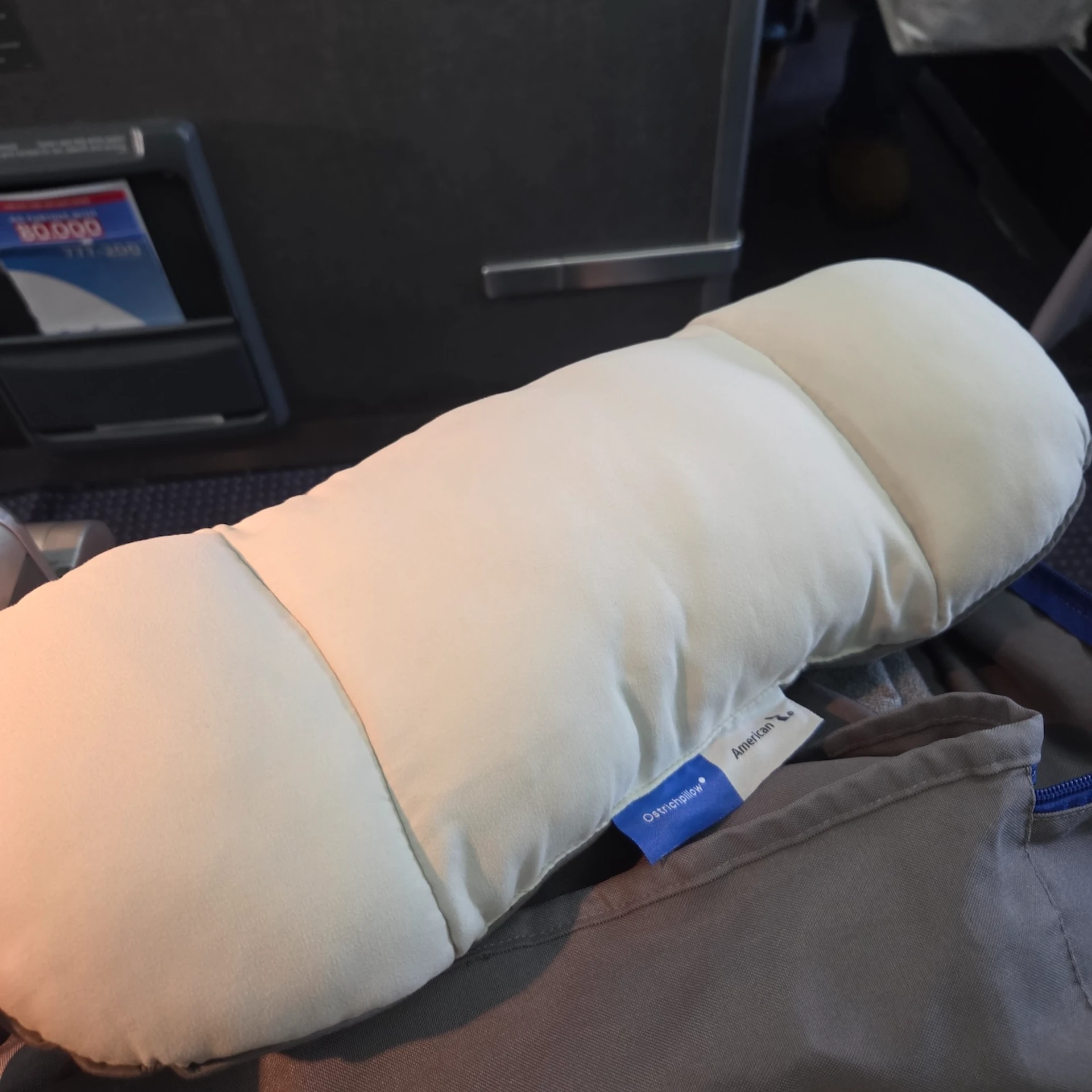
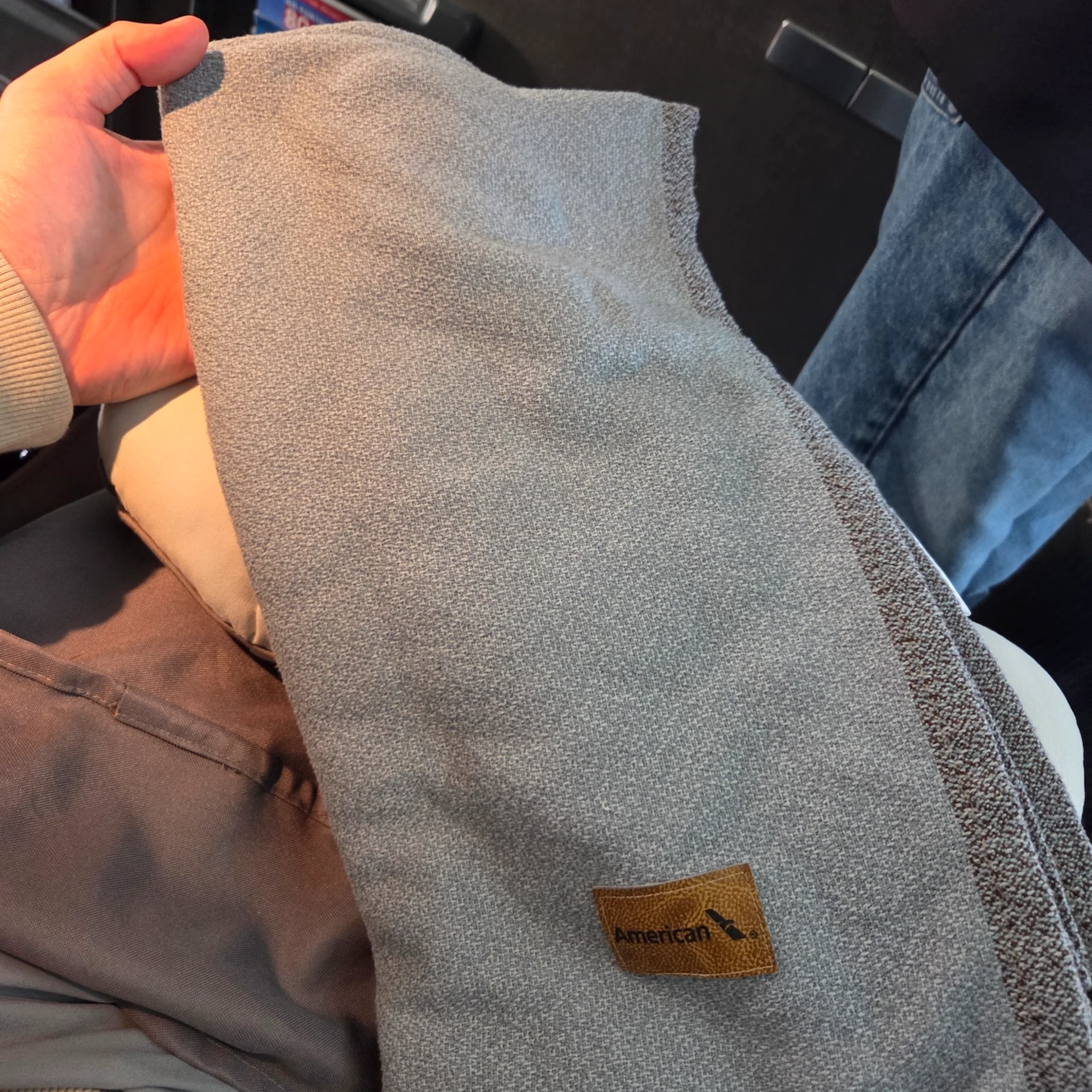
American Airlines provides basic amenities such as slippers, bedding and a headset in long-haul Premium Economy. Compared with regular Economy, the extra attention to these items, as well as the seat itself, is a clear benefit. When I boarded, the slippers and Premium Economy bedding were already on my seat. The slippers were made of the soft cotton material commonly used in hotels and on planes. The material and finish were better than I expected, and I was happy to use them. They were useful for taking off my shoes and getting comfortable during the long flight. The bedding consisted of a pillow and a blanket. The pillow was a little different from the usual rectangular pillows often provided in Business Class. Both sides could be folded inward to support the head. Since Premium Economy seats do not lie flat, I thought this shape might actually be more useful for supporting the head and neck. The blanket was also a little thicker and softer than the thin blankets in regular Economy. American tends to keep its cabins cooler than Korean Air and some other Asian airlines, but I did not feel cold while sleeping under this blanket. The bedding was comfortable enough for several hours of sleep.
American Airlines AA280 Seoul-Dallas B777 Premium Economy – Amenities & Lavatory 1
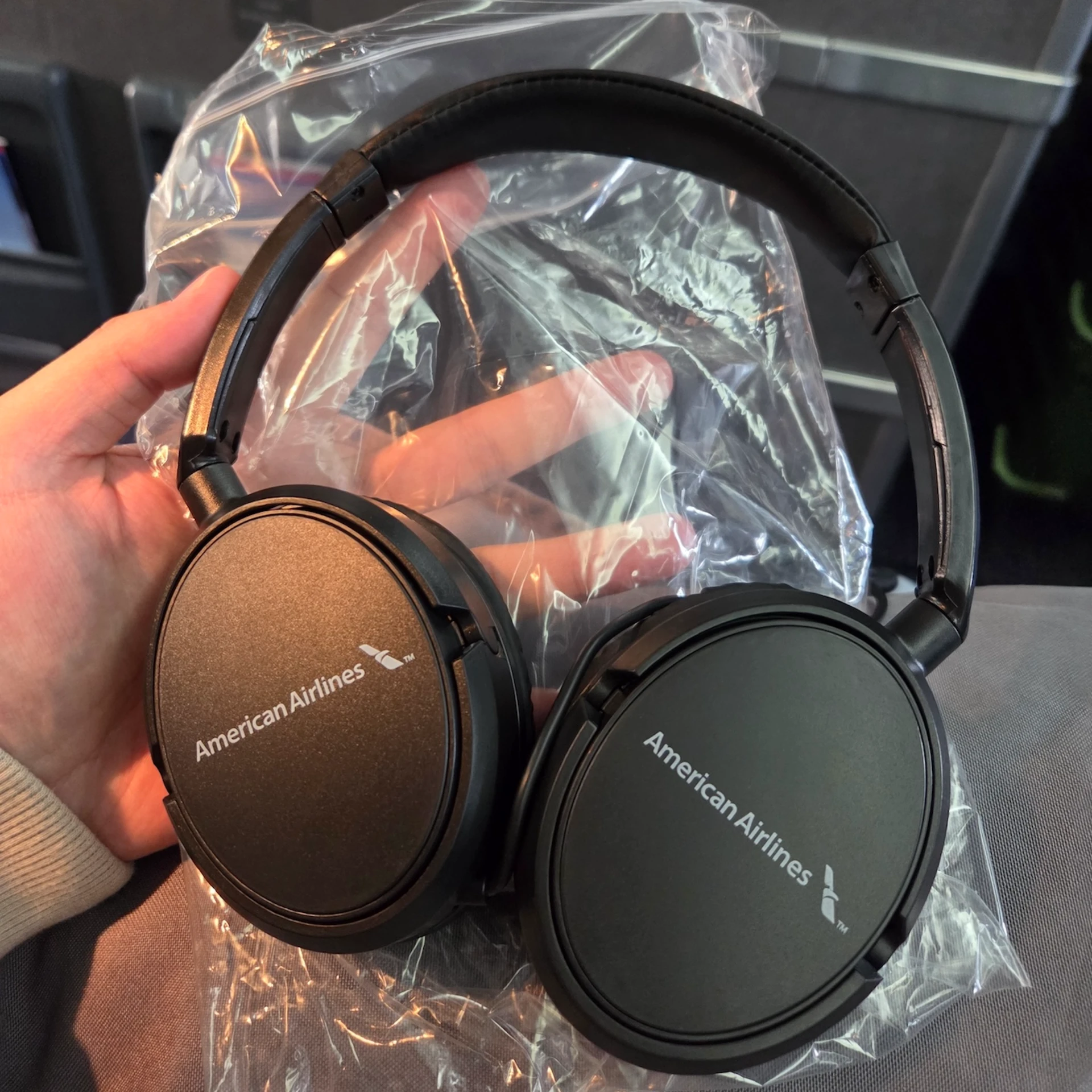
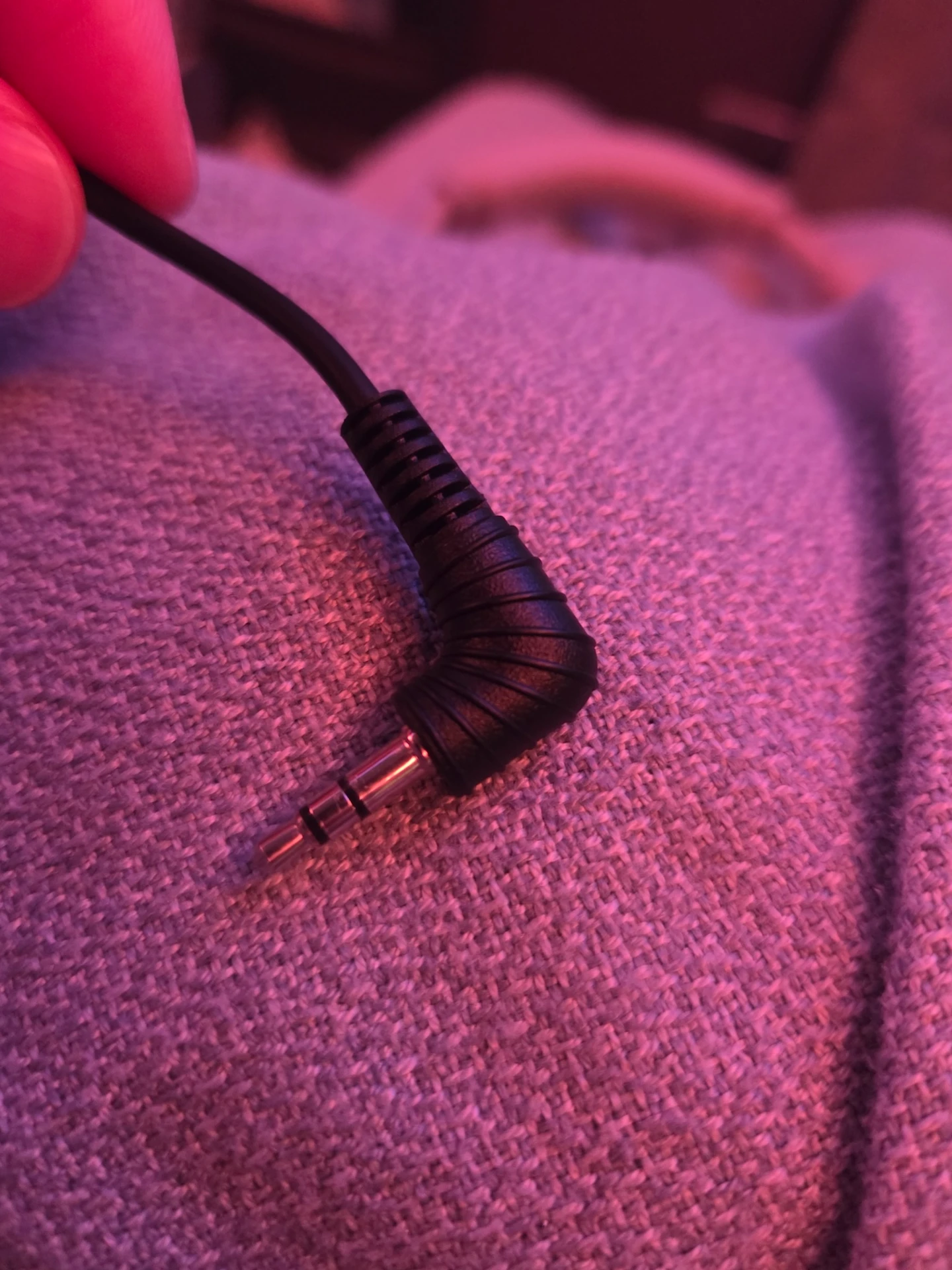
A basic headset was also provided for the entertainment system. It used a standard single plug that connected to the headphone socket beside the seat and did not have noise cancellation. It was not a high-end headset with particularly good sound, but it did not feel overly cheap or uncomfortable either. It was good enough for watching the onboard entertainment. There was no bottled water waiting at the seat when I boarded, but I received a 500 ml bottle when service started after takeoff. The water was from the Korean brand ICIS. Having my own bottle beside the seat and drinking whenever I needed was more convenient than getting water in a small cup.

American Airlines AA280 Seoul-Dallas B777 Premium Economy – Amenities & Lavatory 2
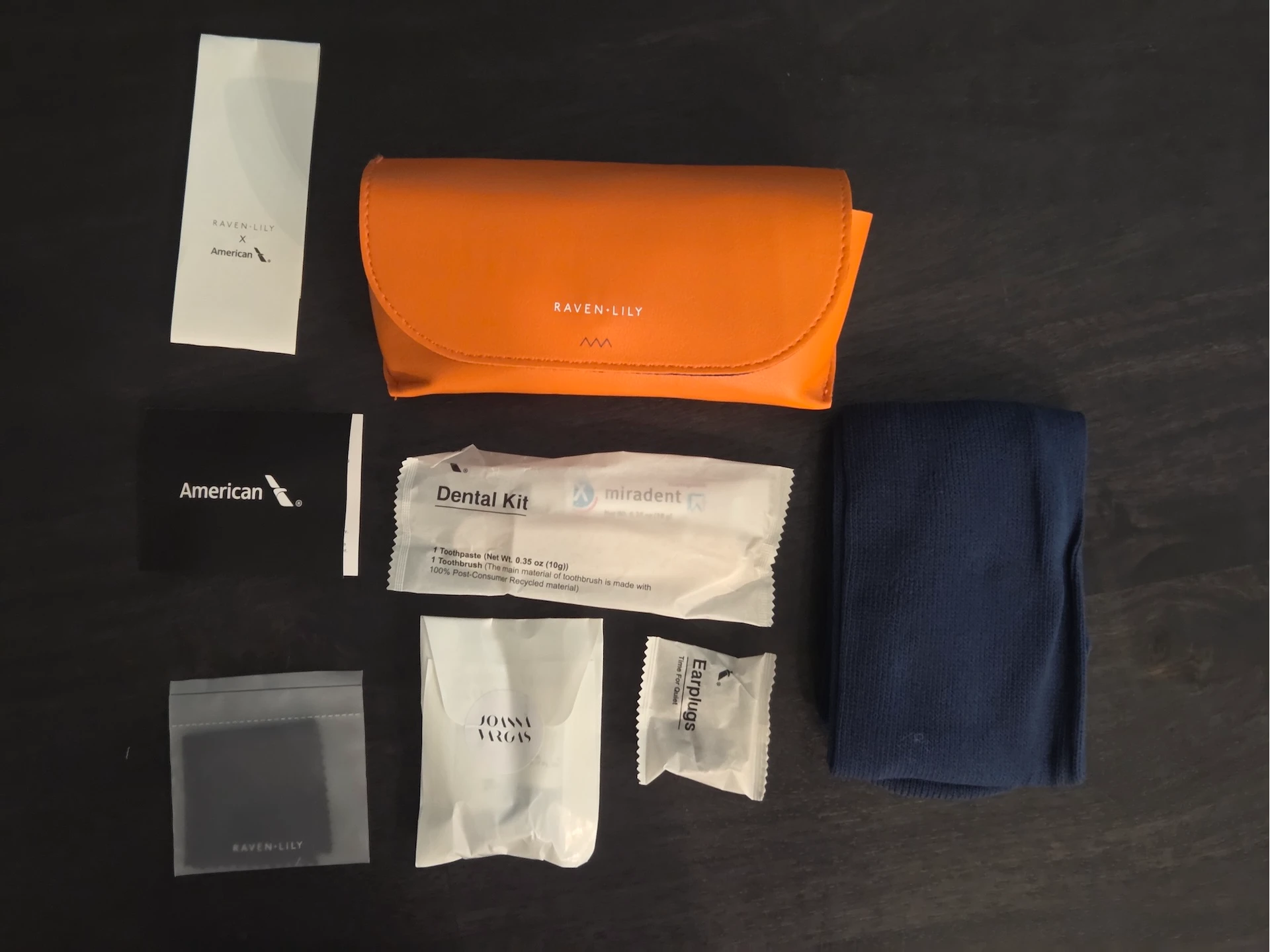
The headset and amenity kit were inside the storage compartment in the left armrest. The kit came in a bright orange pouch made in collaboration with Raven + Lily. My Premium Economy pouch was long and flat, a little like a glasses case. The bright orange looked better than I expected. It was easy to spot without looking too loud, and I thought it would be useful for storing charging cables or other small items after the flight. Inside were socks, earplugs, a toothbrush and toothpaste set, a cloth for cleaning glasses or screens, and a few basic skincare products, including hand cream. There was not a huge selection, but the contents were practical things I would actually be likely to use on a long flight. It did not have the expensive skincare products or variety you might find in a Business Class kit, but the basics were all there. Considering the design and how easily the pouch could be reused, I thought it was a good fit for Premium Economy.
American Airlines AA280 Seoul-Dallas B777 Premium Economy – Amenities & Lavatory 3
But the lavatories were one of the most disappointing parts of Premium Economy on American’s Boeing 777-200ER. Although Premium Economy has its own separate cabin, it does not have dedicated lavatories. Passengers have to share the lavatories farther back in Economy. As airlines fit more seats into their aircraft and adjust the number and location of lavatories, I feel Premium Economy can end up in a slightly awkward position. You do not have dedicated lavatories like in Business Class, and although you sit ahead of Economy, you still have to walk back into that cabin to use them. It was especially inconvenient that I could not easily see from my seat whether the lavatories were occupied. I could walk all the way back only to find a long line, so choosing when to go made a difference.
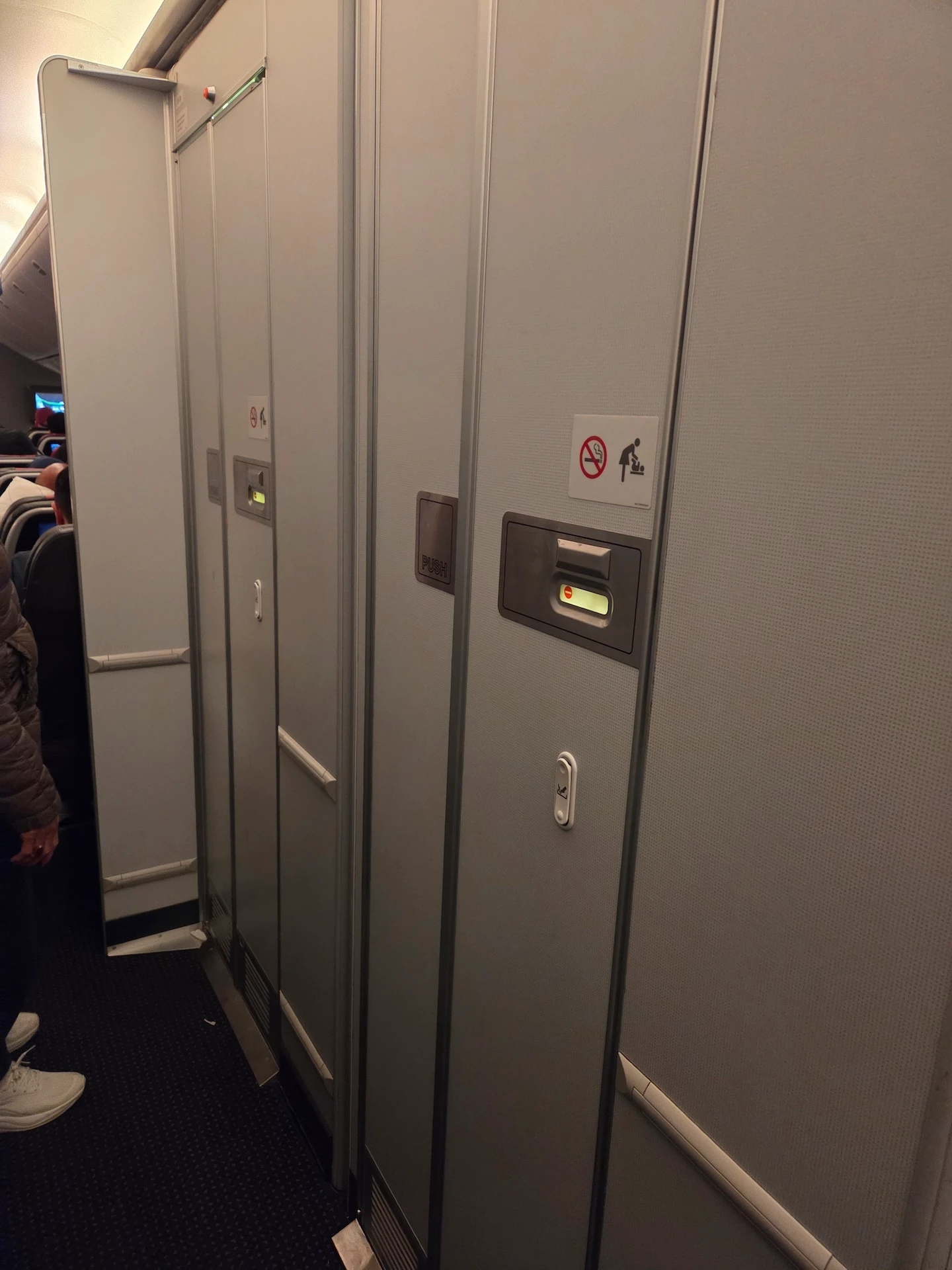
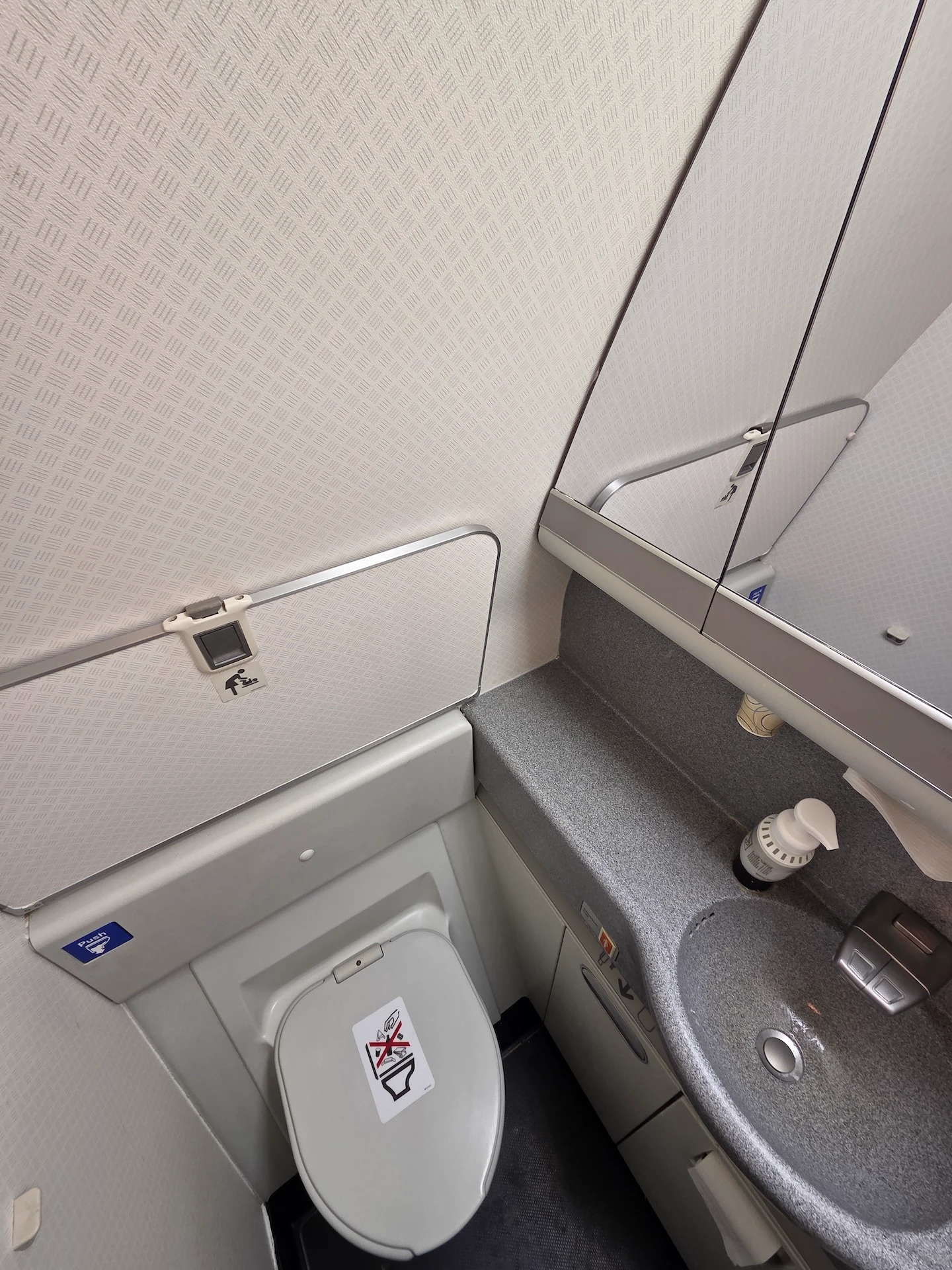
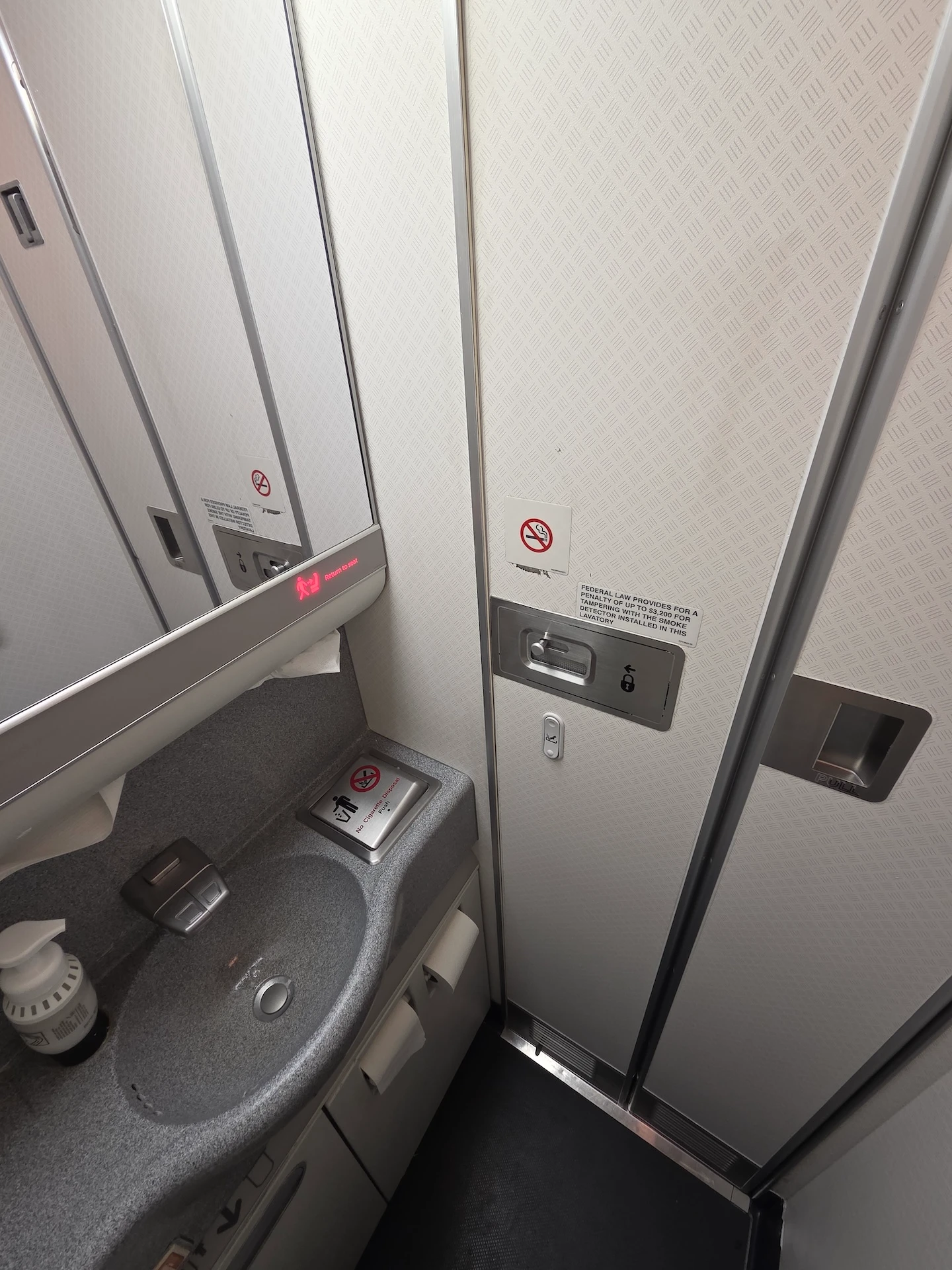
American Airlines AA280 Seoul-Dallas B777 Premium Economy – Amenities & Lavatory 4
For me, the best time to avoid a line was just after finishing my meal early. Since Premium Economy received meals first, I could finish eating, leave the tray on my table and use the lavatory before most Economy passengers had finished their meals. Another option was to go when the crew started collecting trays from the front. Premium Economy trays were cleared first, so walking toward the back behind the collection cart gave me a better chance of getting there before a line formed. But just after the entire meal service finished, many passengers headed to the lavatories at once, making a longer line more likely. Facing the front of the aircraft, there were two Economy lavatories along the left aisle and three along the right. So if you use the lavatory often, choosing a seat near the right aisle may be a little more convenient. My seat, 13H, was at the right aisle of the center block, which was a relatively good position for this.
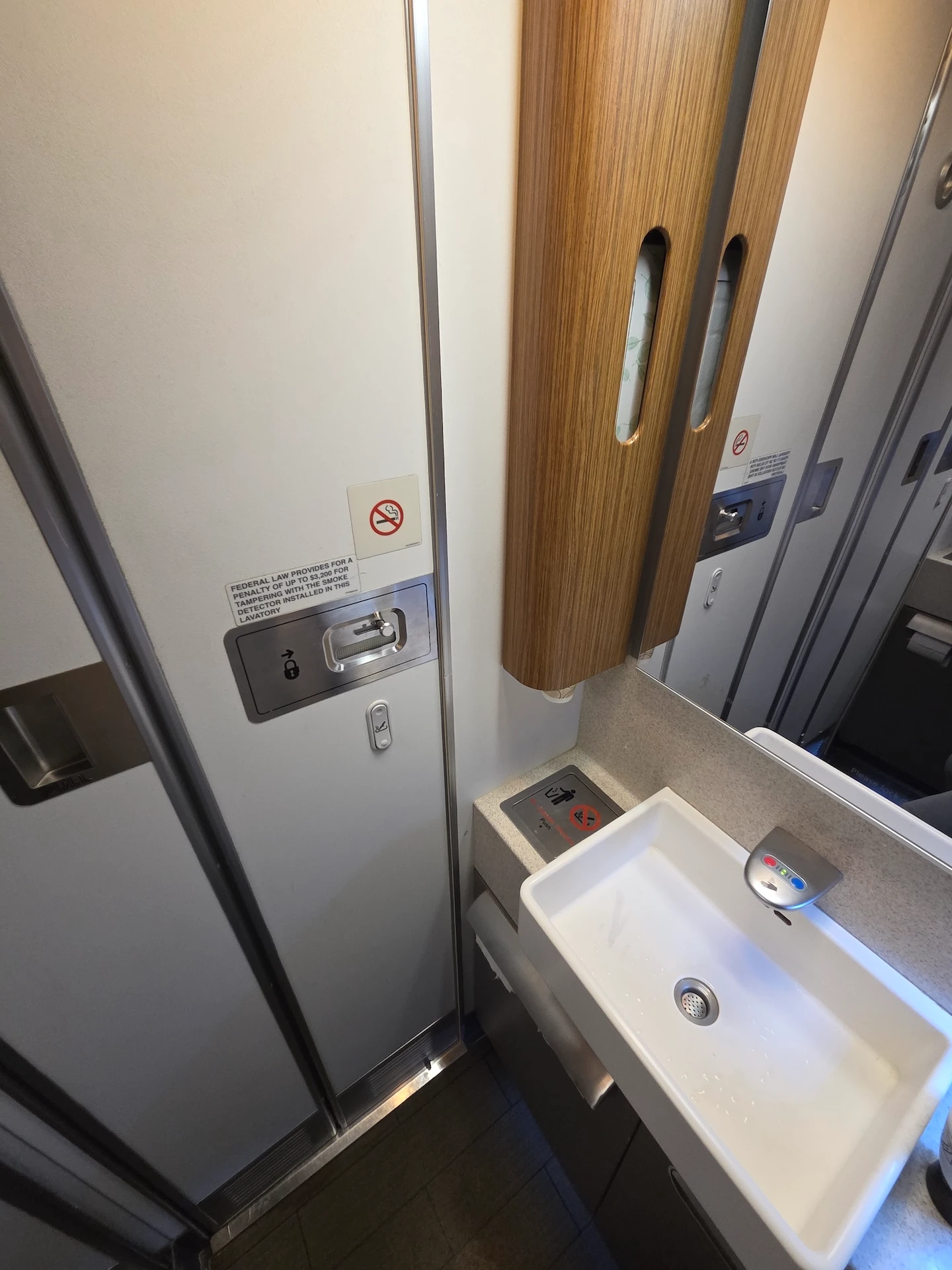
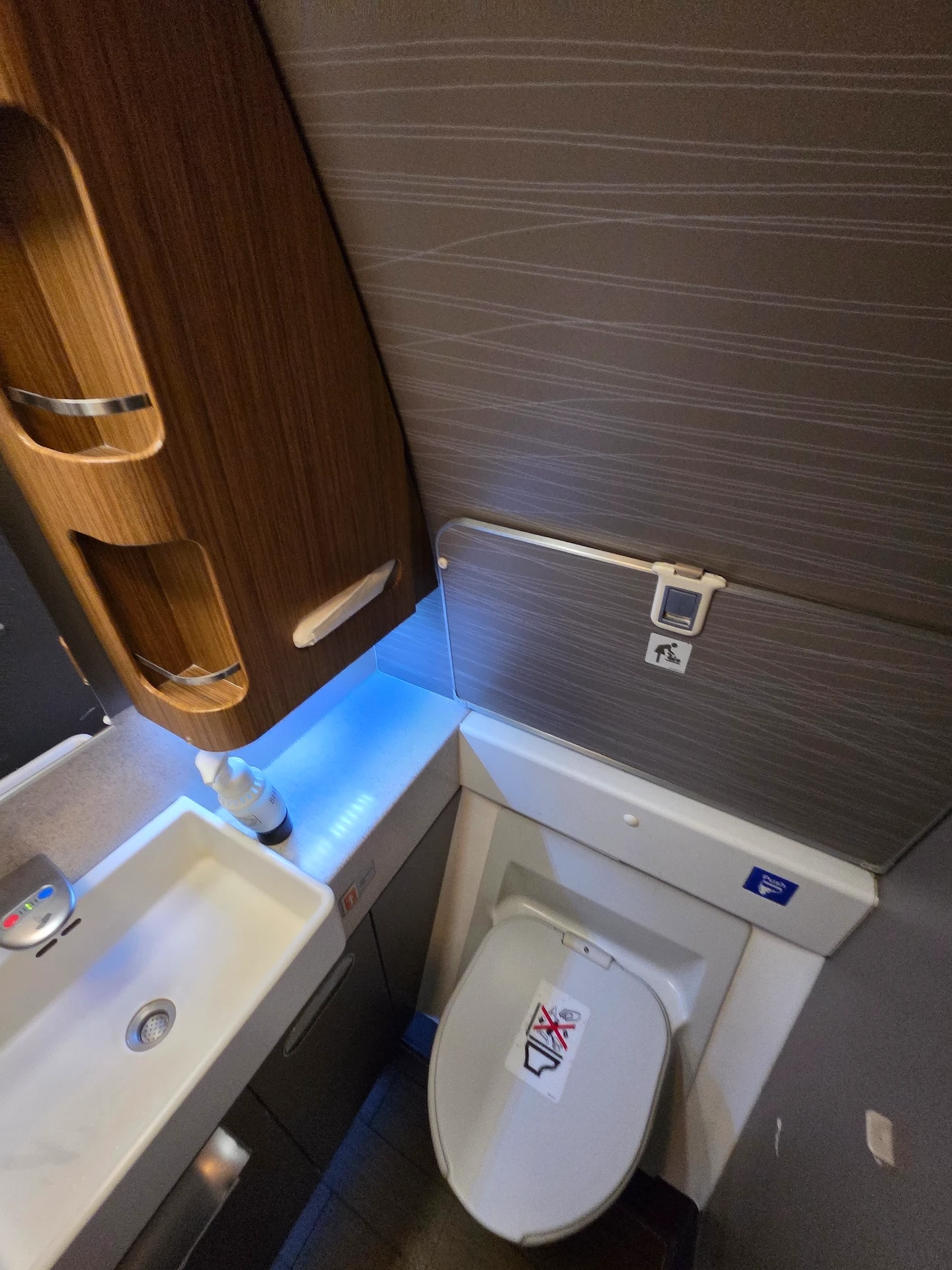
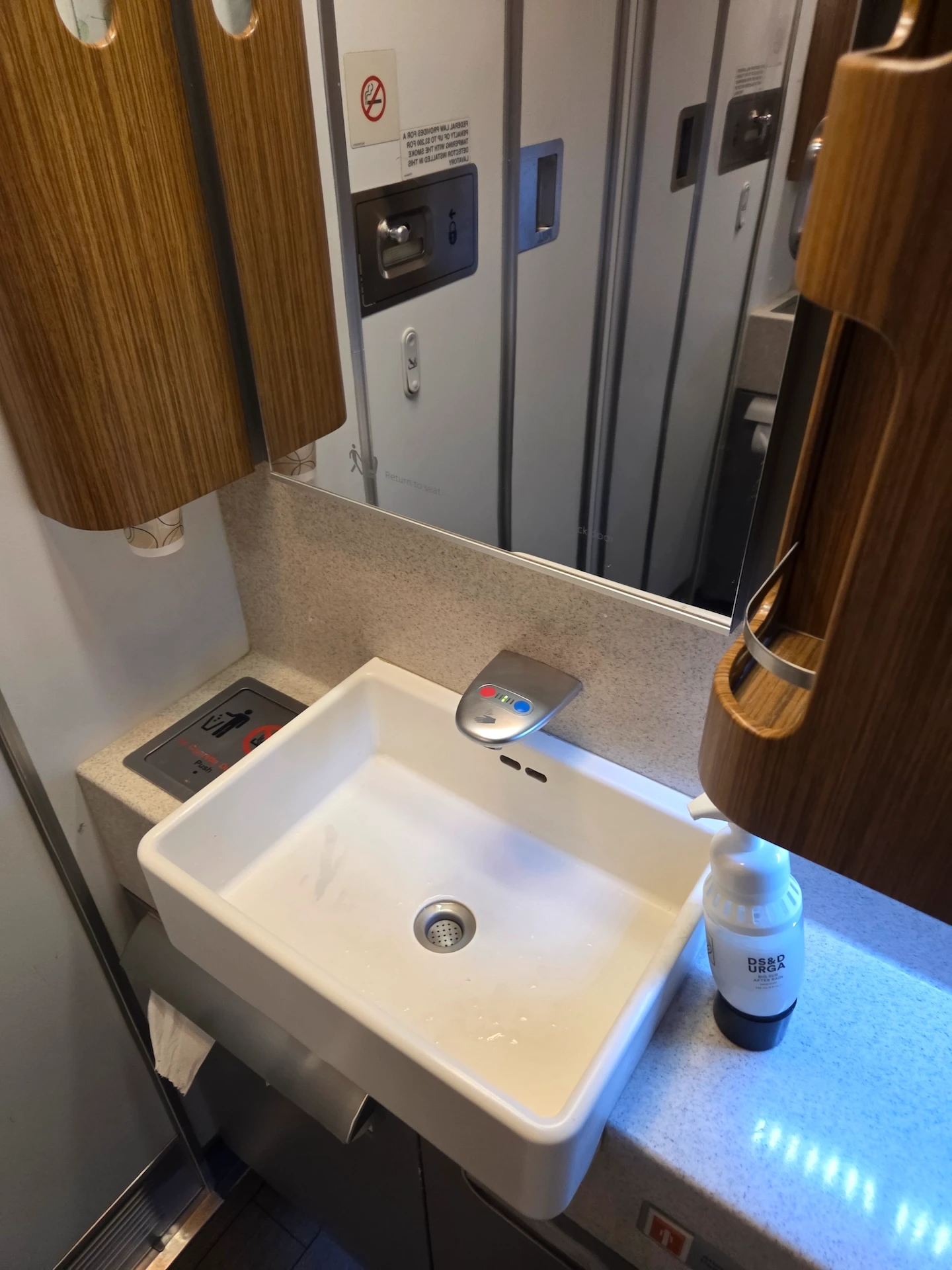
American Airlines AA280 Seoul-Dallas B777 Premium Economy – Business Class Lavatory
Inside, the lavatories were the same as those in regular long-haul Economy, with no special facilities or extra amenities. There were no separate skincare products or other items for Premium Economy passengers. So although the seat, bedding and amenity kit were better than regular Economy, the lavatory experience was exactly the same. One thing I found inconvenient was the sink drain. Behind the water button was a separate button for opening the drain, and I had to keep pressing it for the water to drain away. As soon as I let go, the drain closed and water collected in the sink again. Having to hold the drain button while washing my hands was a little awkward. It was a simple mechanism, but anyone unfamiliar with it might think the sink was not draining properly. During boarding, the crew did not stop passengers from using the Business Class lavatories ahead. So if you need to use one just after boarding, going forward may be more convenient than walking back to the Economy lavatories. But during the flight, the divider and curtains between Business Class and Premium Economy were closed, making it difficult to keep using the lavatories ahead.

American Airlines AA280 Seoul-Dallas B777 Premium Economy – Amenities & Lavatory 6
Overall, the slippers, bedding, headset, bottled water and separate amenity kit were good enough for long-haul Premium Economy. I was especially satisfied with the contents of the amenity kit and the useful pouch. But not having a dedicated lavatory and needing to walk back into Economy was a clear downside. This may be difficult to avoid with the way Premium Economy is set up, but I still found it disappointing that the improvements in the seat and amenities did not extend to the lavatories at all.
Food & Beverage
American Airlines served three meals in long-haul Premium Economy: the first meal, a mid-flight snack and a meal before arrival. Each was served on a single tray, but ceramic dishes replaced plastic containers, and the cutlery was metal. The food selection and presentation also felt a step above regular Economy. Overall, I thought the meals were suitable for Premium Economy.

American Airlines AA280 Seoul-Dallas B777 Premium Economy – Food & Beverage 1
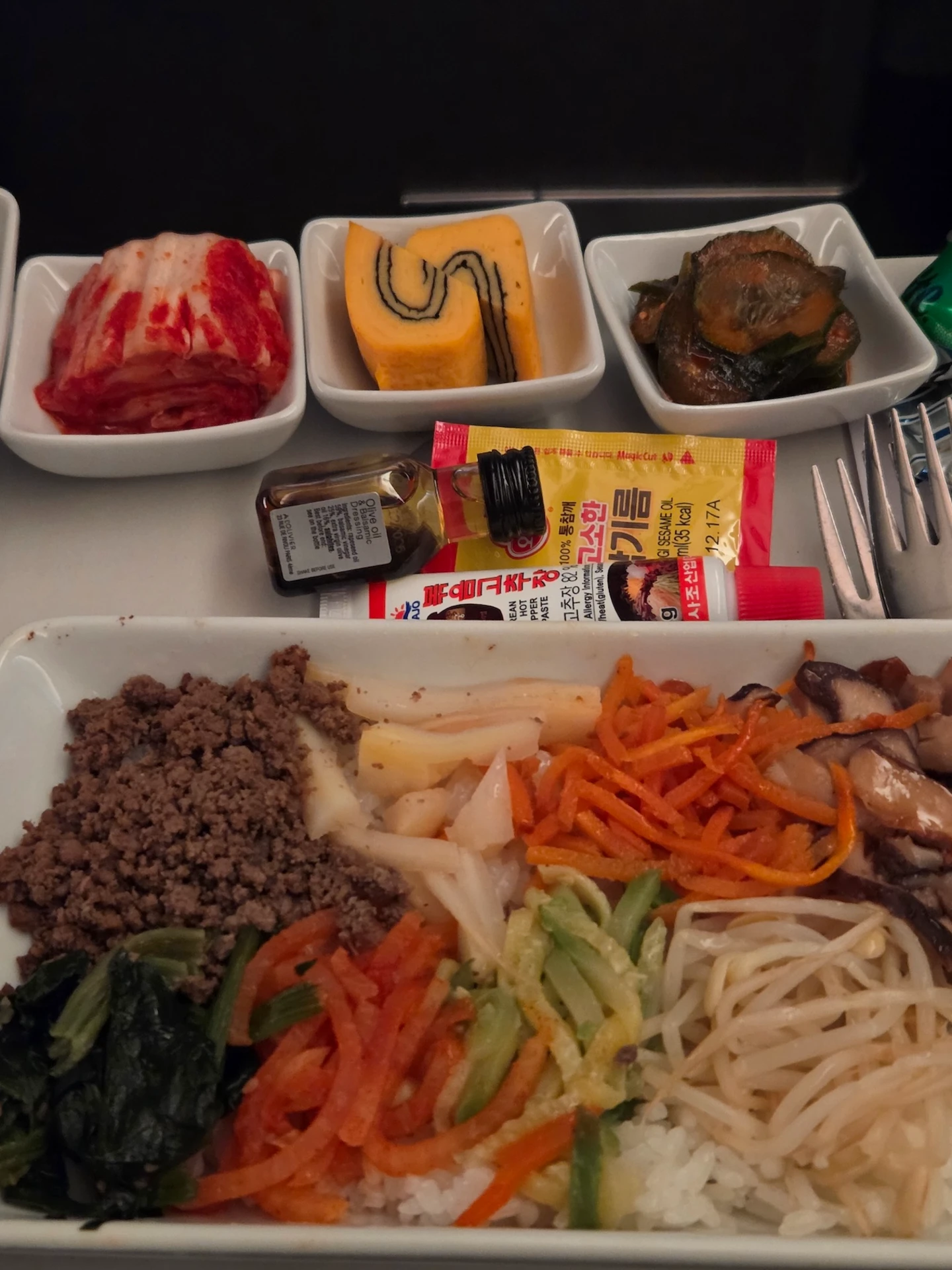
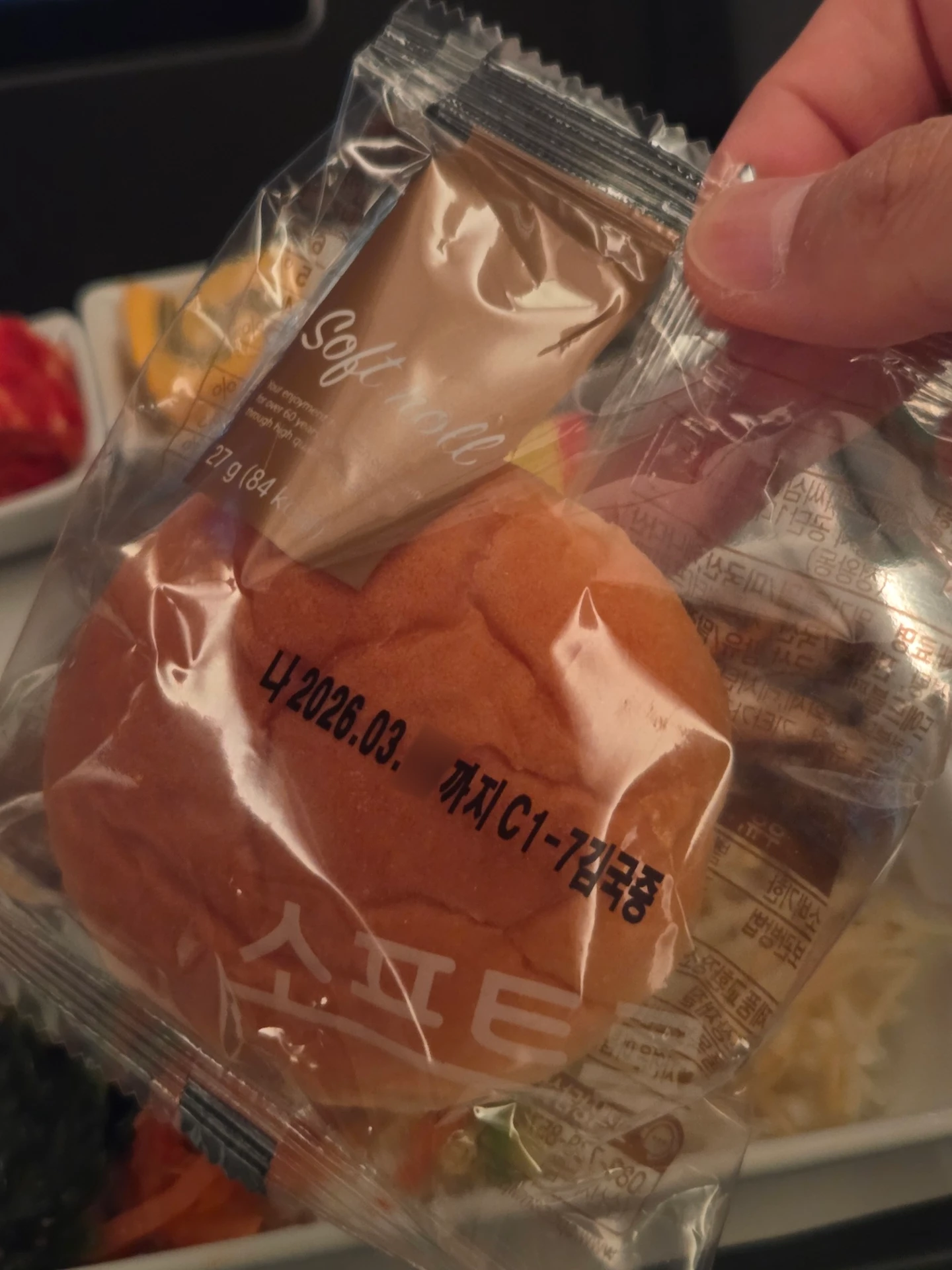
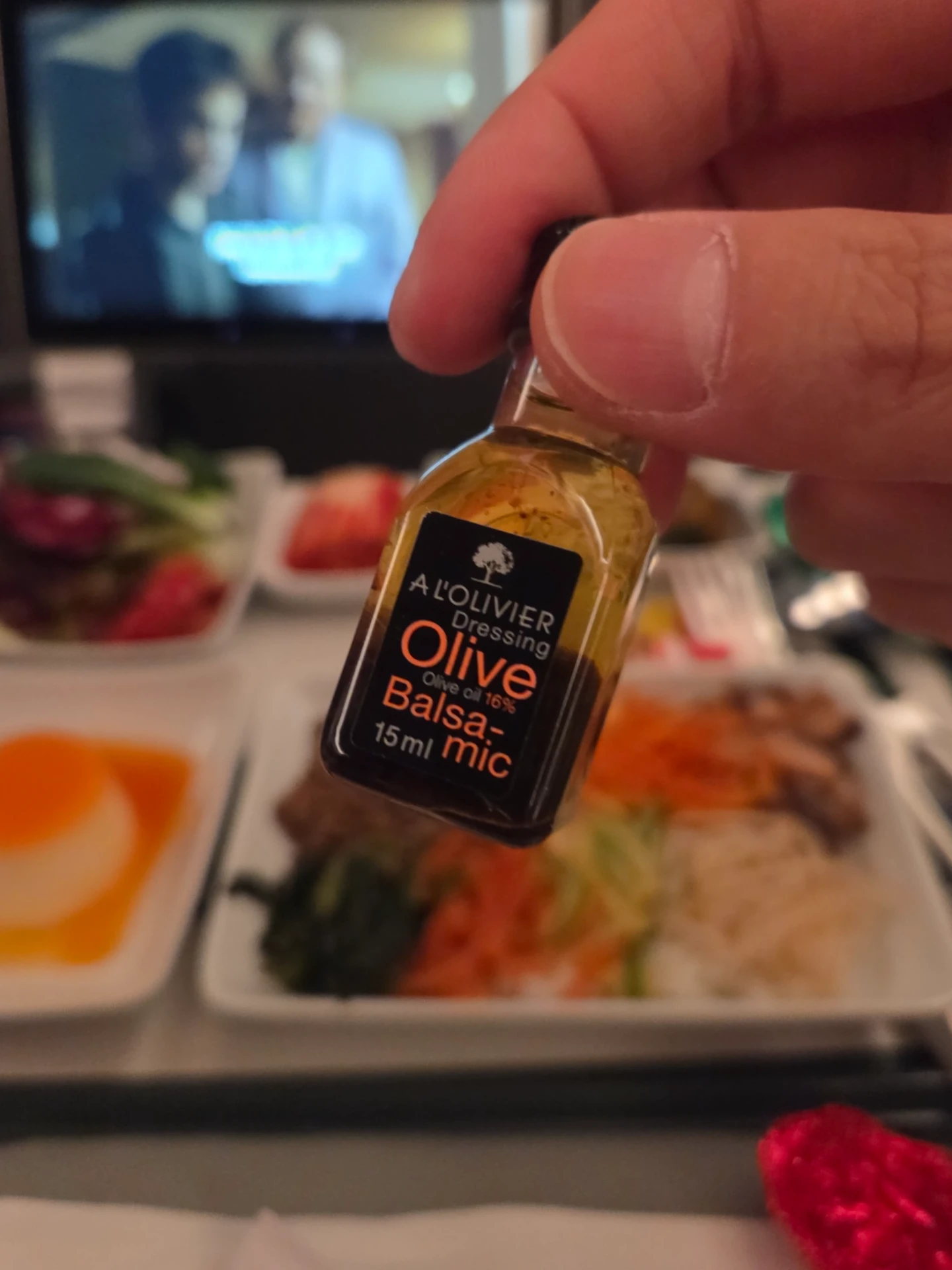
For the first meal, the choices were pasta and bibimbap, and I chose bibimbap. The tray came with bread and butter, a salad, the bibimbap, three side dishes and dessert. It was not a meal served course by course, but the tray still had everything from a starter to a main and dessert. The salad contained mixed vegetables, black olives and sun-dried tomatoes, with balsamic dressing on the side. The vegetables were fresh, and since I usually like balsamic dressing, I enjoyed the salad. The bibimbap had various toppings, including soybean sprouts, zucchini, carrots, shredded radish, mushrooms, spinach and meat. Gochujang and sesame oil were provided separately for mixing. Some of the vegetables were a little overcooked, probably from being reheated onboard, so the texture could have been better. But there were plenty of toppings compared with the amount of rice, and the bibimbap tasted good overall. The portion itself was not particularly large, though. If I had boarded without eating beforehand, it might not have been enough.
American Airlines AA280 Seoul-Dallas B777 Premium Economy – Food & Beverage 2
The side dishes were kimchi, Korean rolled omelet and seasoned cucumber. The omelet was served cold, but it tasted fine, and the cucumber was not overly sweet. Having kimchi with the bibimbap was also a nice touch on a long-haul flight. The bread was a regular soft roll served with butter. Dessert was a mango mousse cake with a soft texture and a noticeable mango flavor from the sauce. It was a decent way to finish the first meal. The ceramic dishes, metal cutlery and neat presentation made this meal feel clearly different from regular Economy. With a salad, main, side dishes and dessert, I was satisfied with the selection. But the cutlery was a little disappointing. There were two forks, a knife and disposable wooden chopsticks, but no spoon for the bibimbap. It seemed to be a standard Western-style set used for every meal rather than one chosen for this dish. A spoon would have made the bibimbap easier to eat.

American Airlines AA280 Seoul-Dallas B777 Premium Economy – Food & Beverage 3
The mid-flight snack was served about six hours after departure. The choices were a sandwich and salad noodles, and I chose the noodles. Although they were called salad noodles, the dish was closer to Korean bibim guksu, with noodles mixed in a sweet and sour gochujang sauce. The noodles were thin, similar to somyeon, and had not become as soft or soggy as I expected. There were plenty of vegetables and toppings, including cabbage, sprouts, thin strips of egg, kimchi and stir-fried zucchini. It was a decent light meal. The sauce was sweet and tangy, with more heat than I expected. Most Korean passengers who like bibim guksu would probably find the taste familiar, but it might be a little spicy for passengers who are not used to spicy food. Personally, I thought some sesame oil would have added a nice nutty flavor. Even this snack was served with ceramic dishes and metal cutlery, rather than in a paper box or plastic wrapping. It felt more like a light meal than the packaged snacks usually served in regular Economy, and the presentation was a little neater too. The crew did not wake sleeping passengers to offer the snack. But the flight attendant who introduced the Premium Economy cabin after boarding had explained that we could ask for it later if we missed it. So it seemed that passengers who slept through the service could still get it by asking.
American Airlines AA280 Seoul-Dallas B777 Premium Economy – Food & Beverage 4
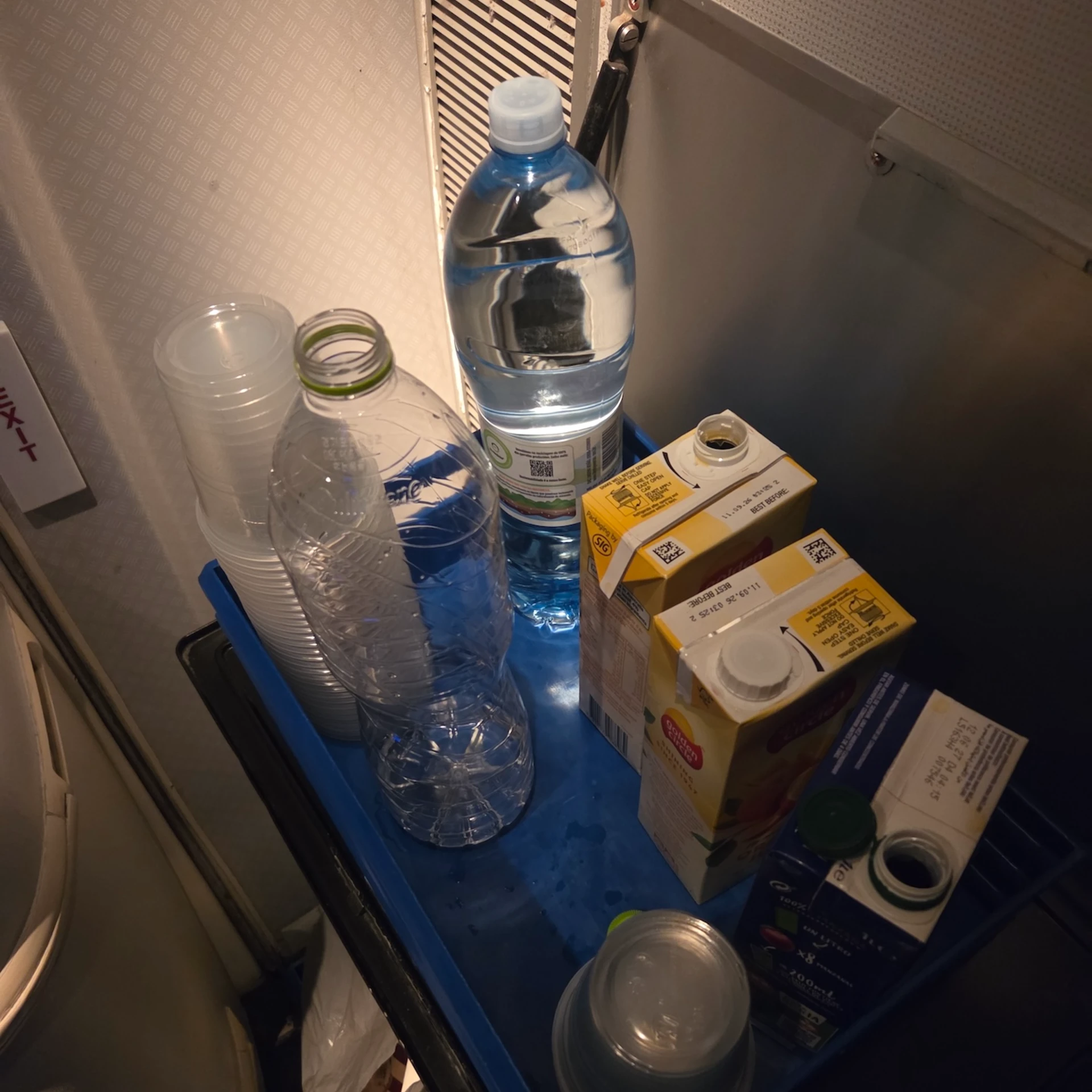
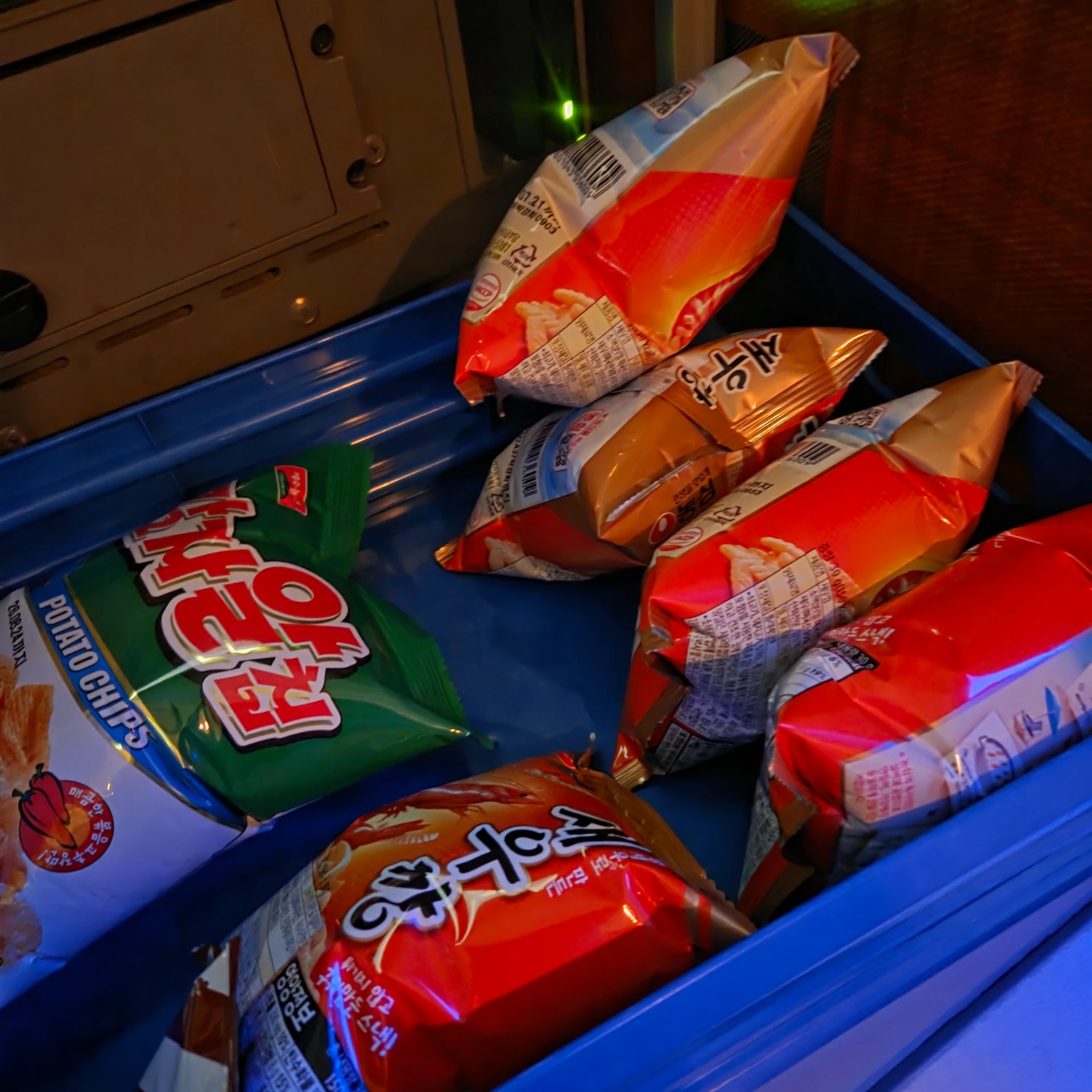
Outside the scheduled meal services, there was also a small self-service snack bar in the rear Economy galley. Snacks included Saewookkang shrimp crackers, potato chips and chocolate snacks. Orange juice and water were also available to help yourself to. It was useful if the meals were not enough or if I felt hungry between services.
American Airlines AA280 Seoul-Dallas B777 Premium Economy – Food & Beverage 5
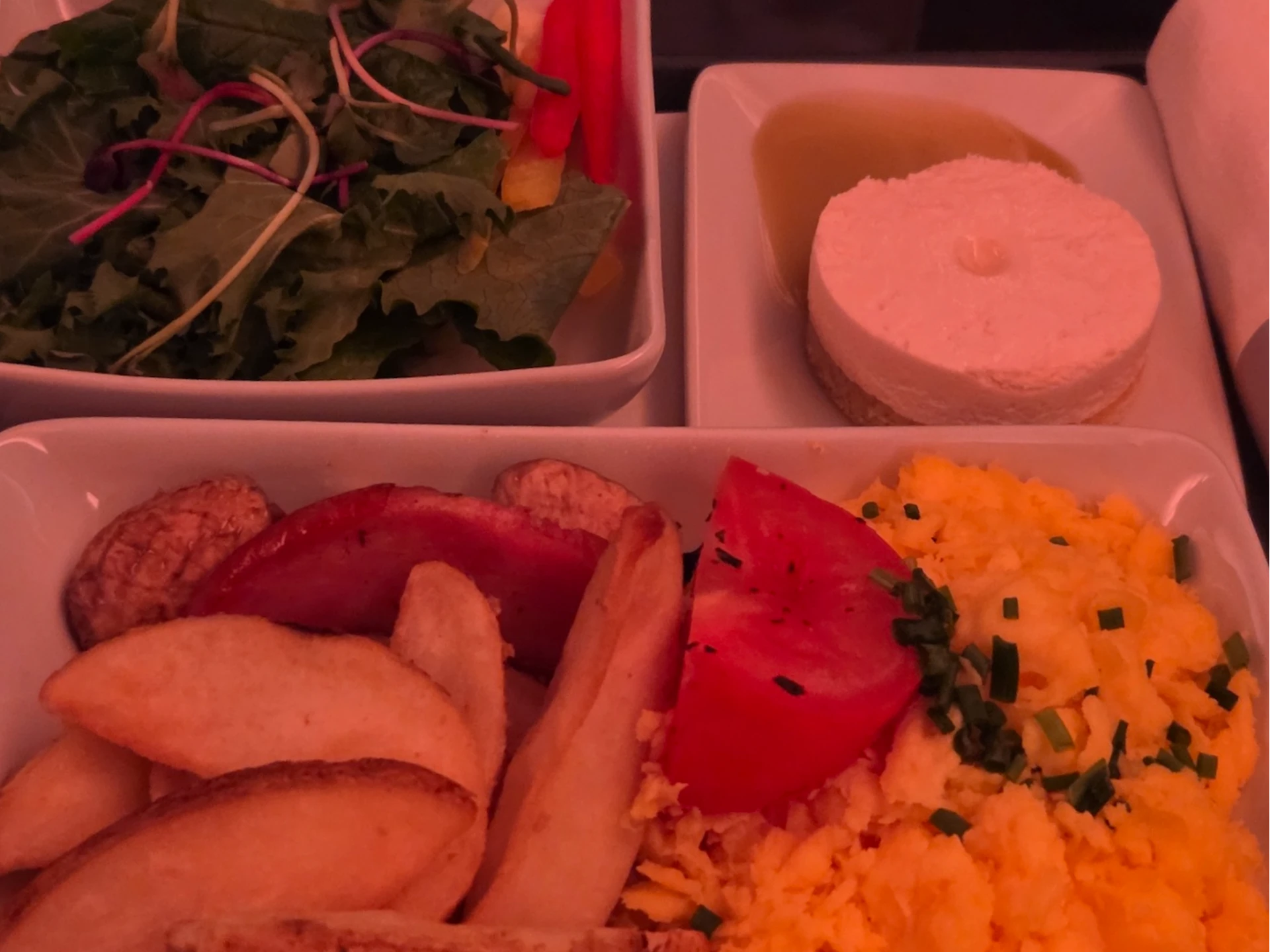
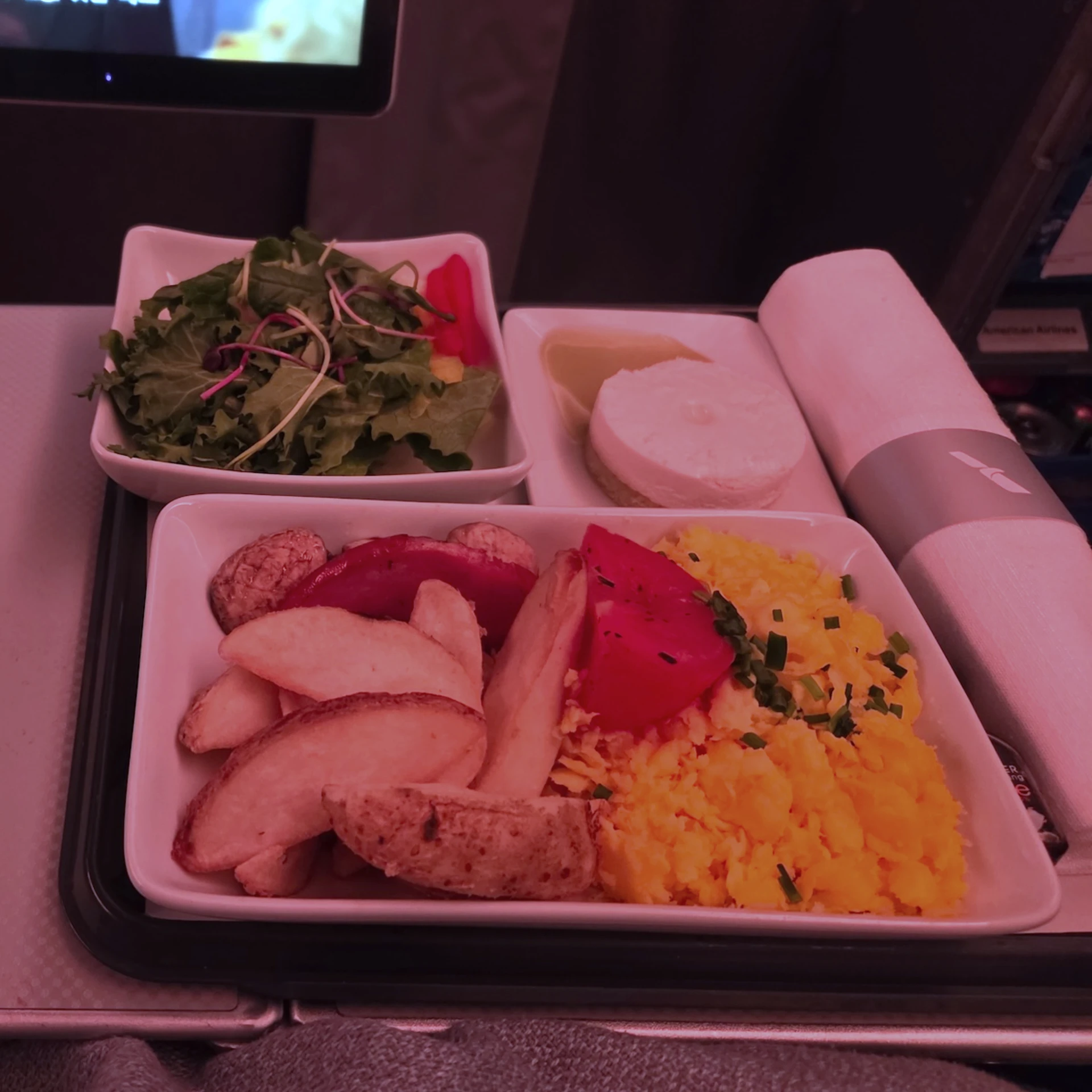
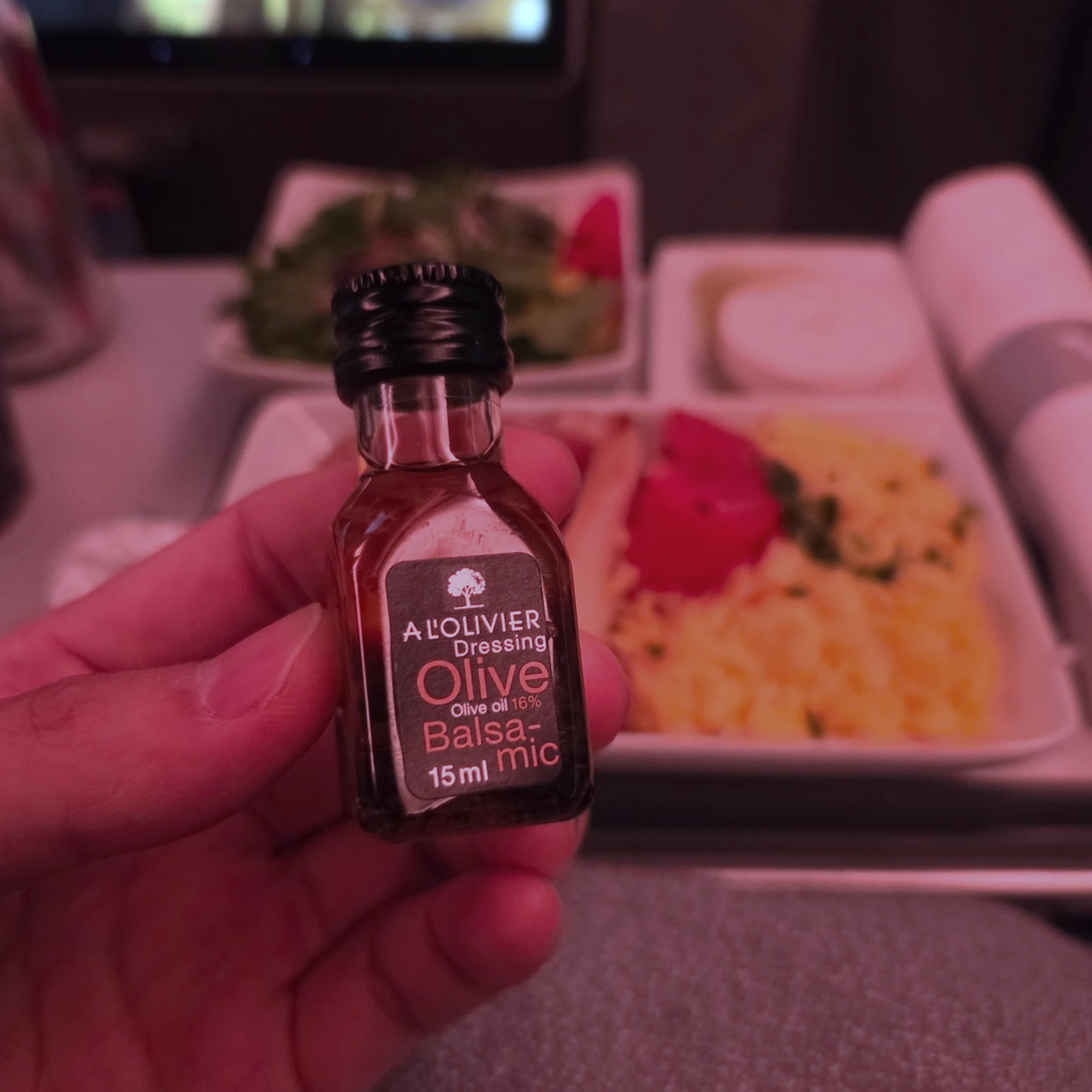
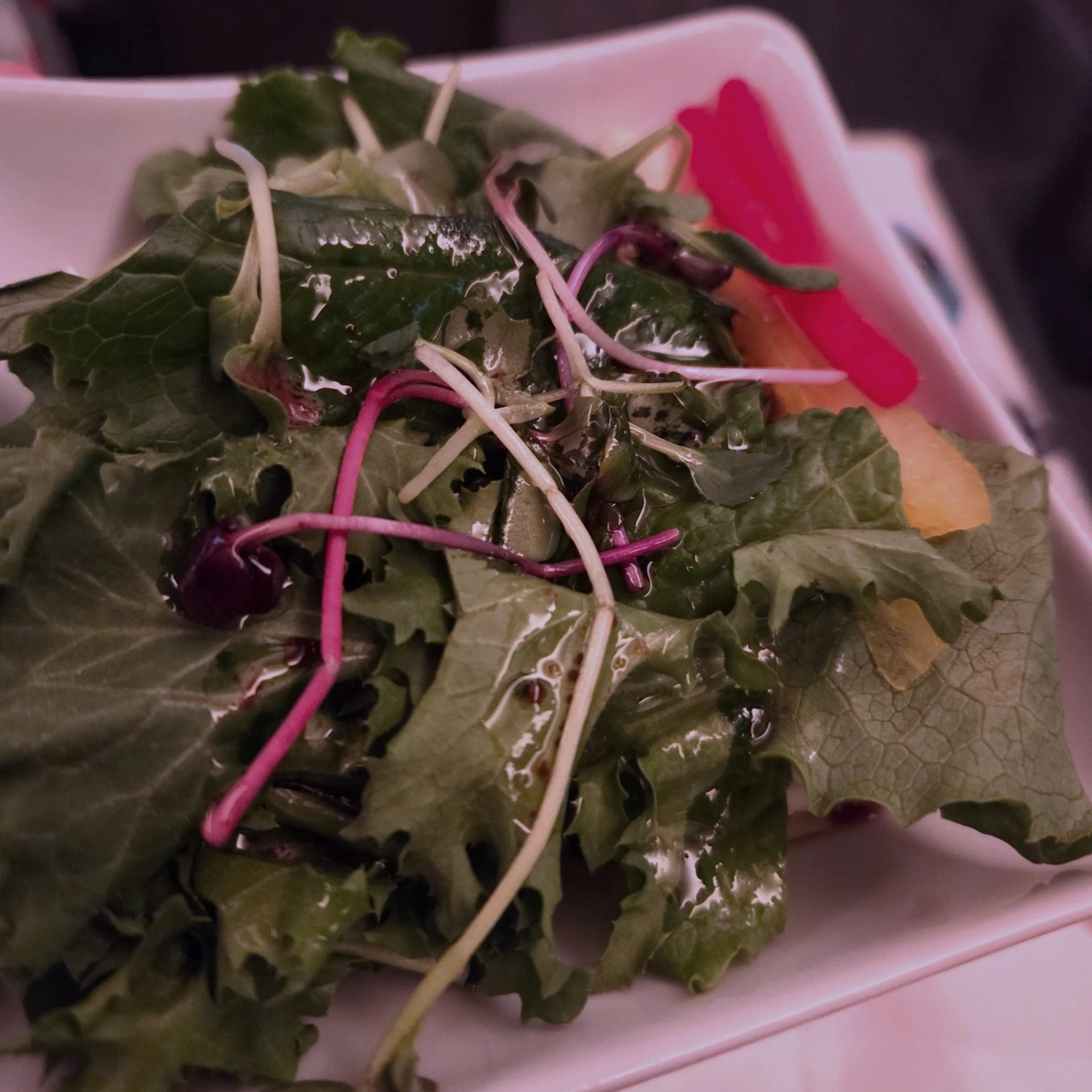
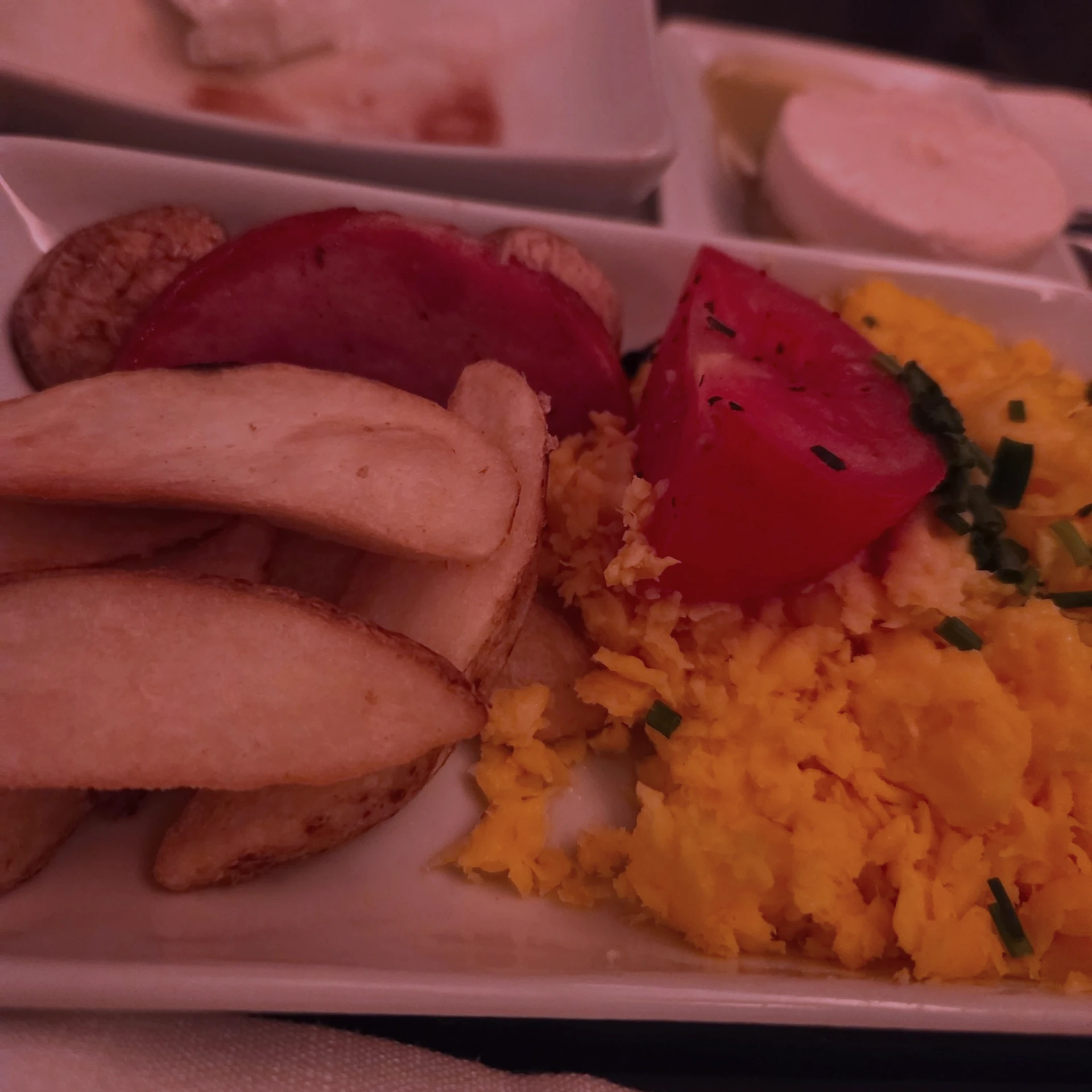
For the meal before arrival, the choices were an egg dish and chicken. Even though I was sitting in the very first row of Premium Economy, I was told that the chicken was already unavailable, so I chose the eggs. Since service started from the front of the cabin, I found it a little confusing and disappointing that one of the two options was already gone. The main dish was scrambled eggs with potato wedges and a grilled tomato, served with a salad and cake. Again, ceramic dishes and metal cutlery made the setup and presentation clearly better than regular Economy. But the scrambled eggs and potatoes were a little dry. Eating them with the tomato helped, but the meal itself was more ordinary than the first meal or the mid-flight snack. The salad was still fresh and came with balsamic dressing. I could not tell exactly what kind of cake was served for dessert, but it was fine.


American Airlines AA280 Seoul-Dallas B777 Premium Economy – Food & Beverage 6
Overall, the dishes, cutlery, presentation and meal selection in American Airlines’ Premium Economy were clearly better than regular Economy. Every meal came with ceramic dishes and metal cutlery, and the first meal had a fairly complete selection of salad, a main dish, side dishes and dessert. I also liked that the mid-flight snack was served as a light meal rather than just a packaged snack.
But the portions were not particularly larger just because this was Premium Economy. Passengers with a bigger appetite might still feel hungry after the scheduled meals. In that case, the snacks and drinks in the rear galley could be useful. I also thought a simple menu would have been nice in Premium Economy. Being able to see the food and drink choices beforehand would have made ordering easier and the service feel a little more premium. It was disappointing that this small detail was missing.

American Airlines AA280 Seoul-Dallas B777 Premium Economy – Food & Beverage 7
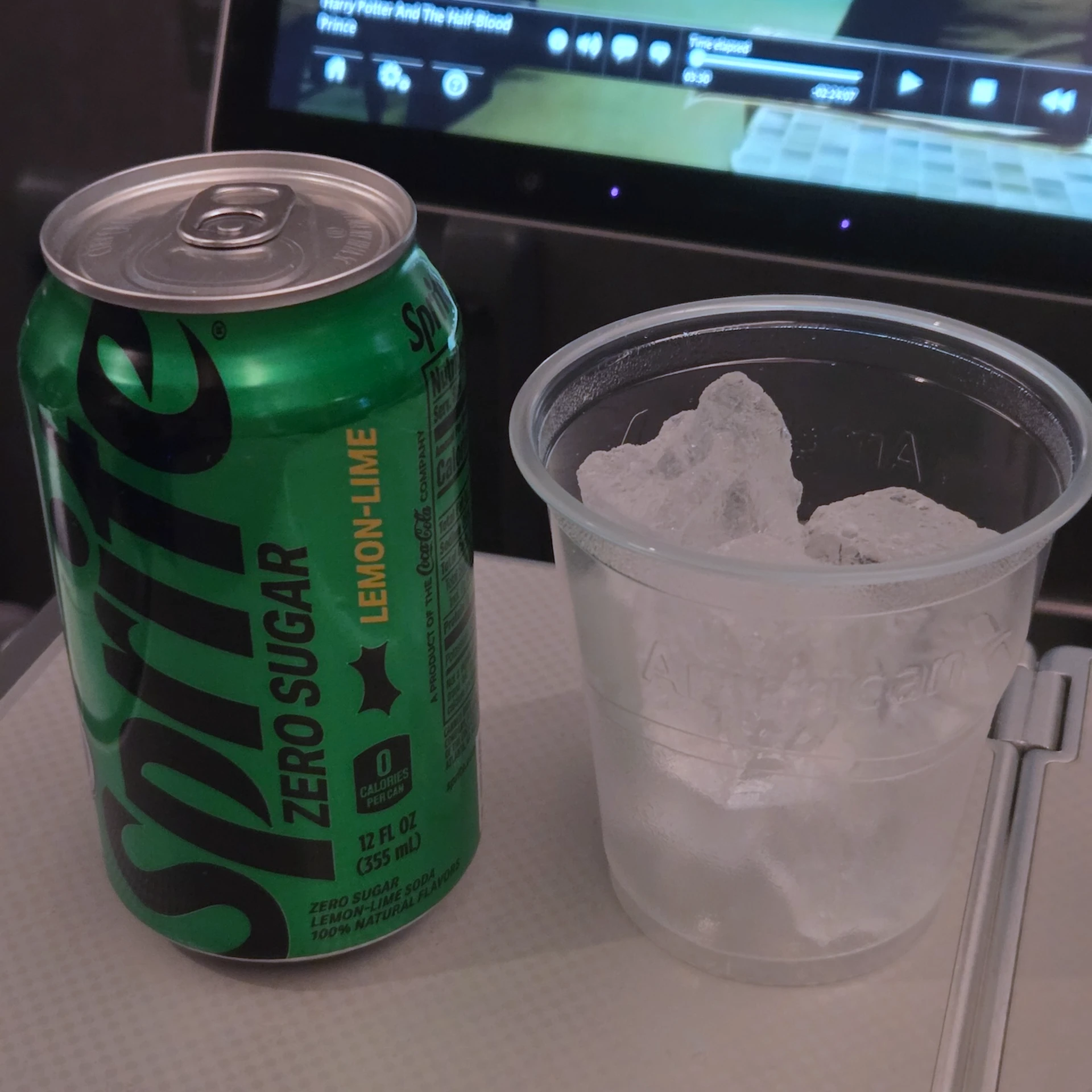
The alcoholic and non-alcoholic drink selection in American Airlines’ long-haul Premium Economy does not seem very different from regular Economy. On a long-haul international flight such as AA280 from Incheon to Dallas, soft drinks, juice, coffee and tea are complimentary, along with beer, wine and basic spirits. The actual brands and choices can vary by route, season and availability. There was a wide selection of soft drinks, as I would expect from a US airline, including Coke, Diet Coke, Coke Zero, Dr Pepper, Sprite, ginger ale, club soda and tonic water. Water, sparkling water, orange juice, apple juice, tomato juice, regular and decaf coffee, and black tea were also available. I tend to find American’s coffee a little stronger than the coffee served by Korean Air or Asiana. Alcohol choices included basic red and white wines, beer, gin, rum, whiskey, vodka and tequila. Mixers such as Bloody Mary mix, margarita mix, tonic water and club soda were available too. So you could ask for vodka with Bloody Mary mix or tequila with margarita mix to make a simple cocktail.
The main difference between Premium Economy and regular Economy was how the drinks were served rather than the selection itself. Premium Economy received drinks first, so the wait was shorter. Drinks also came in proper glasses with a neater setup rather than disposable plastic cups, which made the same drink feel a little more premium. But there was no separate selection of better wines or a wide range of alcohol like in Business Class, so the difference in drinks alone was limited. Overall, there were enough choices for a long flight. The variety of soft drinks and juices, along with complimentary beer, wine and spirits, covered what I would expect in an Economy-based cabin. But it was a little disappointing that Premium Economy did not have its own special alcohol selection or a separate drinks menu. As with the meals, a simple menu showing what was available to order would have made the service feel a little more thoughtful.
In-flight Entertainment & Wi-Fi
American Airlines AA280 Seoul-Dallas B777 Premium Economy – In-flight Entertainment & Wi-Fi 1
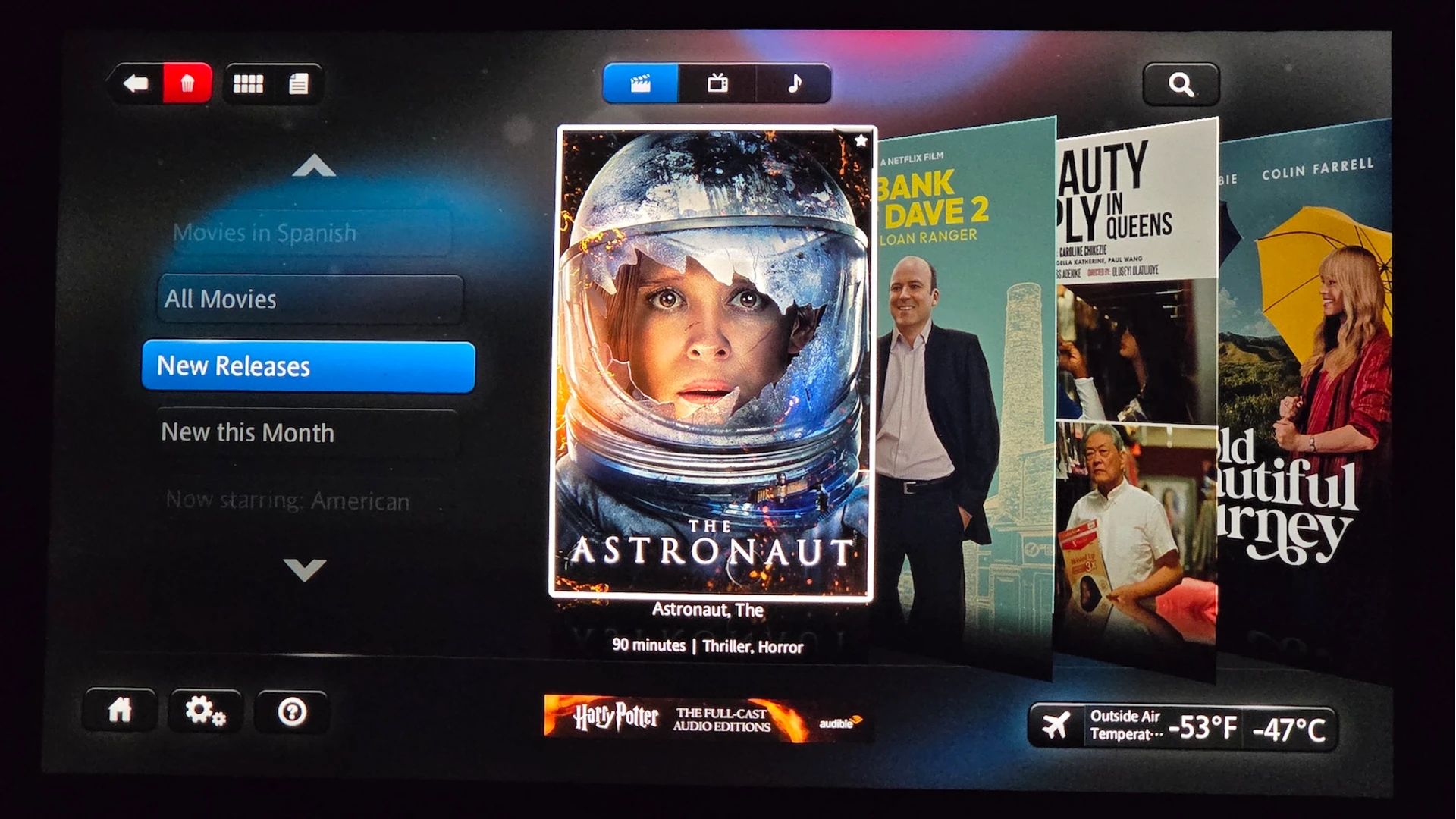
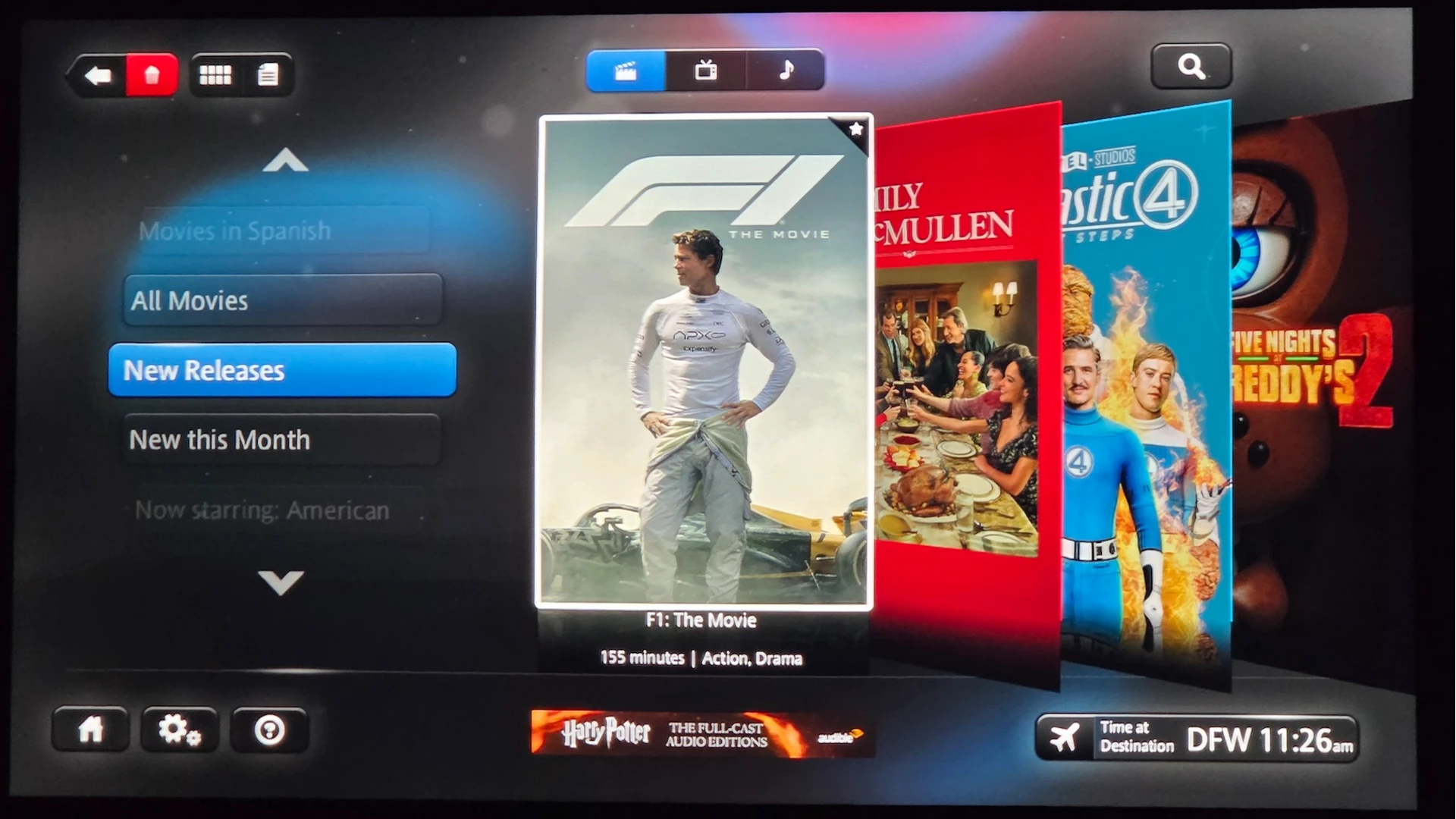
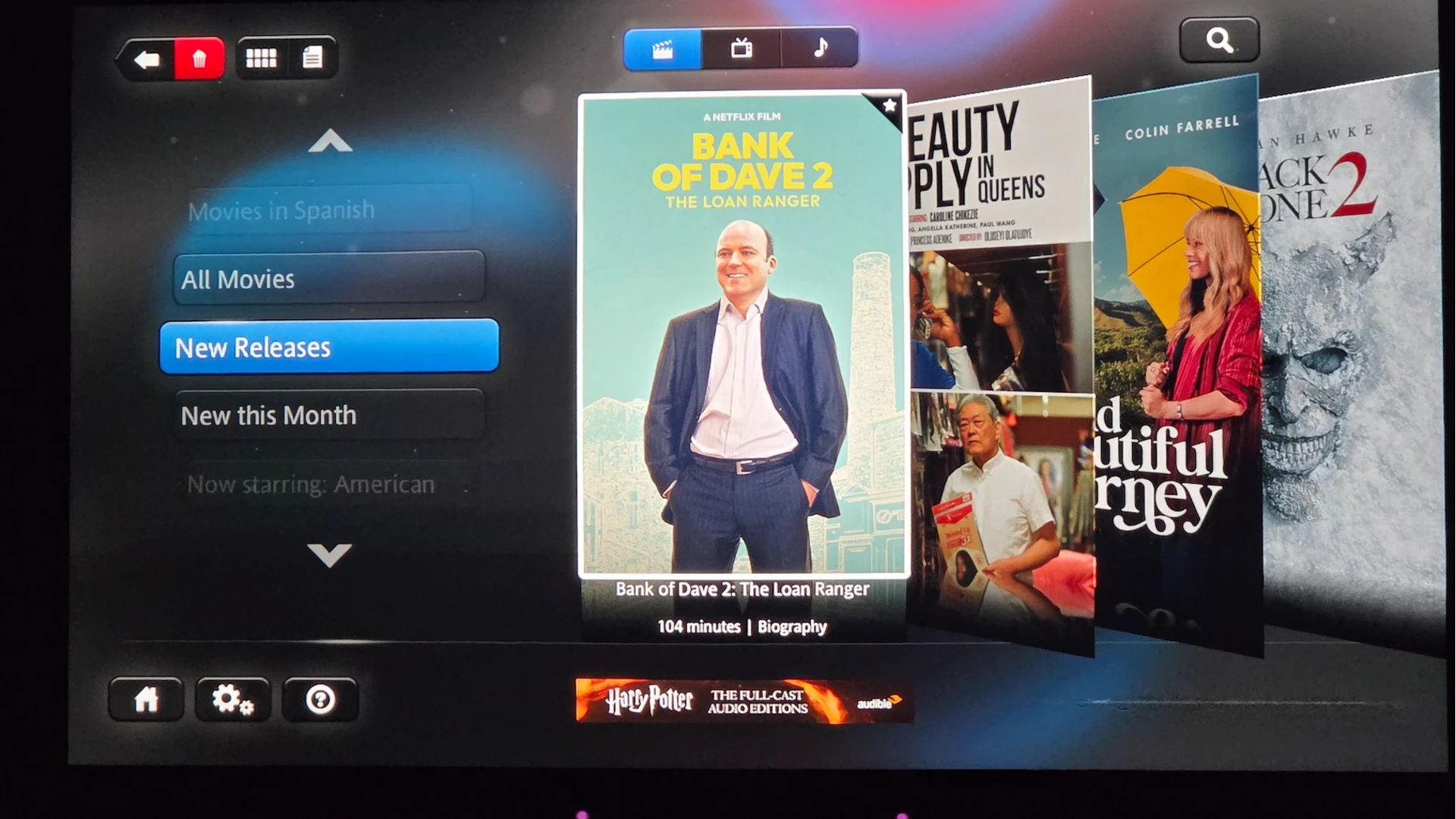
The Boeing 777-200ER operating this AA280 flight had an on-demand entertainment system with individual screens. Premium Economy does not have separate content or different software. Economy, Premium Economy and Business Class all use basically the same entertainment system and content. I had flown in Main Cabin Extra on the same AA280 route about three weeks earlier, so I did not notice any major changes in the selection. The movies were not all the latest releases, but there was a decent selection from the past two or three years, along with enough other choices to pass the time on a long flight. If there is no new movie I particularly want to watch, I think watching a series like Harry Potter, The Lord of the Rings or Marvel in order over several flights is a good option. These movies appear fairly often on different airlines’ long-haul entertainment systems, so it is usually possible to continue where I left off on another trip.
American Airlines AA280 Seoul-Dallas B777 Premium Economy – In-flight Entertainment & Wi-Fi 2
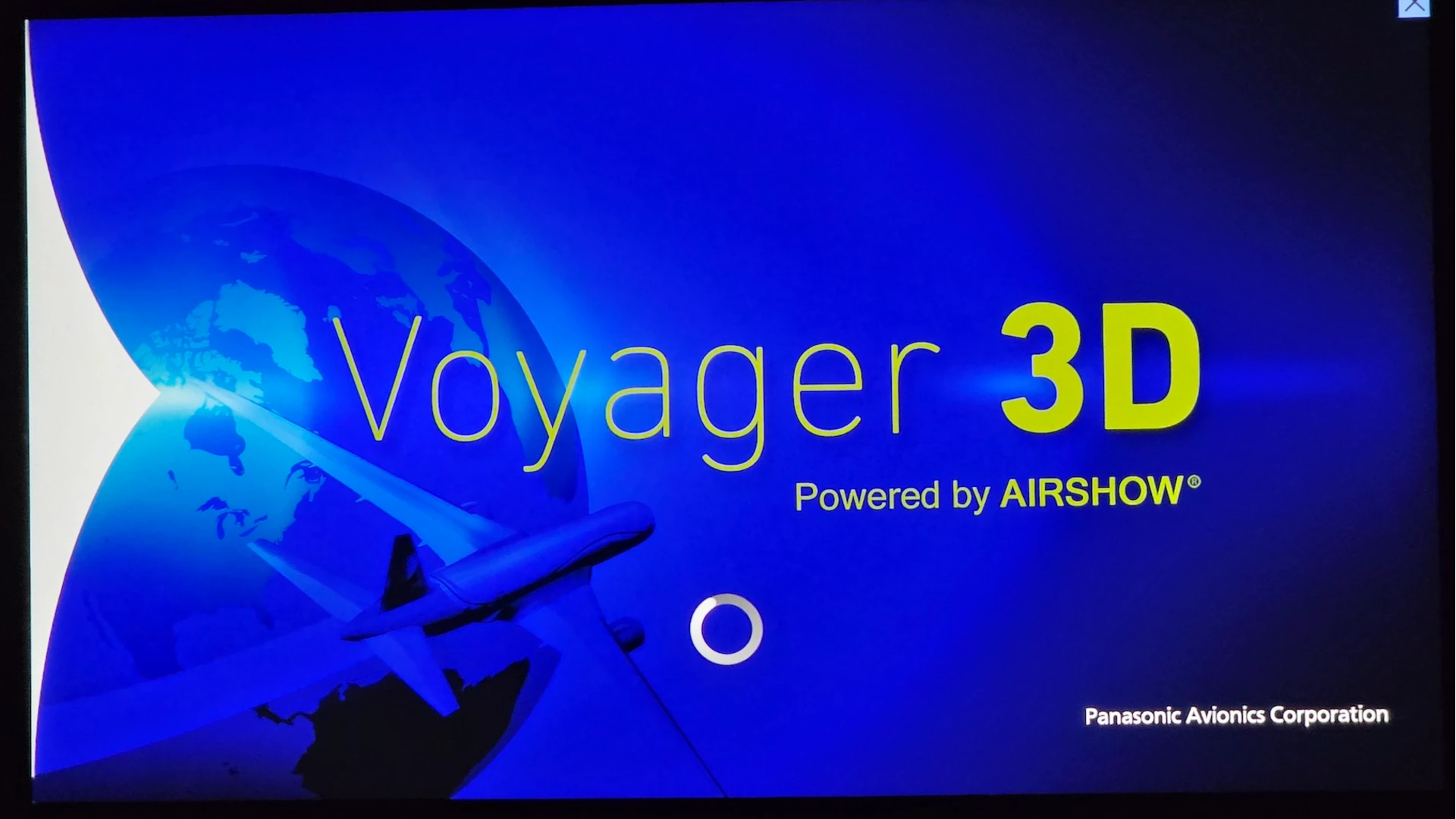
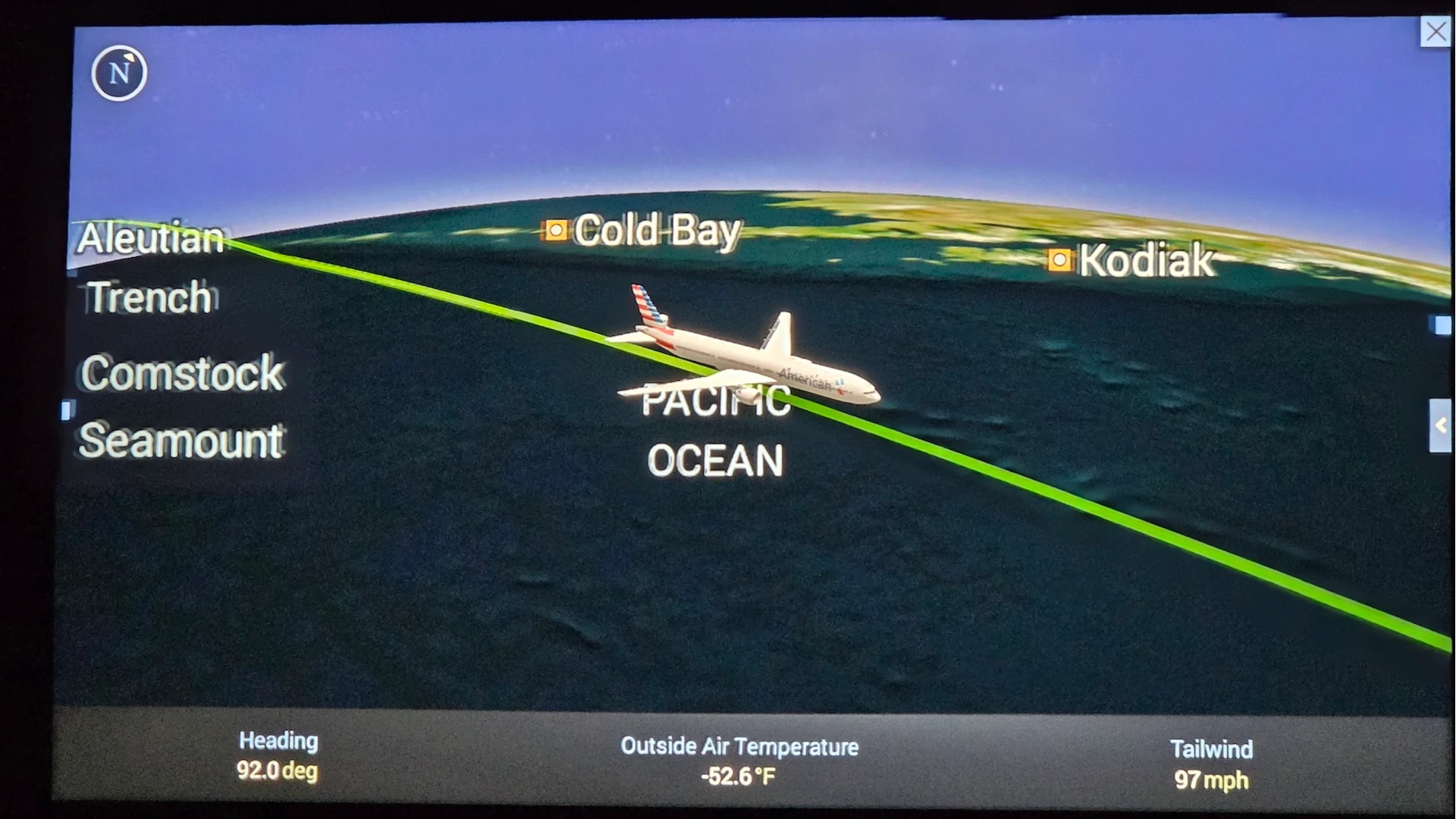
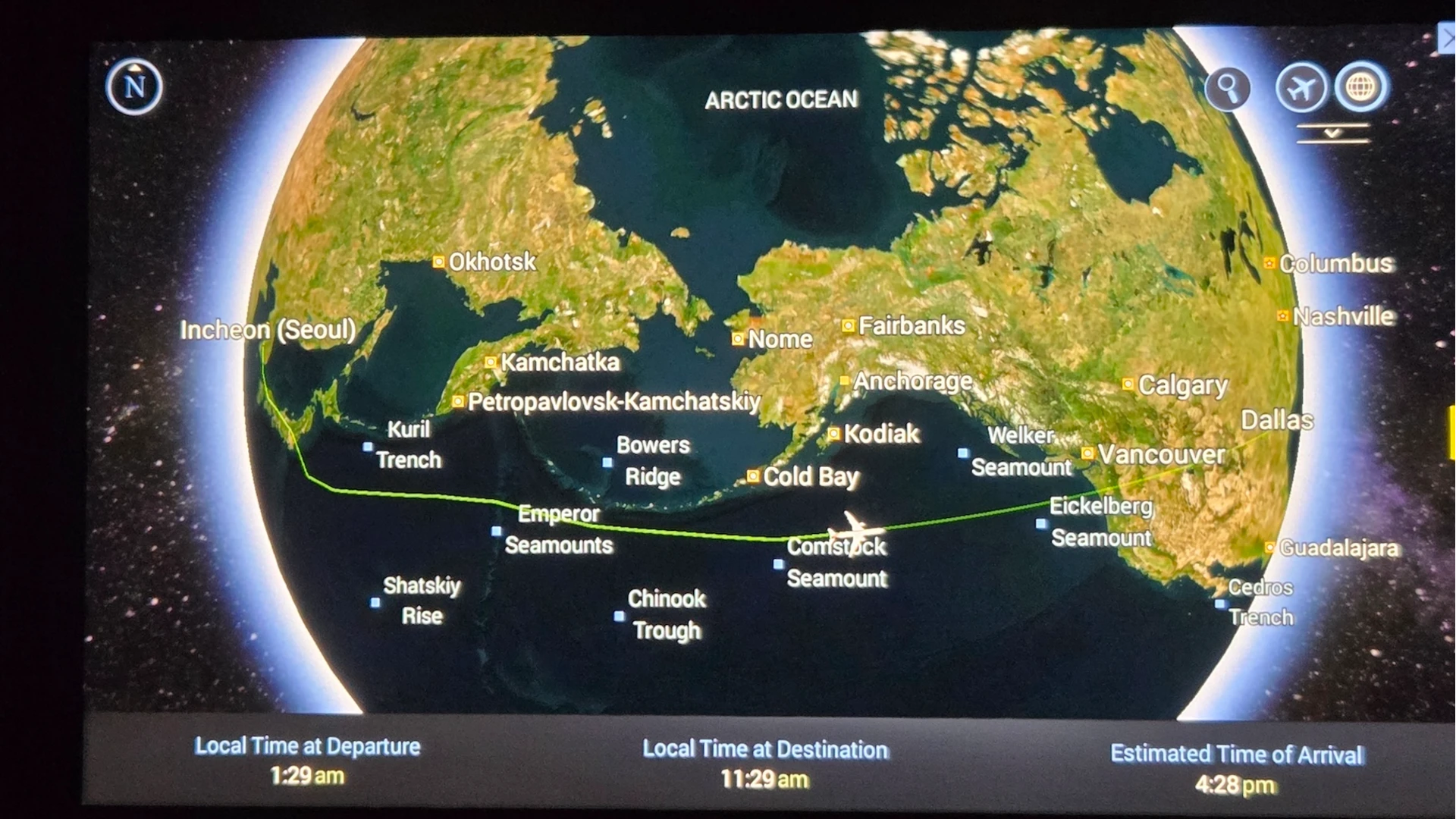
The flight map used Panasonic’s Voyager 3D system. It looked a little dated compared with the more detailed maps and smoother graphics on newer aircraft, but I had no trouble checking our location, remaining distance, altitude and flight time. The shared monitor on the bulkhead also showed the map and flight information during takeoff and landing, so I could check the basics without unfolding my own screen.
The Premium Economy seats had approximately 11.5-inch HD touchscreens. The system and content were the same as regular Economy, but the slightly larger screen made watching movies and checking the flight map more comfortable. It was not comparable to the large, high-resolution screens on newer aircraft, but the size and picture quality were good enough for a long flight. At my bulkhead seat, 13H, the screen was stored inside the left armrest rather than on the seatback in front. I had to lift it out and unfold it to use it. The touchscreen was within easy reach, so I could mostly control it directly.

American Airlines AA280 Seoul-Dallas B777 Premium Economy – In-flight Entertainment & Wi-Fi 3
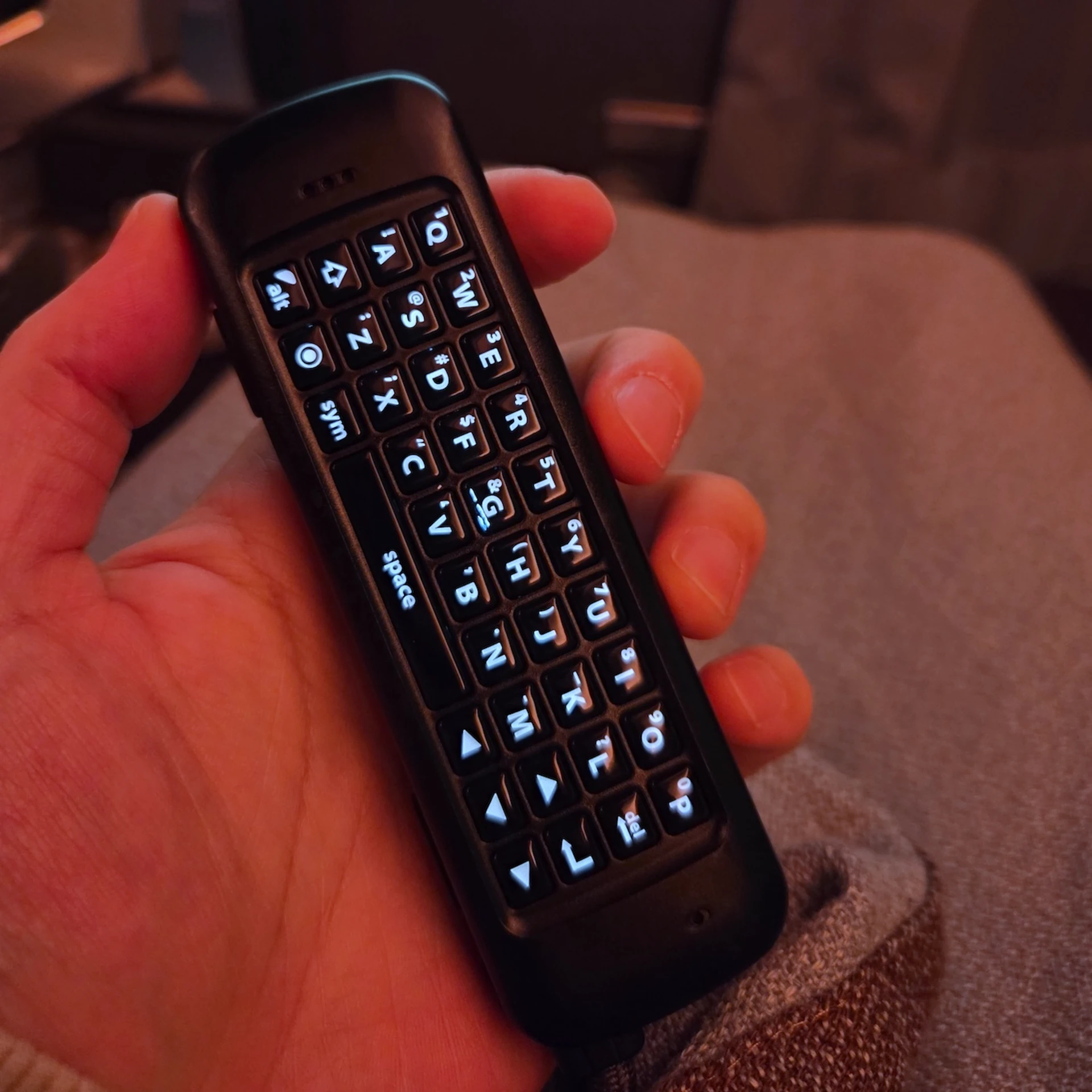
There was also a separate entertainment remote beside the seat. The touchscreen was enough for browsing menus and choosing movies, so I did not use the remote very often. But even while it was stored away, I could press its buttons to adjust the volume or turn off the screen. This was quite convenient for simple controls.

American Airlines AA280 Seoul-Dallas B777 Premium Economy – In-flight Entertainment & Wi-Fi 4
The entertainment screen also showed information about some of the drinks and alcohol available onboard. But it did not seem to list everything that was actually available. If you cannot find the drink you want on the screen, I think asking a flight attendant directly is the quickest and most reliable option.
Paid Wi-Fi was also available on American’s Boeing 777-200ER. This aircraft used Panasonic Wi-Fi, and the prices and how to connect were the same as on my flight about two or three weeks earlier. A two-hour pass cost US$29, while a full-flight pass was US$35. With such a small difference, the full-flight pass made more sense in most cases. On my previous flight, I had purchased the full-flight pass and measured average download speeds of about 3.57 Mbps and upload speeds of about 1.08 Mbps. It was generally fine for checking email, messaging and light web browsing, but not fast enough for smooth video streaming on YouTube or Netflix. Music streaming was mostly possible, although speeds varied quite a bit throughout the flight. The connection felt slower over the Pacific and a little better over land. There were not many long periods when it disconnected completely, but it was clearly behind the Starlink Wi-Fi being introduced by several airlines in both speed and reliability. Premium Economy did not include free Wi-Fi or a separate discount either. As with the entertainment content, the Wi-Fi was available on the same terms as regular Economy.
Overall, Premium Economy did not offer much difference from regular Economy in the entertainment system or content. But the slightly larger 11.5-inch screen and remote beside the seat made watching and controlling it more convenient. It was not the latest system, but it was enough to keep me occupied on a long flight. Even though it cost extra, I also thought having internet access during the flight was still a benefit.
Landing & Immigration
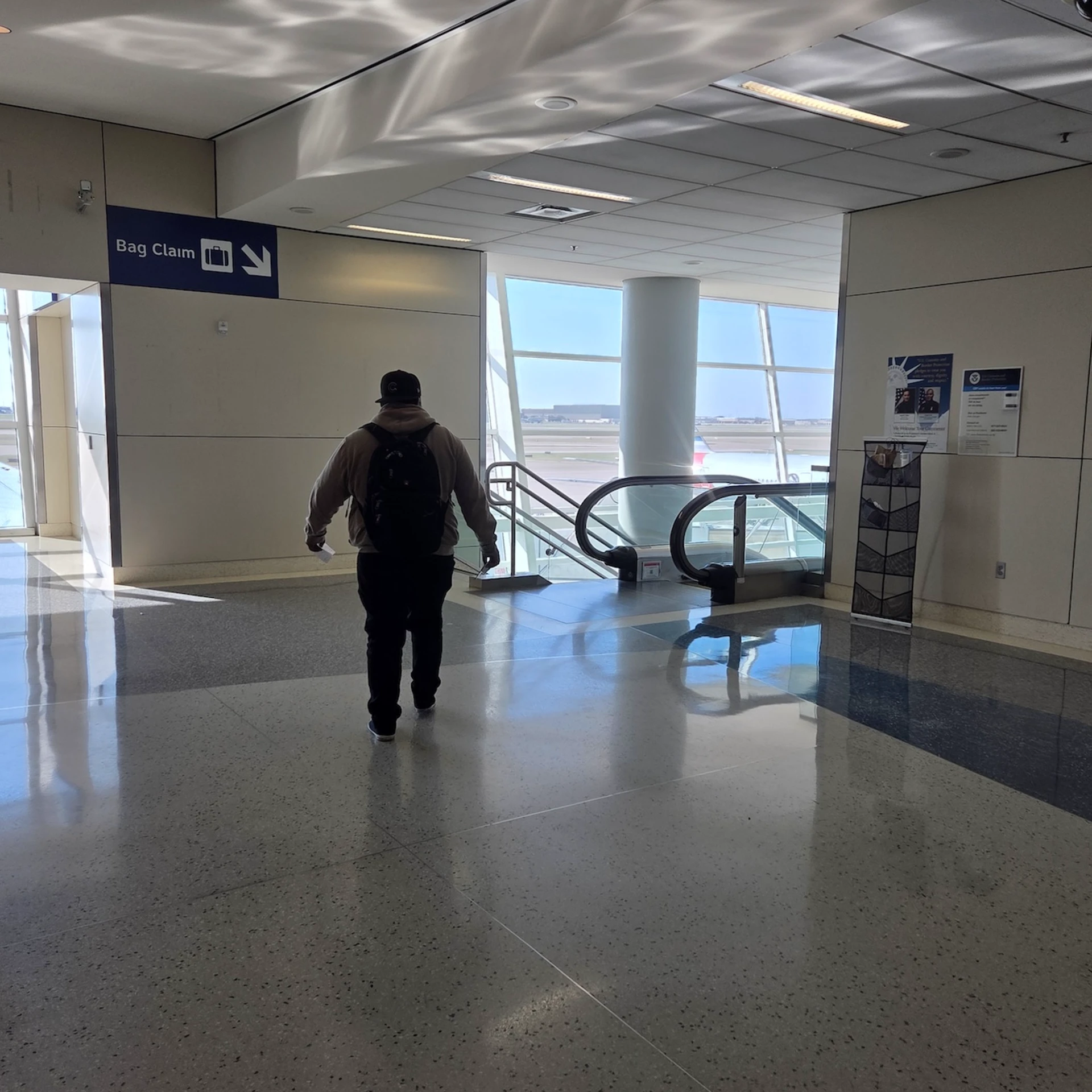
My AA280 flight landed at Dallas Fort Worth International Airport at around 4:30 p.m. The aircraft then arrived at a gate in Terminal D, and I got off about ten minutes later, at around 4:40 p.m. International arrivals at DFW use Terminal D, and passengers head to the same immigration hall. So the wait at immigration can vary quite a bit depending not only on the number of passengers on your flight, but also on how many other international flights arrive around the same time.

American Airlines AA280 Seoul-Dallas B777 Premium Economy – Landing & Immigration 1
I reached immigration at around 4:50 p.m., about ten minutes after getting off the plane. It was very quiet, with almost no passengers waiting. Some flights from the Middle East were not operating at the time, which seemed to have reduced the number of international arrivals during that period. AA280 also had a relatively high proportion of US citizens, so there were not many passengers heading to the foreign passport line. I was sitting in the first row of Premium Economy and could get off the plane quickly too. With all these factors together, I went through immigration with almost no wait.
But immigration wait times at DFW vary considerably by date and time. If several international flights have arrived just before yours, the line can be much longer. Your nationality and immigration status can also affect how long it takes. Global Entry can save a lot of time, but on this occasion, the regular lines were so quiet that it probably would not have made much difference.
American Airlines AA280 Seoul-Dallas B777 Premium Economy – Landing & Immigration 2
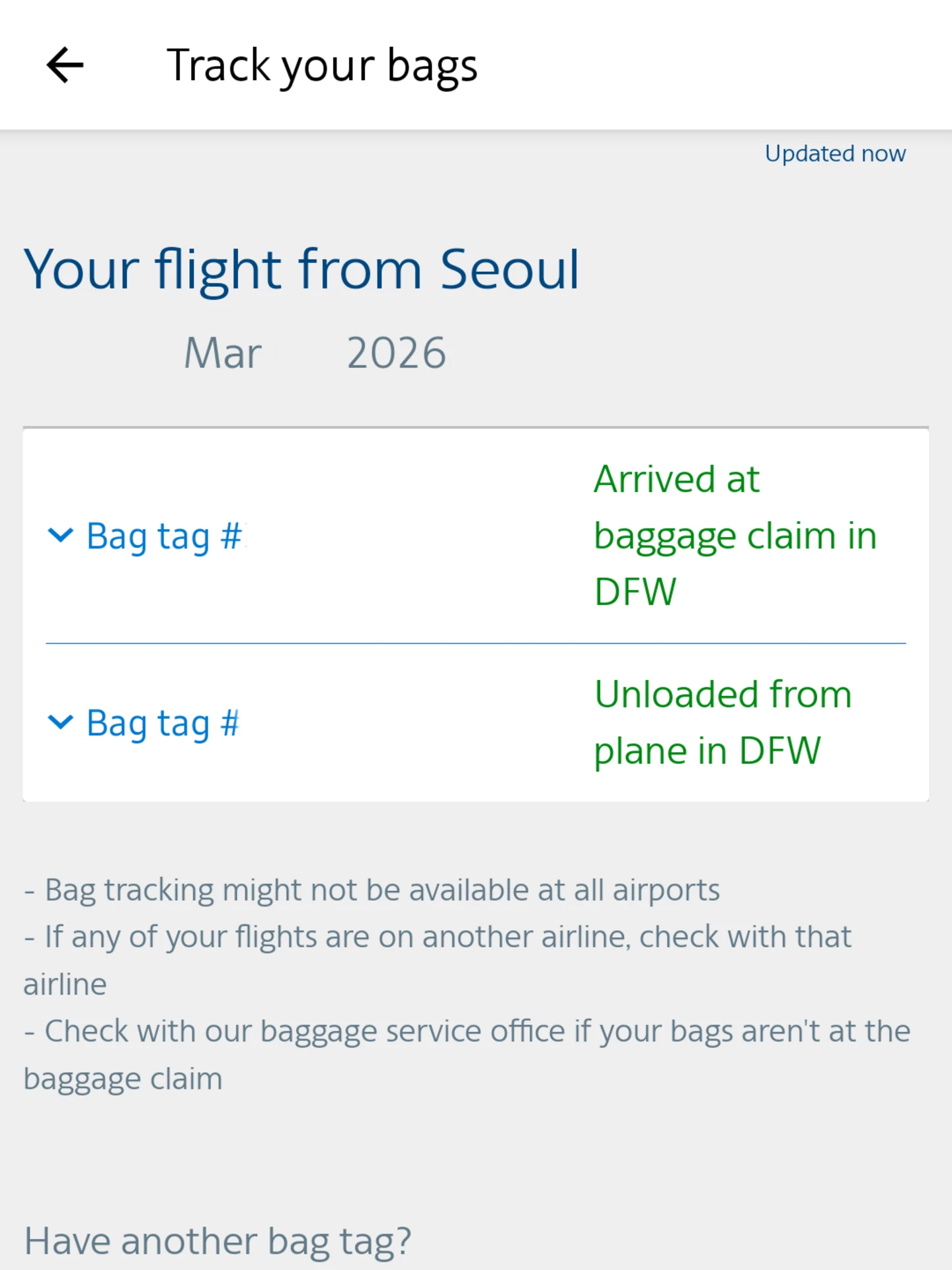
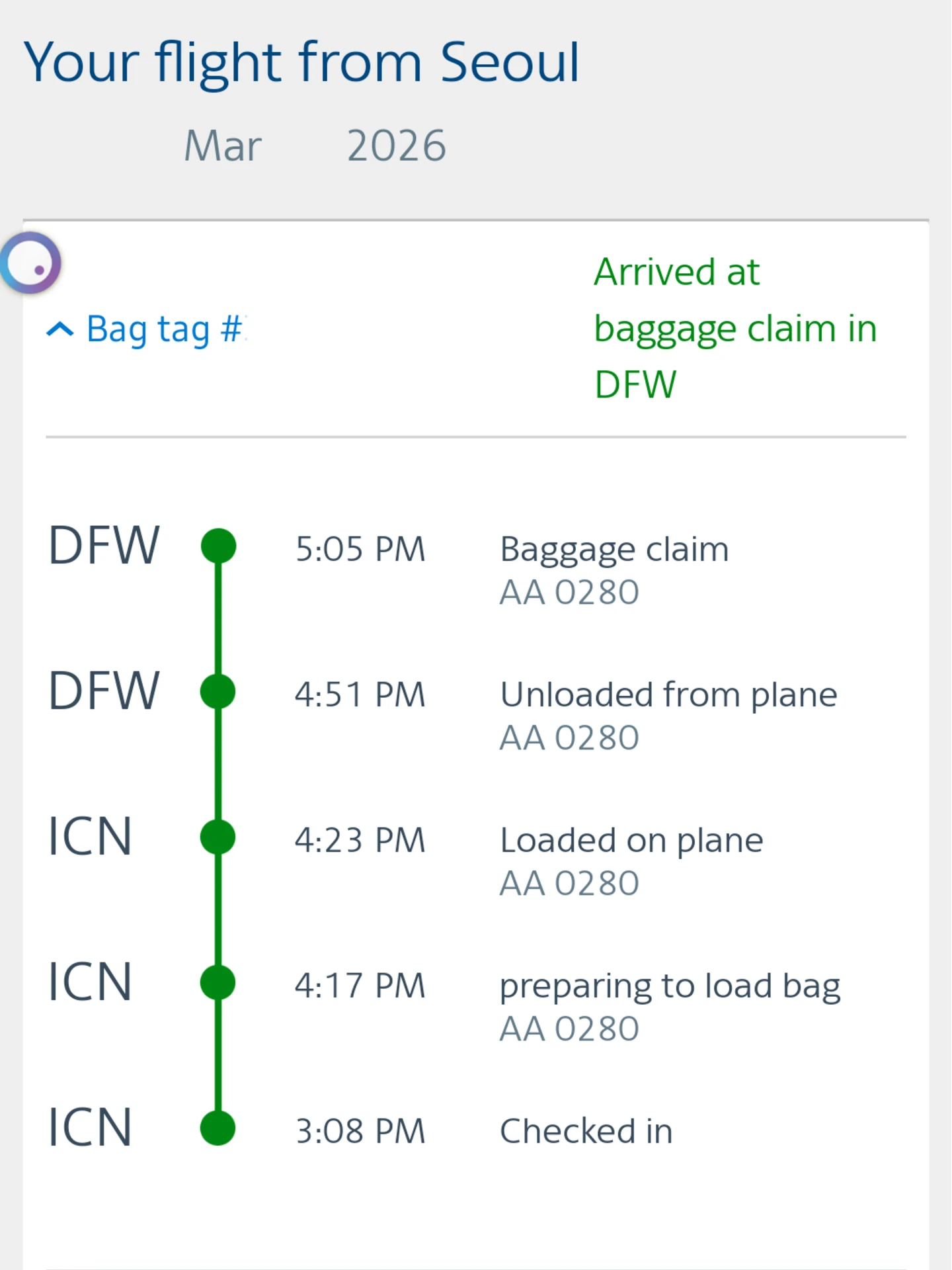
After immigration, I headed to baggage claim, where checked bags started coming out at around 4:55 p.m. The American Airlines app lets you track your checked bags, but the information was not accurate this time. Both of my bags had already reached the carousel, but the app showed only one as having arrived. The other was still shown as not yet delivered. Both bags arrived without any problems, but relying only on the app could have been a little confusing.
American Airlines AA280 Seoul-Dallas B777 Premium Economy – Landing & Immigration 3
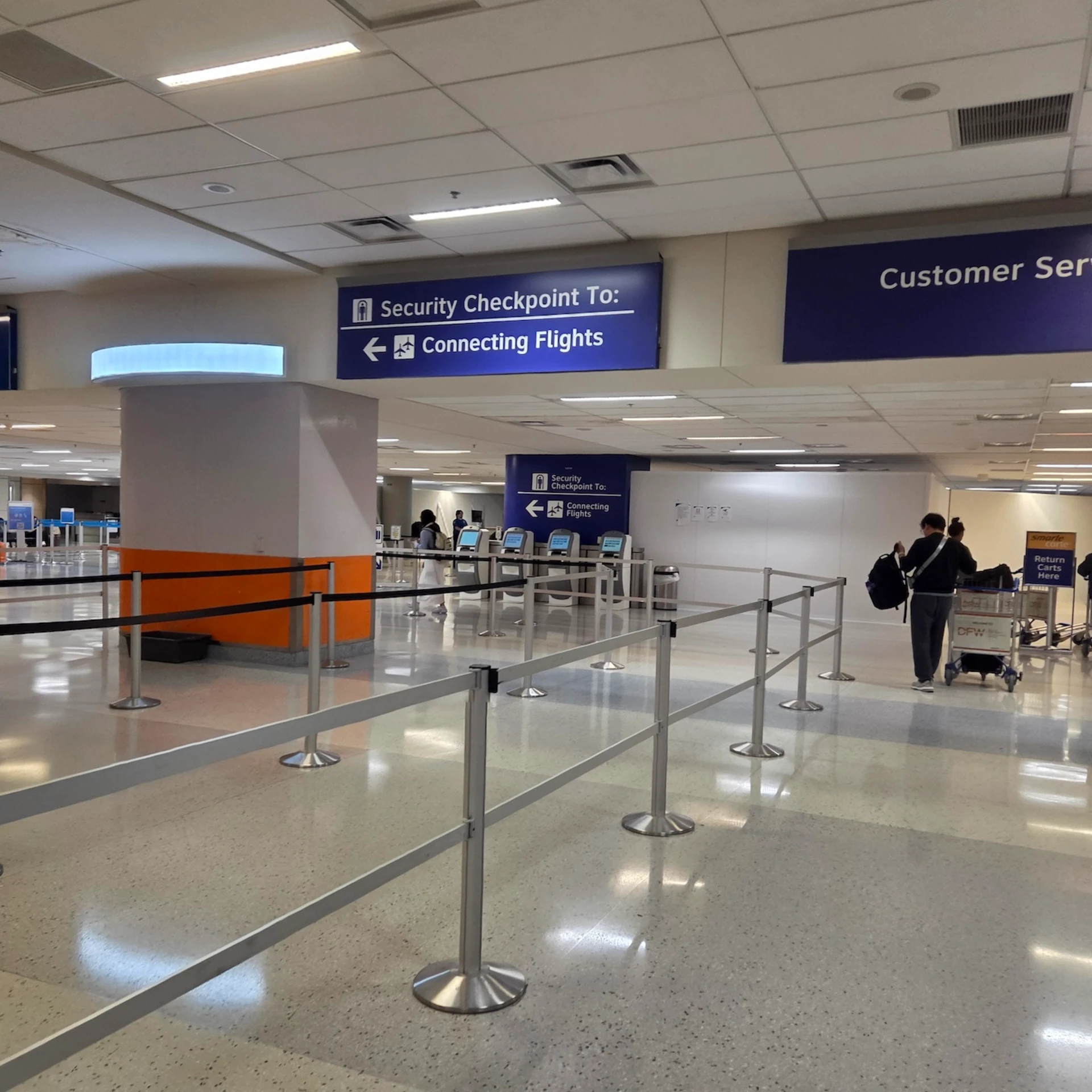
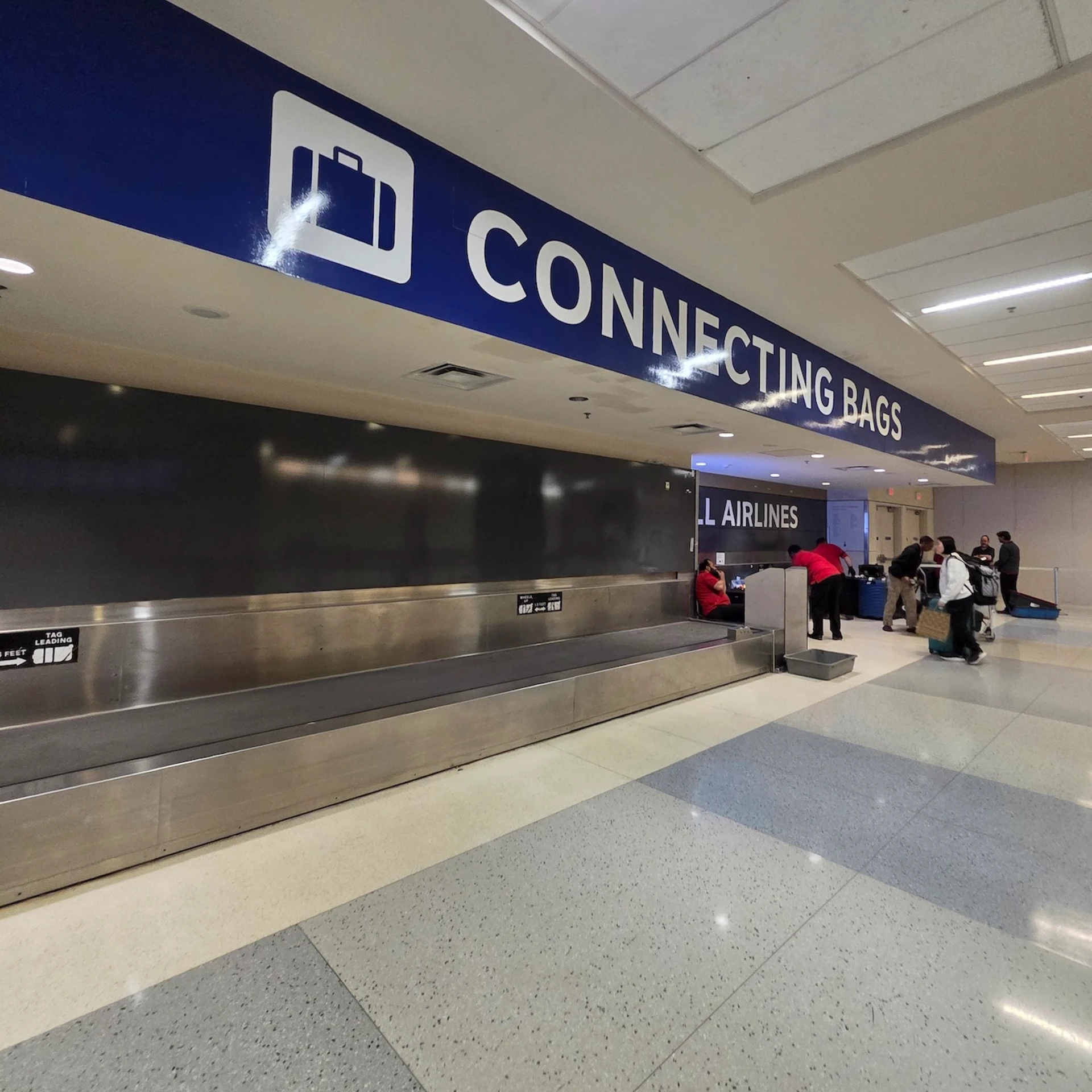
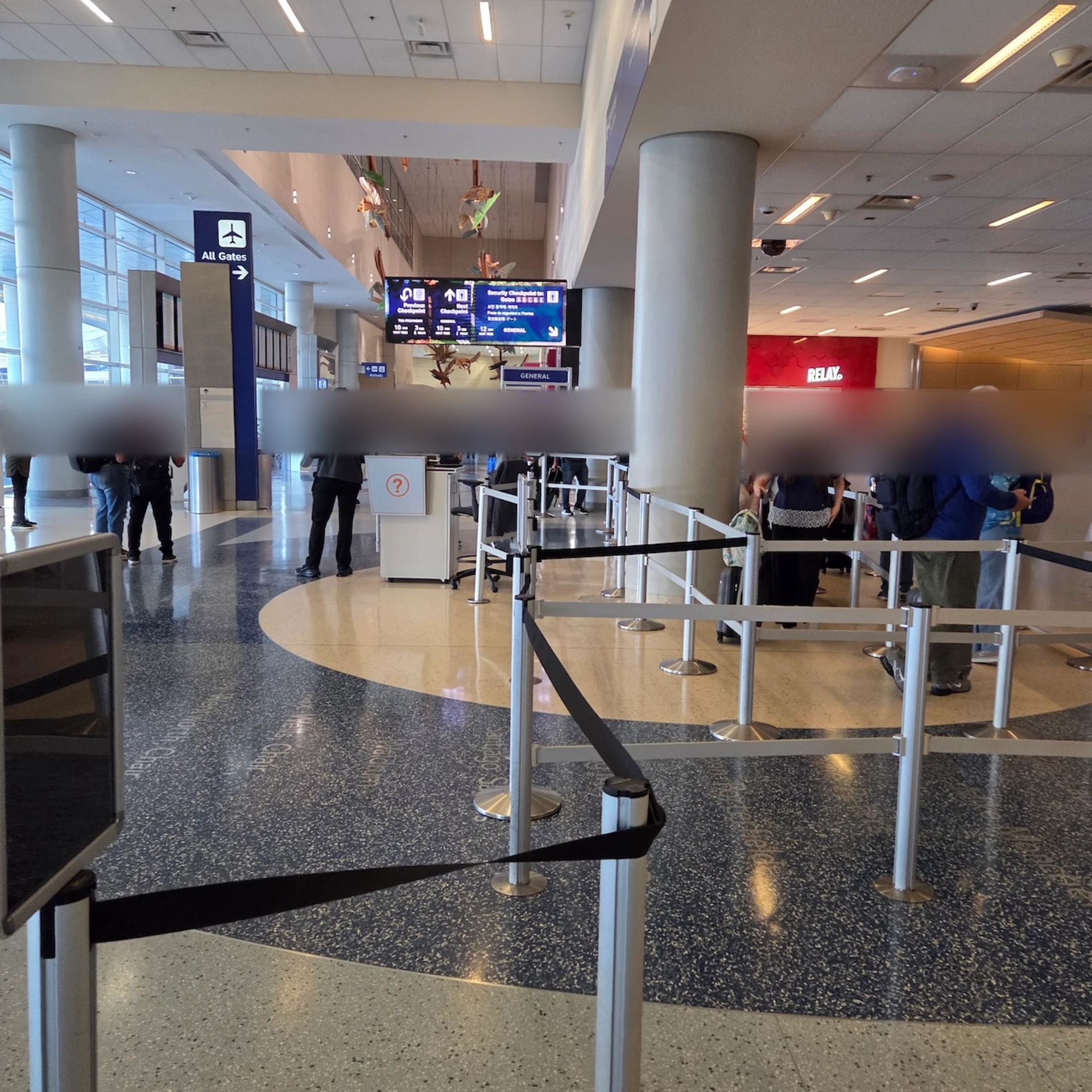
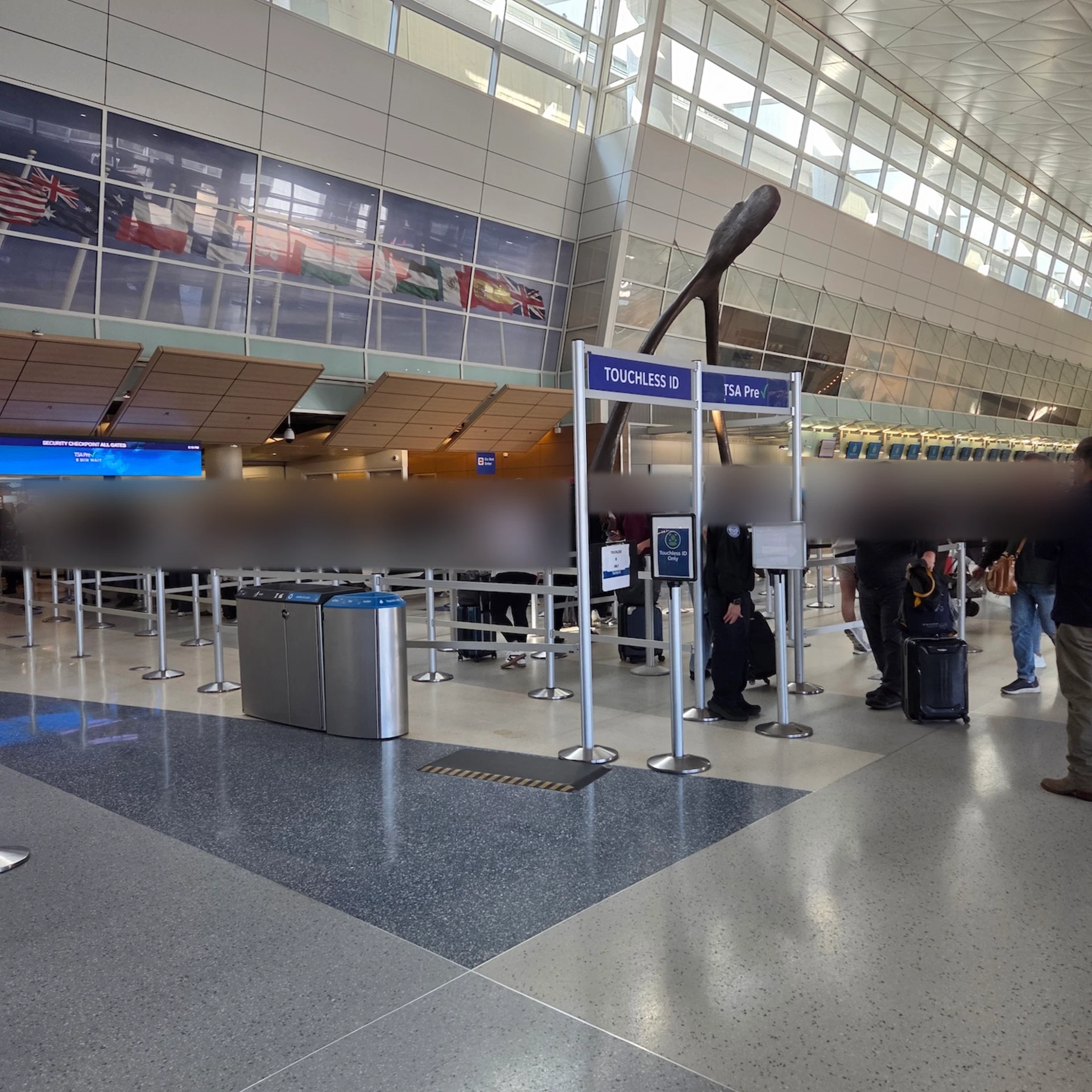
If DFW is not your final destination and you are connecting to another US city or another country, you need to collect your checked bags after immigration. If Dallas is your first point of entry into the US, you have to collect your bags and take them through customs, even if they are tagged to your final destination. After collecting them, follow the “Connecting Flights” signs to the baggage recheck area. If you bought any duty-free liquids in containers larger than 100 ml, this is a good time to put them in your checked bag before handing it over again. After rechecking your bags, you come out into the public area and need to pass through a nearby security checkpoint to get back airside. If your connecting flight leaves from another terminal, you can take Skylink after security. DFW is a large airport, but Skylink runs within the secure area and makes traveling between terminals fairly convenient.
American Airlines AA280 Seoul-Dallas B777 Premium Economy – Landing & Immigration 4
Your connection time needs to include immigration, baggage collection, rechecking your bags, security and getting to the next terminal. On busy days, such as Friday evenings or holiday periods, security can take a long time even if immigration is quick. Personally, I would expect an international connection at DFW to take about an hour even when everything goes smoothly, and I would allow at least two hours between flights. If you do not have Global Entry, several international flights arrive at the same time, or your checked bags are delayed, allowing three hours or more would be safer. For more details on arrival and connection procedures at DFW, please see my separate post, “How to Connect at Dallas Fort Worth International Airport (DFW).”
What Could Be Better
My biggest disappointment with American Airlines’ Boeing 777-200ER Premium Economy was that the service did not feel as different from regular Economy as I had expected. The seat, bedding, amenity kit, dishes and meal presentation were clearly better. But the basic service, drink selection, lavatories and entertainment system were almost the same as regular Economy.
The lack of dedicated Premium Economy lavatories was the most noticeable downside. Although the cabin is separate from Business Class and regular Economy, I still had to walk back into Economy to use the lavatories. It was difficult to see from my seat whether they were available, and after meal service, there was a good chance of having to queue with Economy passengers. The lavatories themselves were also the same as regular Economy, with no extra amenities. The sink was a little inconvenient too. There was a button behind the water button that opened the drain, and I had to keep holding it down for the water to drain away. As soon as I let go, the drain closed and water collected in the sink. Anyone using it for the first time might think it was not draining properly.
The ceramic dishes, metal cutlery and neat presentation made the meals clearly different from regular Economy, but the portions were smaller than I expected. If you board without eating beforehand or usually eat larger meals, the first meal alone might not be enough. It was also disappointing to be told that the chicken was unavailable for the meal before arrival, even though I was served in the very first row of Premium Economy. Not having a spoon for the bibimbap felt like another detail that had been missed. There were forks, a knife and wooden chopsticks, but no spoon to make the bibimbap easier to eat. It seemed that the same Western-style cutlery set was provided for every meal. I also would have liked a separate menu for Premium Economy. Being able to see the food, drinks and alcohol choices beforehand would have made choosing easier and the service feel a little more premium. Some drink information was available on the entertainment screen, but it did not show everything, so I still had to ask a flight attendant whether they had what I wanted.
The paid Wi-Fi and slow connection were other downsides. At US$29 for two hours or US$35 for the full flight, it was not cheap, and the speed was mostly suitable for email and light web browsing. Premium Economy did not include free Wi-Fi or a discount either. The overhead bins on the Boeing 777-200ER were also small compared with newer aircraft. In particular, carry-on suitcases had to be laid flat in the center bins rather than stored upright. There are not many Premium Economy passengers, but on a full flight, bags from other cabins can end up in the remaining space. Boarding late could mean having to store your bag farther from your seat.
In the end, the seat and meals offered a clear improvement over regular Economy, but some of the smaller service details did not feel particularly premium. Having dedicated lavatories and a simple menu would have made the overall experience feel much more complete.
Final Thoughts & Conclusion
American Airlines’ Boeing 777-200ER Premium Economy was clearly more comfortable than regular Economy, and I felt it was worth it on a transpacific flight of over 13 hours. The seat does not lie flat like Business Class, but the extra legroom, generous seat width, eight inches of recline and leg rest made it much easier to find a comfortable position. Being able to relax my legs and having less overlap with the passenger beside me made a noticeable difference on a long flight. I was also happy with my bulkhead seat, 13H. I could not keep my bag at my feet during takeoff and landing, but there was no seat reclining into my space, and I had enough room to stretch my legs.
American Airlines AA280 Seoul-Dallas B777 Premium Economy – Final Thoughts & Conclusion 1
The cabin service was not very different from regular Economy, but Premium Economy was served first, so I did not have to wait long for drinks or meals. I could finish eating sooner, and the trays were collected first too. This made a difference when I wanted to get some rest as early as possible. The bedding, slippers, headset and amenity kit, along with meals served in ceramic dishes with metal cutlery, were also a step above regular Economy. But there were no dedicated lavatories, separate drinks menu or crew assigned only to Premium Economy. So I think it is more accurate to see it as regular Economy with a more comfortable seat, better meals and amenities than as something close to Business Class. Personally, I was fine with this. The seat matters most to me on a long flight, and Premium Economy solves much of what makes regular Economy difficult: limited legroom and a lack of personal space.
At the right price, I think it is well worth considering. For an award ticket, paying an extra 15,000 miles over regular Economy offers good value. For a one-way transpacific cash ticket, I would also consider it a good choice at around US$300–400 more. On this trip, I paid 50,000 miles and US$40.43 for Premium Economy from Incheon to Dallas, which I thought was a good use of miles. Overall, I see American Airlines’ Premium Economy as a practical option. The service is not fancy or particularly special, but being able to cross the Pacific much more comfortably than in regular Economy gives it real value.
The Editor Behind This Journey: Heejung

Have any questions or similar experiences? Please feel free to share them below.
Share this story to inspire another journey.
More Journeys to Explore
🗓️ Dec 2024 Flight | 💺 World Traveller | ✈️ A350-1000
7/10 (🌕🌕🌕🌗🌑) British Airways’ long-haul economy experience was considerably better than its short-haul product. The comfortable seat aboard the modern A350, excellent entertainment system, and decent meals were all positives, but chaotic boarding and the lack of priority baggage handling ultimately made this a fairly ordinary long-haul flight.
🗓️ Apr 2026 Flight | 💺 Business | ✈️ A350-900
9/10 (🌕🌕🌕🌕🌗) STARLUX Airlines’ A350-900 Business Class delivered a polished premium experience with stylish seats, excellent service, and an extensive food and beverage selection. The snack policy and a few other details could have been better, but the flight was highly satisfying overall.
🗓️ Apr 2026 Flight | 💺 Business | ✈️ A350-900
9/10 (🌕🌕🌕🌕🌗) Singapore Airlines’ A350-900 Business Class delivered an impressive experience even on a flight of just 40 minutes, with a spacious lie-flat seat, efficient service, a light meal, wine, free Wi-Fi, and an excellent lounge. The aging seat and limited cold meal selection were minor drawbacks.
🗓️ Feb 2026 Flight | 💺 Prestige Sleeper | ✈️ B777-300ER
7/10 (🌕🌕🌕🌗🌑) Korean Air's signature service, Korean-style meals, and convenient lounge boarding were satisfying, but it was a flight where the limitations of the older B777-300ER and Prestige Sleeper seats were clear. Even within the same Prestige Class, the gap in quality depending on the aircraft and seat type was very noticeable.