

Flight Review Series
- Overall Rating:8/10 (🌕🌕🌕🌕🌑)
- Quick Summary:
- Easily one of the best Economy Class products in the sky, completely justifying JAL’s premium price tag.
- Flight Route
- JL11 (AA8481), Dallas Fort Worth International Airport (DFW), USA → Tokyo Haneda International Airport (HND), Japan
- 10:35 Departure → 15:25(+1) Arrival
- Flight Time: 13h 50m
- Aircraft Type:A350-1000, JA05WJ (Aug 2024 delivered, 1.5-year-old)
- Cabin Class & Product:Seat Selection
- Ticket Price & Booking
- Check-in & Baggage Allowance
- Departure Lounge
- Boarding Process
- Cabin Class & Product
- In-flight Service
- Amenities & Lavatories
- Food & Beverage
- In-flight Entertainment & Wi-Fi
- Landing & Immigration
- What Could Be Better
- Final Thoughts & Conclusion
6. Ticket Price & Booking
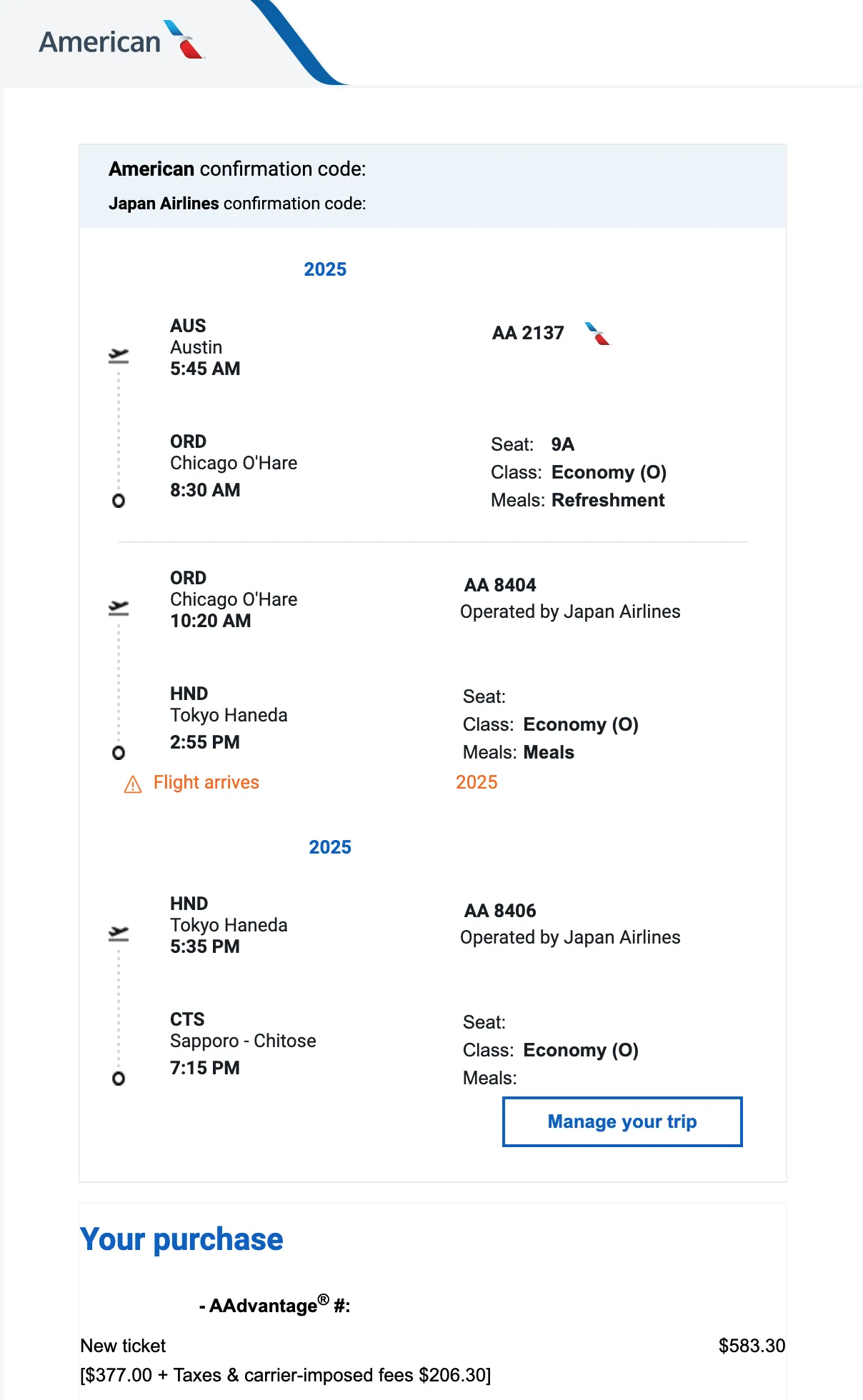
Initial Ticket Info: Austin to Sapporo via Chicago and Tokyo Haneda
Initial Ticket Info: Austin to Sapporo via Chicago and Tokyo Haneda
I originally purchased a one-way ticket on American Airlines from Austin, Texas to Sapporo New Chitose Airport via Chicago O’Hare and Tokyo Haneda for $583.30 USD. How this eventually turned into a Dallas layover involves a bit of a story. Starting mid-December, airfares from the US to Asia skyrocket, especially around the last Thursday or Friday before Christmas. Since I predictably travel to Japan or Korea at the end of December every year, I always start monitoring fares 11 to 12 months in advance when schedules first open. Usually, only full-fare tickets are available at that time, but occasionally, discounted buckets drop early.

Price History for Austin to Sapporo via Chicago & Haneda © google.com/travel/flights
Price History for Austin to Sapporo via Chicago & Haneda © google.com/travel/flights
Around February 2025, about 10 months before my planned departure, I spotted a one-way ticket to Japan for under $600 and immediately booked it. This original itinerary had me flying to Chicago O’Hare, taking JAL to Haneda, and then connecting to Sapporo on a Sunday. A Sunday departure right before Christmas at that price was a phenomenal deal, so I booked it without hesitation and was quite pleased. However, in June, JAL resumed their Narita-Chicago route, which triggered schedule changes across their Chicago flights. The Chicago-Haneda segment was shifted to a red-eye, meaning my arrival in Sapporo was delayed from Monday to Tuesday. Since this significant schedule change qualified for a free rebooking, I called American Airlines and successfully switched to an itinerary routing through Dallas instead.
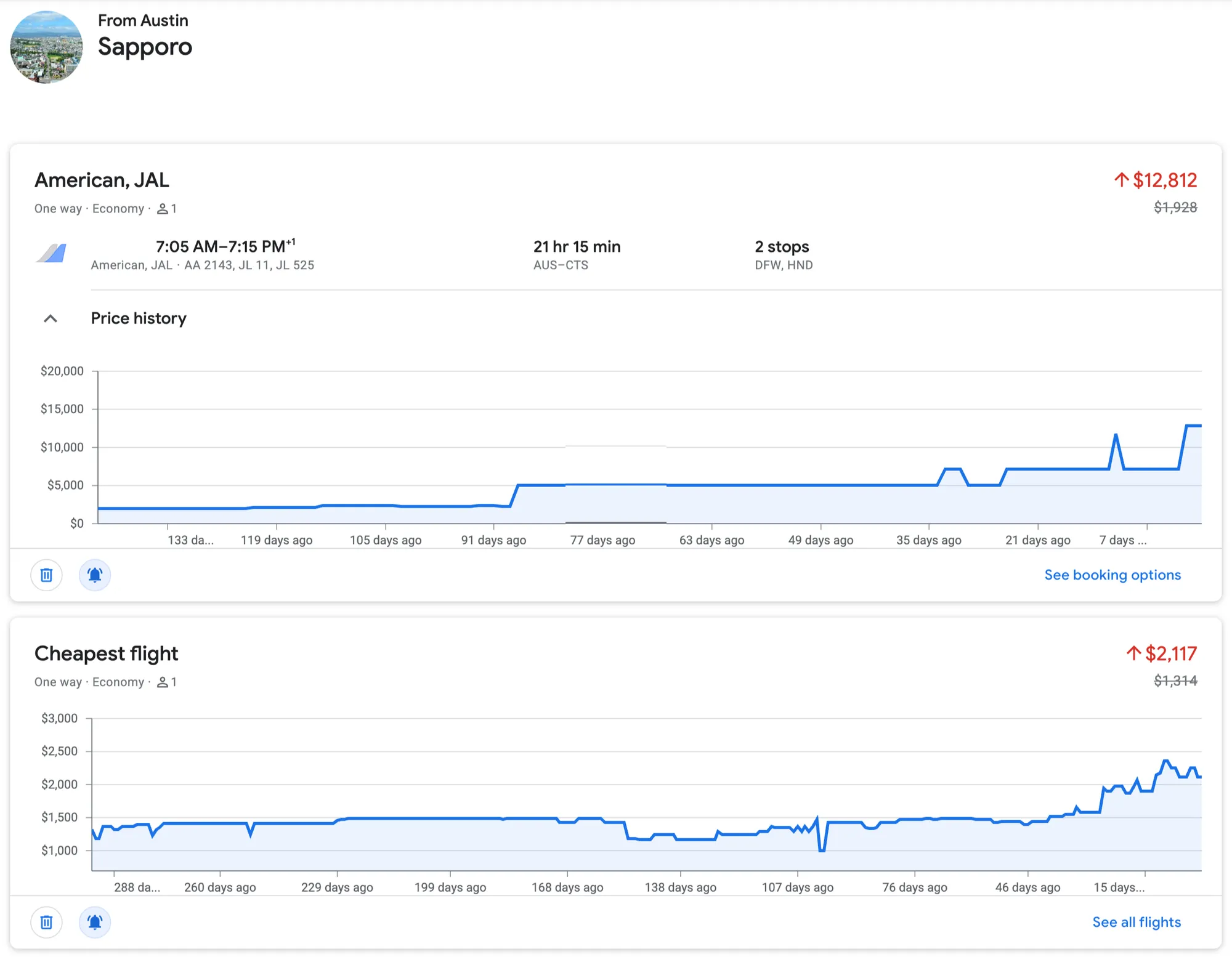
Price History for Austin to Sapporo © google.com/travel/flights
Price History for Austin to Sapporo © google.com/travel/flights
My originally ticketed JL9 out of Chicago was operated by JAL’s older B777-300ER. JL11 out of Dallas Fort Worth, however, is operated by their brand-new flagship A350-1000, meaning the Dallas routing is typically much more expensive. Thanks to this unexpected schedule change, I managed to score a flight on the A350-1000 for a bargain-basement price. Having already reviewed First, Business, and Economy on the JAL A350-1000, I now just need to try Premium Economy to complete the set.
7. Check-in & Baggage Allowance
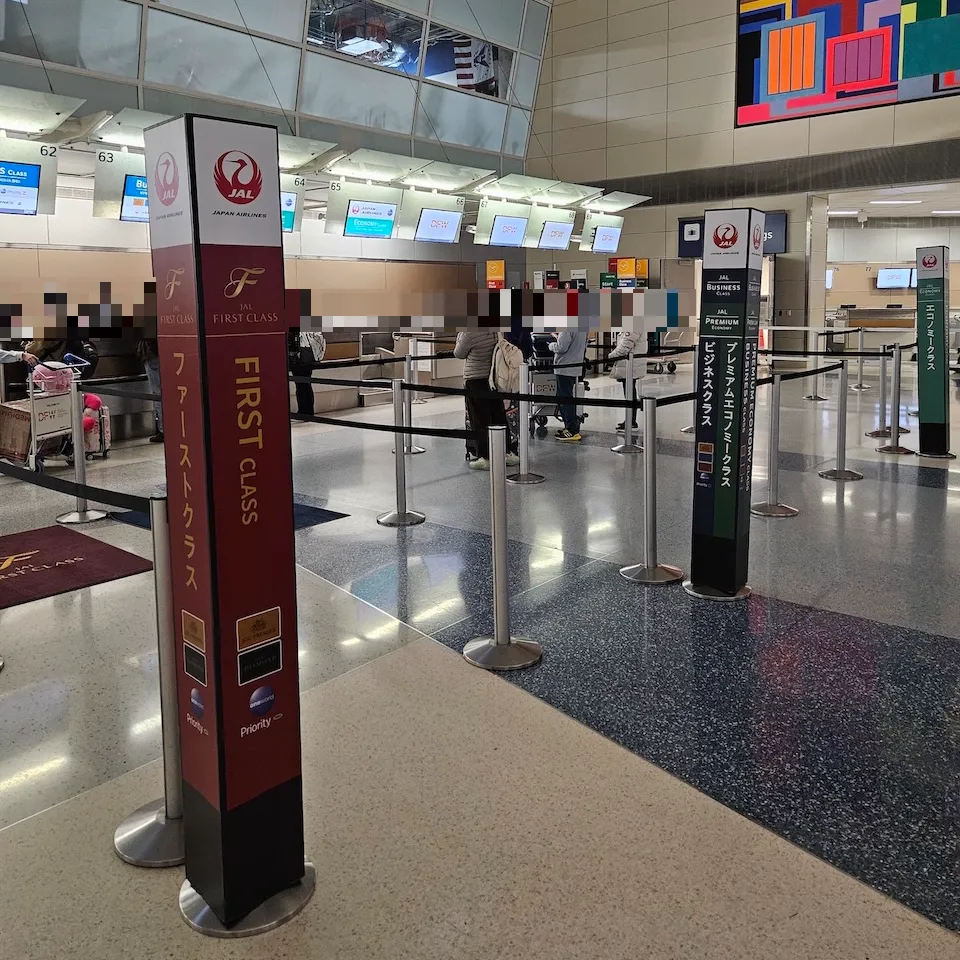
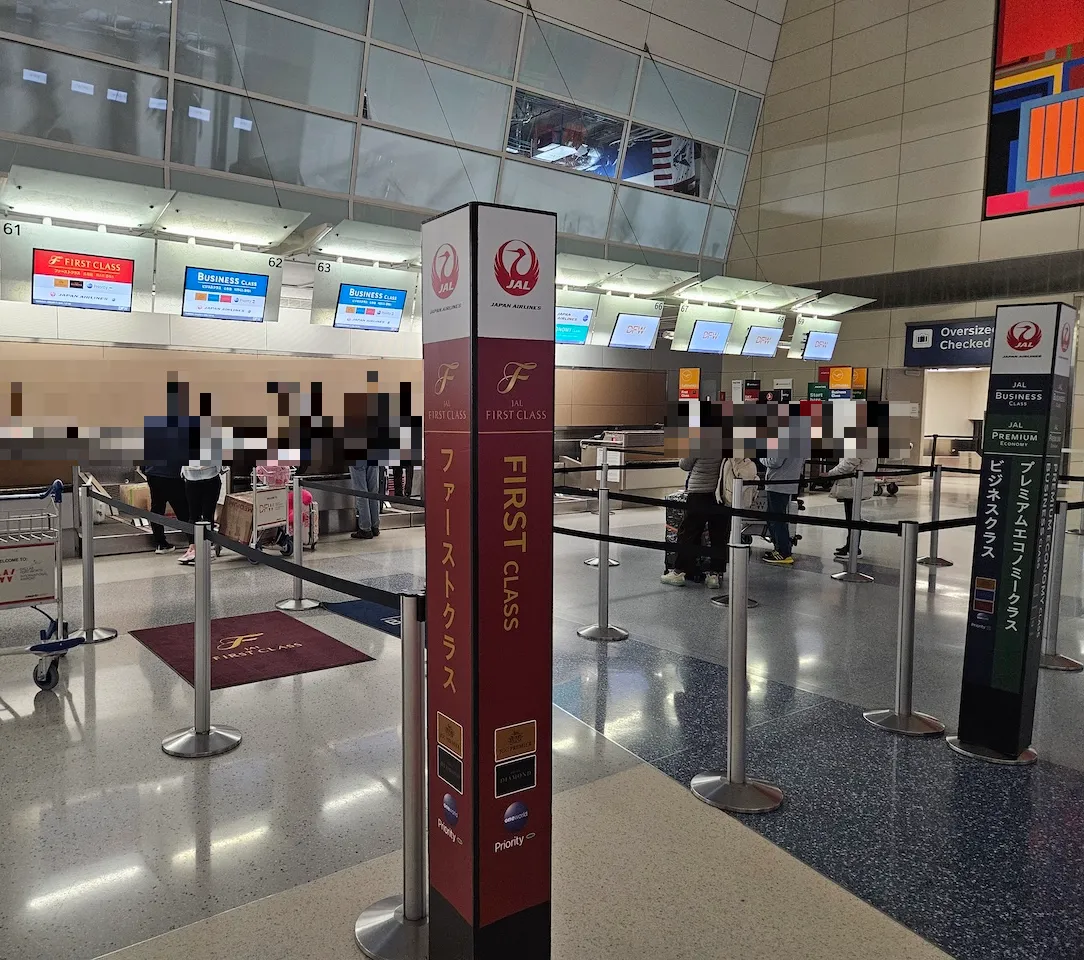
JAL Check-in Counters at DFW Airport
Check-in for JAL’s JL11 to Tokyo Haneda is located in the 60s section of Terminal D at Dallas Fort Worth (DFW) Airport. It’s situated near the Korean Air counters, making it fairly easy to spot. The counters open about 3 hours before departure (around 7:30 AM) and close strictly 1 hour before departure (around 9:30 AM). Since I checked my bags all the way through from Austin, I didn’t need to visit the JAL counters in Dallas. Given that JAL’s A350-1000 is configured with only 239 seats—the lowest density layout globally for this aircraft type—the check-in queues shouldn’t be overly long.

JAL International Carry-on Baggage Info © jal.co.jp/jp/en/
JAL International Carry-on Baggage Info © jal.co.jp/jp/en/
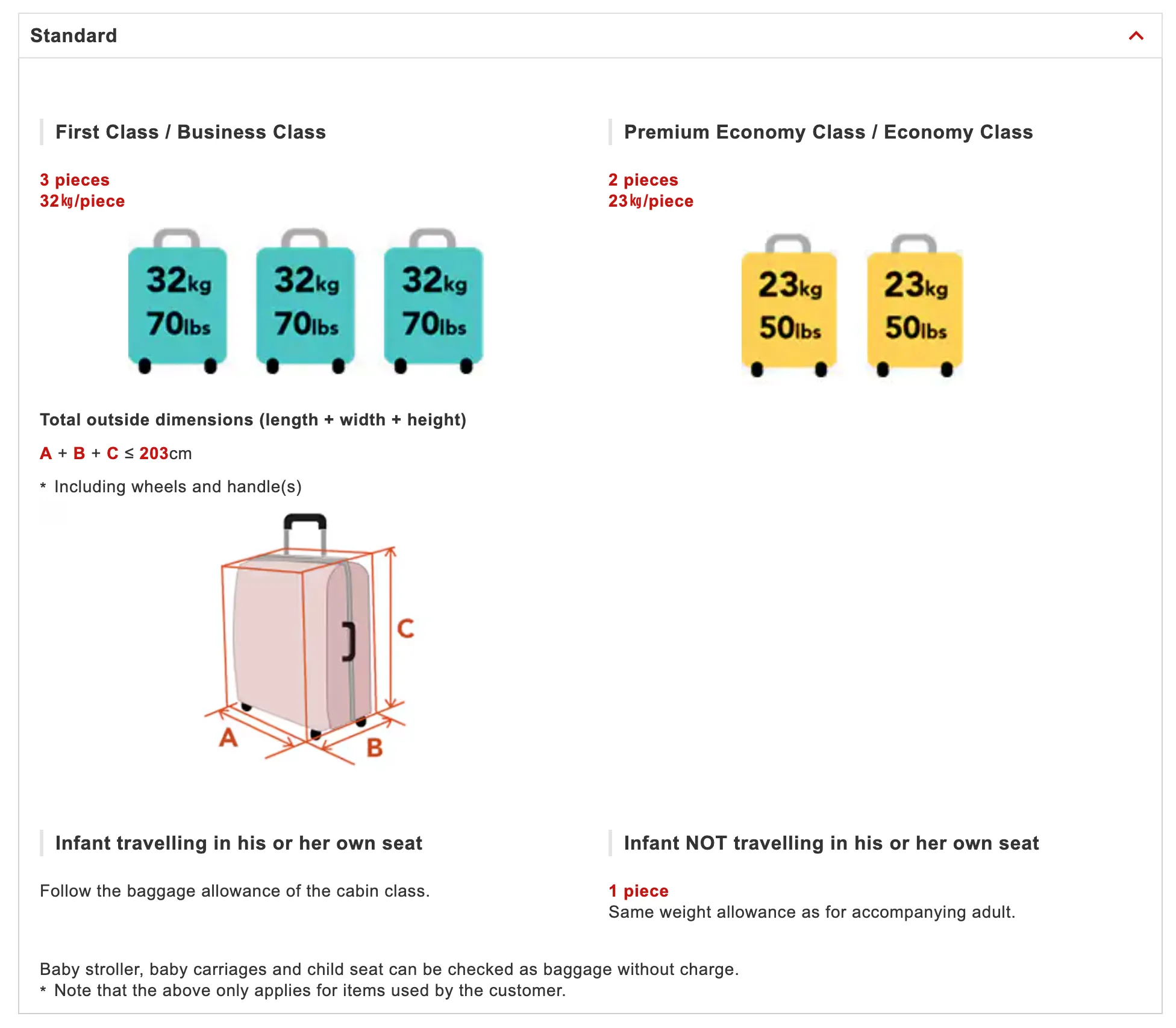
JAL International Checked Baggage Info © jal.co.jp/jp/en/
JAL International Checked Baggage Info © jal.co.jp/jp/en/
Japan Airlines allows one carry-on bag and one small personal item for international flights, with a combined weight strictly limited to 10 kg (22 lbs) regardless of the cabin class. For checked baggage on Japan-North America routes, First and Business Class passengers are allowed three bags up to 32 kg (70 lbs) each, while Premium Economy and Economy Class passengers can check two bags up to 23 kg (50 lbs) each. Oneworld Sapphire members do not receive an extra baggage allowance since the standard two-bag allowance already applies. However, Oneworld Emerald members are entitled to one additional checked bag based on their ticketed class weight limit. For JAL’s carry-on baggage policy, click here. For checked baggage policies, click here, and for oneworld elite benefits, check here.
8. Departure Lounge
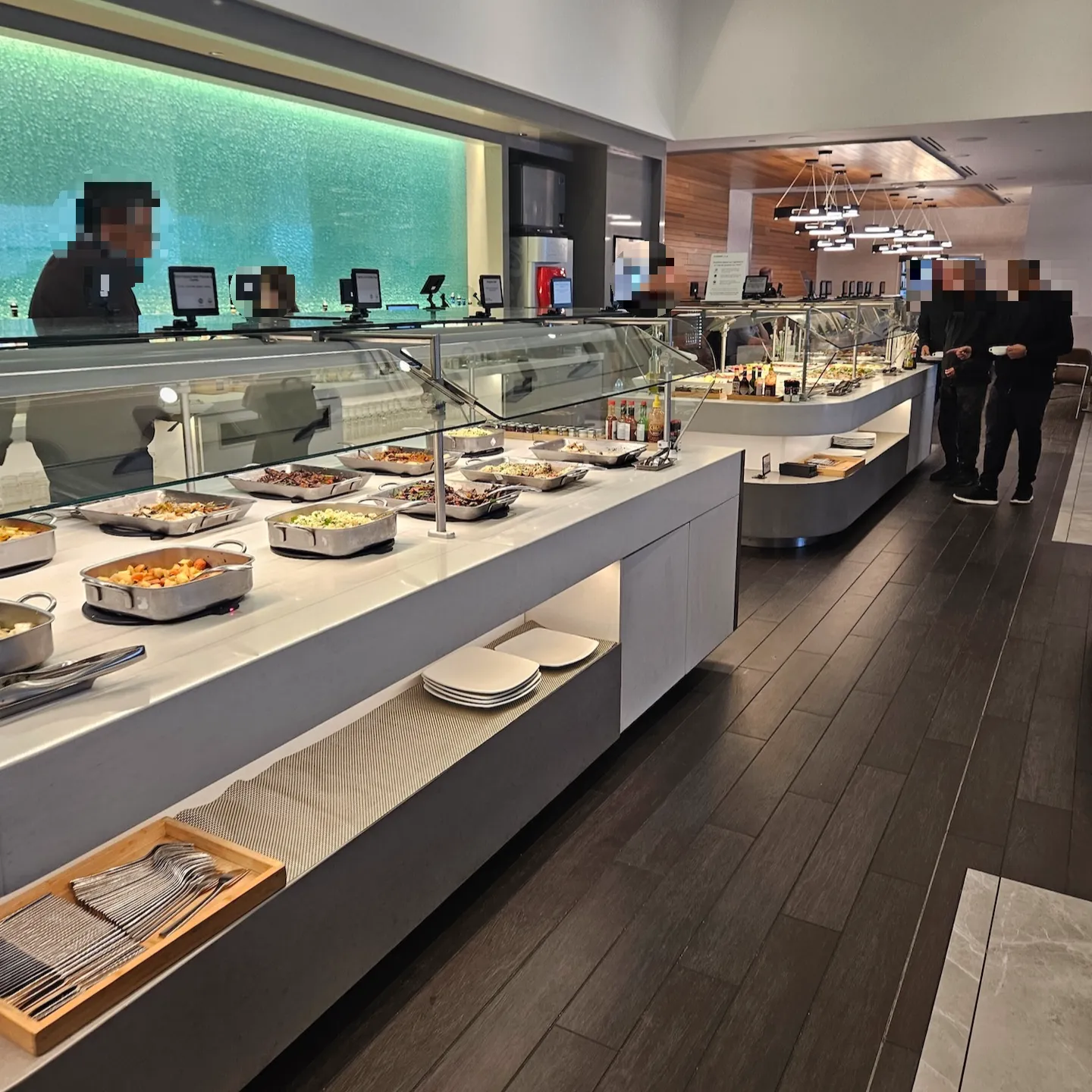
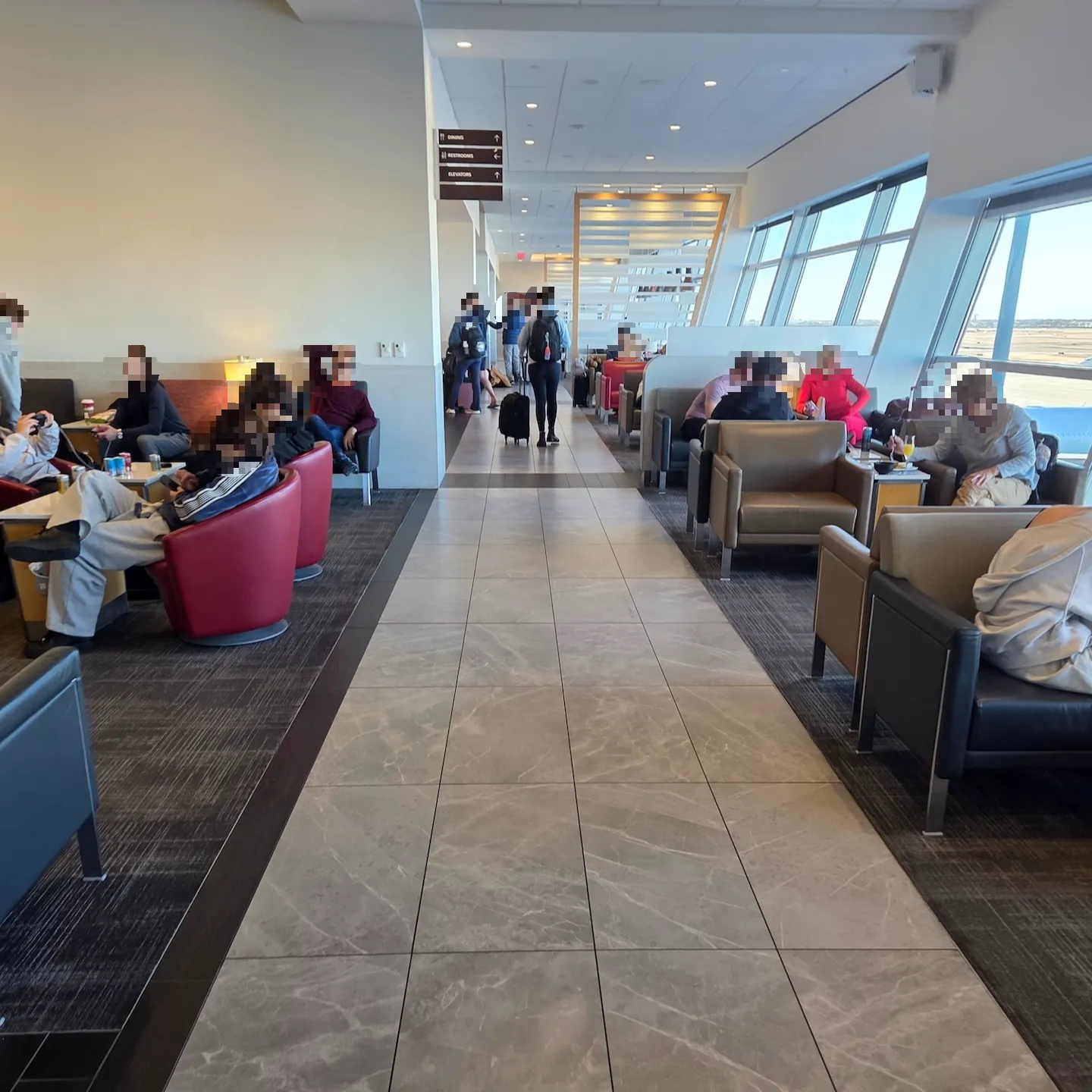
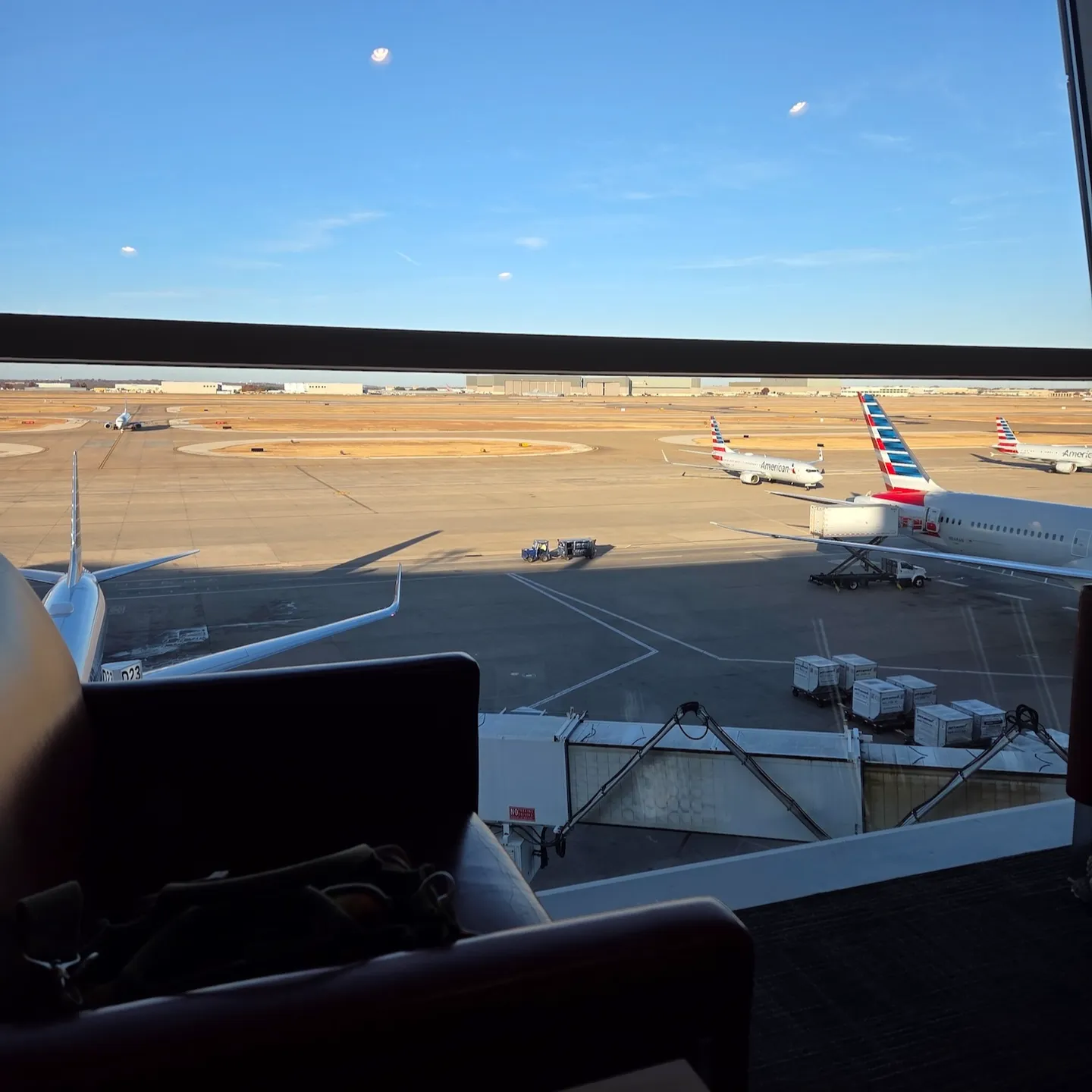
American Airlines Flagship Lounge at DFW
At DFW, JAL utilizes the American Airlines Flagship Lounge and the Admirals Club. First and Business Class passengers are granted access to the premium Flagship Lounge. Premium Economy passengers, as well as Economy passengers on full-fare ‘Y’ class tickets, are given access to the standard Admirals Club. Most airlines don’t extend lounge access to Premium Economy or standard Economy passengers, making JAL’s policy notably generous. Furthermore, if you hold oneworld Sapphire or Emerald status, you are entitled to use the Flagship Lounge regardless of your cabin class. Although I was flying Economy, my oneworld Sapphire status got me into the Flagship Lounge. For a full review, please refer to my dedicated post: American Airlines Flagship Lounge at DFW Airport.
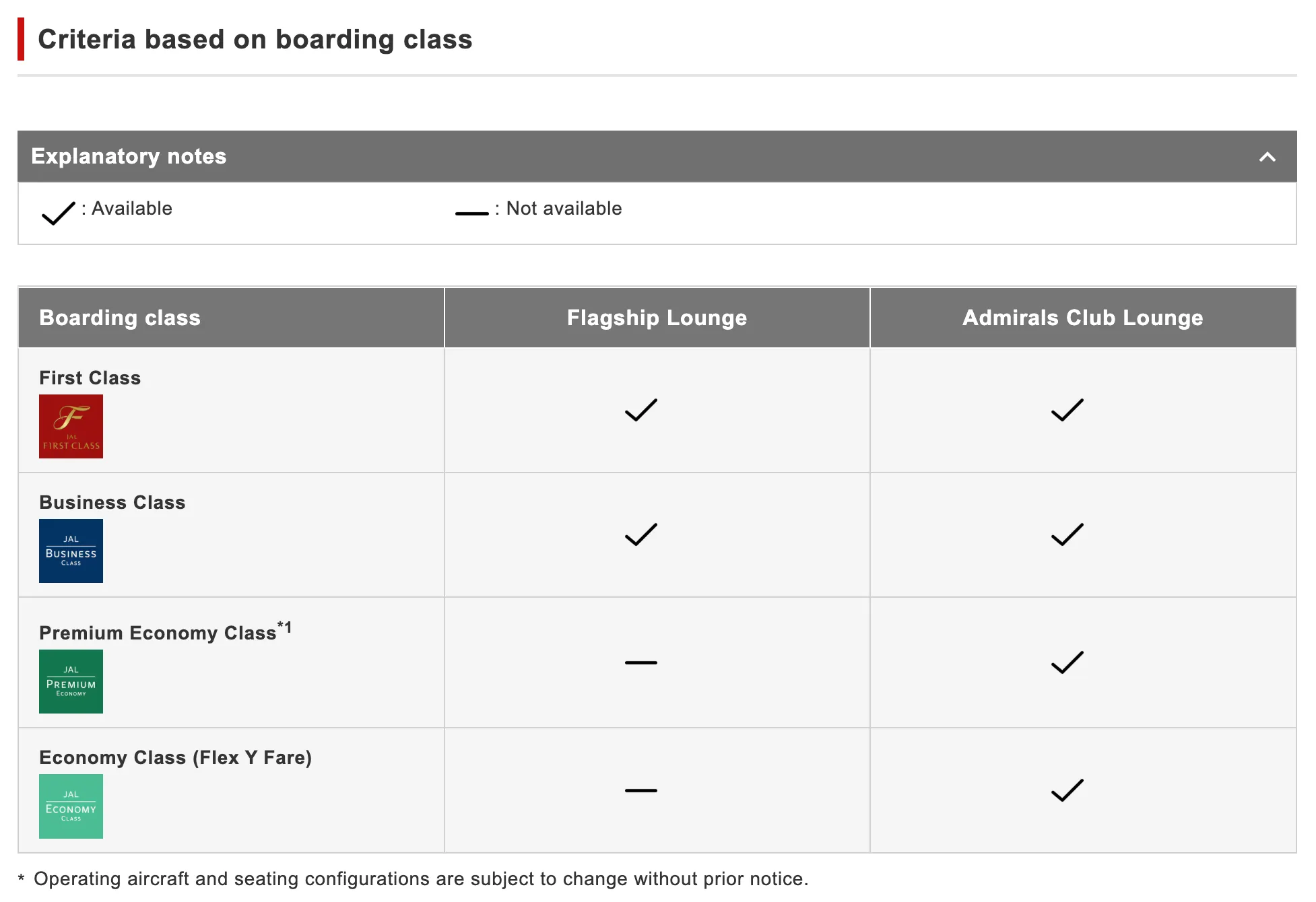
JAL DFW Lounge Access Info © jal.co.jp/jp/en/
JAL DFW Lounge Access Info © jal.co.jp/jp/en/
Around JAL’s 10:30 AM departure time, several of American Airlines’ Asian routes are also departing, so the Flagship Lounge had a decent number of people. Fortunately, since there are fewer flights than during the afternoon European bank, it wasn’t overly crowded. The Flagship Lounge serves breakfast until about 10:30 AM, so you can easily grab breakfast before boarding JL11. Personally, I consider the AA Flagship Lounge to be one of the best accessible lounges in Terminal D. If you have access, I highly recommend using it over the other options.
9. Boarding Process
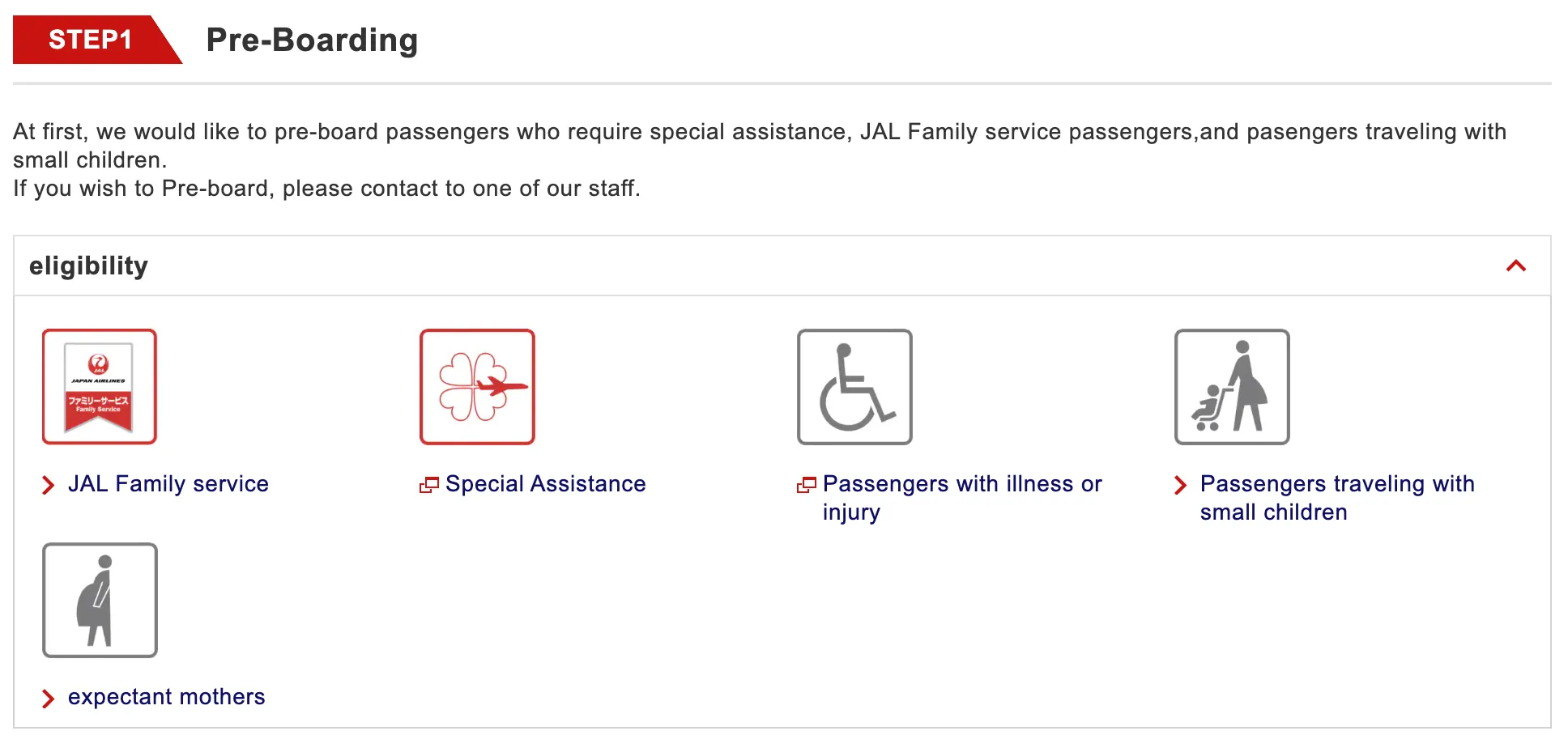
JAL Pre-boarding Eligibility © jal.co.jp/jp/en/
JAL Pre-boarding Eligibility © jal.co.jp/jp/en/
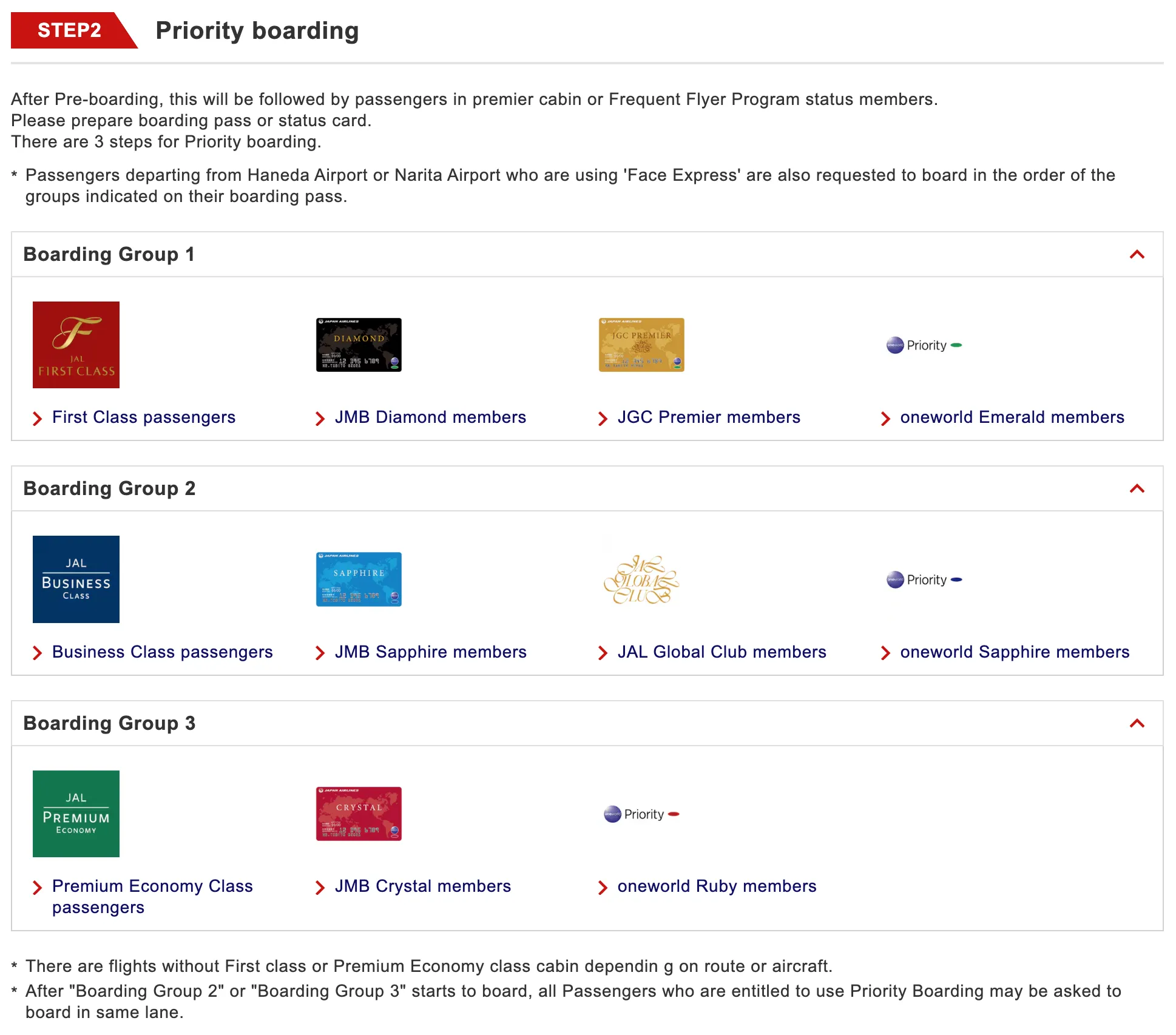
JAL Priority Boarding Eligibility © jal.co.jp/jp/en/
JAL Priority Boarding Eligibility © jal.co.jp/jp/en/
My flight to Haneda, JL11, departed from Gate D14 at DFW. Gate D14 is about a 5-minute walk from the AA Flagship Lounge and roughly 2-3 minutes from the Skylink D1-D22 station. JAL divides its international boarding process into five groups. Groups 1 through 3 are priority groups, while Groups 4 and 5 are general boarding. Group 1 consists of First Class, oneworld Emeralds, JMB Diamonds, and JCG Premiers. Group 2 includes Business Class, oneworld Sapphires, JMB Sapphires, and JAL Global Club members. Group 3 covers Premium Economy, oneworld Rubys, and JMB Crystals. Group 4 is generally for Economy passengers seated in the rear of the cabin, and Group 5 is for all remaining Economy passengers. (For detailed information on JAL’s international boarding procedures, check the JAL English Website.)
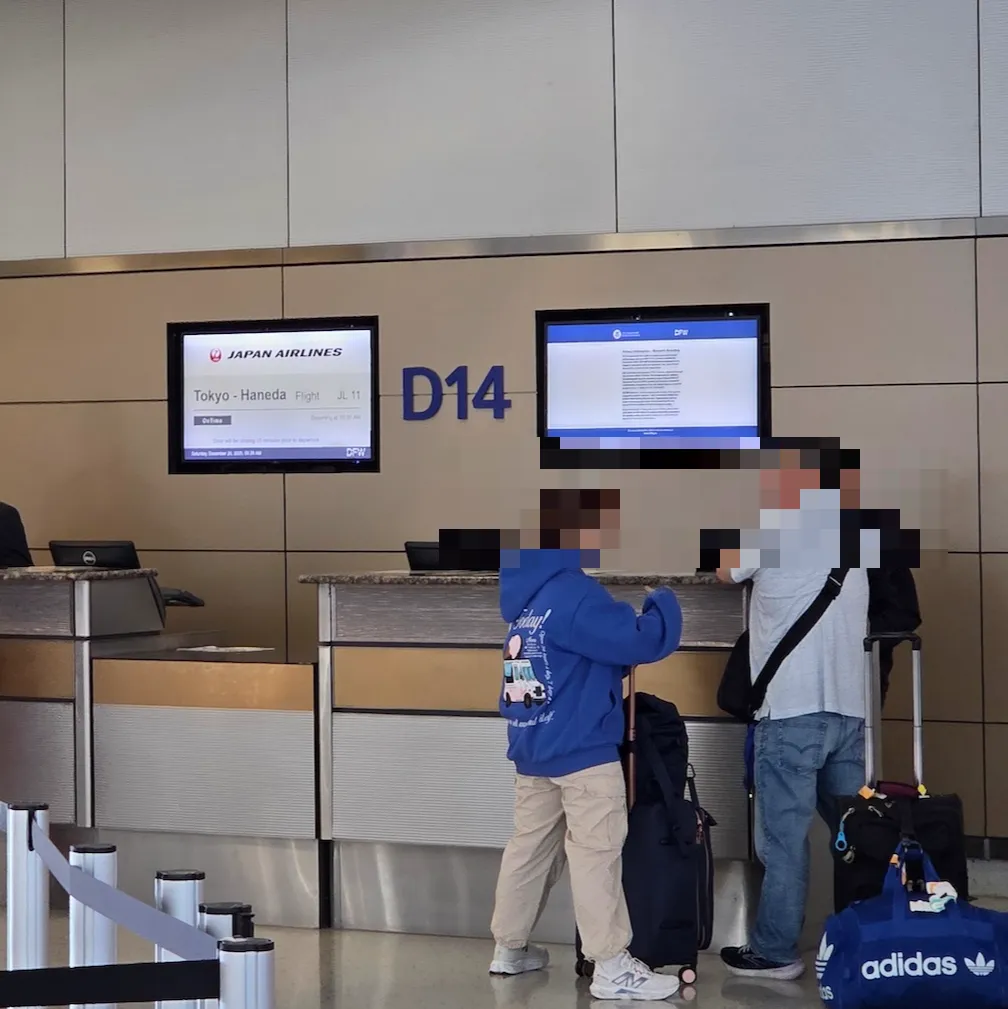
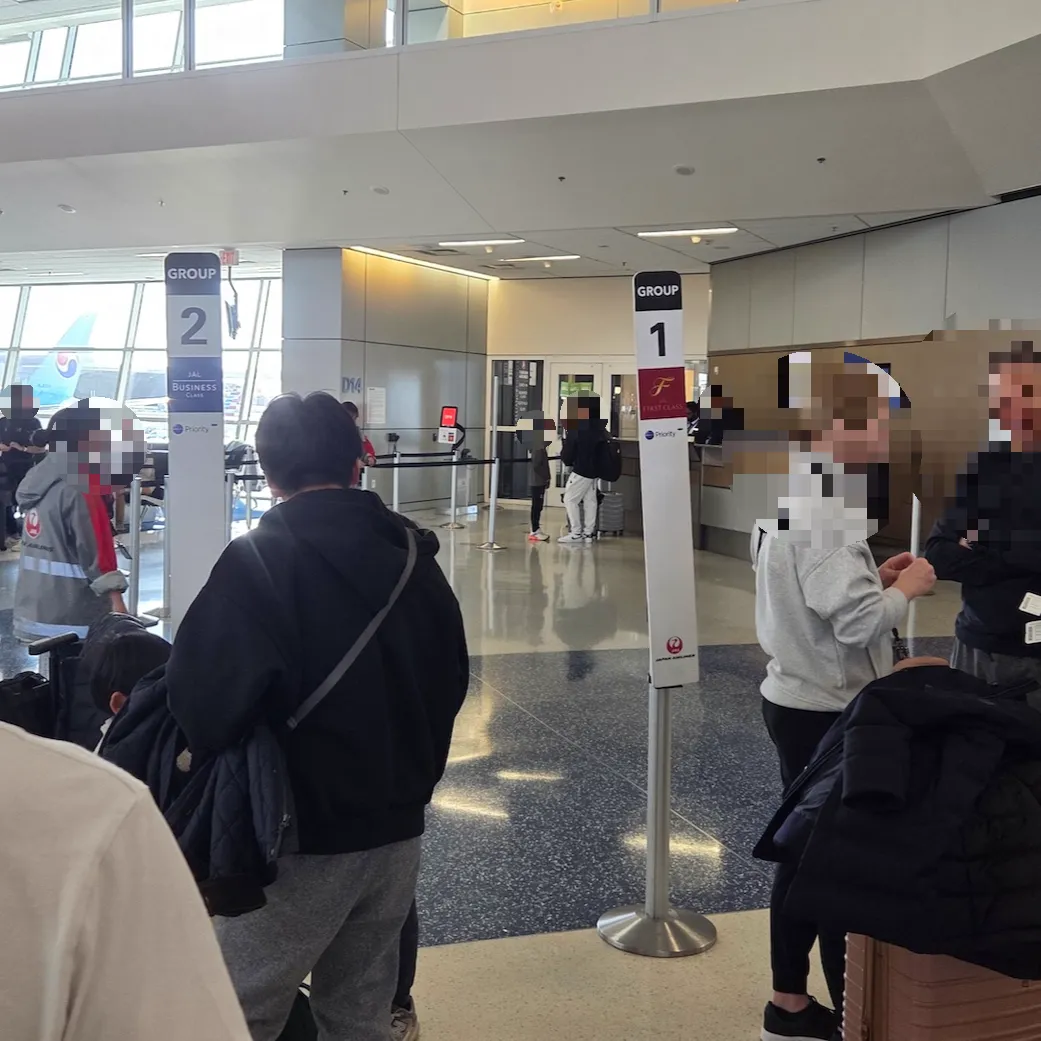
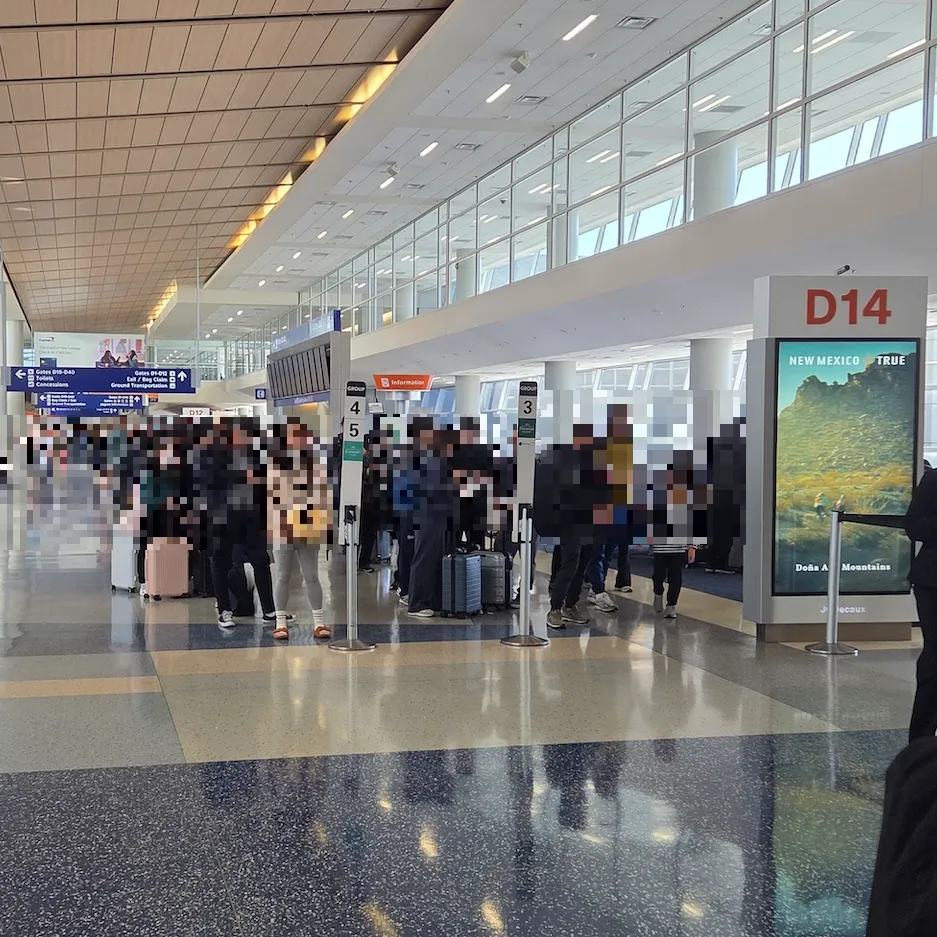
Gate D14 at DFW, Departure Gate for JL11
JL11’s boarding began with pre-boarding, followed sequentially by the assigned groups. Pre-boarding is reserved for expectant mothers, passengers traveling with infants, those with disabilities, or anyone needing special assistance. Even if the pre-boarding window has passed, staff will immediately assist eligible passengers onto the plane. Thanks to my oneworld Sapphire status, I boarded with Group 2. As you pass through the gate and head down the jet bridge at DFW, you’ll almost always see someone—who I assume is JAL’s DFW Station Manager—bowing and thanking passengers. It happened on this flight, too. It’s not necessarily good or bad, but it’s a striking display of ‘Omotenashi,’ Japan’s unique culture of hospitality. Note that Groups 4 and 5 actually line up and board simultaneously, so while there are technically five groups, the process effectively operates in four stages.
10. Cabin Class & Product
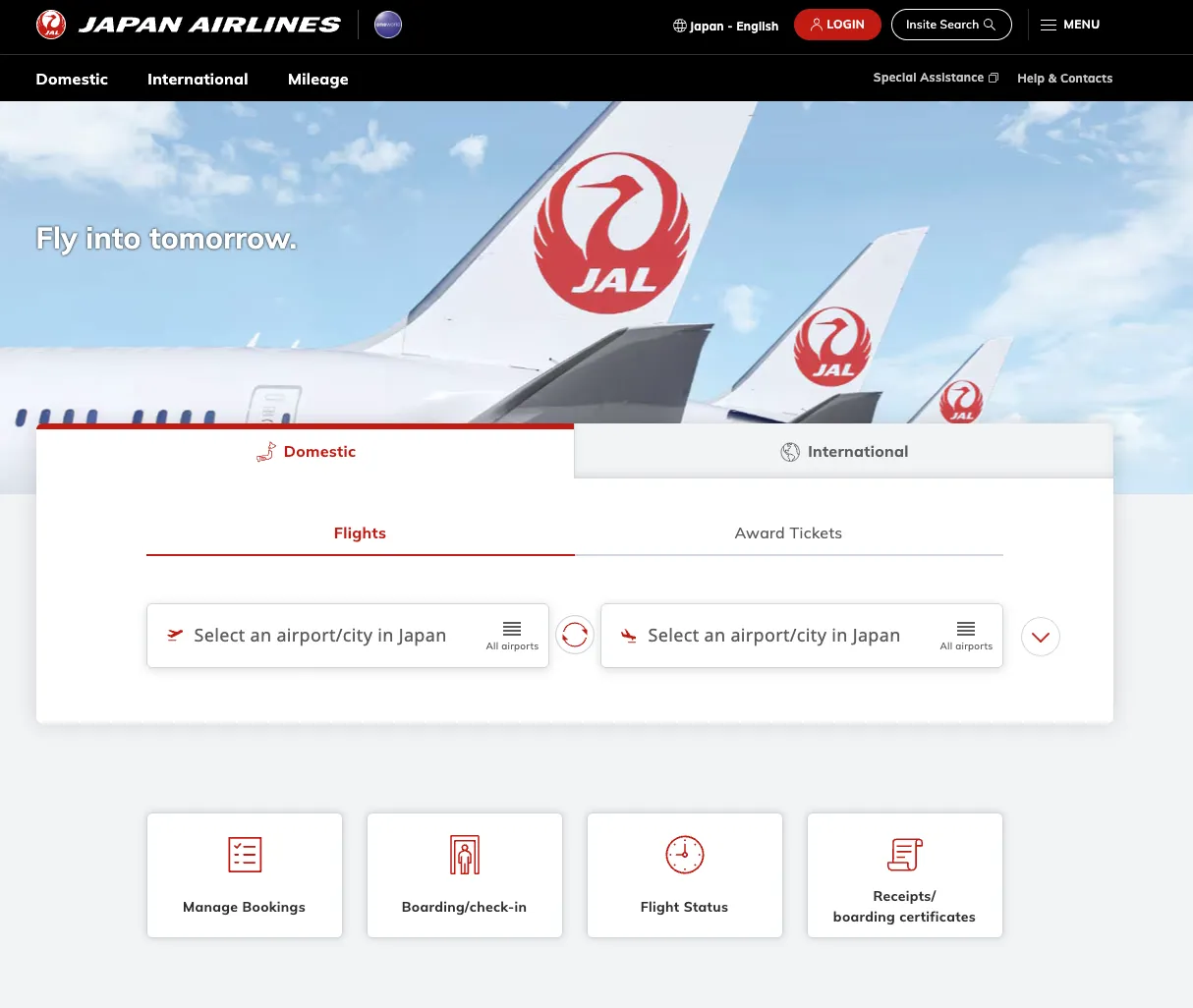
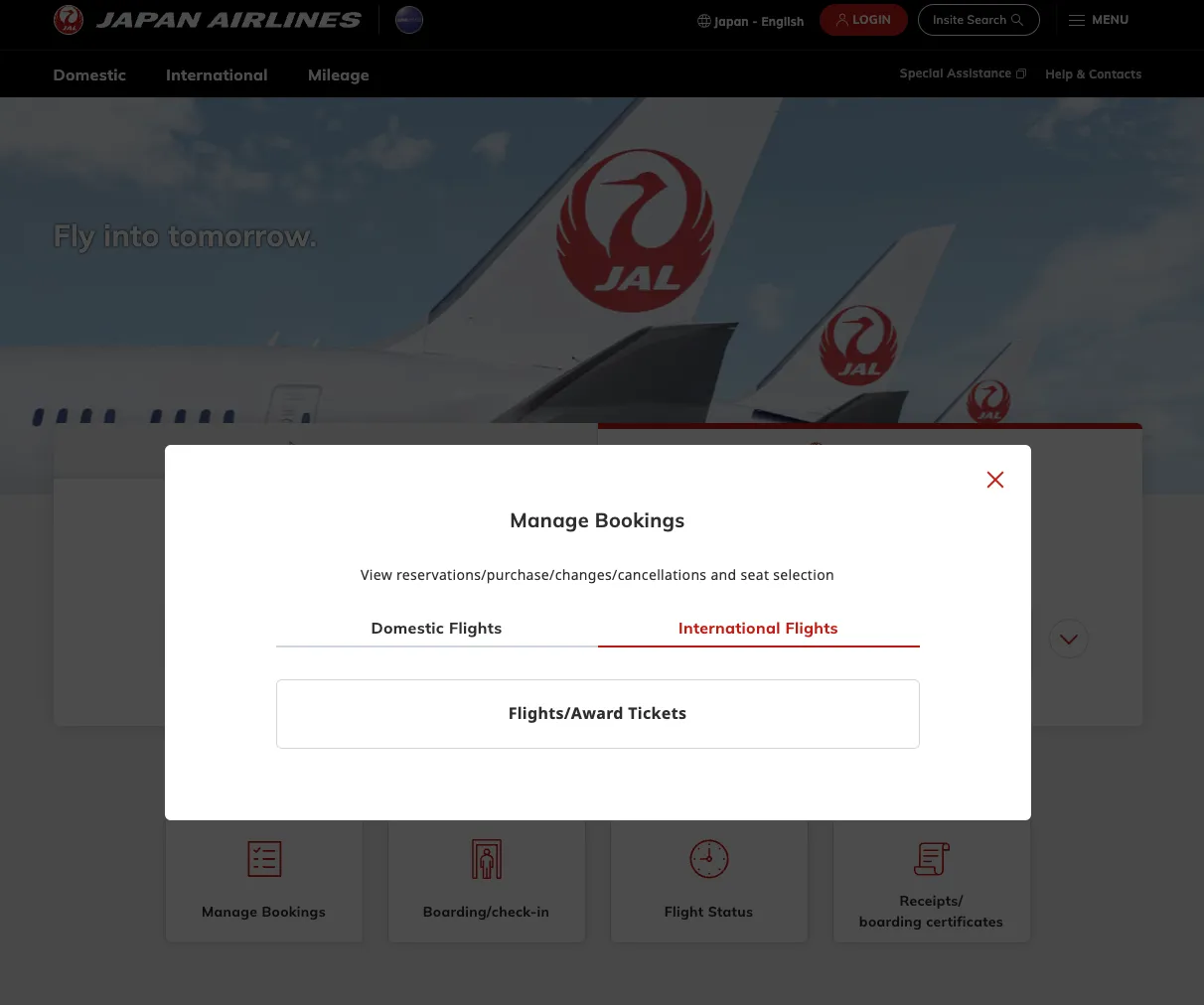
JAL Website © jal.co.jp/jp/en/
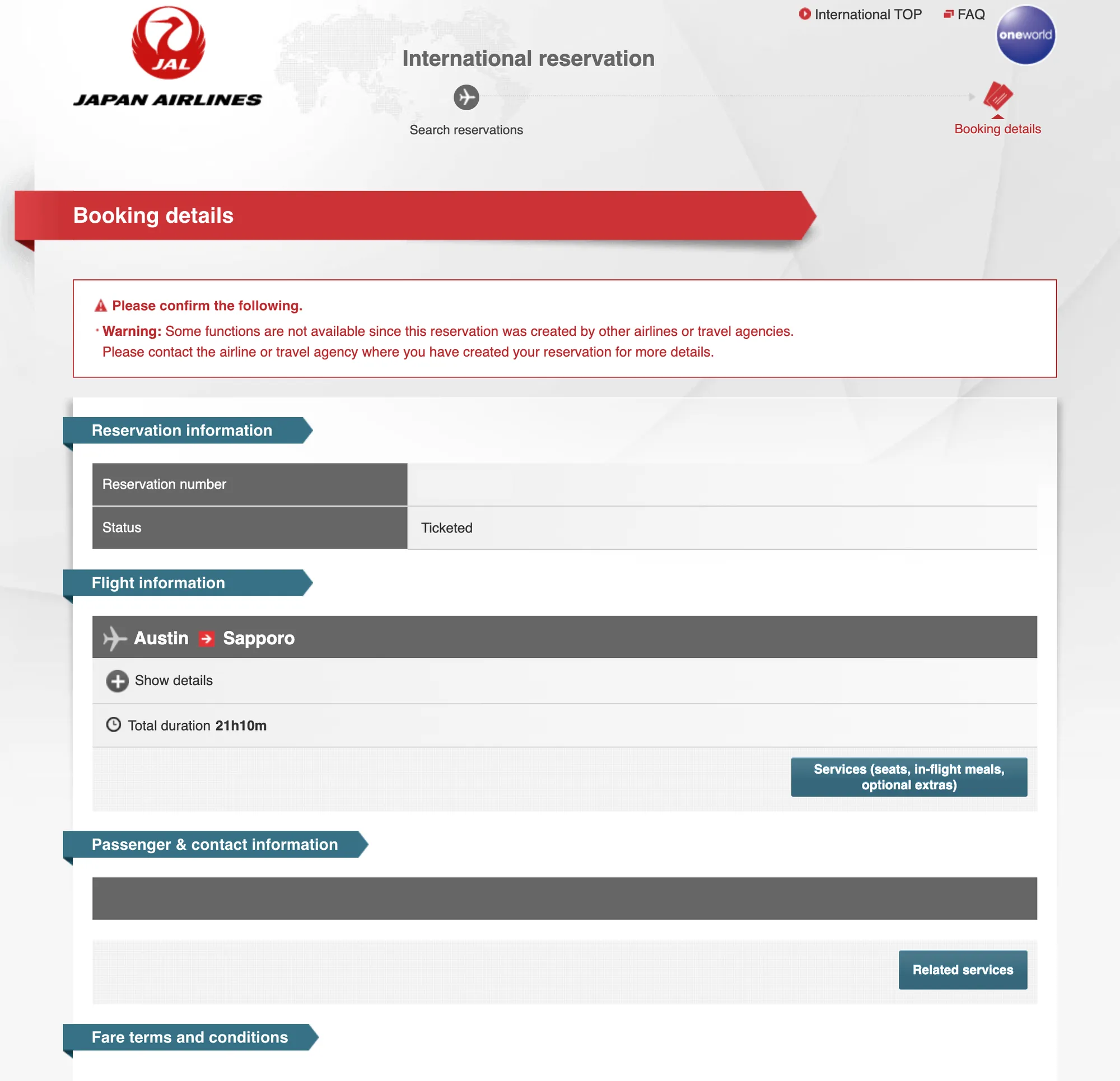
If, like me, you booked a JAL-operated flight as a codeshare through a partner airline rather than directly with JAL, there are two ways to select your seat. The first is to contact the ticketing airline directly. The second is via the JAL website. Here’s how to do it yourself online: First, go to the JAL Japan region website. The display language doesn’t matter, but it must be the Japan regional site. (You can access the English version of the Japan regional site via this link.)link.)Next, click the ‘Manage Bookings’ button on the right side of the page. In the pop-up window, select ‘International Flights’, then click ‘Flights/Award Tickets’. This will take you to the reservation search page.

JAL Website Reservation Search Screen © jal.co.jp/jp/en/
Now you need to enter your booking details. The first field requires either your e-ticket number (13 digits) or your booking reference/PNR (a 6-character alphanumeric code). A crucial detail: while there is only one e-ticket number, you may have multiple booking references depending on the airline. Because I booked through American Airlines, I was issued an AA confirmation code AND a JL confirmation code. You MUST use the JAL confirmation code here. The next critical step is the Flight Number. If you booked a codeshare, you must enter the codeshare flight number, not the actual JAL operating flight number. Since my ticket said AA8481, I had to enter ‘AA8481’, including the airline code. The third field is the flight date, and the fourth is your last name. Finally, enter your first name. If your ticket includes a middle name, combine your first and middle names without any spaces. Once everything is filled out, click ‘Booking Details’ to view your reservation.
JAL Website Seat Selection Screen © jal.co.jp/jp/en/
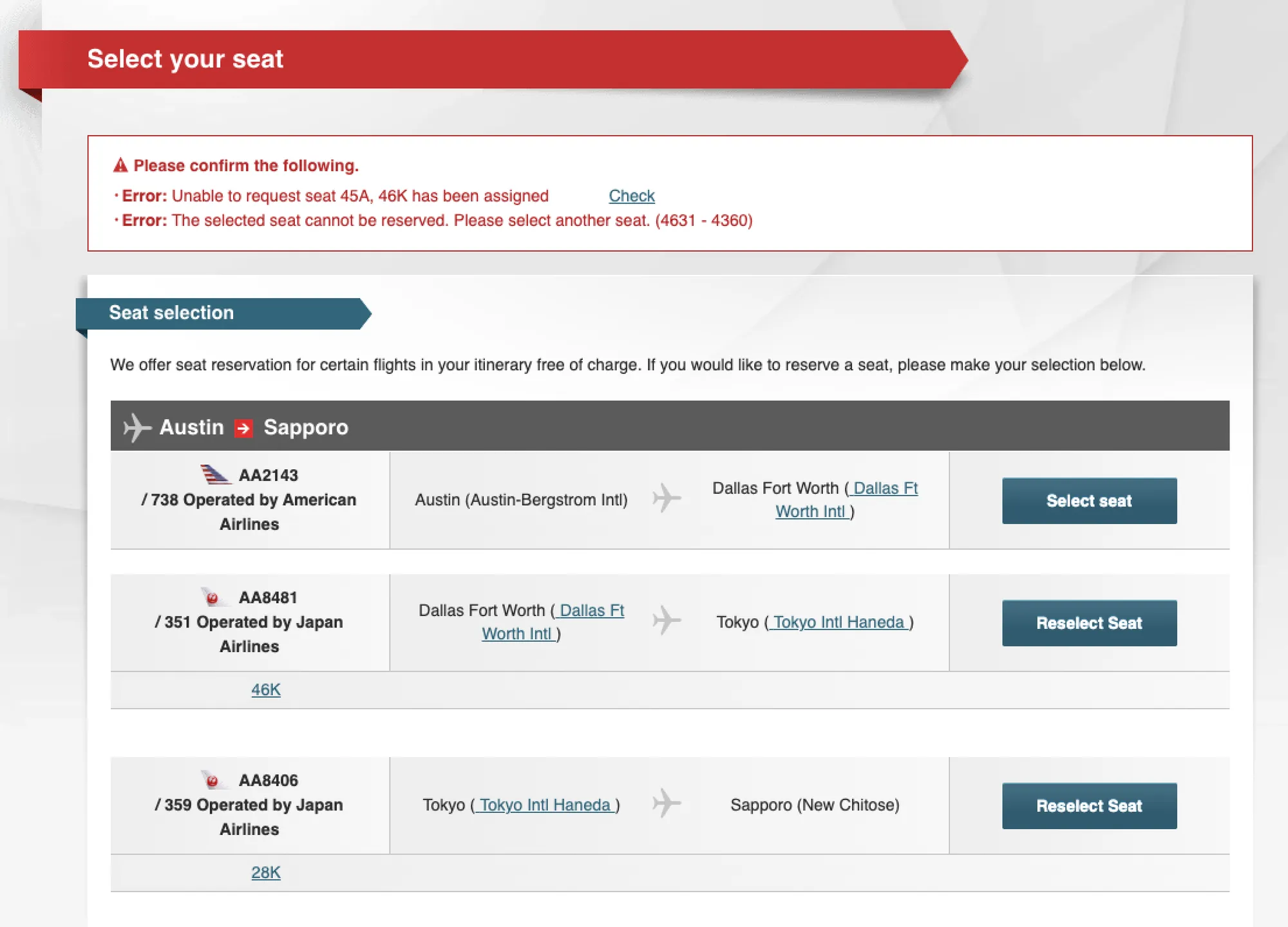
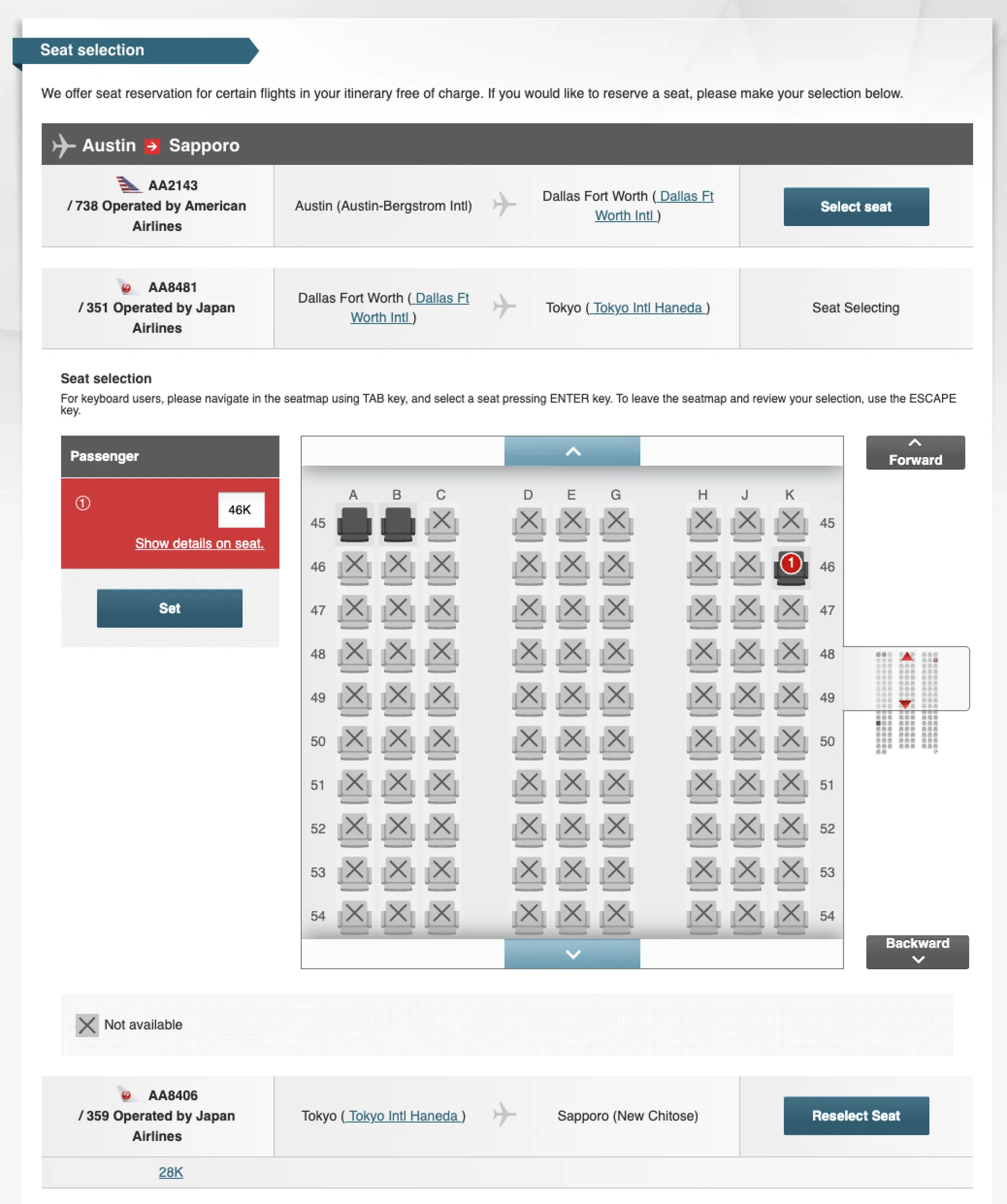
On the reservation page, look for the ‘Flight Information’ section in the center. At the bottom right of this section, click the ‘Services (seats, in-flight meals, optional extras)’ button to select your seat. Two weeks before departure, I checked the seat map and saw two exit row seats available. I tried to grab the window exit seat, but the system repeatedly threw an error and wouldn’t process the change. It seems exit row selection might be restricted based on the ticketing airline, booking class, or nationality, so keep that in mind.

JAL A350-1000 Business Class and Premium Economy Seats Seen During Boarding

JAL A350-1000 Economy Class Cabin
JAL A350-1000 Economy Class Cabin
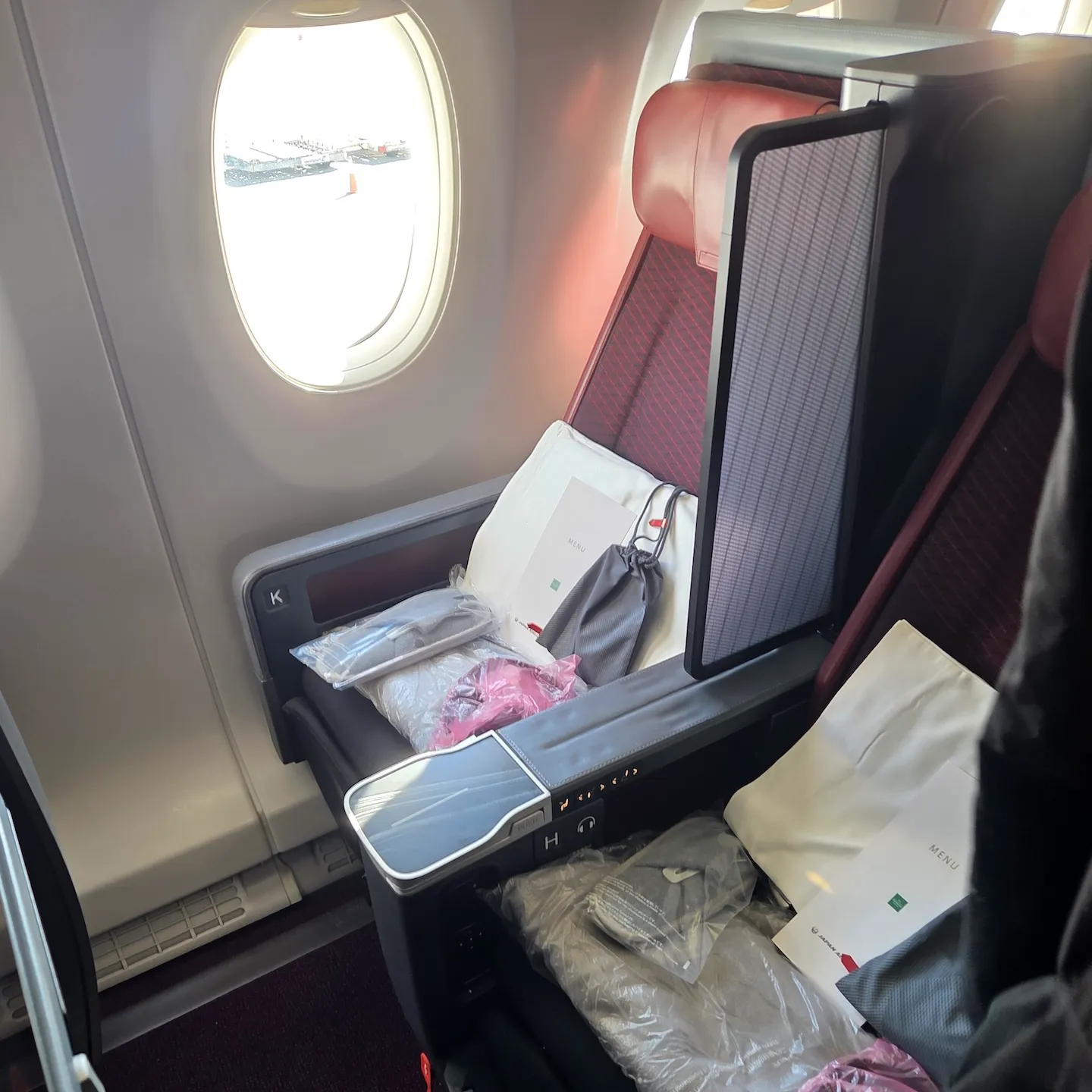
JAL’s A350-1000 features a mere 239 seats in total, making it the least dense commercial A350-1000 in the world. This translates to an incredibly premium-heavy layout, with roughly two-thirds of the aircraft’s footprint dedicated to First, Business, and Premium Economy. The Economy Class cabin is relegated to the rear of the aircraft, comprising just 155 seats in a 3-3-3 configuration. The seats are Recaro CL3710s, boasting an 18-inch width and a massive 33.1 to 33.8-inch pitch. This easily makes it one of the most spacious standard Economy Class products among any full-service carrier globally.


JAL A350-1000 Economy Class Seat


JAL A350-1000 Economy Class Armrest and Seat Recline
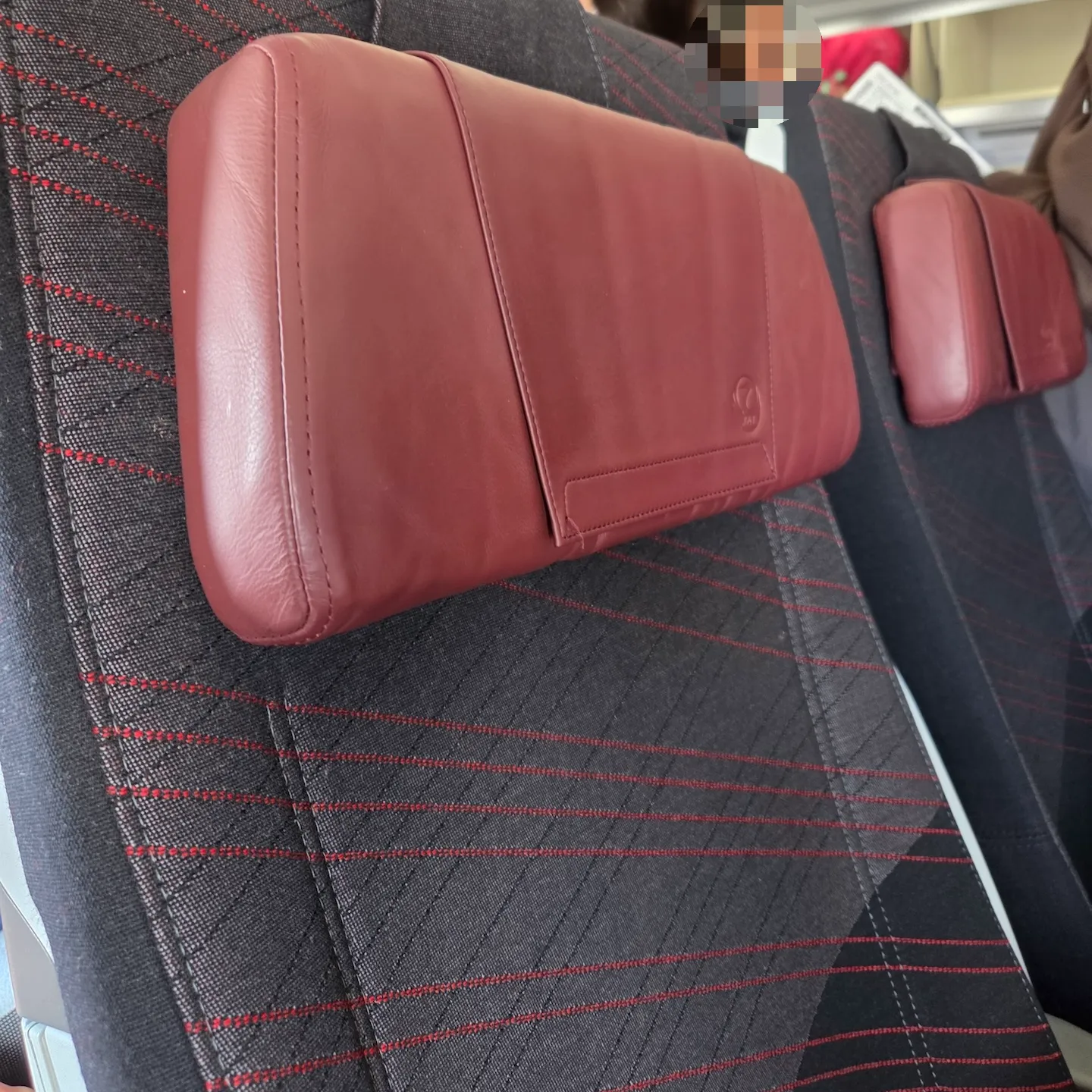
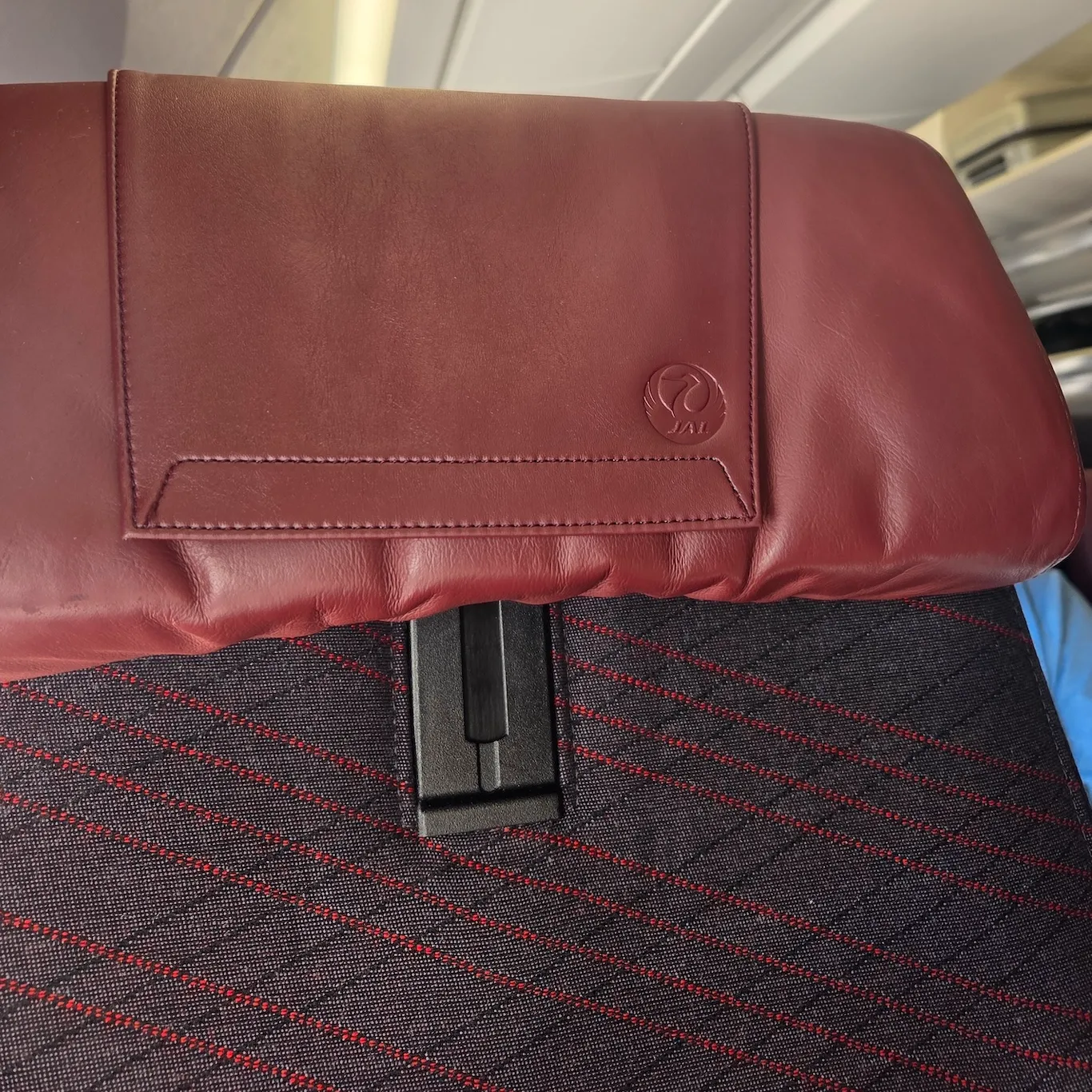
JAL A350-1000 Economy Class Headrest
For this flight, I was in seat 46K, a window seat. The seatback and cushion are upholstered in a breathable fabric, ensuring you don’t get overly sweaty during long flights. As is typical with modern slimline seats, the padding isn’t thick or plush, but it provided enough support that I didn’t feel uncomfortable on this ultra-long-haul journey. The backrest reclines up to 5 degrees. While that doesn’t sound like much on paper, the geometry is well-designed, making for a surprisingly comfortable resting position when fully reclined. The leather headrest is 6-way adjustable: it slides up and down, the wings fold in to cradle your head, and the bottom neck-support section can be pulled forward or pushed back. There are four armrests for every block of three seats, and I appreciated the subtle detail of having the row letters printed on them to prevent confusion.

JAL A350-1000 Economy Class Legroom

JAL A350-1000 Economy Class Front Seat Leg Position
JAL A350-1000 Economy Class Front Seat Leg Position
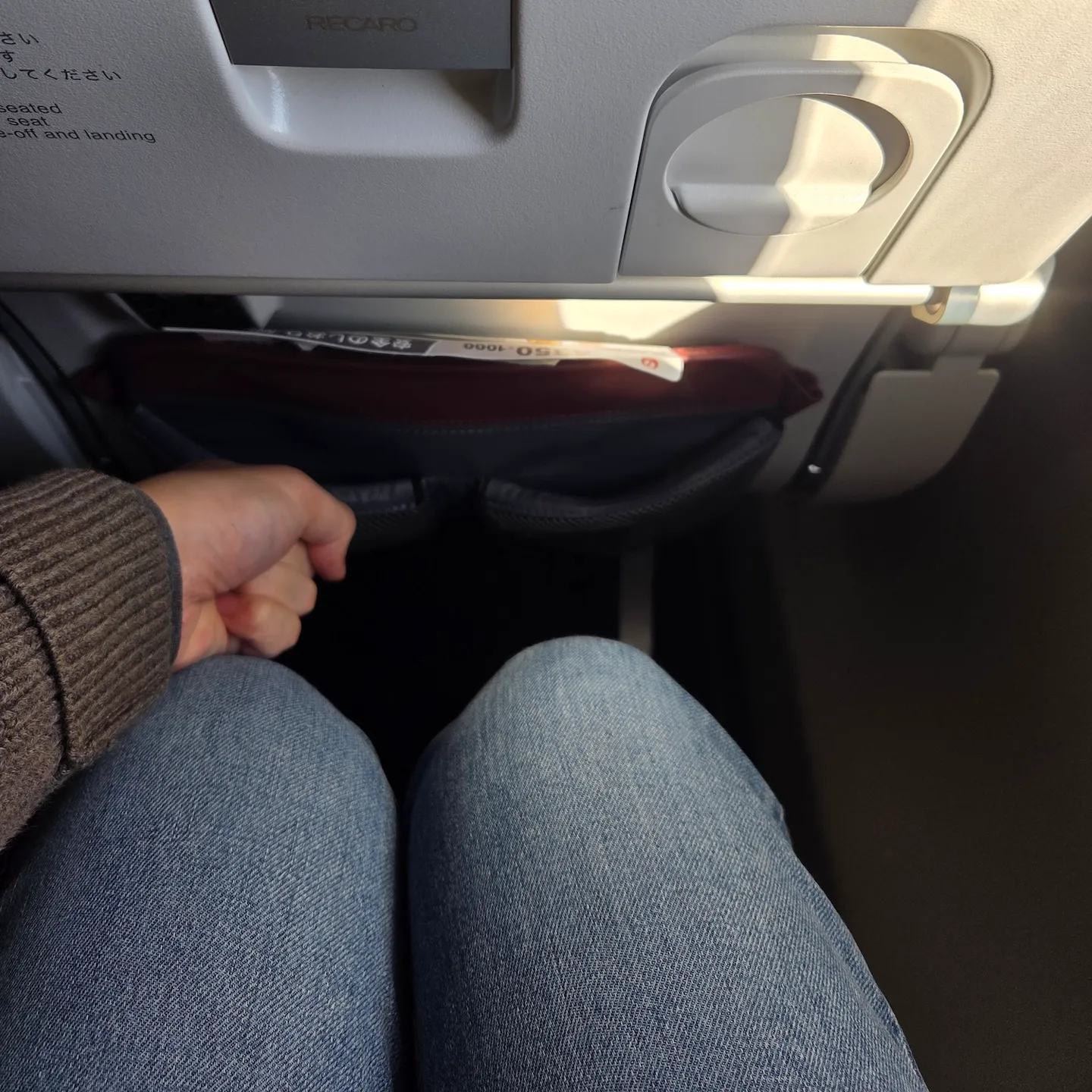
A pitch of over 33 inches is incredibly generous by hardware specs alone, but because these modern seats drastically thin out the knee area, the perceived legroom feels even larger. When a 180cm (5’11”) man sits all the way back, there is enough room to easily fit one and a half fists between his knees and the seatback. US carriers typically sell 34-inch pitch seats as ‘Extra Legroom,’ and honestly, this standard JAL seat felt nearly identical in space. It’s not a stretch to say that every Economy seat on JAL’s A350-1000 is effectively an Extra Legroom seat. Furthermore, window seats often suffer from restricted foot space due to the seat support legs curving inward. However, on JAL’s A350-1000, they’ve pushed that mounting leg as close to the fuselage as possible, completely eliminating that awkward foot obstruction.
JAL A350-1000 Economy Class 13-inch 4K IFE Monitor
JAL A350-1000 Economy Class 13-inch 4K IFE Monitor
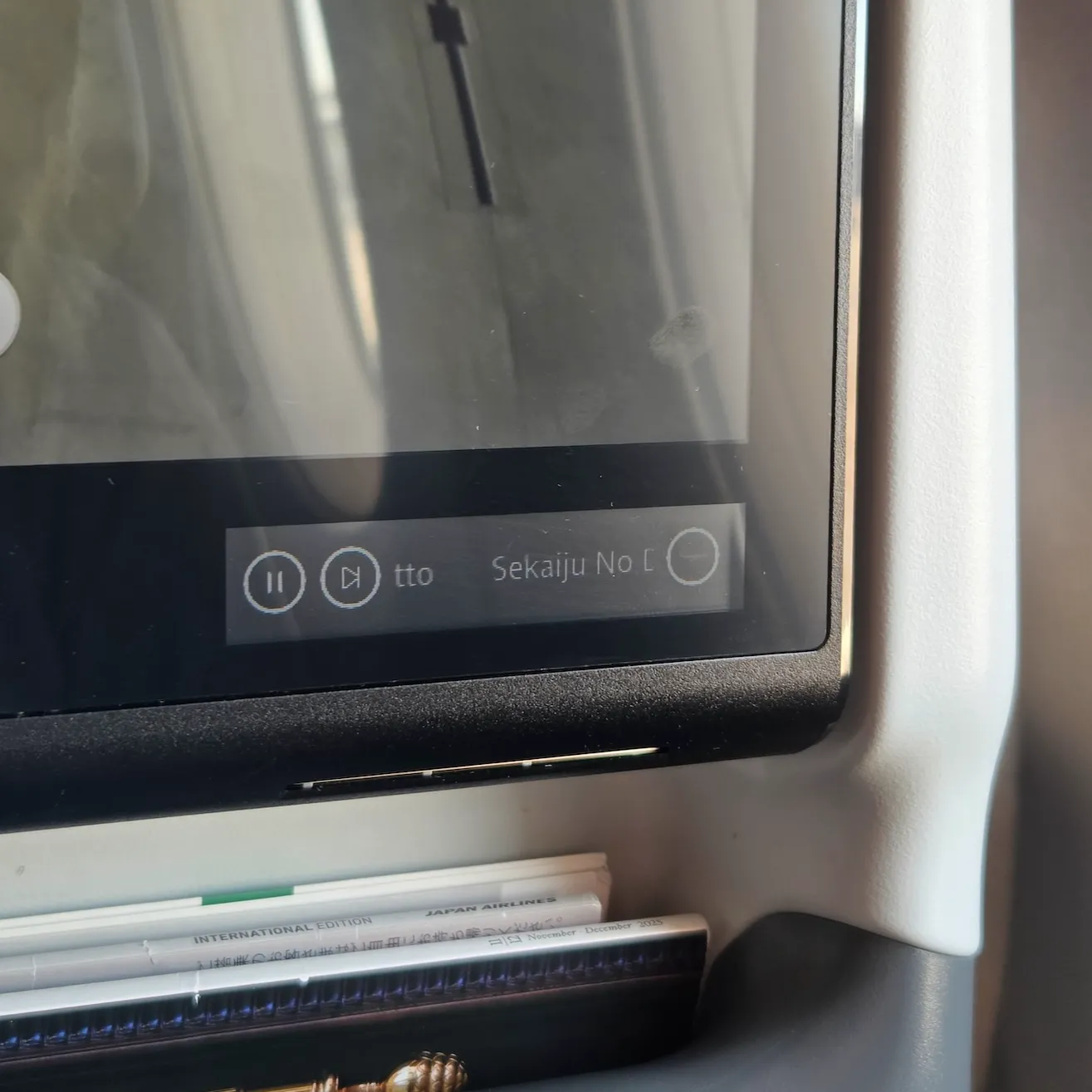

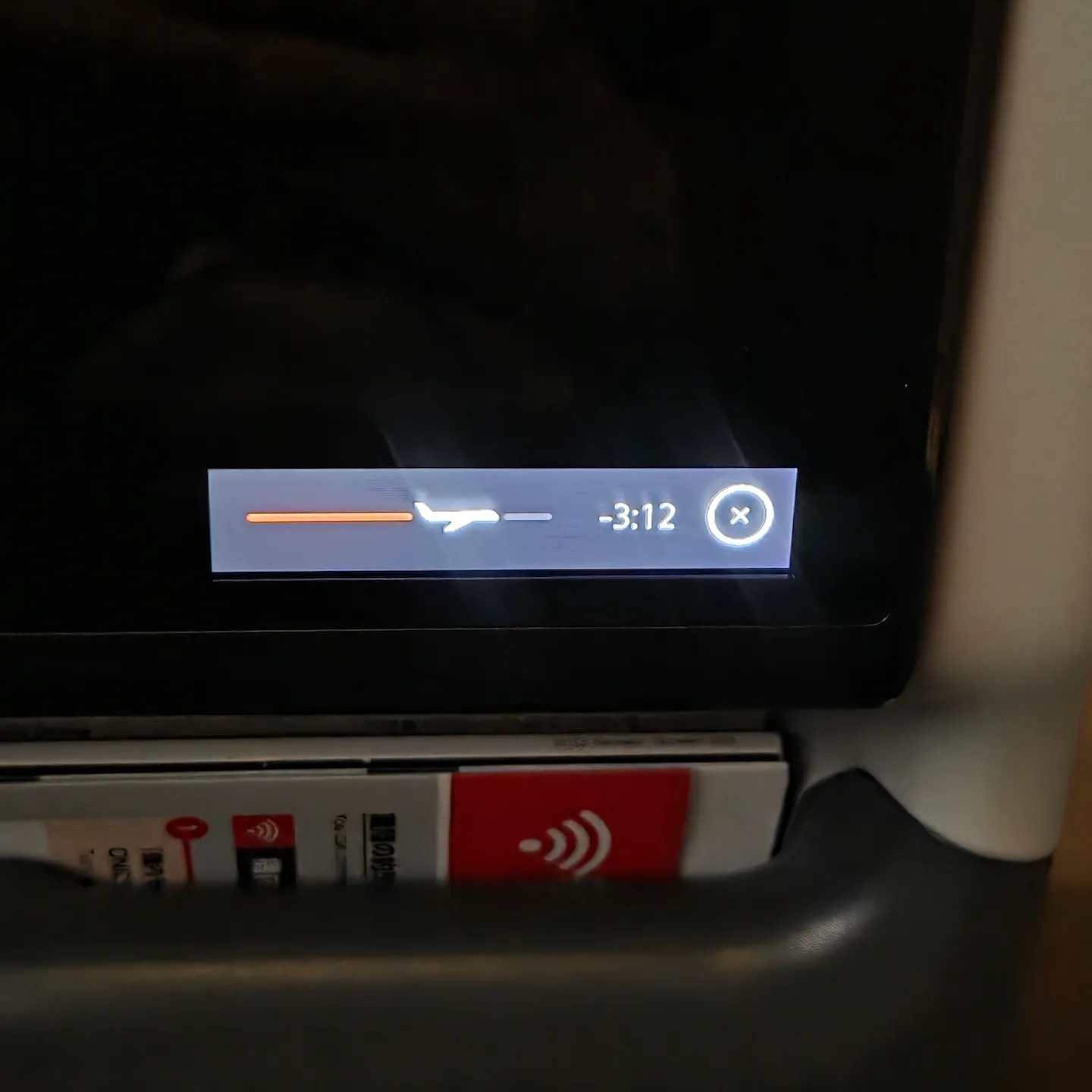
JAL A350-1000 Economy Class Touch Screen Guide Window
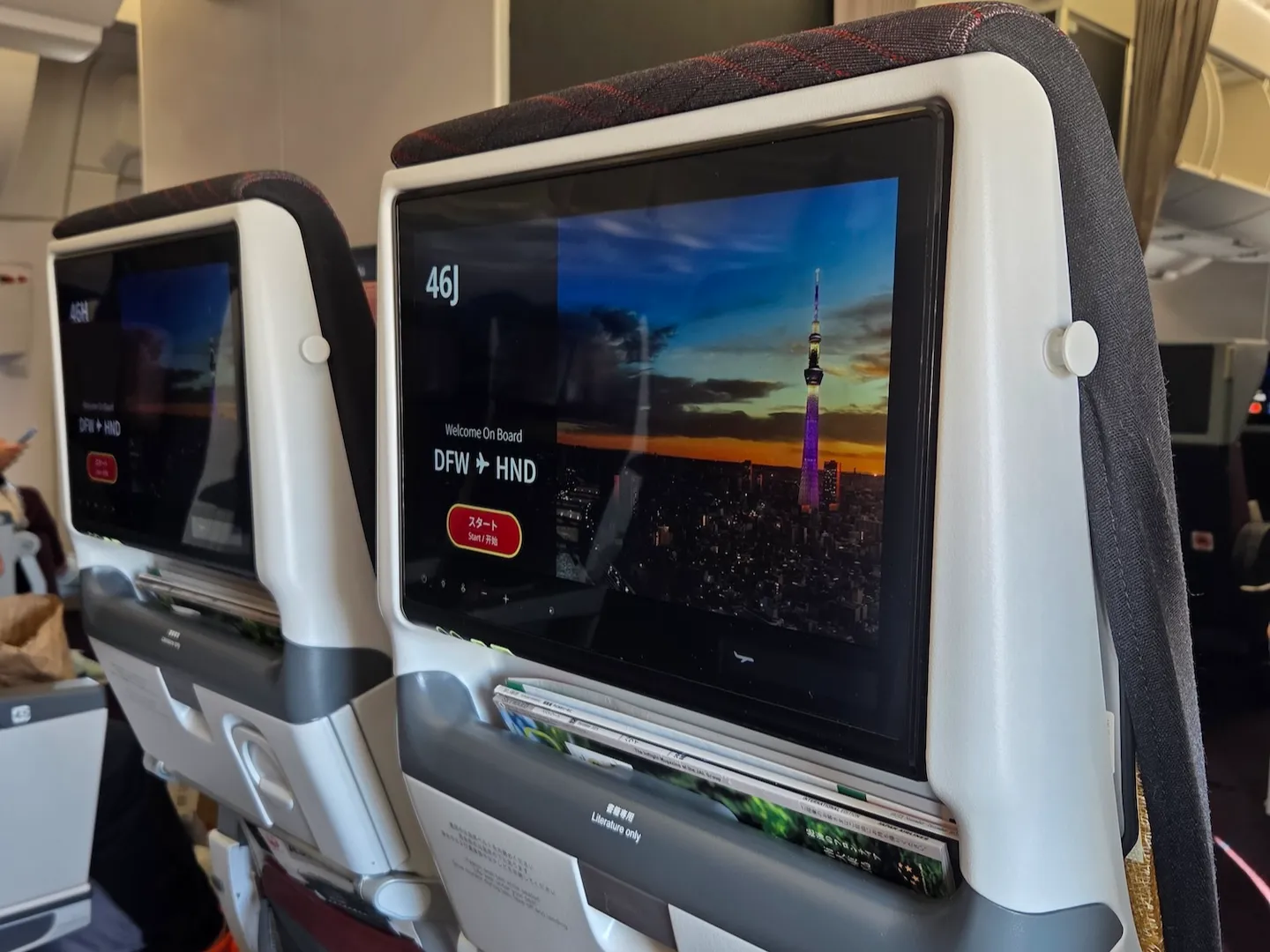
Beyond the legroom, several other features make JAL’s A350-1000 Economy seat exceptional. The most striking is the massive 13-inch 4K IFE screen that dominates the seatback. While it might not be the absolute largest screen in the sky, the unparalleled 4K resolution provides a highly immersive viewing experience. It doesn’t appear to have an anti-glare coating, so there is some reflection, but it wasn’t a major issue when the cabin was dim or the window shades were drawn. Additionally, there’s a clever secondary mini-display nestled in the bottom right corner. This shows current media info and time to destination, which I found incredibly useful during the flight. This mini-display is also a touch screen, allowing you to use it as a remote to play or pause your content.
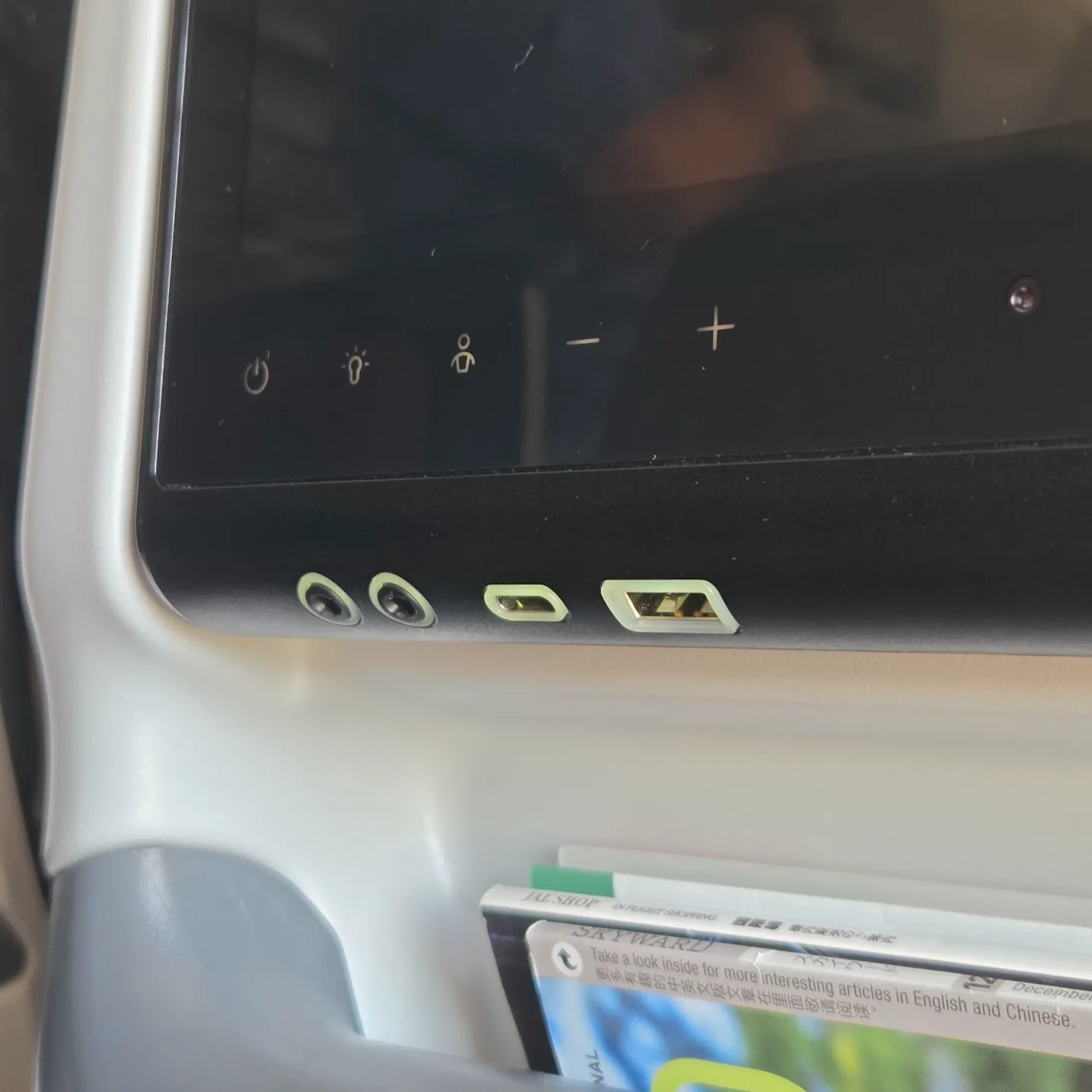

JAL A350-1000 Economy Class Charger, Audio Jack, and Universal Power Outlet
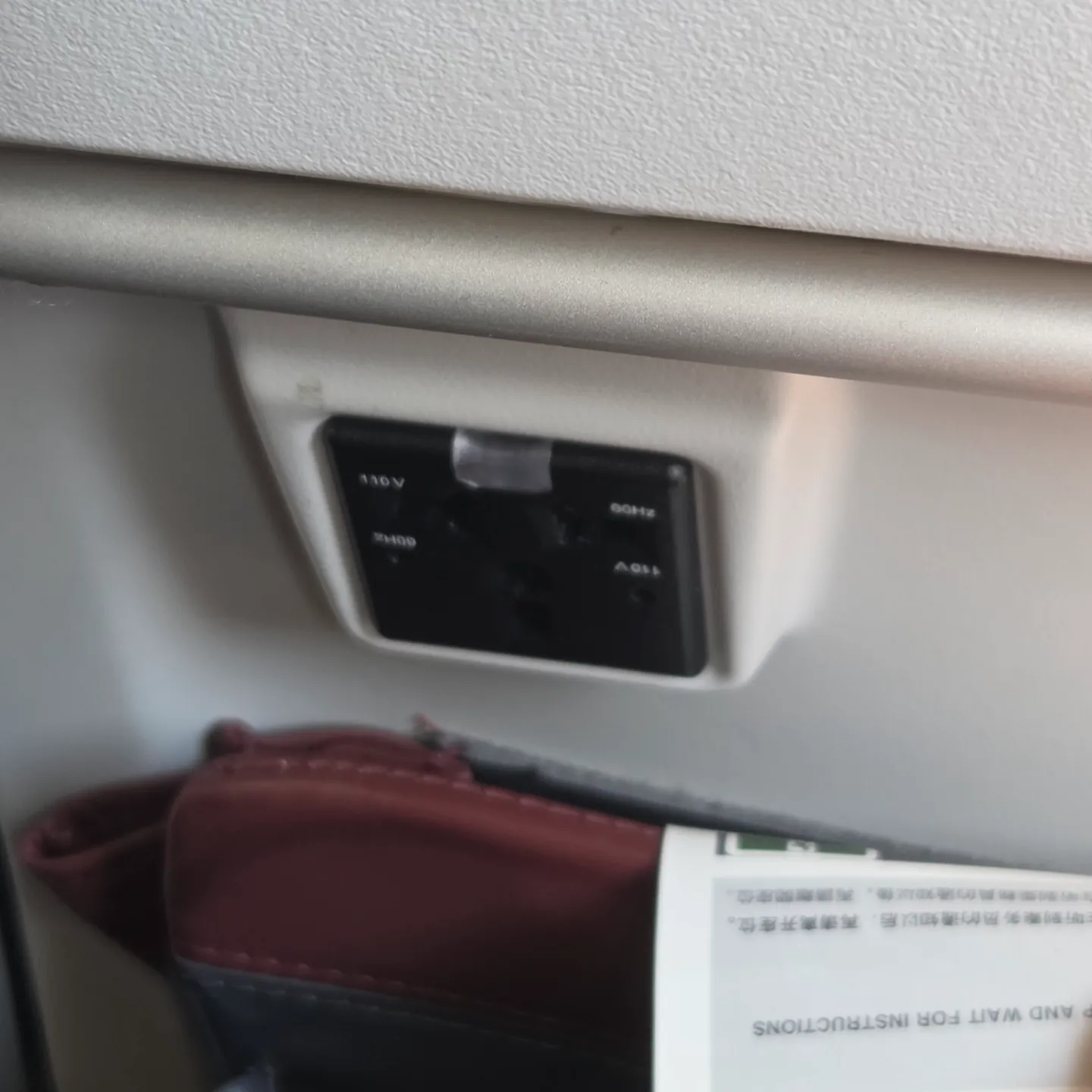
JAL A350-1000 Economy Class Charger, Audio Jack, and Universal Power Outlet
The monitor bezel houses both USB-A and USB-C ports, ensuring you can charge nearly any device. Brilliantly, there’s an audio jack located on the armrest in addition to the one on the display. This means your headphone cord won’t drag across your food tray or tangle when your neighbor needs to pass. Below the seat, every passenger gets a dedicated 110V universal power outlet. If you have a dual-voltage charger, you can plug your 220V adapter straight in. However, the socket felt a bit loose and faces downwards, meaning heavy chargers tend to easily fall out if bumped. Note that both the AC power and USB ports only activate above 10,000 feet—they remain dead during taxi and takeoff.
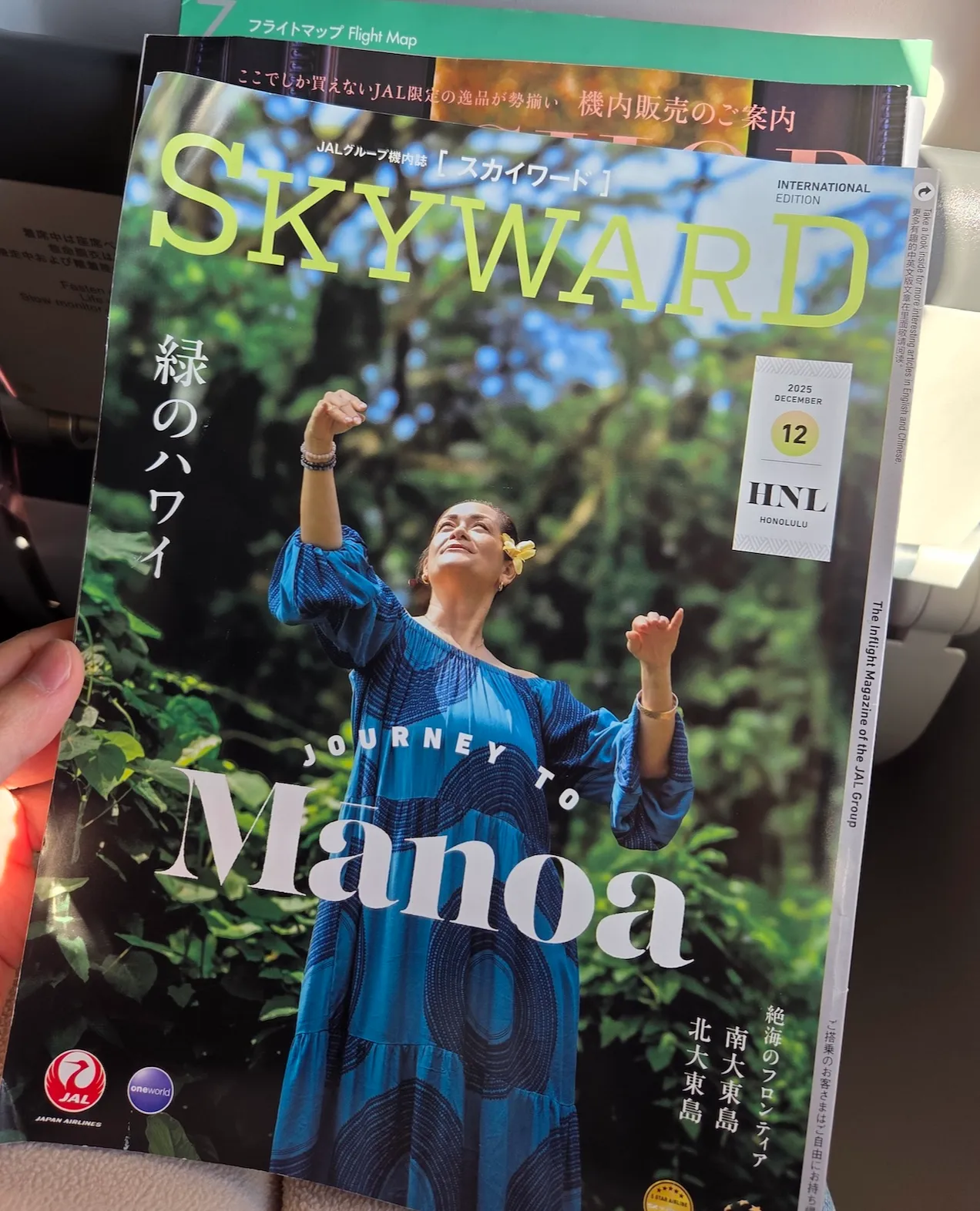

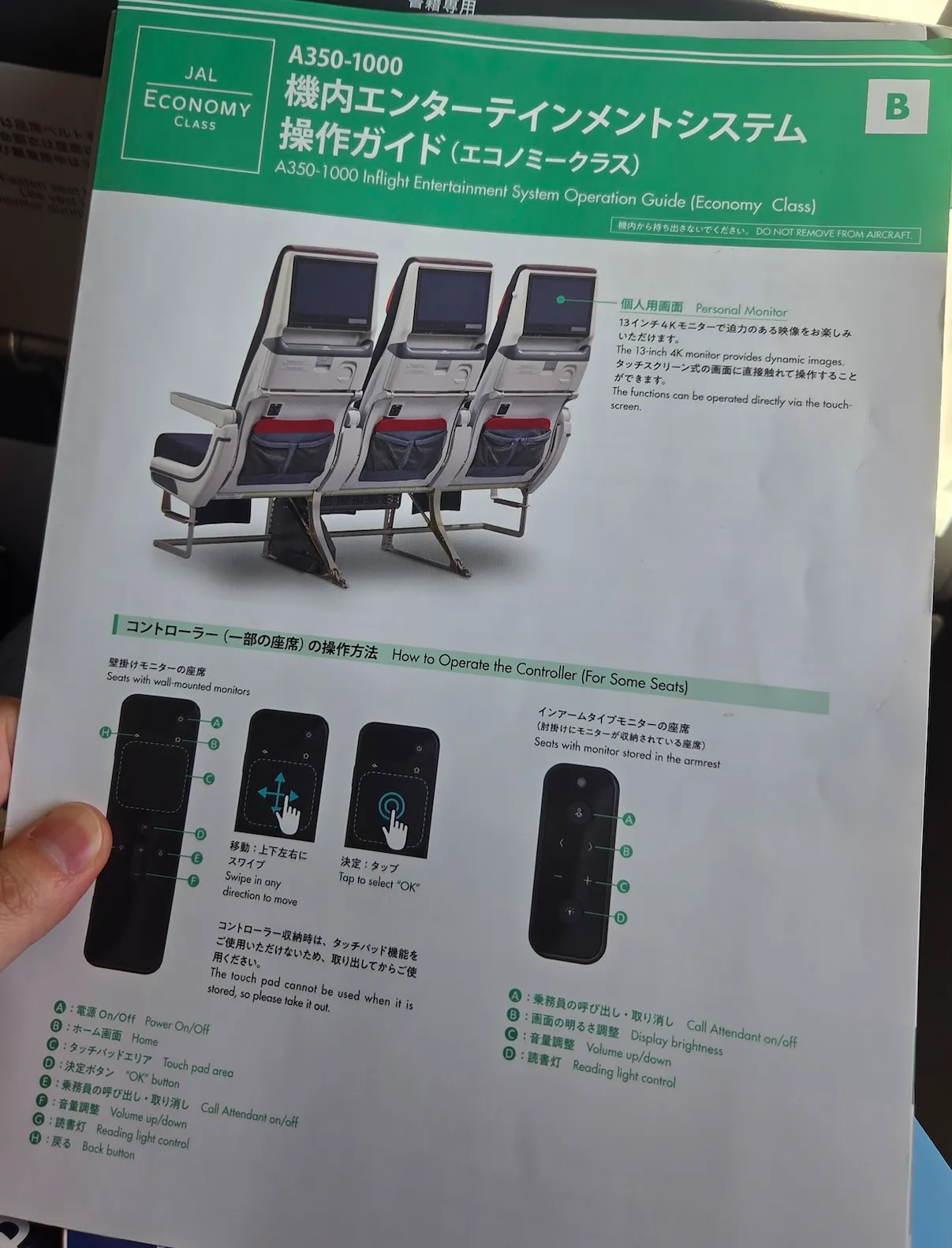
JAL A350-1000 Economy Class In-flight Magazines
Just beneath the display is a rigid literature pocket. JAL places a detailed user manual for the specific seat in this pocket, along with Wi-Fi connection instructions and the duty-free catalog.

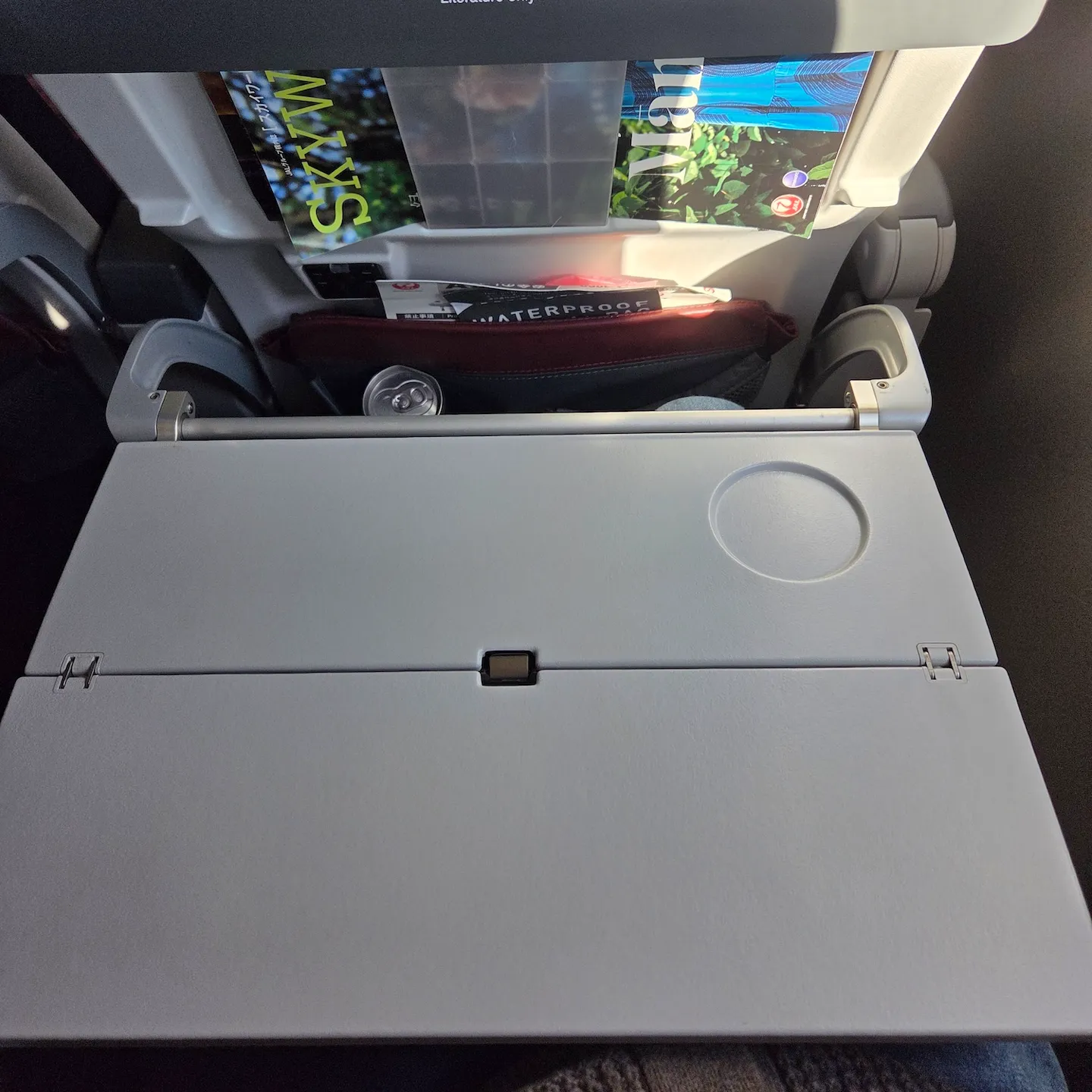
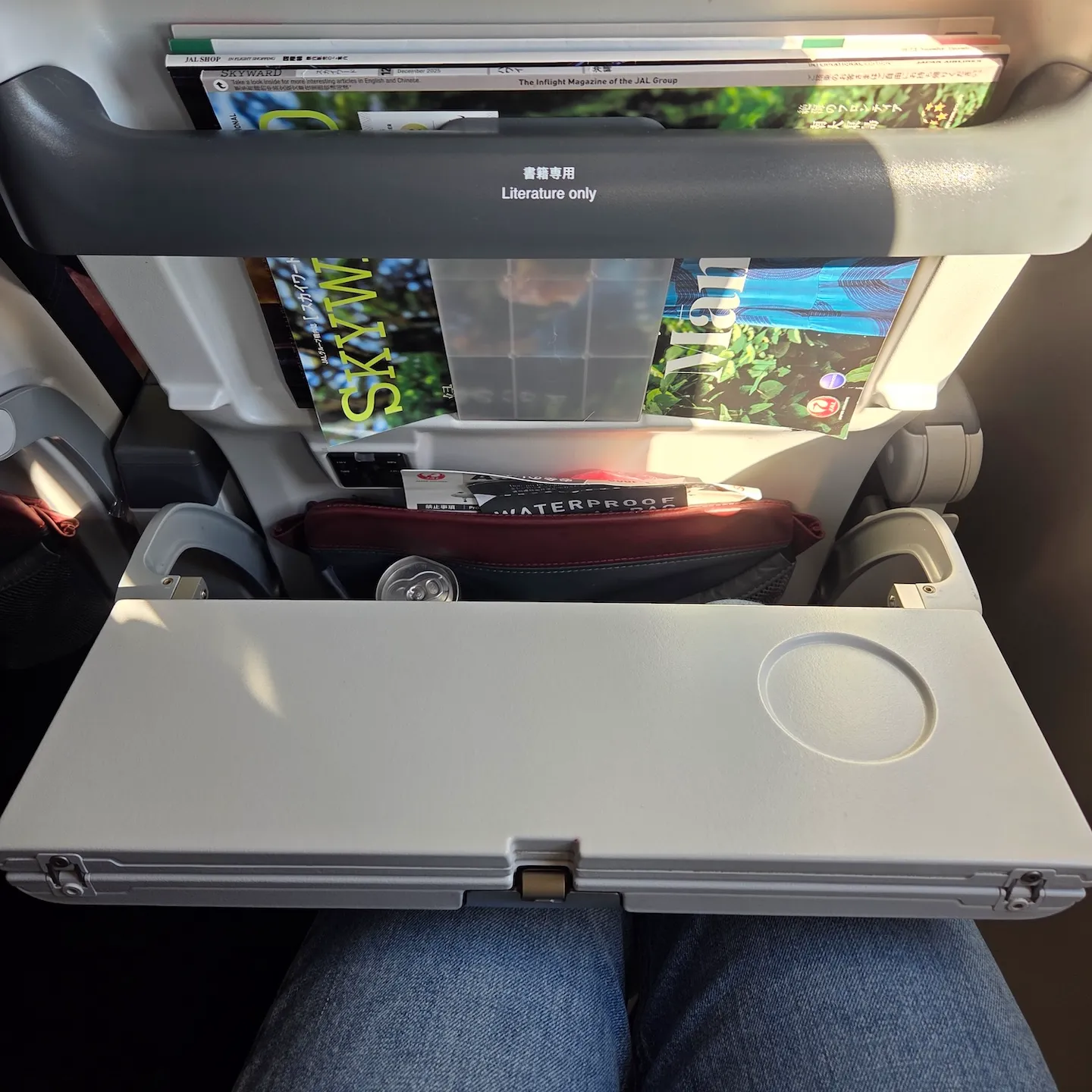
JAL A350-1000 Economy Class Tray Table
Below the literature pocket is a bi-fold tray table. When folded in half, it forms a small shelf with a shallow indentation for resting a paper cup and a snack. Fully extended, it’s large enough to comfortably hold a full meal tray. Best of all, a separate cupholder can fold out independently even when the main table is completely stowed.
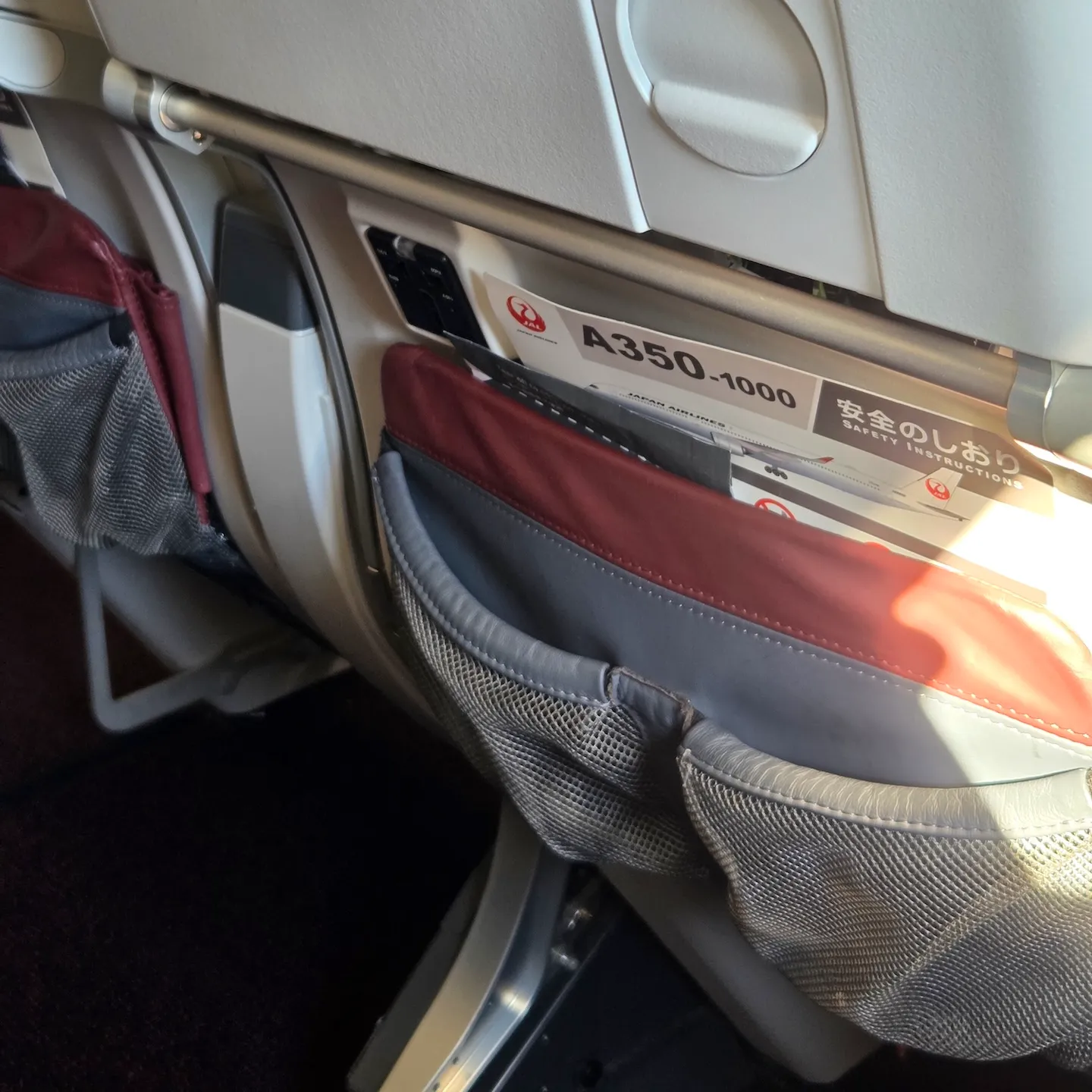
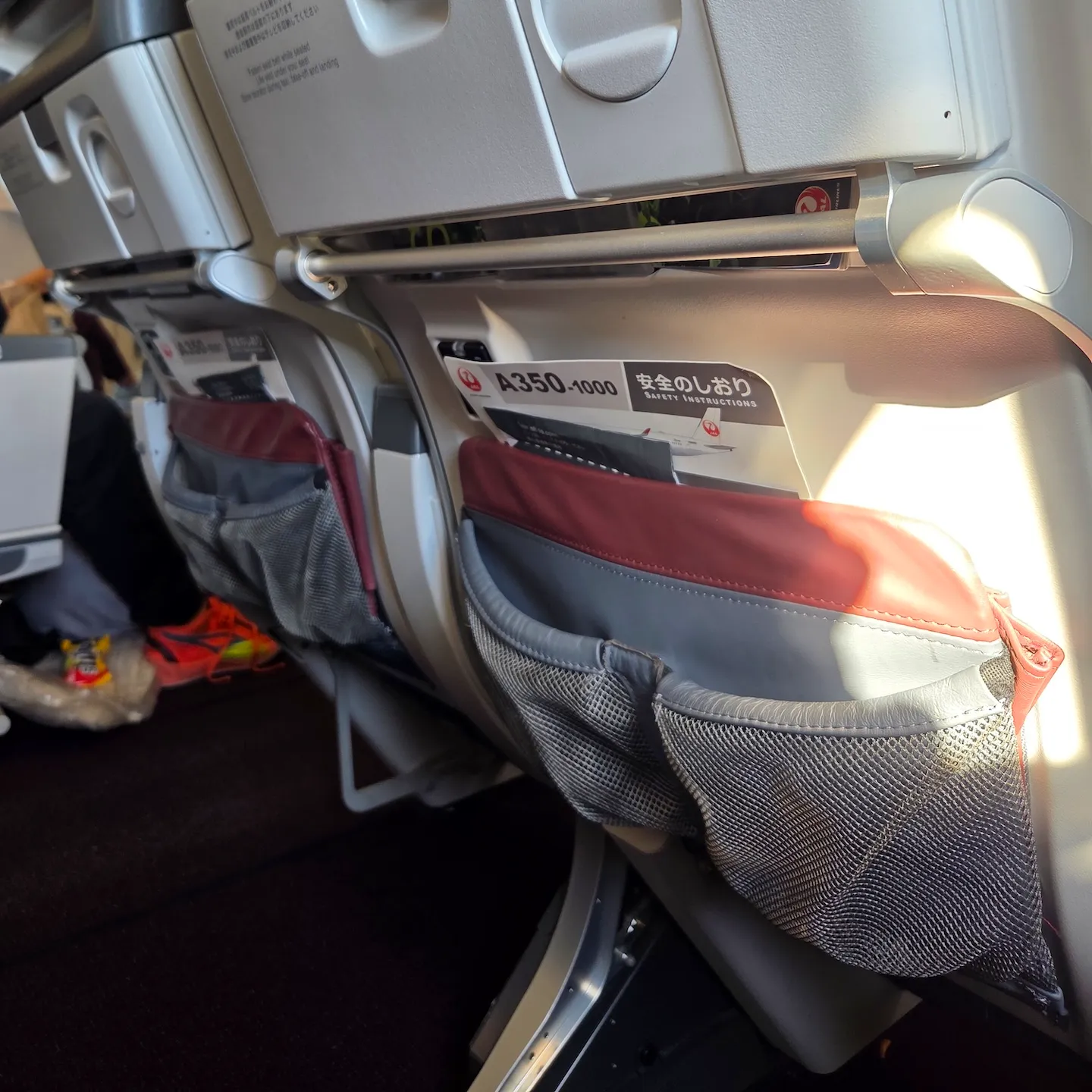
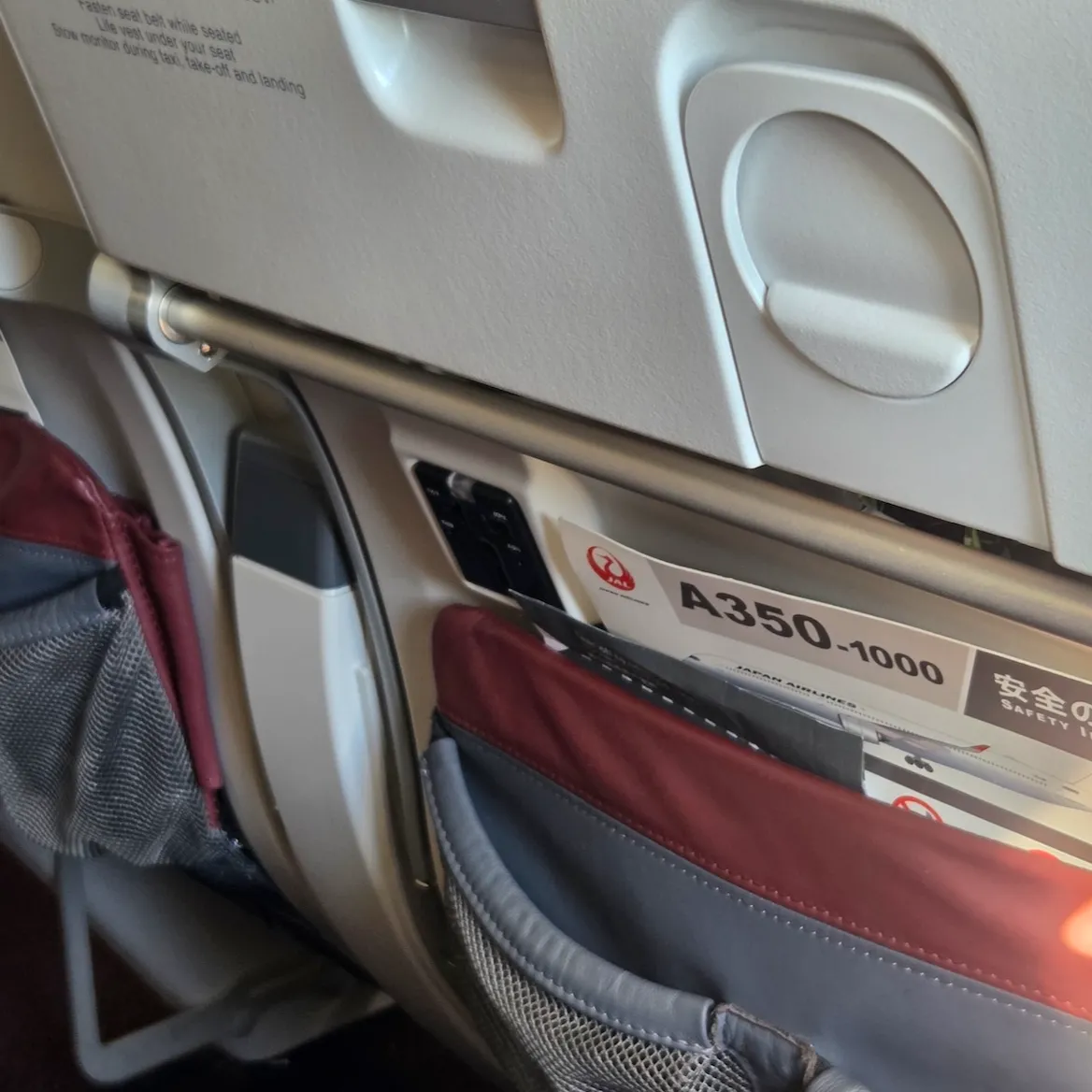
JAL A350-1000 Economy Class Storage Pockets, Coat Hook, and Safety Card
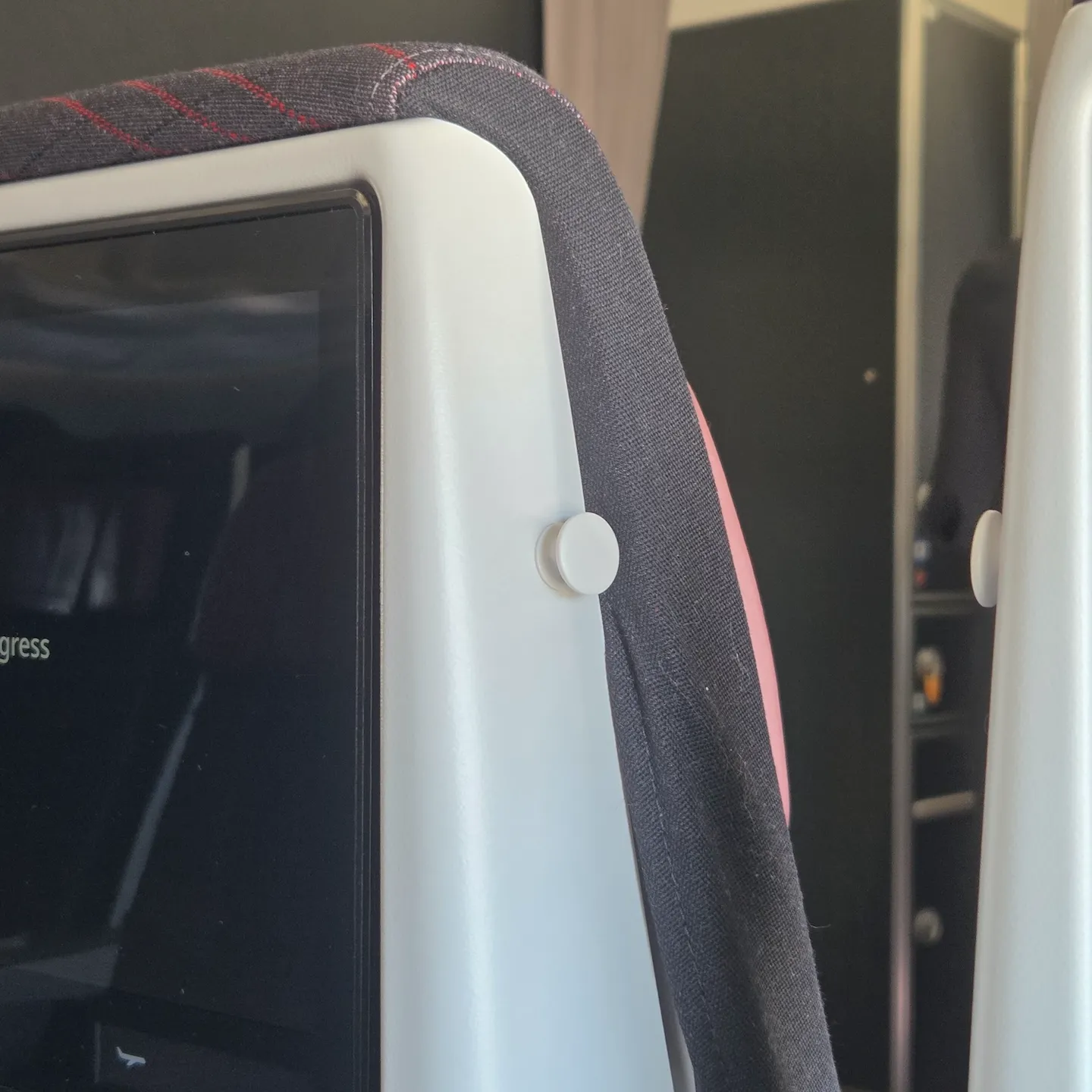
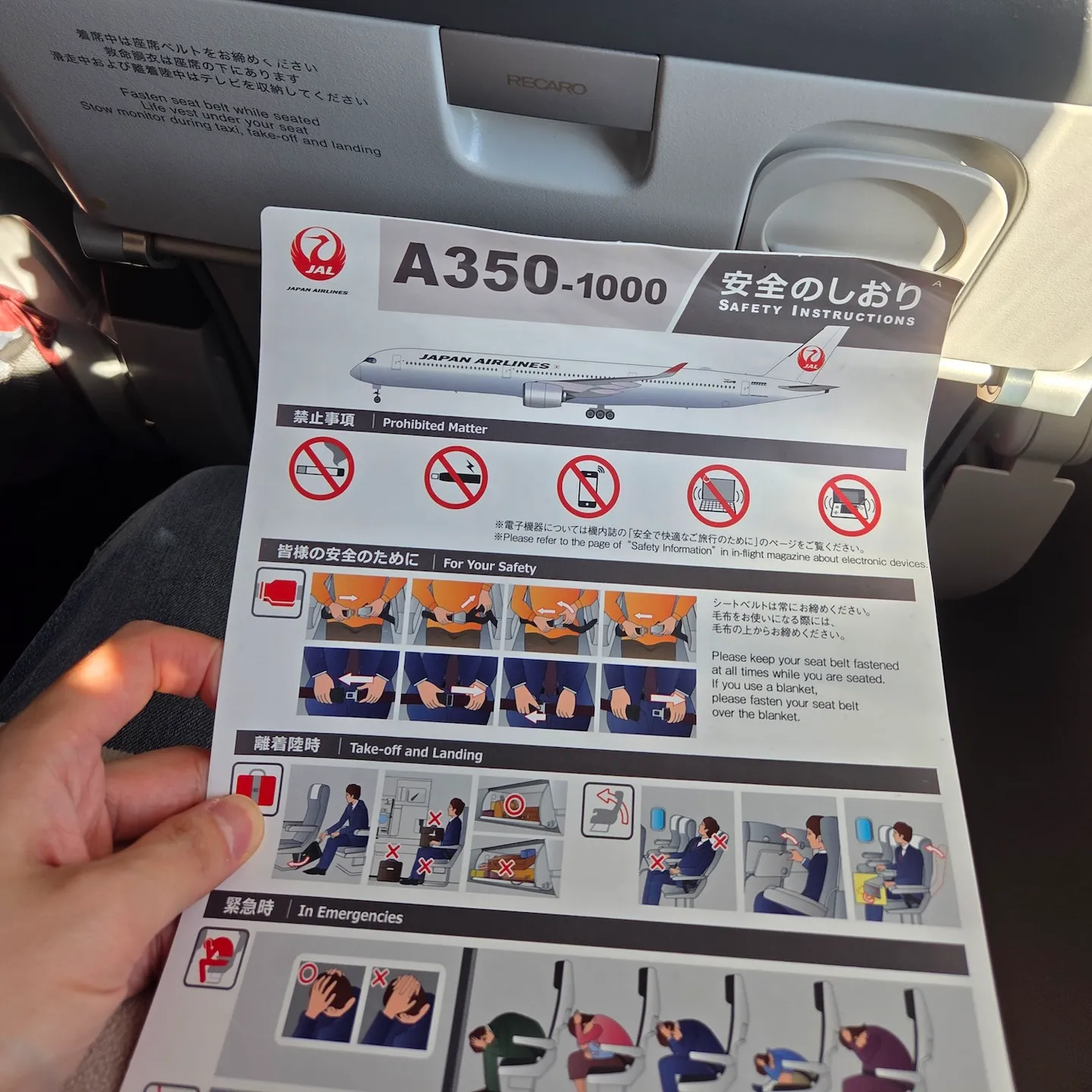
JAL A350-1000 Economy Class Storage Pockets, Coat Hook, and Safety Card
Near your knees are various soft storage pockets. The larger pouch contains the safety card and sickness bag, while the smaller adjacent pockets are perfectly sized for a smartphone or water bottle. Typically, stuffing these pockets eats into your knee space, but because the baseline pitch here is so generous, it barely affected comfort. Finally, there’s a coat hook mounted on the seatback ahead (on the left side for K seats, and on the left side for other seats as well, depending on orientation).

JAL A350-1000 Economy Class Reading Light and Window Shade
Overhead, there is an individual reading light, but notably, no personal air vents. Because of this, the direct sunlight hitting the K column during and right after takeoff made the cabin feel uncomfortably warm. Unlike the First and Business Class cabins which feature electronic dimmable windows, the Economy Class on JAL’s A350-1000 uses traditional pull-down shades. I suspect this is because the electronic dimmers on older Boeing 787s degrade over time and fail to block heat completely, leading to passenger complaints—prompting JAL to stick with reliable physical shades in Economy.
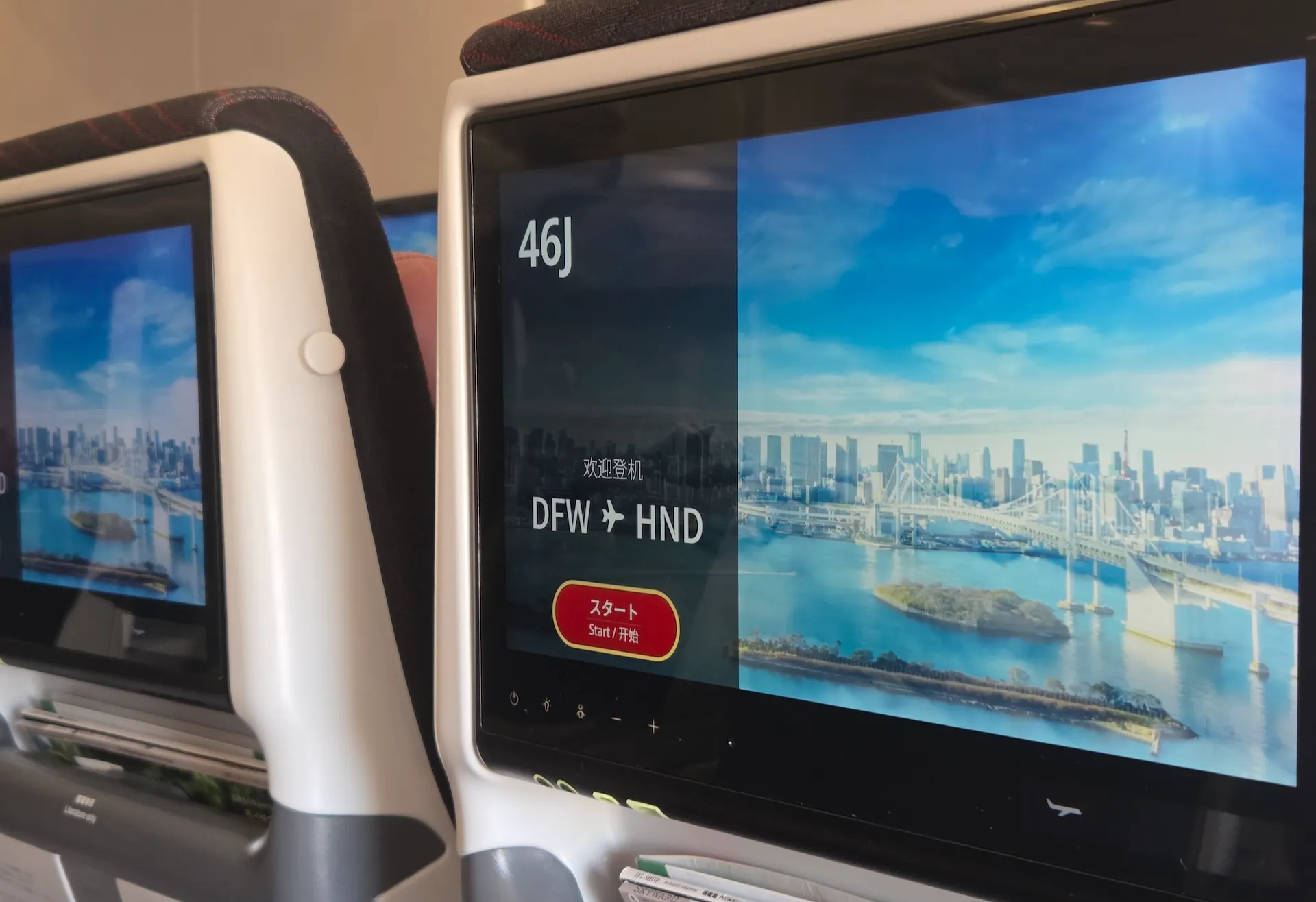
JAL A350-1000 Economy Class 13-inch 4K IFE Screen
JAL A350-1000 Economy Class 13-inch 4K IFE Screen
JAL’s Economy Class was awarded ‘World’s Best Economy Class Seat’ by Skytrax in 2025. Part of that victory stems from being the only airline globally to maintain a 2-4-2 layout on their Boeing 787s (rather than the industry standard 3-3-3), but this brand-new A350-1000 seat absolutely cements that reputation. In terms of width, pitch, screen quality, and practical features, I can confidently say this is one of the best Economy seats in the world. Despite enduring an ultra-long-haul flight of over 13 hours, apart from the inherent inconvenience of being trapped at the window seat when needing the lavatory, I felt virtually zero discomfort.
11. In-flight Service
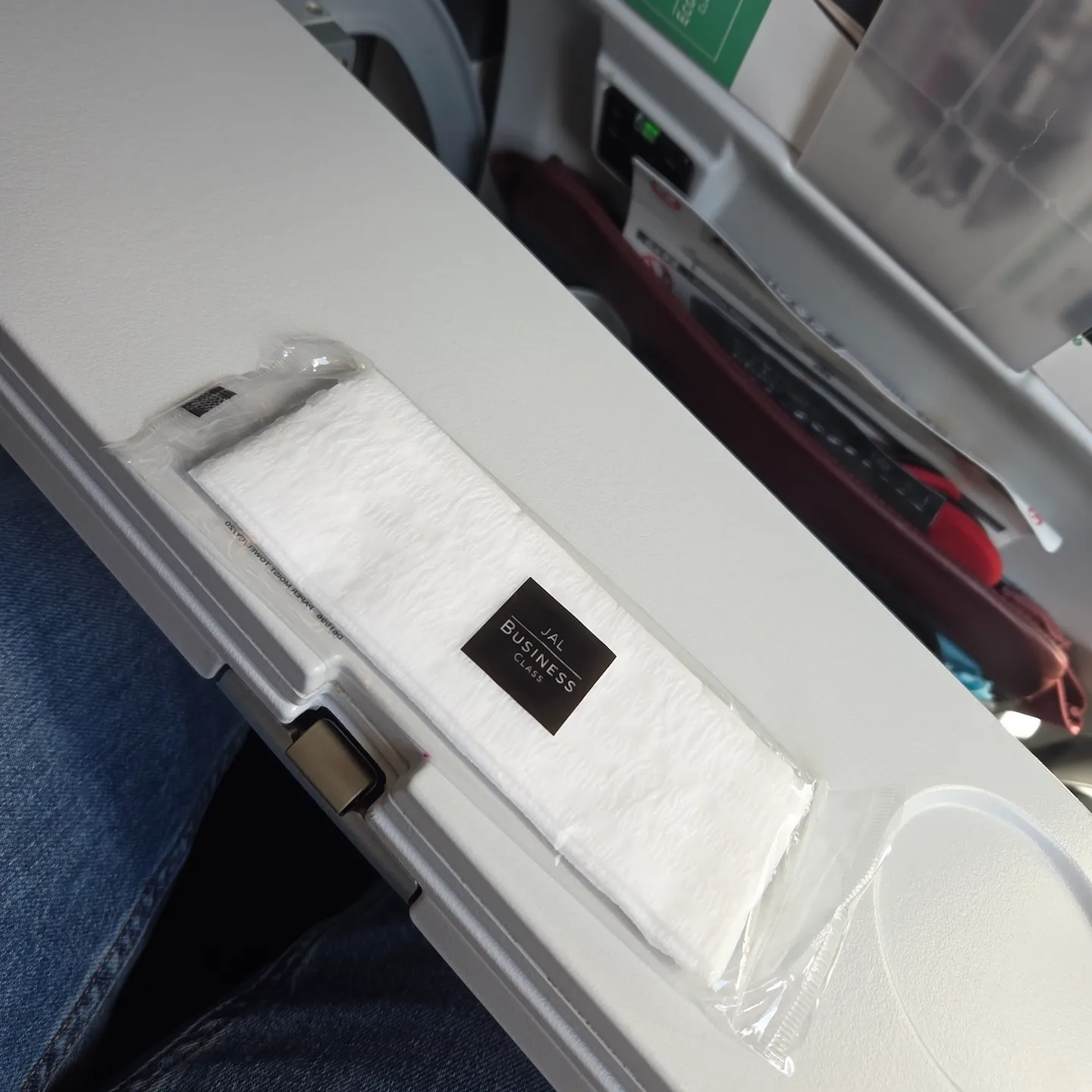
JAL Pre-meal Beverage Service After Takeoff
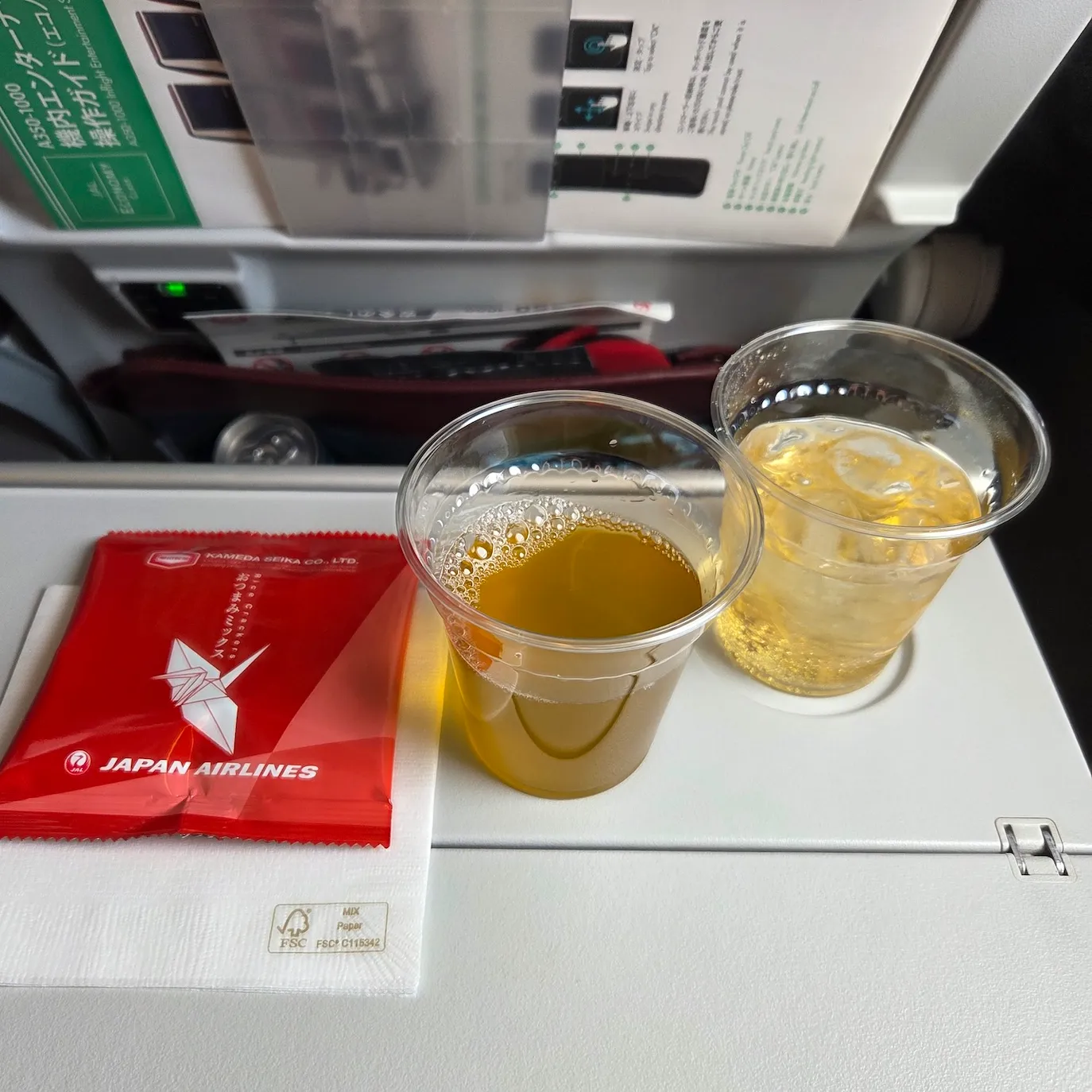
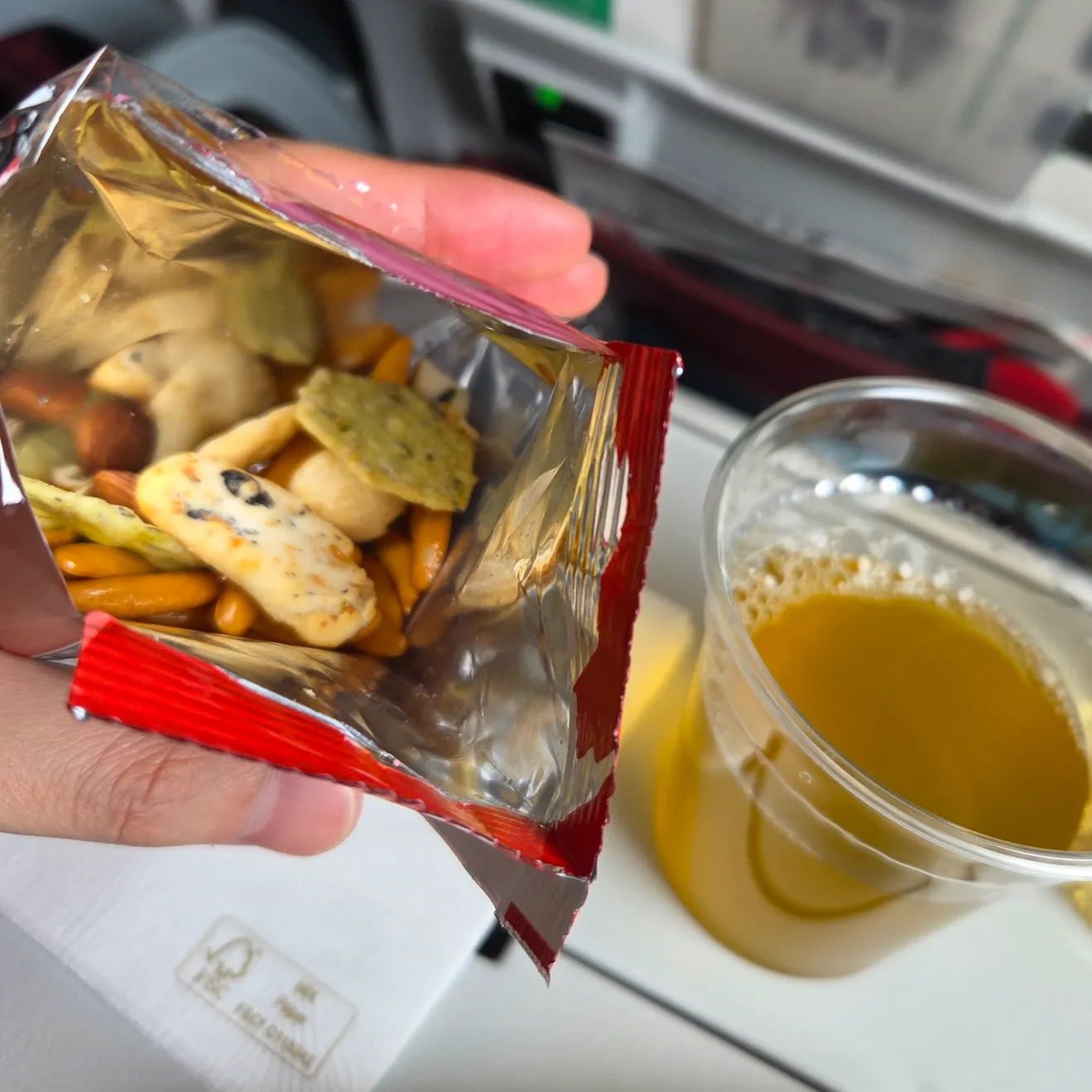
JAL Pre-meal Beverage Service After Takeoff
On JAL’s daytime flights to the Americas, the Economy Class service flows as follows: a post-takeoff meal, a mid-flight snack, and a pre-landing meal. The first meal service begins about 30 minutes after takeoff. The mid-flight snack is served around the 8-hour mark, and the pre-landing meal is offered roughly 2.5 hours before arrival. The gap between the mid-flight snack and the final meal feels a bit short, but since the snack is light, it wasn’t an issue. I had heard that on some JAL flights, crews distribute the mid-flight snack along with the first meal to maximize uninterrupted sleep time, but on JL11, the snack was served during its designated mid-flight window.

JL11’s Two In-flight Meals
The first meal service is broken into three stages: a beverage and snack run, followed by the main meal, and concluding with a dessert service of ice cream, coffee, and tea. There was about a one-hour gap between the initial drinks and the main meal. On this particular flight, we hit turbulence severe enough that the crew had to take their seats, which likely extended that gap. The dessert service followed about 30 minutes after the main meal. For the pre-landing meal, everything is served simultaneously on a single tray, and beverages are offered just once alongside the food.
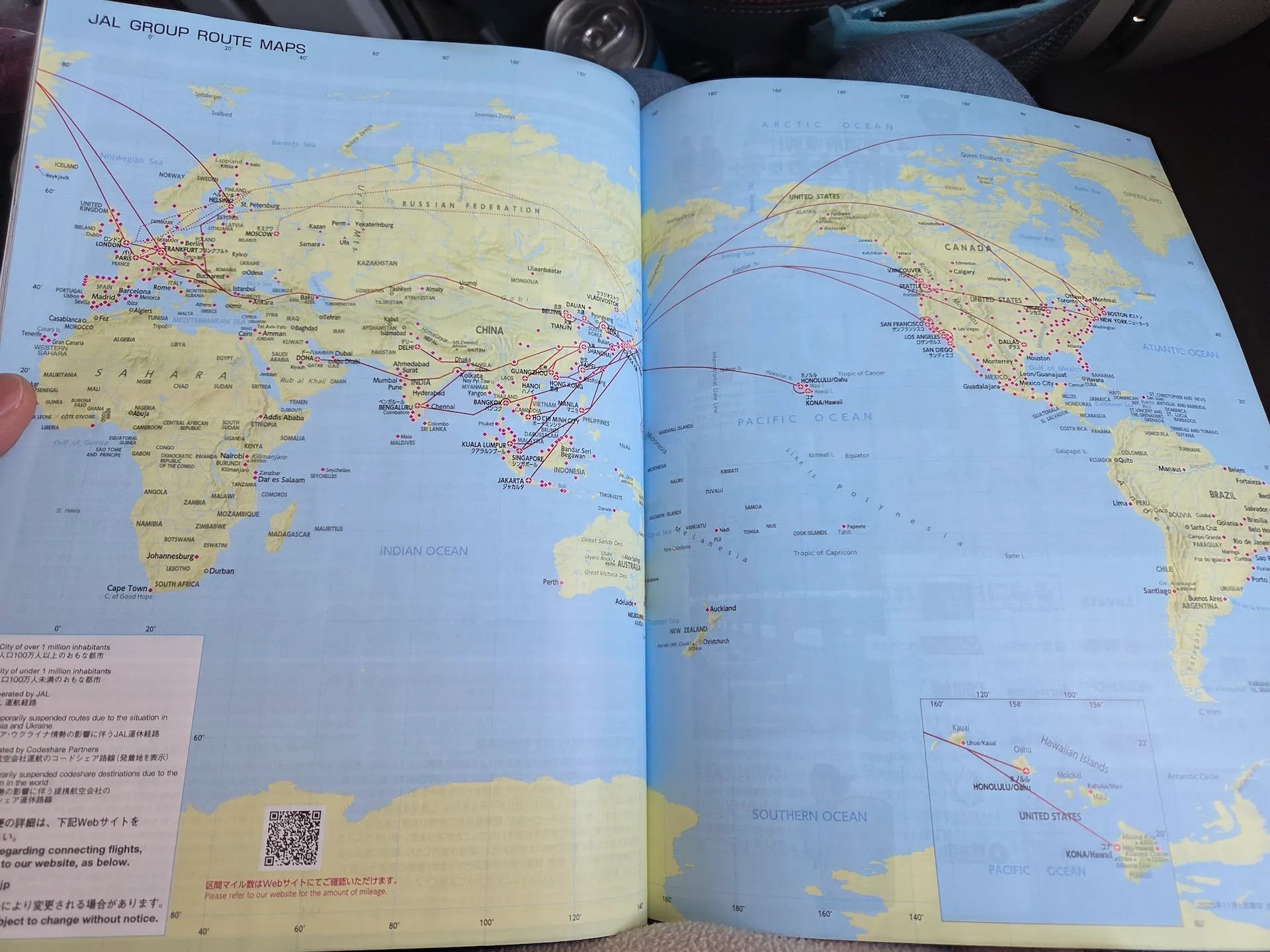
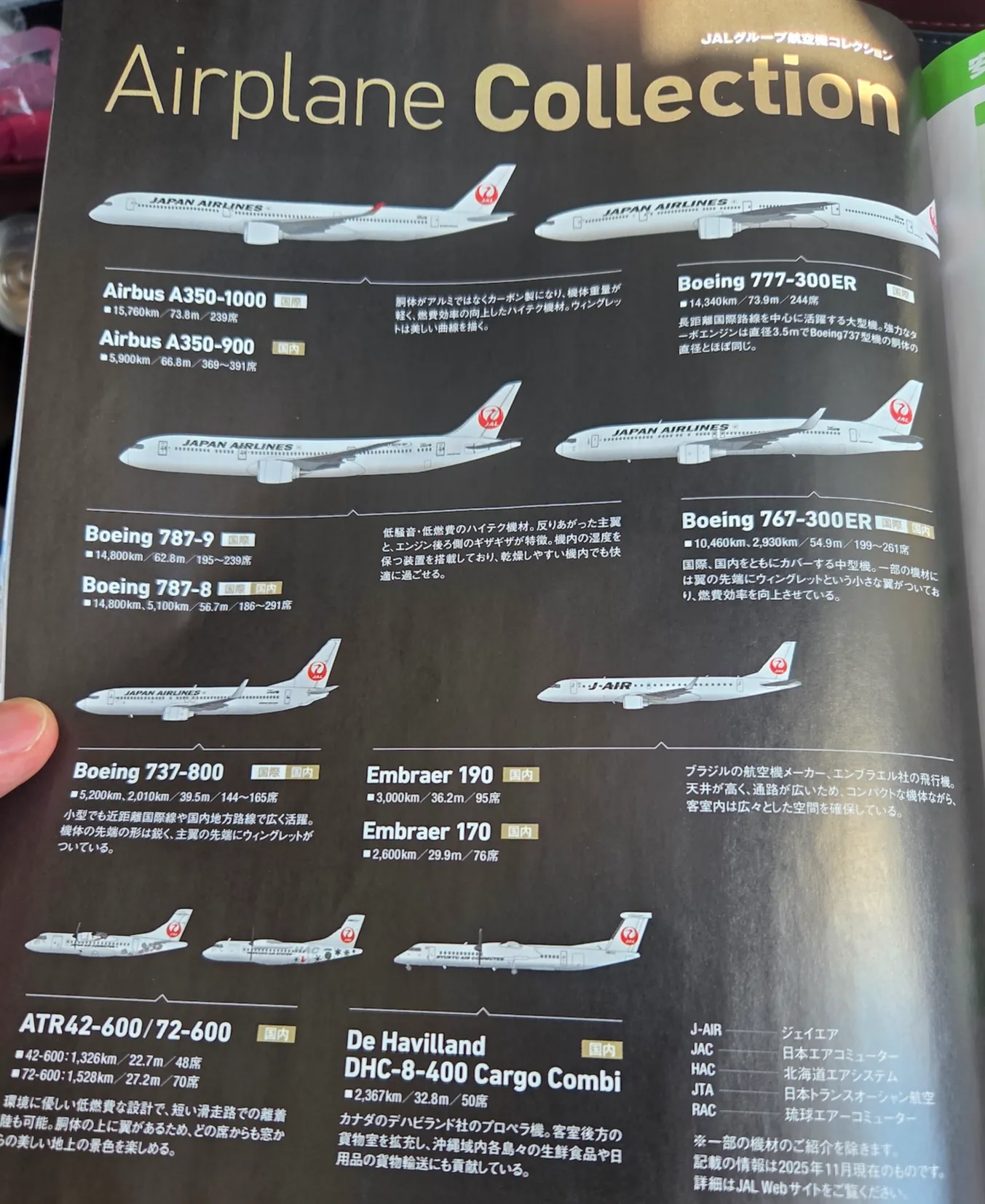
JAL Route Map and Fleet Info
I’ve seen reviews mentioning that some of JAL’s late-night departures to the Americas offer a severely truncated first meal to allow passengers to sleep. However, since JL11 is a daytime departure, it featured the full, multi-course service you’d typically expect on a transpacific crossing.
12. Amenities & Lavatory
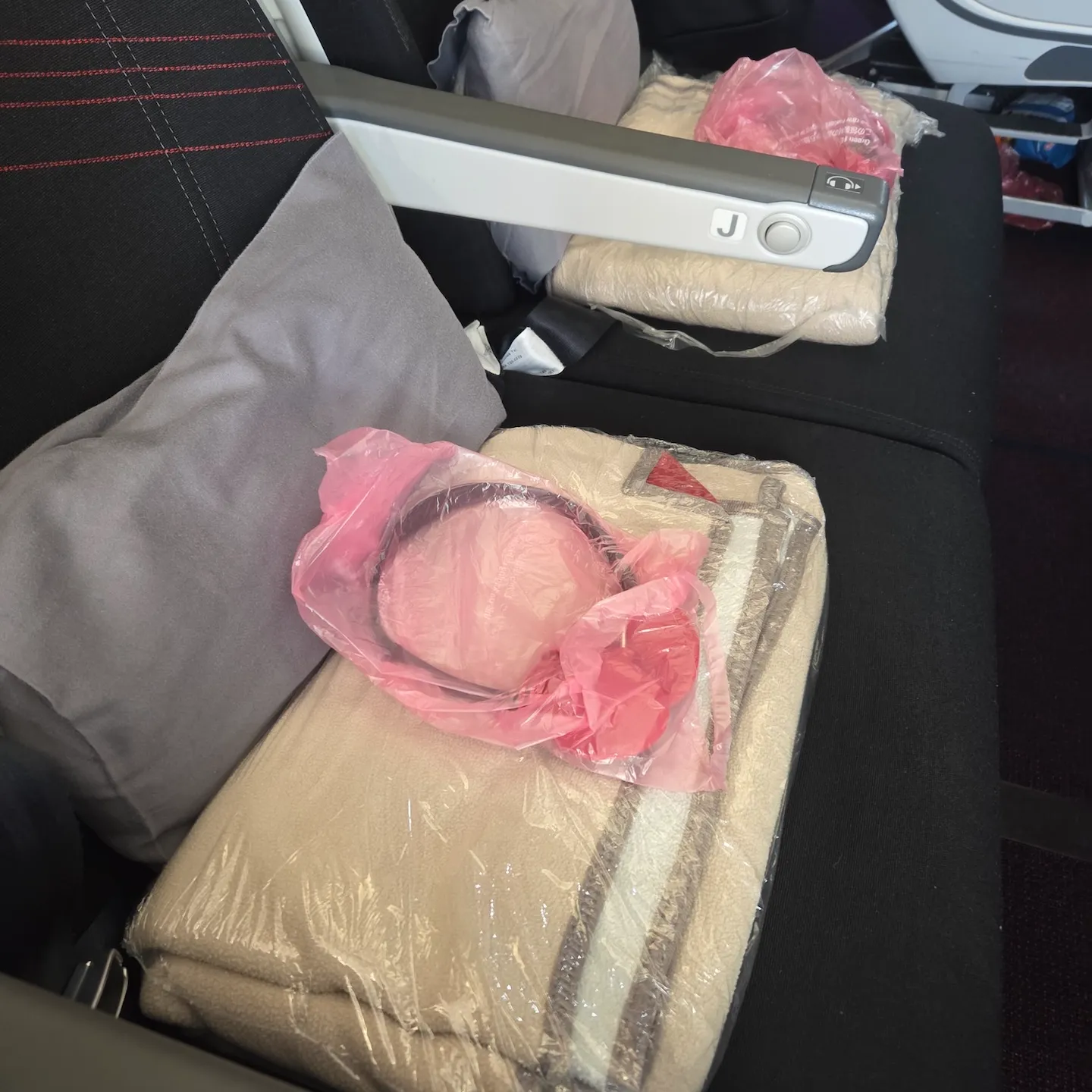
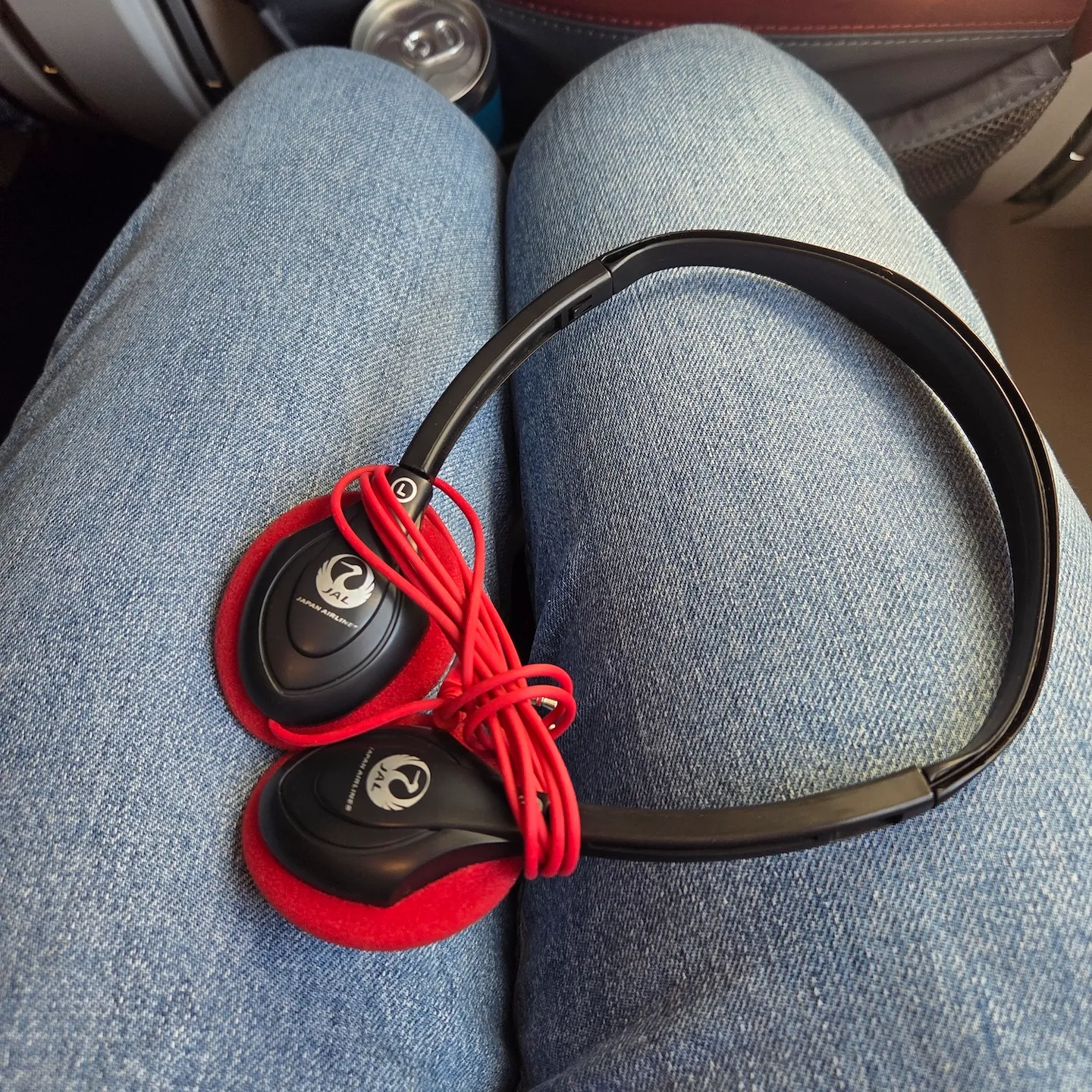

JAL Long-Haul Economy Class In-flight Amenities
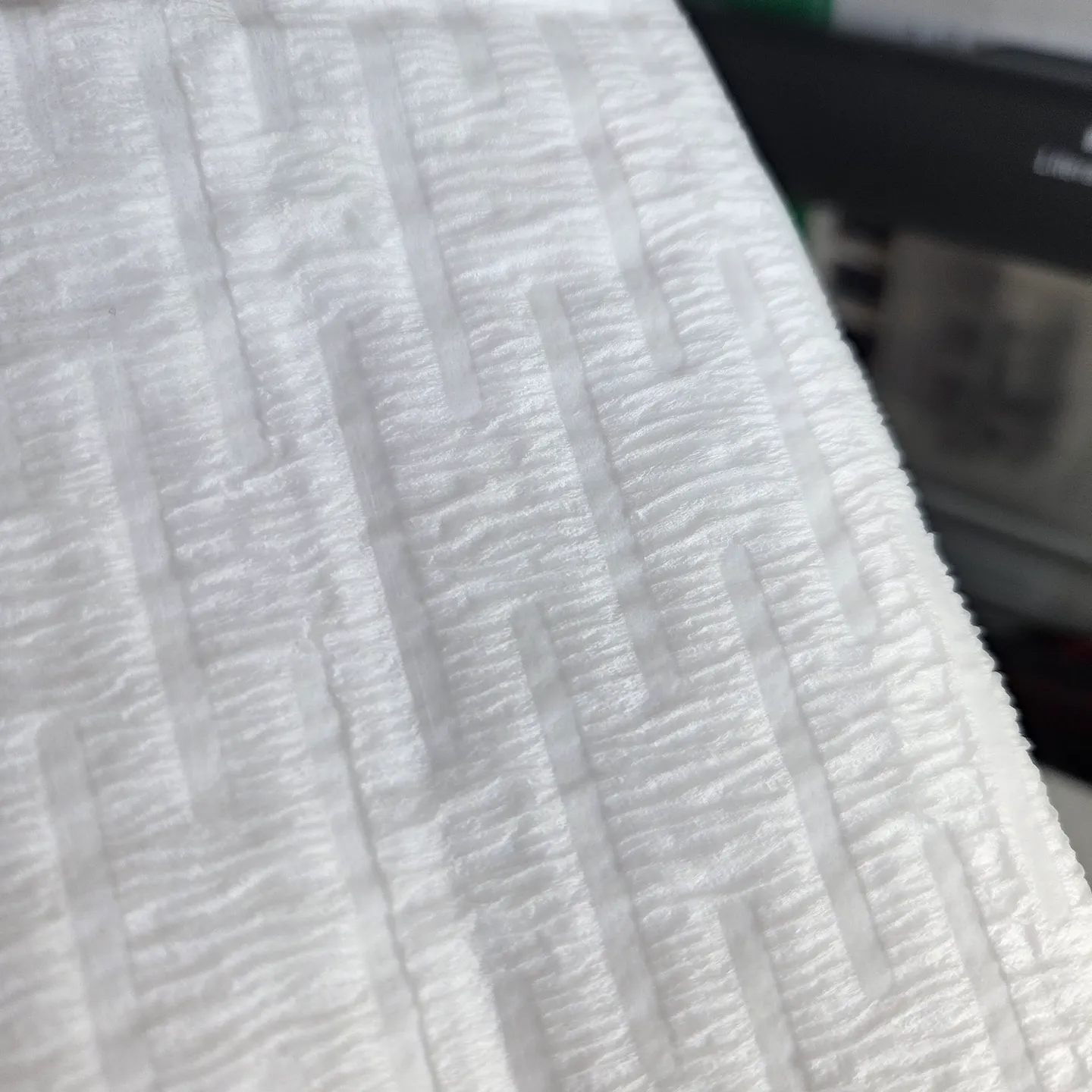
In JAL’s long-haul Economy Class, standard amenities like a blanket, pillow, and headset are waiting at your seat. The blanket is a standard fleece material, but I liked the signature JAL touch of having one corner folded and stitched in red. However, JAL cabins are famously kept quite warm, so unless you run very cold, you probably won’t need it. The pillow is thin but perfectly adequate, and unlike Korean Air, the pillowcase is made of actual cotton, making it much softer to the touch. The provided headset is basic and lacks noise cancellation, though it’s still better than those cheap earbuds that make your ears ache after an hour. That said, since the A350-1000’s IFE supports Bluetooth audio, you likely won’t need the airline’s headset anyway. I initially wondered why there was no bottled water at the seat during boarding, but a small 350ml bottle was provided on the tray during the first meal service. Other amenities like eye masks, earplugs, and postcards are available upon request.
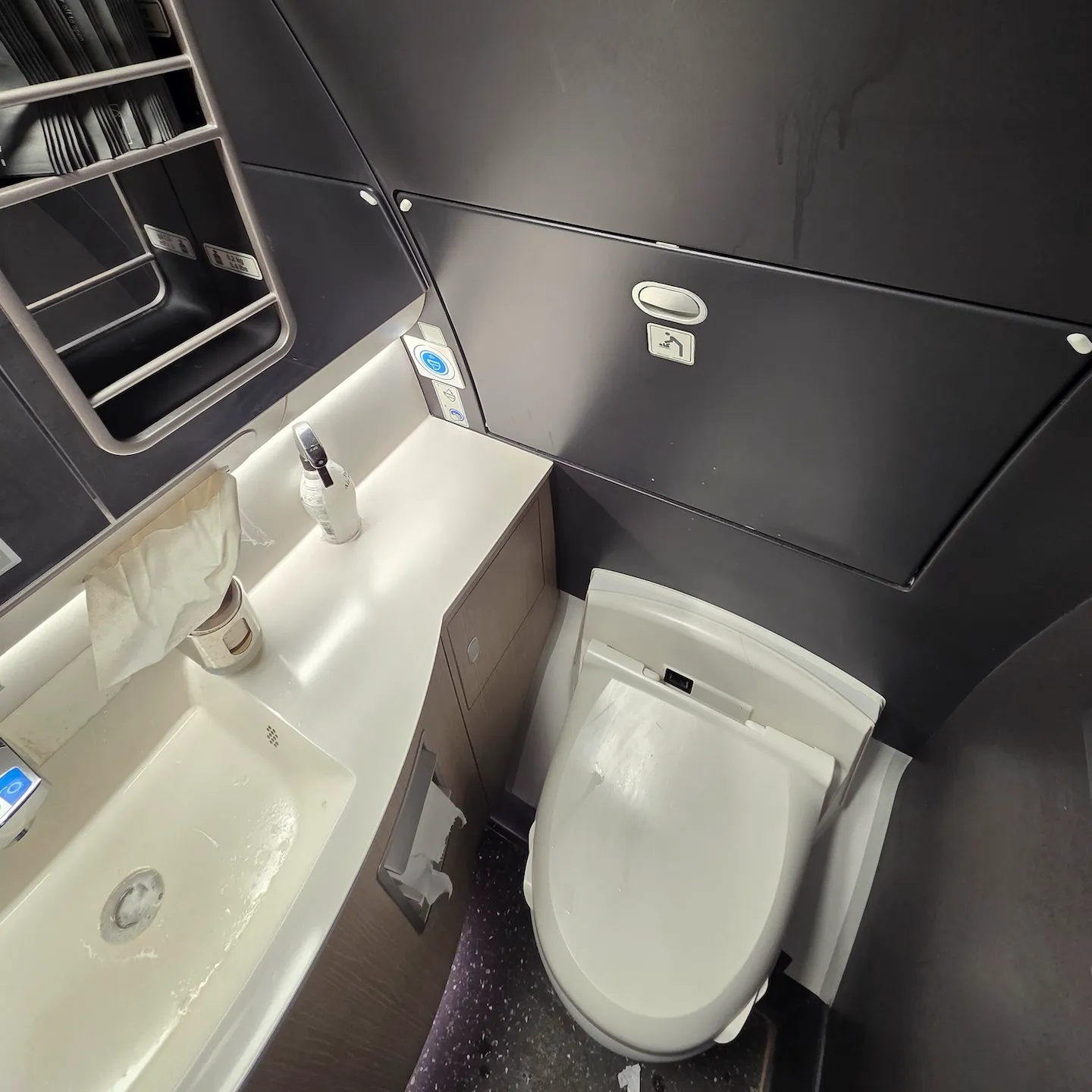
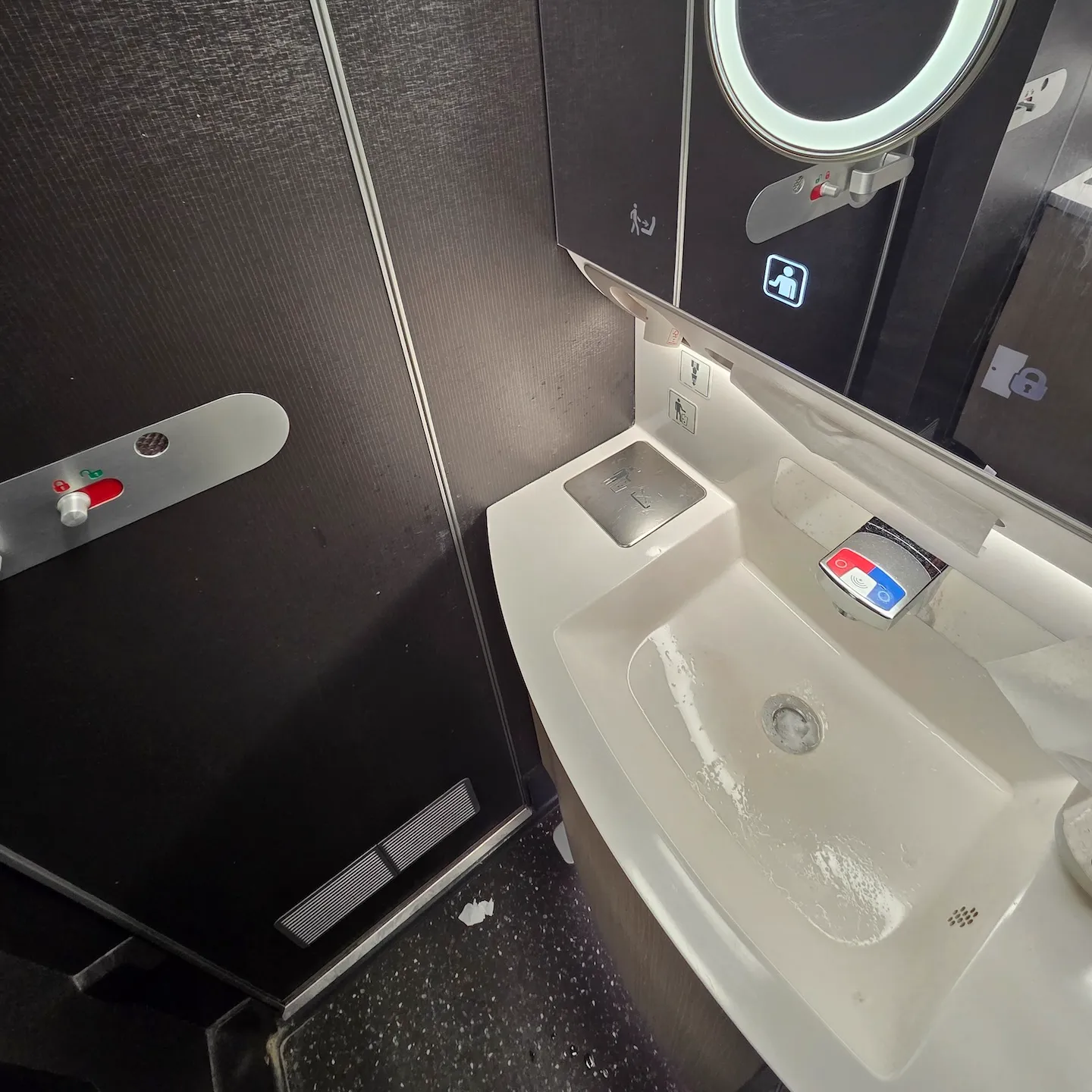
JAL A350-1000 Economy Class Lavatory


JAL A350-1000 Economy Class Lavatory Paper Cups and Toilet Seat Cover
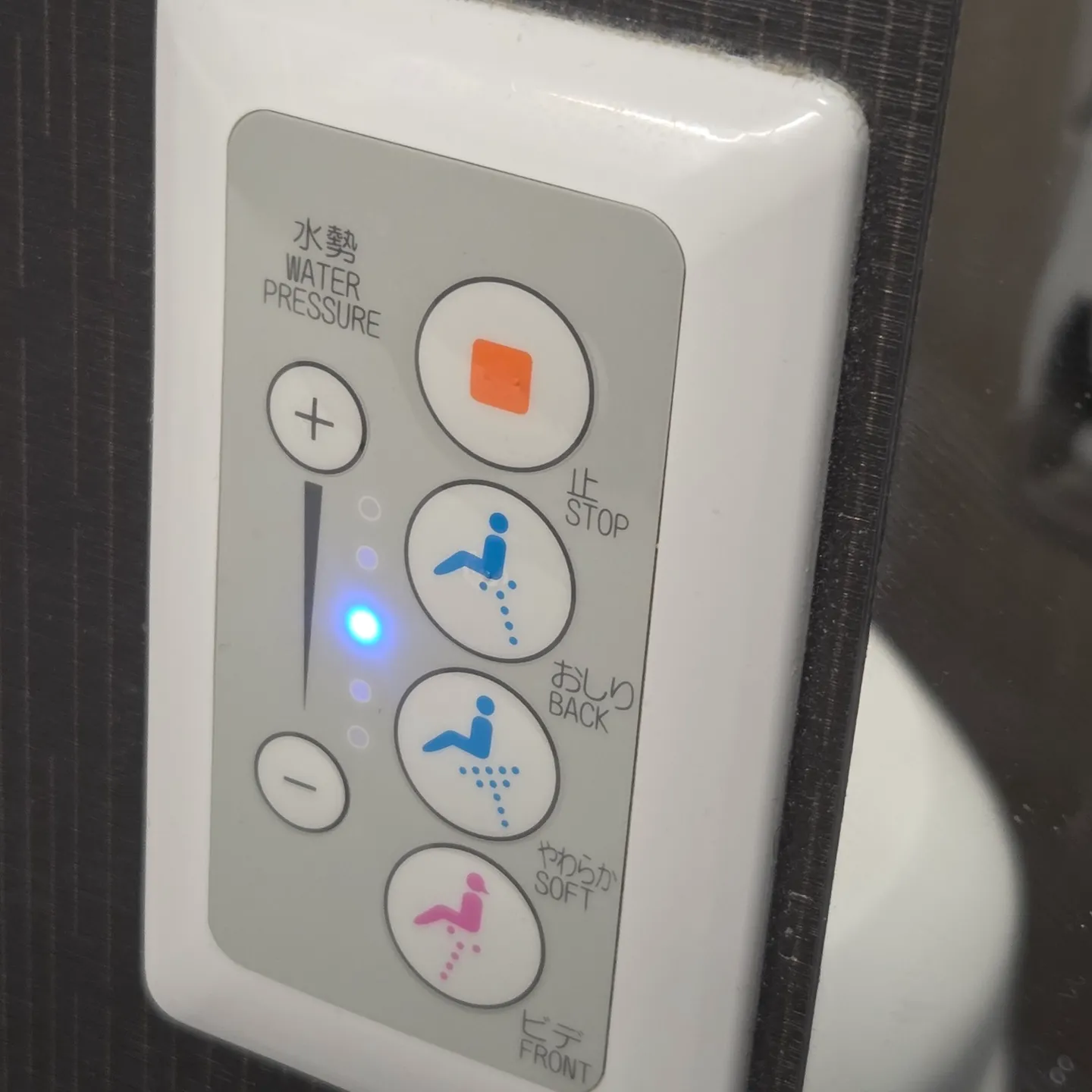

JAL A350-1000 Economy Class Lavatory Bidet and Flush Buttons
For the Economy cabin on this A350-1000, there is one lavatory at the front right and three at the rear, resulting in a ratio of about one lavatory per 52 passengers. In true Japanese fashion, all four lavatories are equipped with bidets, and all but the rear-right lavatory feature infant changing tables. While the layout is standard, the aircraft is barely 1.5 years old, so the facilities are in pristine condition. Interestingly, the walls and flooring are finished in dark tones—except for the white toilet and sink—giving the space an unusually moody, premium vibe for an airplane bathroom. Inside, you’ll find a spray air freshener, hand wash, and small paper cups that are perfect for rinsing after brushing your teeth. Befitting a modern aircraft, the toilet flush is activated via a touchless sensor.
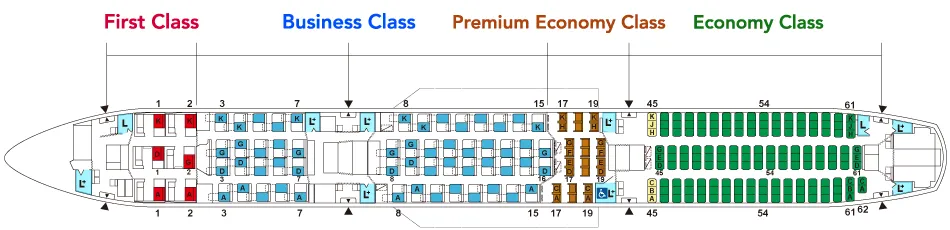
JAL A350-1000 Seat Map © jal.co.jp/jp/en/
JAL A350-1000 Seat Map © jal.co.jp/jp/en/
Technically, the lavatory on the front-left of the Economy cabin is designated exclusively for Premium Economy passengers. However, the crew didn’t seem to strictly enforce this. In fact, when lines formed after the meal service, flight attendants actively directed Economy passengers to use the empty Premium Economy lavatory. Notably, this specific lavatory is designed for wheelchair accessibility, meaning it is significantly more spacious than the others. Like most premier Asian carriers, the JAL crew takes lavatory maintenance seriously; outside of peak rush hours, the bathrooms were kept exceptionally clean throughout the flight.
13. Food & Beverage
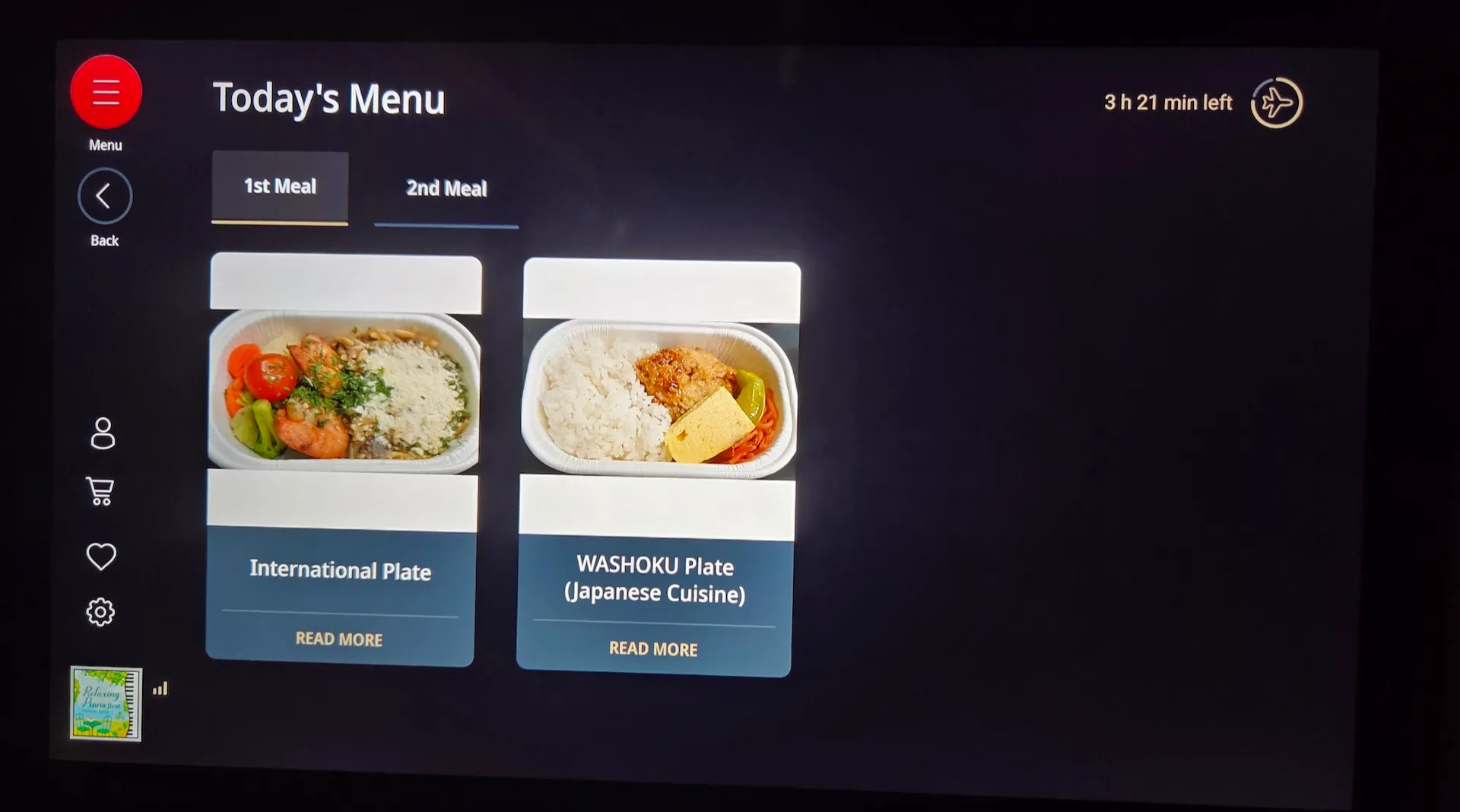
JAL Long-Haul Economy Class JL11 In-flight Menu
JAL Long-Haul Economy Class JL11 In-flight Menu
For the first meal, passengers could choose from two mains: Chicken Meatballs with Teriyaki Sauce, or Lemon Butter Shrimp with Bacon & Mushroom Risoni (served with bread and butter). The side dishes, which were the same regardless of your main choice, included a Broccoli Rabe & Quinoa Salad, Stir-fried Tofu & Vegetables, a Wasabi-flavored Fish Cake & Potato Salad, and a Chocolate Chip Cookie. For dessert, there was a choice between Vanilla or Caramel Häagen-Dazs ice cream, followed by coffee, black tea, or green tea.
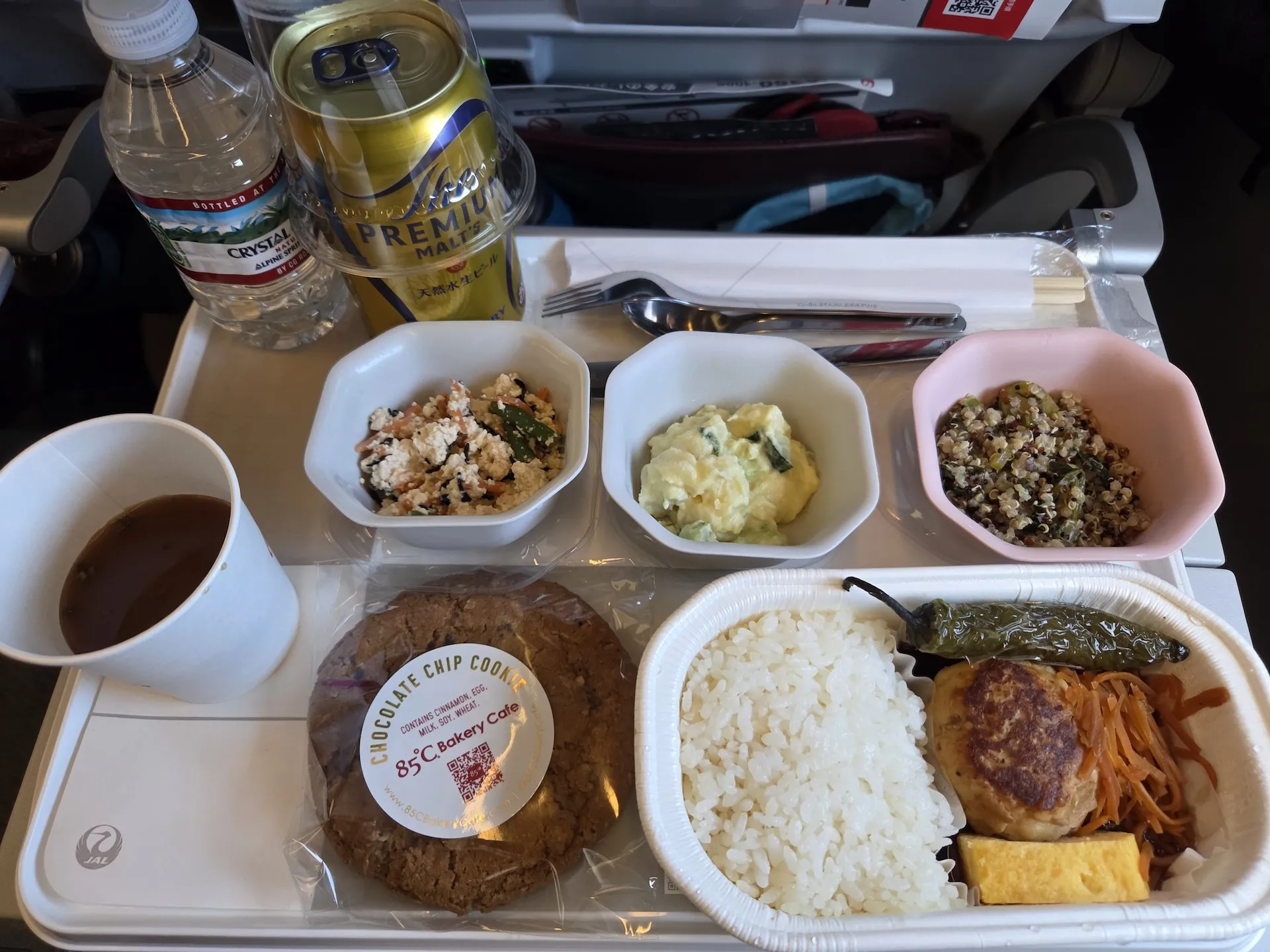
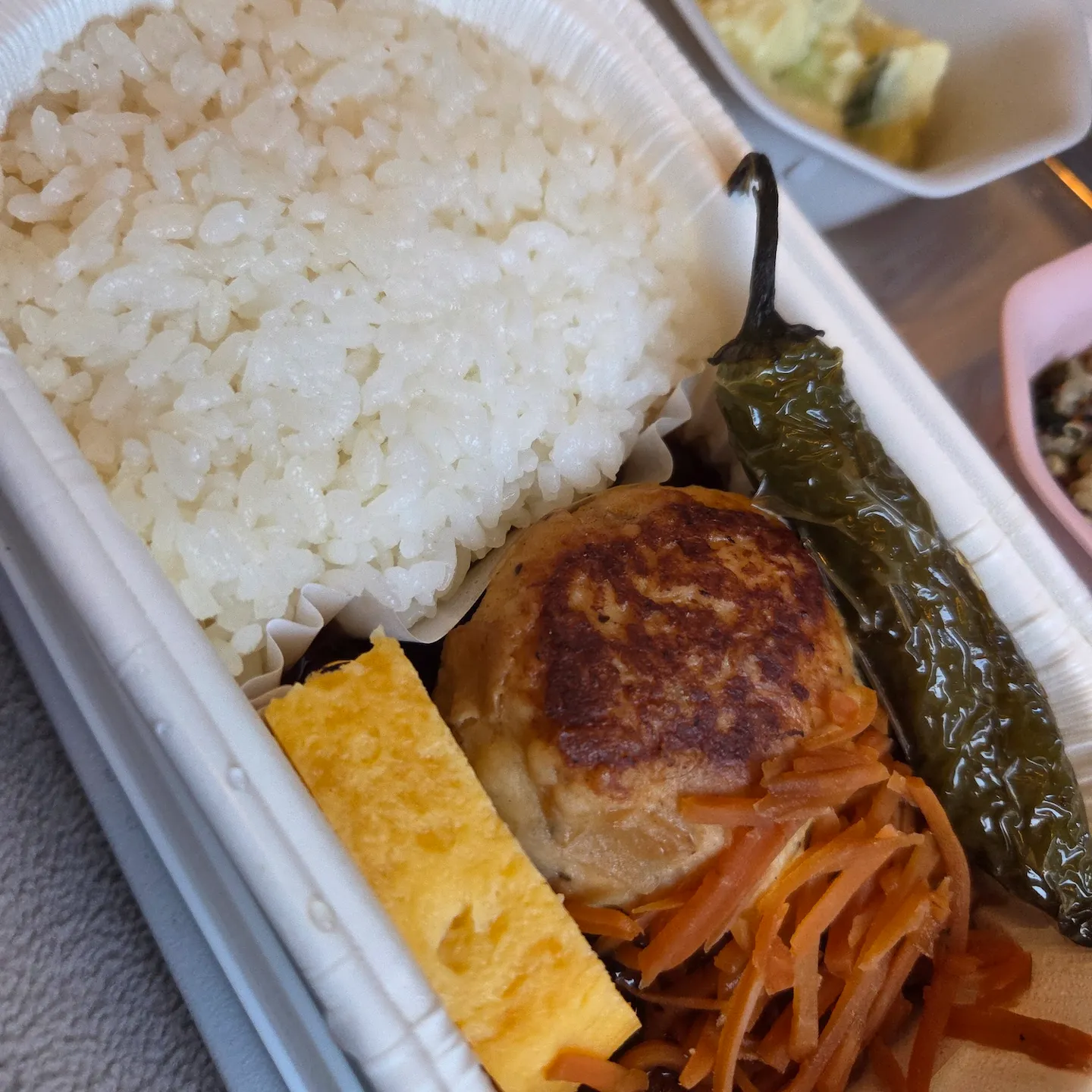
JAL Long-Haul Economy Class JL11 Post-Takeoff Meal



JAL Long-Haul Economy Class JL11 Post-Takeoff Meal Side Dishes

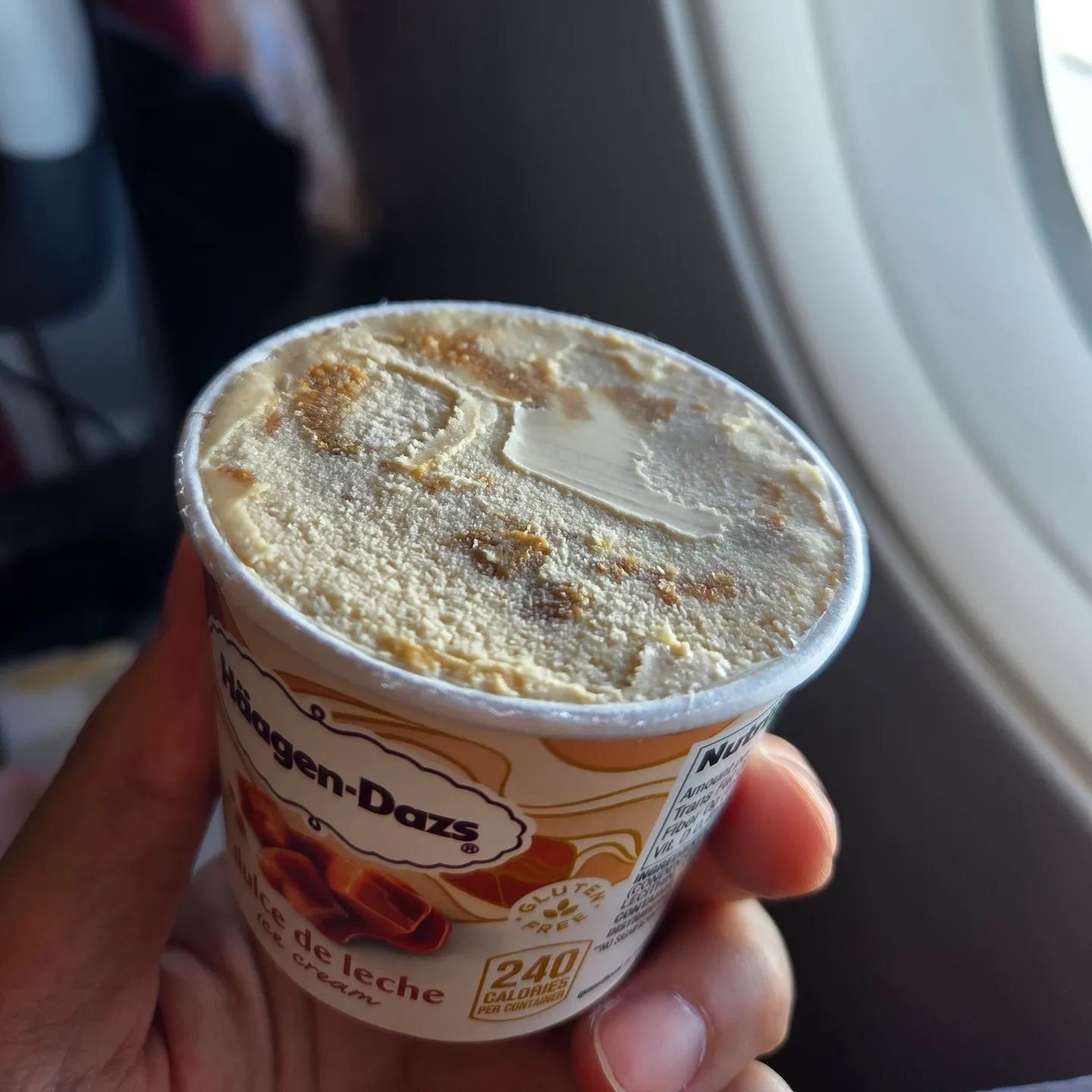

JAL Long-Haul Economy Class JL11 Post-Takeoff Meal Dessert
The broccoli salad leaned savory and nutty, dominated by sesame oil rather than a bright vinaigrette. The tofu and vegetable stir-fry was sweet and rich. The wasabi potato salad was a standout—the wasabi flavor was very subtle and not at all spicy, and the crunchy cucumbers provided a great texture. For my main, I went with the Japanese option: Chicken Meatballs with Teriyaki Sauce. The rice had a faint ‘reheated frozen rice’ aroma, but nothing offensive. The egg had the classic sweetness of a Japanese tamagoyaki. The carrots were slightly overcooked, turning a bit mushy, while the peppers were surprisingly spicy but pleasant in small bites. The chicken meatballs themselves were slightly dry, but there was no ‘gamey’ poultry taste, and they paired well with the teriyaki sauce. The crew also came around pouring miso soup into paper cups—this was a robust, earthy miso rather than a clear, mild soup. The cookie was from 85°C Bakery Cafe (a popular Taiwanese-style bakery in the US). It wasn’t overwhelmingly sweet like typical American cookies and had a lovely, subtle hint of cinnamon. The Häagen-Dazs ice cream was delicious, though served rock hard, so it took a while to soften. When coffee is offered, you can request decaf; however, while the regular coffee is freshly brewed, the decaf is instant.


JAL Long-Haul Economy Class JL11 Mid-flight Snack
For the mid-flight snack, we received a chocolate croissant, also from 85°C Bakery Cafe. The pastry itself was tasty, but because it had been stored frozen, the chocolate inside wasn’t just solid—it was ice-cold and crunchy when I bit into it right after it was served. During snack time, flight attendants primarily walked the aisles offering coffee and green tea, but they happily brought other beverages upon request. Crew members passed through frequently to collect trash, which was great as I didn’t have to stuff empty wrappers into my seatback pocket.
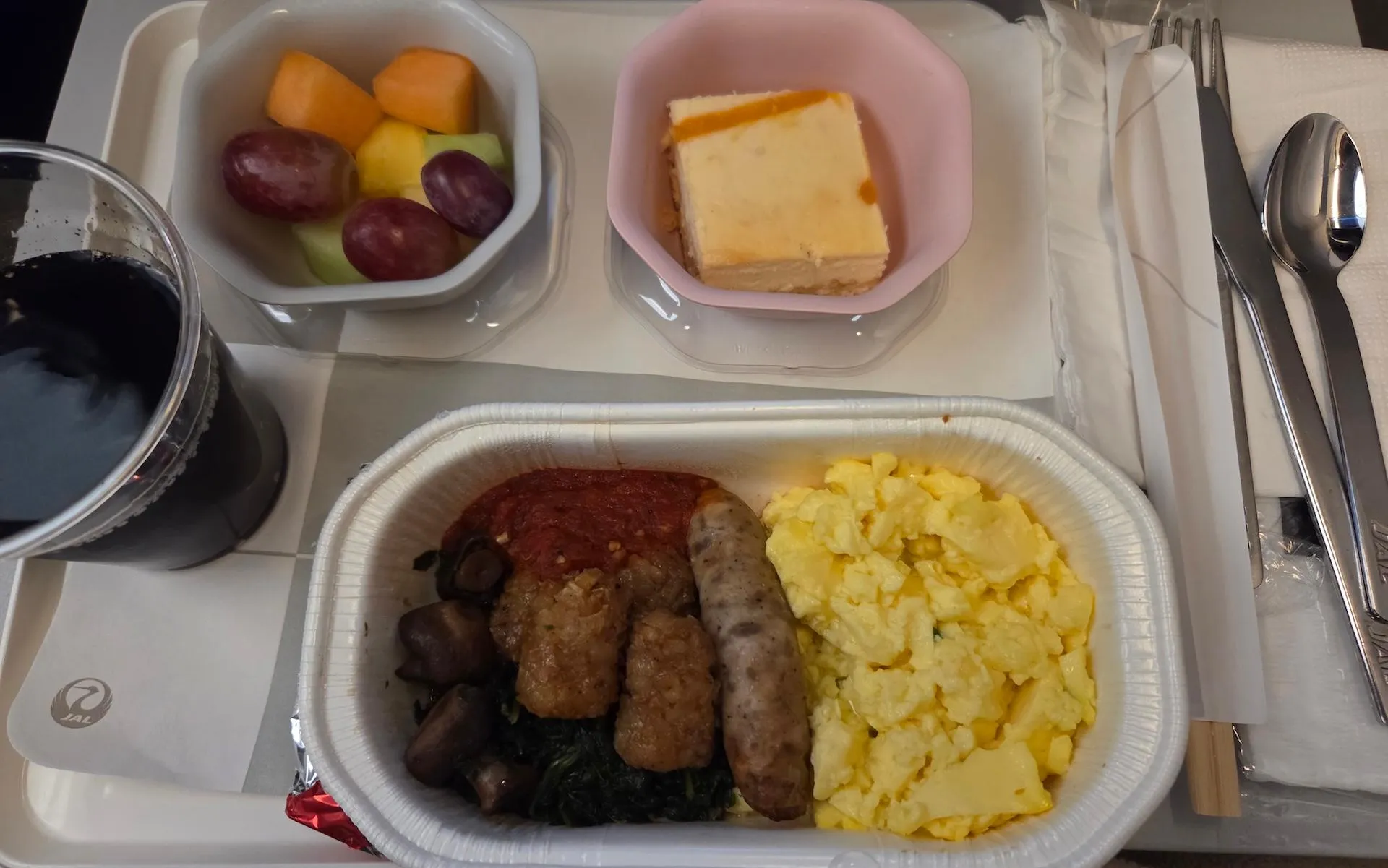

JAL Long-Haul Economy Class JL11 Pre-landing Meal


JAL Long-Haul Economy Class JL11 Pre-landing Meal
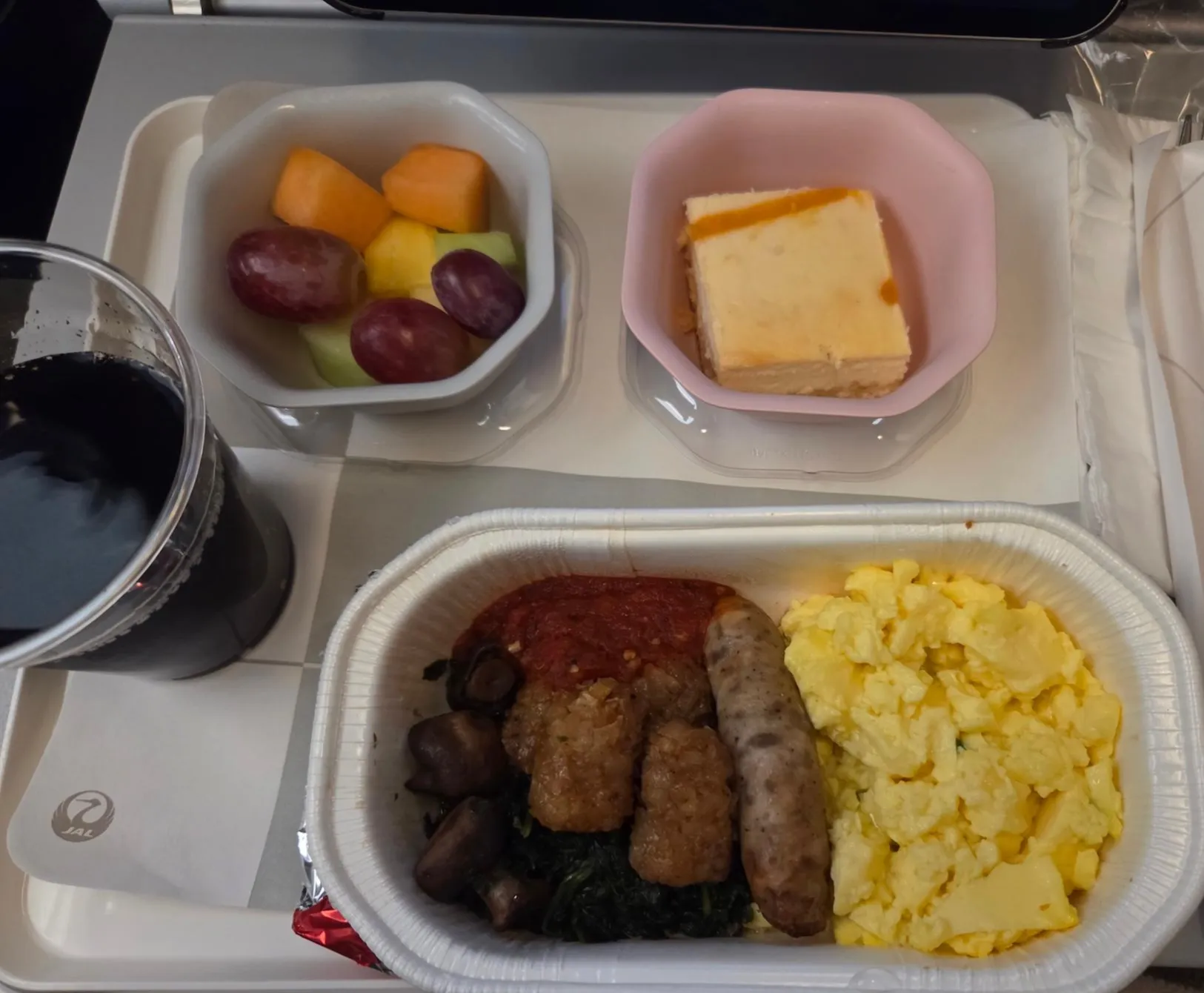
The pre-landing meal was a single option: Scrambled Eggs with Pork Sausage, sautéed spinach, and tater tots. Dessert consisted of fresh fruit, a passionfruit cheesecake, and coffee/tea. The tater tots were a letdown—they were soggy and tasted distinctively like a freezer. The scrambled eggs, however, held a surprisingly good, firm texture for a reheated airplane meal. The pork sausage had a slightly ‘gamey’ meat smell, likely because it was a milder Japanese-style sausage rather than a heavily spiced American one. The sautéed spinach and mushrooms were lightly seasoned, allowing their natural flavors to shine. The fruit was fresh, though aside from the grapes, not particularly sweet. The passionfruit cheesecake, with its subtle tartness, was a delightful finish.
Overall, JAL’s long-haul Economy catering out of DFW heavily emphasized Japanese culinary sensibilities. It wasn’t just about the menu items; the subtler seasoning and lighter use of spices felt distinctly Japanese rather than American. However, this flavor profile didn’t always seem to mesh well with the US catering kitchen or the ingredients used. There were noticeable flaws—freezer burn flavors, overcooked vegetables, soggy fried items, and a slight gaminess in the pork. None of this made the food inedible, but a sensitive palate would certainly notice. (Interestingly, I didn’t experience any of these catering issues when flying Business Class on this exact route a year ago, which makes this a bit puzzling.) That being said, the overall composition and variety are still leaps and bounds better than what North American carriers offer. Also, like Korean Air, JAL provides proper stainless steel cutlery in Economy, which is a huge plus. For more details on JAL’s international menus, click here.

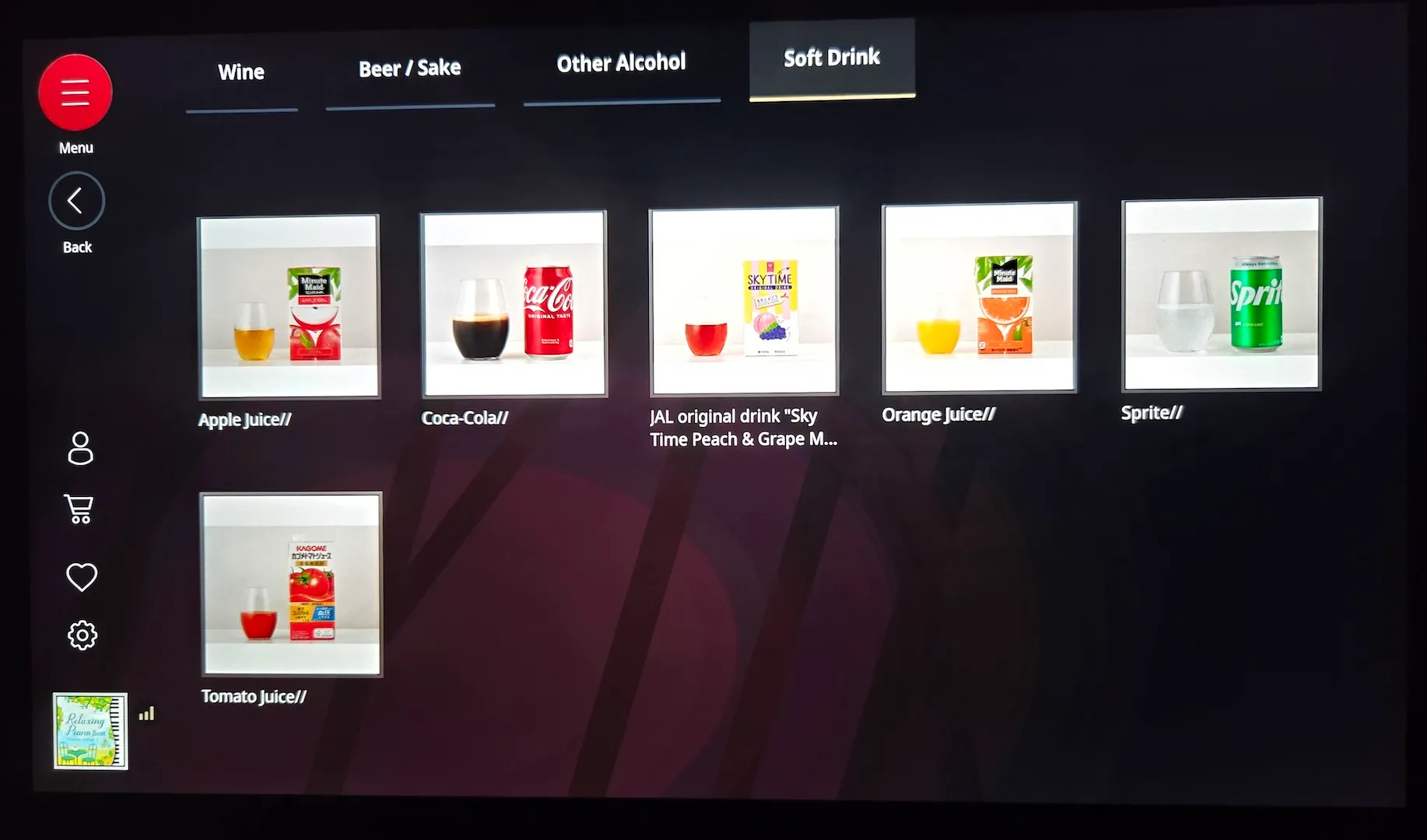
JAL Long-Haul Economy Class Beverage and Alcohol Menu
Since this is a full-service carrier’s long-haul route, almost all beverages and alcoholic drinks in JAL’s Economy Class are complimentary. The alcohol selection includes red and white wine, four types of Japanese beer (Asahi, Suntory Premium Malts, Kirin Ichiban, and Yebisu), Japanese sake, highballs, gin, and plum wine (umeshu). However, to differentiate the cabins, Japanese shochu and sparkling wine are exclusive to Premium Economy and are not available in standard Economy.
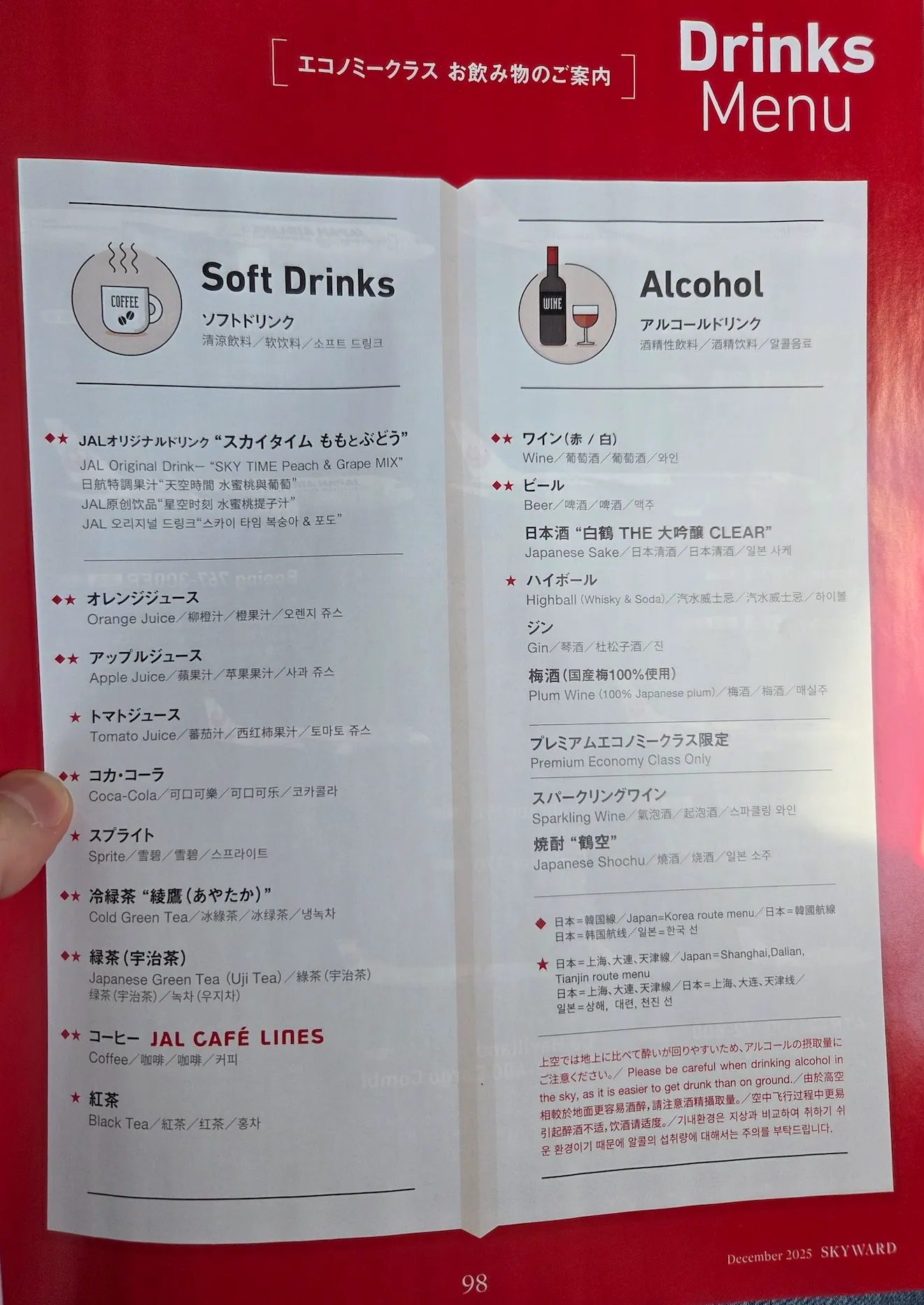
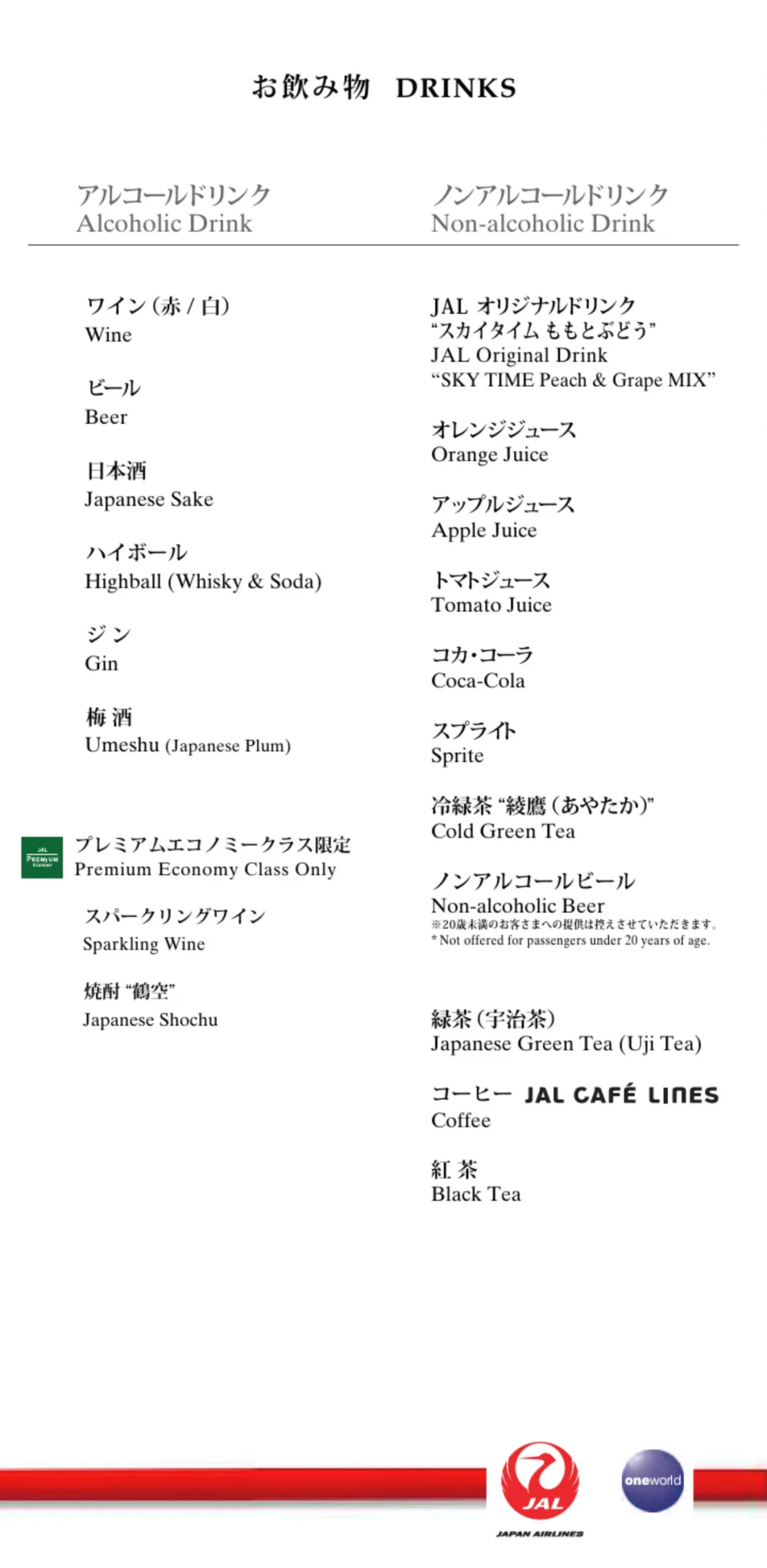
JAL Long-Haul Economy Class Beverage and Alcohol Menu
Non-alcoholic options included JAL’s signature ‘Sky Time’ (Peach & Grape), orange juice, apple juice, tomato juice, Coca-Cola, Coke Zero, Sprite, iced green tea, hot green tea (Uji tea), coffee, and black tea. While not the most expansive list, it covers all the basics. Tragically, on my JL11 flight, the crew announced they had run out of ‘Sky Time’ stock for the Economy cabin. I honestly can’t imagine flying JAL without having Sky Time, so this was genuinely disappointing and a bit baffling. Additionally, perhaps I’ve grown too accustomed to US carriers handing out full cans of soda, but the tiny pour of Coke Zero into a small paper cup felt a bit stingy.
JAL’s beverage selection can be summarized as competent but not extraordinary. If you are a fan of Japanese beer, having four premium domestic brands to choose from is a massive perk. But again, running out of their signature Sky Time drink before the very first beverage service was incredibly uncharacteristic for JAL and a major letdown. For a detailed list of JAL’s international beverage offerings, click here.
14. In-flight Entertainment & Wi-Fi
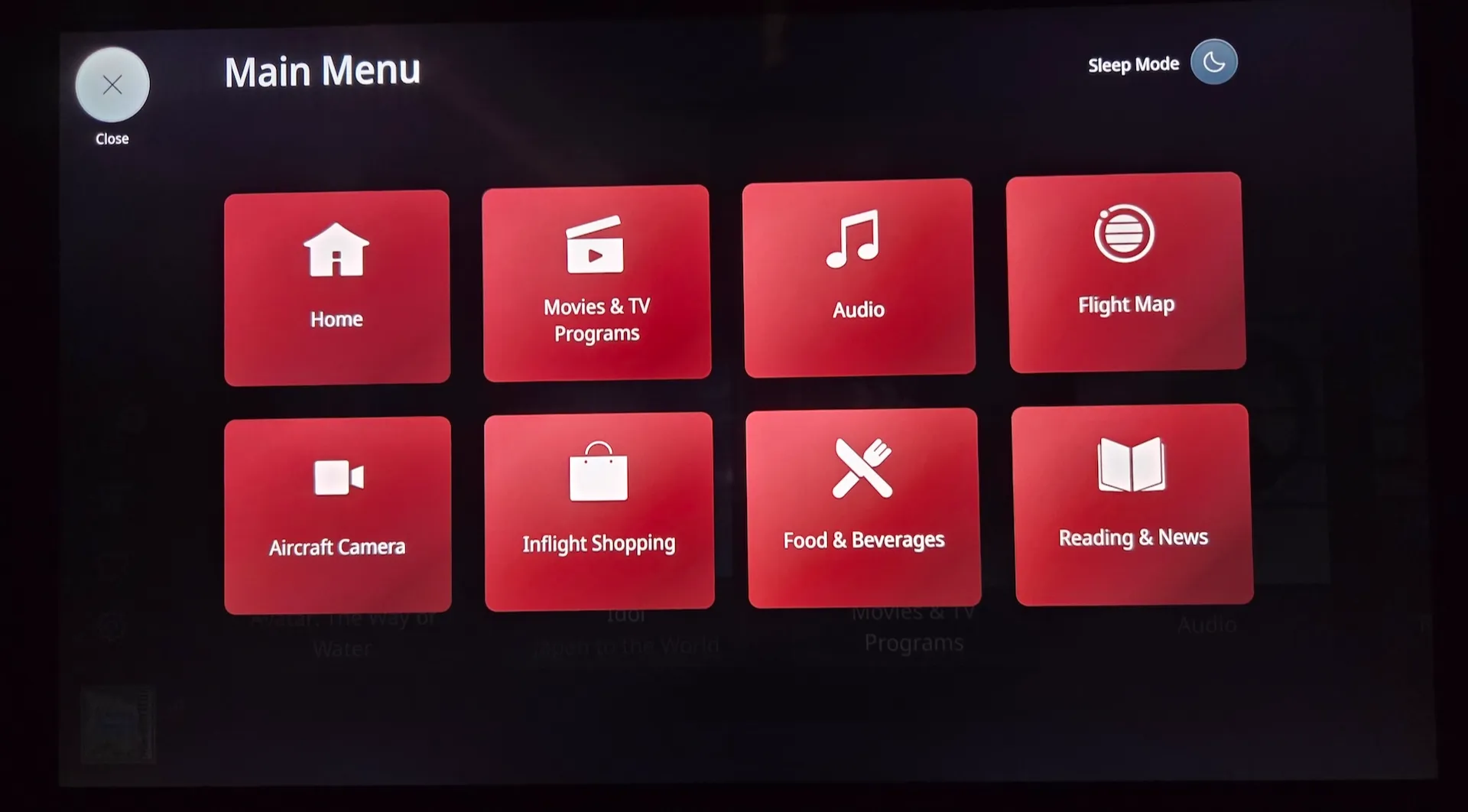
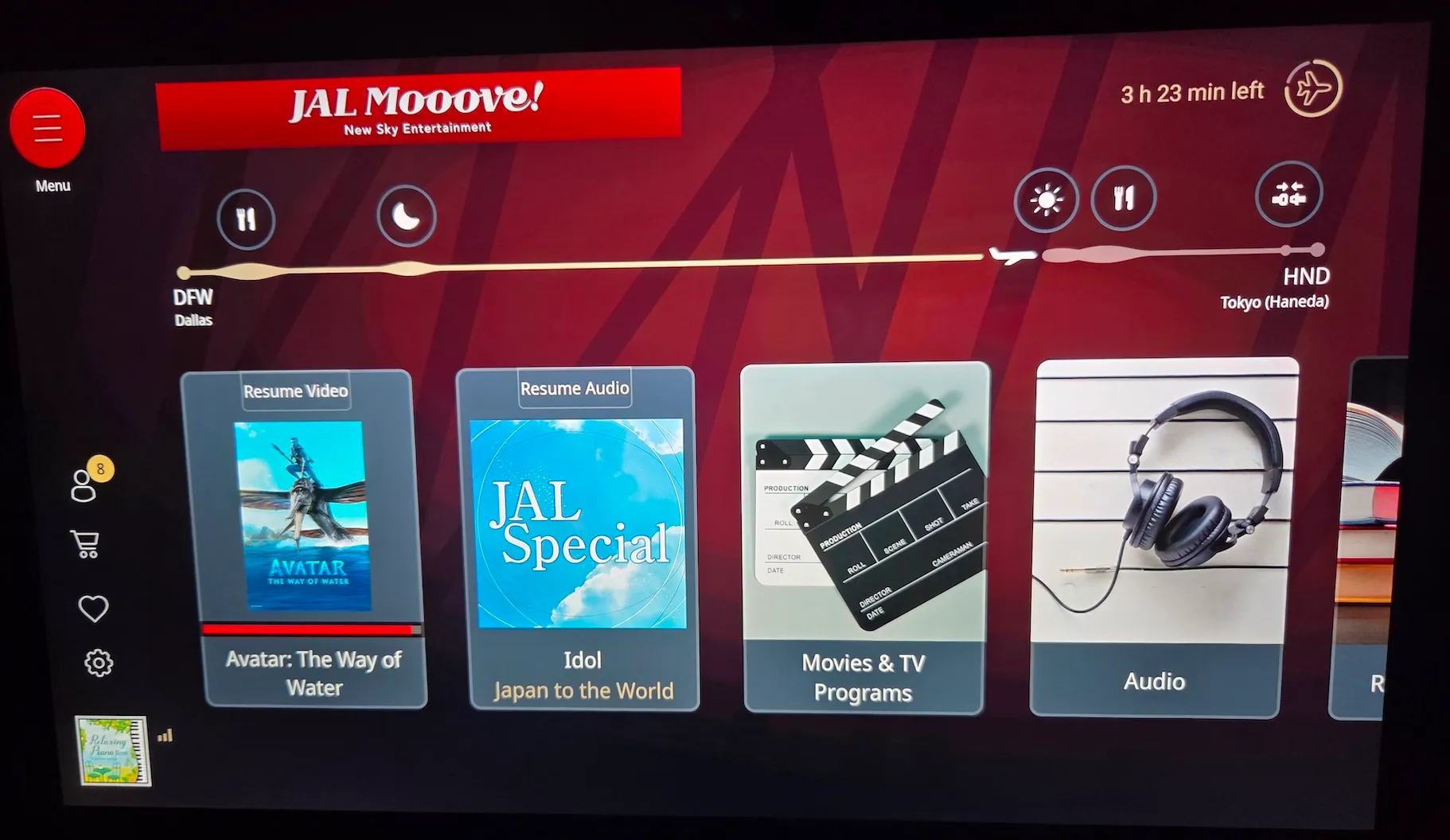
JAL A350-1000 In-flight Entertainment System
One of the greatest strengths of JAL’s new flagship A350-1000 is the incredible hardware powering its IFE system across all classes. As I mentioned earlier, it is no exaggeration to say that this 13-inch 4K monitor in Economy is the finest in the industry. However, JAL’s Achilles’ heel on international routes has always been its sparse content library. It’s not that there are only a handful of movies—there is a reasonable selection of both English and Korean content—but whenever I browse JAL’s catalog, I inevitably end up thinking, ‘There’s really nothing to watch.’


JAL A350-1000 IFE Content
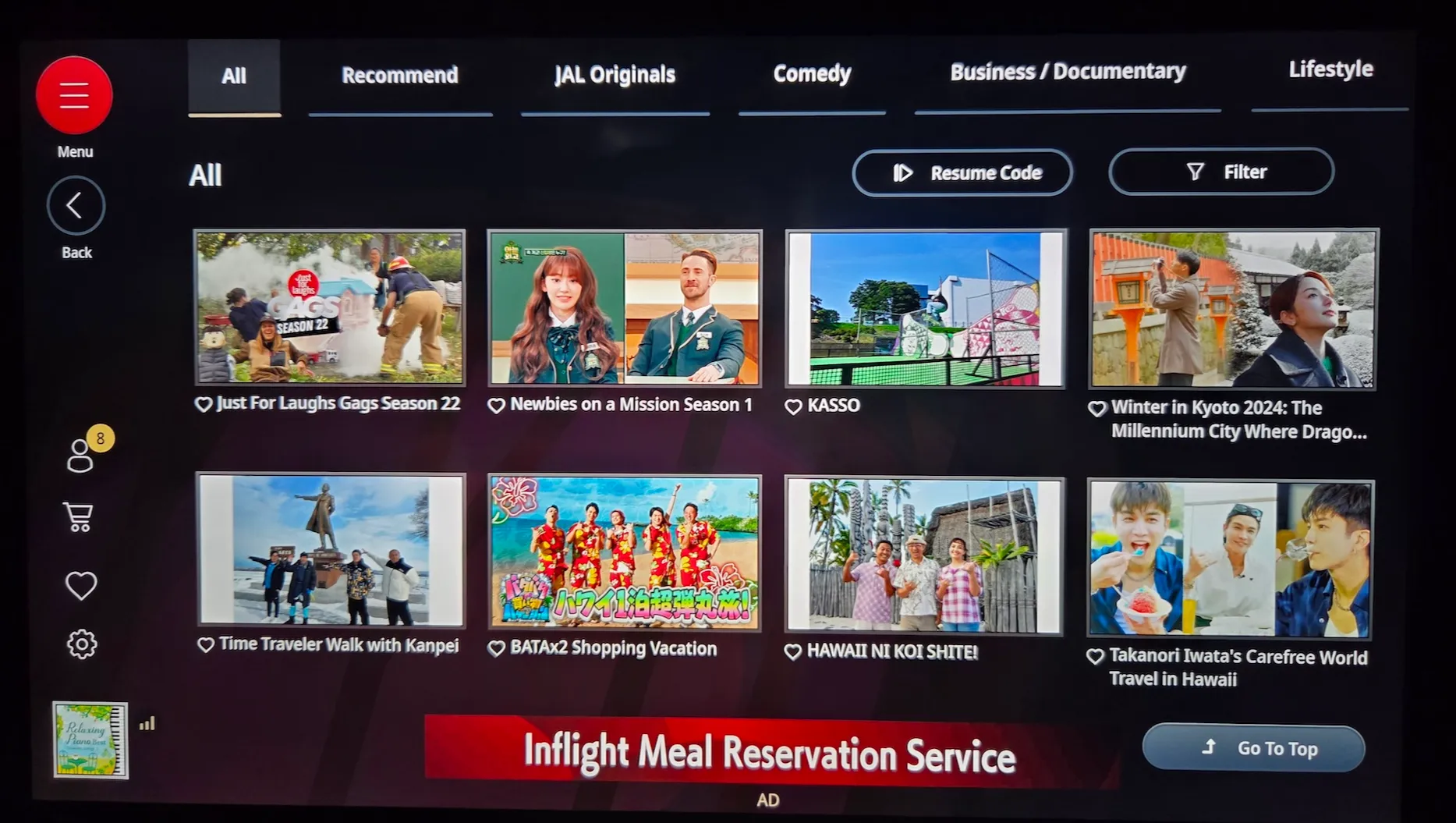
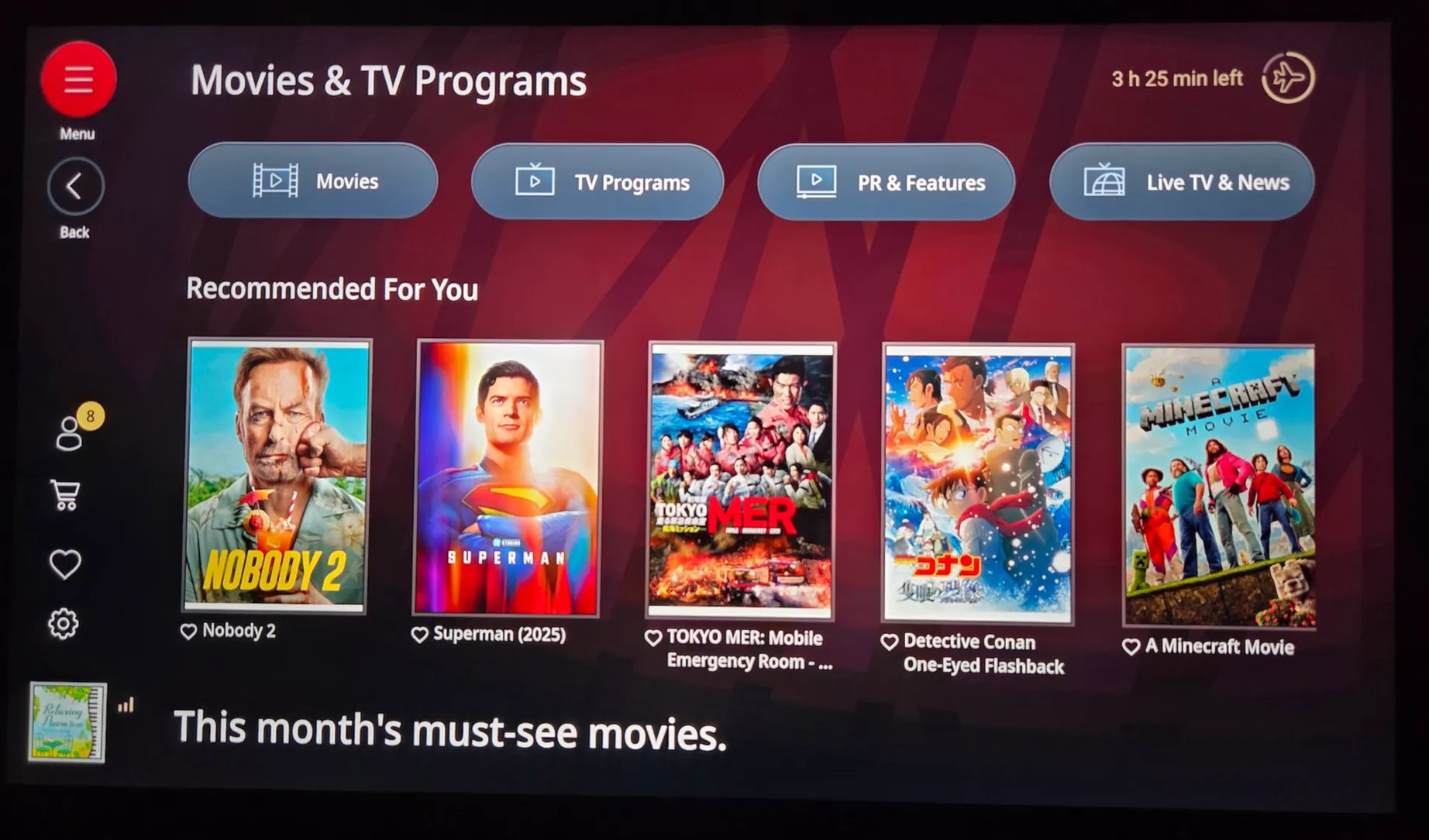
JAL A350-1000 IFE Content
Still, as I noted, there was Korean content available, including movies like ‘Citizen of a Kind’ and ‘Hitman 2’, variety shows like ‘Knowing Bros’, and music programs like the ‘SBS Gayo Daejeon’. In terms of Hollywood blockbusters, they had the first two Avatar films (perhaps in anticipation of the upcoming sequel) and the newly released 2025 Superman movie. For fans of Japanese media, the wildly popular drama ‘The Solitary Gourmet’ was also available.
JAL A350-1000 In-flight Entertainment System
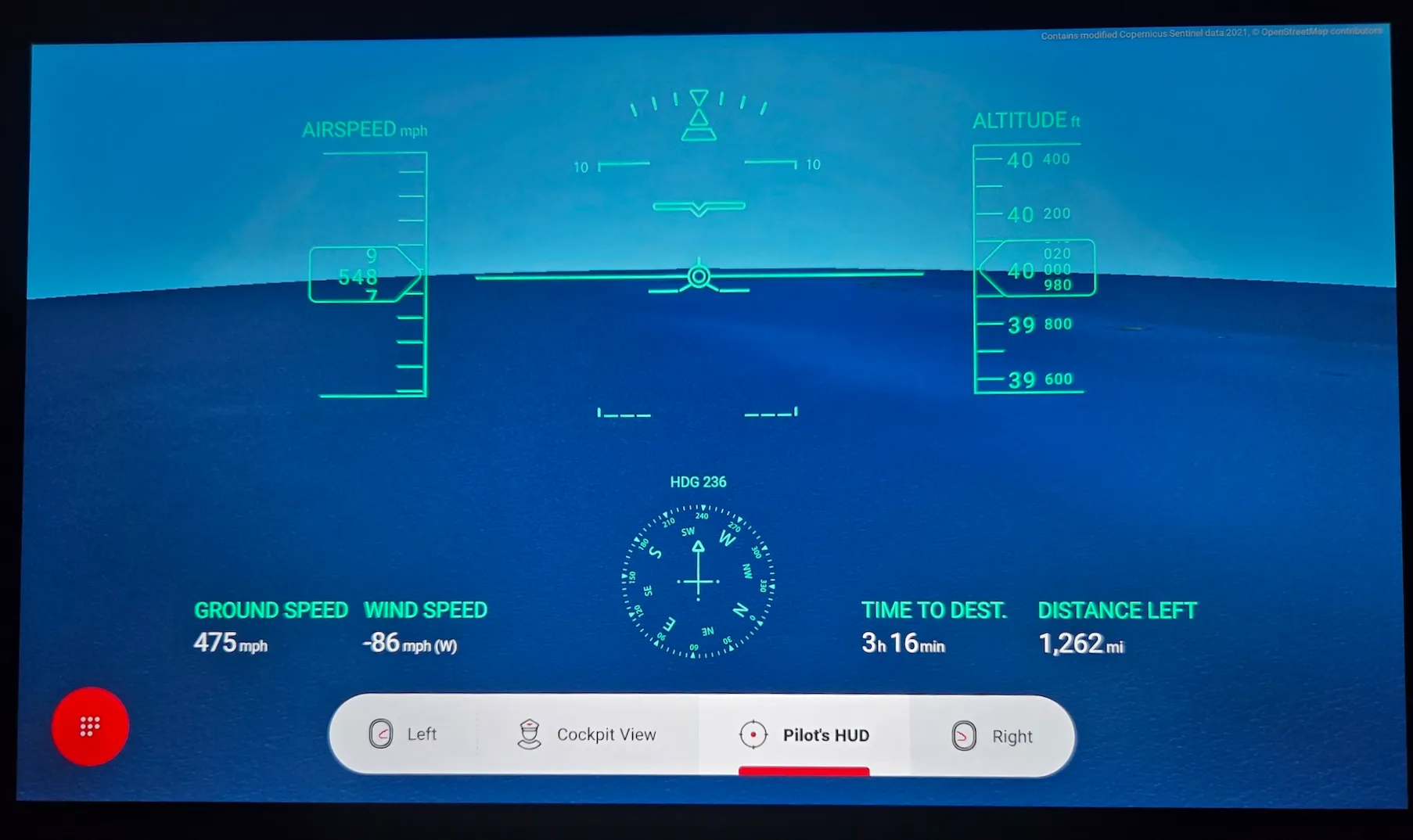
JAL A350-1000 IFE Flight Map
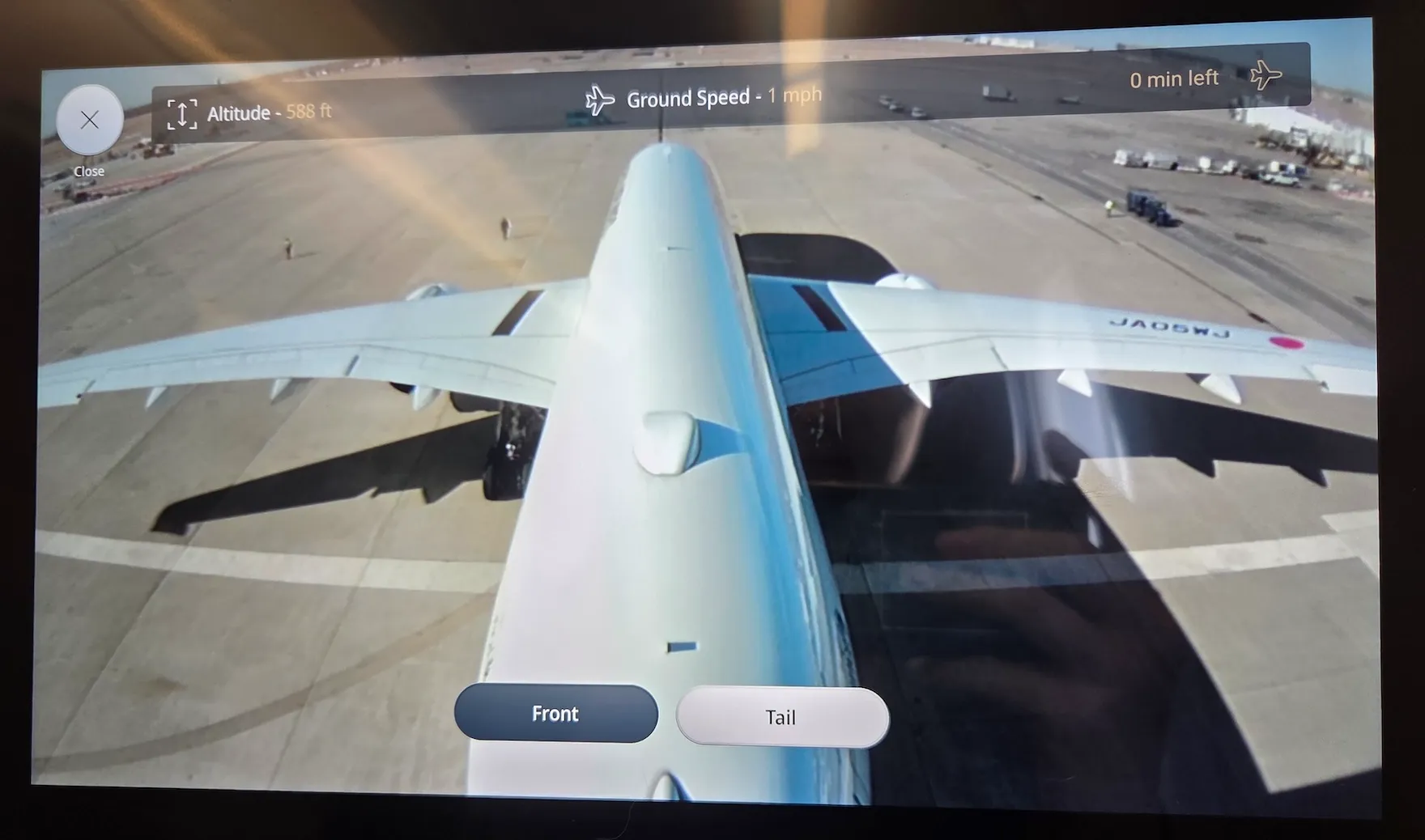
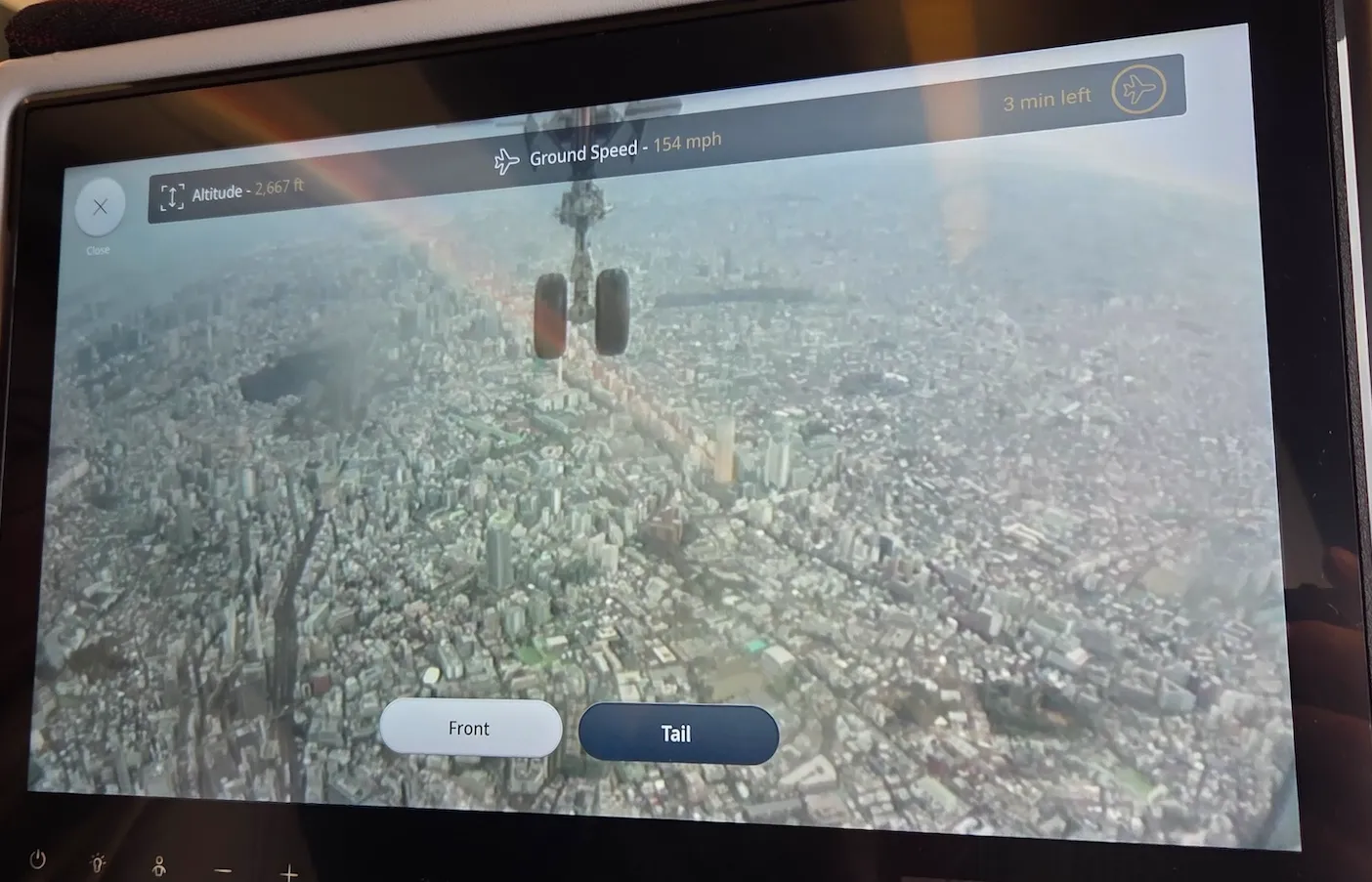
JAL A350-1000 IFE Tail Camera
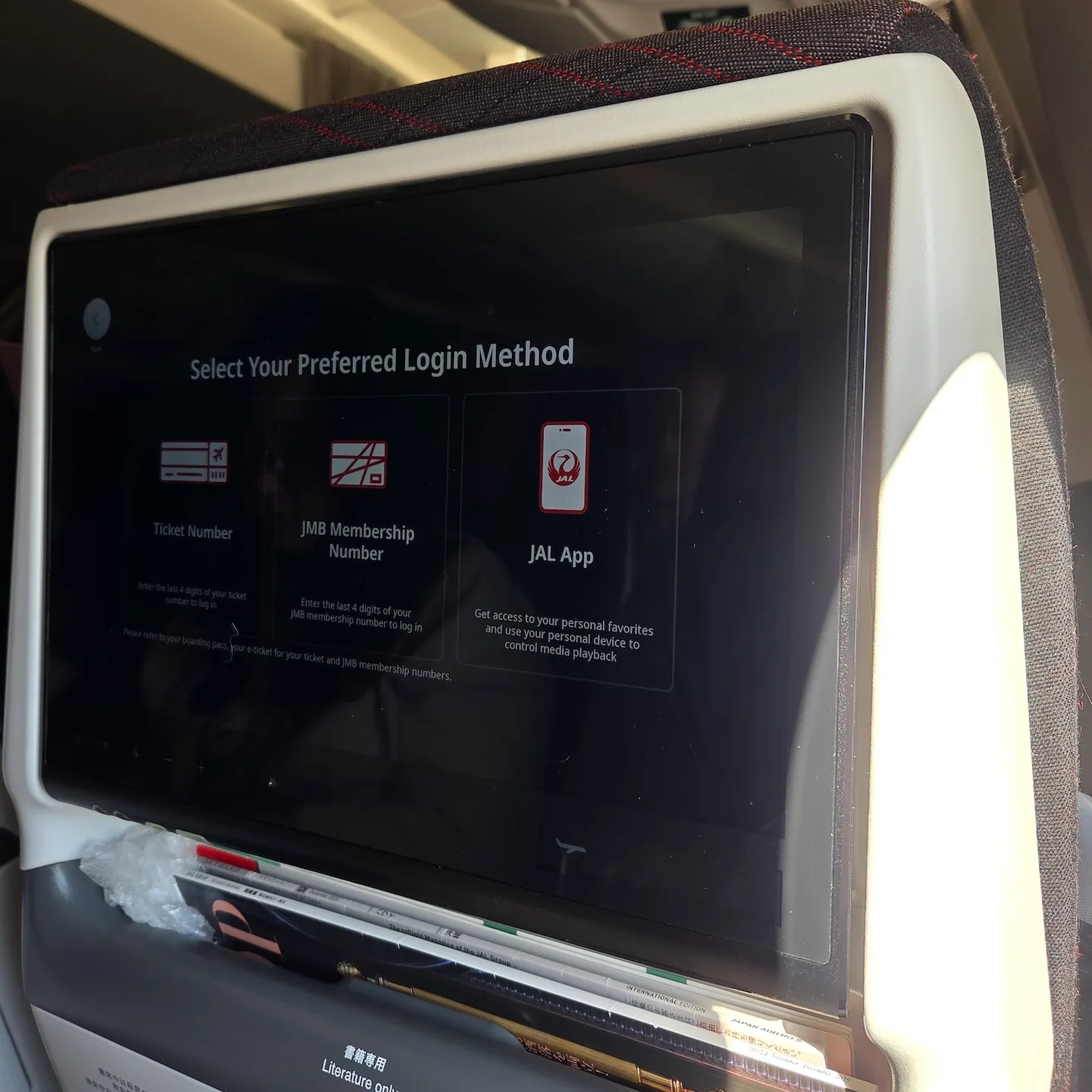
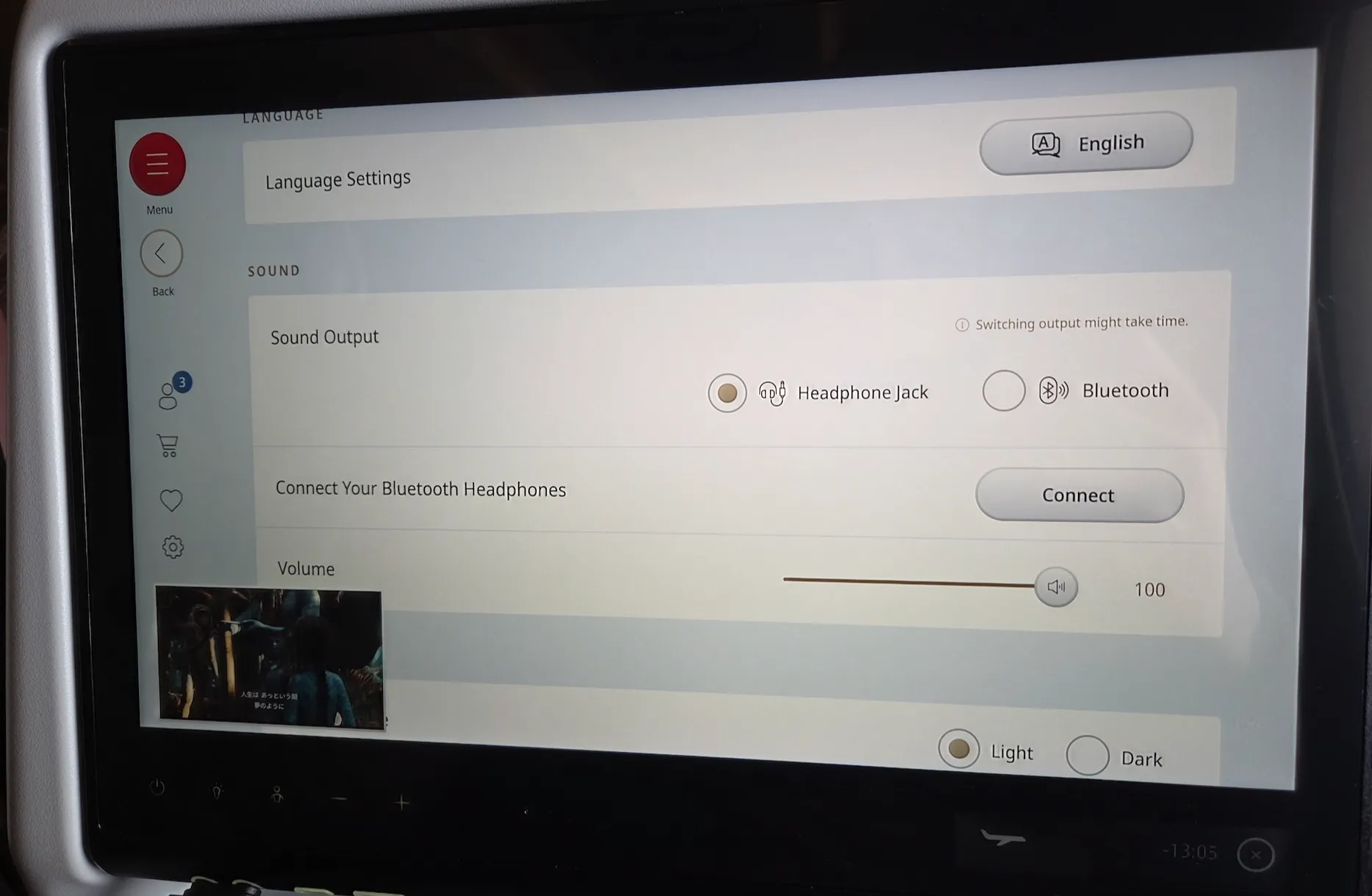
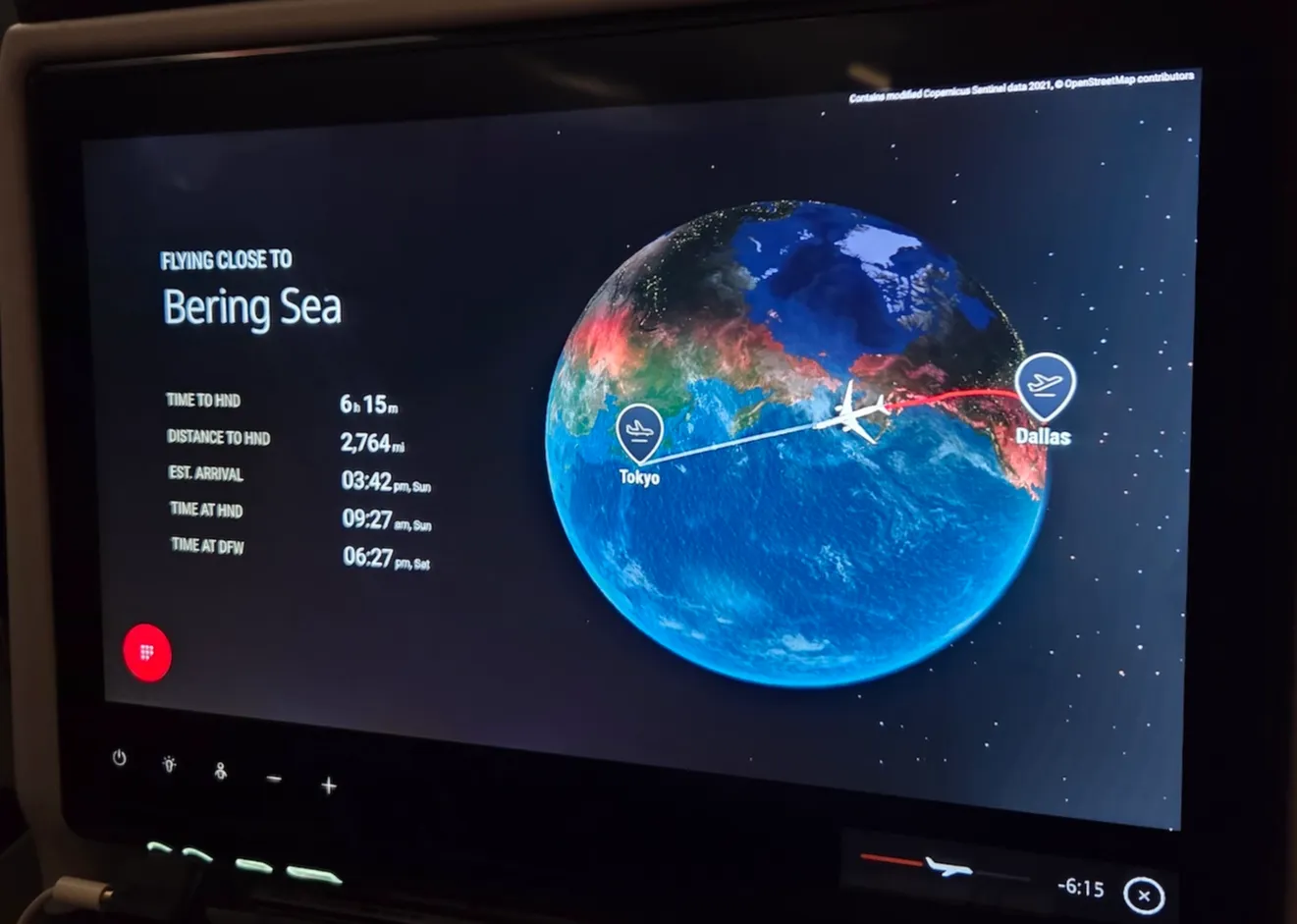
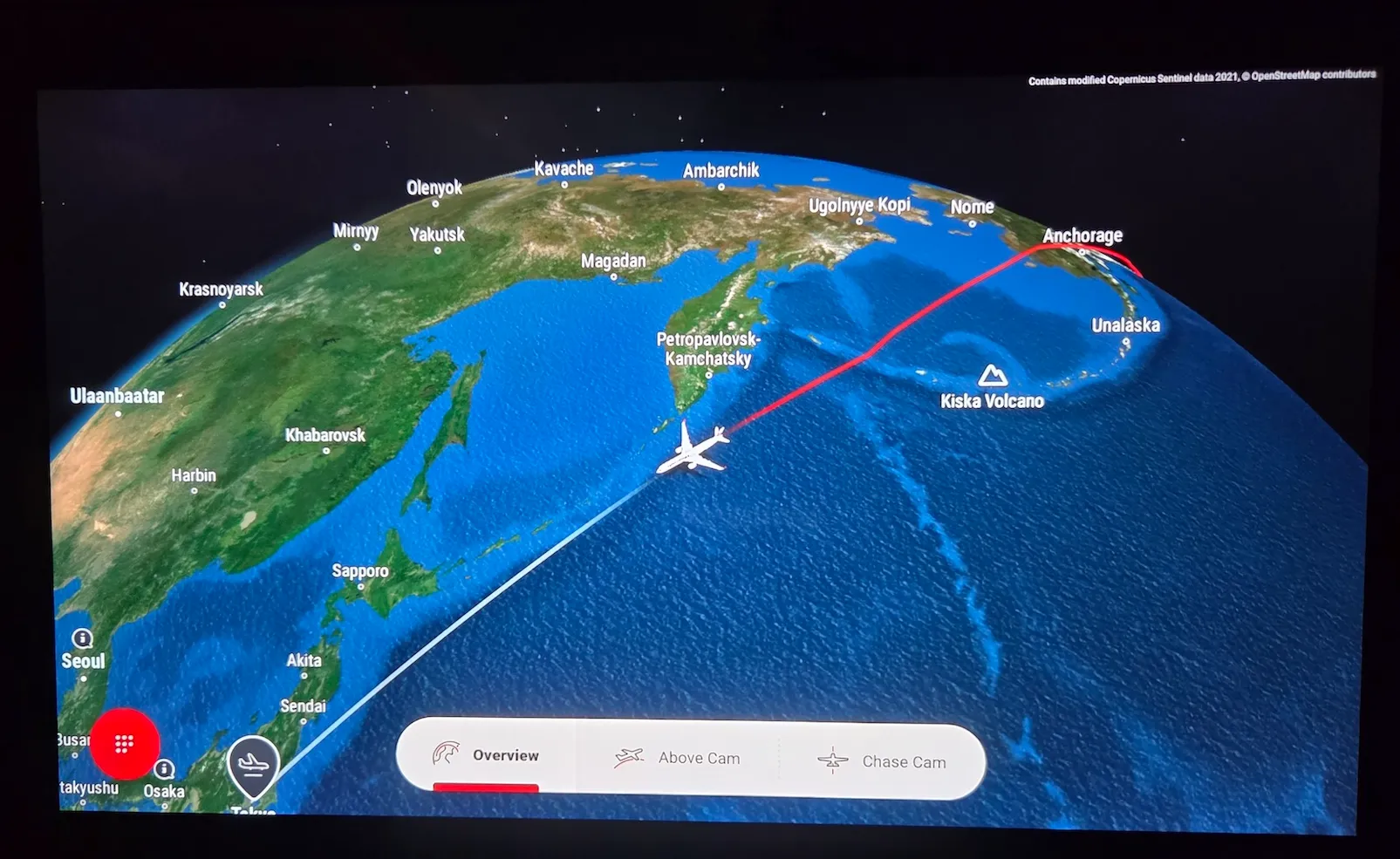
While the movie selection may be lacking, the A350-1000’s IFE system offers some incredibly useful utilitarian features. As I highlighted before, the ability to pair your own Bluetooth headphones is fantastic, and having a physical headphone jack on the armrest is a brilliant design choice. If you are a JAL Mileage Bank (JMB) member, you can link your account to the system for a slightly more personalized experience. The interactive 3D flight map is sleek and highly customizable. Best of all, you can view the aircraft’s belly and tail cameras on that crisp 4K monitor.
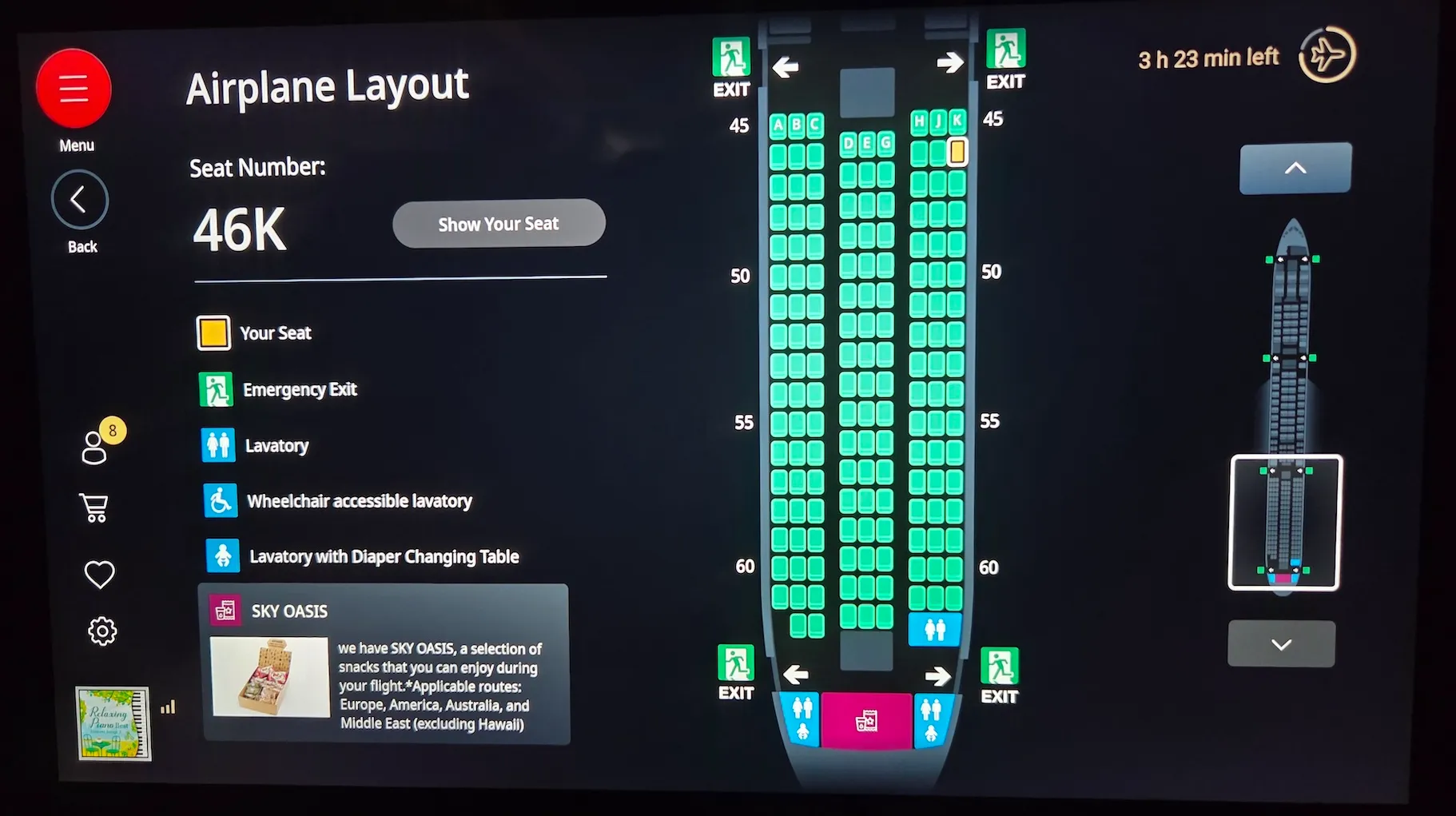
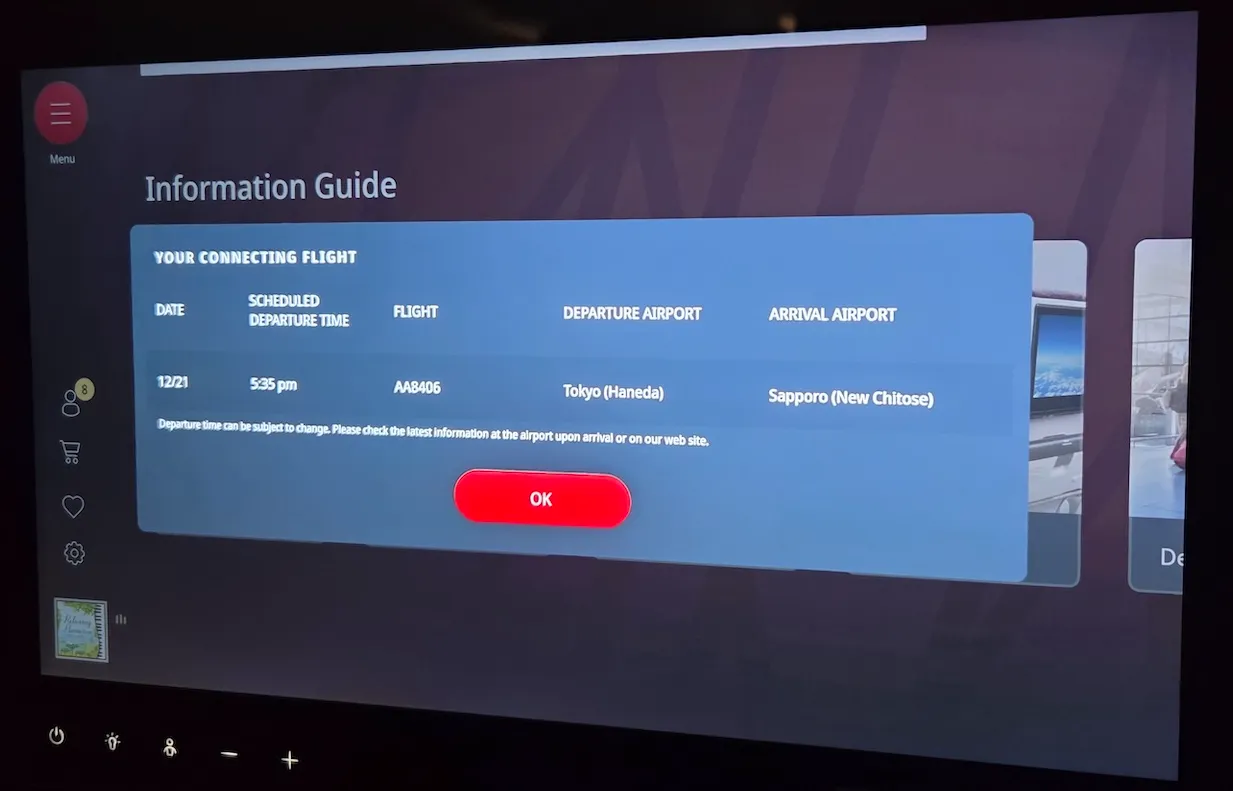
JAL A350-1000 Economy Class Cabin Map and Connecting Flight Info
Through the monitor, you can also access a digital cabin layout showing lavatory locations, view the food and beverage menus, and listen to a variety of audio channels. There is a section for connecting flight information, but it only lists flight numbers, departure times, and destinations. Since it doesn’t display gate or terminal assignments, it isn’t particularly useful for navigating your layover.

JAL A350-1000 In-flight Wi-Fi Connection Guide
JAL A350-1000 In-flight Wi-Fi Connection Guide
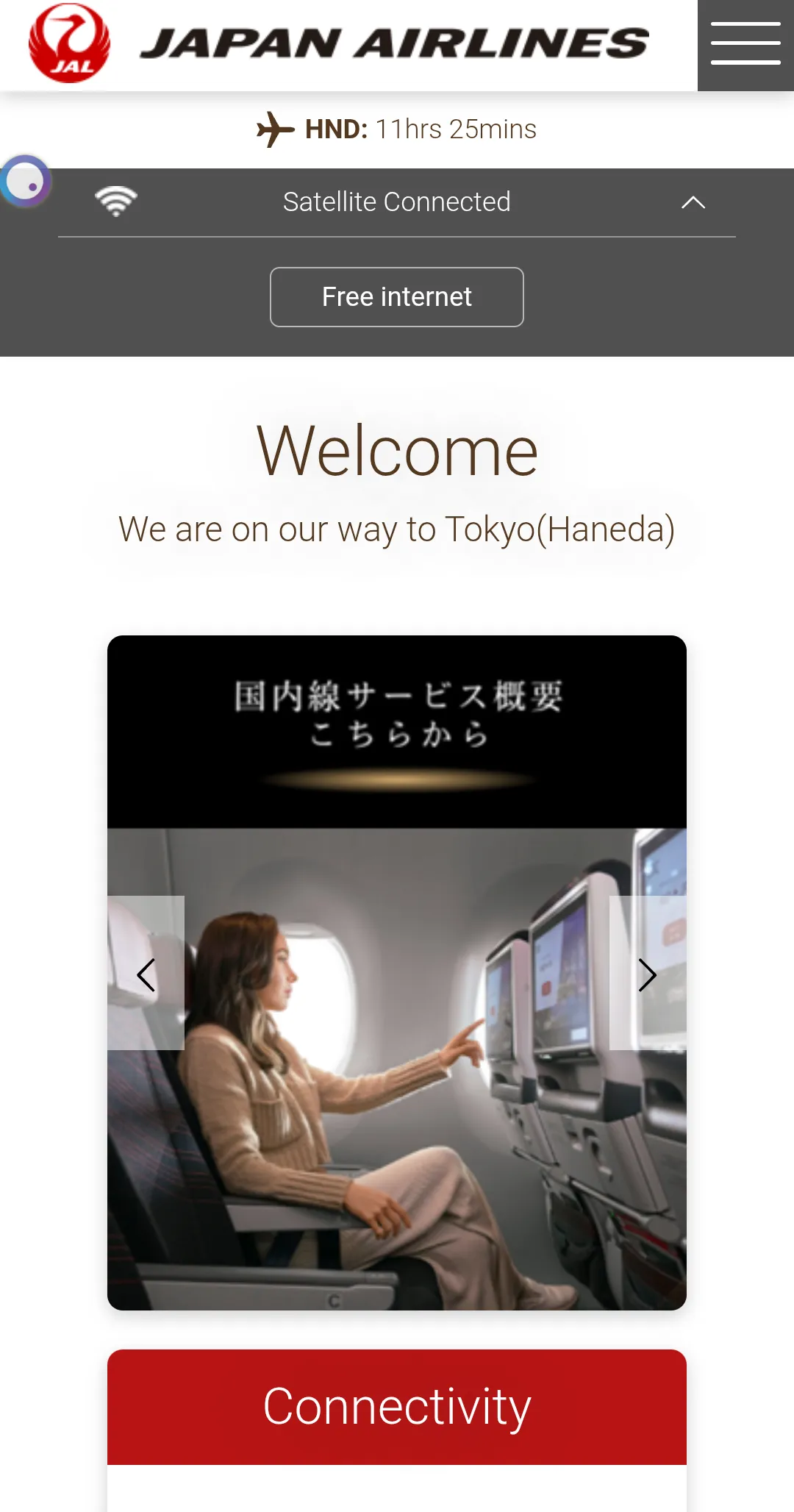
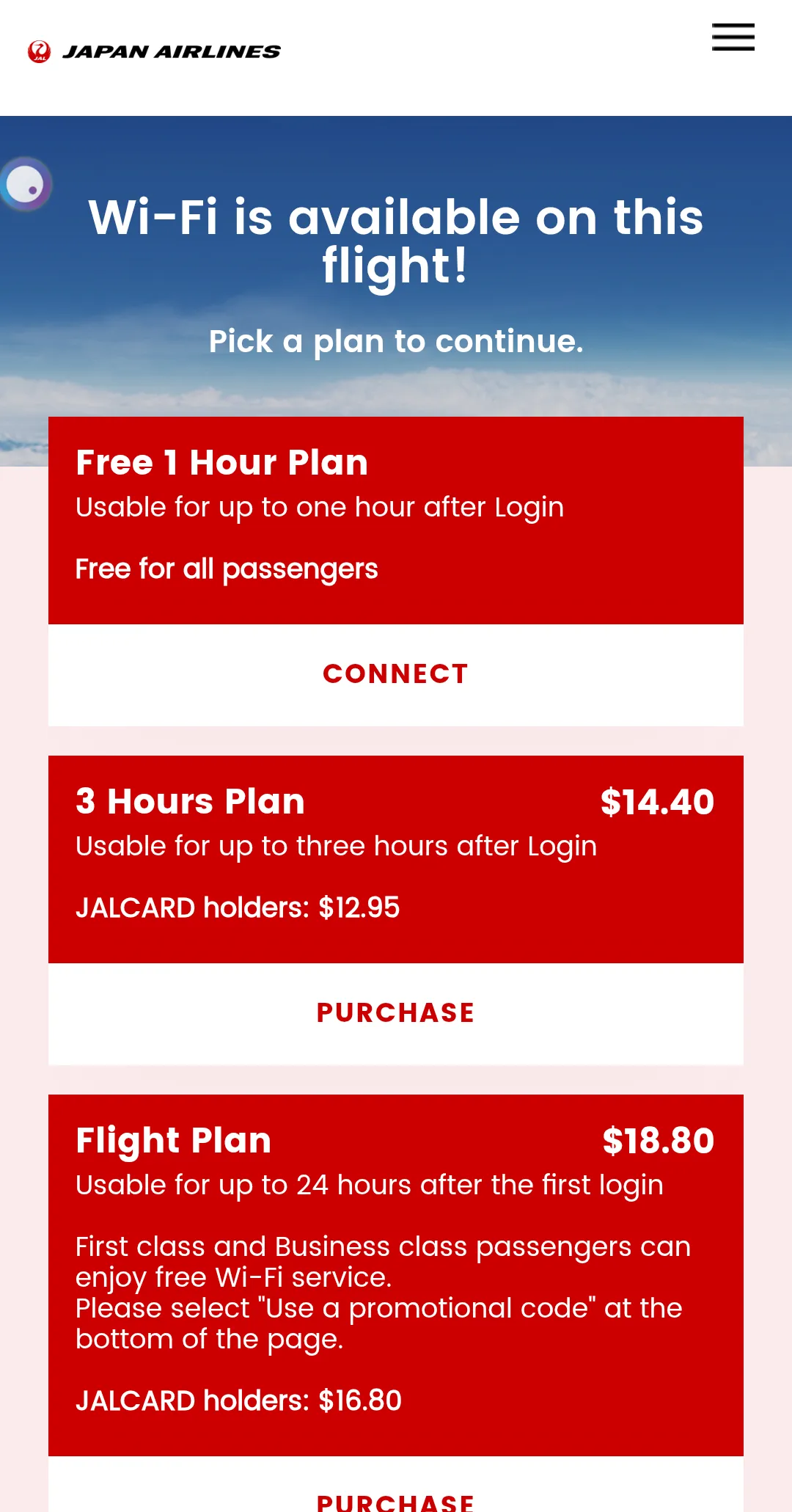
JAL A350-1000 In-flight Wi-Fi Portal Screen
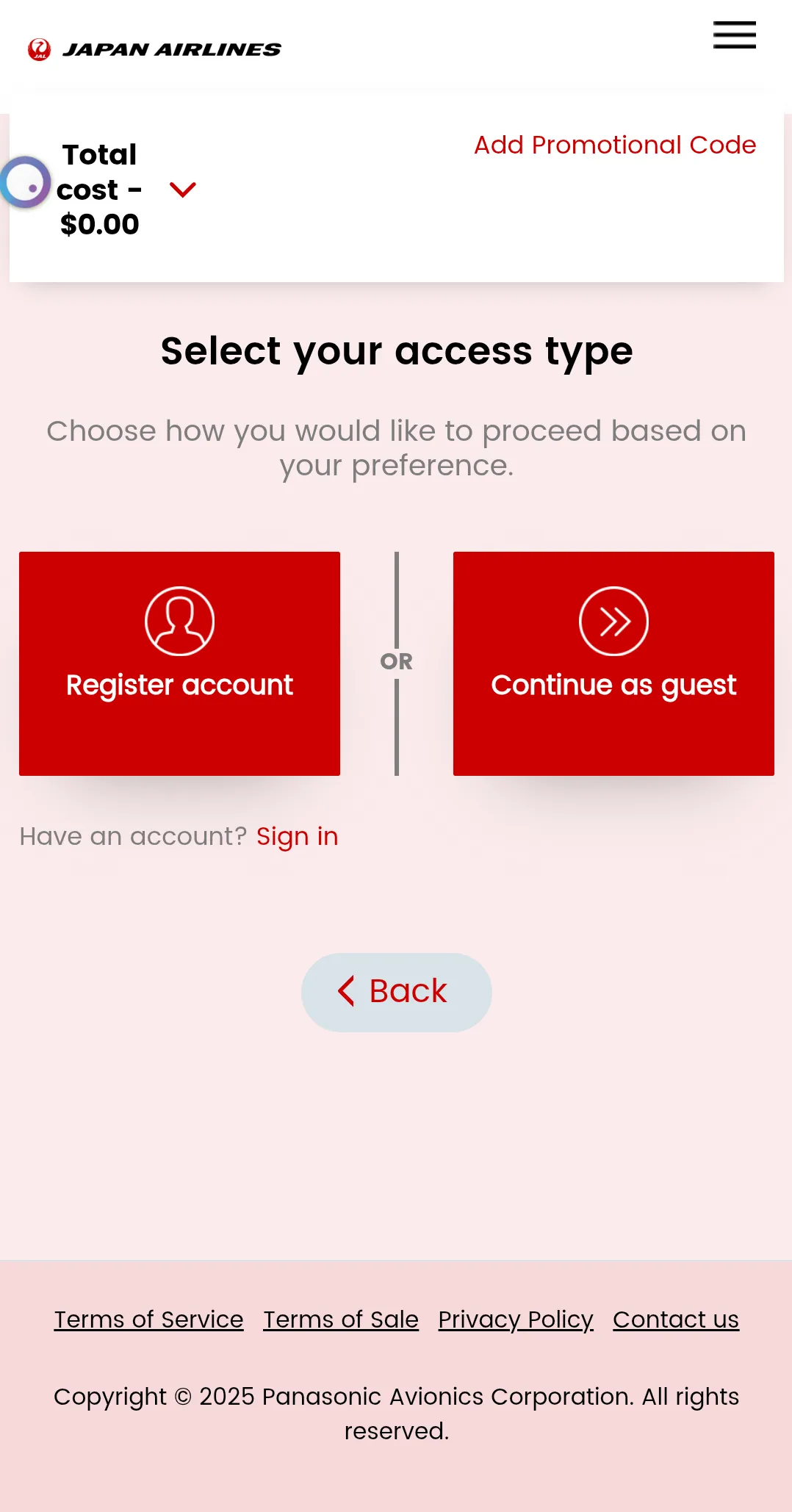
JAL A350-1000 In-flight Wi-Fi Portal Screen

JAL A350-1000 In-flight Wi-Fi Portal Screen
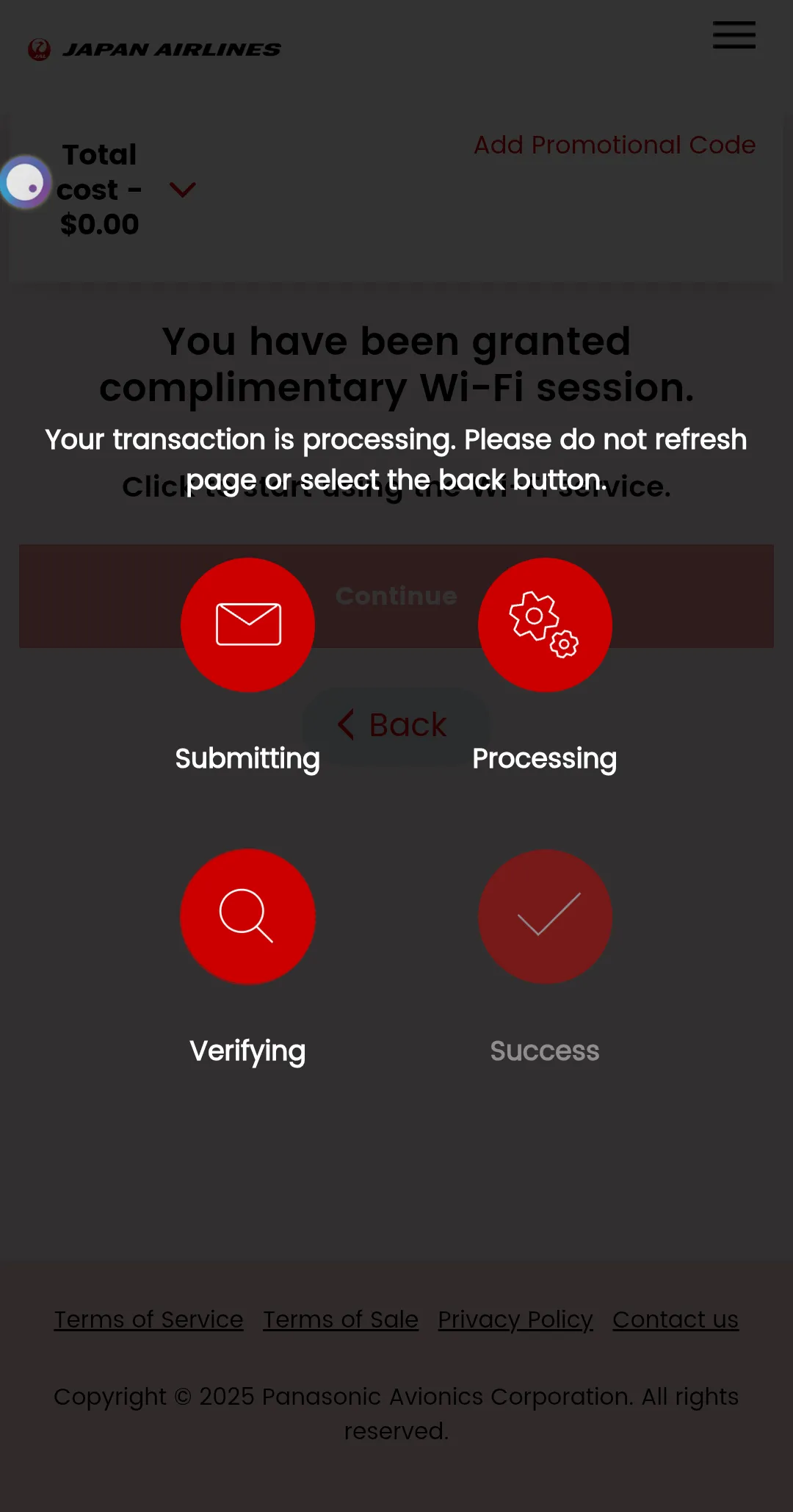
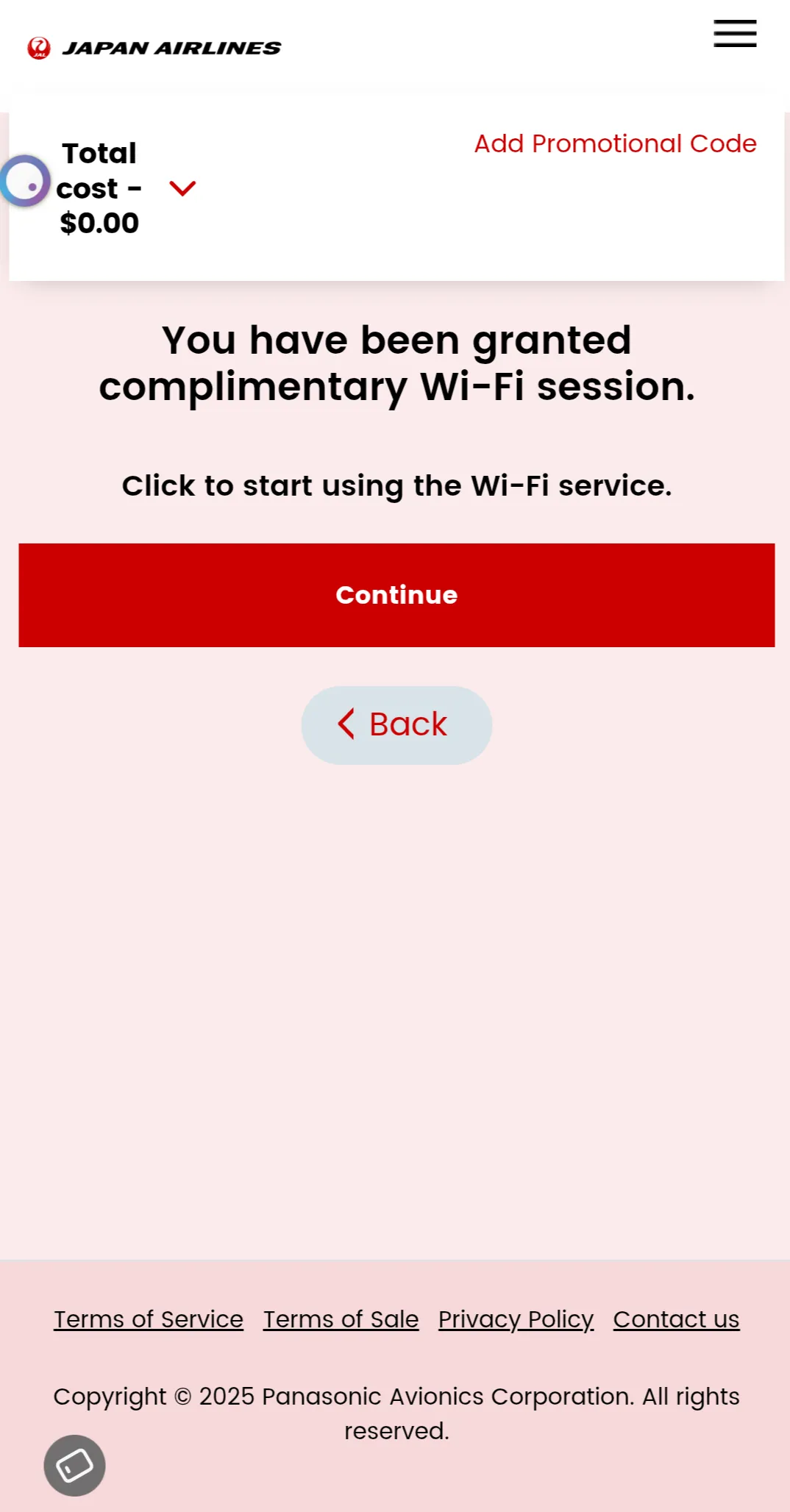
In-flight Wi-Fi is also available on the A350-1000. First and Business Class passengers receive complimentary unlimited Wi-Fi, while Premium Economy and Economy passengers get a 1-hour free pass. Once the free hour expires, you can purchase additional access. A 3-hour pass costs $14.40, and a full-flight pass is $18.80 (JAL credit card holders receive a discount). Speeds weren’t blazing fast—I clocked downloads at about 1.5 Mbps—but it was perfectly adequate for web browsing and sending emails.
15. Landing & Immigration


JAL A350-1000 JL11 on Final Approach
JAL A350-1000 JL11 Touching Down
JAL A350-1000 JL11 Touching Down
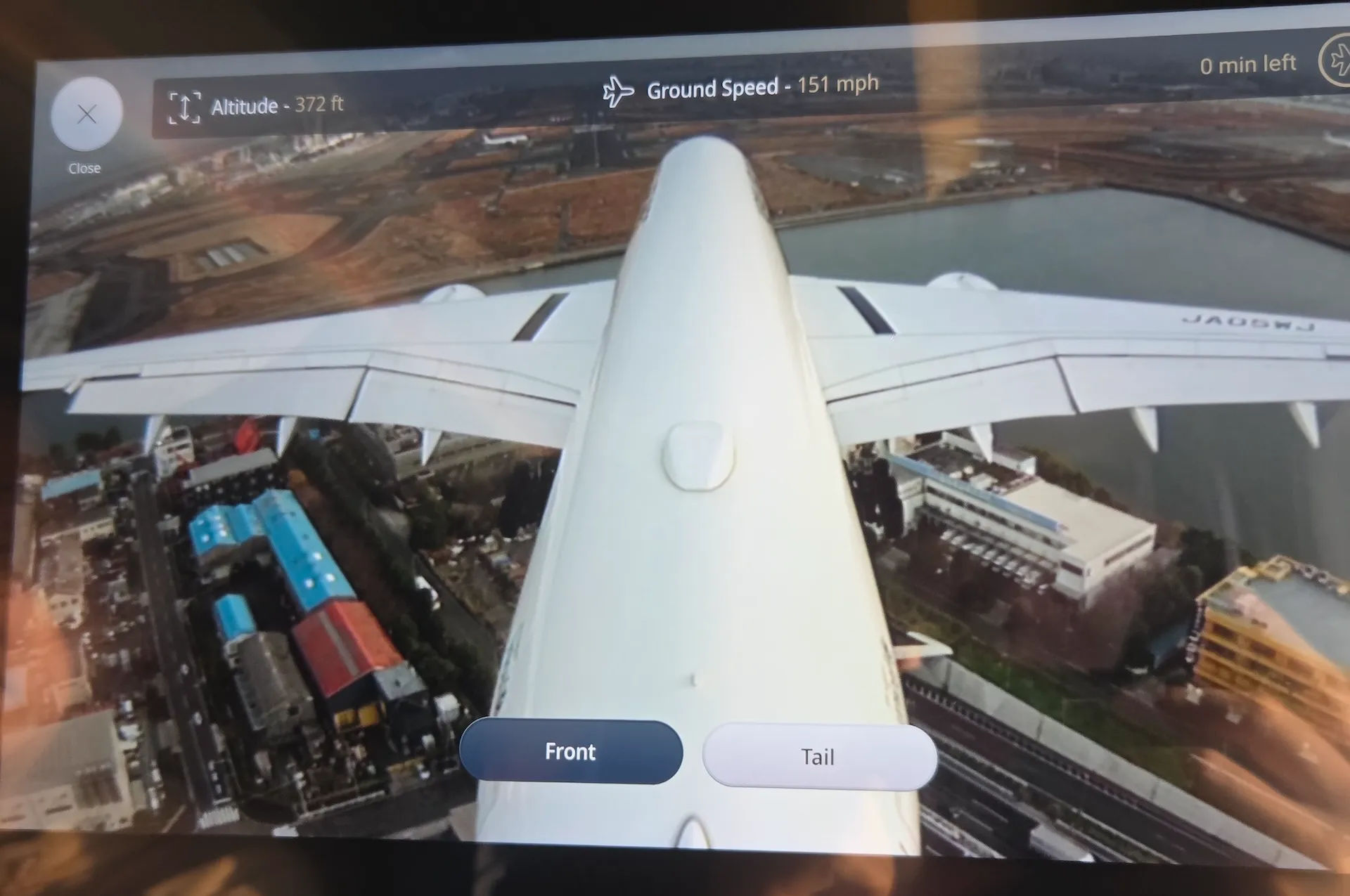
My JL11 flight touched down at Tokyo Haneda International Airport at 3:30 PM, exactly 5 minutes behind schedule. Aside from a brief descent to a lower cruising altitude to avoid turbulence, the flight was entirely uneventful. However, by the time we actually pulled into the gate, we were about 15 minutes late. Oddly, I’ve noticed this often with JL11: even when it departs on time and encounters no major delays en route, it almost always arrives right at, or slightly past, its scheduled time. Airlines usually pad their ‘block time’ (gate-to-gate time) generously compared to the actual flying time, meaning flights often arrive 30 minutes early if there are no hiccups. JL11’s block time, conversely, seems to be scheduled incredibly tight.
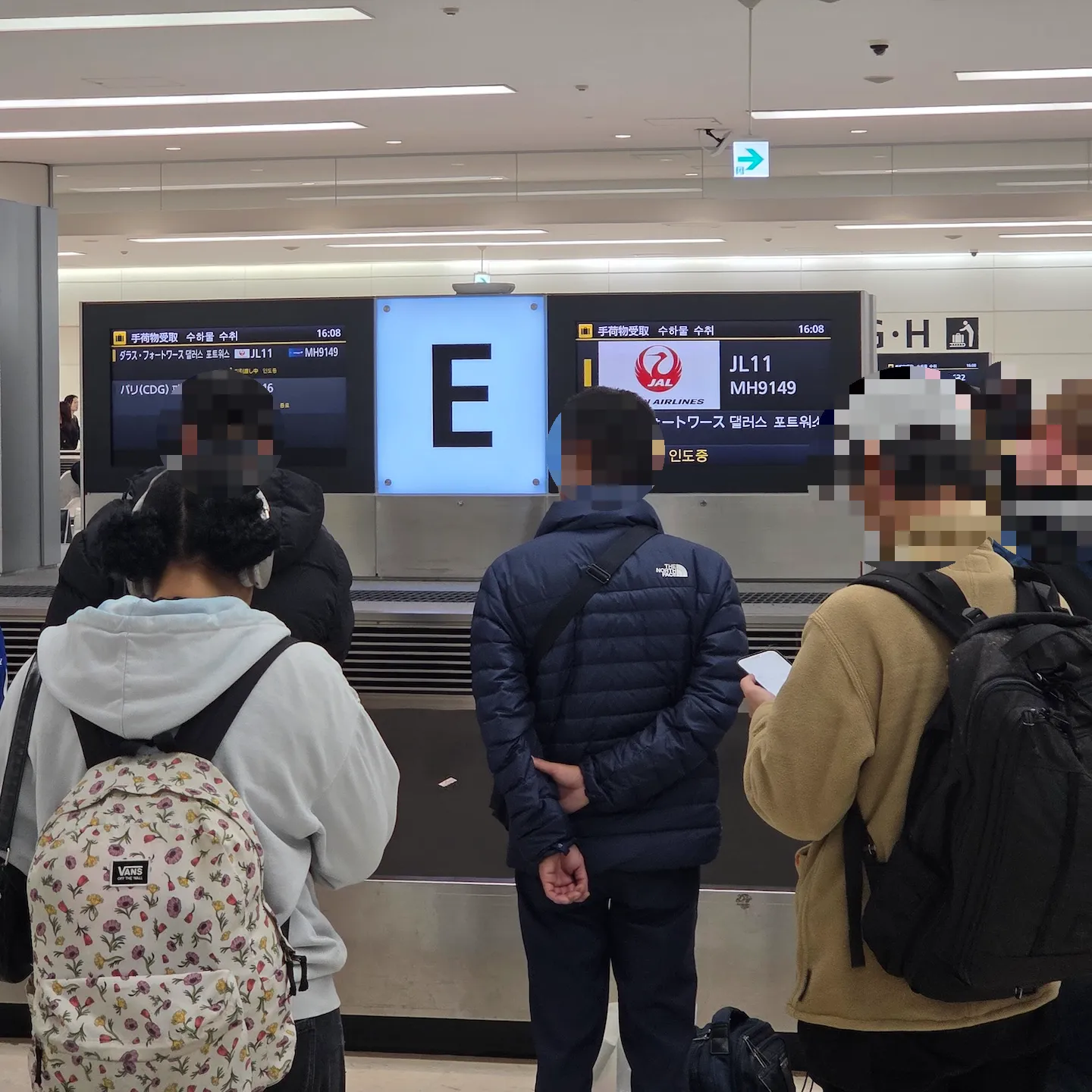
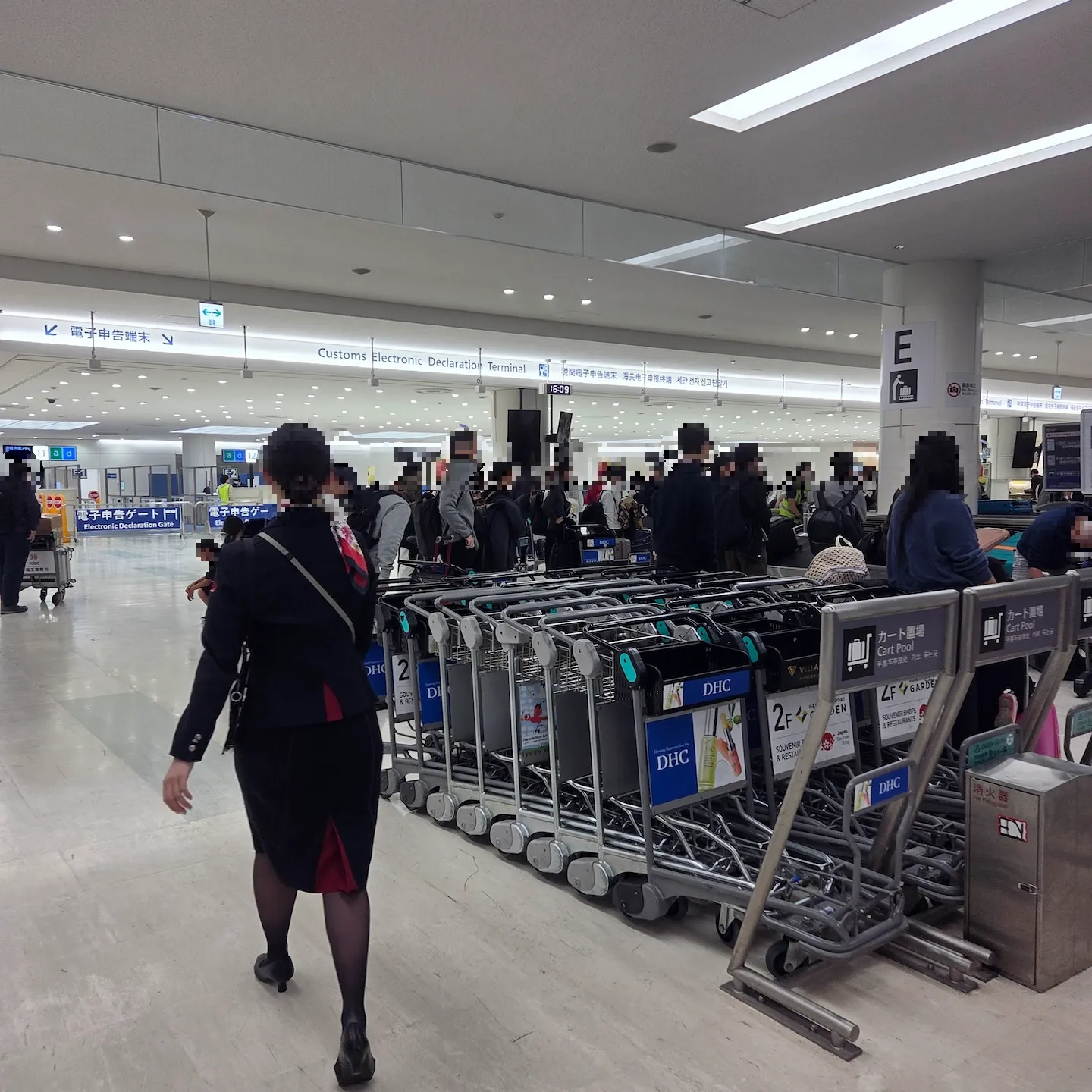
Haneda Airport Immigration Queue and Baggage Claim
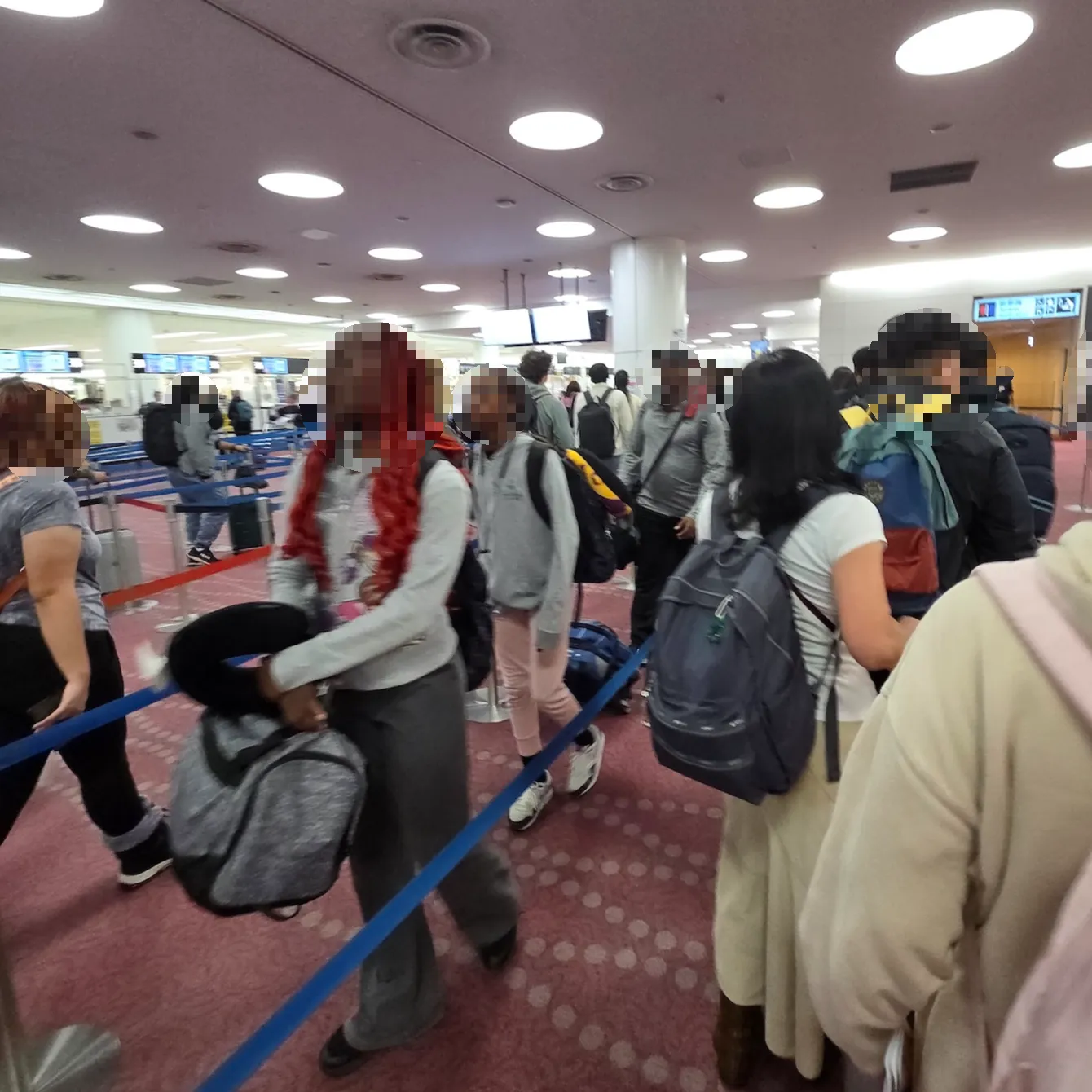
My scheduled layover was 2 hours and 10 minutes—doable, but a bit tight. Since we arrived late, and our gate (Gate 144) was located incredibly far from the immigration hall, I had no choice but to sprint the moment I stepped off the plane. While waiting to disembark, I chatted briefly with a flight attendant; when I told her my connection time, she winced, wished me luck, and said it was going to be tough. Thankfully, I reached immigration in 10 minutes, and because the lines were surprisingly short, I cleared border control in just 20 minutes. Keep in mind that International-to-Domestic transfers at Haneda are not seamless. You have to collect your bags, exit into the landside arrivals hall, check your bags again at the domestic transfer desk, and then take a shuttle bus to the domestic terminal. Furthermore, the transfer desk stops accepting checked bags 1 hour before your domestic departure. If you miss that cutoff, you must haul your luggage onto the inter-terminal train or bus and check in directly at the domestic terminal. I managed to check my bags at the transfer desk exactly 1 hour and 10 minutes before my next flight.
16. What Could Be Better
There were a few disappointing aspects to this flight. First, the cleanliness of the tray table was poor. There was some sticky residue crusted onto it, so I had to wipe it down myself with the alcohol swabs I always carry. I know ground crews don’t meticulously scrub every tray between flights, but it’s still unpleasant when you’re the one sitting down to a dirty surface. Secondly, the lack of dental kits was a letdown. Top-tier Asian airlines routinely provide basic toothbrushes and toothpaste even in Economy. Considering JAL consistently ranks at the top for Economy Class products, omitting this basic amenity feels like a miss.
While the IFE hardware is spectacular, the UI has some frustrating limitations. For example, you can’t move the mini-player, nor can you display the flight map alongside the mini-player simultaneously. The seat itself is brilliantly designed and comfortable for ultra-long-haul travel, but the headrest on my seat wouldn’t lock securely in place, constantly sliding up and down when I leaned against it. Lastly, perhaps because it was a daytime flight, the crew never completely darkened the cabin between services, opting instead to leave the mood lighting partially illuminated. Some passengers trying to sleep might find this bothersome. However, these are minor nitpicks in the grand scheme of things—none of them ruined the flight experience.
There is one specific incident I feel compelled to mention. My companion and I occupied the window and middle seats. The passenger in the aisle seat inflated an air cushion footrest and placed it in their legroom. This naturally made getting out to use the lavatory quite difficult. But inconvenience aside, using these inflatable footrests in aisle or middle seats is fundamentally dangerous. It completely barricades the exit path for the passengers trapped in the window and middle seats. In an emergency evacuation, where seconds matter, an inflated block of plastic wedged in the aisle path is a massive safety hazard. The user might argue they can just move it, but in a panicked evacuation, who has the presence of mind to deflate it? If they just kick it into the main aisle, it creates a tripping hazard for everyone else. The user probably thought nothing of it, but it bothered me the entire flight, always thinking ‘what if we have to evacuate?’ I’m not sure what JAL’s official policy is, but many airlines ban these devices outright for this exact reason. For the safety of everyone on board, please do not use these.
17. Final Thoughts & Conclusion
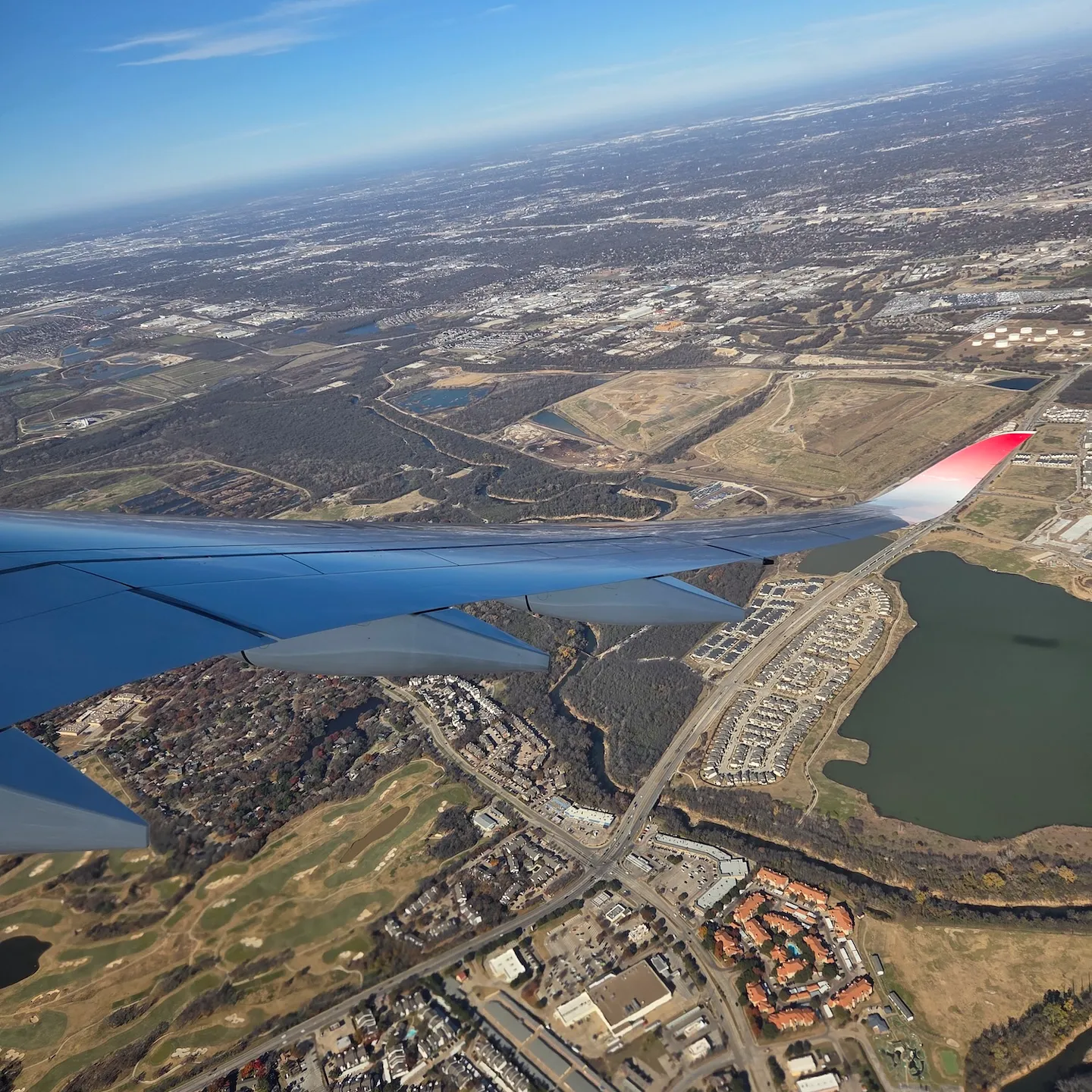

JAL A350-1000 Taking Off and Cruising
Without a doubt, JAL’s long-haul Economy Class is one of the absolute best products in the world. The immense legroom and seat width alone put it leagues ahead of most competitors. Couple that with very good (if not perfect) catering, a solid beverage selection, and industry-leading IFE hardware, and it’s a winner. However, this quality comes at a premium. JAL’s long-haul Economy fares are typically higher than the competition, and routes operated by the flagship A350-1000 usually command an even steeper markup. Therefore, always cross-shop before booking. If the price difference between JAL and a competitor is marginal, booking JAL’s A350-1000 Economy is a no-brainer. Even if it costs a bit more, if you value space and comfort on a 14-hour flight, it’s an investment well worth making.
The Editor Behind This Journey: Heejung

Have any questions or similar experiences? Please feel free to share them below.
Share this story to inspire another journey.
More Journeys to Explore
🗓️ Feb 2026 Stay | 🌏 Seoul, South Korea | 🛏️ Standard King with View
8/10 (🌕🌕🌕🌕🌑) This was a well-rounded Courtyard, best known for its views of the Seoul Botanic Park and convenient access to Magongnaru Station. The rooms were spacious and comfortable, breakfast was decent, and Marriott elite benefits made the stay even more rewarding. With only a modest range of facilities, it worked better as a base for exploring the surrounding area than as a destination for a full hotel staycation.
🗓️ Jan 2026 Stay | 🌏 Boston, MA, USA | 🛏️ Luxury Suite
6/10 (🌕🌕🌕🌑🌑) The central location in downtown Boston was great, but considering the Ritz-Carlton name and the $500+ price tag, the overall satisfaction was mixed. The spacious suite and in-room dining were decent, but the outdated room, paid facilities, and lack of service details were disappointing.
🗓️ Dec 2025 Flight | 💺 Economy | ✈️ A350-900
7/10 (🌕🌕🌕🌗🌑) Compared with an international flight, this was a much simpler economy experience, but the spacious seat, personal monitor, external camera, complimentary Wi-Fi, and even consommé soup made it surprisingly enjoyable. Even on a short domestic route, Japan Airlines’ attention to the basics was easy to appreciate.
🗓️ Apr 2023 Stay | 🌏 Daejeon, South Korea | 🛏️ Premier Corner
As Daejeon's only 5-star hotel, the panoramic views, spacious Premier Corner Room, satisfying breakfast, and Shinsegae connection were definite highlights. However, the cumbersome parking, limited check-in counters, and poor service response left something to be desired.