
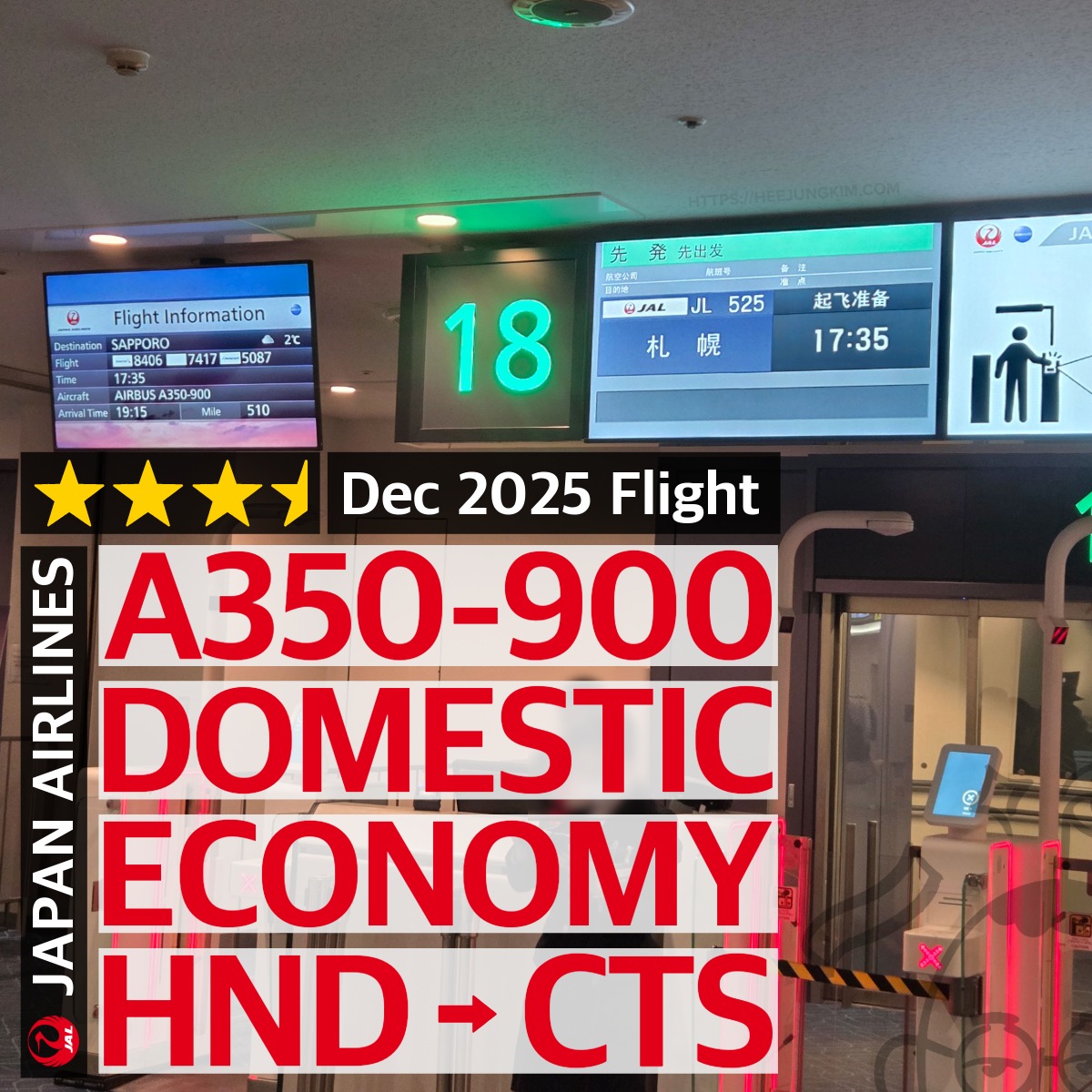
Flight Review Series
- Overall Rating: 7/10 (🌕🌕🌕🌗🌑)
- Quick Summary:
- :
- Flight Route
- JL525 (AA8406), Tokyo Haneda International Airport (HND), Japan → Sapporo New Chitose International Airport (CTS), Japan
- 17:35 Departure → 19:15 Arrival
- Flight Time: 1h 40m
- Aircraft Type: A350-900, JA12XJ (Jun 2017 delivered, 8.5-year-old)
- Cabin Class & Product: 28K, Economy Class, Window Seat
- Check-in & Baggage Allowance
- Boarding Process
- Cabin & Seat Detail
- In-flight Service
- In-flight Entertainment & Wi-Fi
- Landing & Arrival
- Final Thoughts & Conclusion
6. Check-in & Baggage Allowance
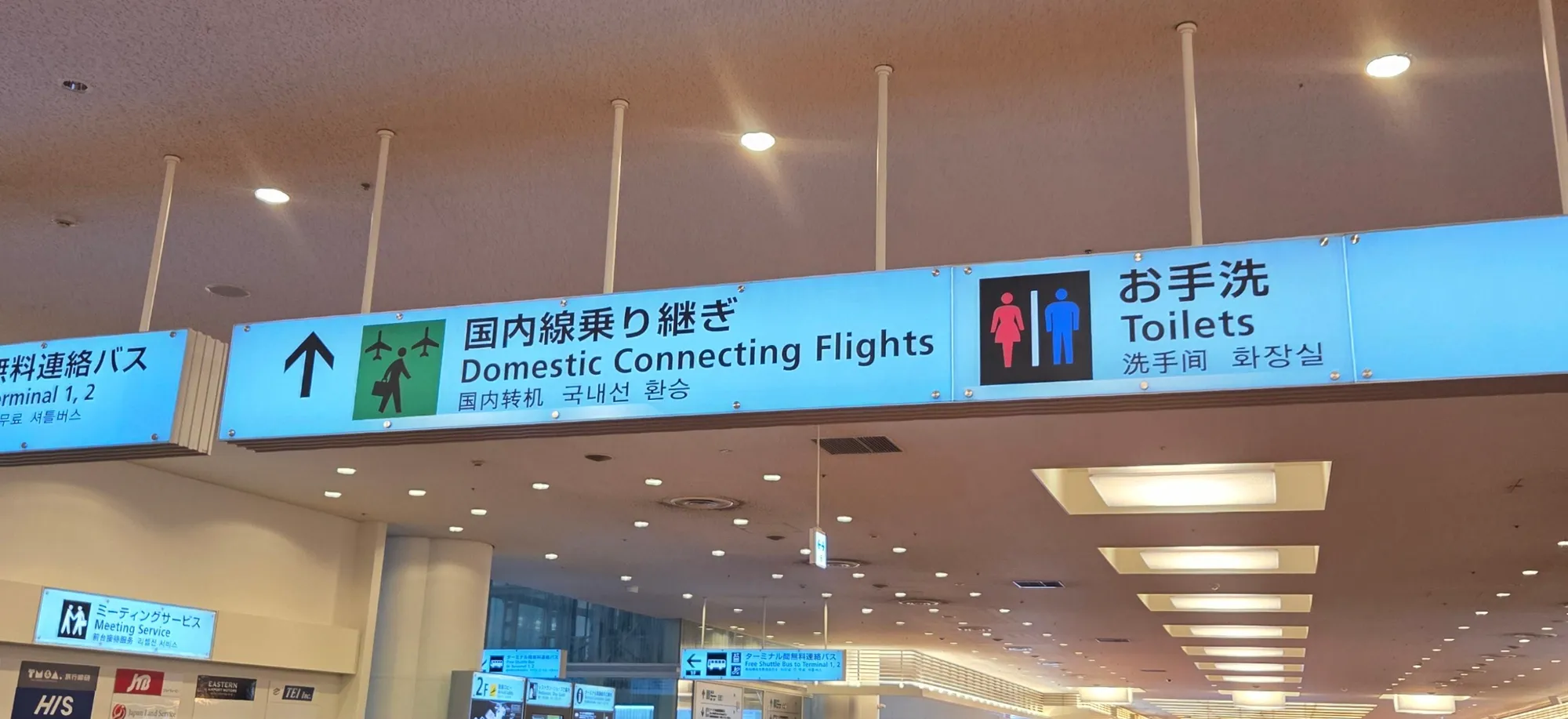
Transfer Check-in Counter Sign at Terminal 3, Tokyo Haneda International Airport
Transfer Check-in Counter Sign at Terminal 3, Tokyo Haneda International Airport
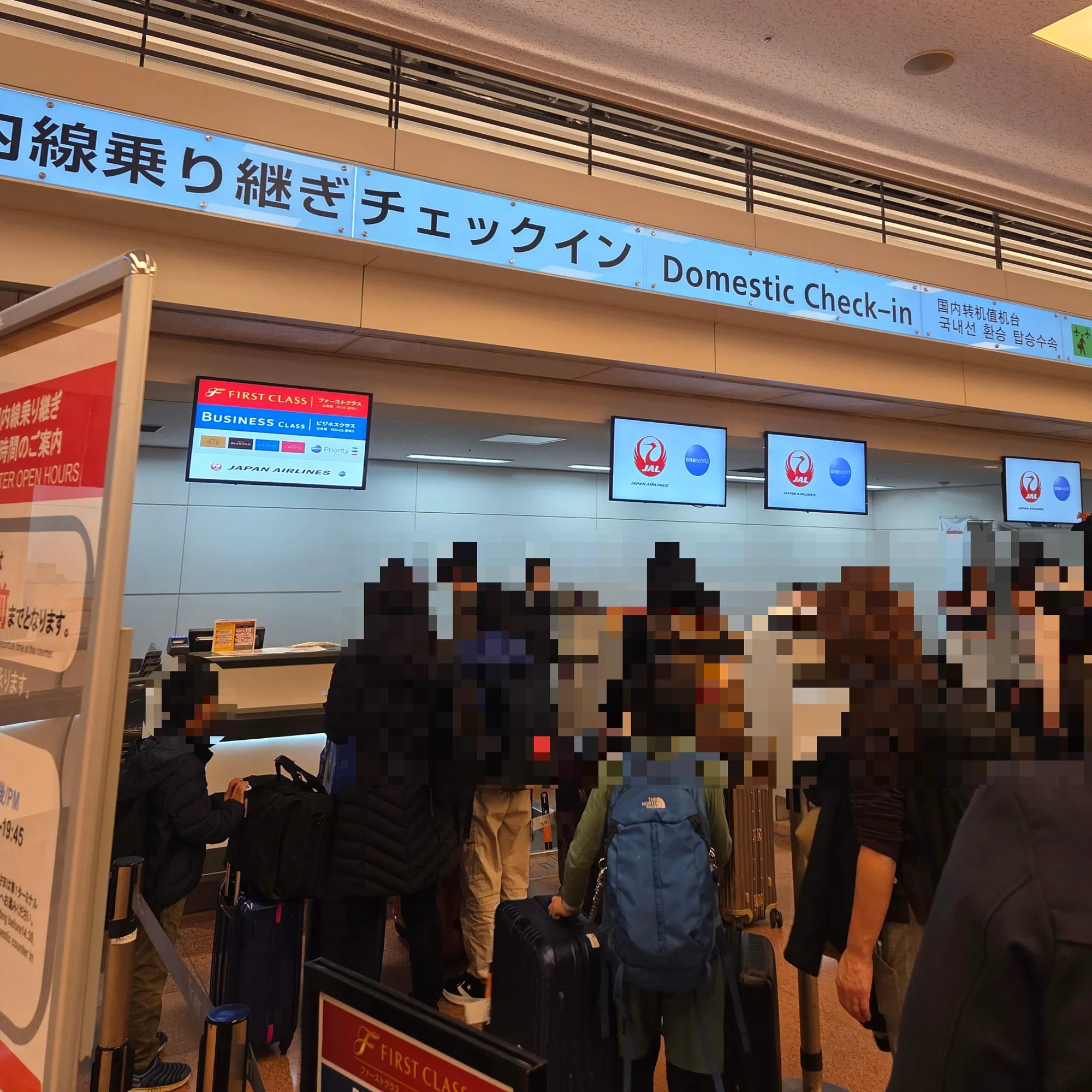
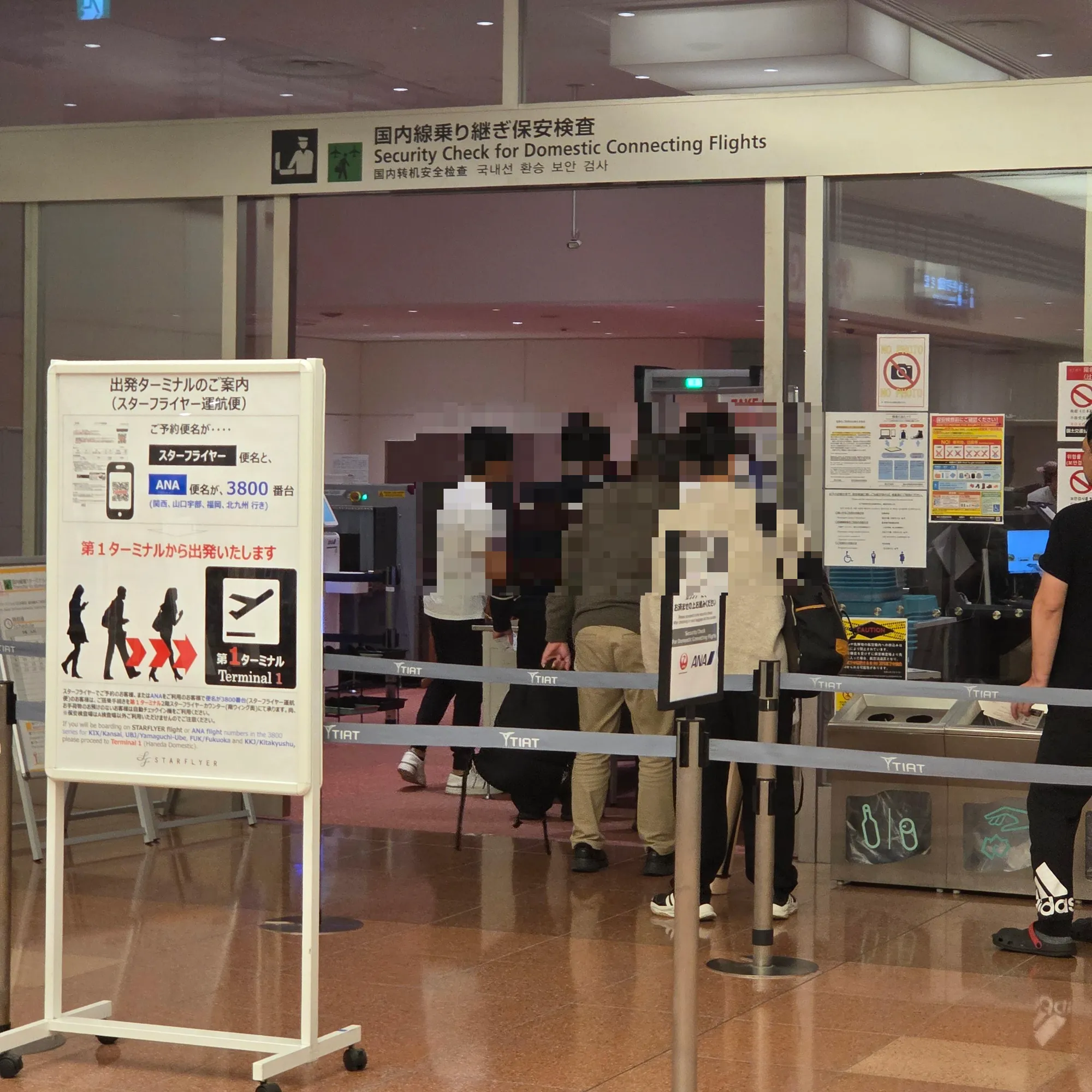
Transfer Check-in Counter at Terminal 3, Tokyo Haneda International Airport
Since I connected to JL525 from an international flight arriving at Tokyo Haneda Terminal 3, and JAL’s domestic flights depart from Terminal 1, I’ll explain the check-in process from a transfer perspective. When connecting from international to domestic at Haneda, your checked bags are not automatically forwarded; you must collect them, clear customs, and re-check them. Once you exit customs into the arrivals lobby, JAL’s domestic transfer counter is located on the far right. Just follow the signs for ‘Domestic Connecting Flights’. Here, you drop off your bags and receive your domestic boarding pass. It’s crucial to note that you can only use this transfer counter if your onward flight has a minimum connection time of 1 hour. If you have less than an hour, you must carry your bags and take the inter-terminal transit to check in directly at Terminal 1. Additionally, this transfer counter is closed between 11:00 AM and 1:30 PM. If you are connecting during these hours, you’ll also need to proceed directly to Terminal 1 to check in. After checking your bags at the transfer counter, you head to the dedicated domestic transfer security checkpoint just behind it. Once you clear security, you go down one level and board a shuttle bus that takes you straight to the Terminal 1 airside area.
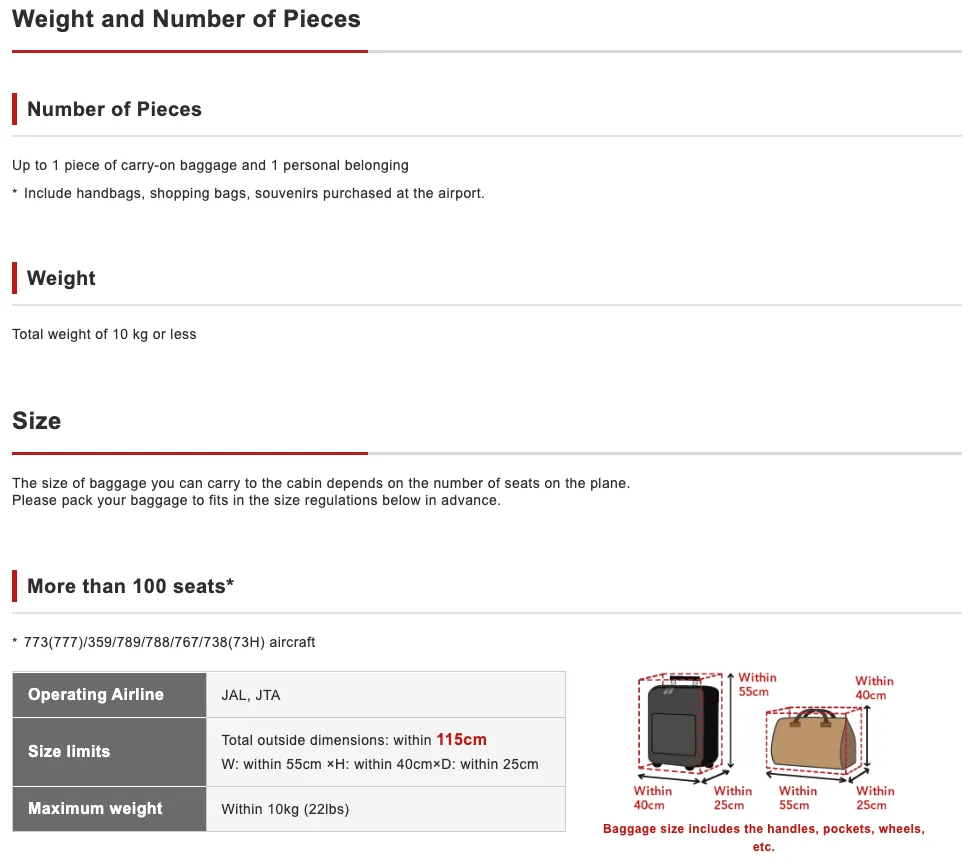
JAL Domestic Carry-on Baggage Information © jal.co.jp/jp/en/dom/
JAL Domestic Carry-on Baggage Information © jal.co.jp/jp/en/dom/

JAL Domestic Checked Baggage Information © jal.co.jp/jp/en/dom/
JAL Domestic Checked Baggage Information © jal.co.jp/jp/en/dom/
For domestic flights, JAL allows one carry-on bag and one small personal item per passenger. The combined weight of both items must not exceed 10kg, regardless of your cabin class. Because JAL operates a variety of regional aircraft on domestic routes, carry-on size limits vary depending on the plane. However, since the Haneda-Sapporo route is operated exclusively by wide-body aircraft, standard cabin-sized luggage is perfectly fine. JAL’s domestic checked baggage allowance is based on total weight, not a piece concept. First Class passengers can check up to 45kg, while all other passengers are allowed 20kg. oneworld Sapphire members get an extra 15kg (bringing the Economy total to 35kg), and oneworld Emerald members receive an extra 20kg (totaling 40kg). For full details on JAL’s domestic carry-on policy, click here. For the checked baggage policy, click here, and for oneworld elite tier benefits, check here.
However, since I was flying on a single ticket that connected from an international flight, international baggage rules applied to my domestic segment. Therefore, I was able to check two 23kg bags all the way to my final destination, Sapporo.
7. Boarding Process
JAL’s domestic boarding process is famously efficient. They open the gate 20 minutes before departure and close the doors 10 minutes prior. This timeline is strictly adhered to, even for their high-density domestic wide-bodies that seat nearly 400 passengers. What’s truly remarkable is that they almost always manage to board hundreds of people within this 10-minute window and push back exactly on time.
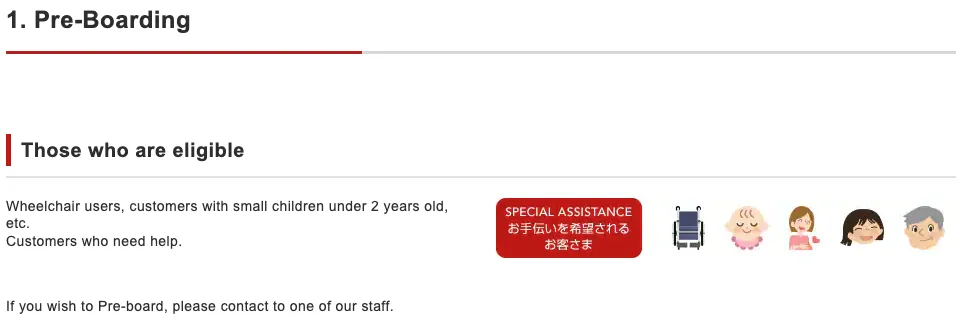
JAL Domestic Pre-boarding Eligibility © jal.co.jp/jp/en/dom/
JAL Domestic Pre-boarding Eligibility © jal.co.jp/jp/en/dom/
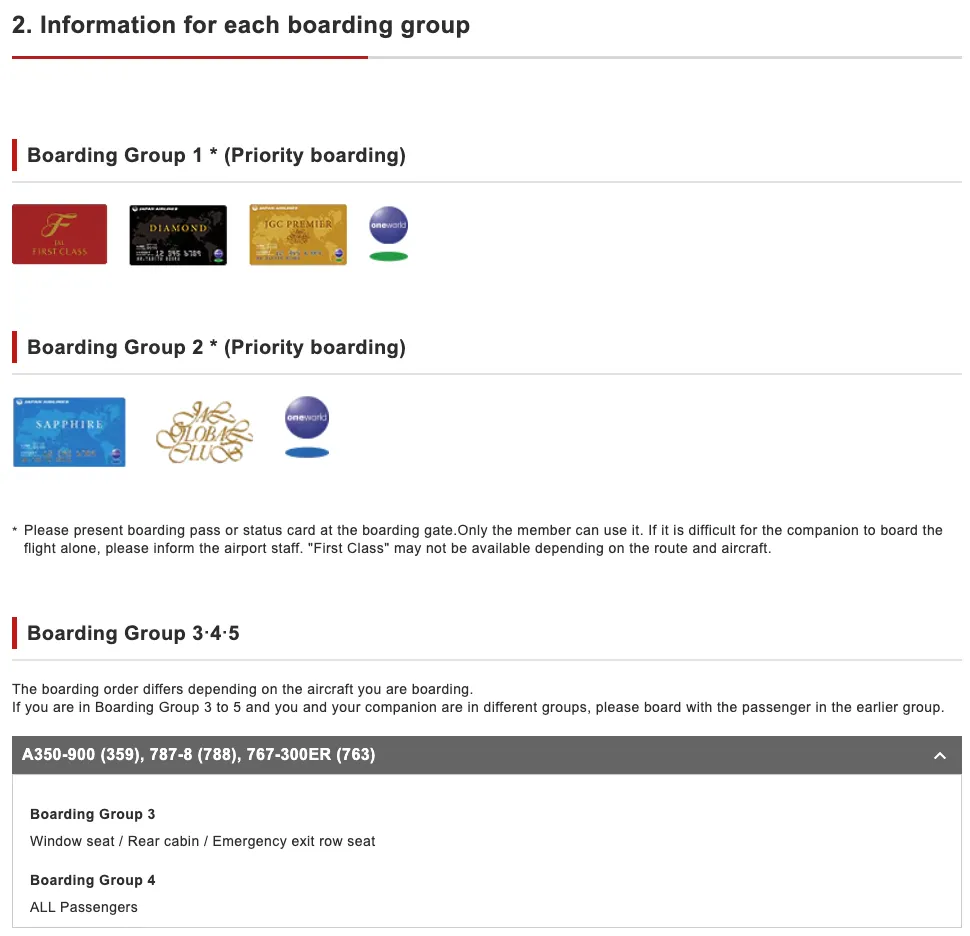
JAL Domestic Boarding Groups © jal.co.jp/jp/en/dom/
JAL Domestic Boarding Groups © jal.co.jp/jp/en/dom/
The boarding sequence goes: Pre-boarding → Group 1 → Group 2 → Group 3 → Group 4 → Group 5. Pre-boarding is for elderly passengers, passengers with disabilities, and families with infants. A unique aspect of JAL’s pre-boarding is that they literally board before general boarding officially starts. They scan these passengers’ passes about 5 minutes before boarding time, hold them near the jet bridge door, and then let them onto the plane a minute or two before the Group 1 call. Group 1 includes First Class passengers, oneworld Emeralds, JMB Diamonds, and JCG Premiers. Group 2 covers oneworld Sapphires, JMB Sapphires, and JAL Global Club members. Groups 3 through 5 are assigned dynamically based on the aircraft type to optimize boarding speed. For my A350-900 flight, Group 3 consisted of window seats, rear cabin passengers, and exit row passengers, while everyone else was put in Group 4. Notably, JAL does not grant priority boarding to Class J passengers (JAL’s domestic Premium Economy, which often books as Business Class via partner airlines).
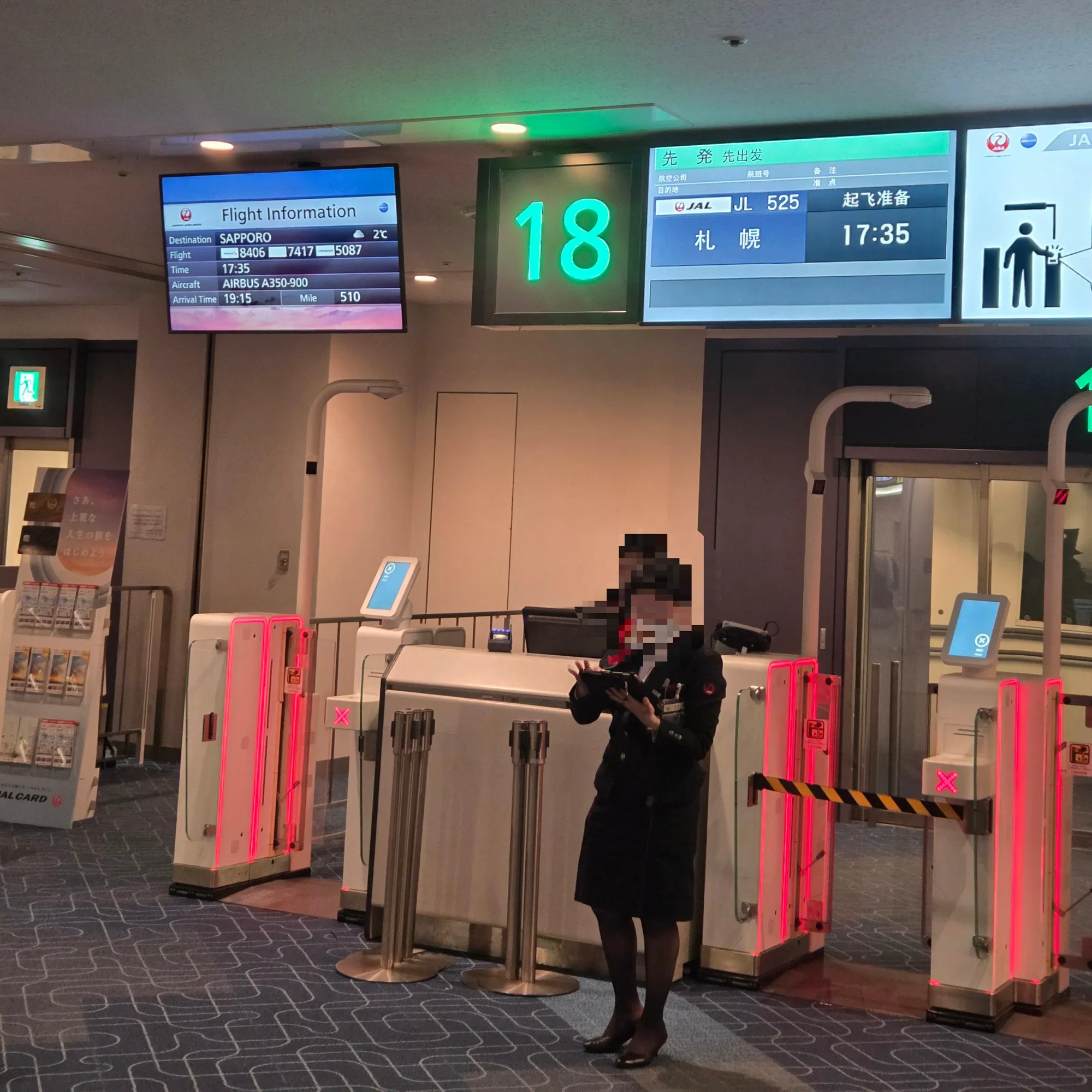

Gate 18 at Haneda Terminal 1 and Priority Boarding Lines for JL525
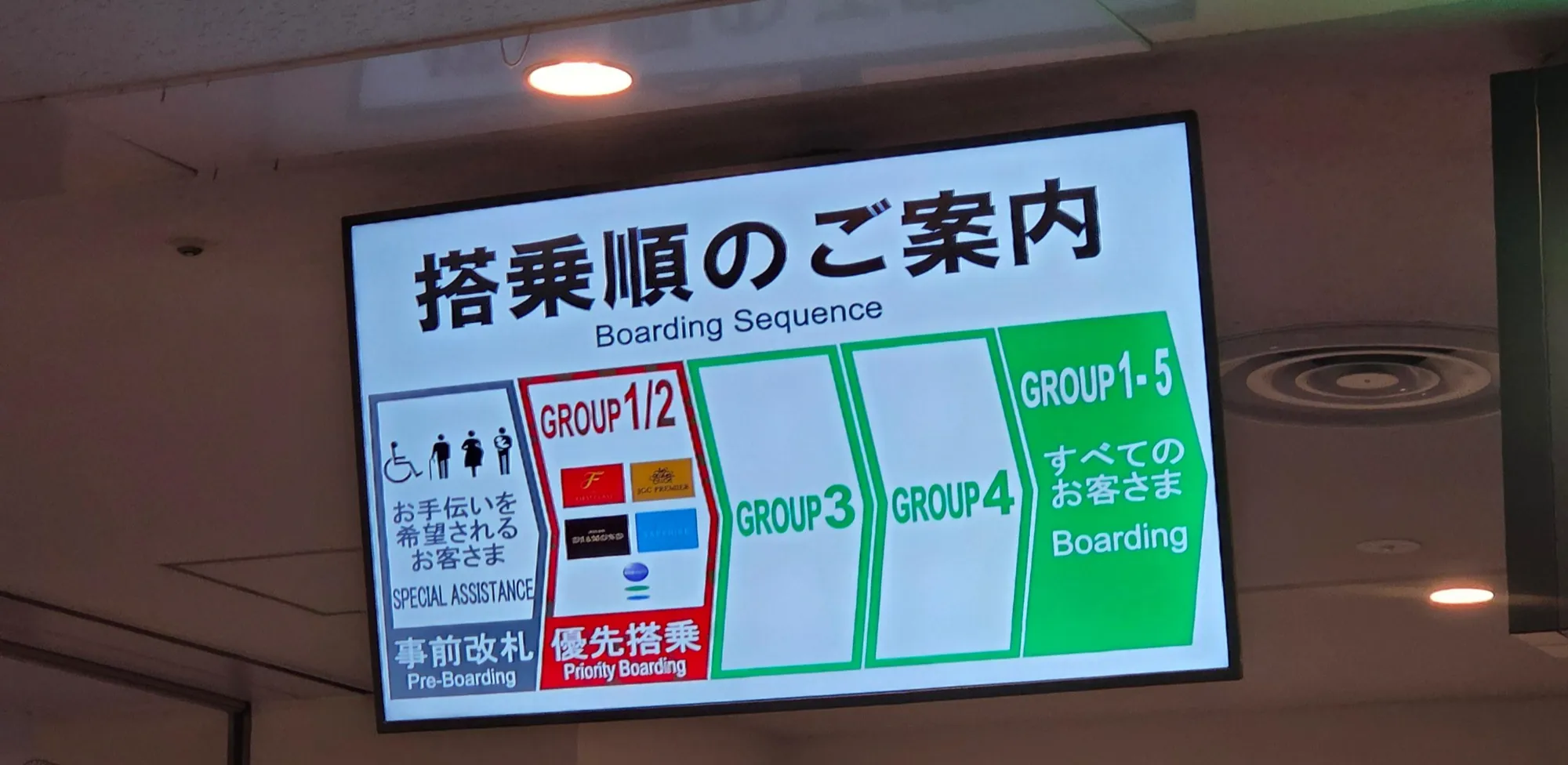
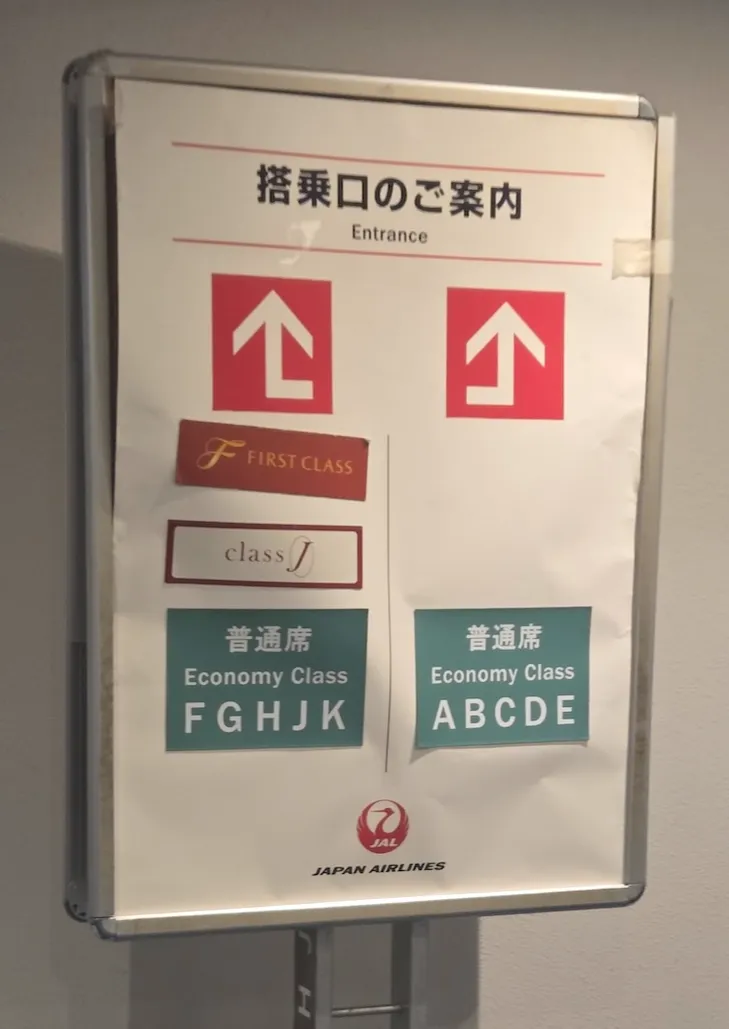
Boarding Sequence for JL525
Since JL525 was scheduled for a 5:35 PM departure, boarding commenced at 5:15 PM. About 10 minutes beforehand, staff set up signage and stanchions for the priority groups (Groups 1 and 2), who lined up in two parallel rows. Thanks to my oneworld Sapphire status, I was in Group 2. Boarding started precisely at 5:15 PM, and Group 2 was called the moment the Group 1 line cleared. You simply scan the QR code or barcode on your boarding pass at the automated gates. Wide-body aircraft here use dual jet bridges: First Class, Class J, and Economy passengers in columns F, G, H, J, and K use the forward bridge (L1 door), while Economy passengers in columns A, B, C, D, and E use the rear bridge (L2 door).
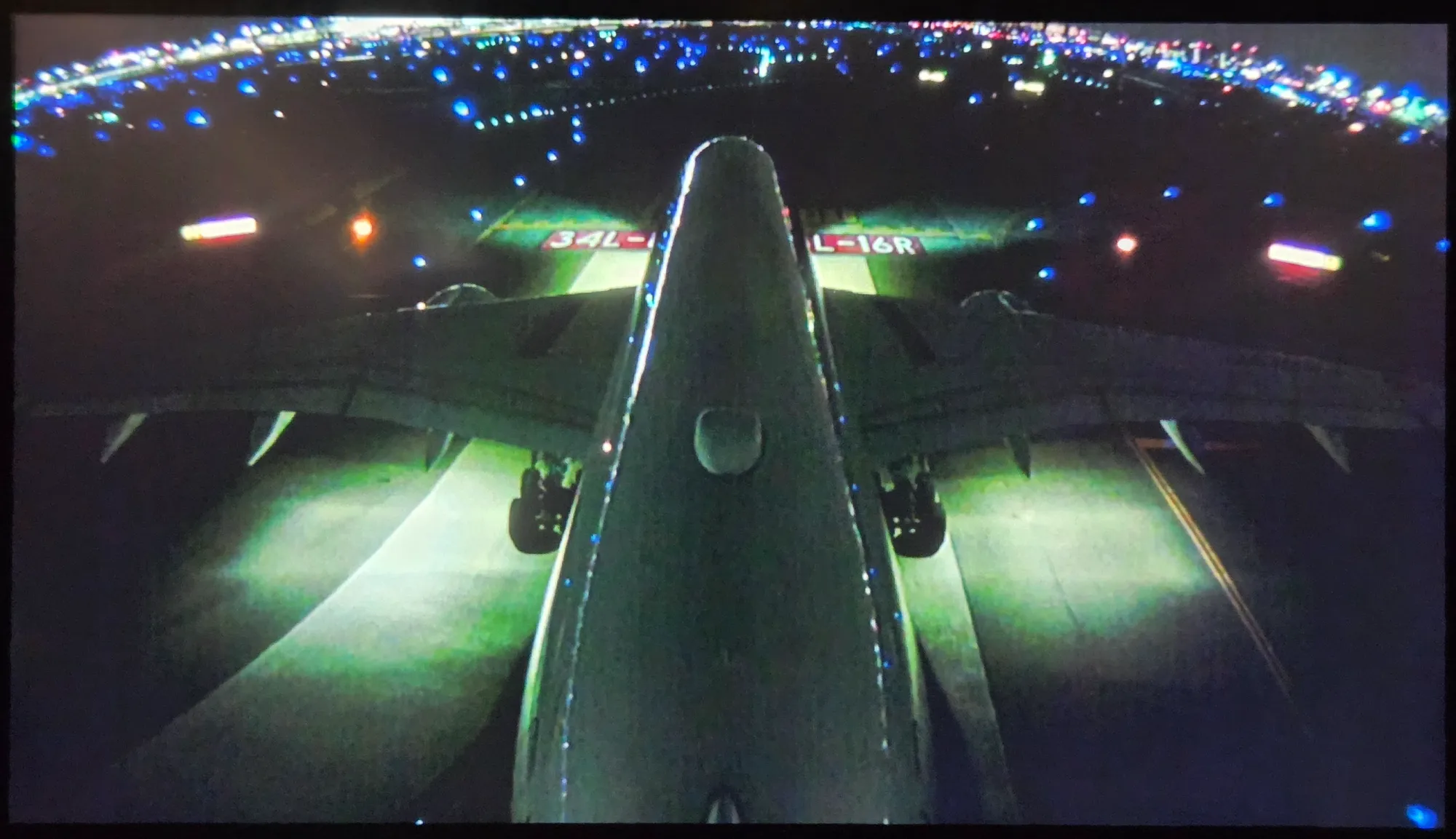
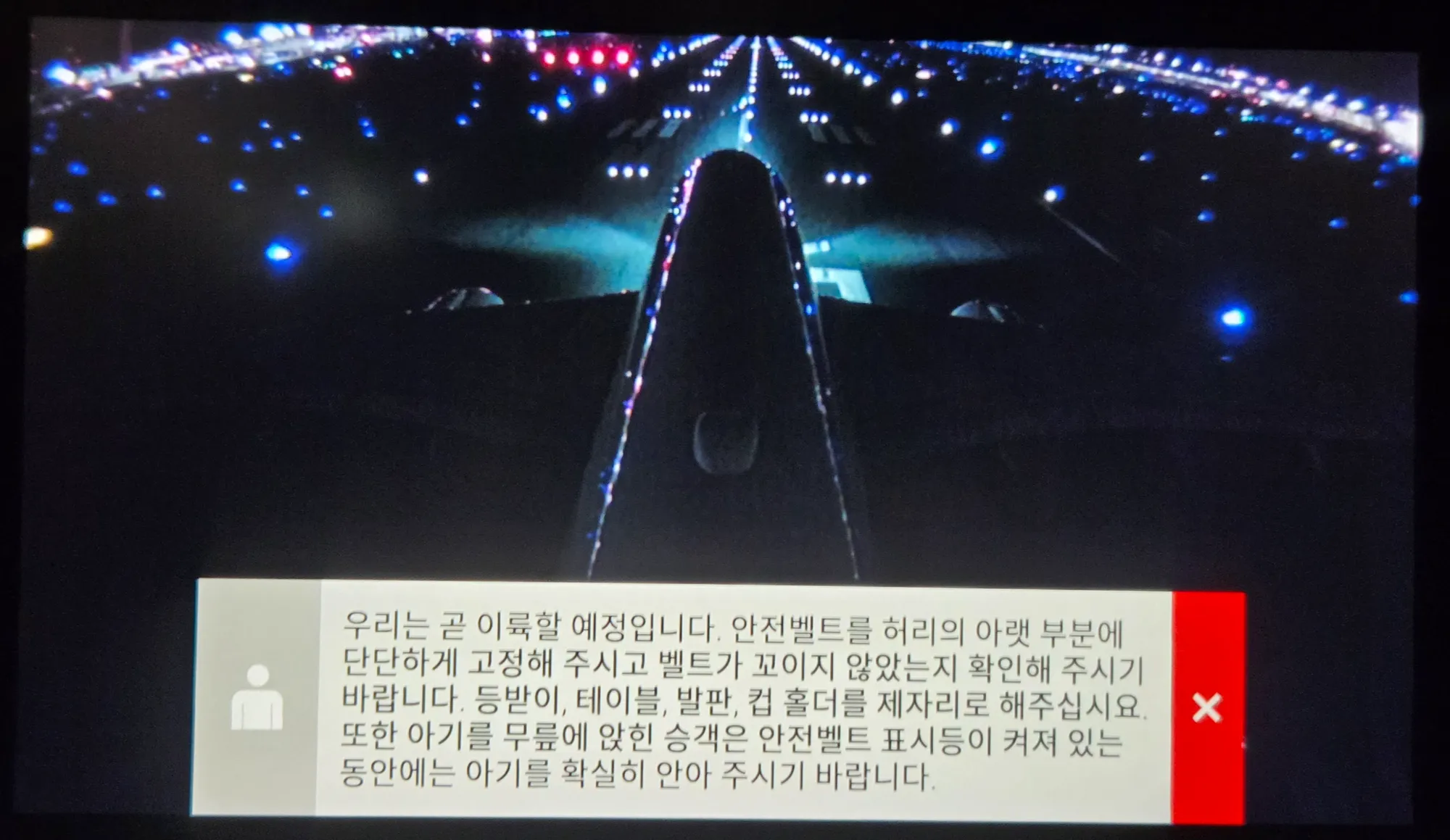
Takeoff View from the Exterior Tail Camera on JL525
Thanks to this highly efficient process, boarding was completed and the aircraft was ready to go right at 5:35 PM. However, due to heavy air traffic at Haneda, we didn’t actually push back until 5:42 PM (7 minutes late), and didn’t take off until 6:10 PM (35 minutes behind schedule).
8. Cabin & Seat Detail

JAL A350-900 X11 Layout © jal.co.jp/jp/en/dom/
JAL A350-900 X11 Layout © jal.co.jp/jp/en/dom/
As of late 2025, JAL’s entire fleet of A350-900s is dedicated exclusively to domestic routes. Compared to JAL’s international aircraft—which are famous for their generous Economy legroom—these domestic planes feature a denser, slightly downgraded configuration. JAL operates two distinct layouts for the domestic A350-900. The X11 type (which operated my flight, tail number JA12XJ) is a slightly more premium-heavy configuration with 12 First Class, 94 Class J, and 263 Economy Class seats. The X12 type is a higher-density configuration featuring 12 First Class, 56 Class J, and 323 Economy Class seats. Aside from the cabin proportions, the actual seats and IFE systems are identical across both versions.
Economy Class on the domestic A350-900 is laid out in a standard 3-3-3 configuration. The seat width is 18 inches, which matches JAL’s flagship international A350-1000s. However, the seat pitch is 31 inches, which is at least 2 inches tighter than their international product. That said, since these aircraft are deployed exclusively on domestic flights under 3 hours, the legroom felt perfectly adequate. While 31 inches might feel slightly cramped compared to standard Korean or Japanese full-service carriers, it’s actually the industry standard for long-haul Economy on many airlines worldwide.
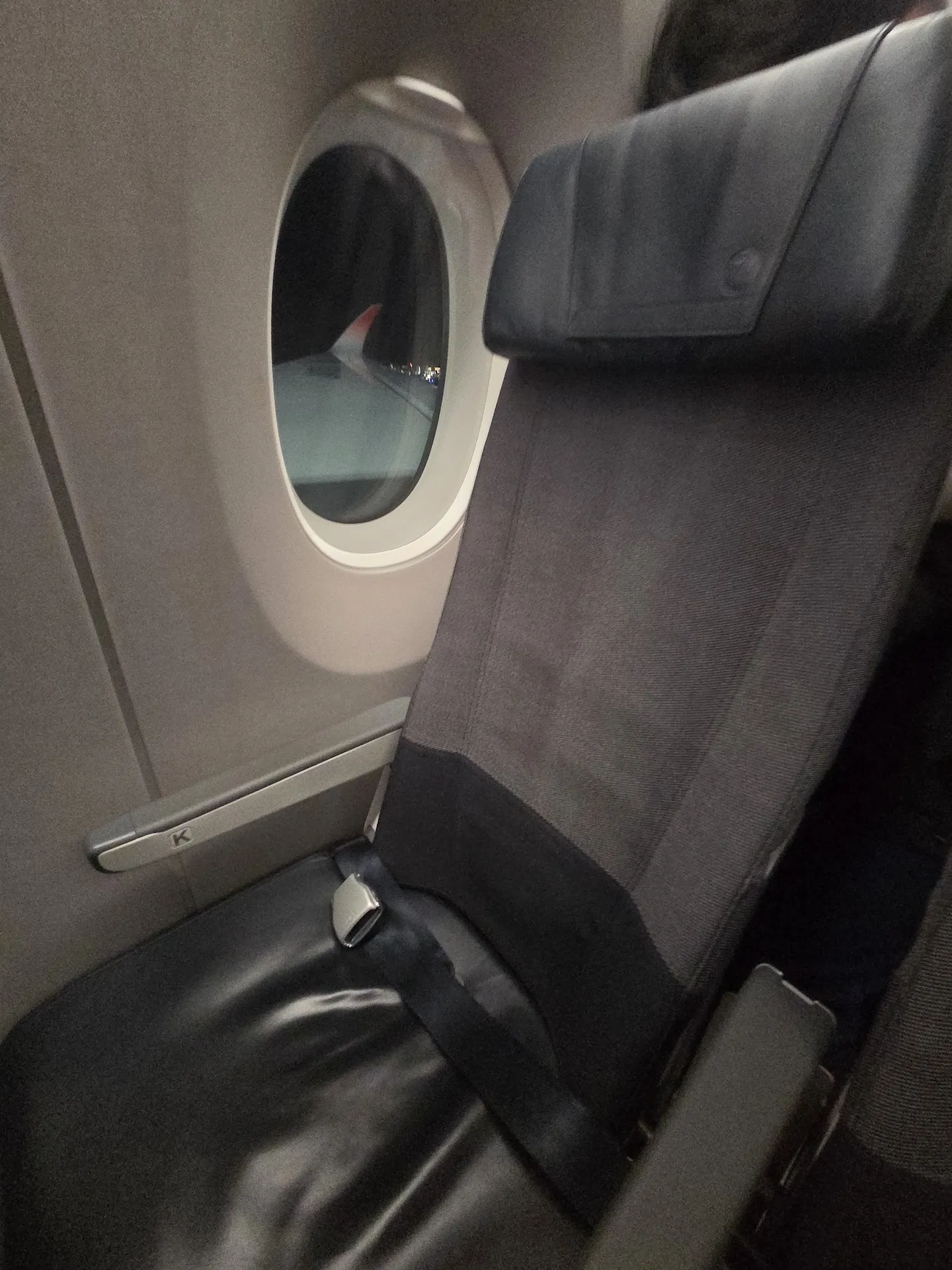
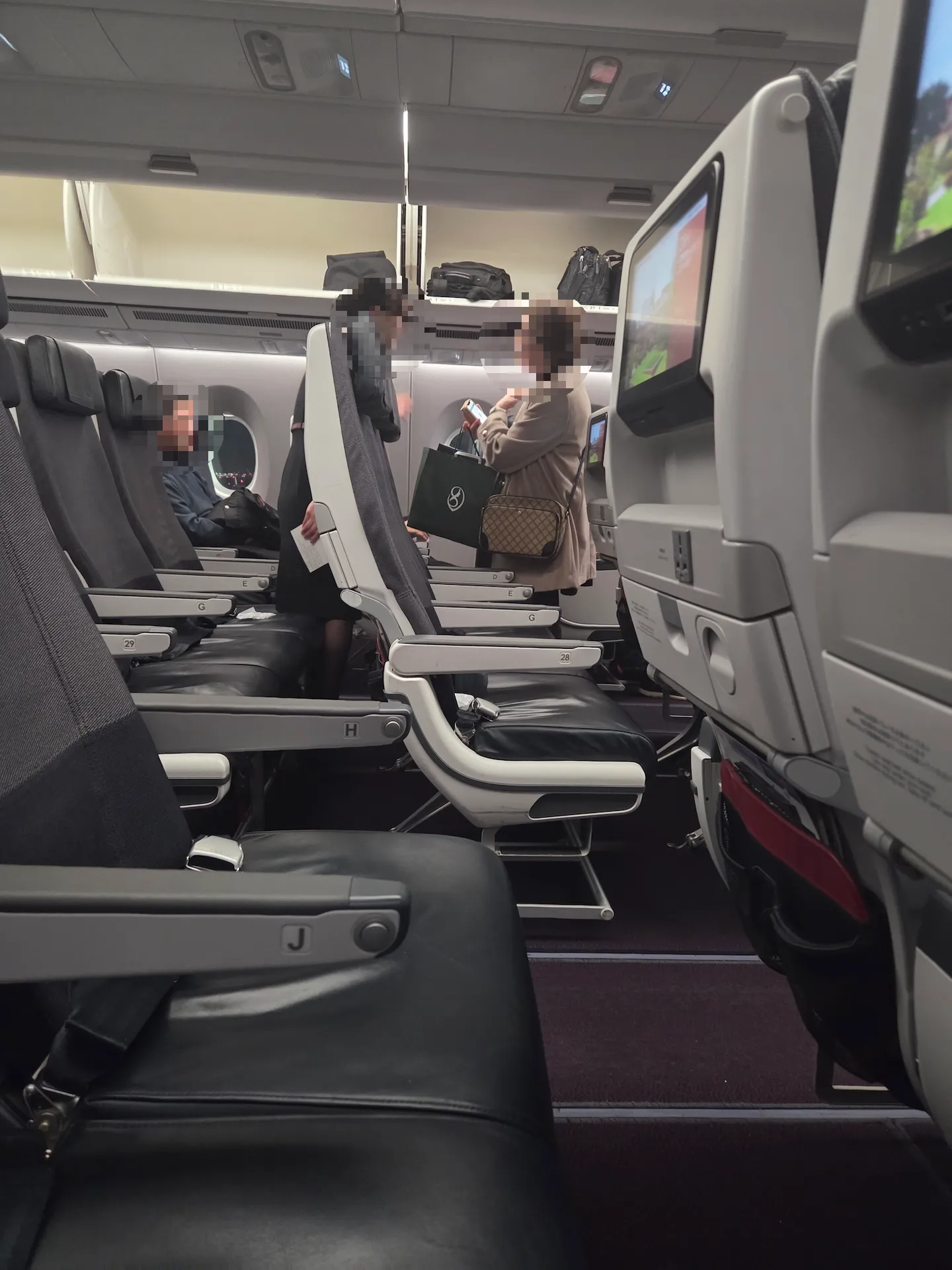
JAL A350-900 Economy Class Seat
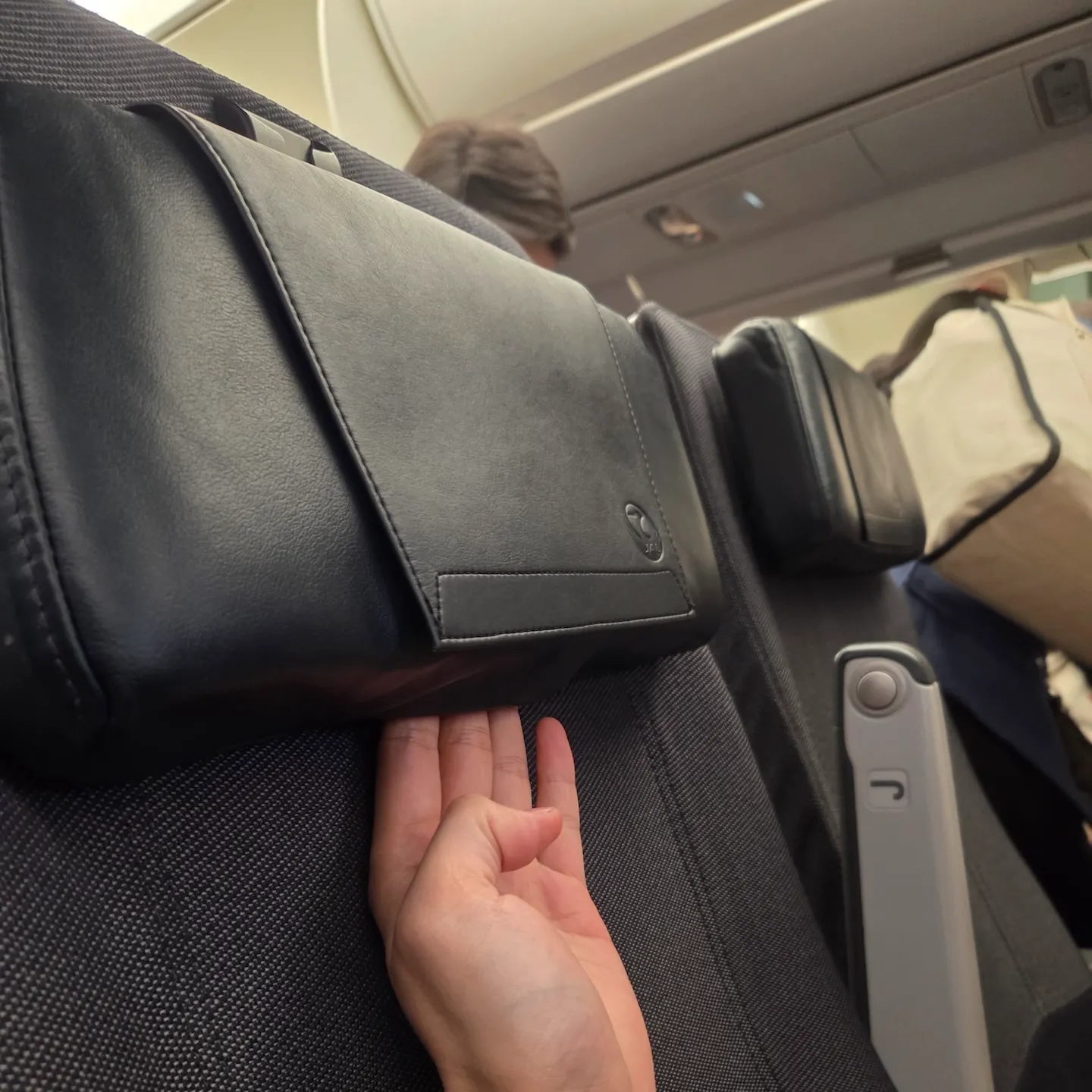


JAL A350-900 Economy Class Seat
For this flight, I was in seat 28K, a window seat located just behind the Class J cabin and one row back from the bulkhead. Unlike First Class and Class J which prominently feature JAL’s signature red tones, the Economy cabin is outfitted in dark, monochromatic greys. You could call it understated, or perhaps a bit dull. The seats themselves are Recaro CL3710 models—the exact same hardware found on JAL’s international A350-1000s, giving a very familiar feel. The seat cushion is upholstered in easy-to-clean leather, while the backrest is covered in breathable fabric. The leather headrest is 6-way adjustable, ensuring a comfortable ride for these short 1-to-3-hour domestic hops.
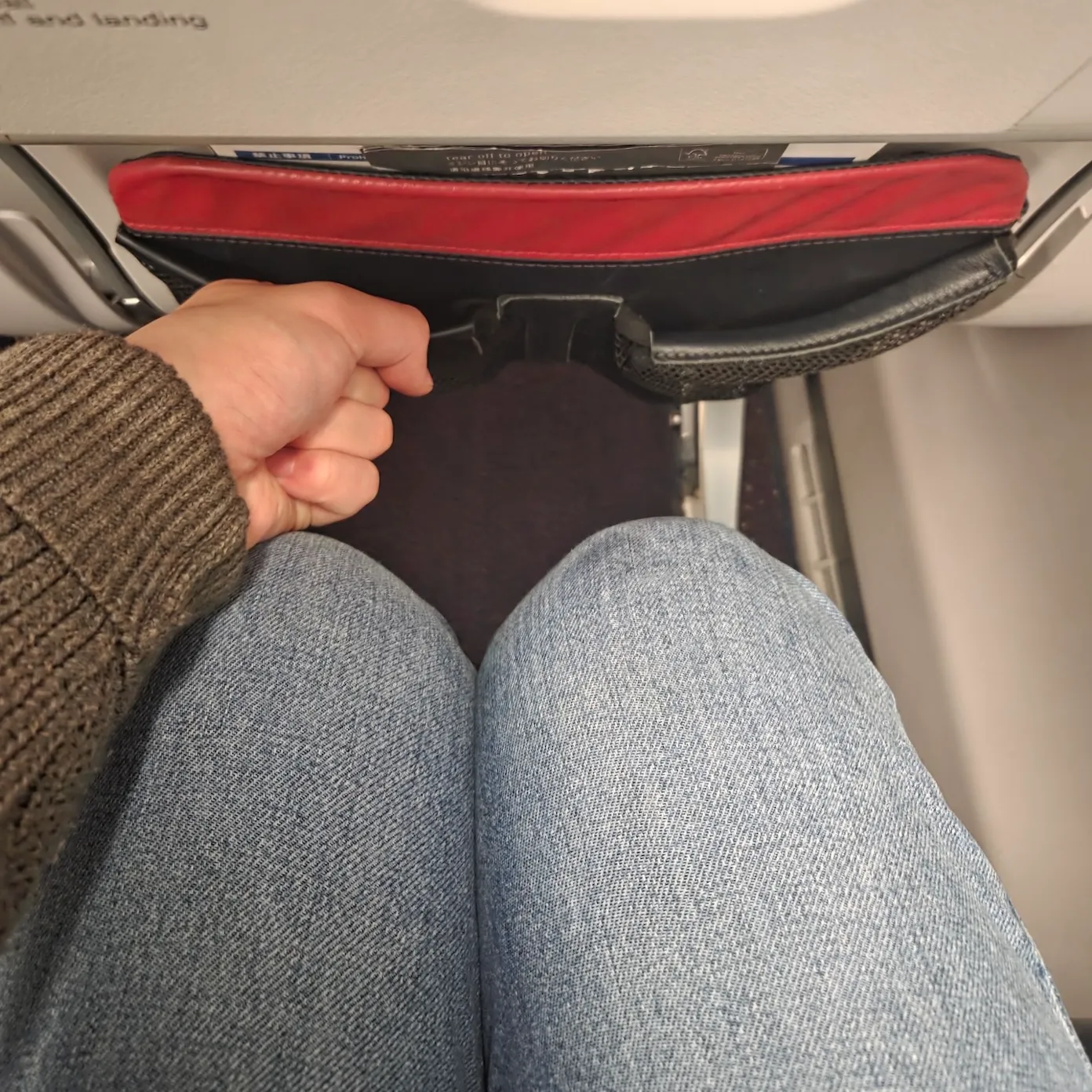
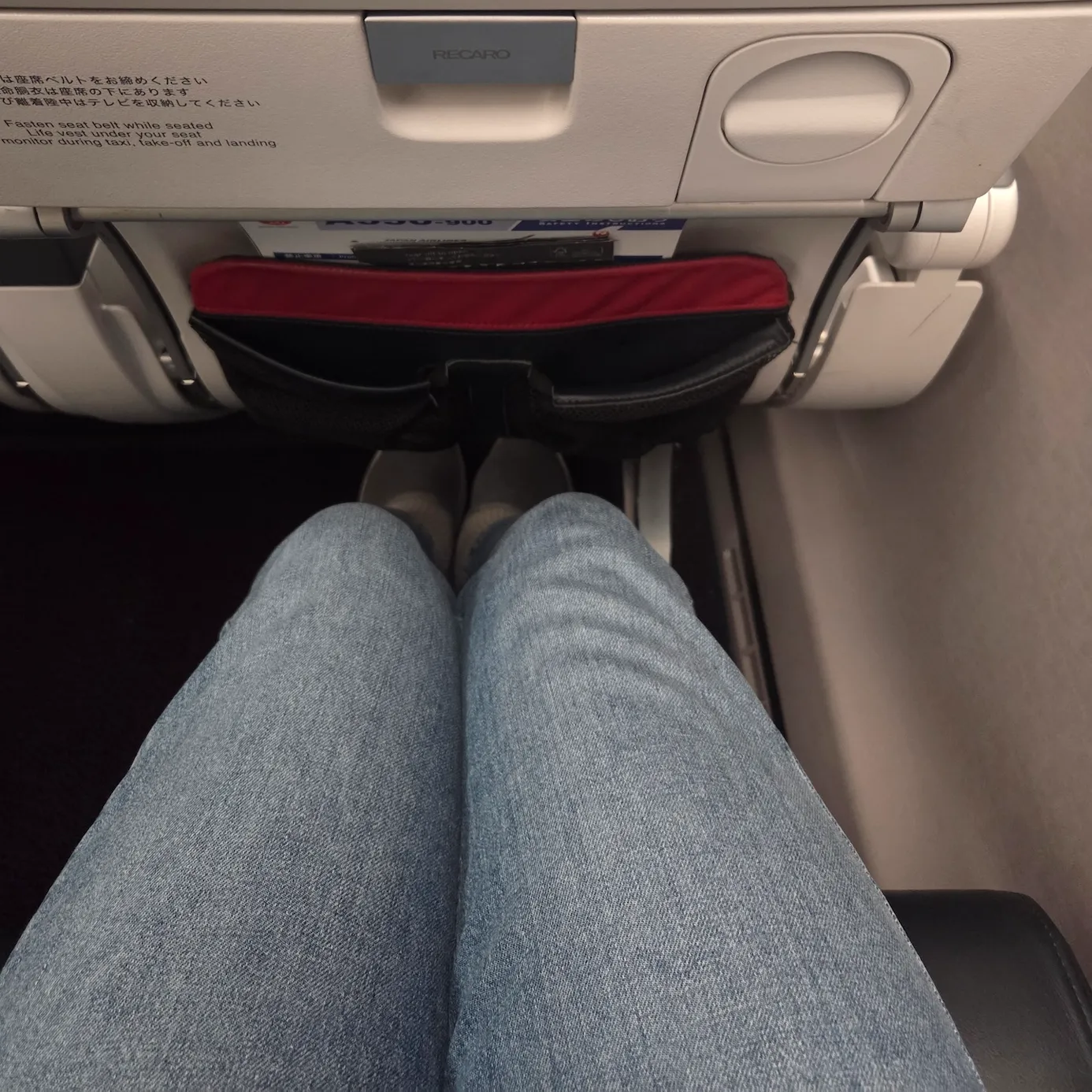

JAL A350-900 Economy Class Legroom

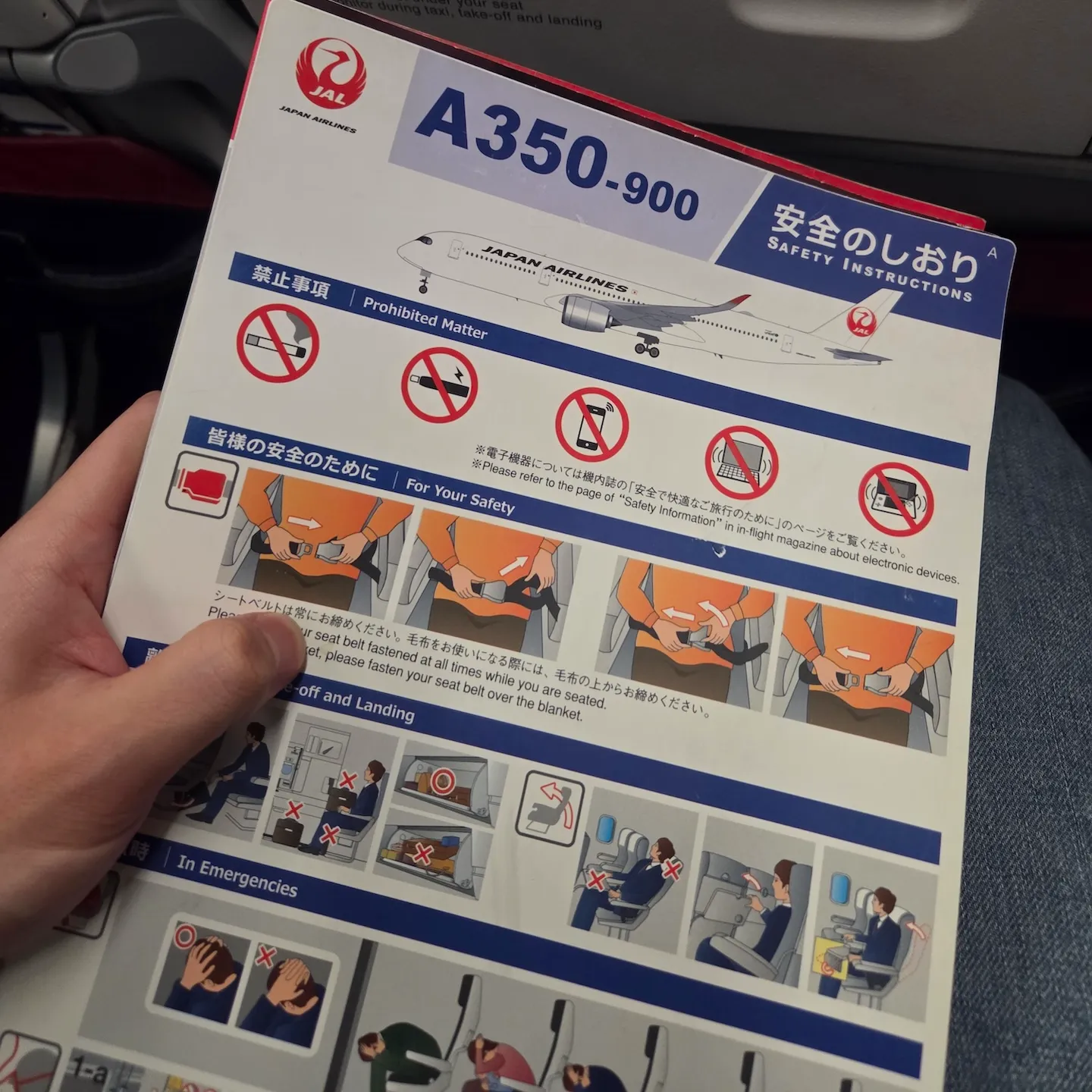

JAL A350-900 Economy Class Seatback Pocket and Safety Card
The Recaro CL3710 is cleverly designed to maximize knee space by shifting the literature pocket and tray table upwards, resulting in surprisingly good legroom. When an adult who is 180cm (5’11”) tall sits all the way back, there’s still a fist’s worth of space between their knees and the seatback ahead. You can even stretch your legs out straight under the seat in front of you without hitting anything. The lower seatback features two storage pockets: a larger one holding the safety card and sickness bag, and smaller pouches perfectly sized for a phone or a water bottle.
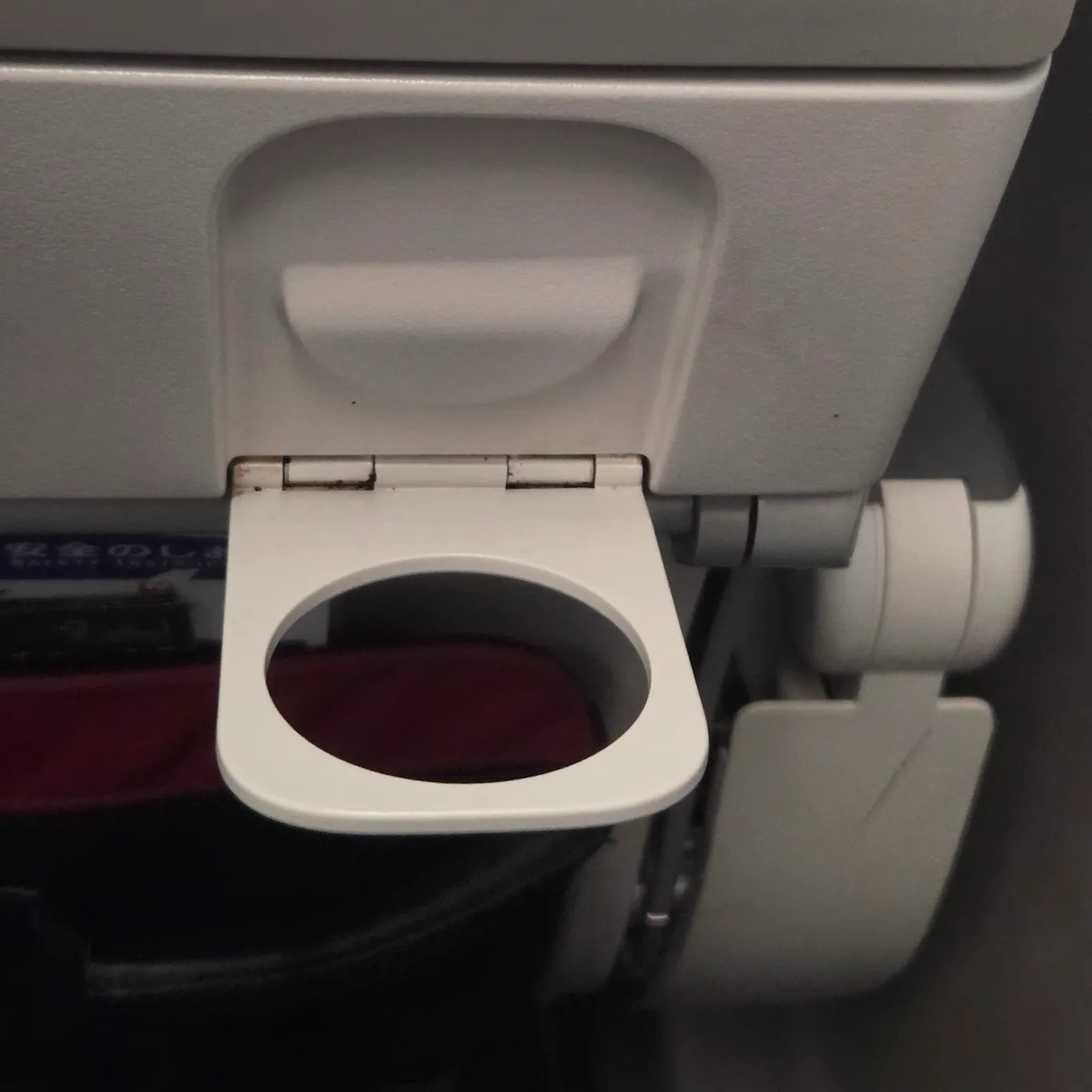
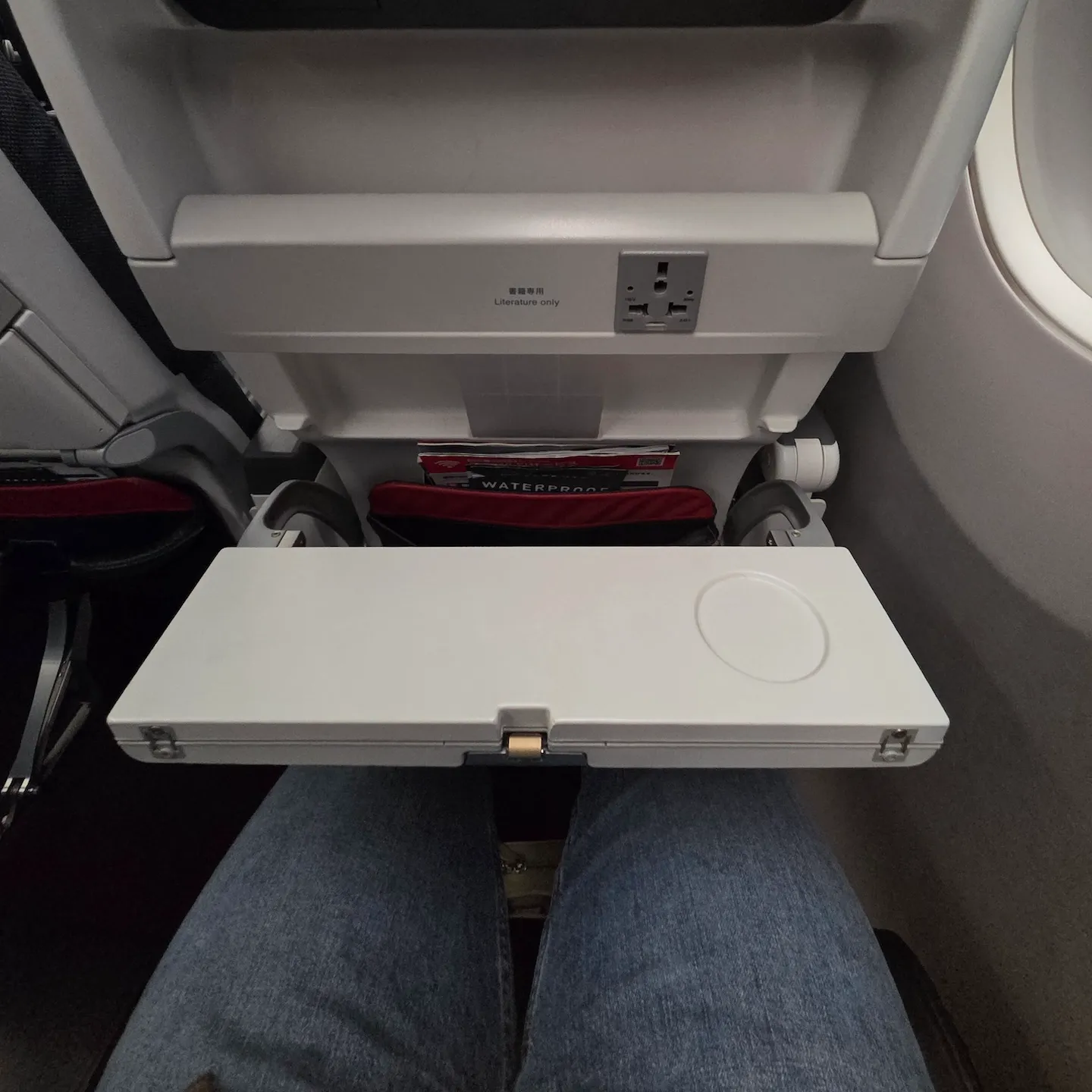
JAL A350-900 Economy Class Tray Table
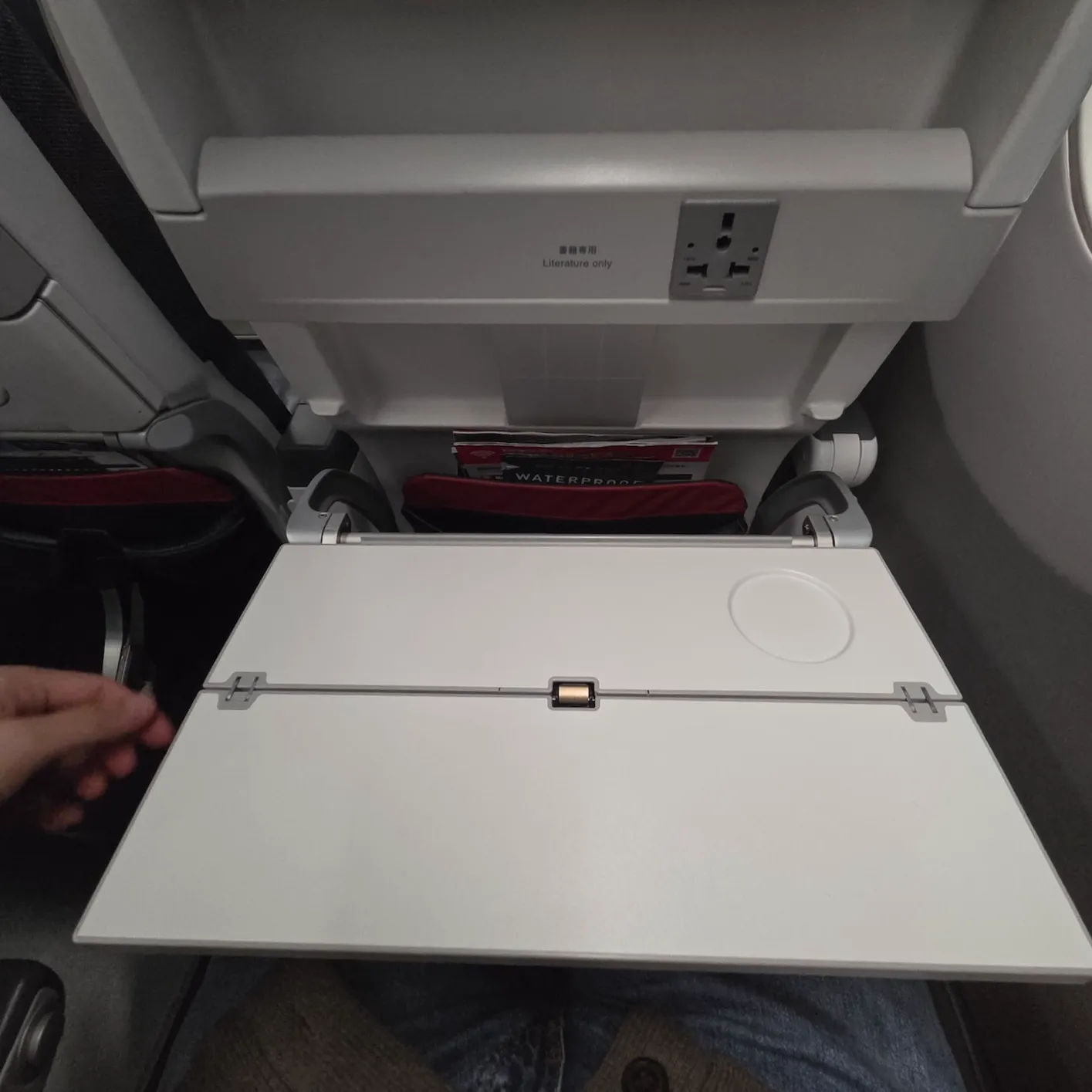
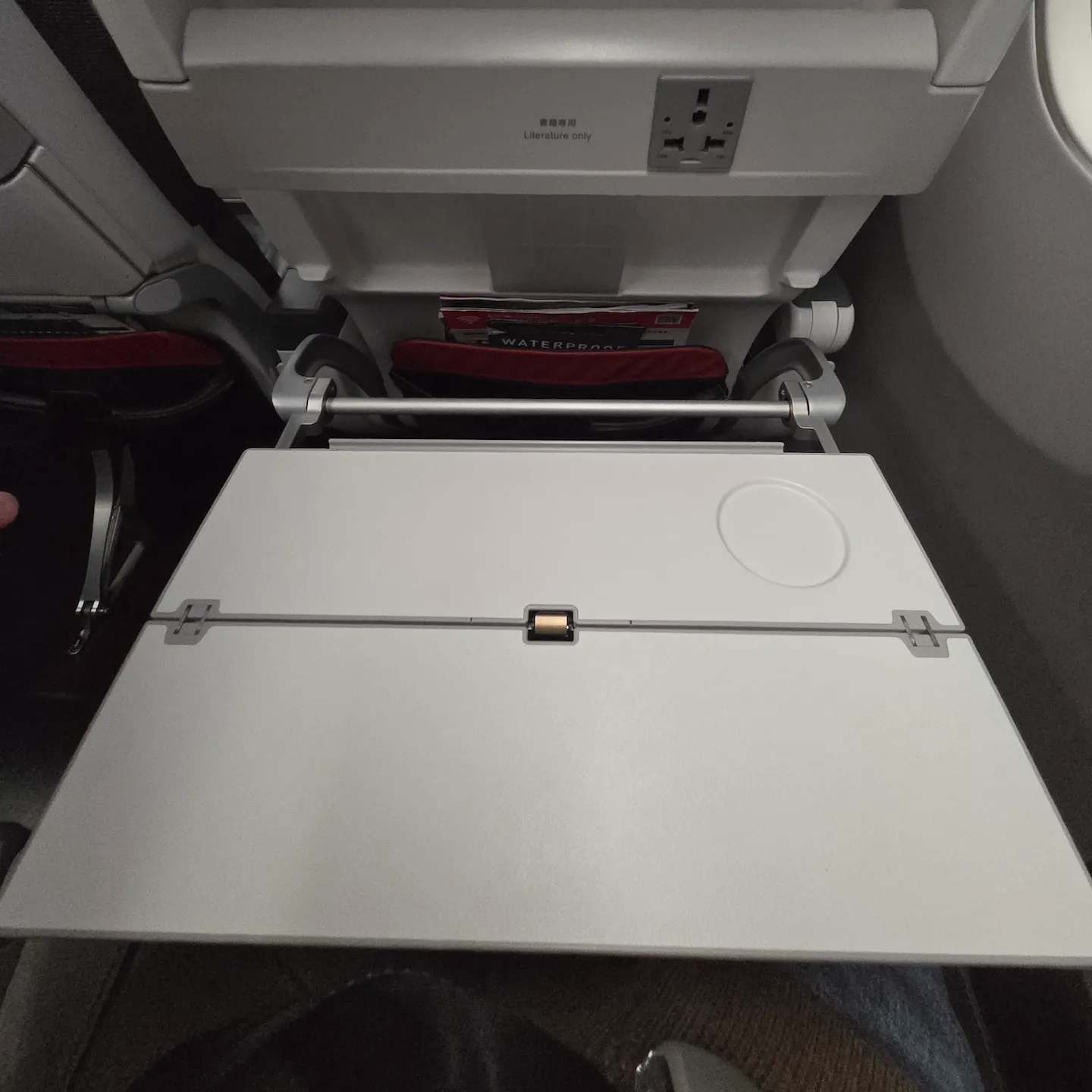
JAL A350-900 Economy Class Tray Table
Above the storage pockets is a bi-fold tray table. It features a built-in cupholder that can be used even when the table is fully stowed. When folded in half, it provides a small ledge about the depth of a hand. Fully extended, it’s large enough to comfortably accommodate a laptop. The table can also be pulled closer to you for added comfort.
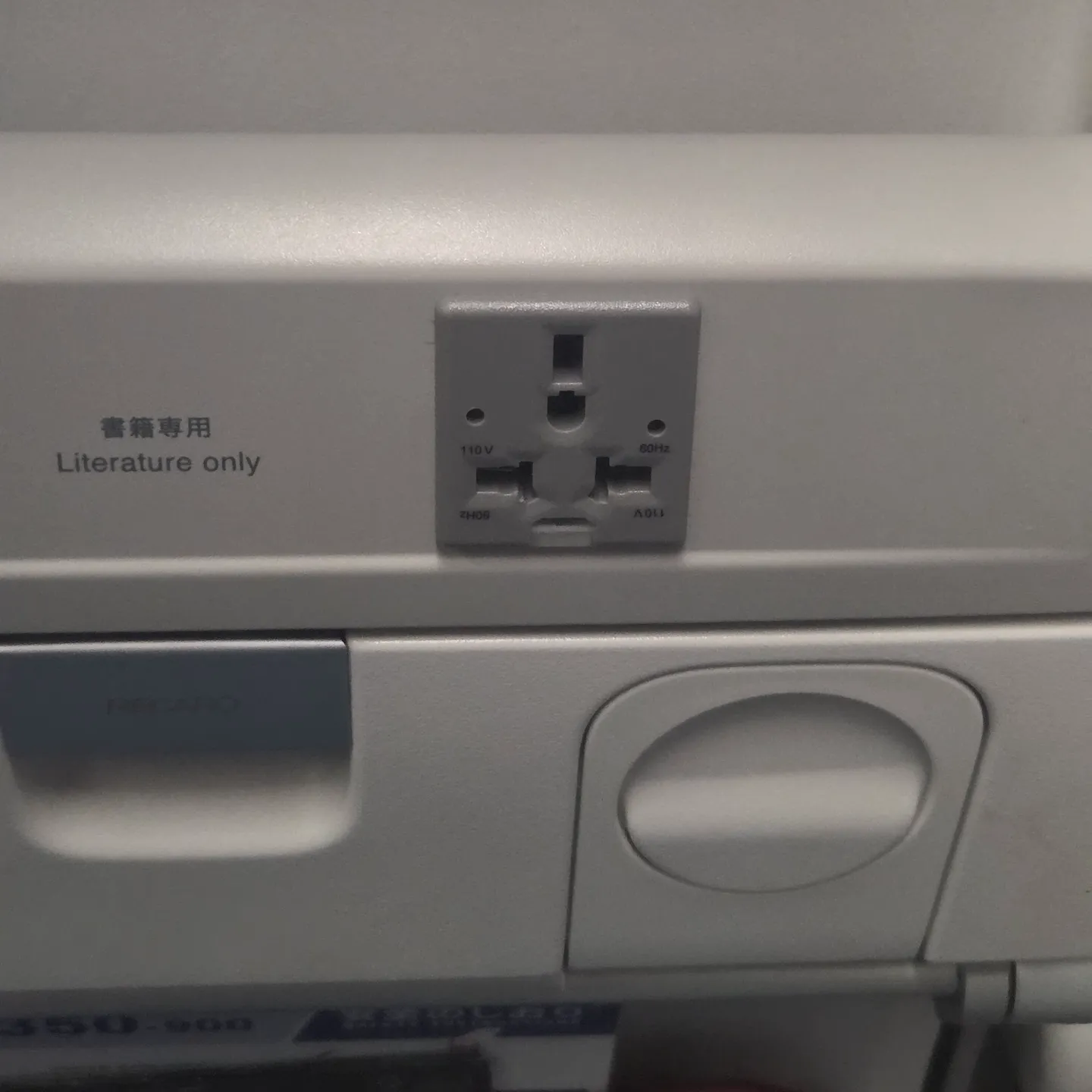

JAL A350-900 Economy Class Power Outlets and Wi-Fi Guide


JAL A350-900 Economy Class In-flight Magazines
Above the tray table sits a universal power outlet and a literature pocket. While the outlet accepts all plug types, it only outputs 110V. Before plugging in, verify that your device is compatible with 110V—plugging a strict 220V device into a 110V socket might not instantly break it, but it can degrade the charger over time. Fortunately, almost all modern mobile device chargers are dual-voltage (100V-240V), so they will work perfectly fine. The literature pocket contained an inflight magazine and a shopping catalog. True to its domestic nature, the magazine was entirely in Japanese, and the shopping catalog featured domestic mail-order items rather than duty-free goods.

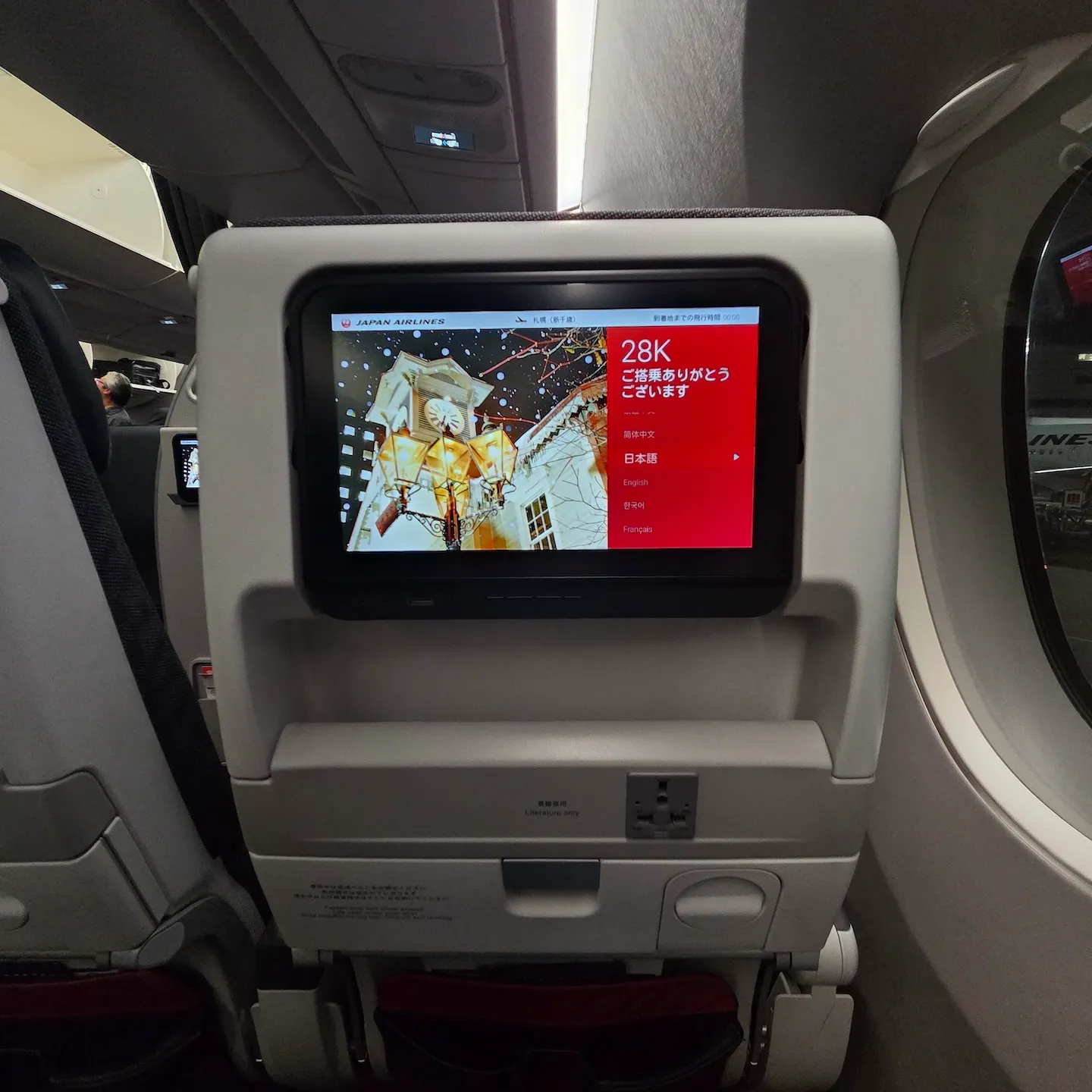
JAL A350-900 Economy Class IFE Screen
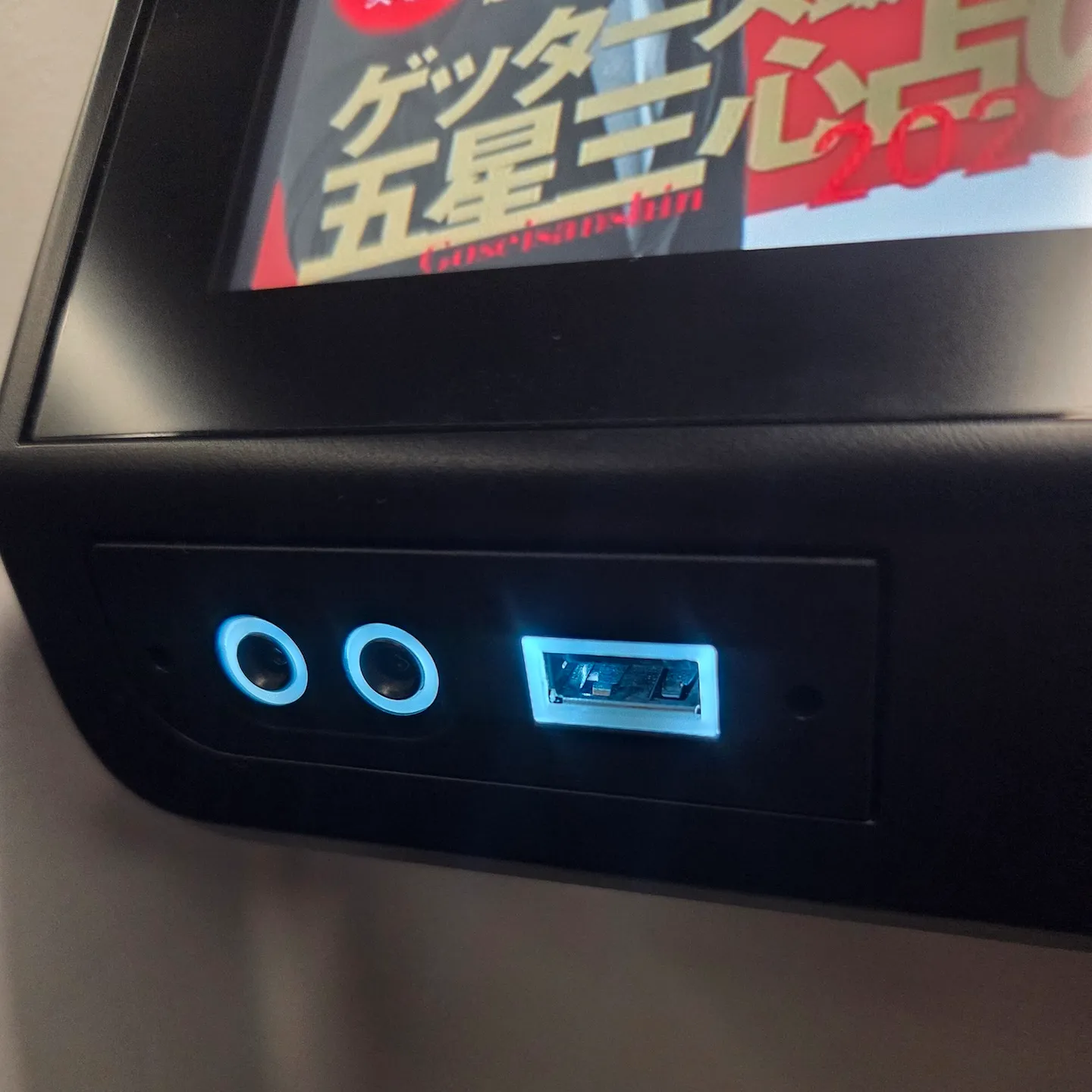

JAL A350-900 Economy Class USB-A Port, Audio Jack, and Tilting Display
At eye level is a 10.6-inch HD entertainment screen. While it’s slightly smaller and has a lower resolution than the monitors on the international A350-1000s, it’s perfectly adequate and benefits from a nice anti-glare coating. Along the bottom edge of the screen are an audio jack and a USB-A port. A major plus is that both the USB port and the AC power outlet are active during boarding and taxiing, not just in the air.

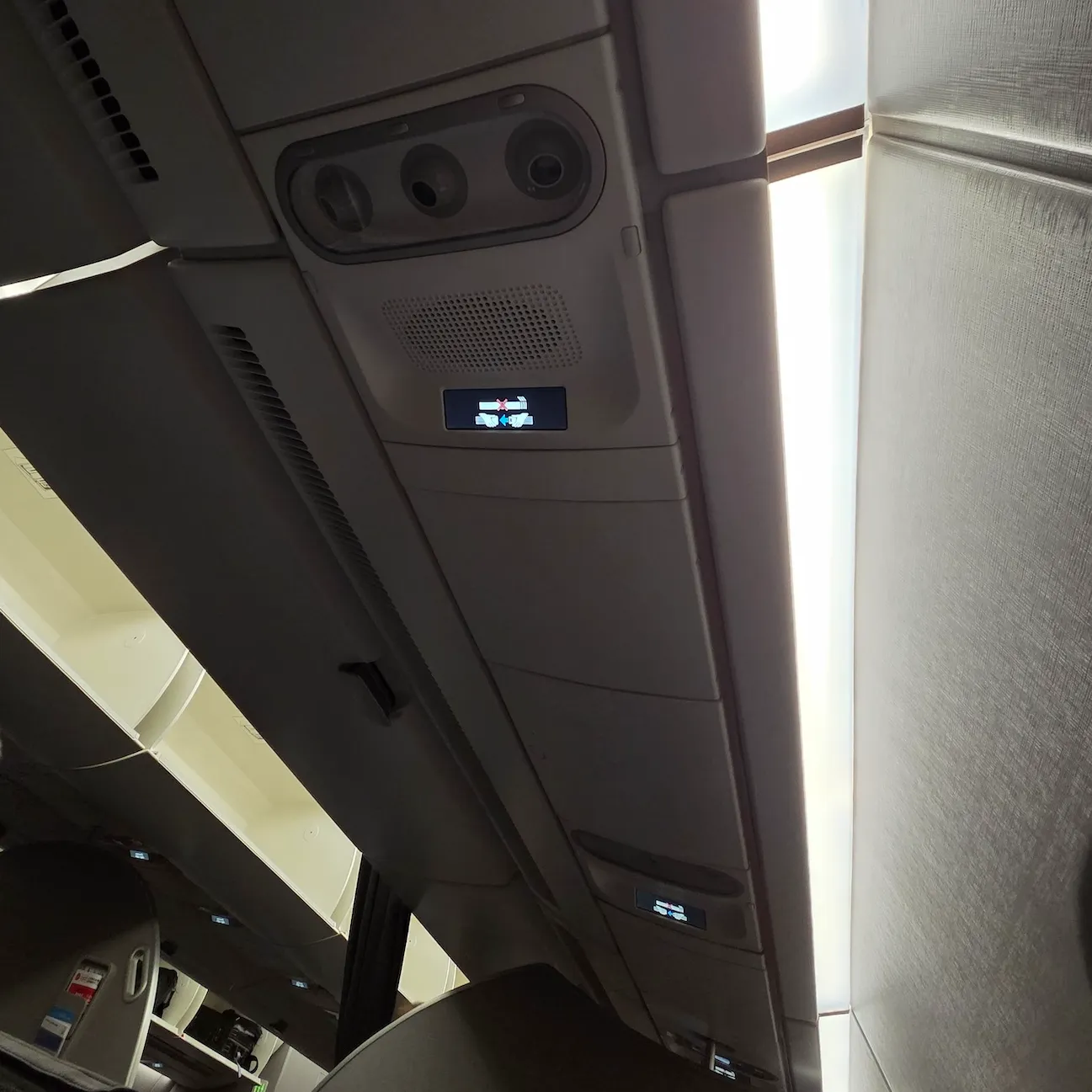
JAL A350-900 Economy Class Coat Hook and Reading Light
Additionally, a coat hook is integrated into the side of the seatback ahead, and the armrests feature clearly labeled letters to help you identify your seat row. Overhead, there are personal reading lights, but no individual air vents.
Ultimately, JAL’s domestic A350-900 Economy Class is exceptionally well-equipped for 1-to-3-hour domestic hops. When I say it’s ‘downgraded,’ that’s only in comparison to JAL’s stellar international product. This exact hardware would easily pass as long-haul Economy on many other global carriers. Personally, I think this seat would be perfectly comfortable even for a 5-to-6-hour medium-haul flight.
9. In-flight Service
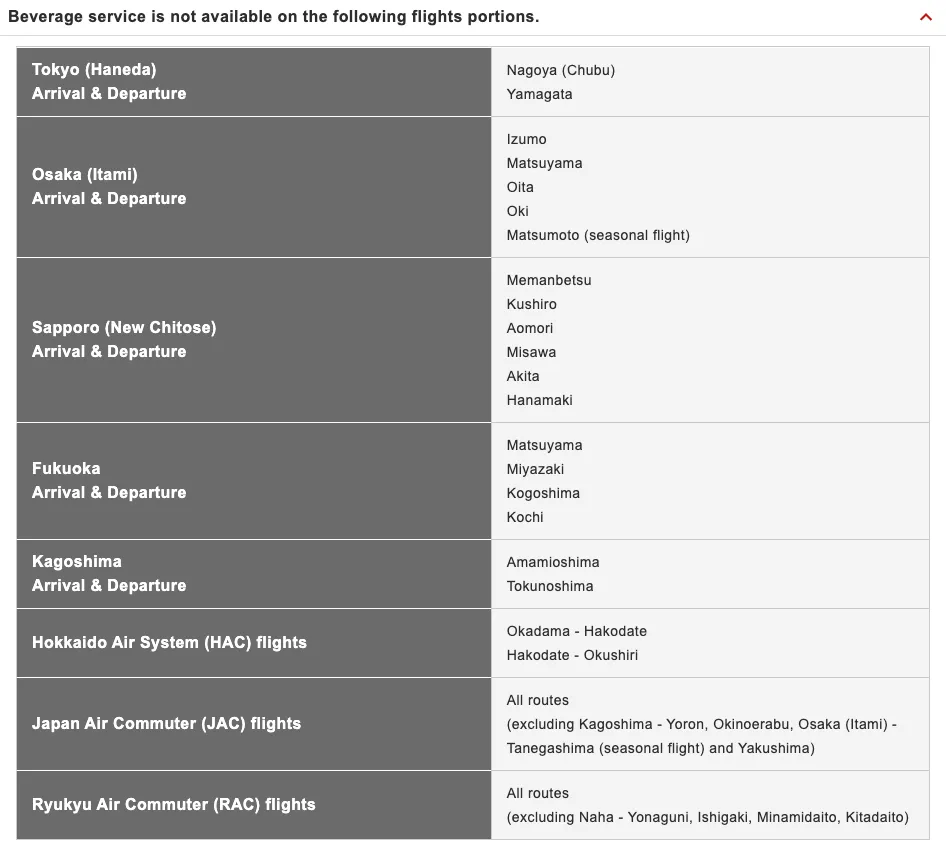
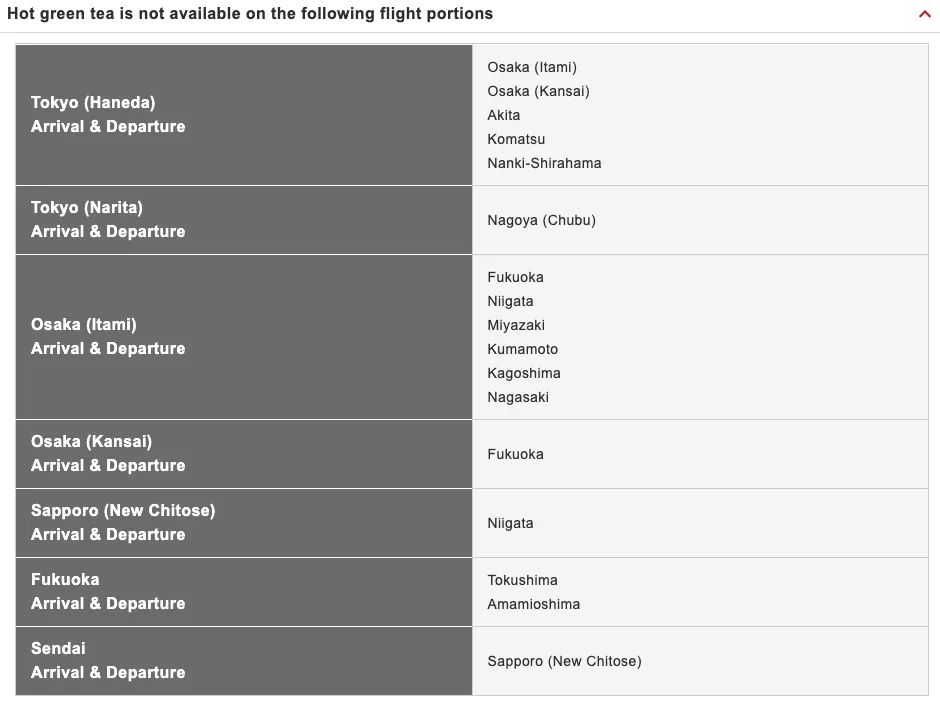
JAL Domestic Routes with Limited Beverage Service © jal.co.jp/jp/en/dom/
In-flight service on JAL domestic routes consists of a single round of complimentary drinks and snacks. On ultra-short routes, such as Haneda ↔ Nagoya, beverage service is omitted entirely. On slightly longer but still brief routes, like Haneda ↔ Osaka, beverages are served, but hot green tea is excluded—likely because there simply isn’t enough time to properly steep it.

JAL Domestic Beverage Menu © jal.co.jp/jp/en/dom/
JAL Domestic Beverage Menu © jal.co.jp/jp/en/dom/
My flight from Haneda to Sapporo (JL525) fell into neither of those categories, so a full beverage service was offered. The carts rolled down the aisle about 40 minutes after takeoff. The drink choices included JAL’s signature ‘Sky Time’ (Peach & Grape), Minute Maid apple juice, Coca-Cola, iced green tea, mineral water, hot coffee, beef consommé, and hot green tea. I’m not sure if JAL strictly separates their domestic and international cabin crews, but domestic attendants generally speak less English. Thankfully, they carry laminated picture menus featuring Japanese, English, and Korean, so communication was entirely frictionless.
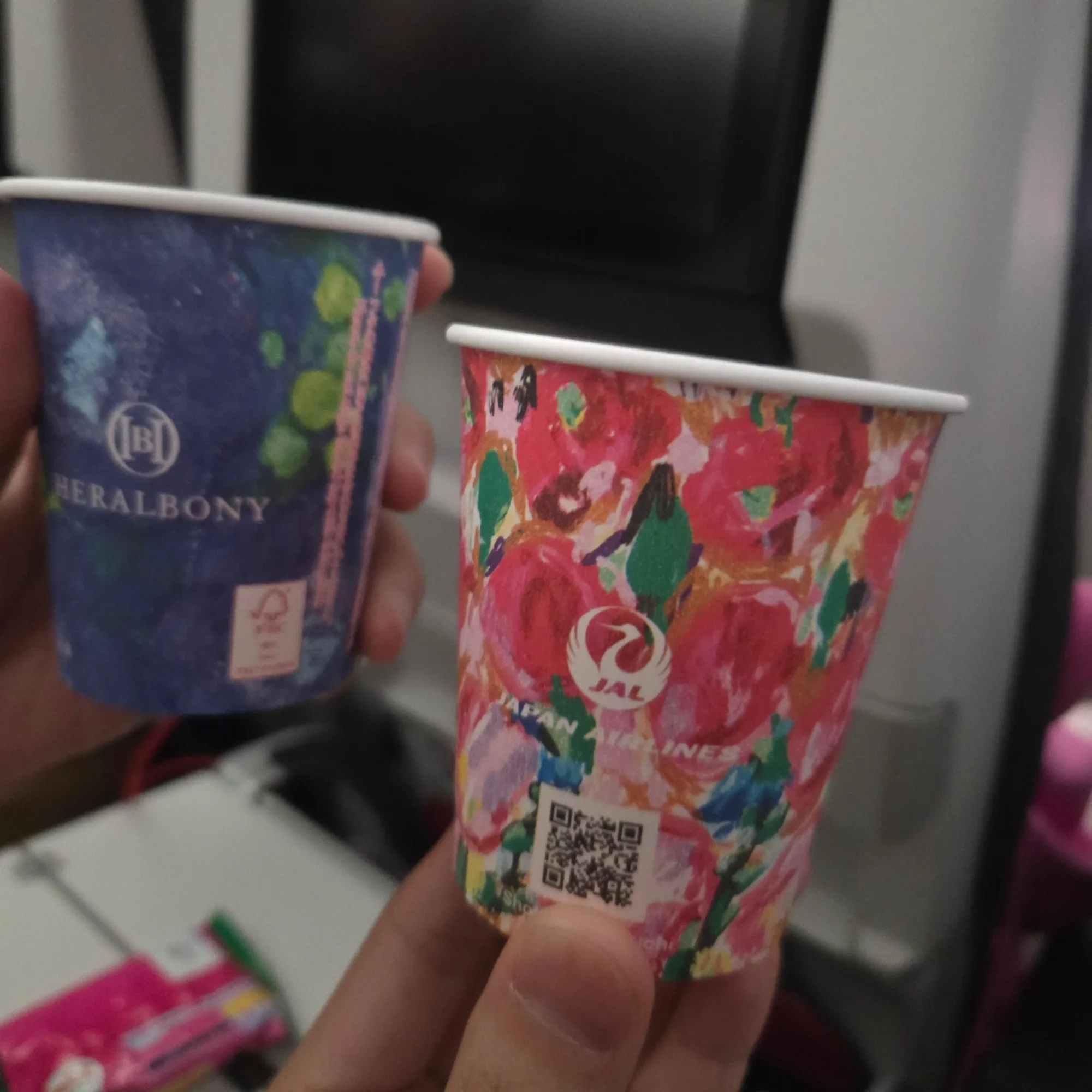
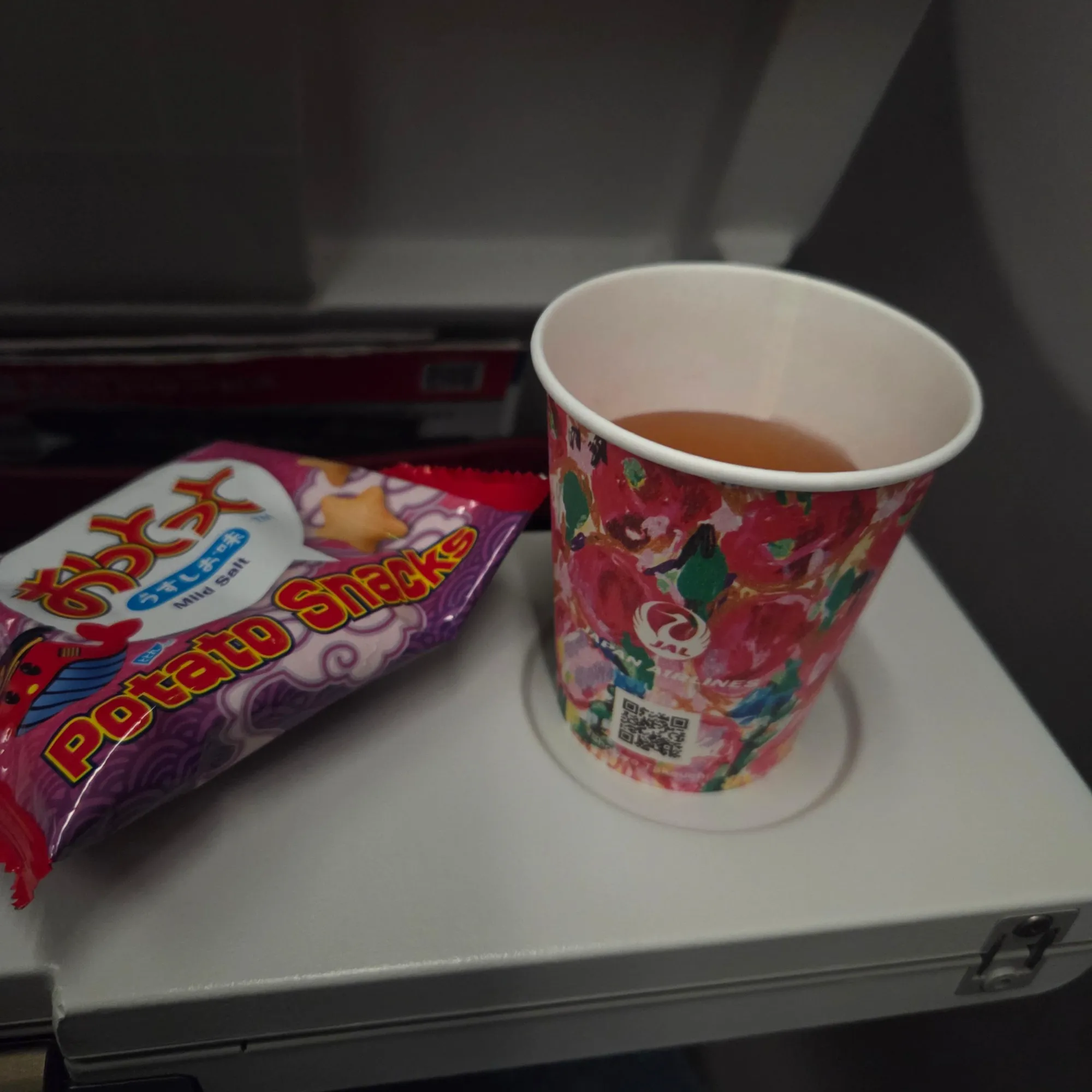
JAL Domestic Beverage Service: Beef Consommé and Snacks
One of the most unique offerings on Japanese domestic flights—both JAL and ANA—is beef consommé. Ever since I first tried it on an ANA flight about 15 years ago, it has become my go-to order. Flavor-wise, it tastes exactly like the rich, highly-seasoned warm beef broth served at traditional Korean cold noodle (naengmyeon) restaurants. It’s salty and intensely savory—a craving that hits you out of nowhere. Having just stepped off a 14-hour long-haul flight, this strong, salty, warm broth hit the absolute spot. Along with the soup, I was handed a small packet of potato snacks that resembled Korean ‘Goraebab’ (whale-shaped crackers).
10. In-flight Entertainment & Wi-Fi


JAL A350-900 IFE System
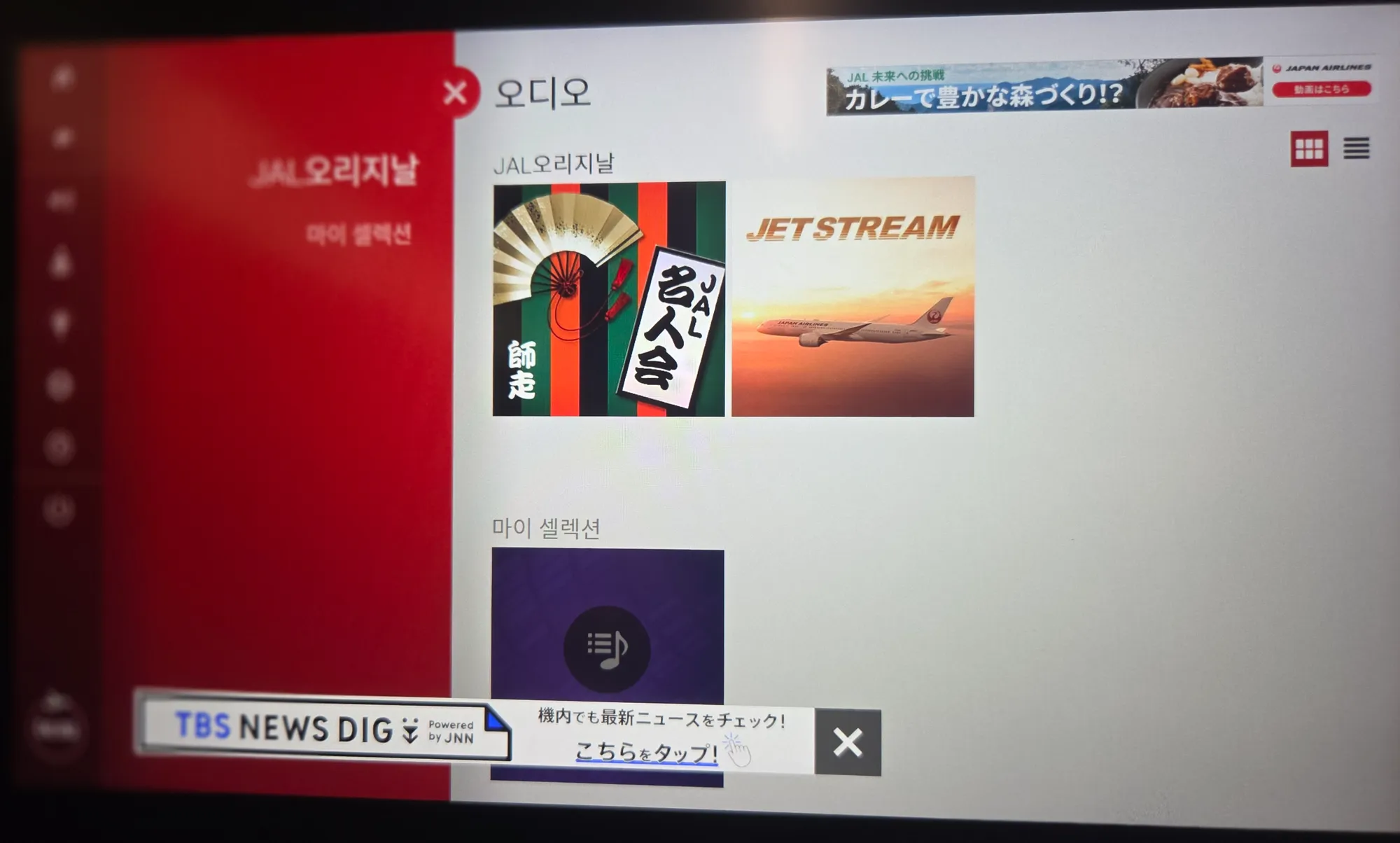
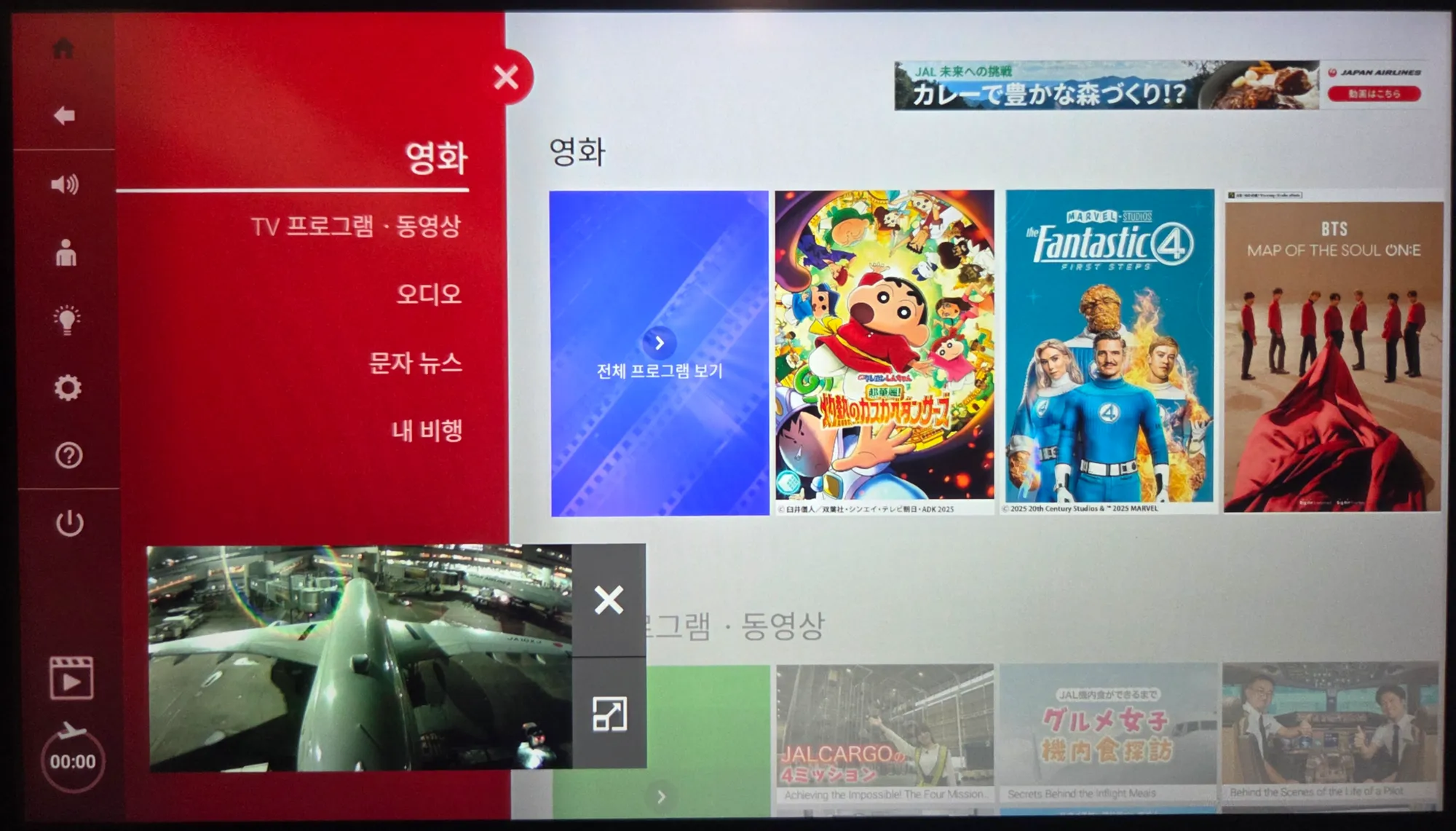
JAL A350-900 IFE System

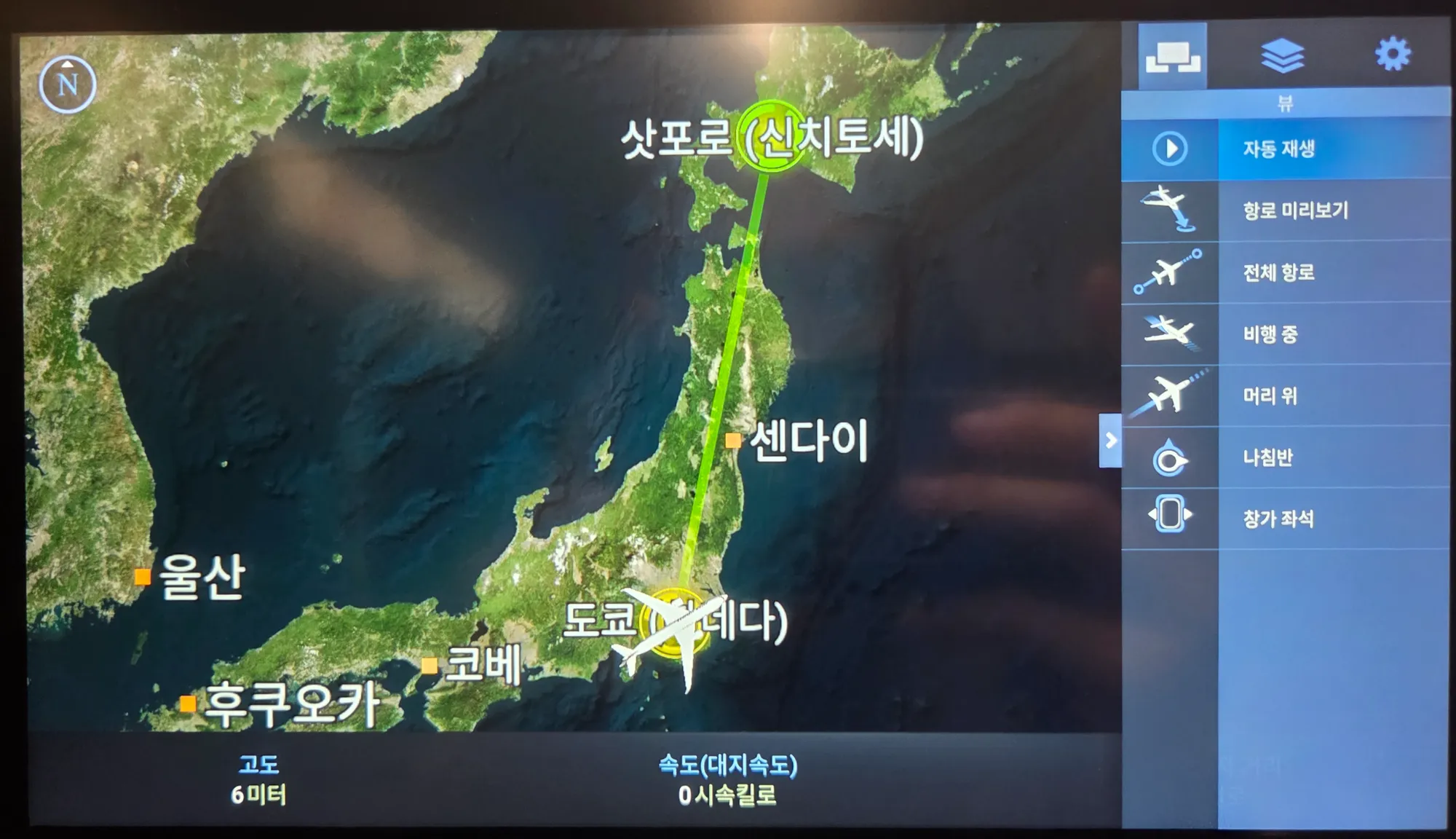
JAL A350-900 IFE Flight Map and Tail Camera
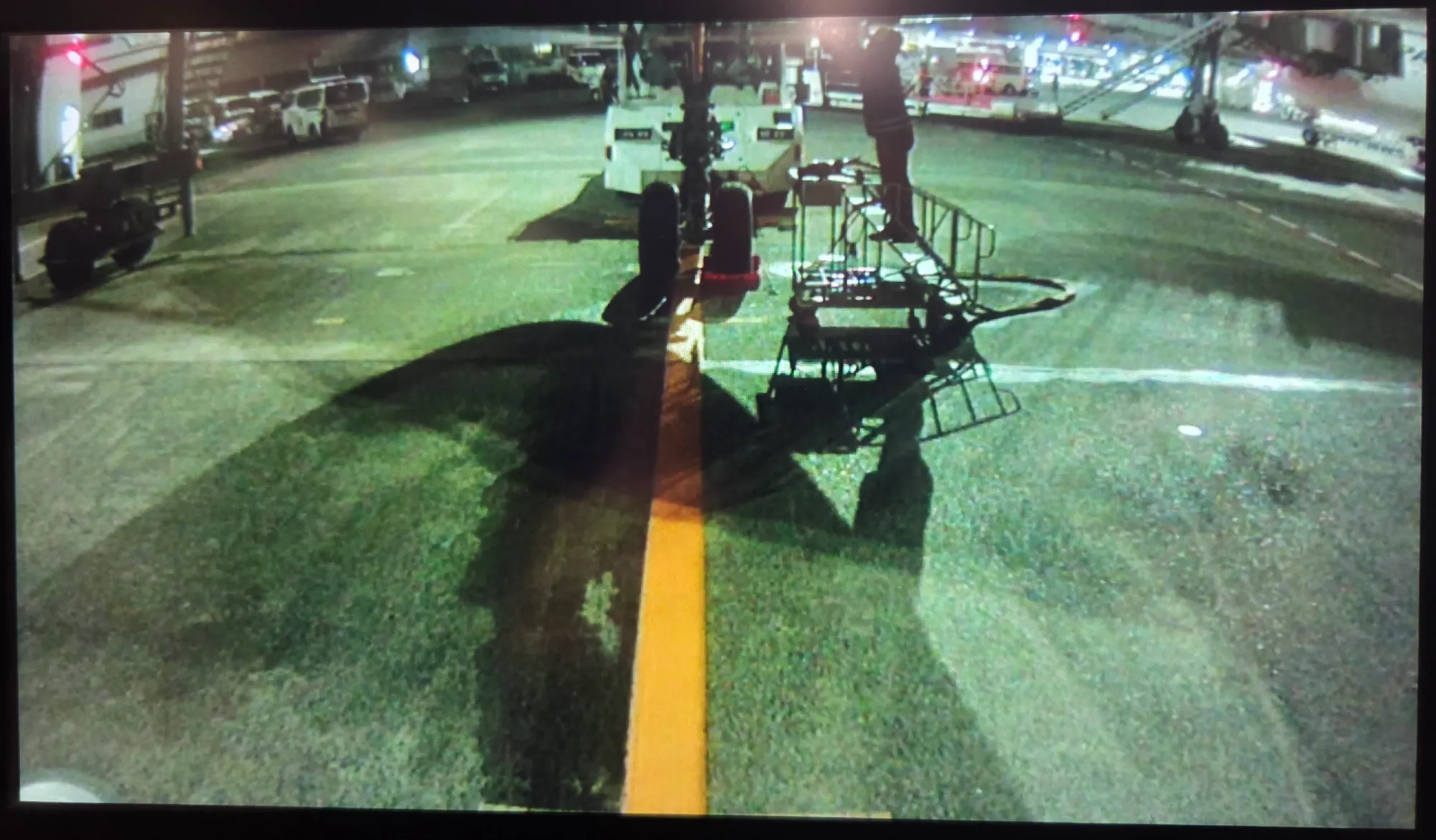
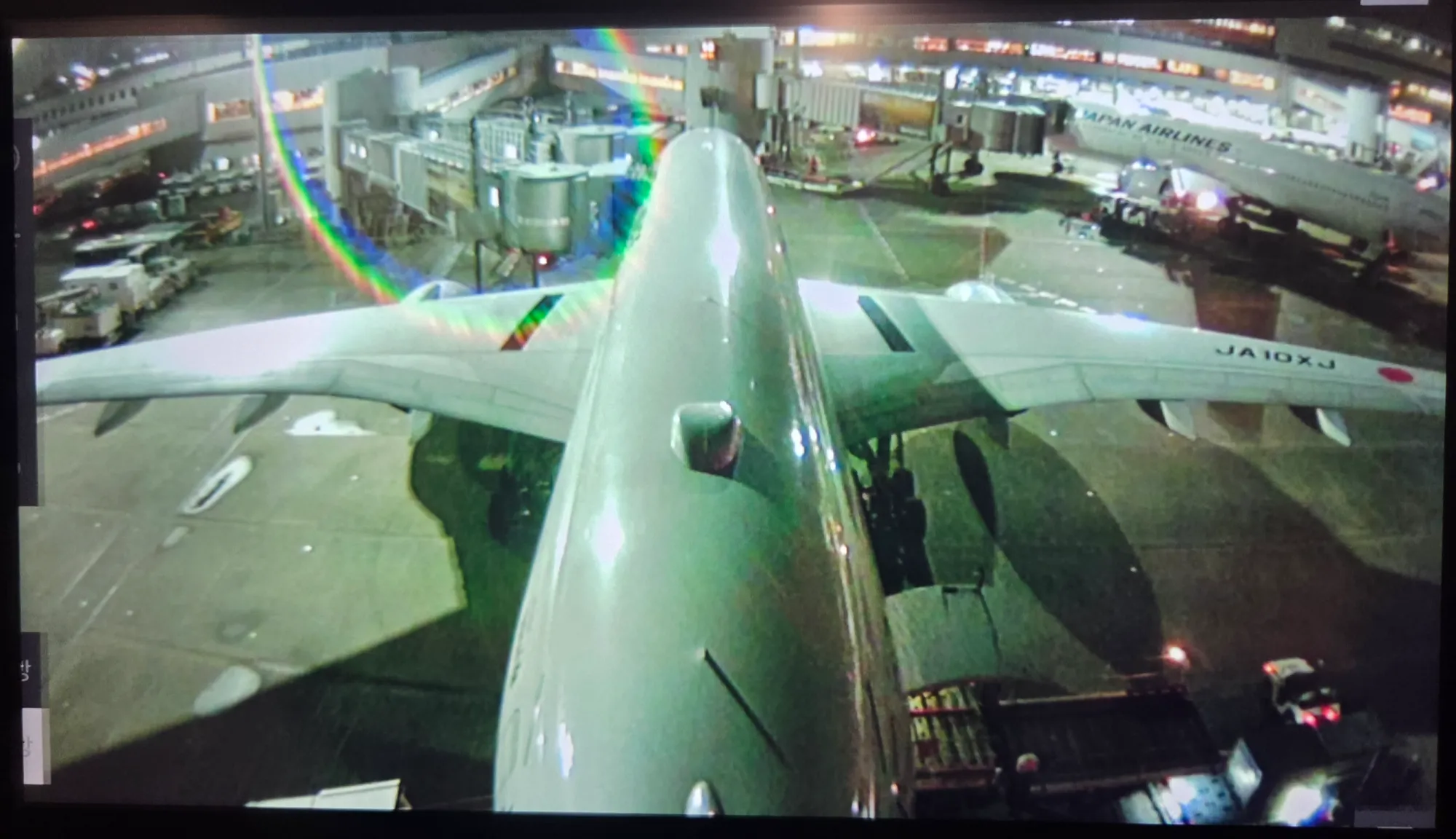
JAL A350-900 IFE Flight Map and Tail Camera
JAL’s domestic A350-900s feature 10-inch IFE screens. Compared to the international system, the content library is much smaller and heavily tailored to local Japanese tastes. However, the interface supports English and Korean, and it features an excellent interactive flight map alongside the A350’s signature exterior tail cameras. Even as a non-Japanese speaker, these features alone made for a solid entertainment experience on a short domestic hop. Note that JAL provides complimentary earphones for the IFE system, even in Economy Class.
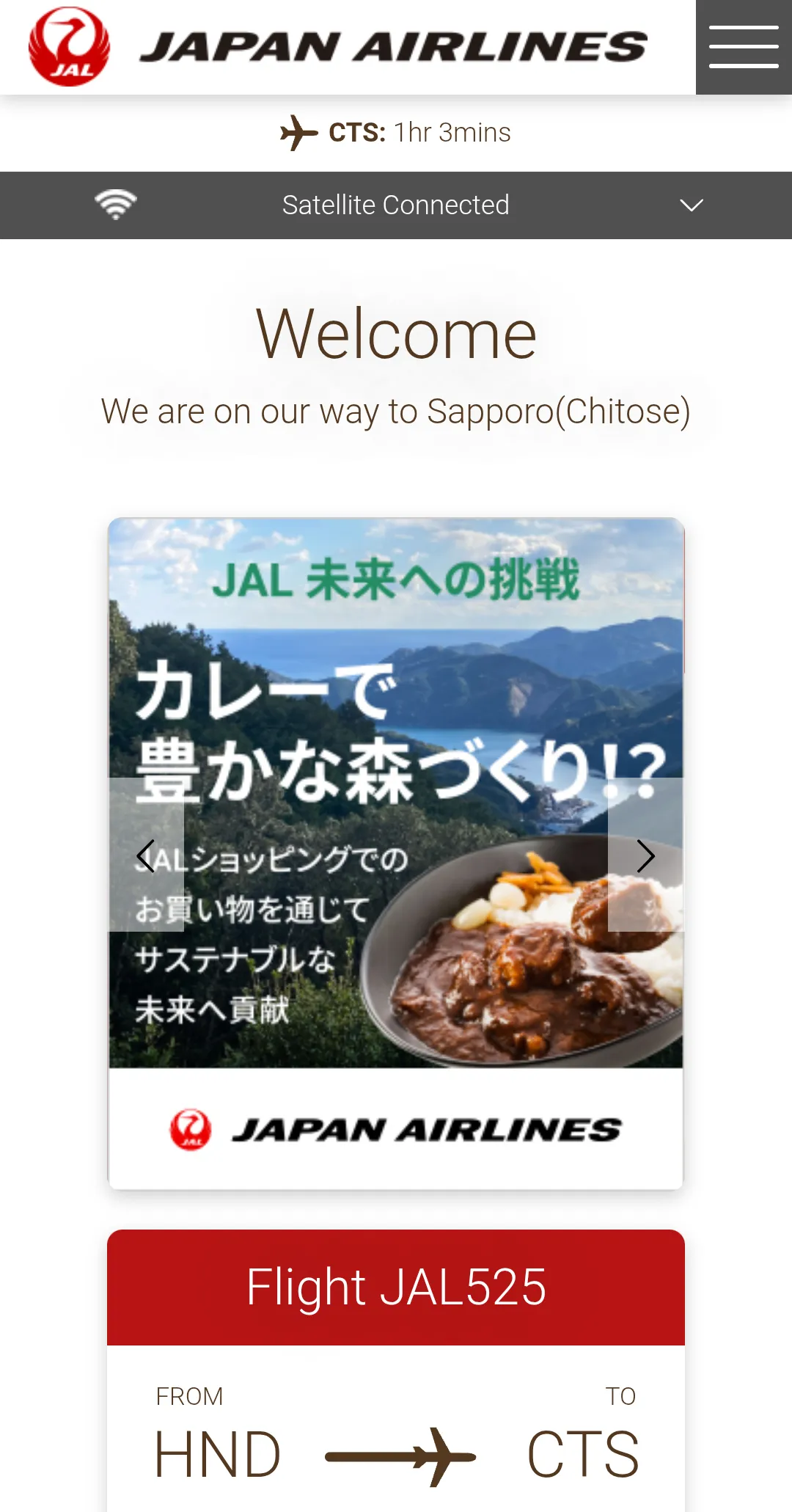
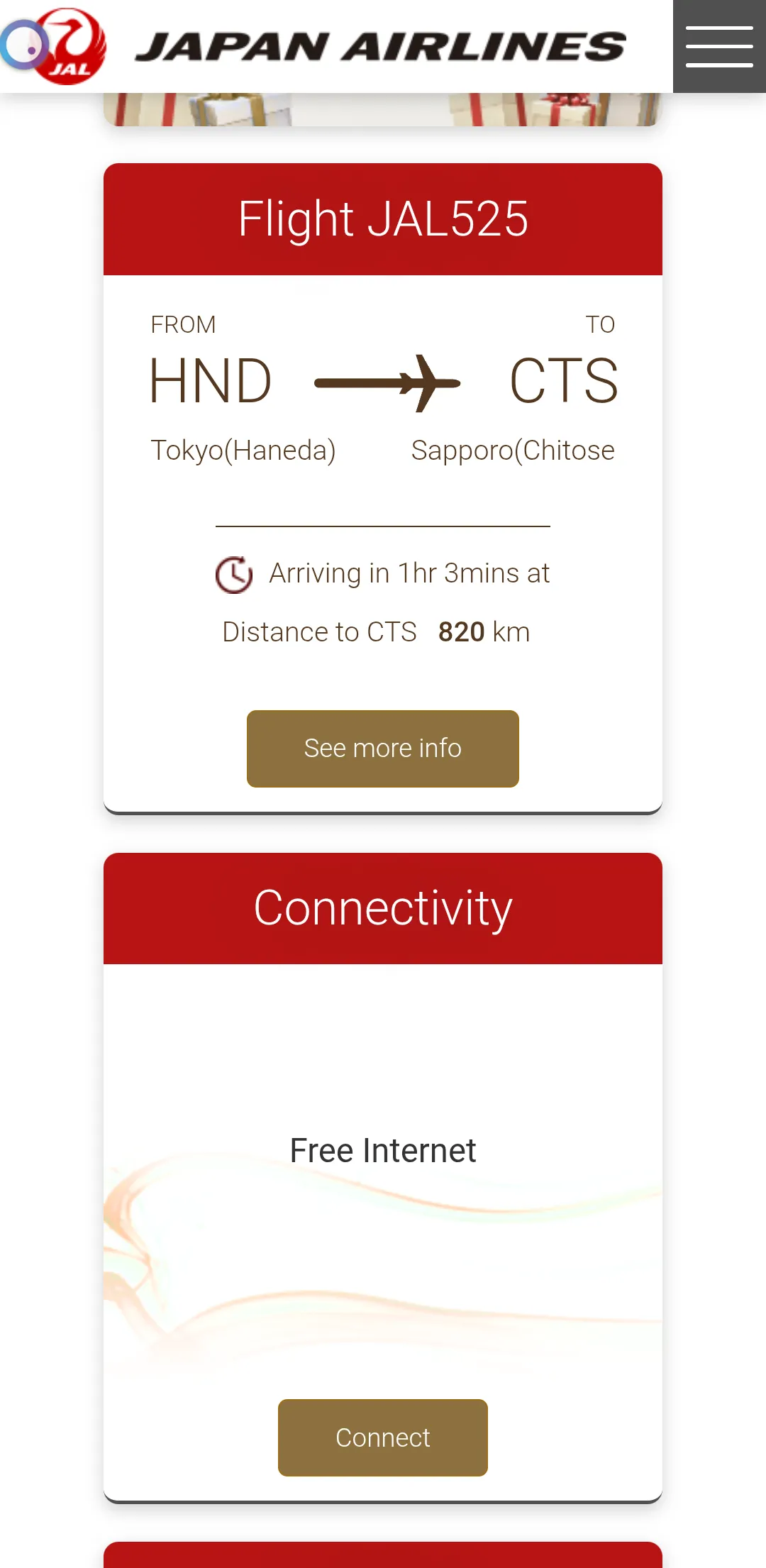

JAL A350-900 In-flight Wi-Fi Portal


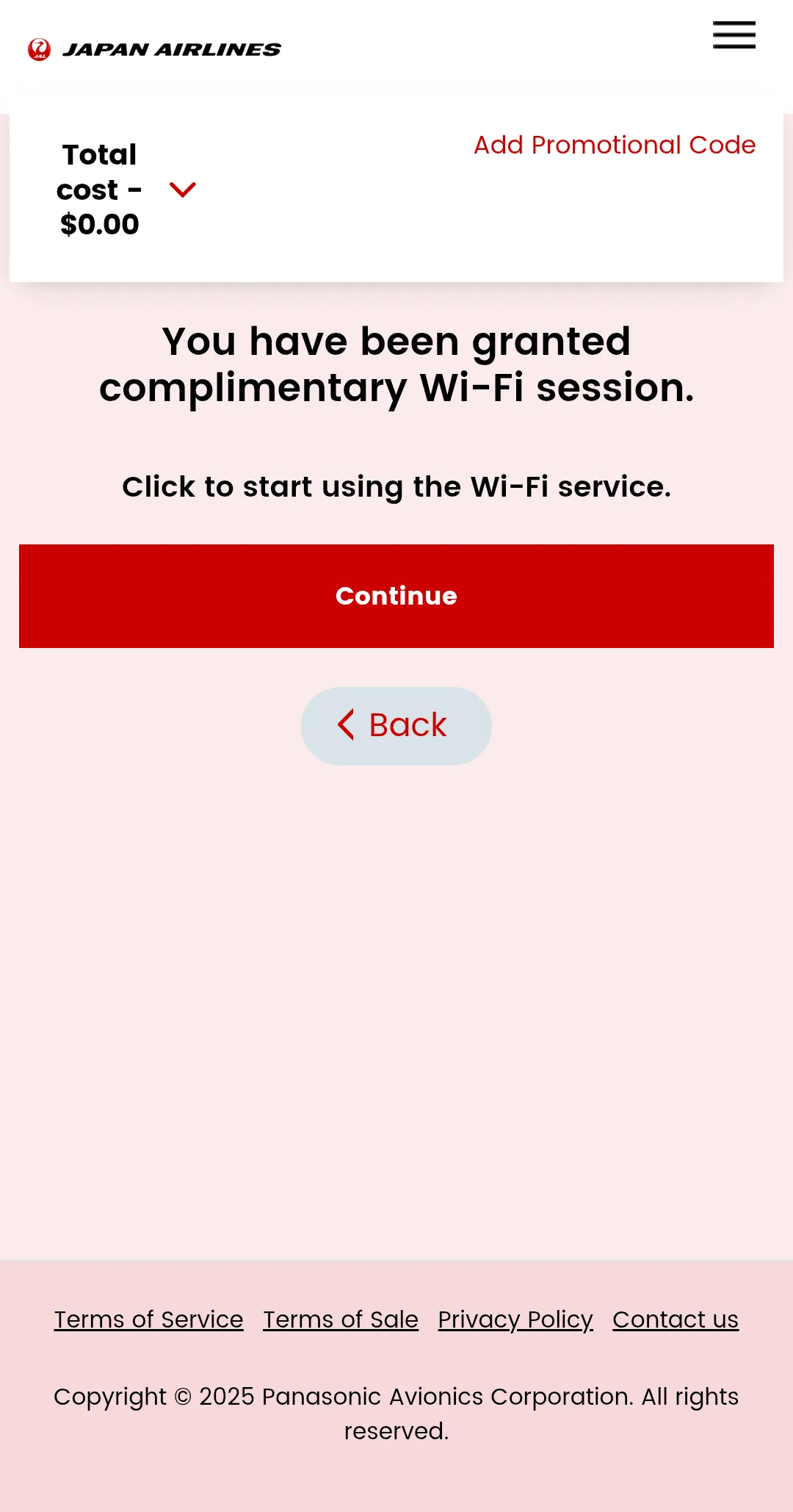
JAL A350-900 Wi-Fi Connection Process
But honestly, the seatback IFE is almost an afterthought because JAL provides free in-flight Wi-Fi on its domestic flights. Unlike international Wi-Fi that only works above 10,000 feet, this domestic system is gate-to-gate. As soon as you flip your phone into airplane mode on the ground, you can connect and stay online until you deplane at your destination. Because the Haneda-Sapporo flight path hugs the Japanese archipelago, the download speeds were quite respectable at around 4 Mbps.
Another impressive touch was watching the cabin crew walk the aisles before takeoff, proactively handing out coloring books and toys to children. Perhaps it was thanks to this, but despite there being quite a few children on board, I didn’t hear a single baby crying or toddler fussing for the entire flight.
11. Landing & Arrival
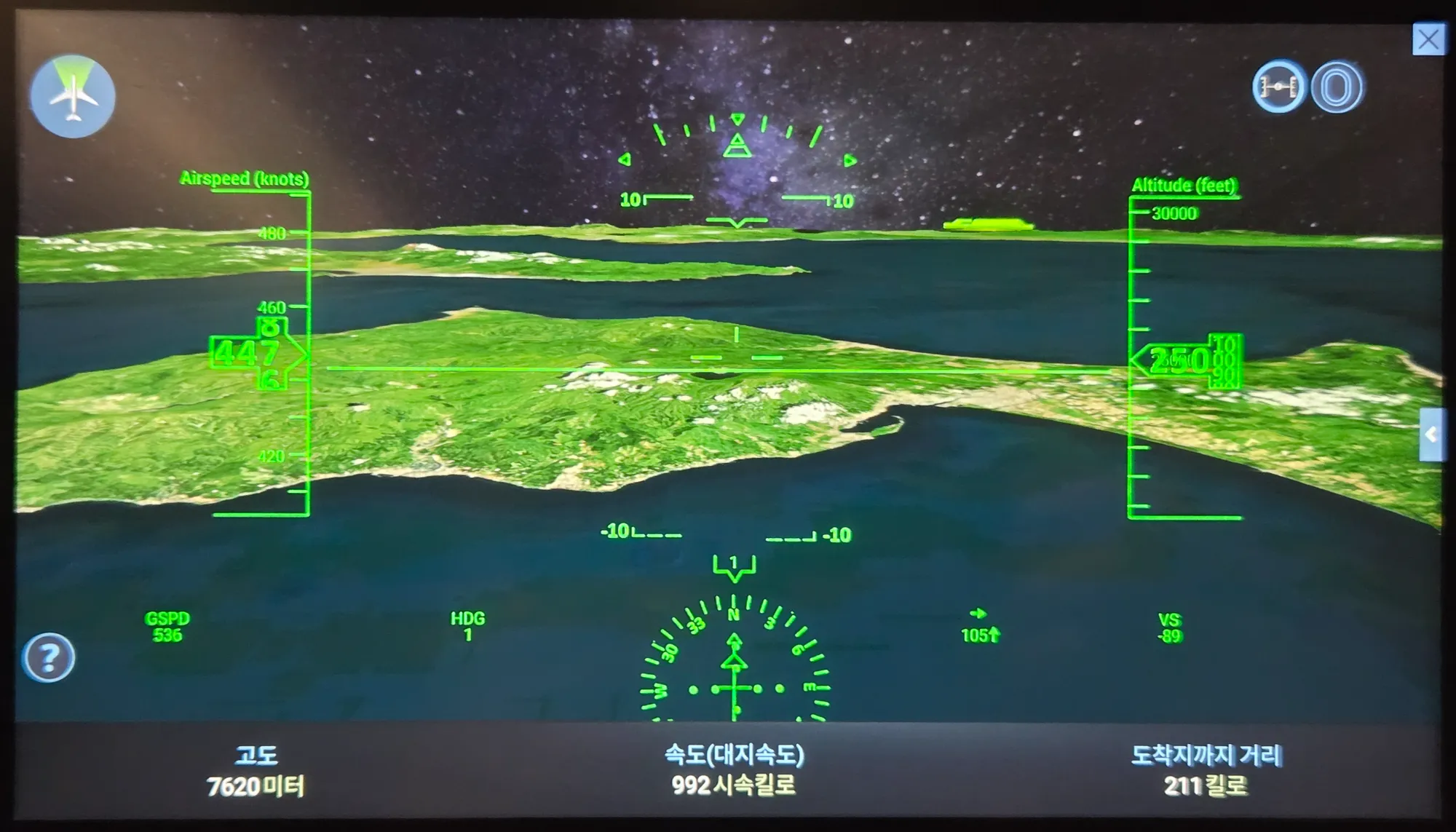
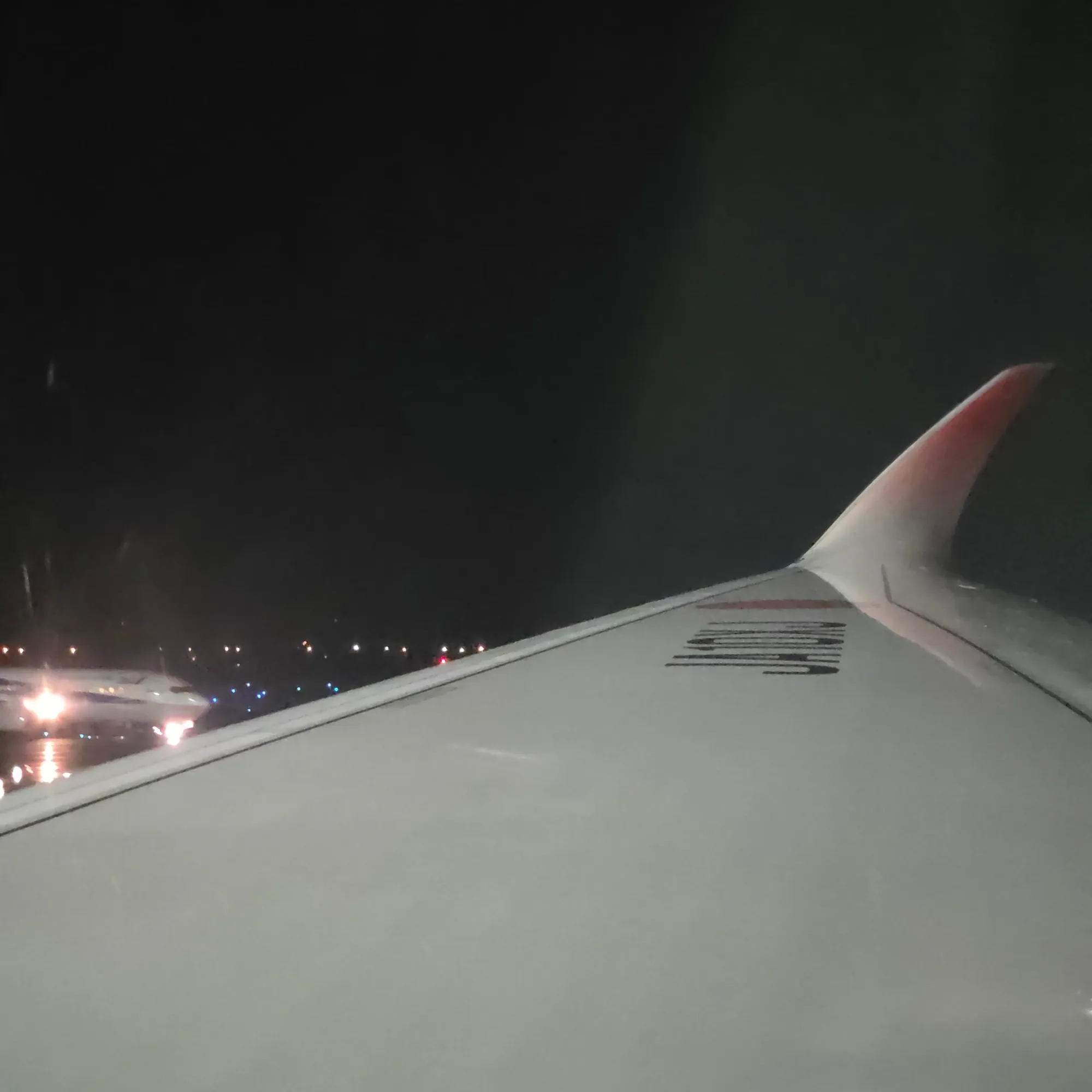
JL525 on Final Approach to Sapporo New Chitose and Post-landing
Despite taking off 35 minutes late, we touched down in Sapporo and arrived at the gate at 7:23 PM—just 7 minutes behind schedule. Yet, between the captain’s PA announcement and the flight attendants profusely apologizing to passengers as they deplaned, the deep-rooted Japanese emphasis on punctuality was vividly apparent.

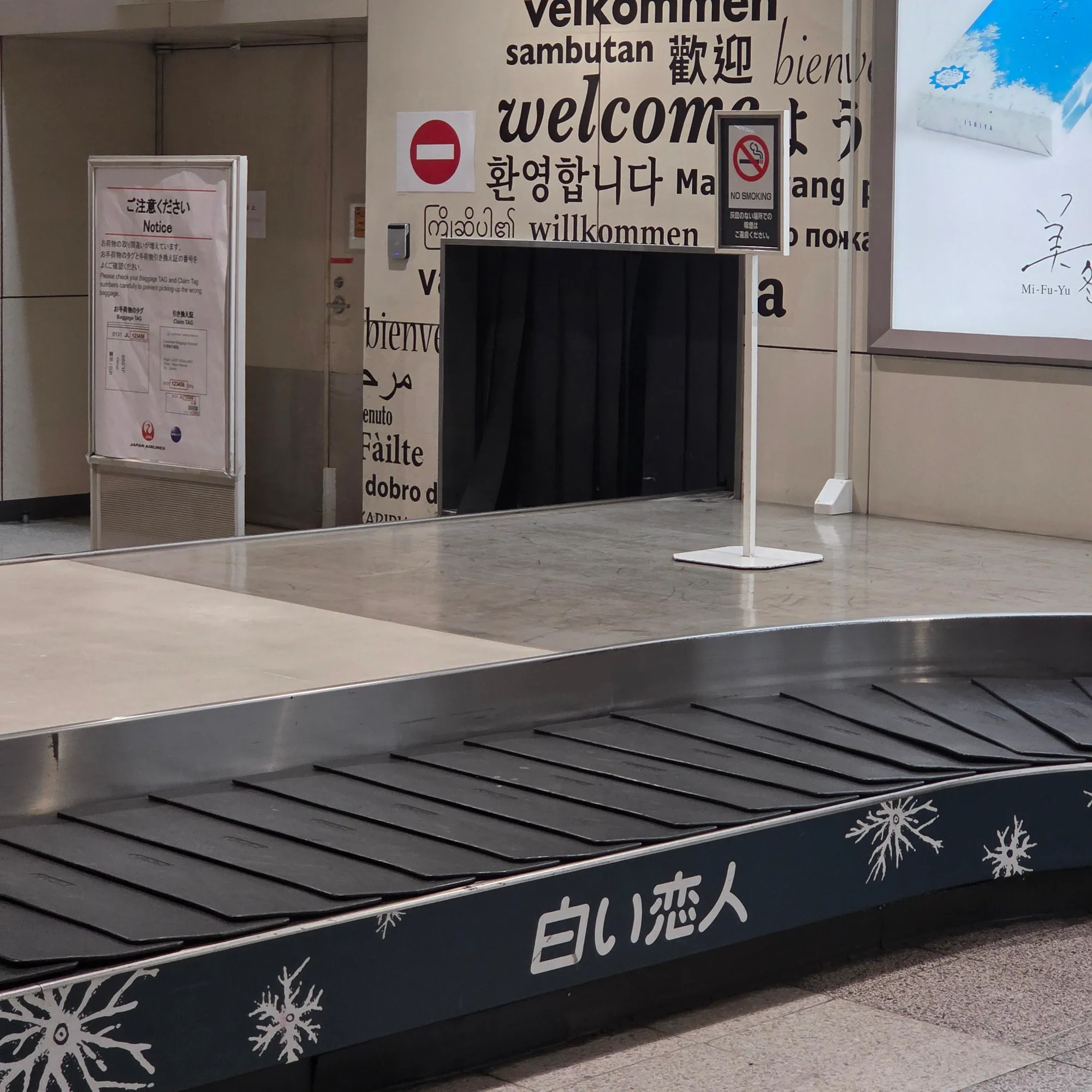
Baggage Claim at Sapporo New Chitose Airport
Checked bags began hitting the carousel about 15 minutes after touchdown. Thanks to my oneworld Sapphire priority tags, my bags were among the first to appear. Since JAL includes free checked baggage on domestic tickets, a surprising number of passengers were waiting around the belt, making the priority handling an incredibly valuable perk.

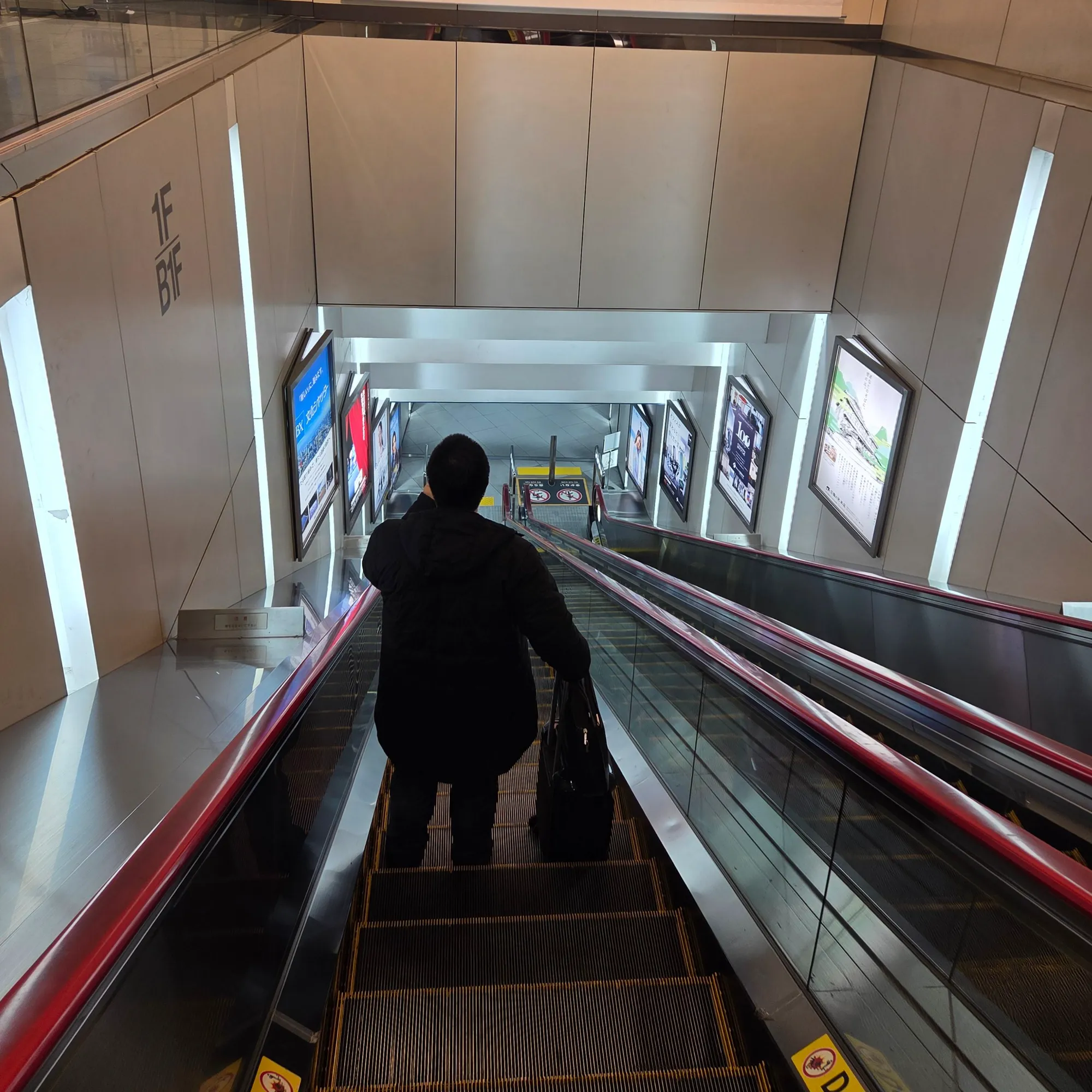
Way to the JR Station at Sapporo New Chitose Airport
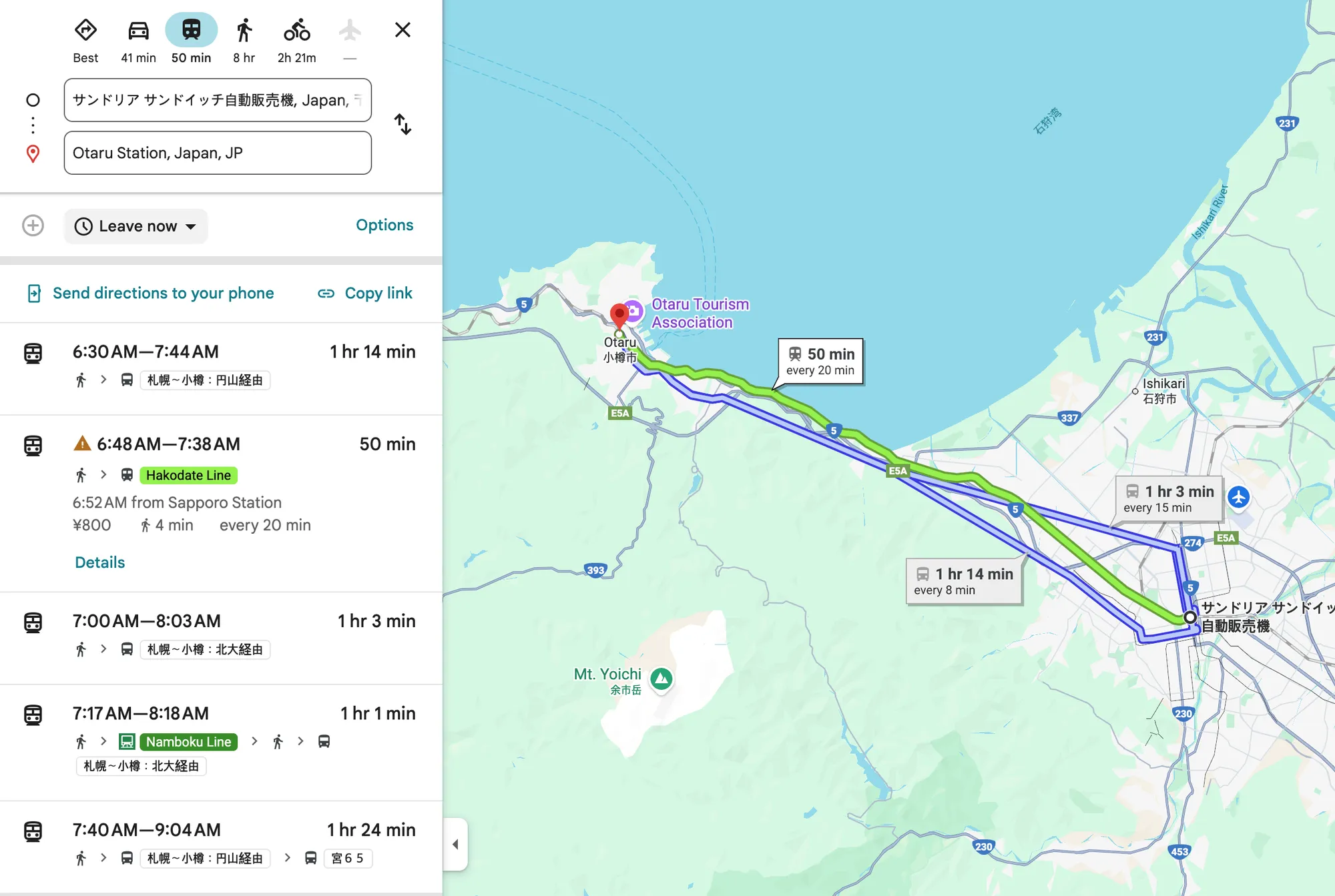
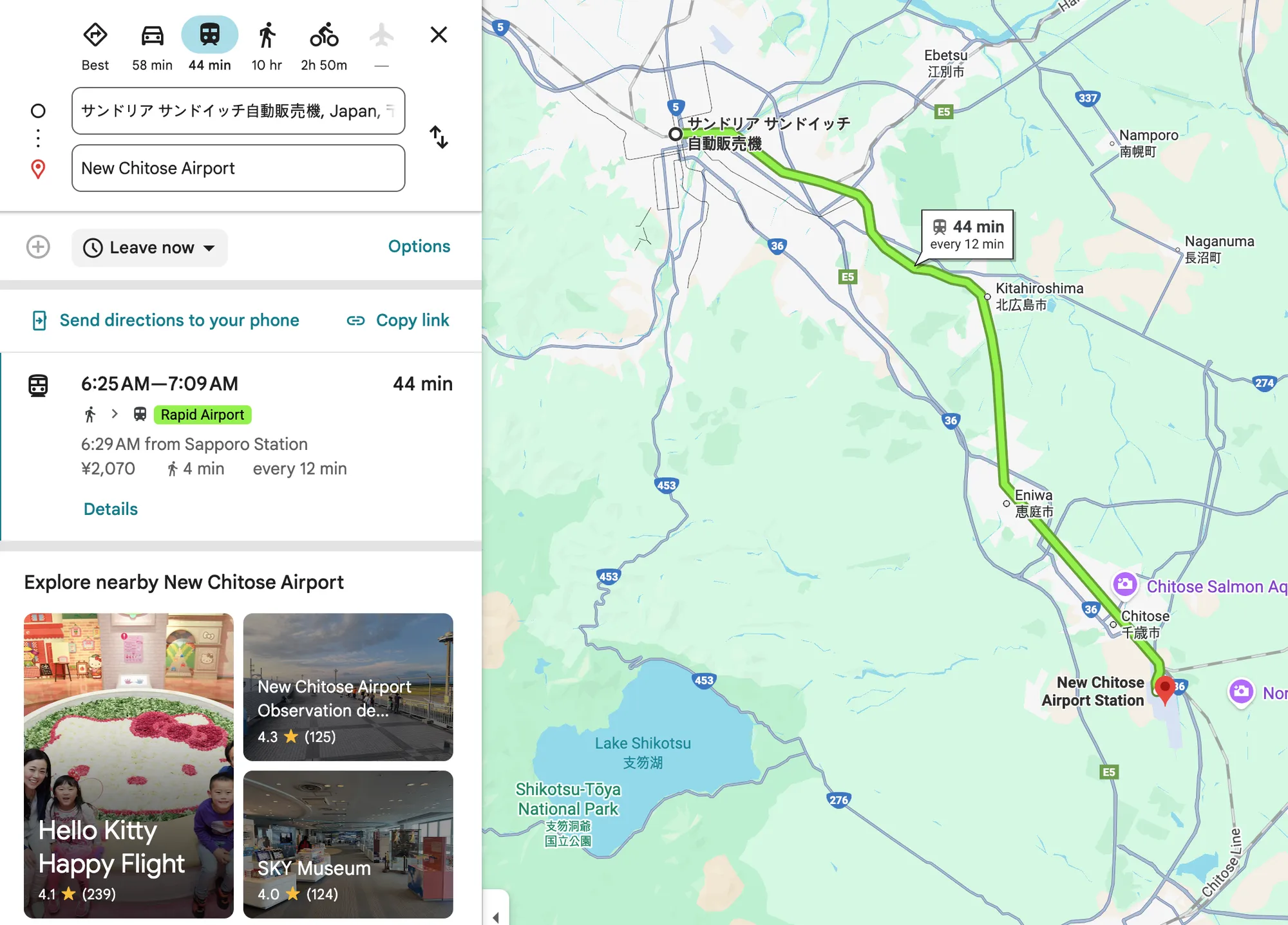
JR Travel Times from Sapporo New Chitose to Sapporo and Otaru Stations
The most convenient way to reach downtown Sapporo or Otaru from the airport is by train. The New Chitose Airport JR Station is located beneath the domestic terminal, so if you arrive via the international terminal, it’s about a 10-minute walk indoors. The journey to Sapporo Station takes 45 minutes (1,230 JPY for an unreserved seat, plus 840 JPY for a reserved seat). To Otaru Station, it takes about 75 minutes (2,040 JPY unreserved, plus 840 JPY reserved). If your hotel isn’t within walking distance of Sapporo Station, taking the airport limousine bus might be a more convenient alternative.
12. Final Thoughts & Conclusion
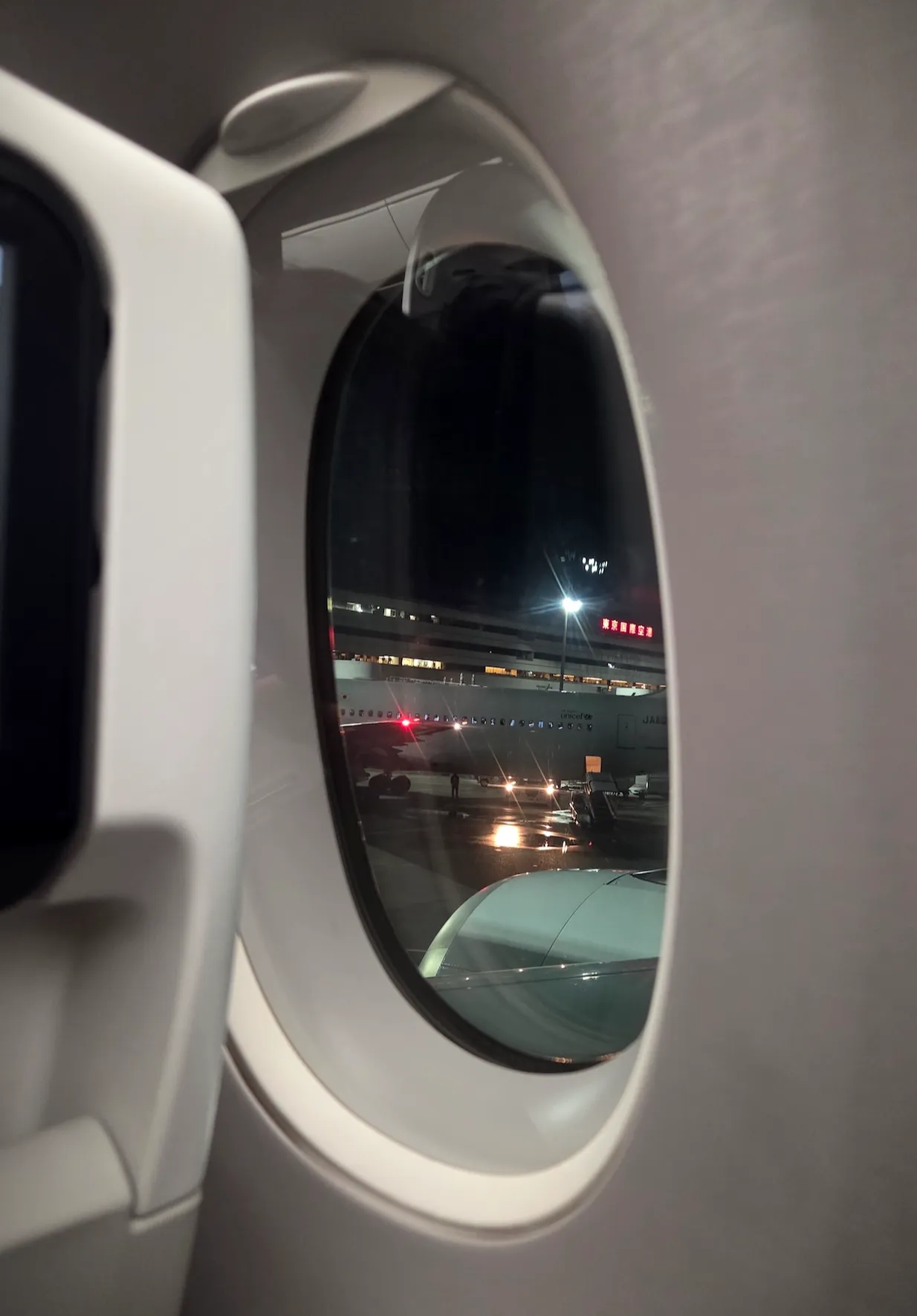
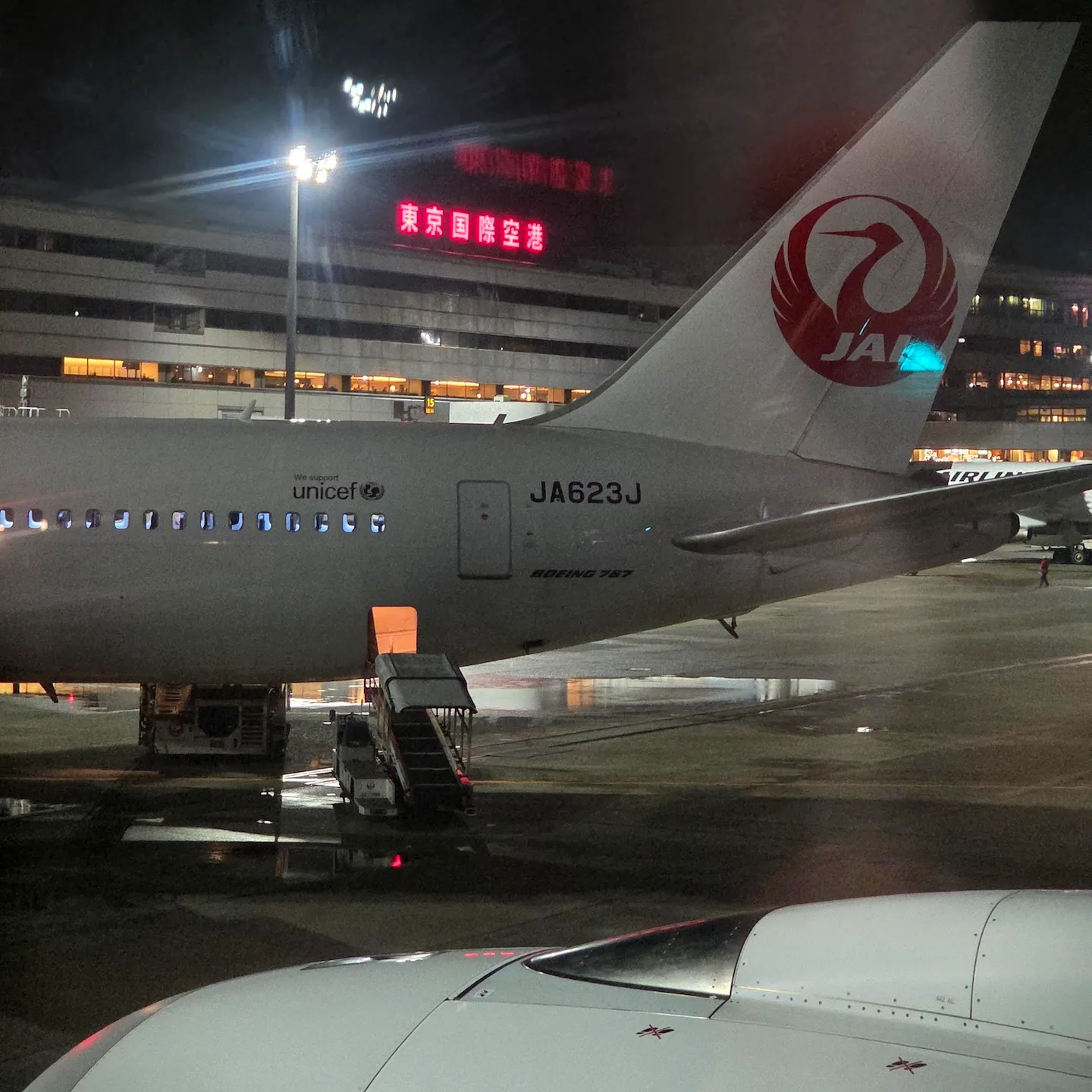
View of Tokyo Haneda Terminal 1 from JL512
Many global airlines treat domestic routes as purely utilitarian, stripping back services to aggressively cut costs and compete with low-cost carriers or high-speed rail. JAL is no exception—their domestic Economy Class is objectively a step down from their world-renowned international Economy product. However, when you tally up the generous 31-inch pitch, seatback screens with interactive maps and tail cameras, free earphones, gate-to-gate complimentary Wi-Fi, and a complimentary drink and snack service, this remains an exceptionally high-quality domestic experience.
The Editor Behind This Journey: Heejung

Have any questions or similar experiences? Please feel free to share them below.
Share this story to inspire another journey.
More Journeys to Explore
🗓️ Jan 2026 Stay | 🌏 Boston, MA, USA | 🛏️ Luxury Suite
6/10 (🌕🌕🌕🌑🌑) The central location in downtown Boston was great, but considering the Ritz-Carlton name and the $500+ price tag, the overall satisfaction was mixed. The spacious suite and in-room dining were decent, but the outdated room, paid facilities, and lack of service details were disappointing.
🗓️ Mar 2026 Stay | 🌏 Seoul, South Korea | 🛏️ Standard Twin
7/10 (🌕🌕🌕🌗🌑) Located right in front of Seodaemun Station with great access to Gwanghwamun, Jongno, and Mapo, it was a decent business hotel with clean and practical rooms. The breakfast and service were standard, but the small rooms, lackluster facilities, parking issues, and some room details were limitations.
🗓️ Feb 2026 Flight | 💺 Business Smartium | ✈️ A380-800
7/10 (🌕🌕🌕🌗🌑) Thanks to the A380's signature spaciousness, full-flat Business Smartium seats, and decent food and beverage offerings, it was a comfortable journey. However, the age of the seats and overall service was noticeable, and the fine details fell short of its past reputation.
🗓️ Jan 2026 Flight | 💺 Delta Main Basic | ✈️ A220-100
7/10 (🌕🌕🌕🌗🌑) With wide seats, a personal monitor, free Wi-Fi, and two beverage services, it was a quite satisfying economy flight for a U.S. domestic route. The seat selection restriction on the Basic fare was a bummer, but I could feel why Delta is considered a premium airline.