
Table of Contents
- Overall Rating: 7/10 (🌕🌕🌕🌗🌑)
- Summary:
- A solid business class that still has some catching up to do on the global stage.
- Route:
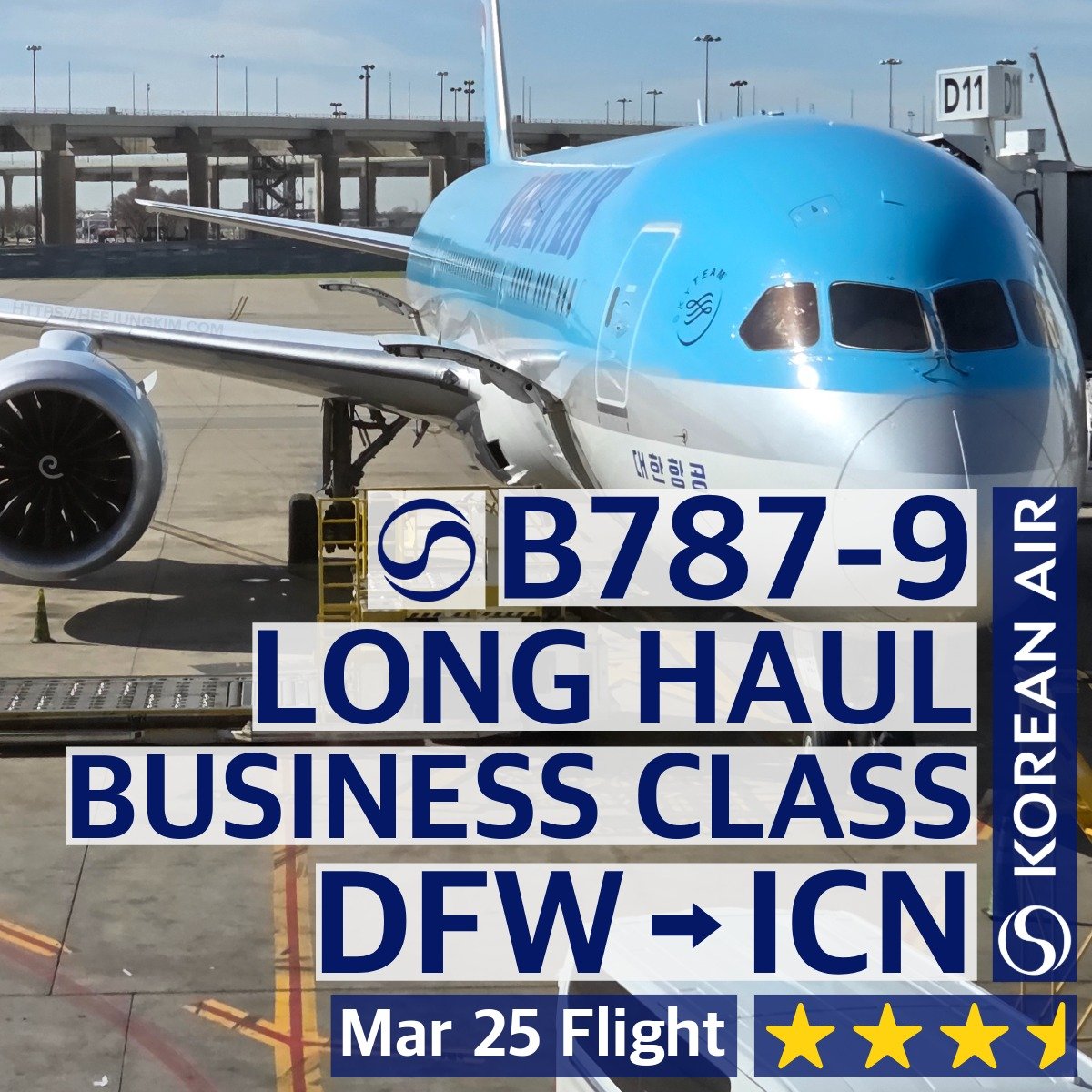
- DFW (Dallas Fort Worth International Airport, U.S.) → ICN (Seoul Incheon International Airport), KE32, 12:25 → 17:35 (+1), Flight time 15h 10m
- Aircraft: Boeing 787-9, HL8391 (Dec 2023 delivered, 4-year-old)
- Ticket price: 75,000 Alaska Airlines points + US$18.10 in taxes and fees
- Seat: 8J, Prestige Class, window seat
- Check-in & Baggage Allowance
- Departure Lounge
- Boarding Process
- Cabin & Seat Detail
- In-flight Service
- Amenities & Lavatory
- Food & Beverage
- In-flight Entertainment & Wi-Fi
- Landing & Immigration
- What Could Be Better
- Final Thoughts & Conclusion
7. Check-in & Baggage Allowance
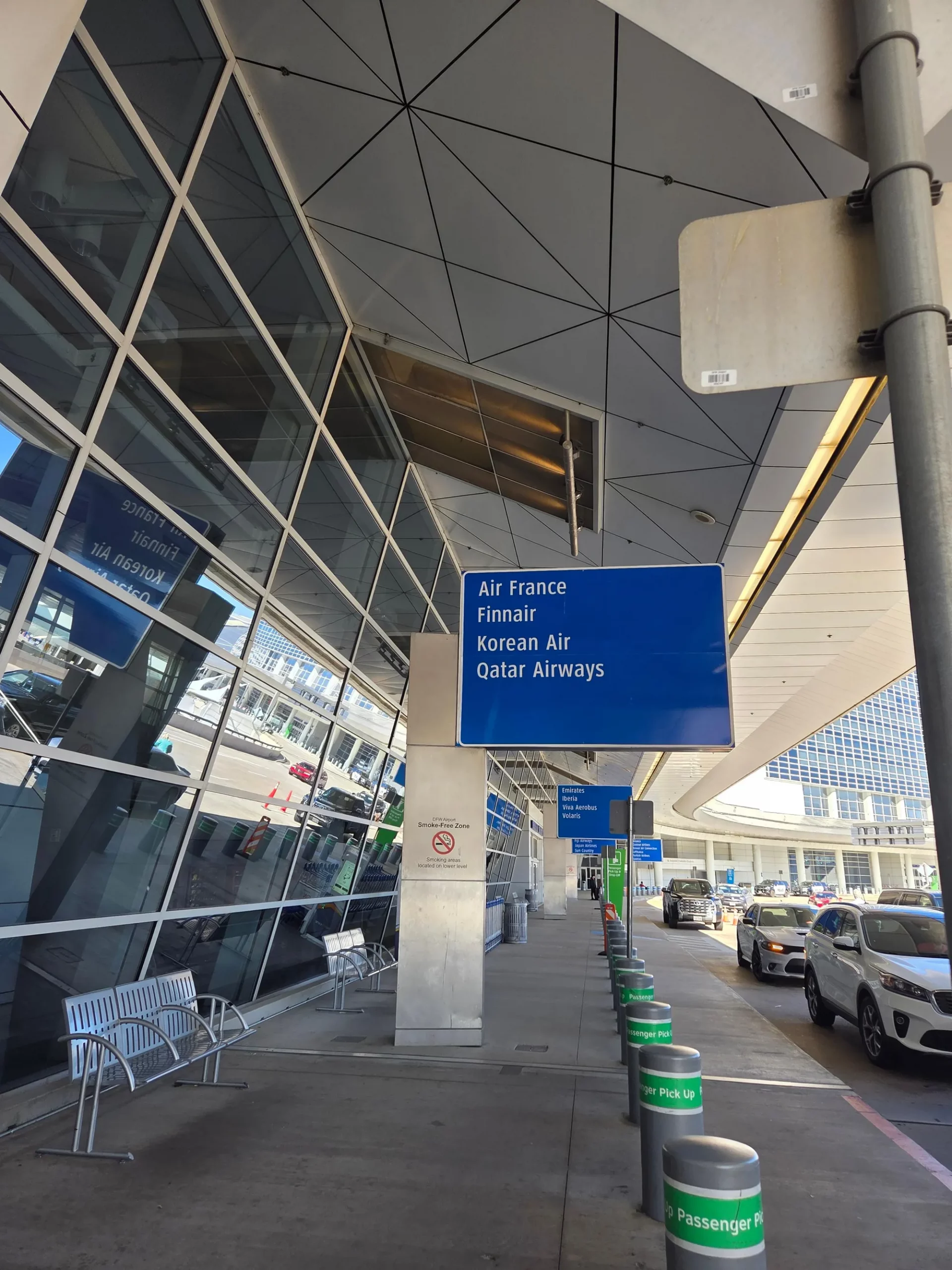
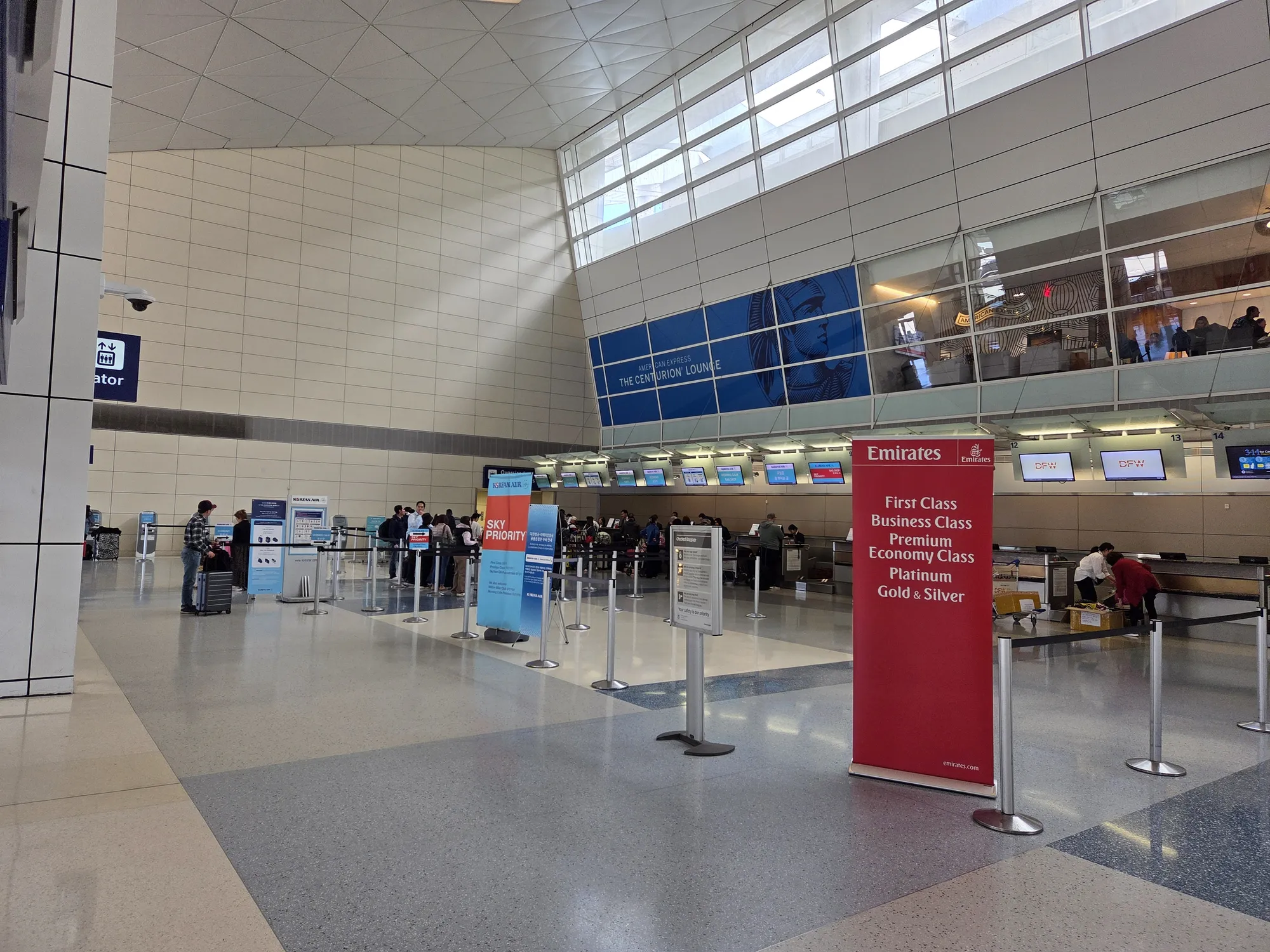
Korean Air check-in counters at Dallas Fort Worth International Airport 1
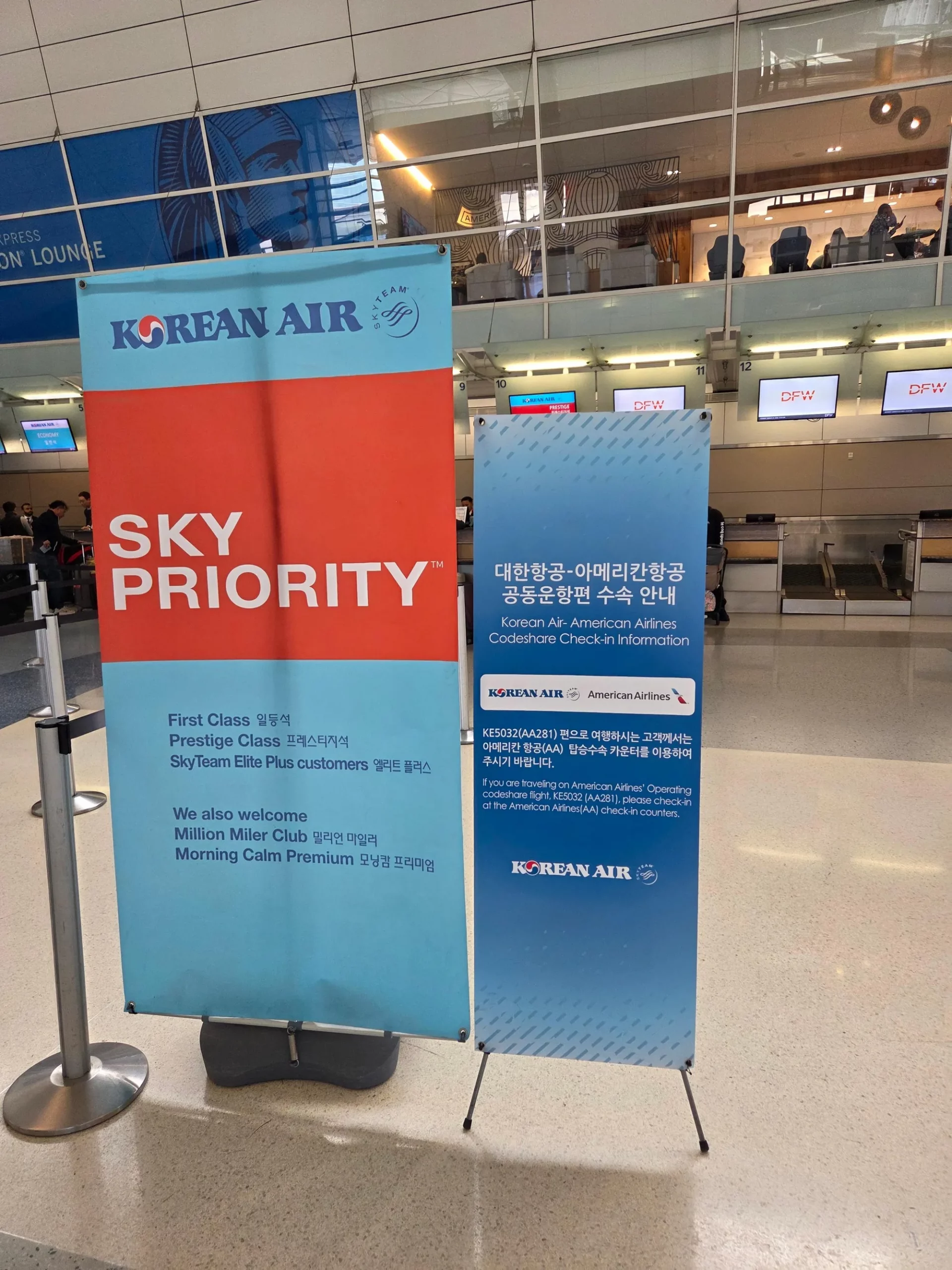
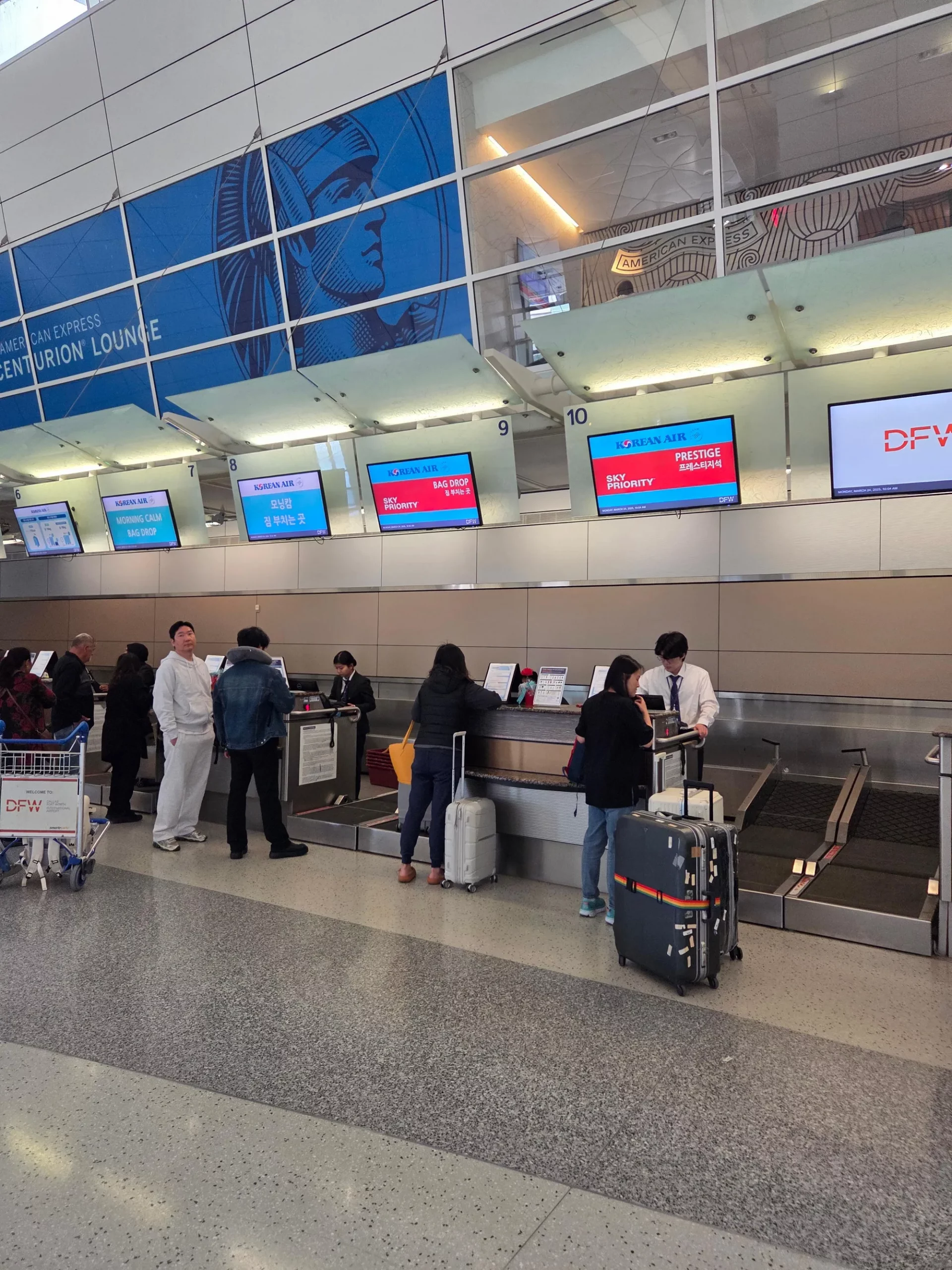
Korean Air check-in counters at Dallas Fort Worth International Airport 2
Check-in for Korean Air flight KE32 takes place at counters 1 through 10 in Terminal D at Dallas Fort Worth International Airport. Counters 1 through 6 are for Economy Class passengers, counters 7 and 8 are for Morning Calm members, and counters 9 and 10 are reserved for Prestige Class passengers. On Korean Air’s U.S. routes, Prestige Class passengers can check two bags weighing up to 32 kg each for free.
8. Departure Lounge
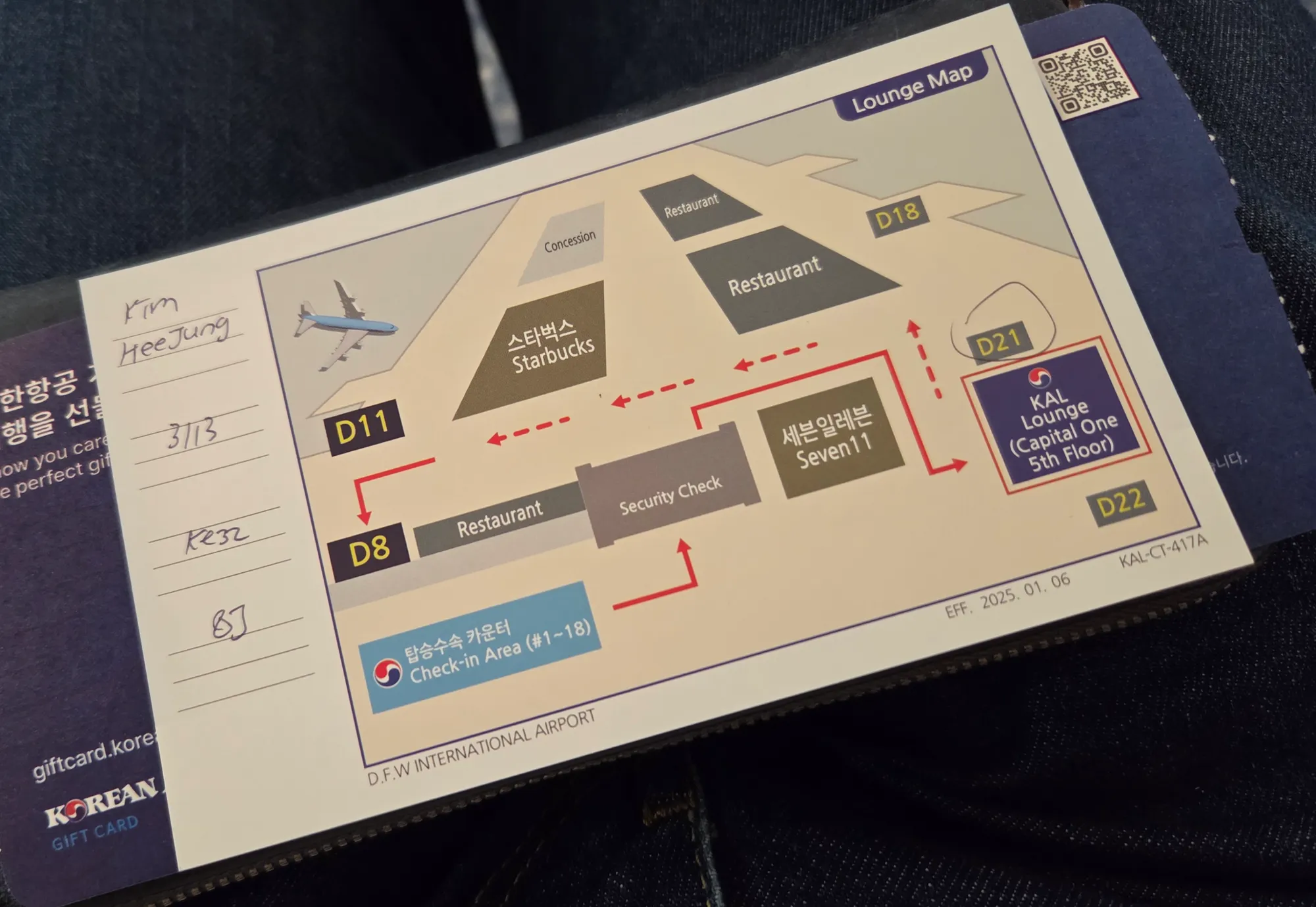
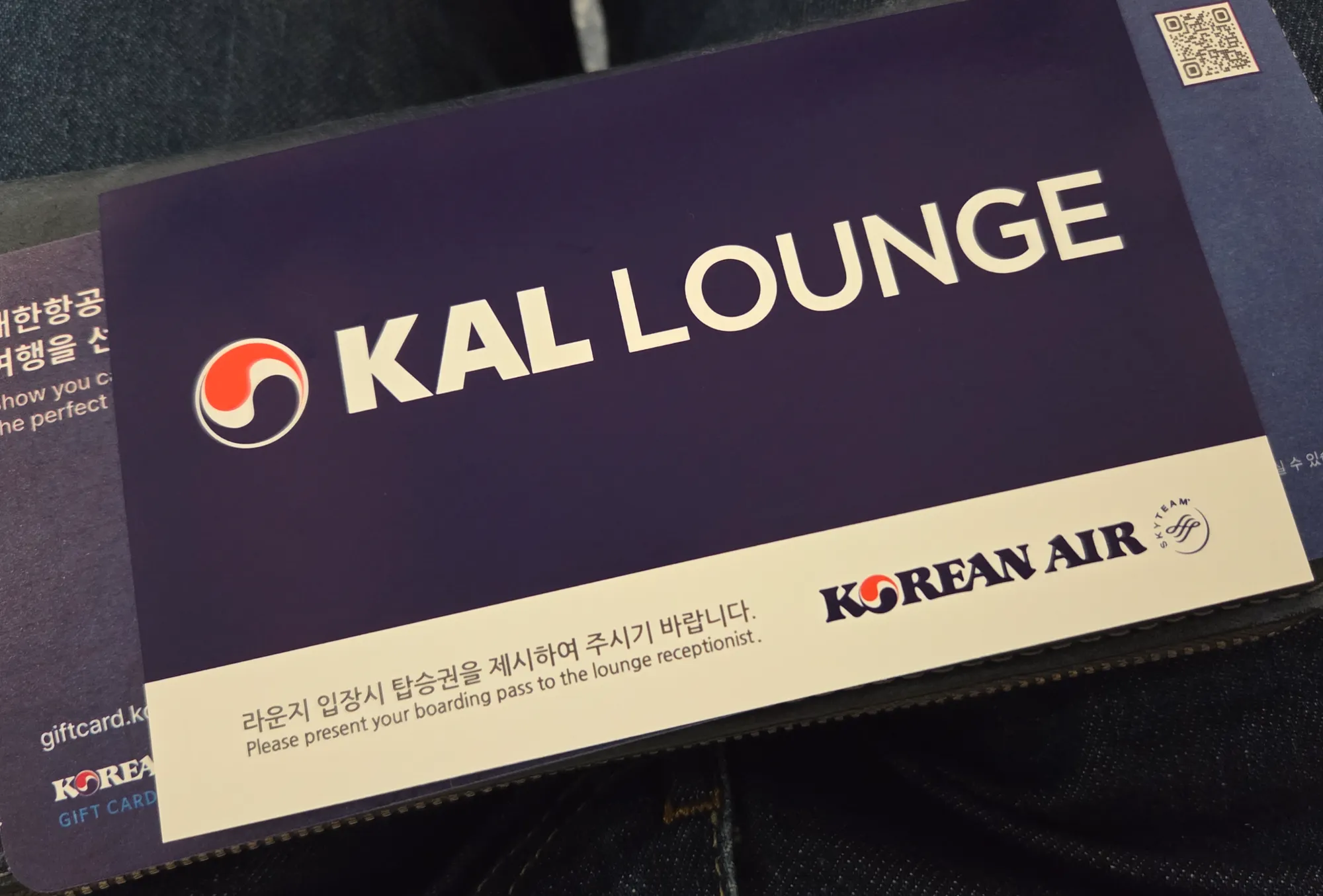
Korean Air business class lounge at Dallas Fort Worth International Airport
Korean Air uses the Capital One Lounge for its Prestige Class passengers at Dallas Fort Worth. The lounge was the biggest disappointment of this trip. It’s one of the busiest lounges at DFW, especially in the morning. Capital One runs it and offers complimentary access to eligible premium cardholders, so it tends to stay busy. Other airlines, including Emirates, also use it as a contract lounge for their business class passengers around the time Korean Air departs. With so many passengers waiting for flights around the same time, seats can take a while to open up.
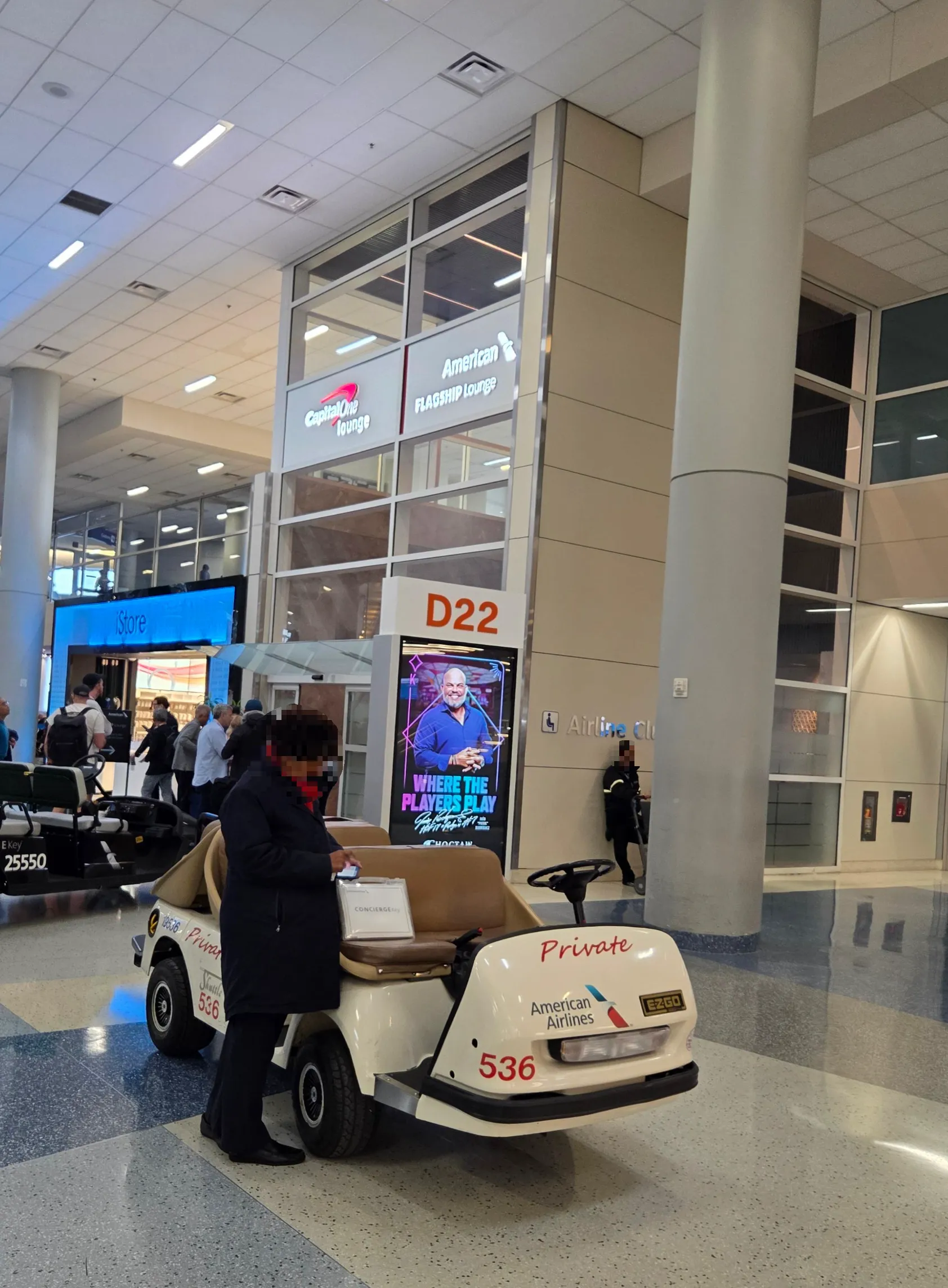
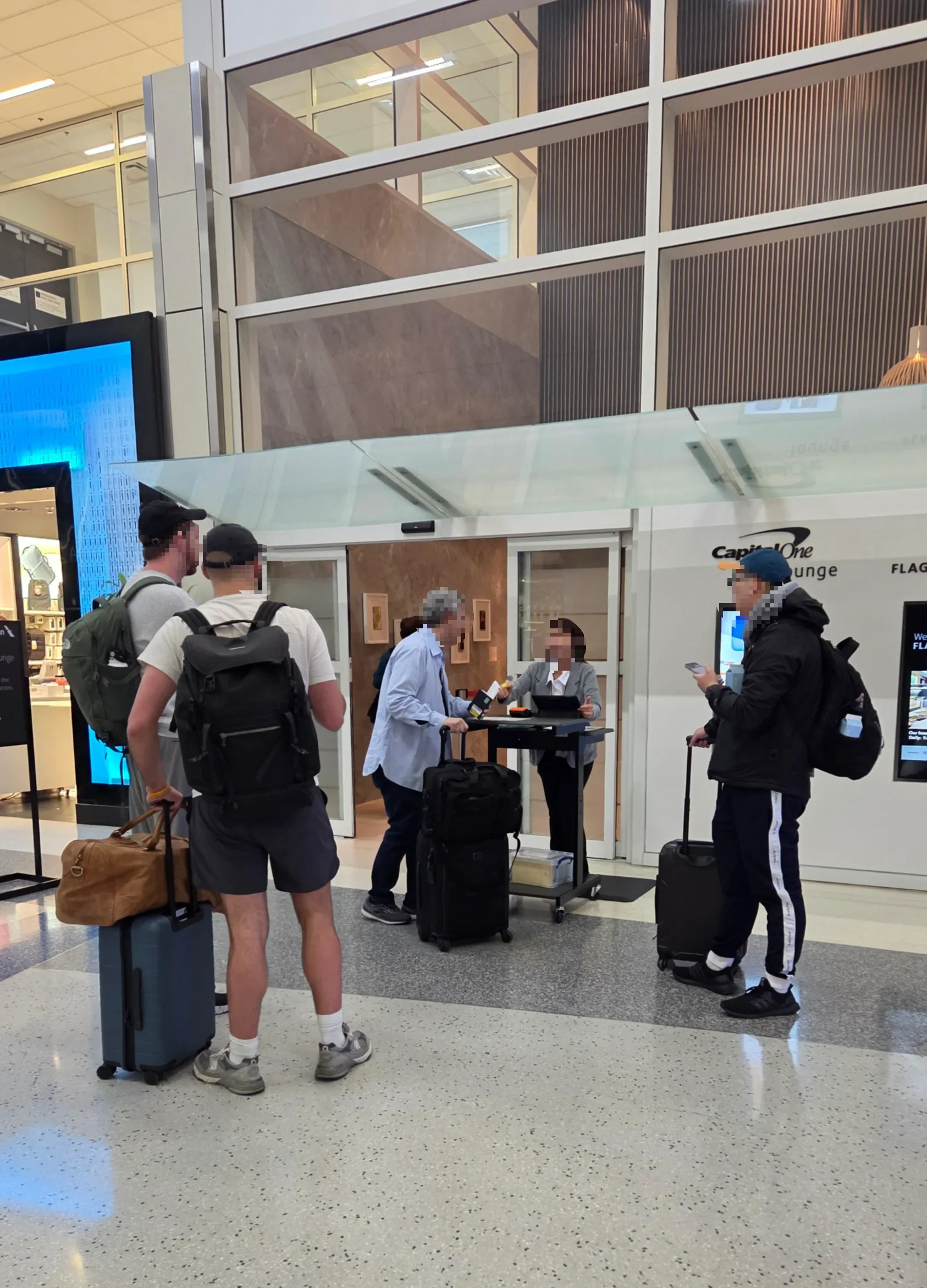

Capital One Lounge and Bar Louie, the alternative dining option at Dallas Fort Worth International Airport
The Capital One Lounge is near Gate D22. When it’s full, you have to give the attendant at the entrance your phone number to join the waitlist. I was told the wait would be 30 to 40 minutes, and it took a little over 30 minutes to get in. The staff also told me that when the lounge was full, passengers with access through a Prestige Class ticket could opt for a complimentary meal at Bar Louie, just outside the lounge, instead.
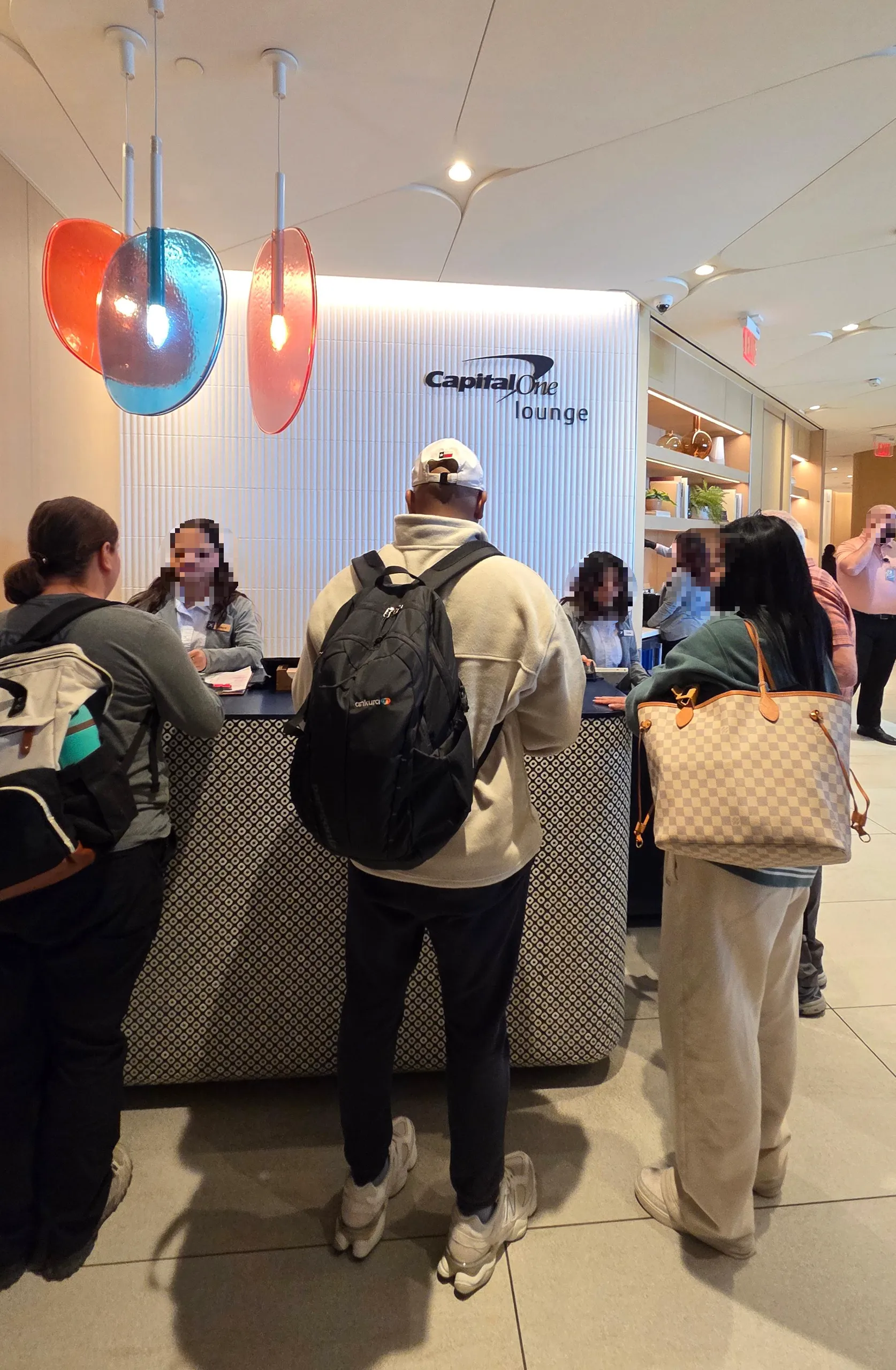
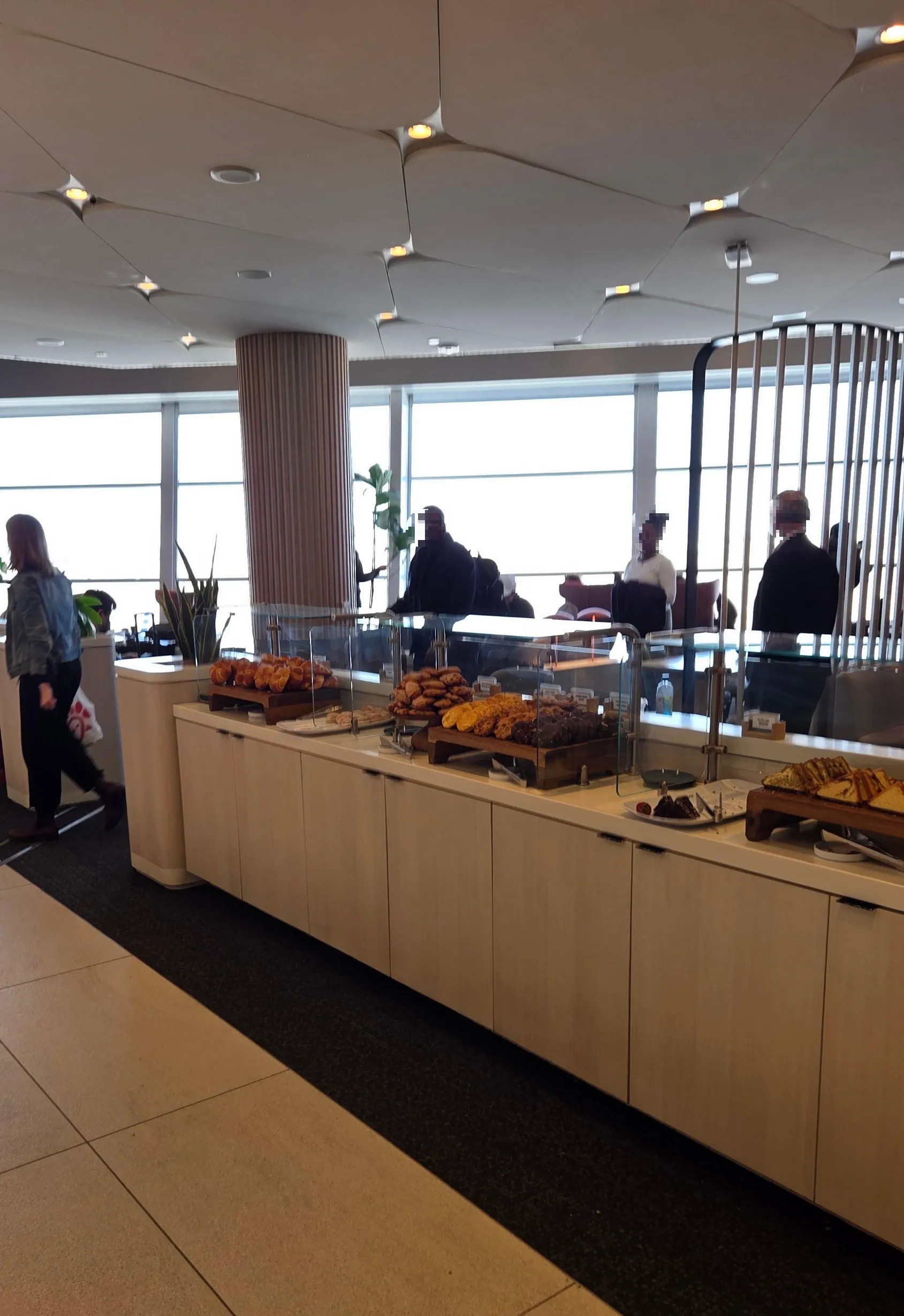
Capital One Lounge at Dallas Fort Worth International Airport
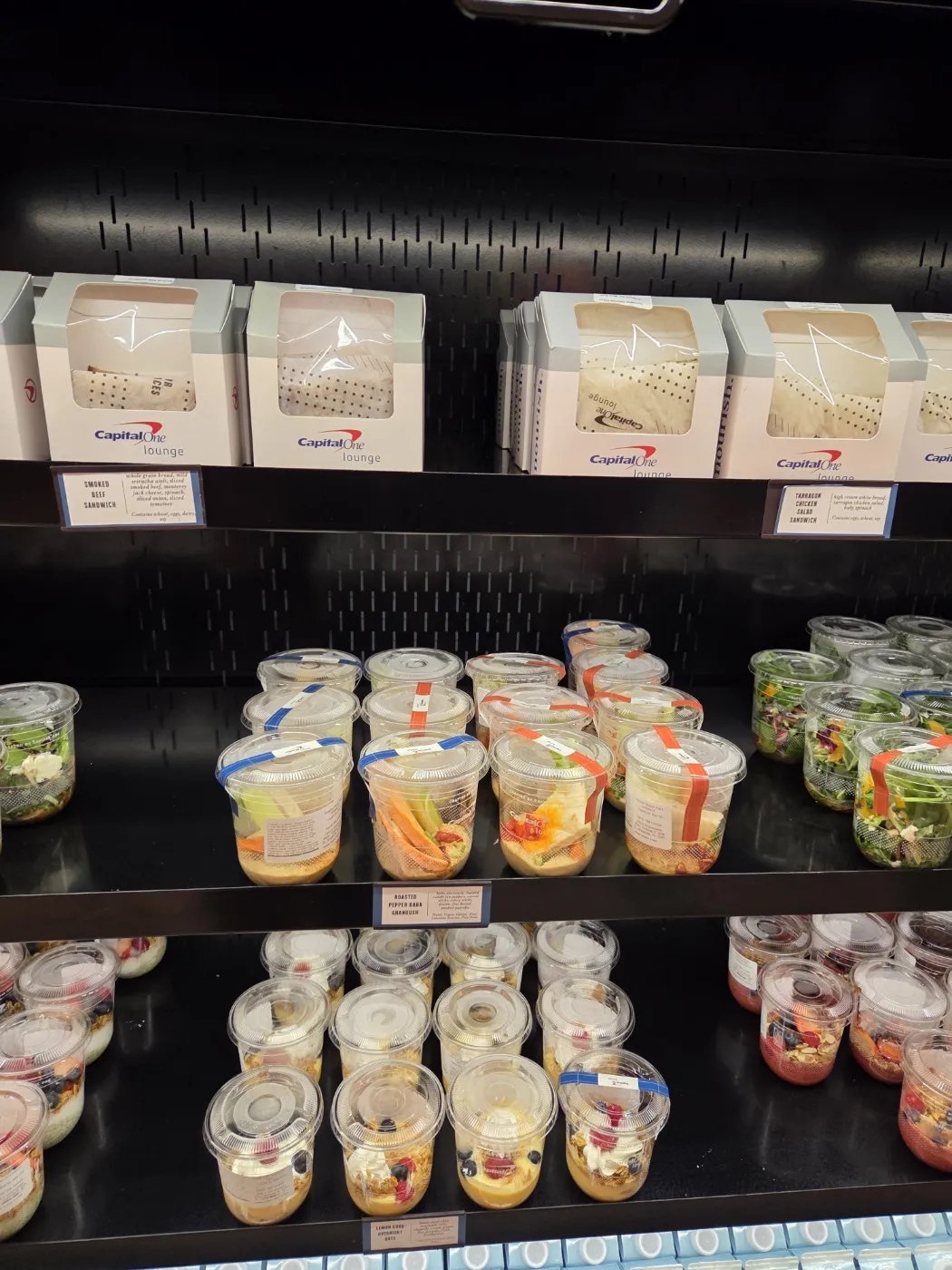
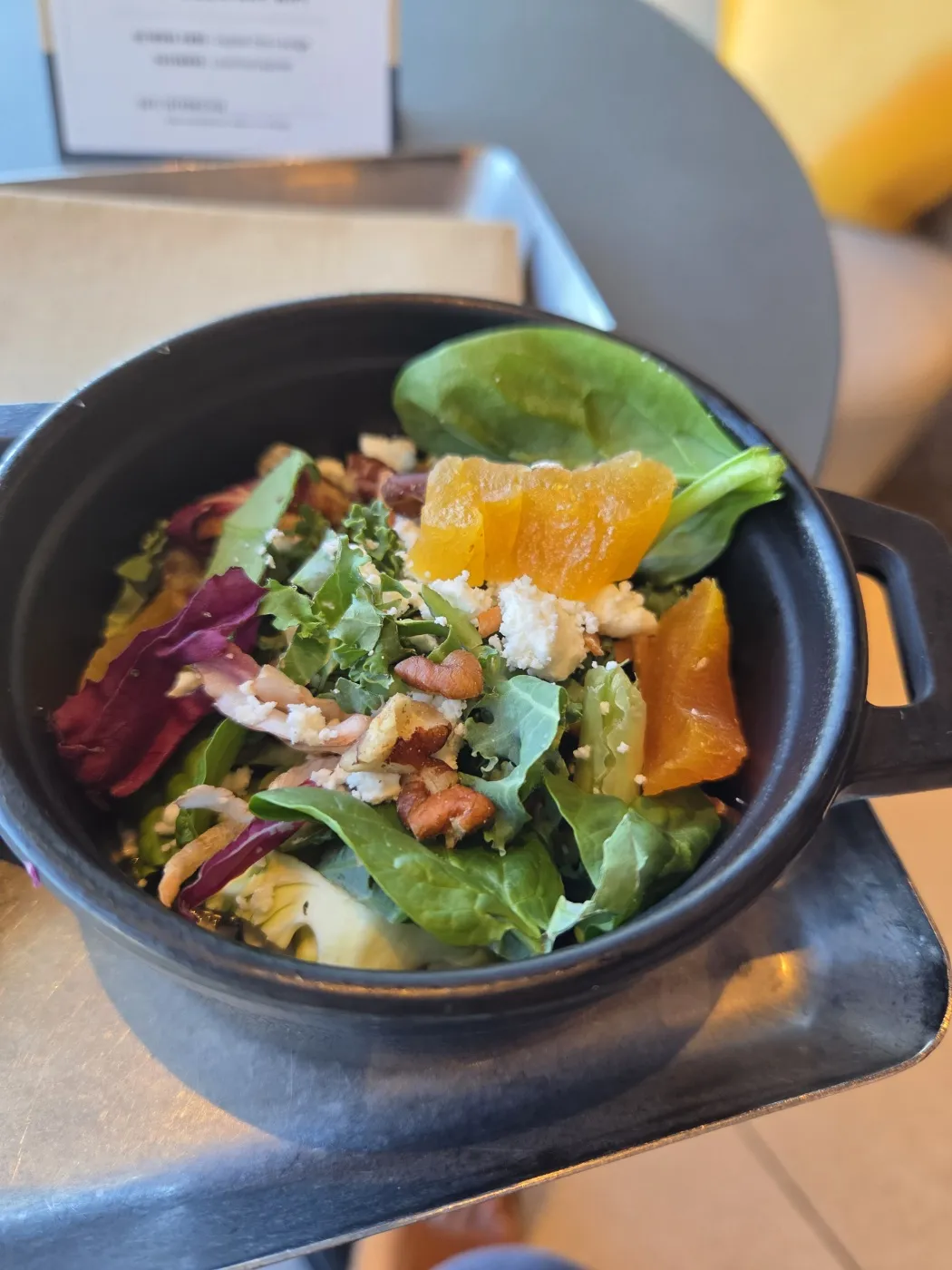
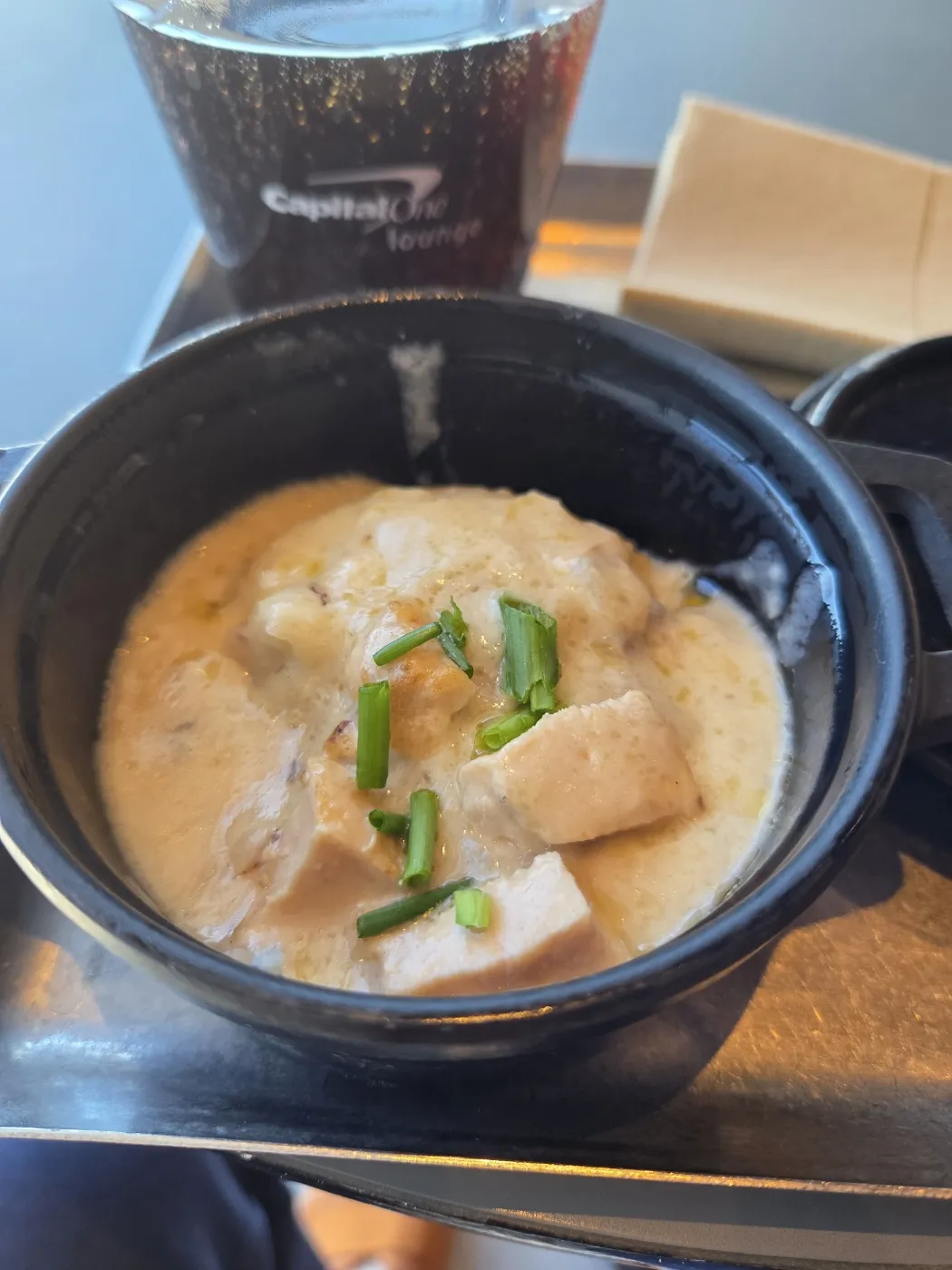
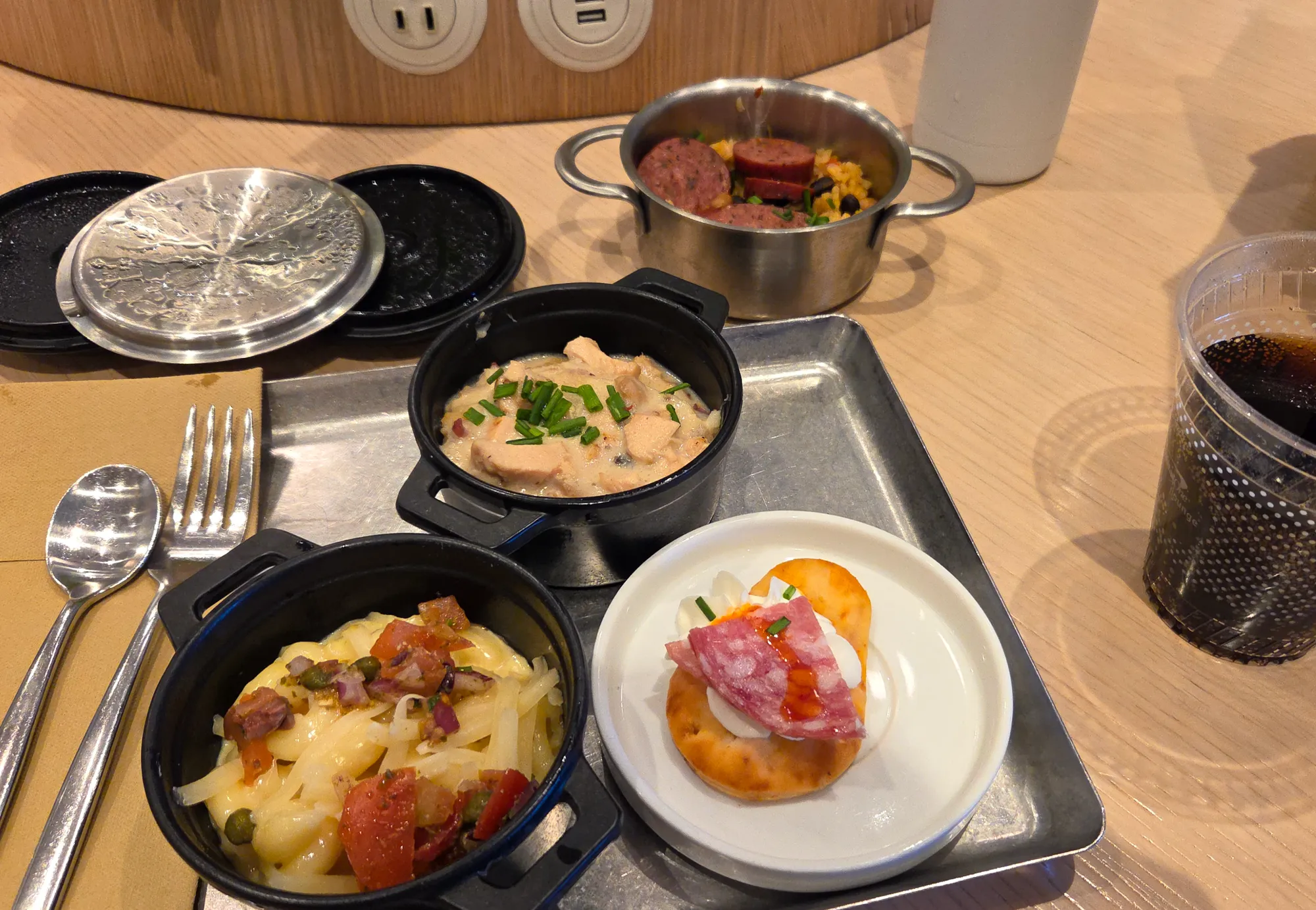
Food at the Capital One Lounge at Dallas Fort Worth International Airport
The lounge is fairly small, with luggage lockers, a prayer room, showers, and a yoga room. Food comes in individual portions in small dishes with lids. There was chicken masala, mac and cheese, and chips and salsa, along with bread, cookies, and other desserts. You can order alcoholic drinks and coffee at the bar at no extra charge. I usually go to a lounge to unwind before a flight, but this visit left me feeling more worn out. There was no dedicated waiting area, and once I got in, the lounge felt crowded. After waiting 30 to 40 minutes to get in, I had only about 30 to 40 minutes before I needed to leave for boarding.
9. Boarding Process
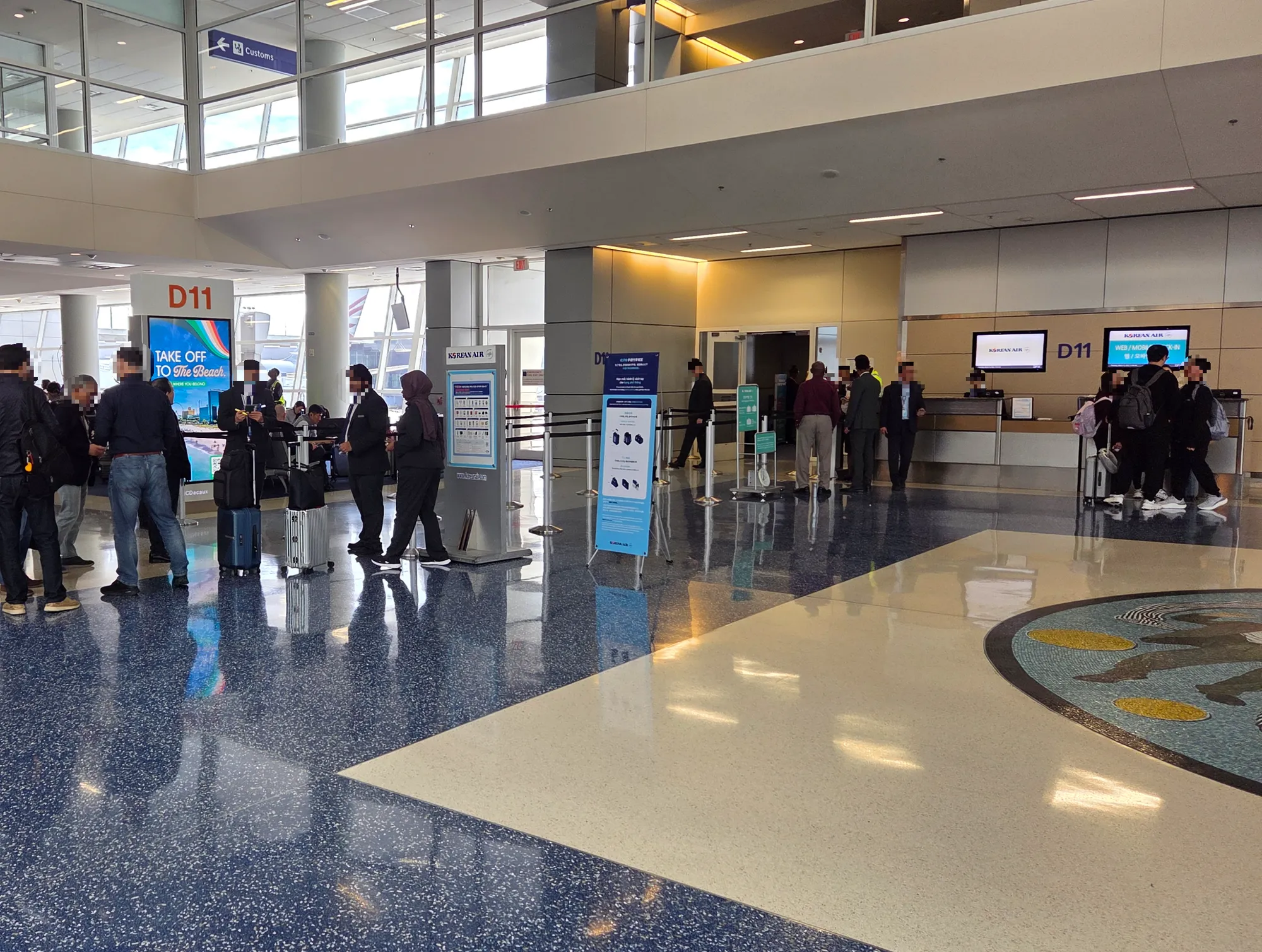
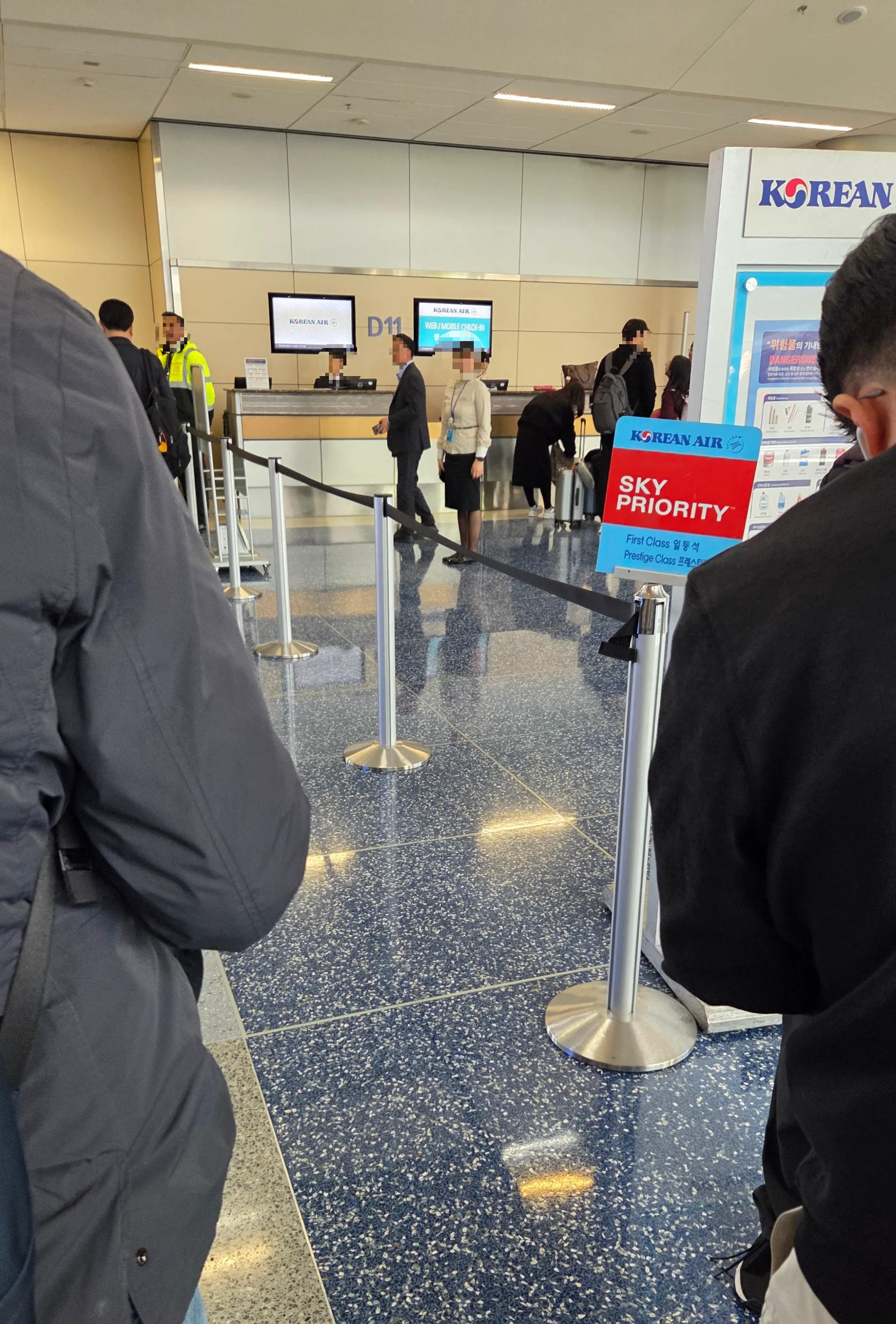
Boarding for Korean Air flight KE32
Boarding began at Gate D11 at 11:50 a.m., 35 minutes before departure. Passengers who needed assistance boarded first, followed by SkyPriority passengers, including those in Prestige Class. Economy Class Groups 1, 2, and 3 boarded next. The gate staff checked my boarding pass and passport, then scanned my boarding pass at the gate. It was scanned again as I stepped onto the plane. The flight attendants checked my boarding pass and showed me to my seat. Once on board, I was offered juice or water as a welcome drink. I chose guava juice, and mini pretzels were available if I wanted some. During boarding, the airline played string arrangements of Korean songs, including “On a Wonderful Day in October.”
10. Cabin & Seat Detail
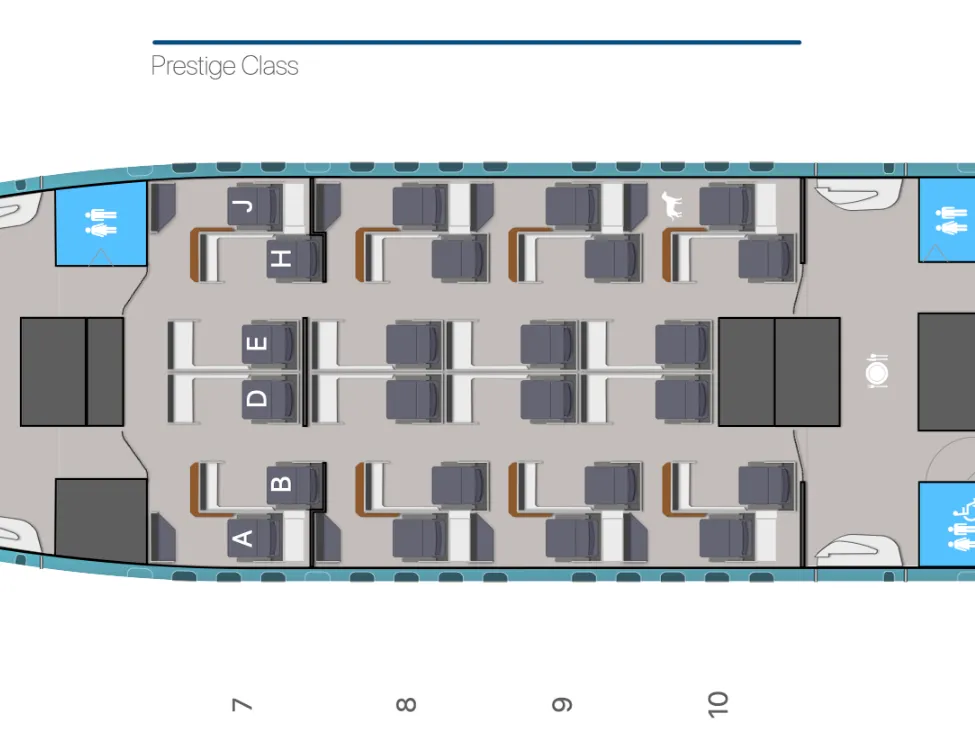
korean-air-b789-business-ke32-dfw-icn-en-18
Korean Air Boeing 787-9 seat map, courtesy of AeroLOPA
Korean Air’s Boeing 787-9 Prestige Class cabin is at the front of the aircraft. It has 24 seats across four rows, with six seats per row. Window seats make up a small share of the cabin, so it’s worth choosing one early. There’s also a gap in the windows at Row 9, leaving just six of the 24 seats with an actual window view. Row 7 was previously used for First Class. It has the same seat design as the rest of the cabin, with a larger monitor and a little more space. I sat in 8J, a window seat. The aircraft had been built four years earlier and had been flying for Korean Air for about a year and two months. The cabin was in good shape overall. The windows were large, as you’d expect on a Boeing 787, and dimmed electronically. Pressing the dimmer on one window adjusted all the windows at my seat at once. That was convenient until I wanted to brighten just one window to look outside. The cabin also felt less dry than on other aircraft, which made the flight a little more comfortable.
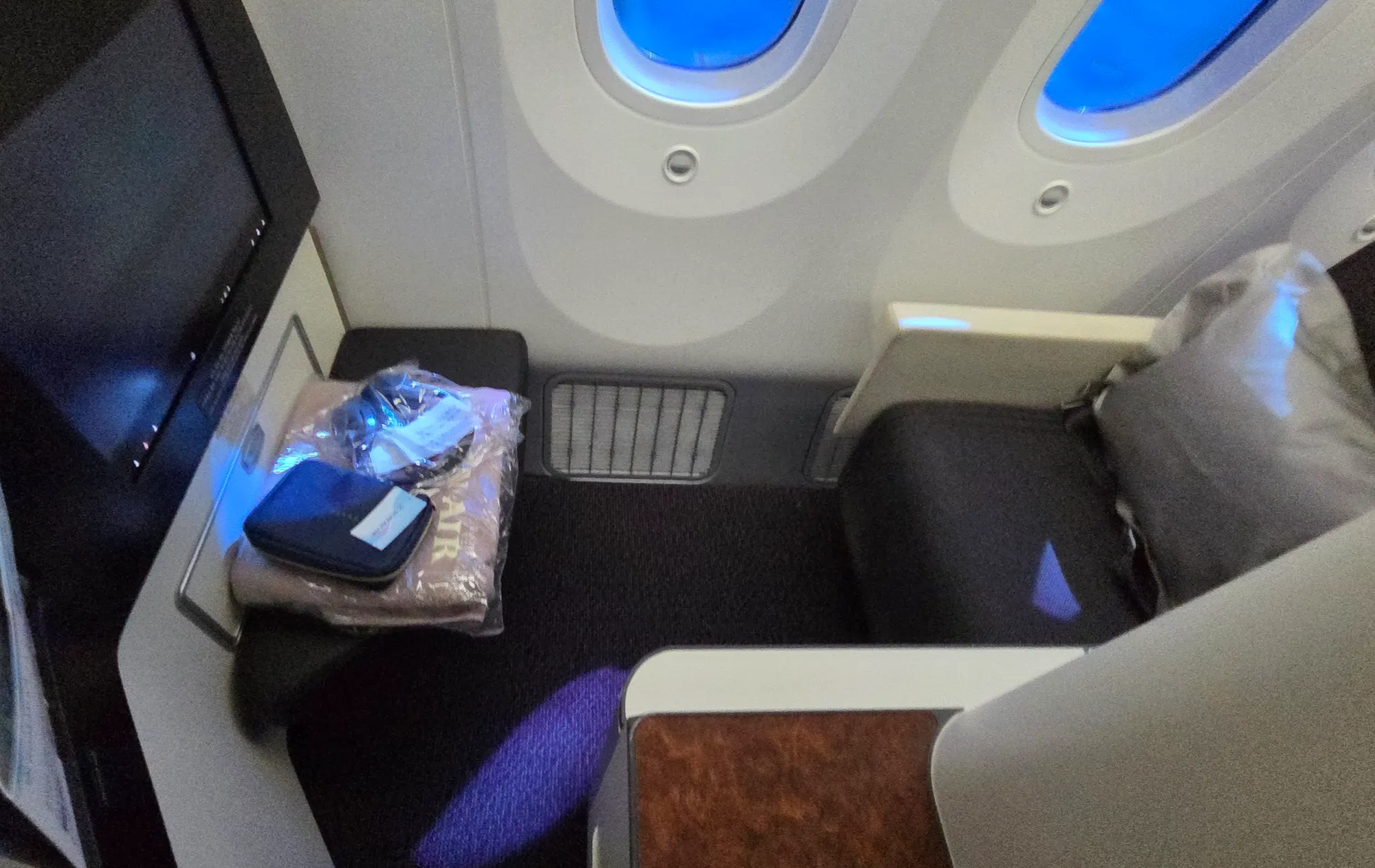
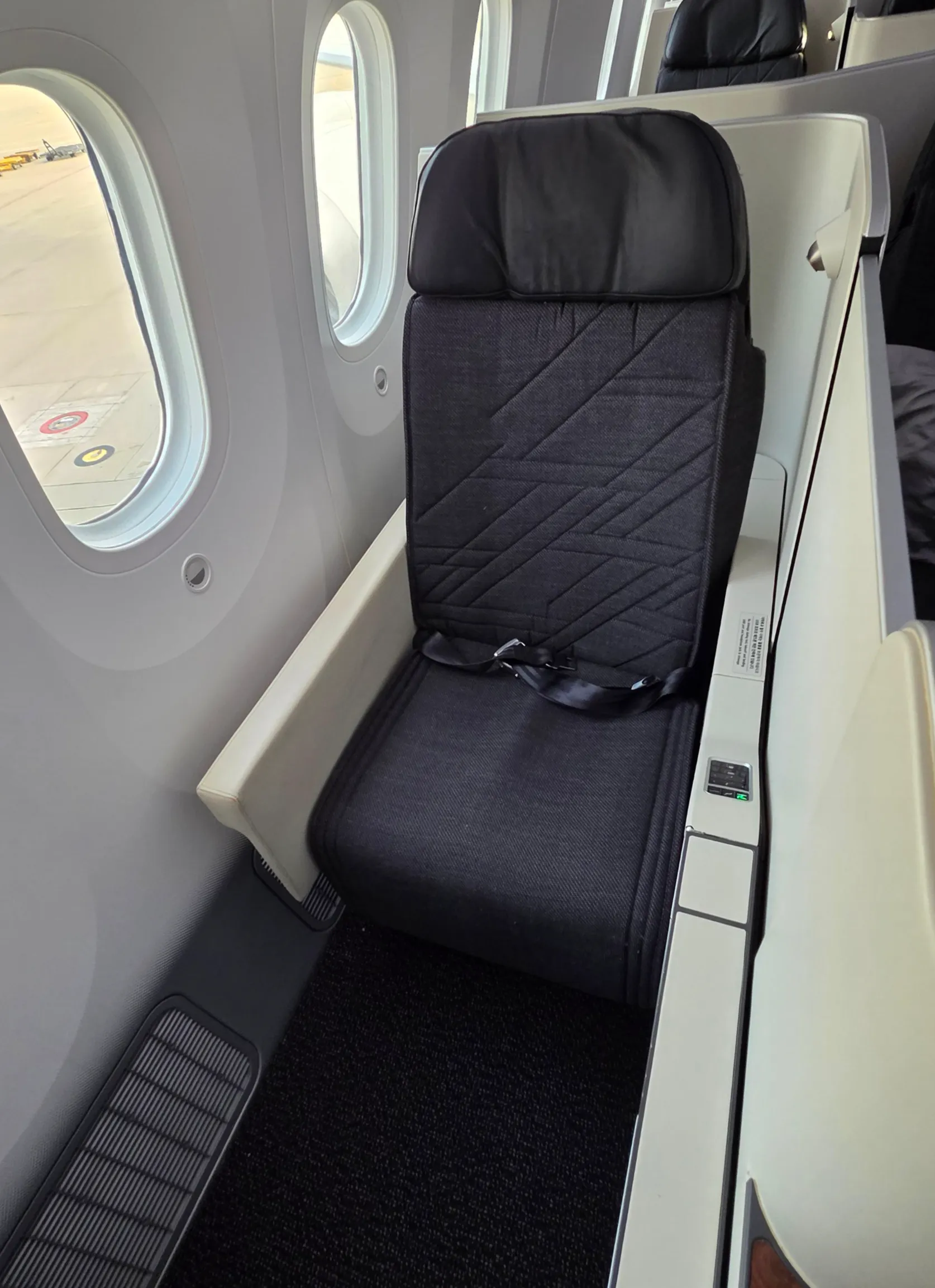
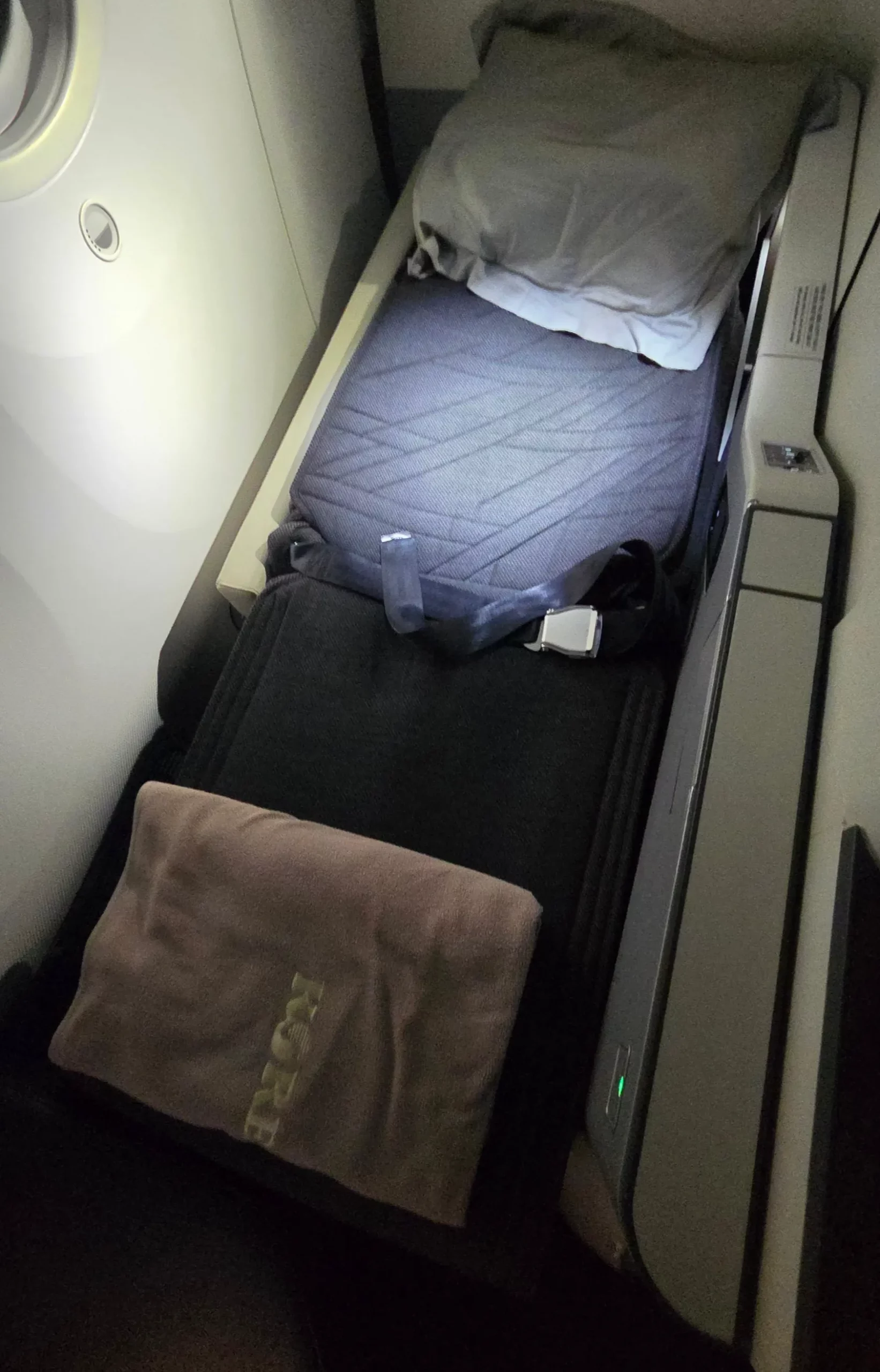
Korean Air Boeing 787-9 Prestige Suite 1
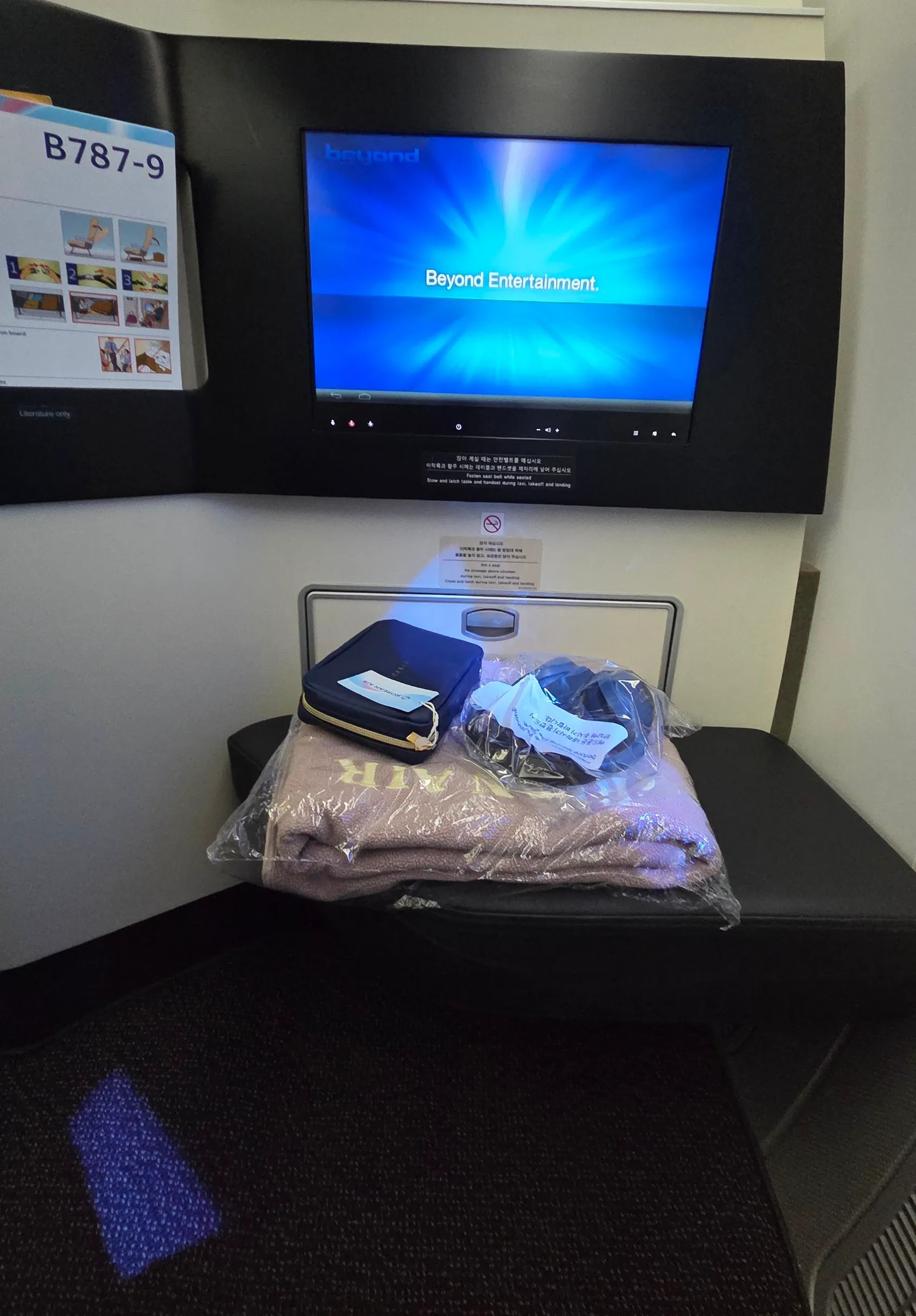
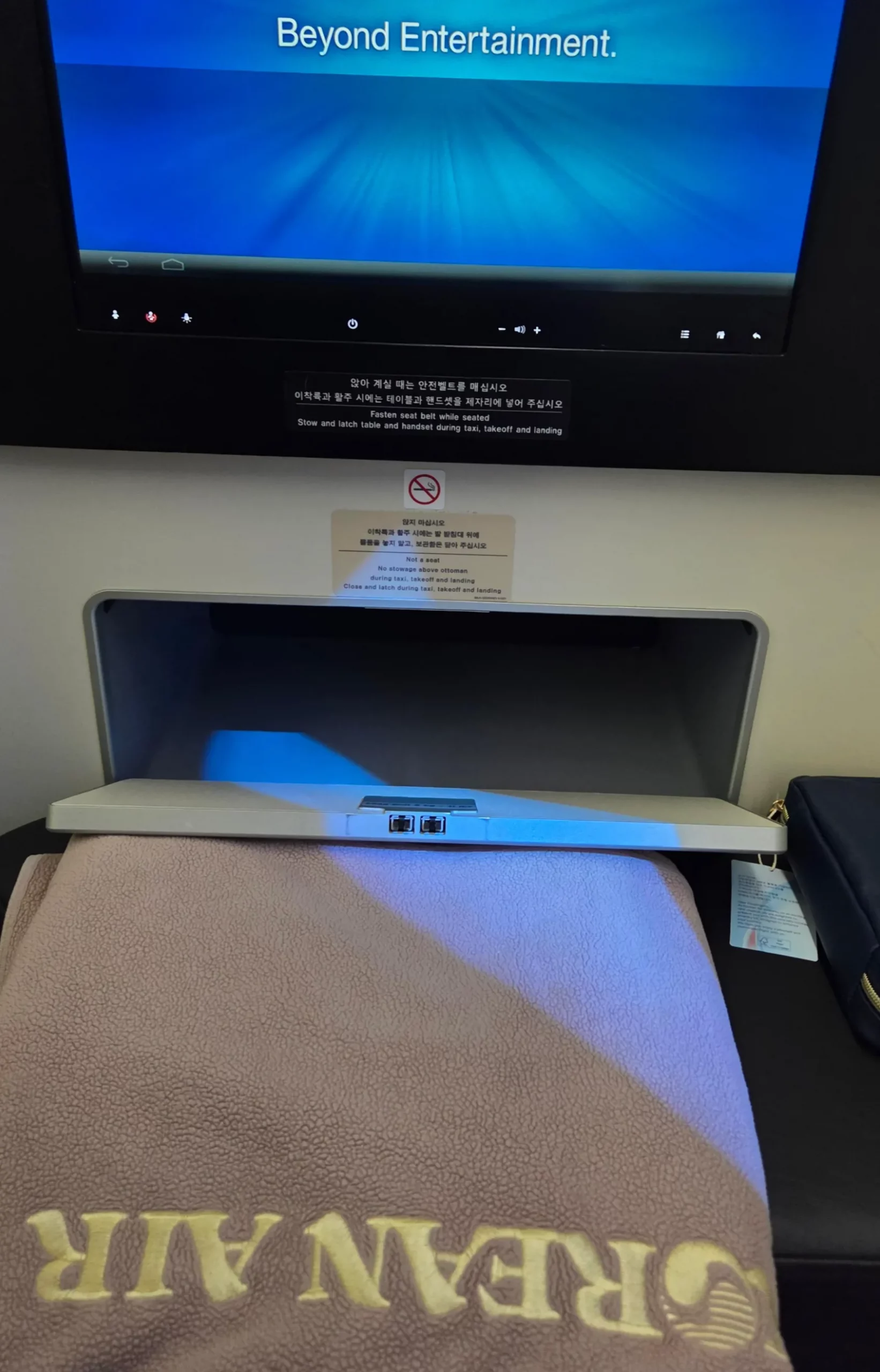

Korean Air Boeing 787-9 Prestige Suite 2
Korean Air’s Boeing 787-9 has Apex Suite seats, which the airline calls Prestige Suites. It’s an older Prestige Class seat that’s still popular for how much space it gives you. The window seat felt quite private even without a door. The best part was the bed. With the seat fully reclined, it was flat and almost rectangular, with plenty of room around my legs and feet. The curved sidewall gave me a little more room when lying down in the window seat. The bed was on the short side, though. If you’re over 185 cm tall, your head and feet may touch the ends. The ottoman cushion was also firm enough that my heels started to ache after resting on it for a while. A thin mattress pad would have helped. I found storage limited on Japan Airlines’ Sky Suite, so I appreciated the extra space Korean Air provided near my feet.
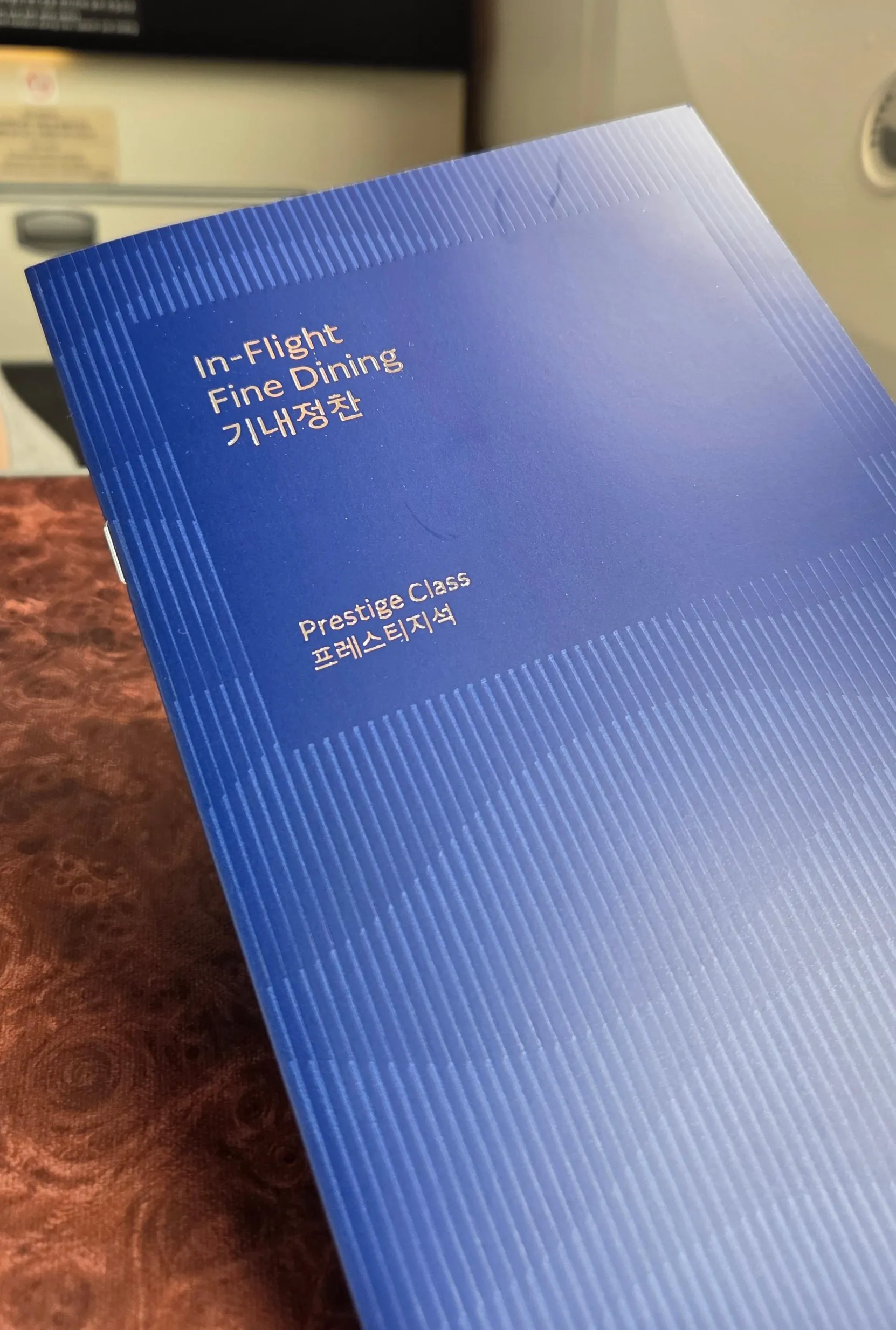
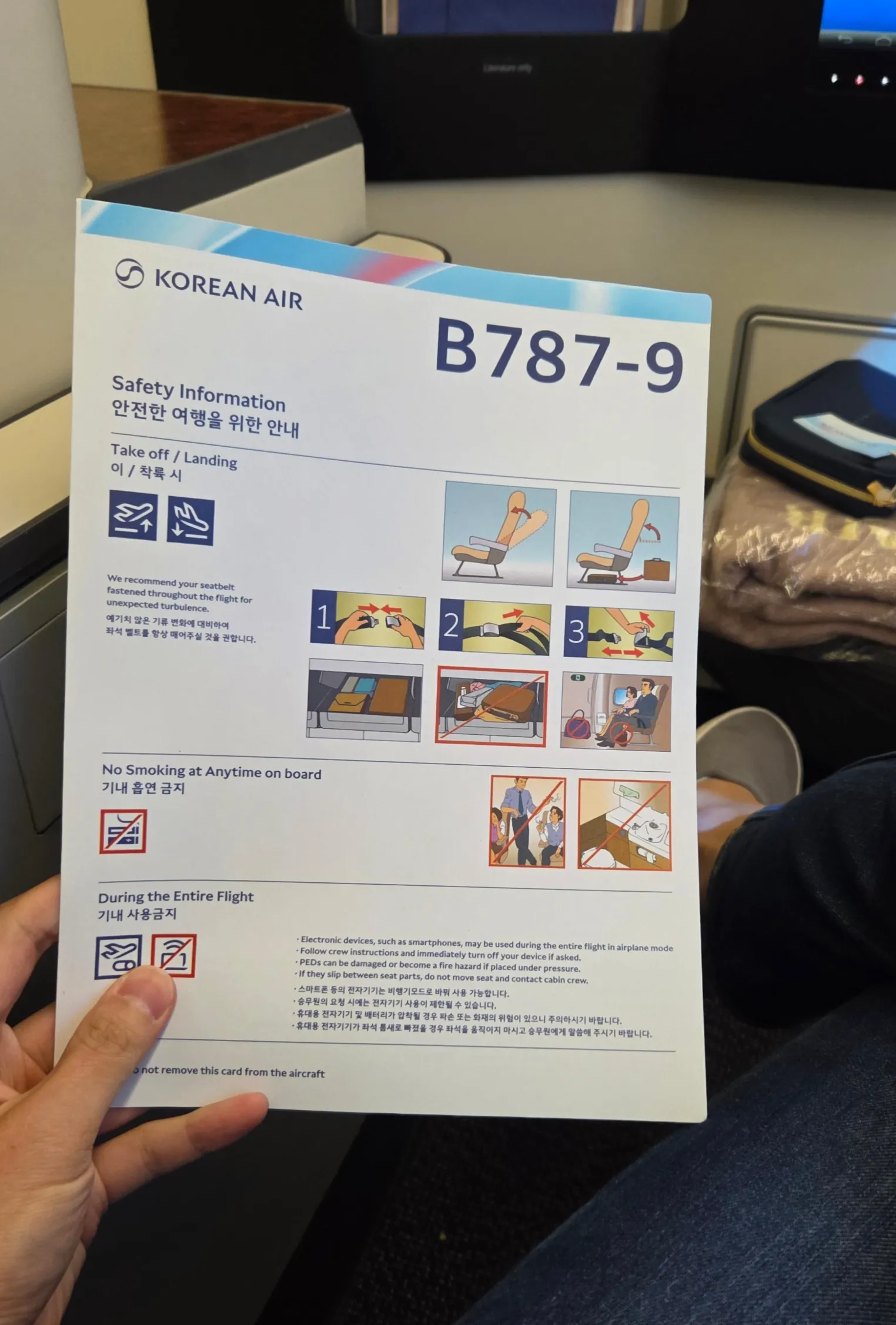
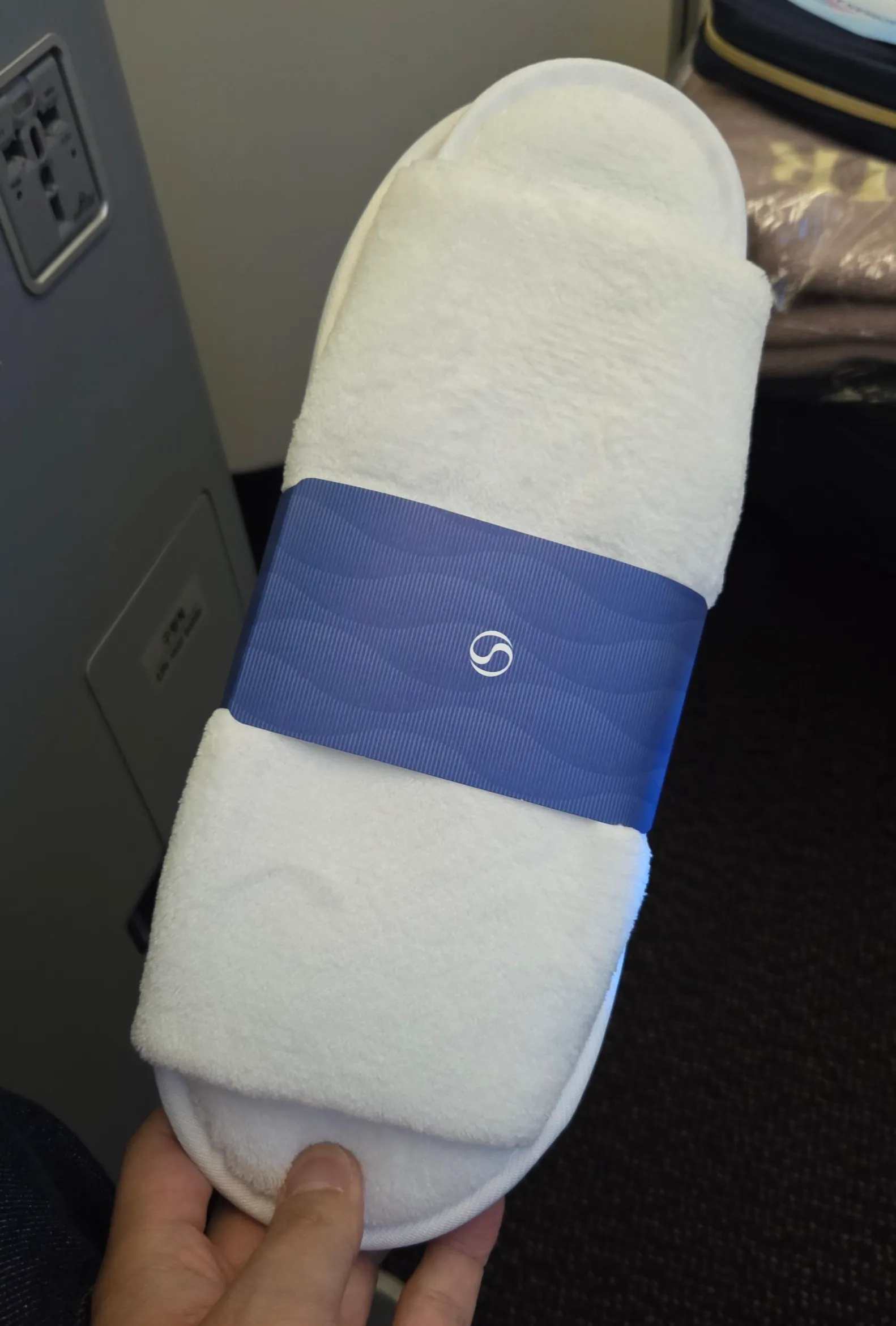
Korean Air’s newly branded onboard items
I could see touches of Korean Air’s new branding, which had been announced three days earlier, all around my seat. The safety card had a new design, and so did the packaging for the amenities and slippers. The inflight menu had also been redesigned. I checked and found out it had been in use for only two days when I boarded. The seats had gone from celadon to dark gray. Taken together, the changes were easy to notice.
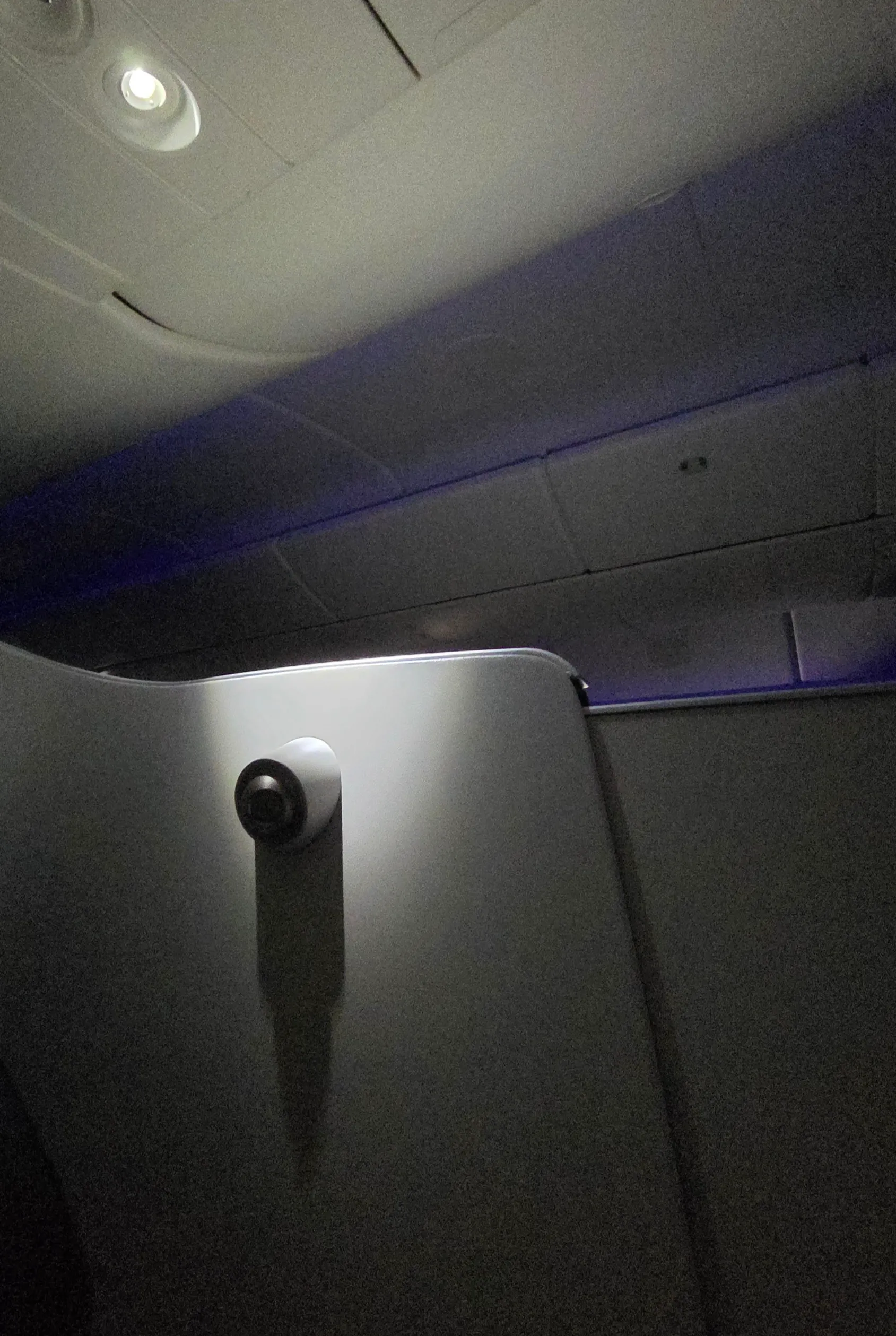
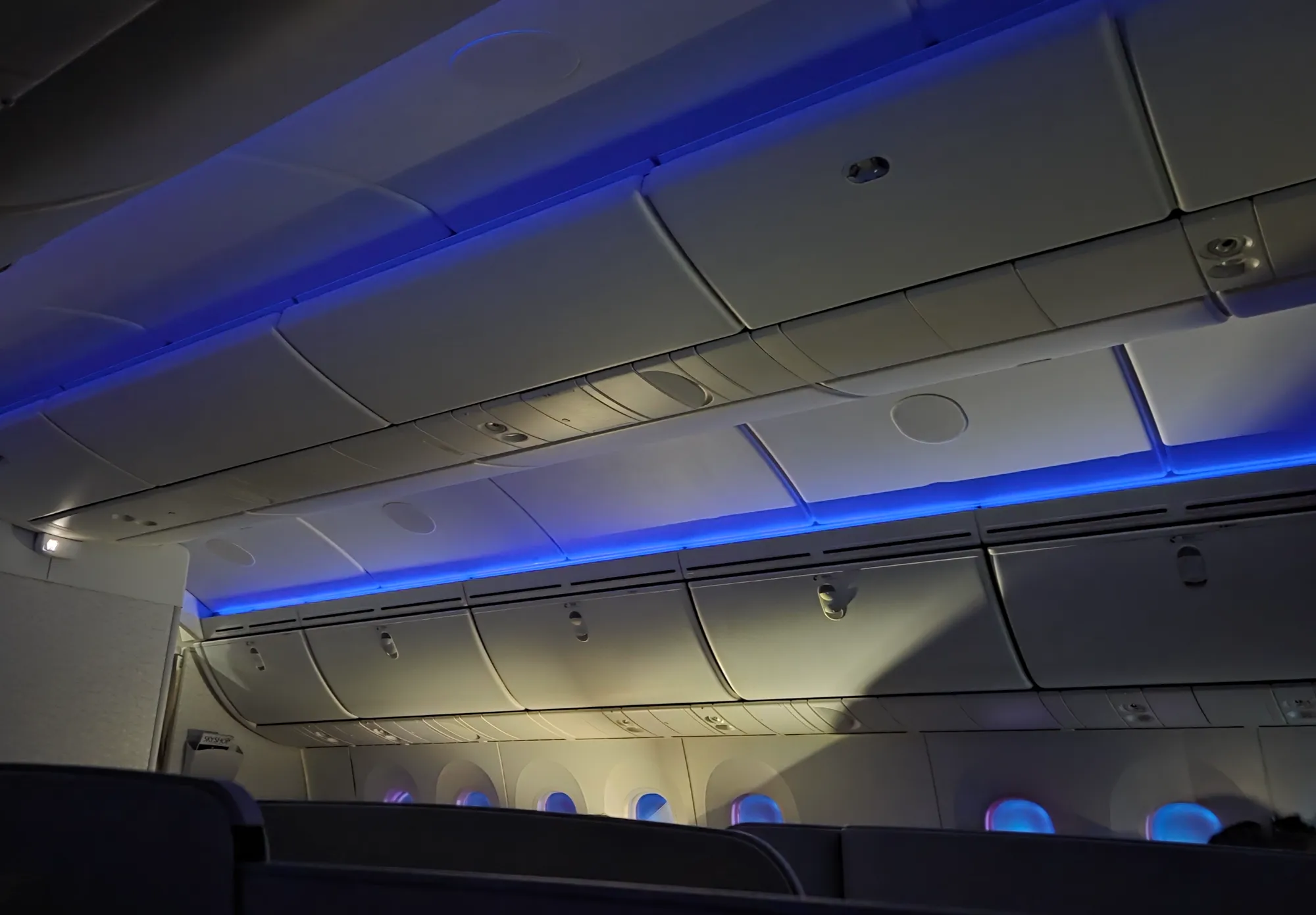
Bright reading light and low partitions
The partitions were a little lower than on Japan Airlines’ version of the Apex Suite. I could see other passengers’ heads when I sat upright, so the seat felt less private in that position. The lower partitions did make the cabin feel more open. My seat and the one next to it also shared a call button. Whenever I pressed it, the flight attendants had trouble telling which of us had called, especially if I was lying down and harder to see. The reading light by the window seat was mounted near the overhead bin, and its beam hit the partition. The glare was strong enough to bother me when I was lying down.
11. In-flight Service
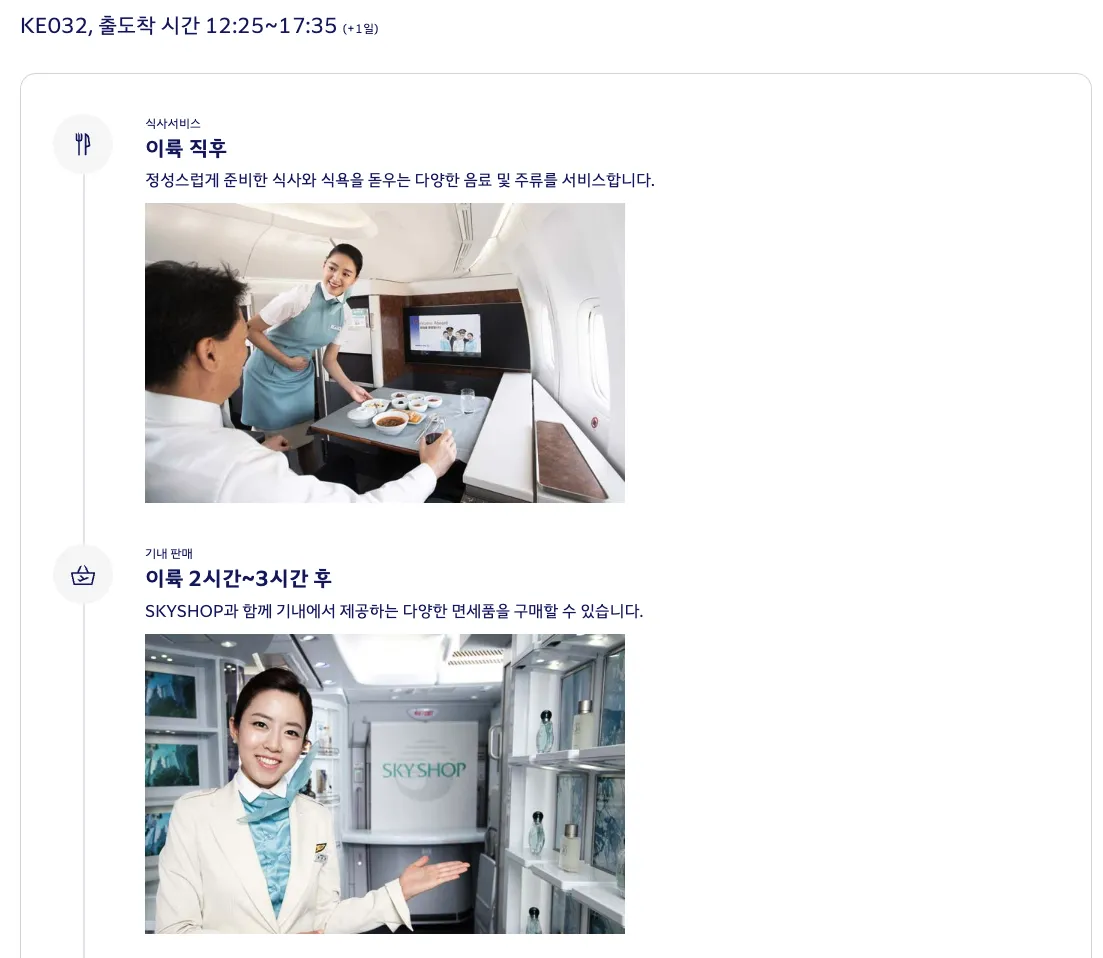
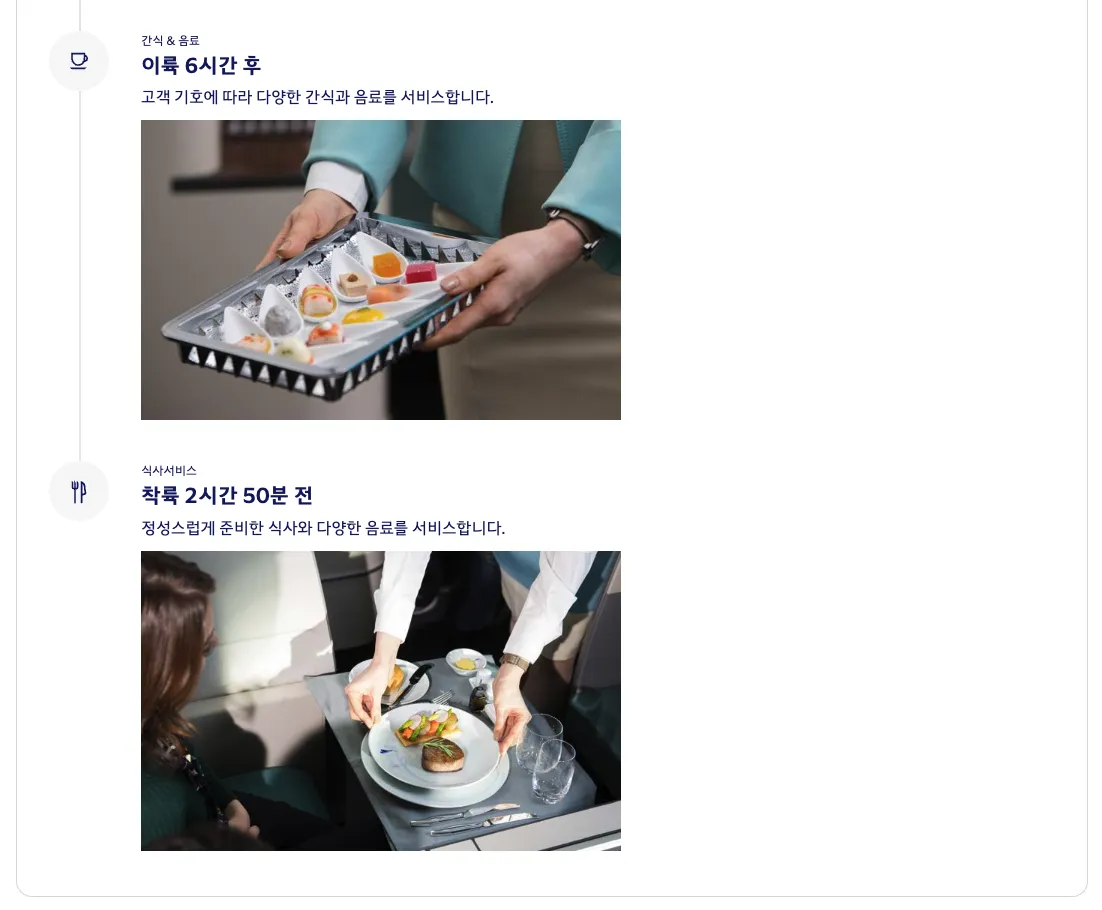
Inflight service timeline for Korean Air flight KE32, courtesy of Korean Air
The crew served welcome drinks shortly after boarding. The flight attendant looking after my seat then came by to take my orders for both the first meal and the meal before landing. The first meal service began shortly after takeoff, followed by inflight duty-free sales. You could also ask a flight attendant to buy something later, any time before landing. Prices were generally higher than at online duty-free shops, and some items even cost more than they did in Korean Air’s own online duty-free store. Snacks were available to order during cruise, and the final meal was served two and a half hours before landing.
12. Amenities & Lavatory
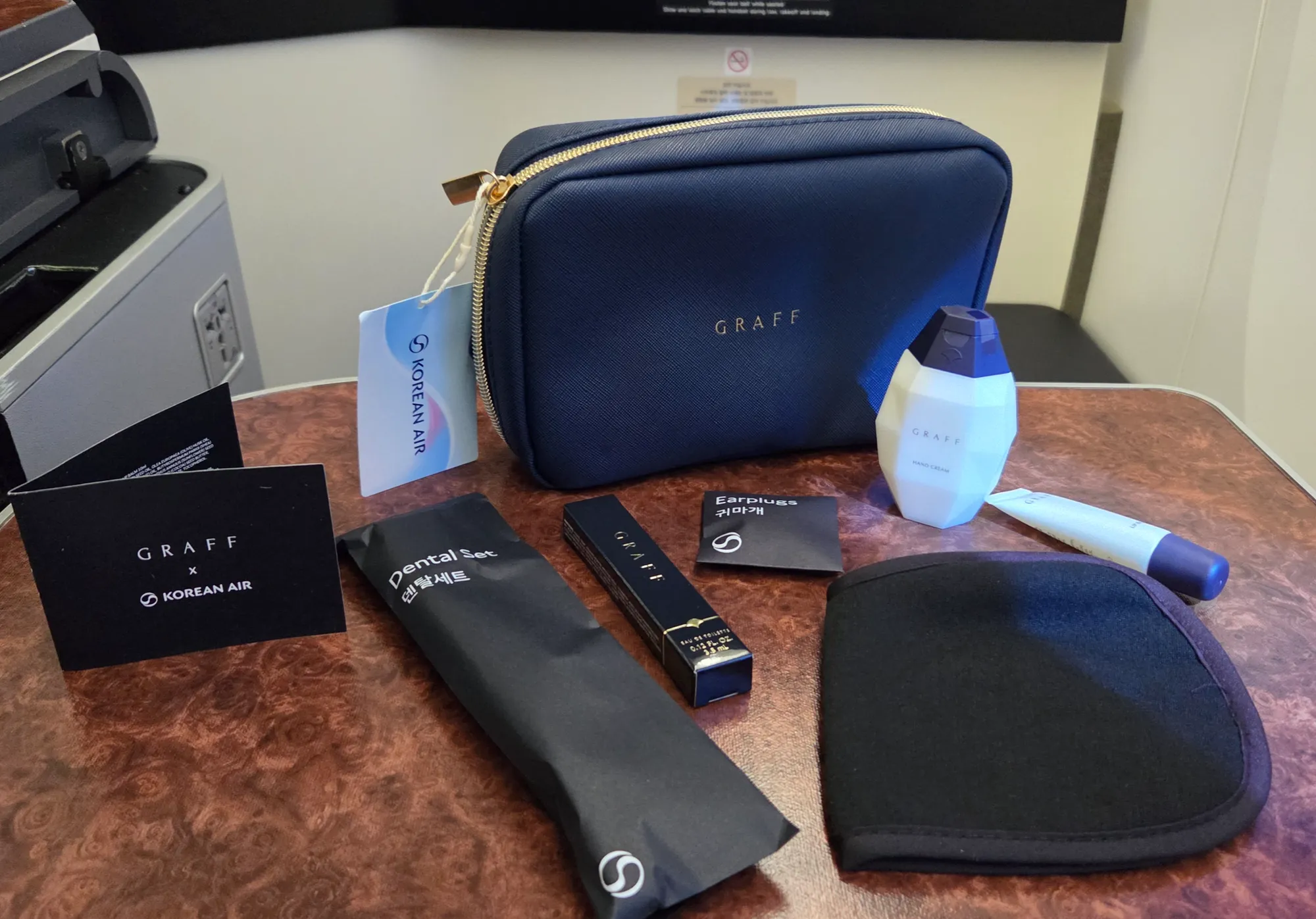
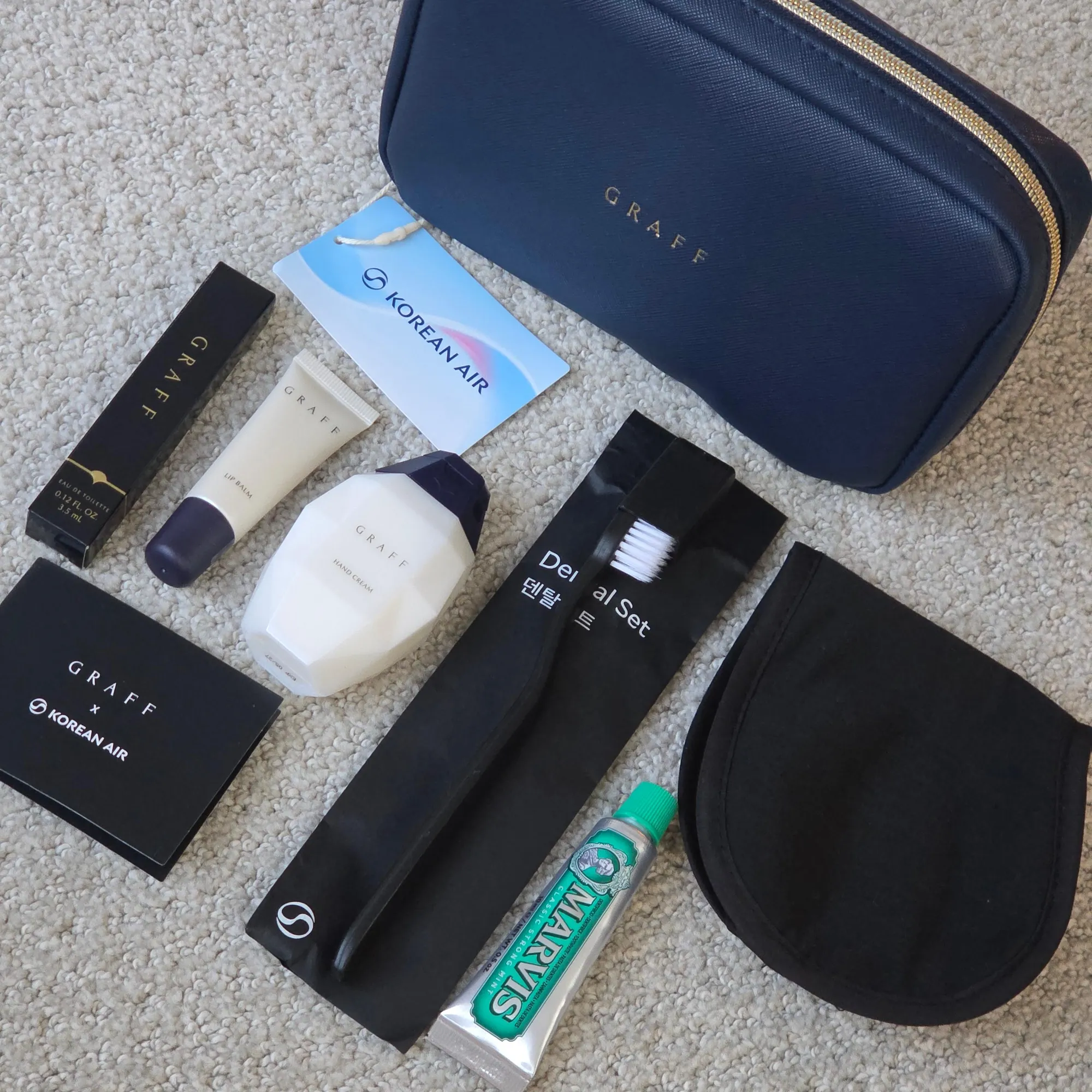
Korean Air’s new Prestige Class amenity kit
Korean Air’s old Prestige Class amenity kits had a reputation for being underwhelming. Plenty of passengers would leave them behind when they got off the plane. As part of its recent rebrand, Korean Air replaced its in-house kit with one made in collaboration with GRAFF. I found the new pouch much more practical. It felt sturdy and had plenty of room. The kit contained hand cream, lip balm, an eye mask, earplugs, and a dental kit. Given how dry the cabin can get, I would have liked a facial mist or lotion, too.
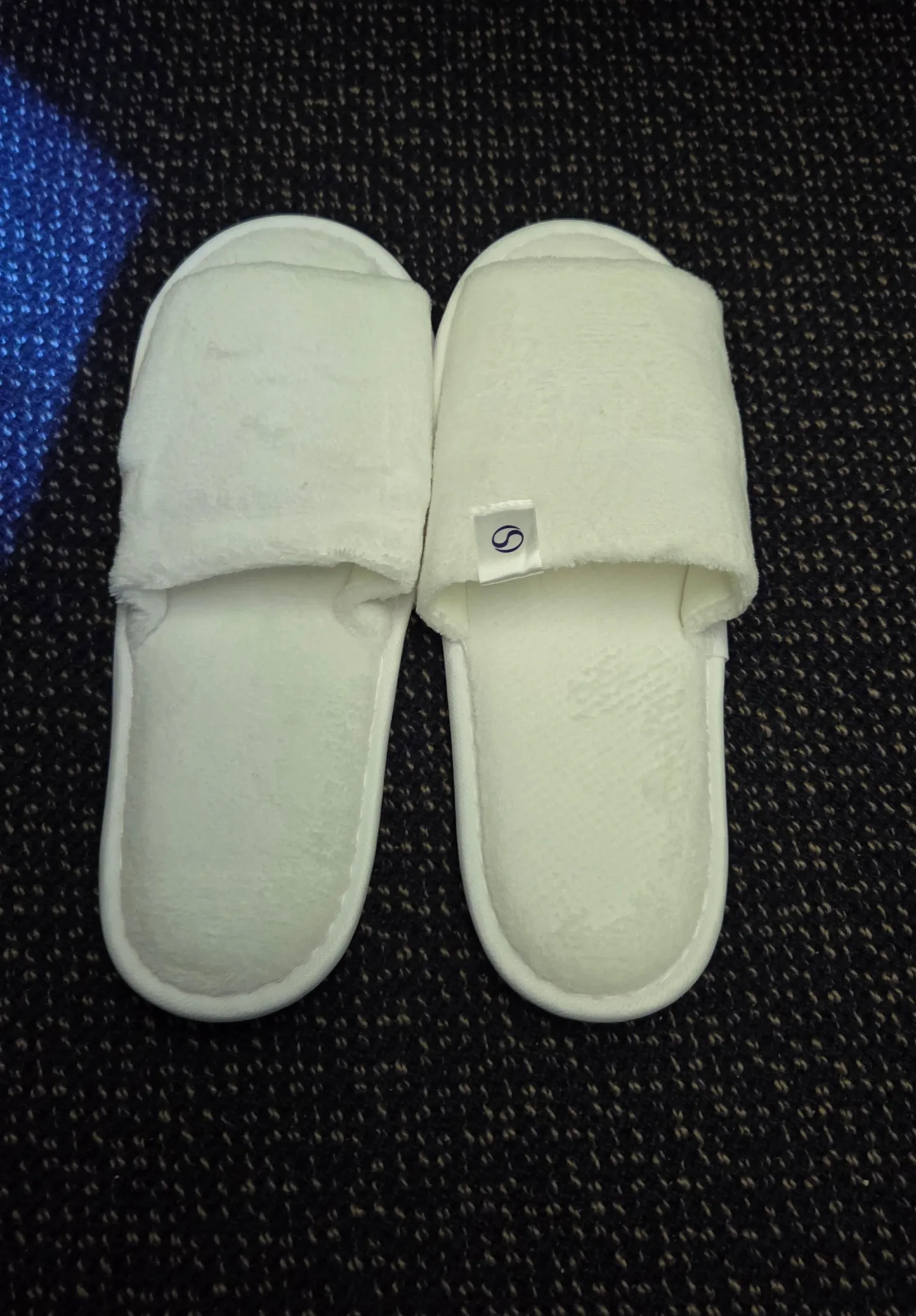
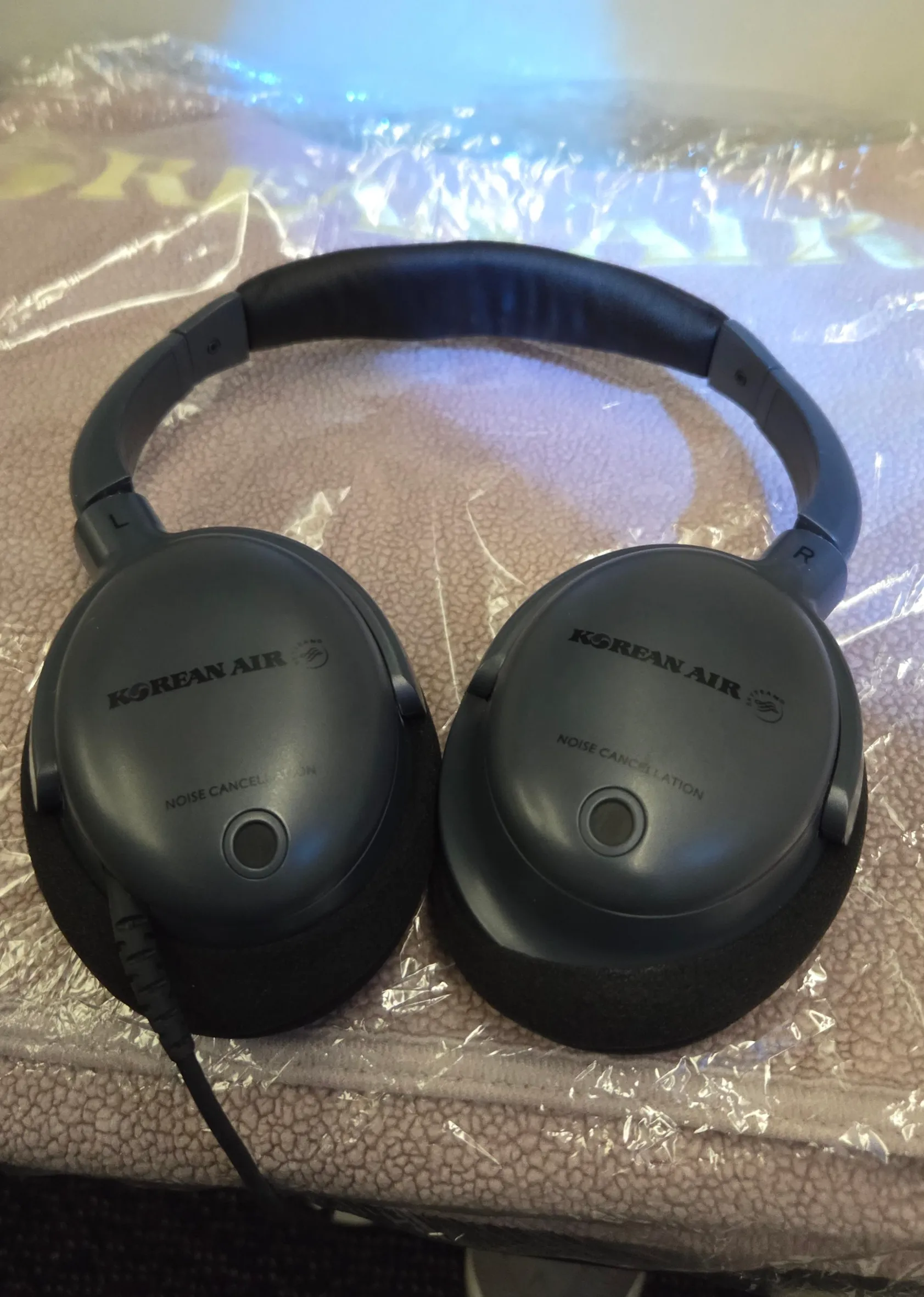
Korean Air Prestige Class slippers in their new packaging, headphones, and bottled water
The slippers now came in dark navy paper packaging in place of the old yellow wrapper. I also got a blanket, a pillow, and a bottle of water. The noise-canceling headphones were made by PHITEK and still carried Korean Air’s old logo. The audio stayed clear throughout, an improvement over the connection problems I’ve had on older aircraft. The headband clamped down quite hard, though, and the ear cups were too small for me. My ears started to hurt after about two hours, so I couldn’t wear them for much longer.
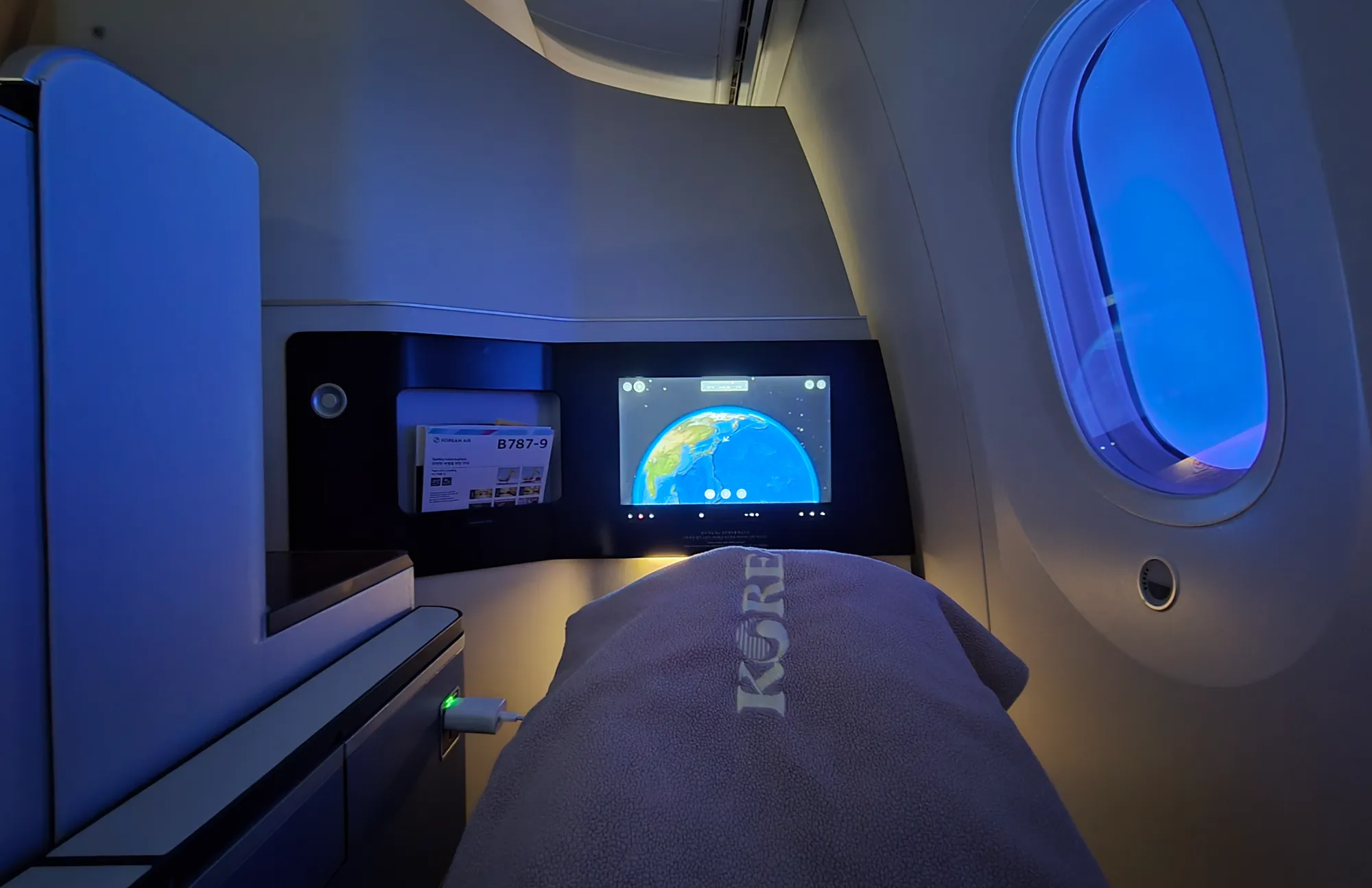
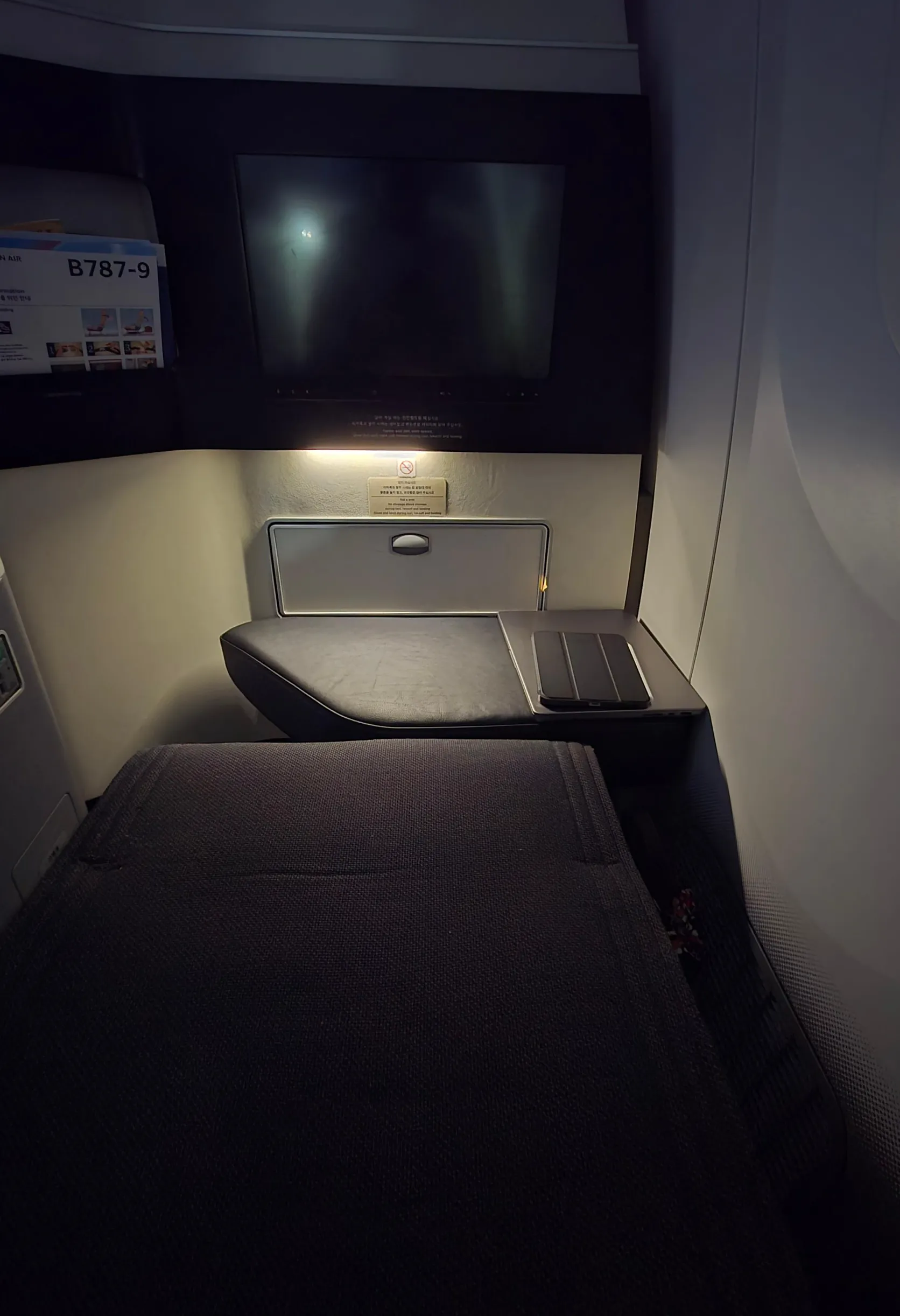
Korean Air Prestige Sleeper seat
The amenities covered the essentials. They were practical, though the bedding felt a little sparse. Many airlines now provide a mattress topper in business class, and on this flight I had just a blanket and pillow. Korean Air had announced plans to introduce blankets and mattress pads from the Italian bedding brand Frette in Prestige Class. I was looking forward to seeing that change roll out.
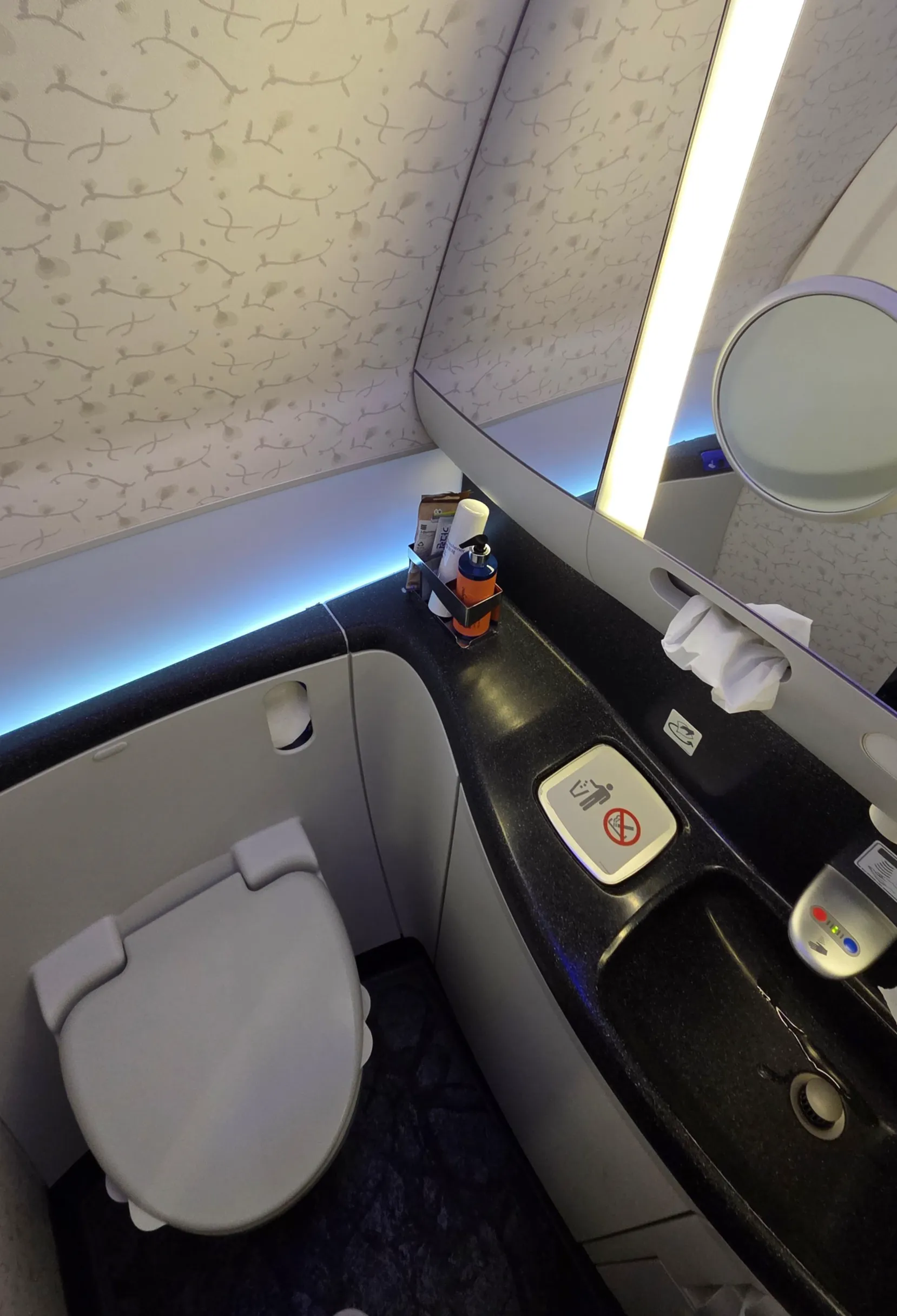
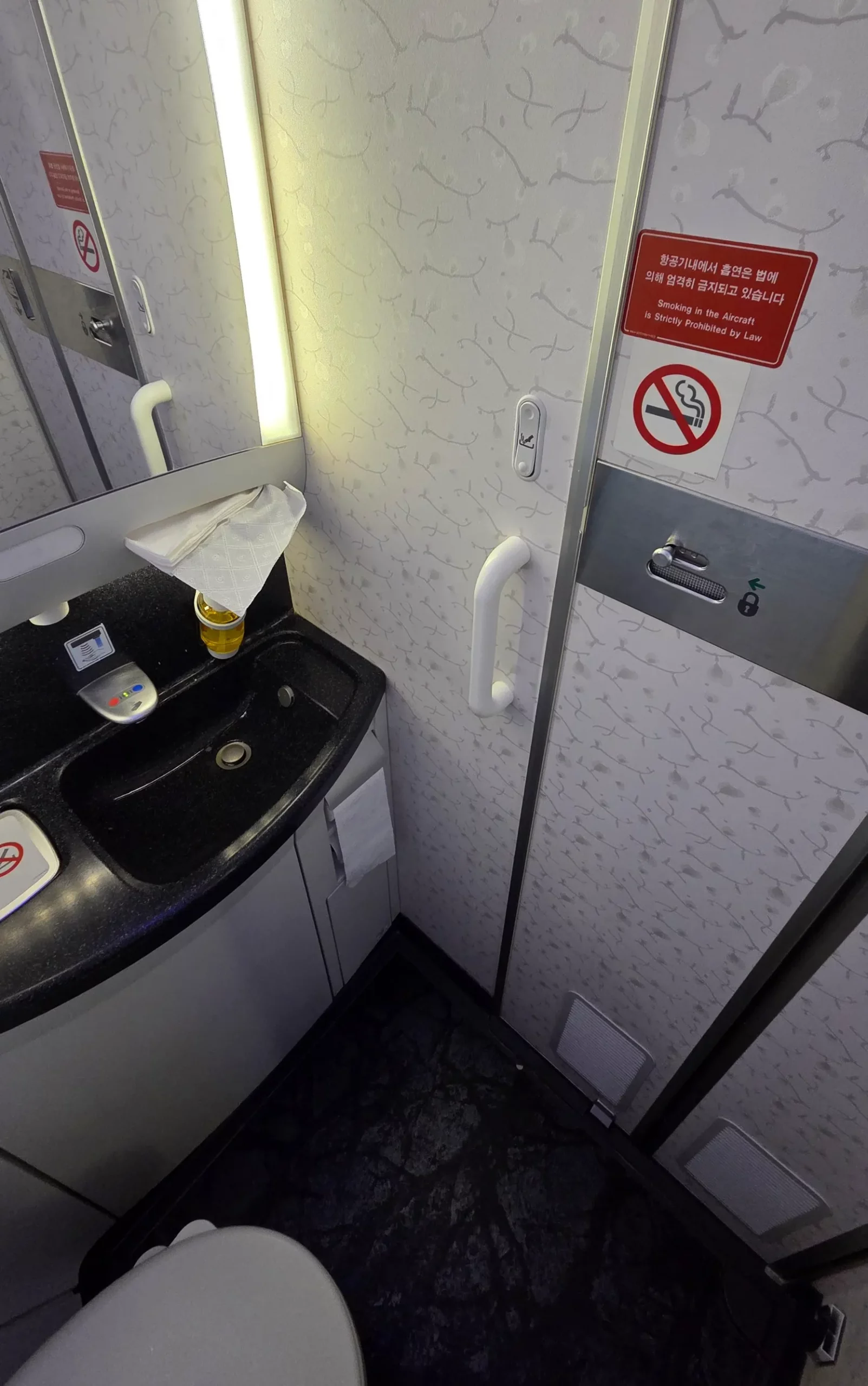
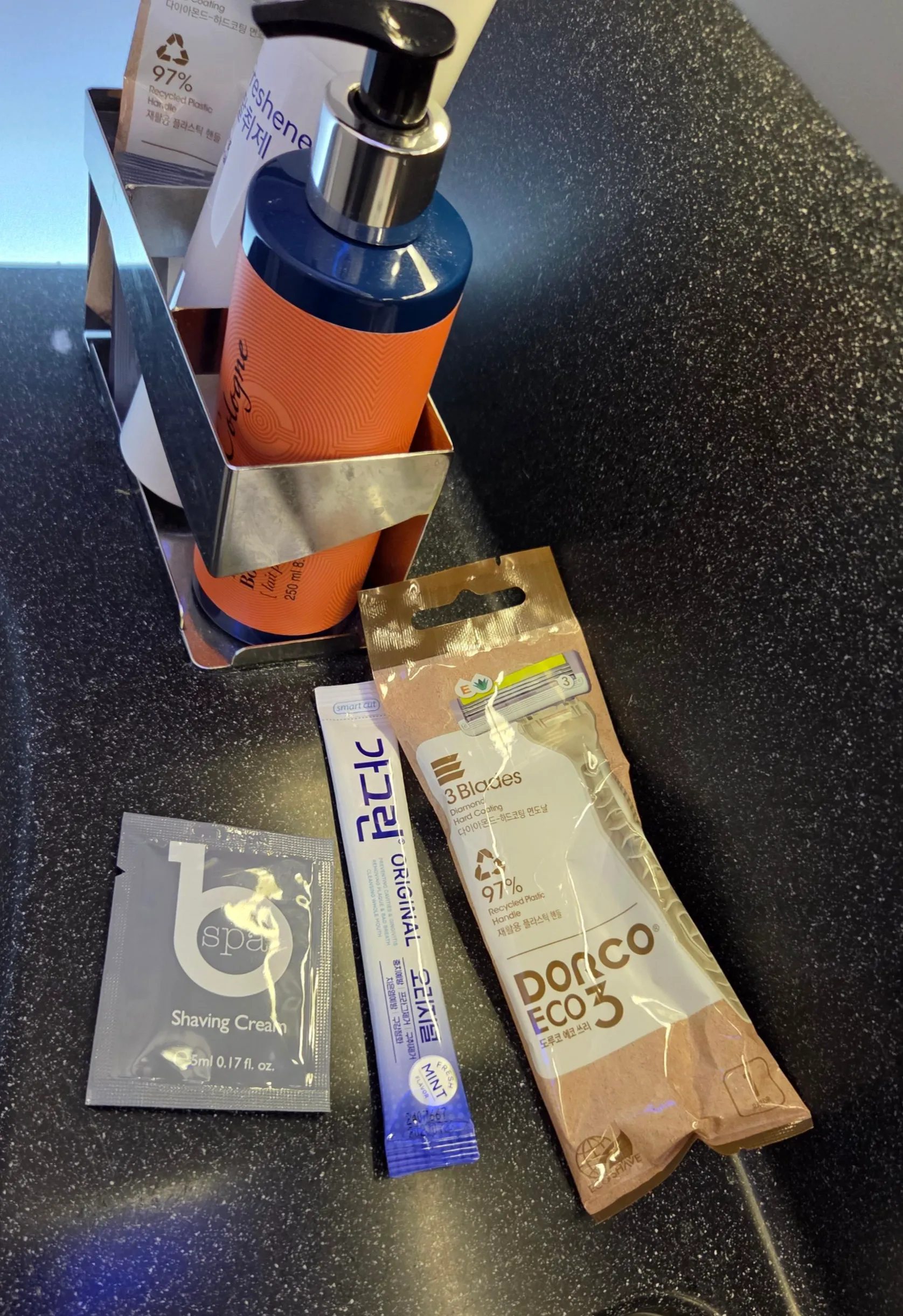
Korean Air Boeing 787-9 Prestige Class lavatory
Prestige Class had two dedicated lavatories, one at the front of the cabin and one at the back. They were fairly standard airplane lavatories, and what stood out was how clean the crew kept them. The flight attendants checked and cleaned them regularly. The one at the front had a little more room, so I’d use that one if you want more space. There were razors and shaving cream, toothbrushes and toothpaste, air freshener, hand cream, hand soap, and Garglin mouthwash. I usually use a toothbrush with fine bristles, and the one in the lavatory was the best I’ve used on a flight.
13. Food & Beverage
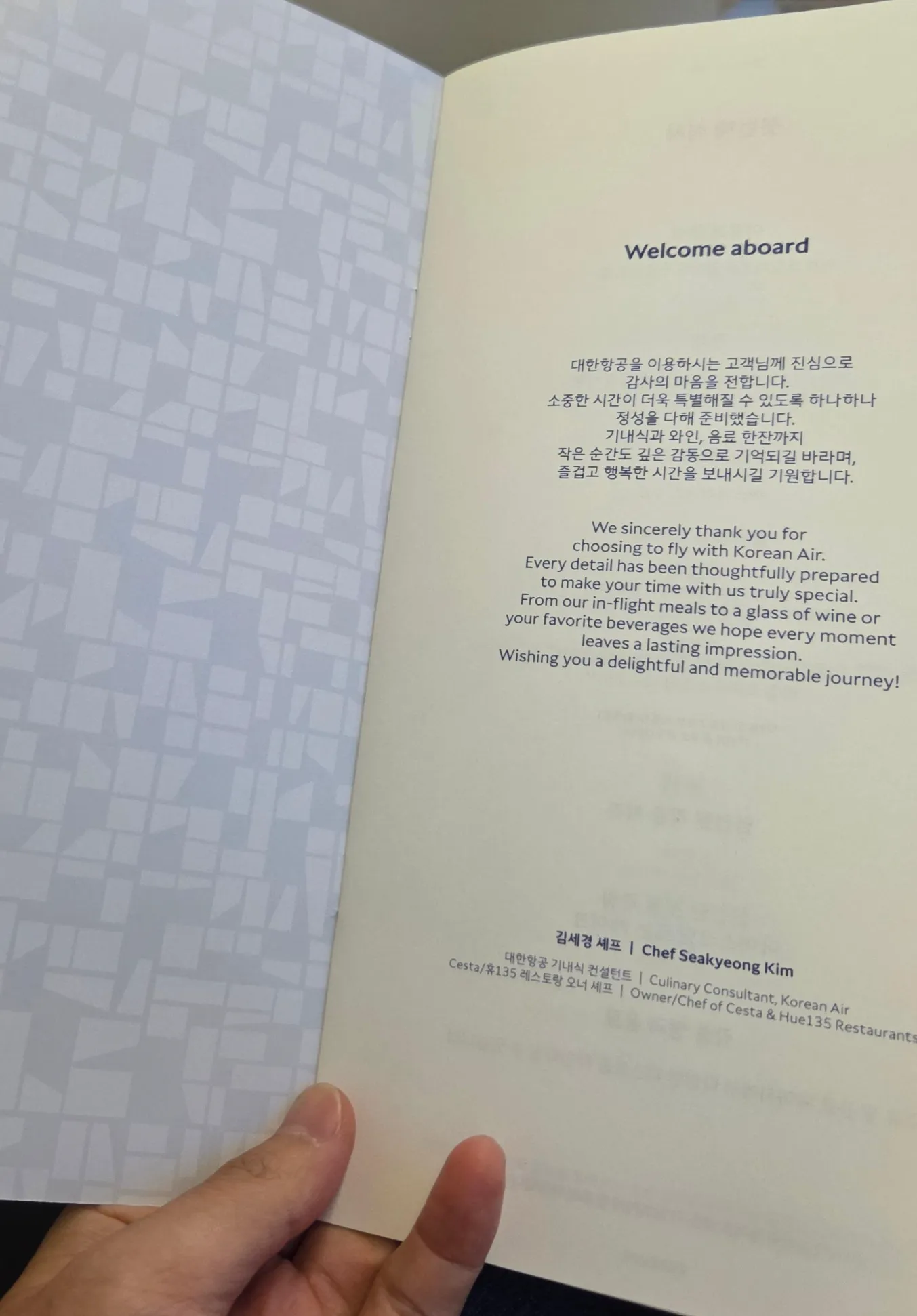
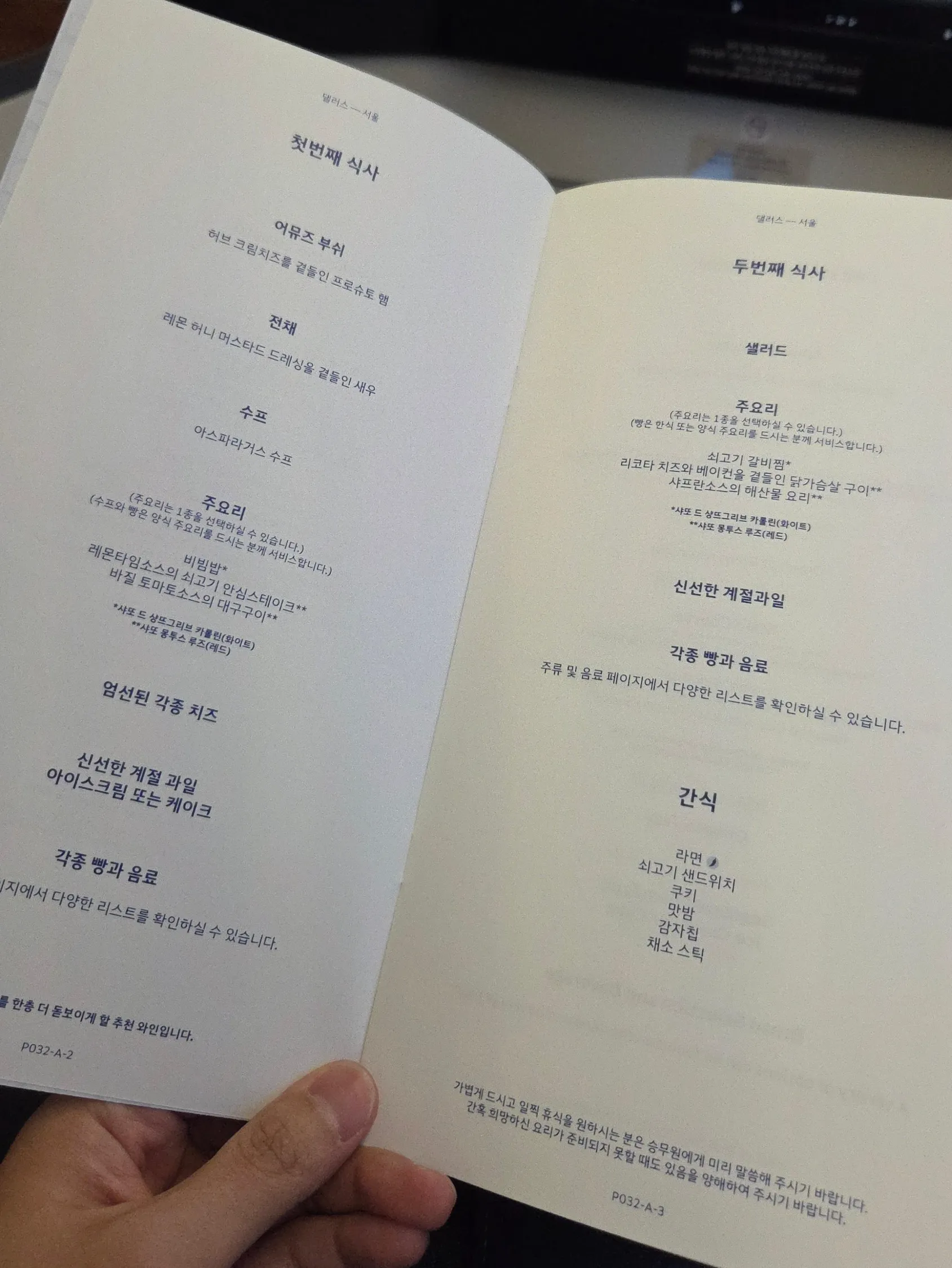
Korean Air KE32 Prestige Class inflight meal menu
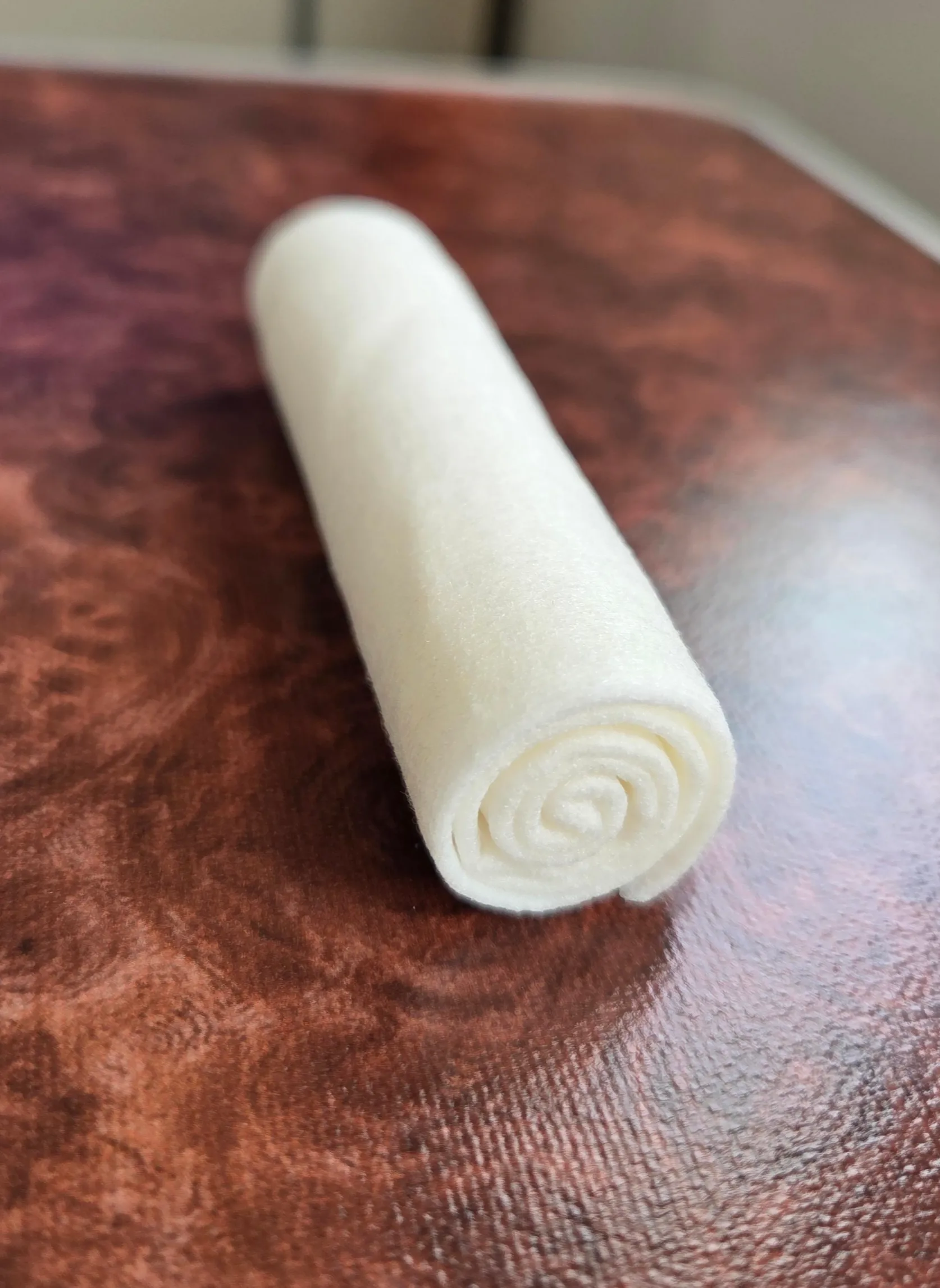
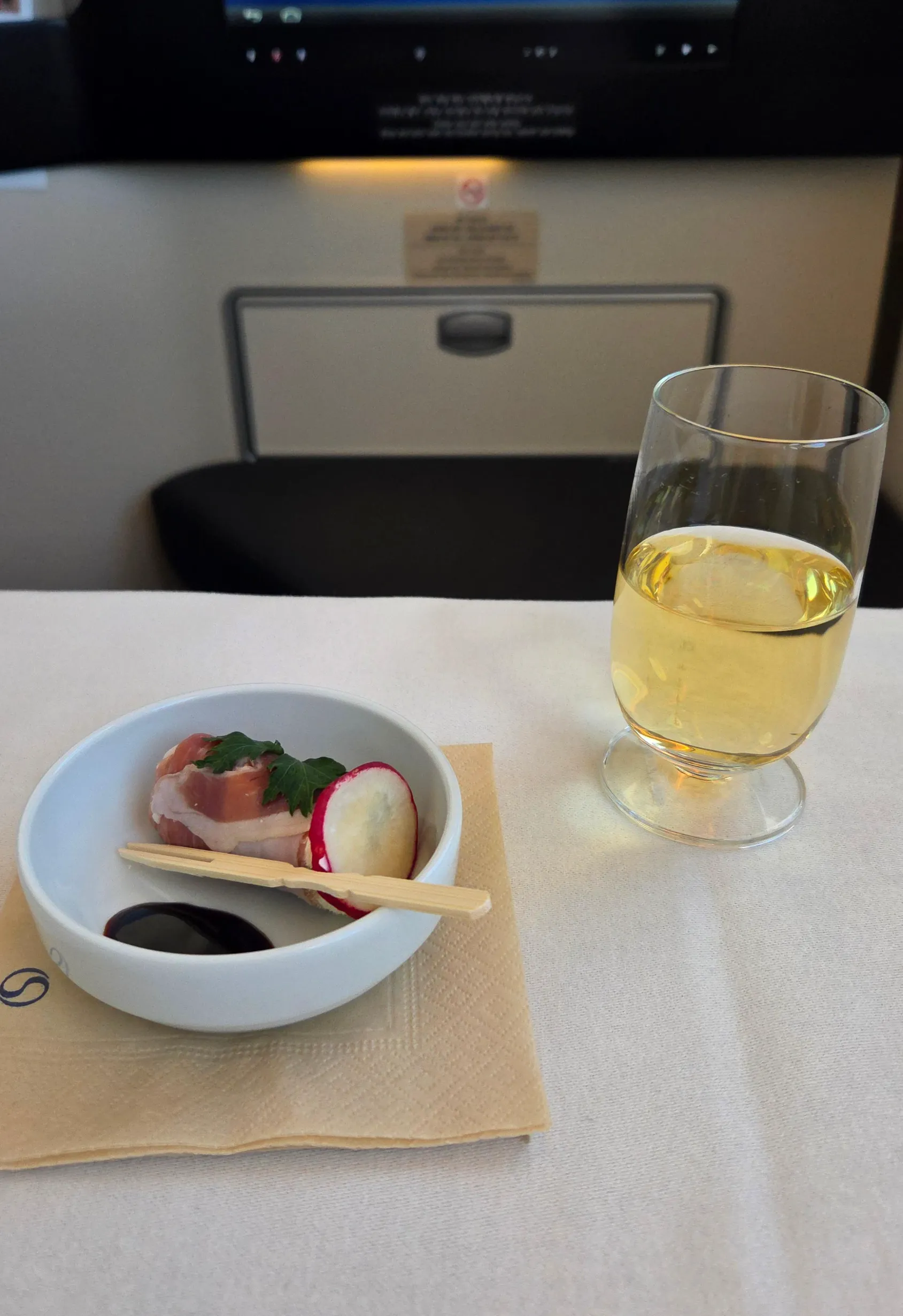

Korean Air KE32 Prestige Class hot towel and amuse-bouche
The first meal after takeoff was served in courses. It started with an aperitif and an amuse-bouche, followed by an appetizer, a main course, two desserts, and tea and coffee. The flight attendant mentioned a change when taking my order. Salmon would be served in place of the cod listed on the menu. The service began with a warm towel that felt more like a thick moist towelette. I chose Champagne as my aperitif and was served Duval-Leroy Blanc de Blancs Grand Cru. The flight attendants showed me the label each time they poured, which seemed to be part of the service routine. The amuse-bouche was prosciutto with herb cream cheese. It was a little big for one bite, so I ate it in two. The salty prosciutto went well with the rich, thick cream cheese. The turnip added some crunch, and the balsamic vinegar gave it a little tang. It was a good match for a crisp Champagne or white wine.
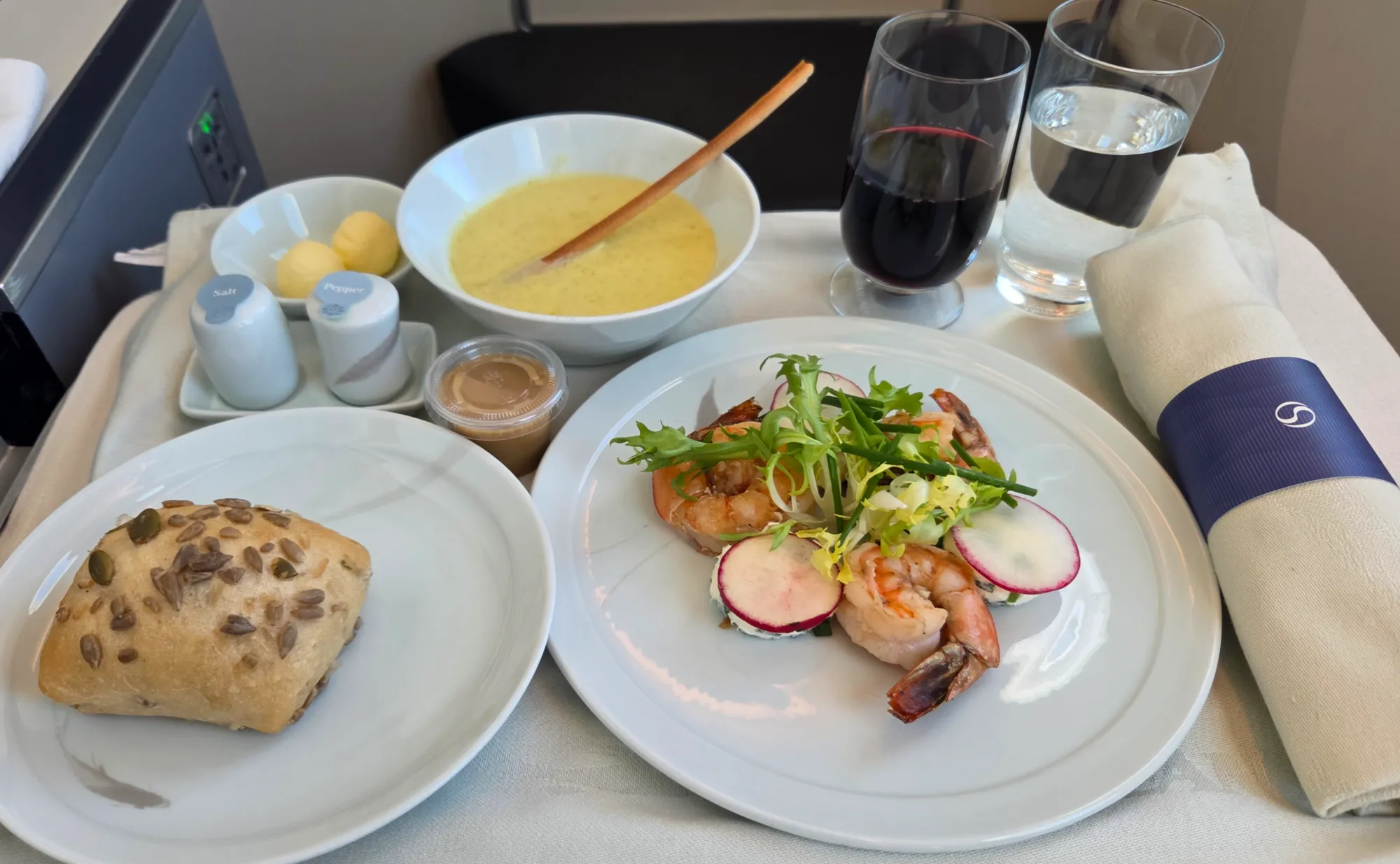
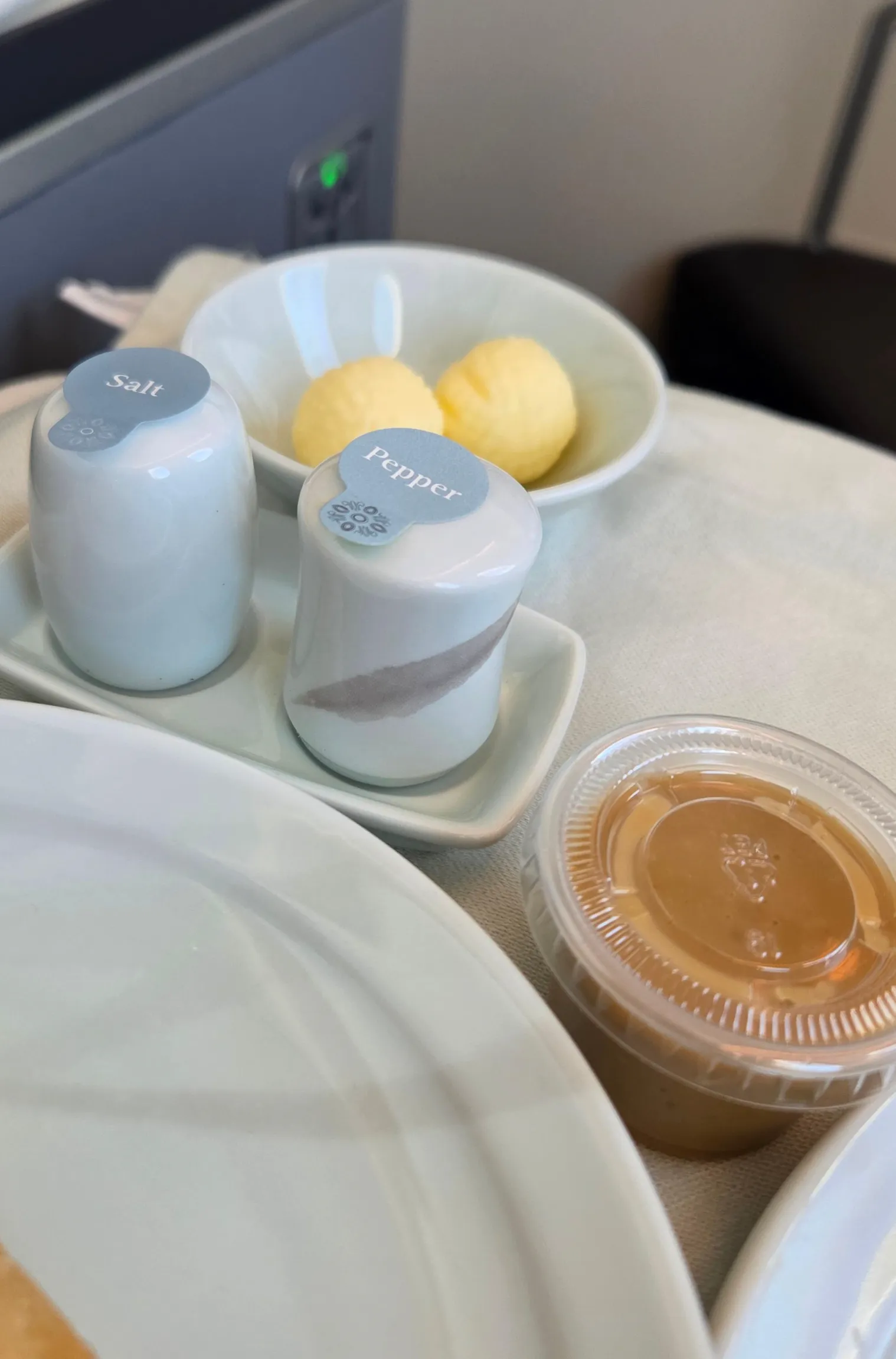
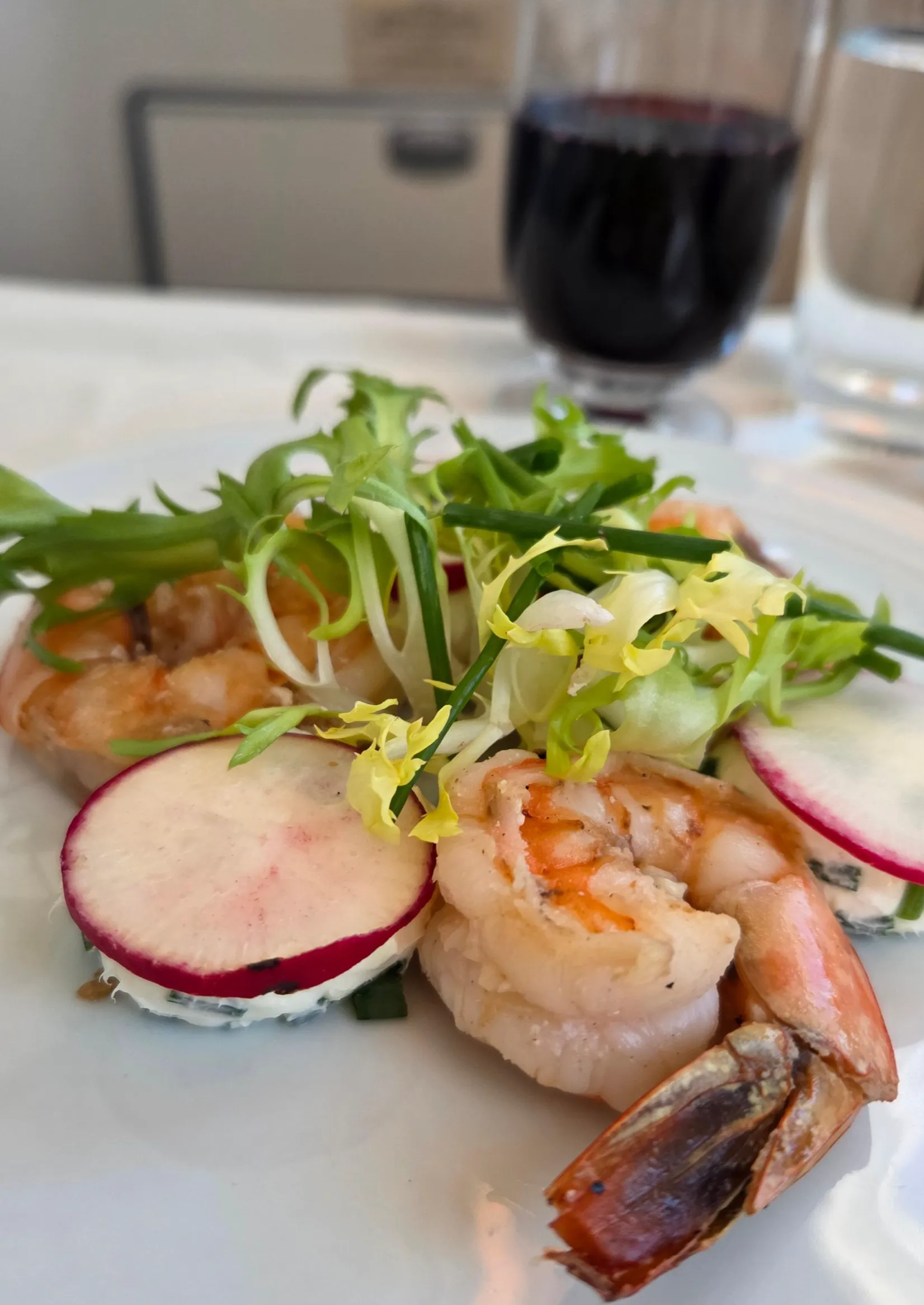
Korean Air KE32 Prestige Class appetizer
The appetizer was shrimp with a lemon honey mustard dressing. The shrimp were cooked just right, and I liked the dressing. The turnip and cream cheese felt a little repetitive after the amuse-bouche. Since I’d ordered the steak, I also got bread and soup. The asparagus soup was rich and tasted fine, though it was a little salty. The bread choices were pumpkin seed bread, a garlic baguette, and whole wheat bread. I went with the pumpkin seed bread and liked the crunch and nutty richness of the seeds.
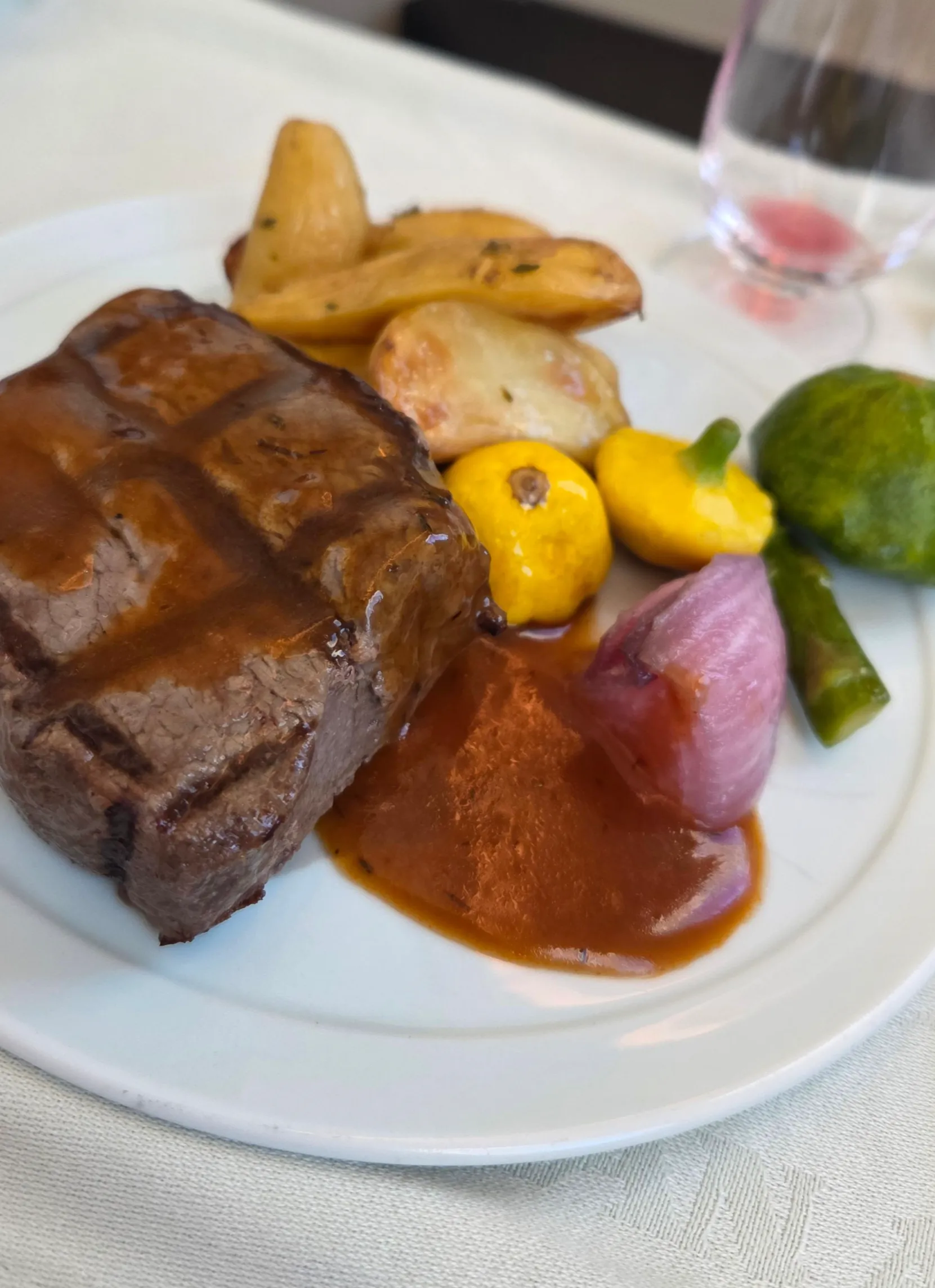
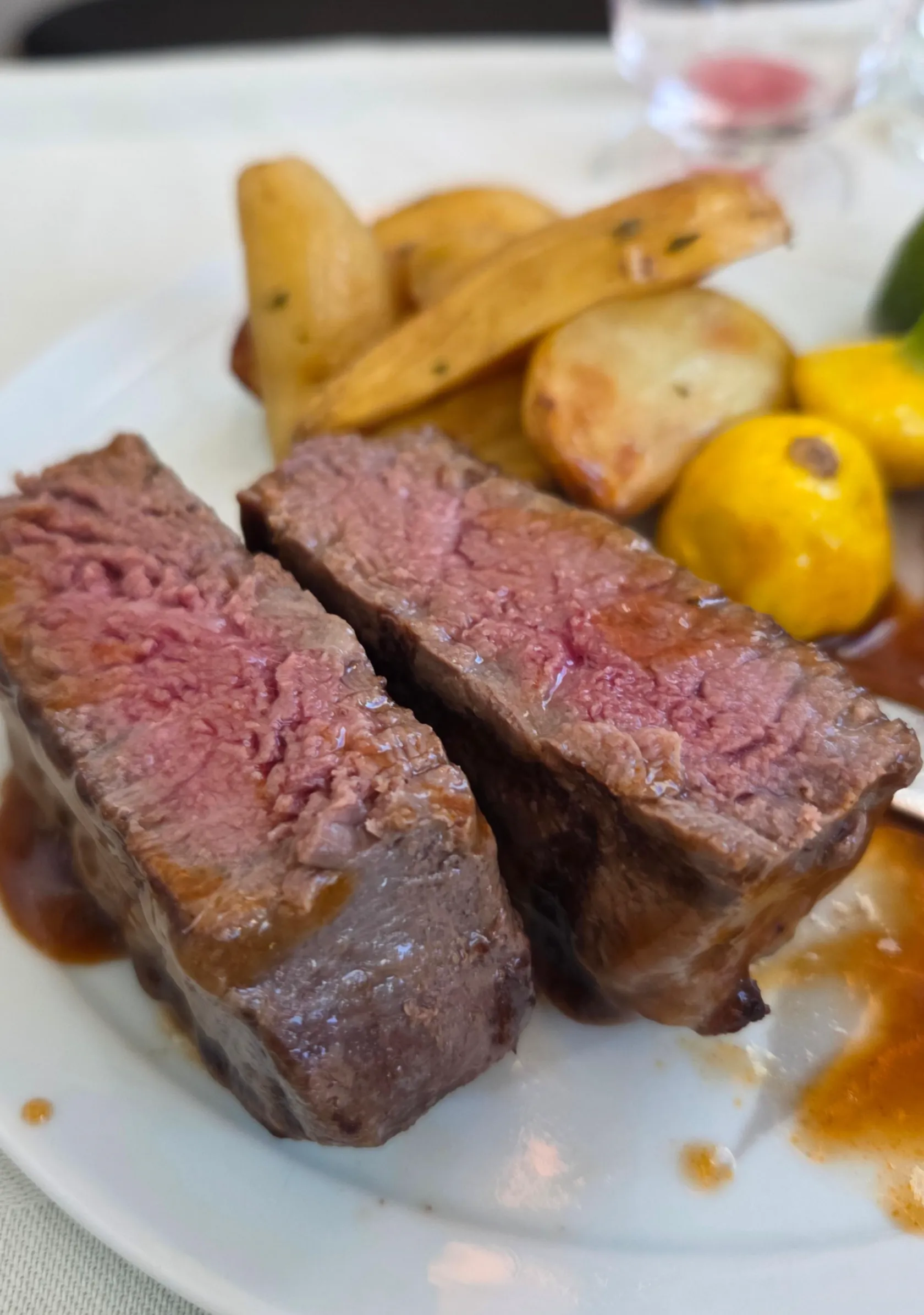
Korean Air KE32 Prestige Class main course
My main course was a beef tenderloin steak with lemon-thyme sauce, served medium. There’s a lot of discussion about how Korean Air cooks its steaks. Mine looked closer to medium-well, though the texture was closer to medium. The texture was fine overall, but the meat was a little dry. The asparagus was slightly bitter, while the other vegetables were cooked well and still had a good bite.

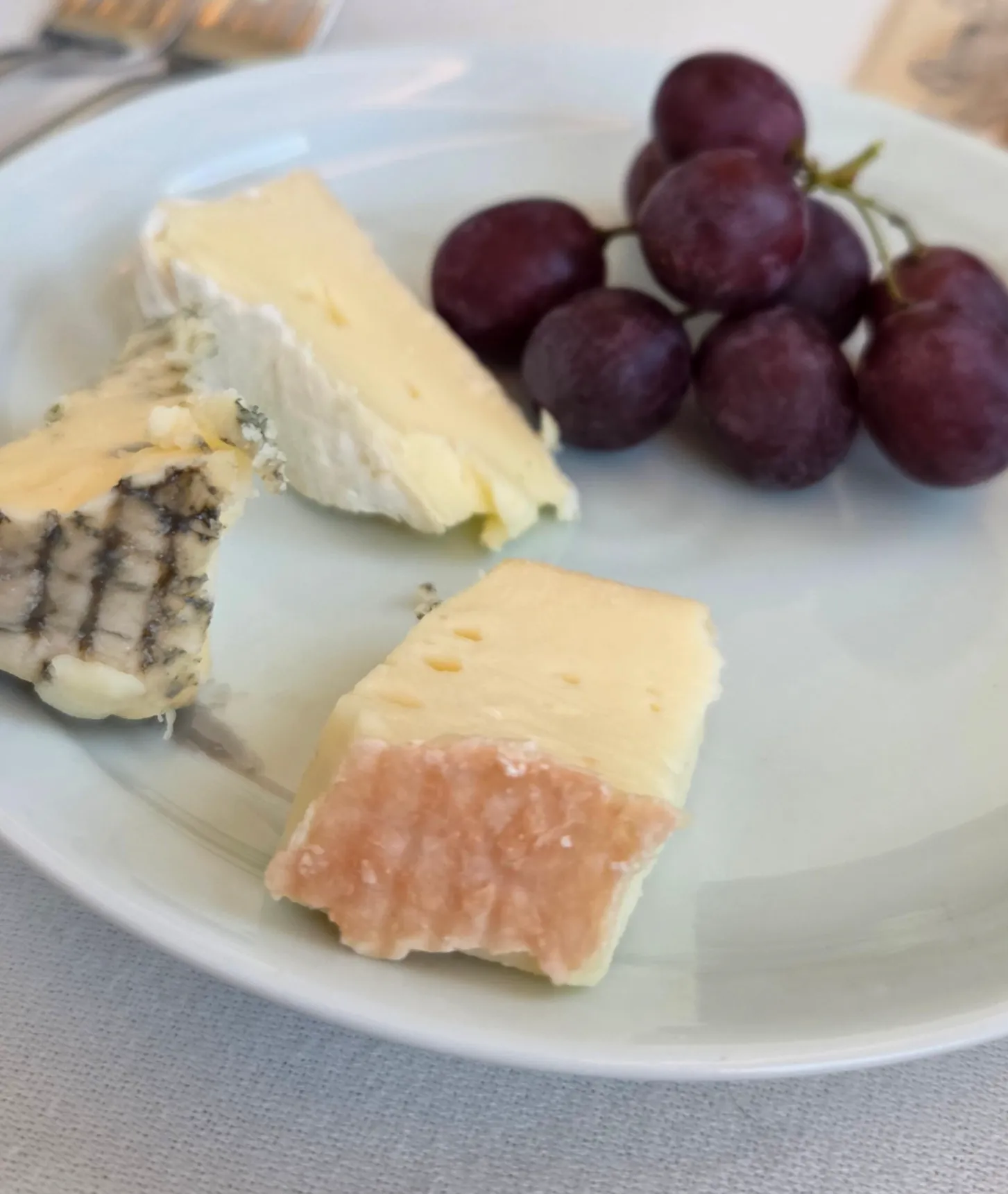
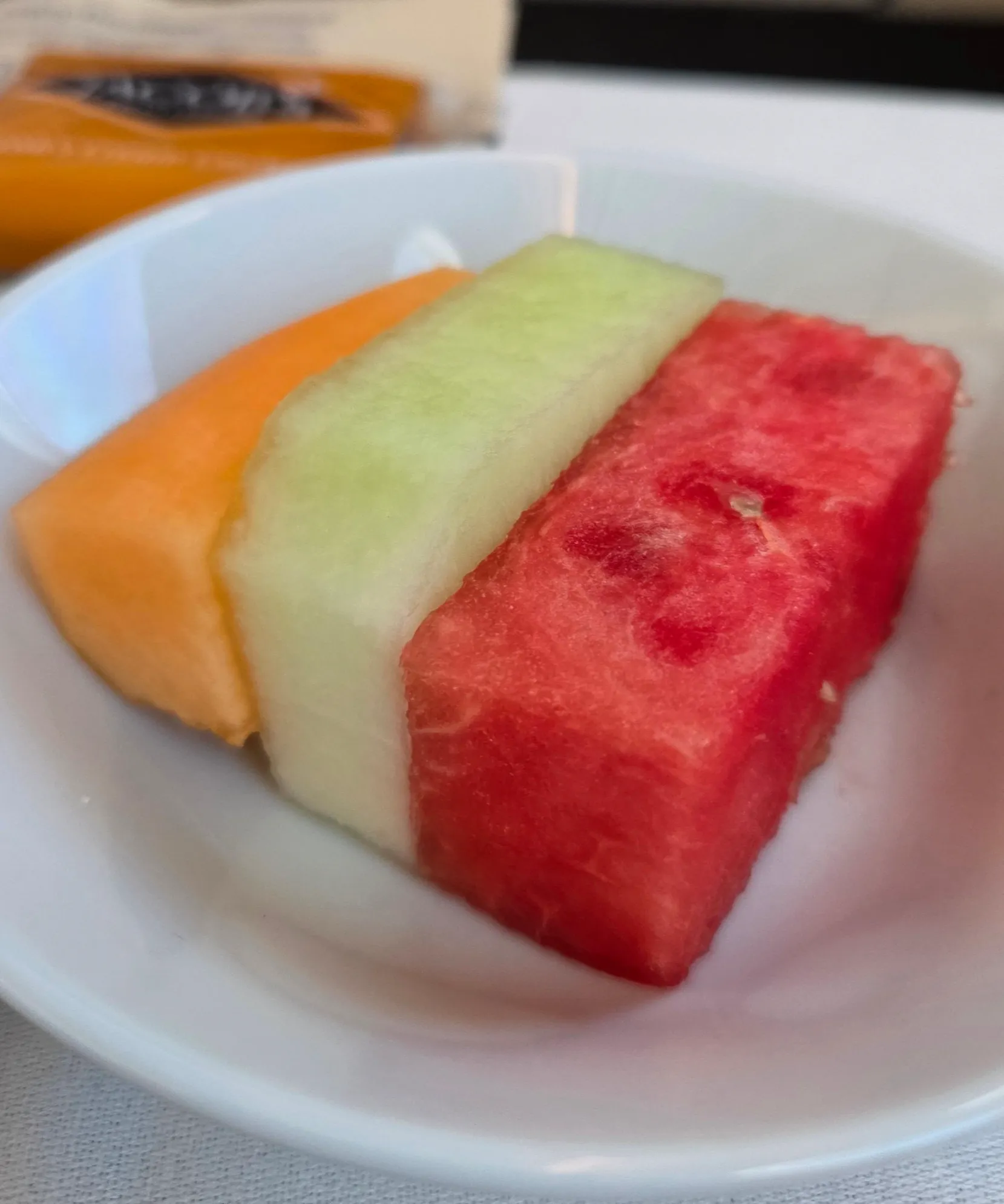
Korean Air KE32 Prestige Class dessert 1
The first dessert course was a cheese plate and fruit. The plate came with Brie, blue cheese, a third cheese I couldn’t identify, and crackers. The cheeses were pretty good. The fruit included grapes, watermelon, melon, and cantaloupe. The grapes were sweet and tasty, the watermelon could have been sweeter, and the melon was fine. The cantaloupe was still crunchy and could have used more time to ripen.
Korean Air KE32 Prestige Class dessert 2
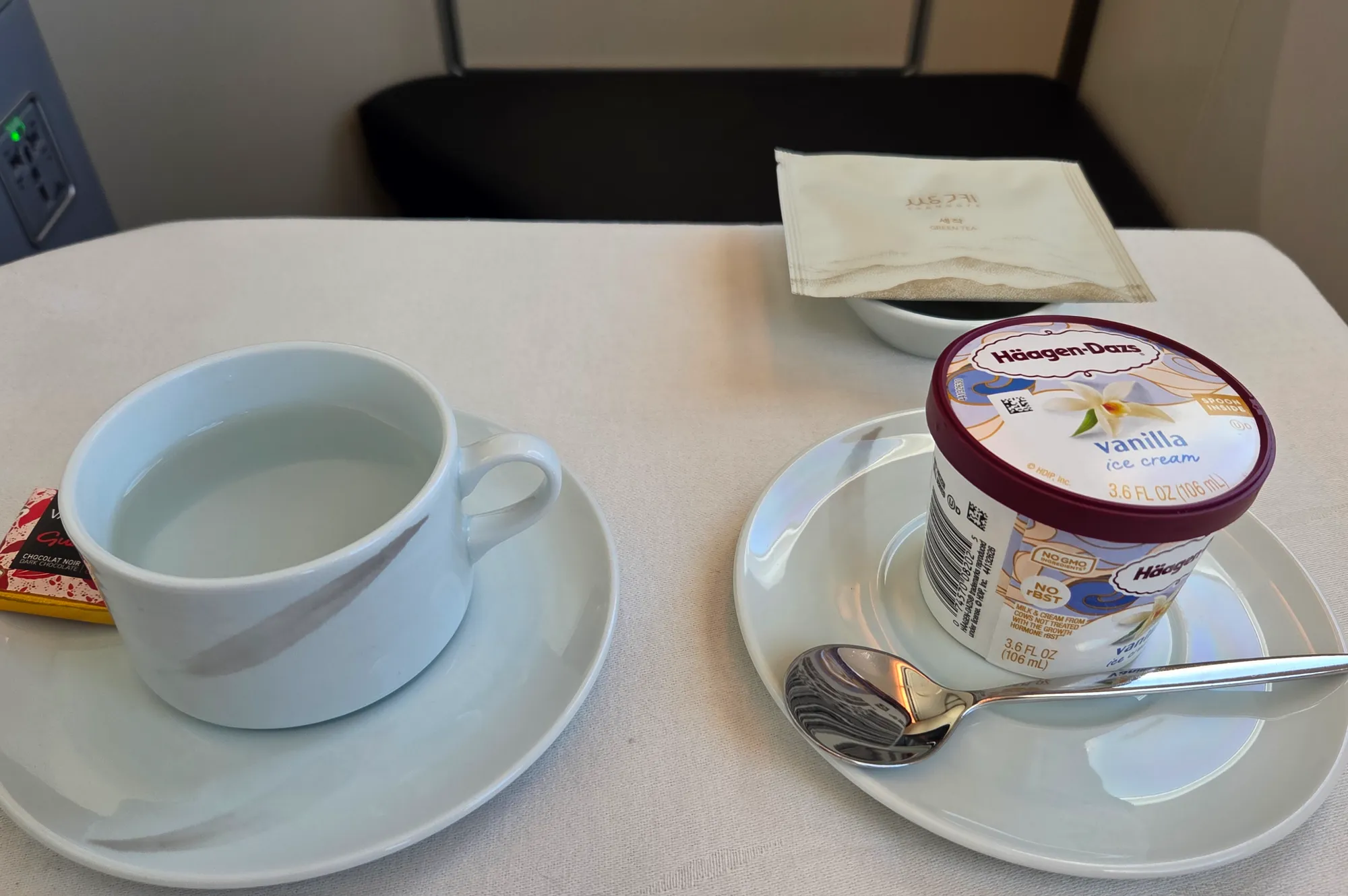
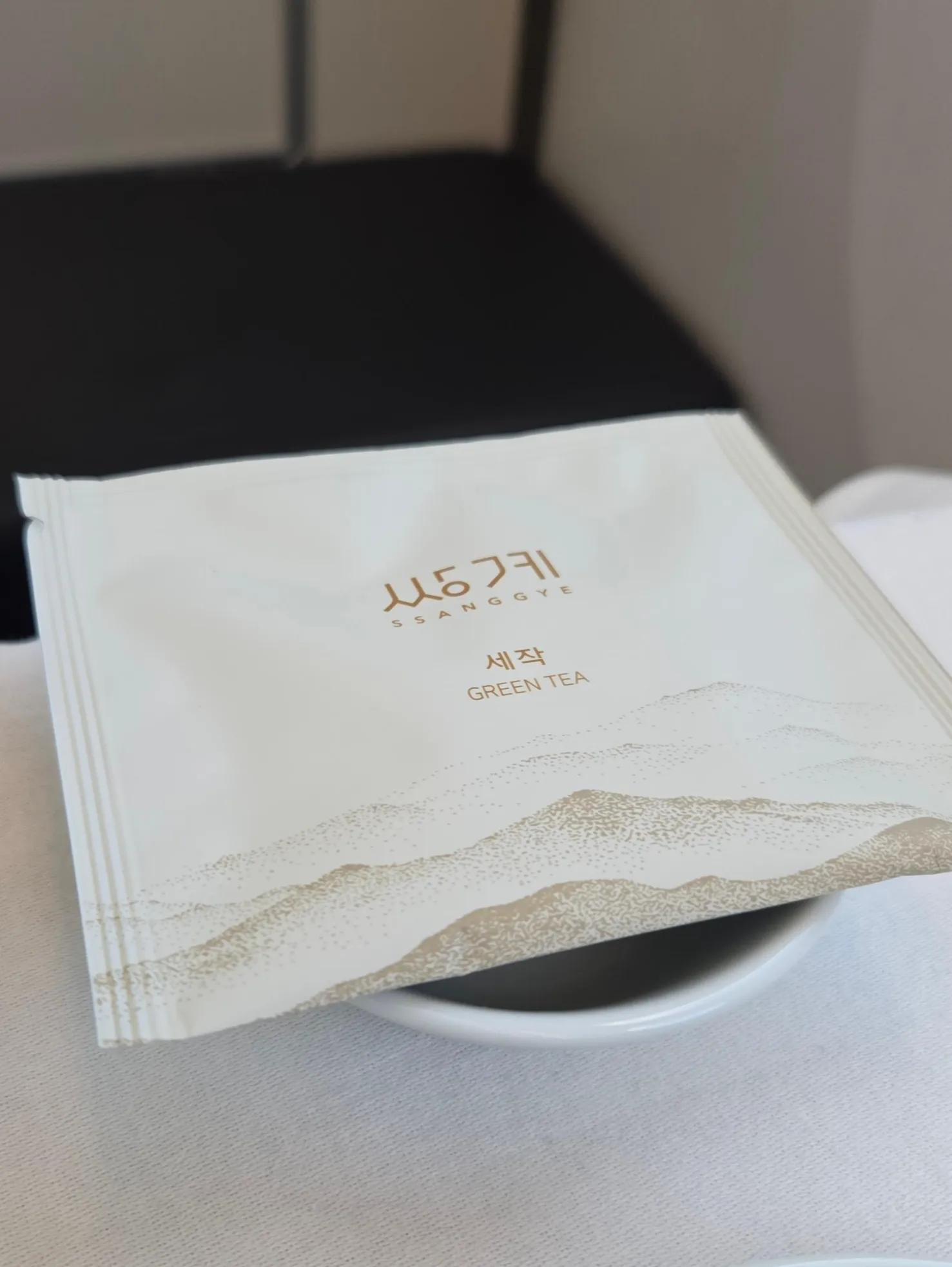
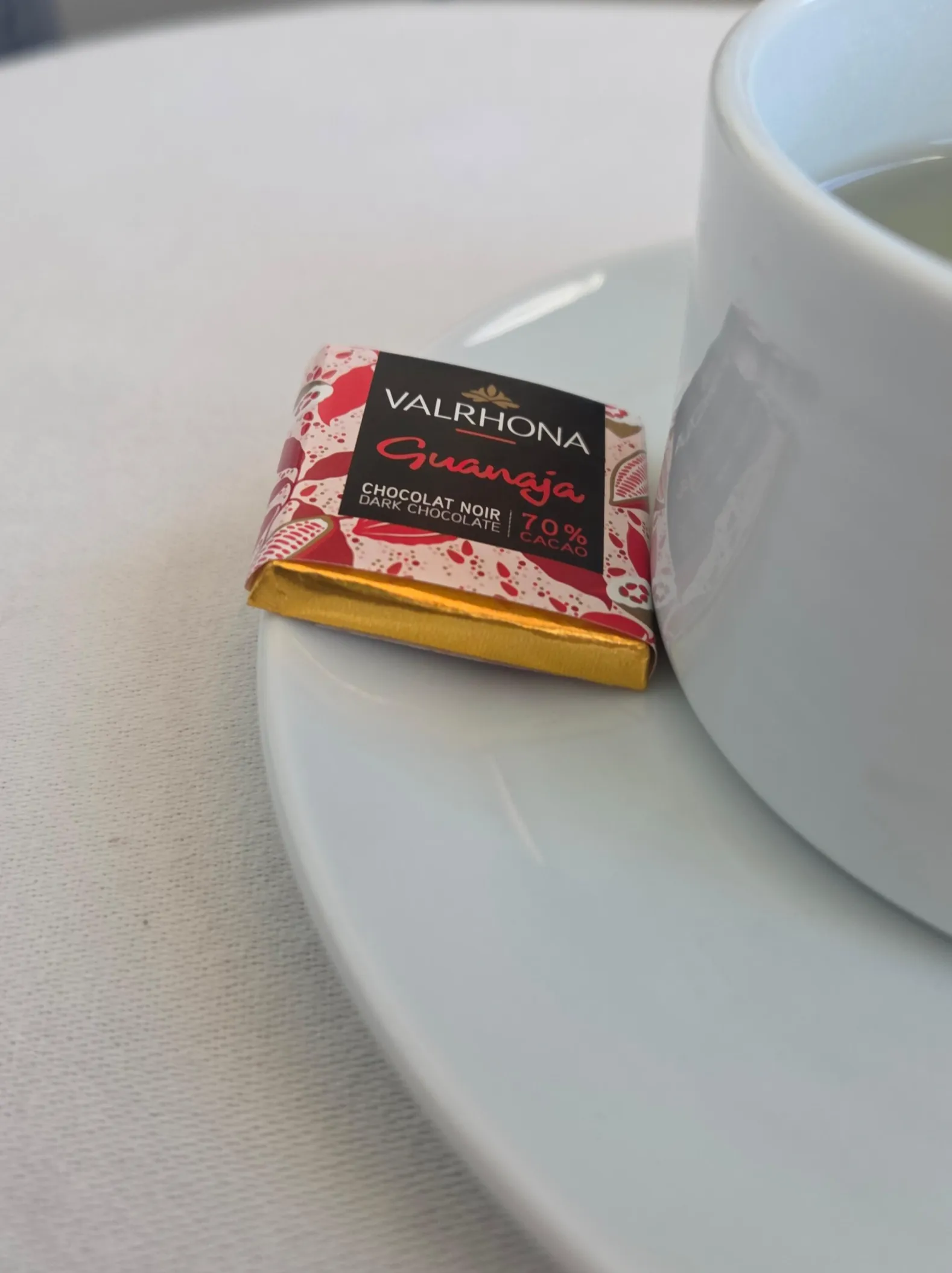
For the second dessert, I could choose between key lime pie and chocolate or vanilla ice cream. I picked vanilla. It seemed to have been taken out ahead of time and was already soft enough to eat with a spoon. I finished the meal with a glass of port and a cup of sejak green tea. The whole service took about an hour and 40 minutes. The meal itself was decent, and the flight attendants were particularly warm and attentive.
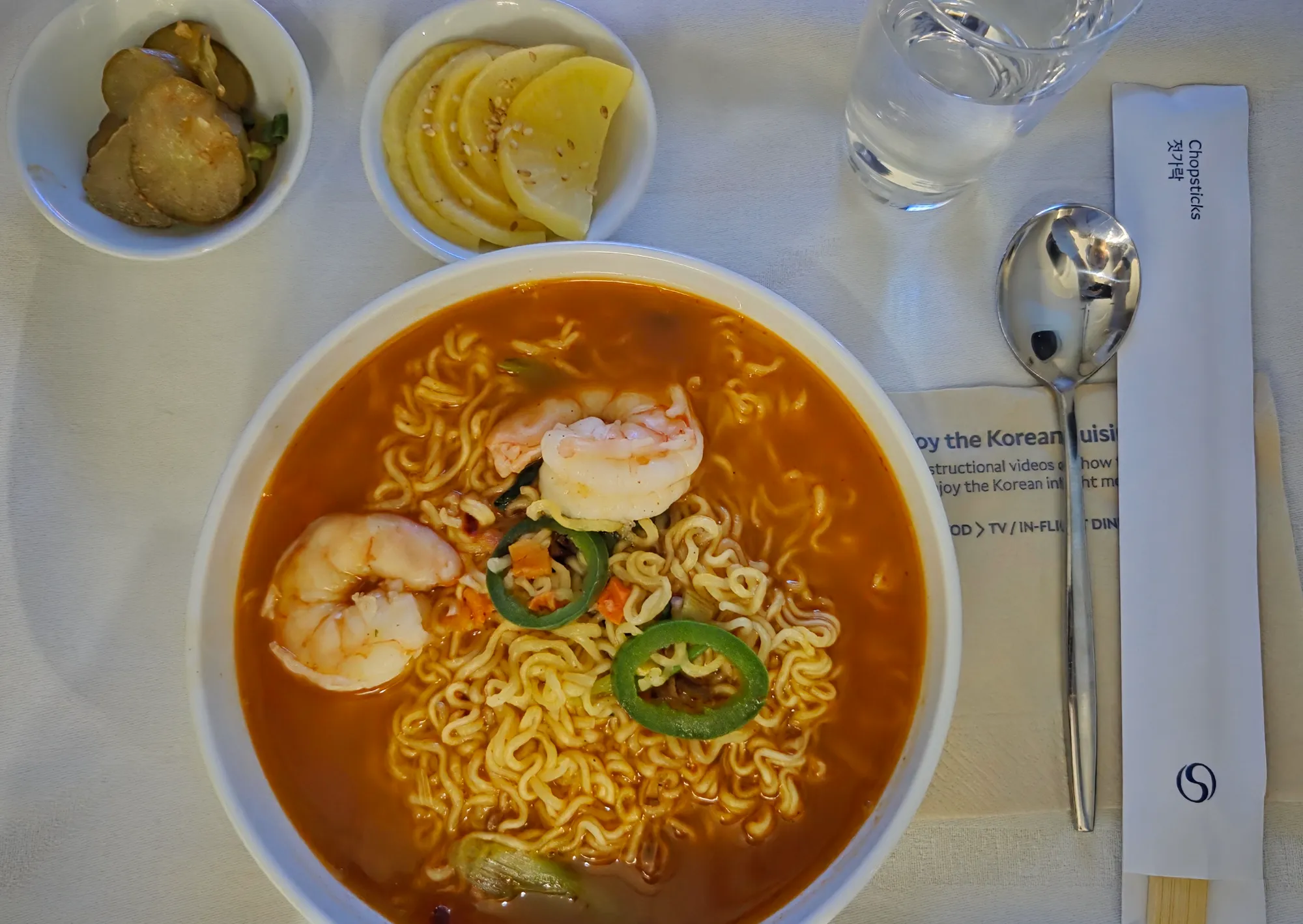
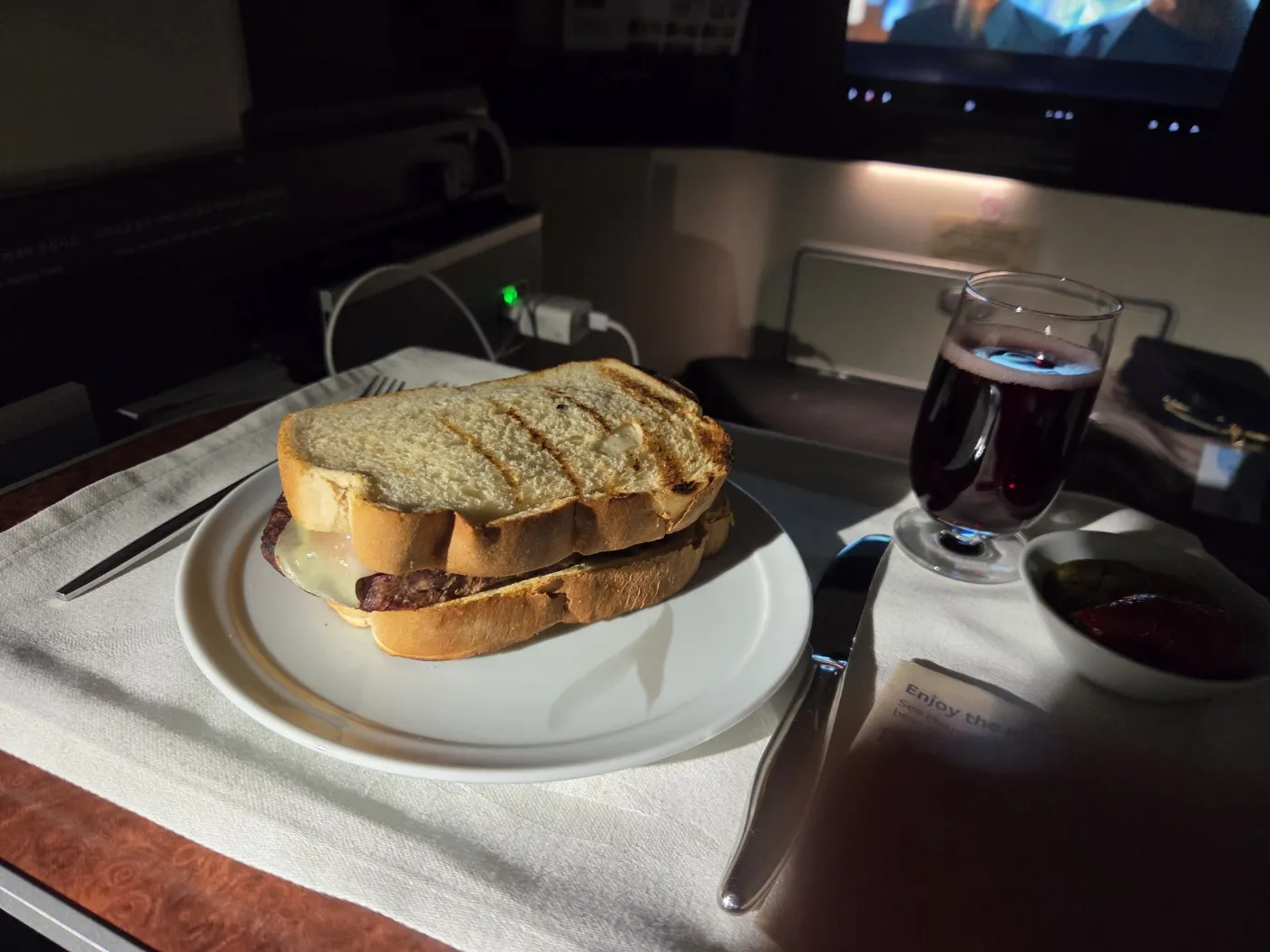
Korean Air KE32 Prestige Class snack 1
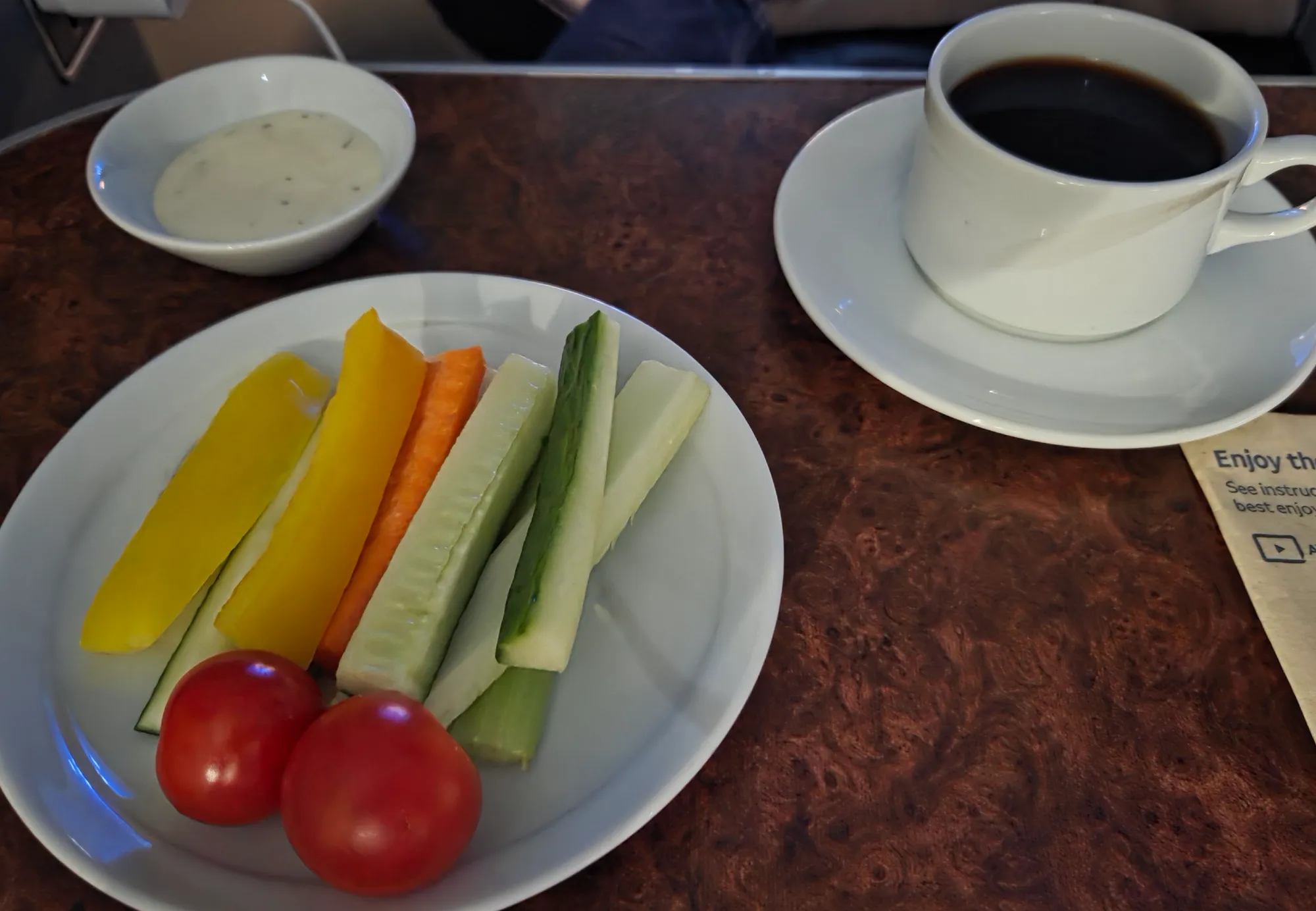
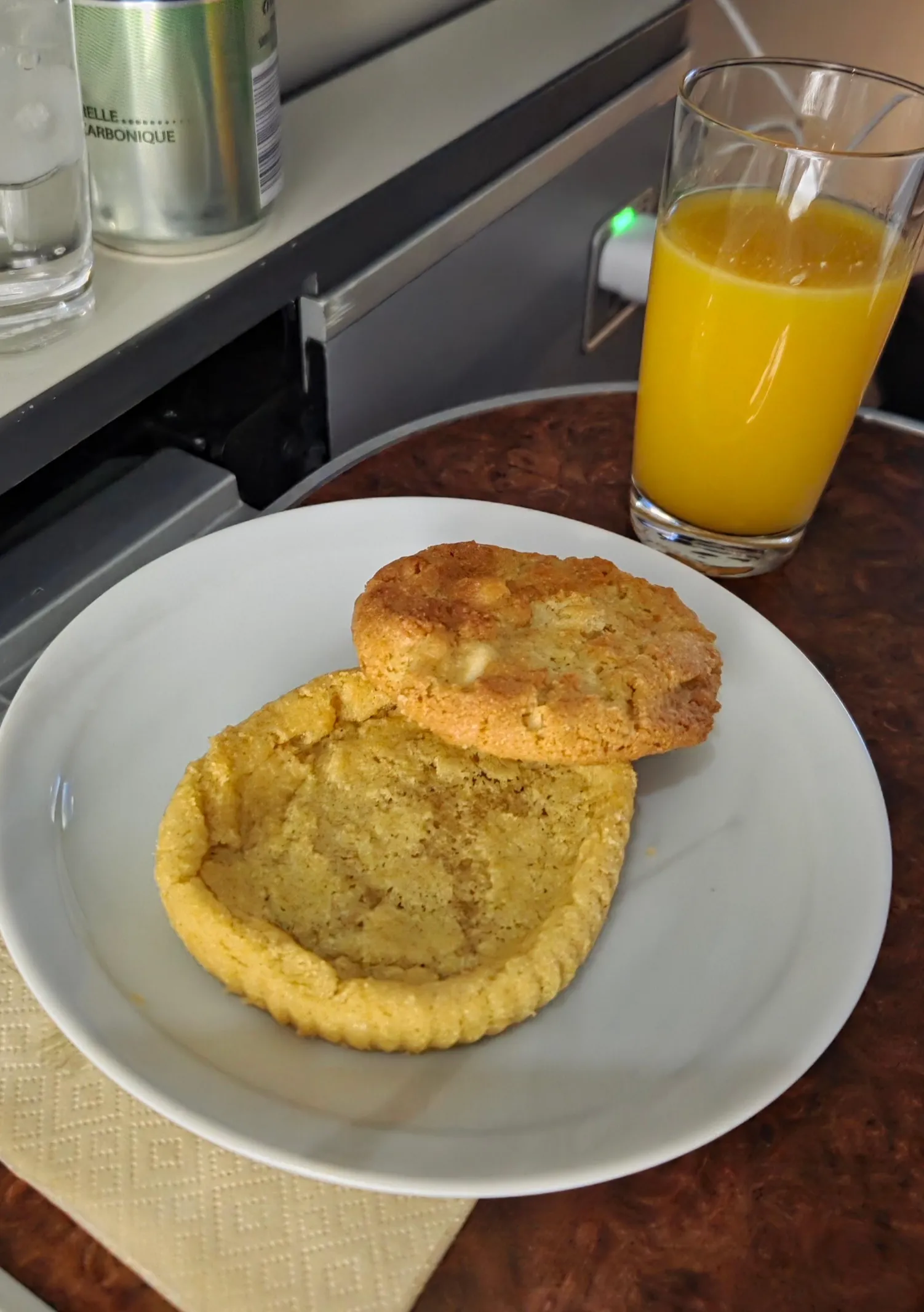
Korean Air KE32 Prestige Class snack 2
About six hours into the flight, the crew served snacks such as freshly baked cookies and roasted chestnuts, along with orange and apple juice. Ramen and a beef sandwich were available on request. I ordered the ramen. Korean Air serves Shin Ramyun Air, a version made without meat ingredients because many countries restrict travelers from bringing in foods that contain meat. It came with two shrimp and some jalapeños. The broth had a clean, spicy flavor and tasted even hotter than regular Shin Ramyun with the jalapeños. The shrimp were plump and cooked just right, and the noodles still had a good bite. It came with seasoned yellow pickled radish, pickled cucumbers, and water. I also tried the vegetable sticks, which came with bell peppers, celery, carrots, cucumber, cherry tomatoes, and ranch dressing. They were a refreshing snack midway through a long flight. I enjoyed the ramen, but the snack selection is still one of the weaker parts of Korean Air’s Prestige Class. On a 15-hour flight, I’d like more substantial choices for a midflight meal. The ramen and sandwich felt like a limited selection compared with what I’ve had on other airlines.
Korean Air KE32 Prestige Class appetizer before landing
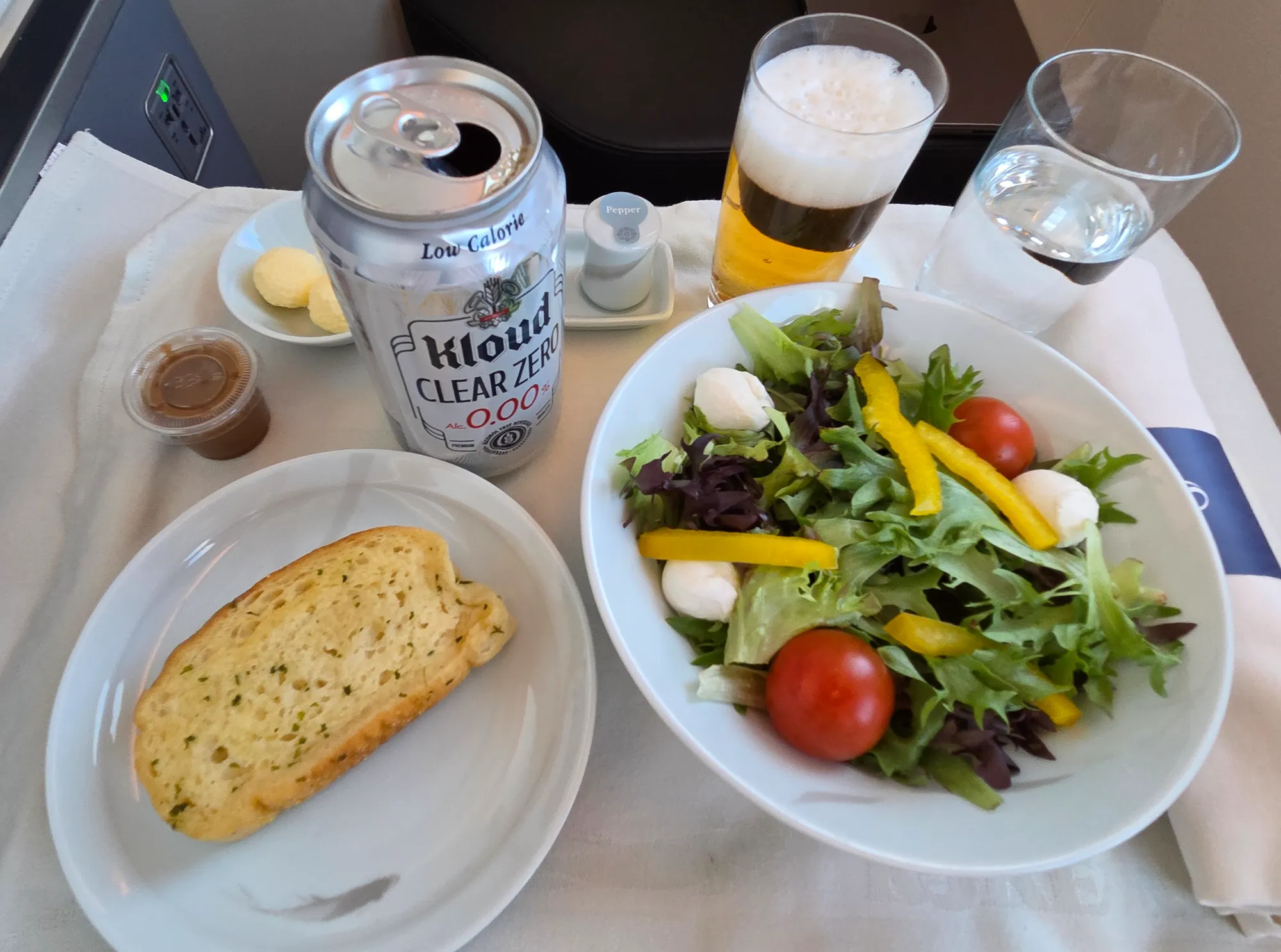
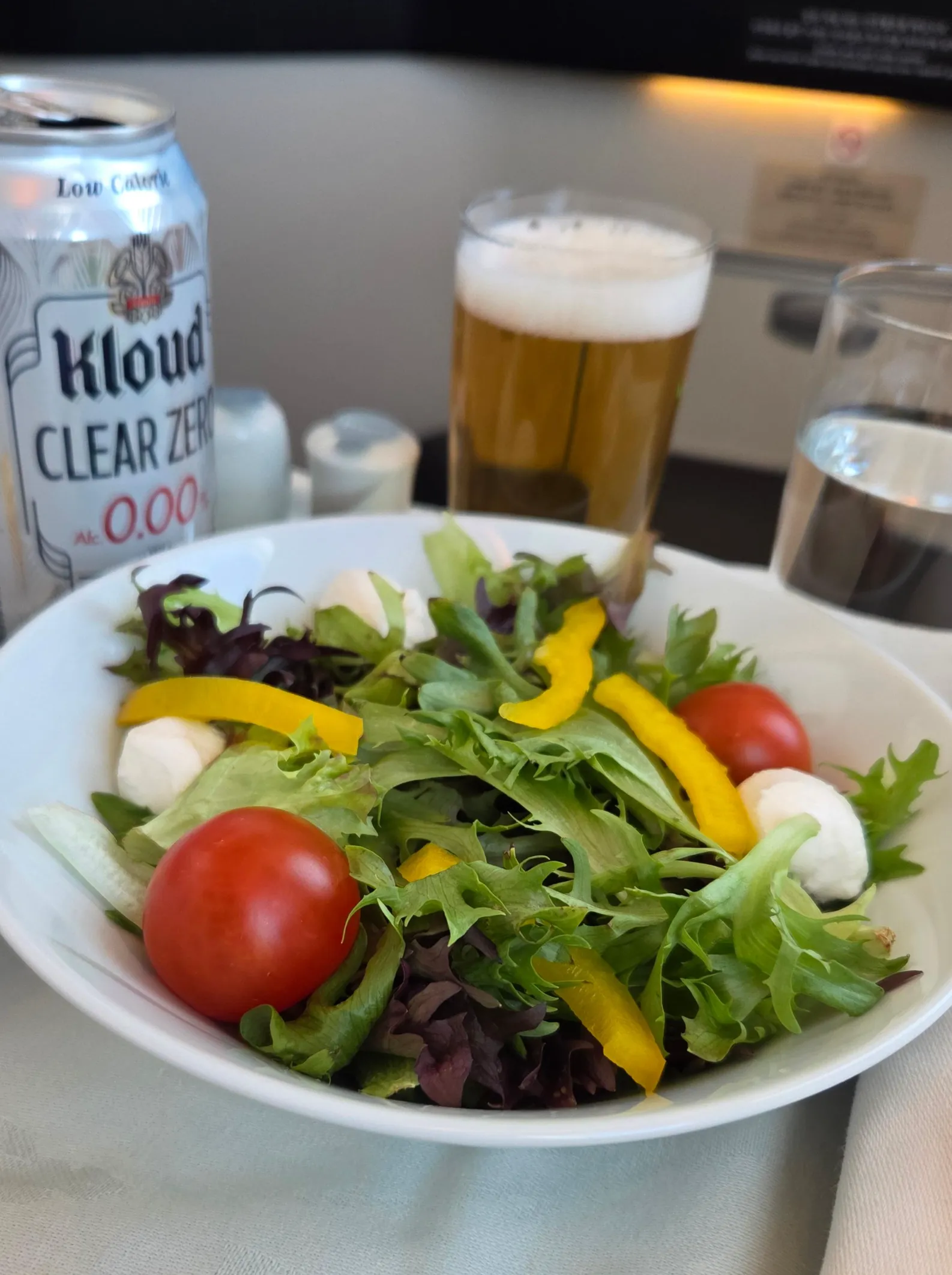
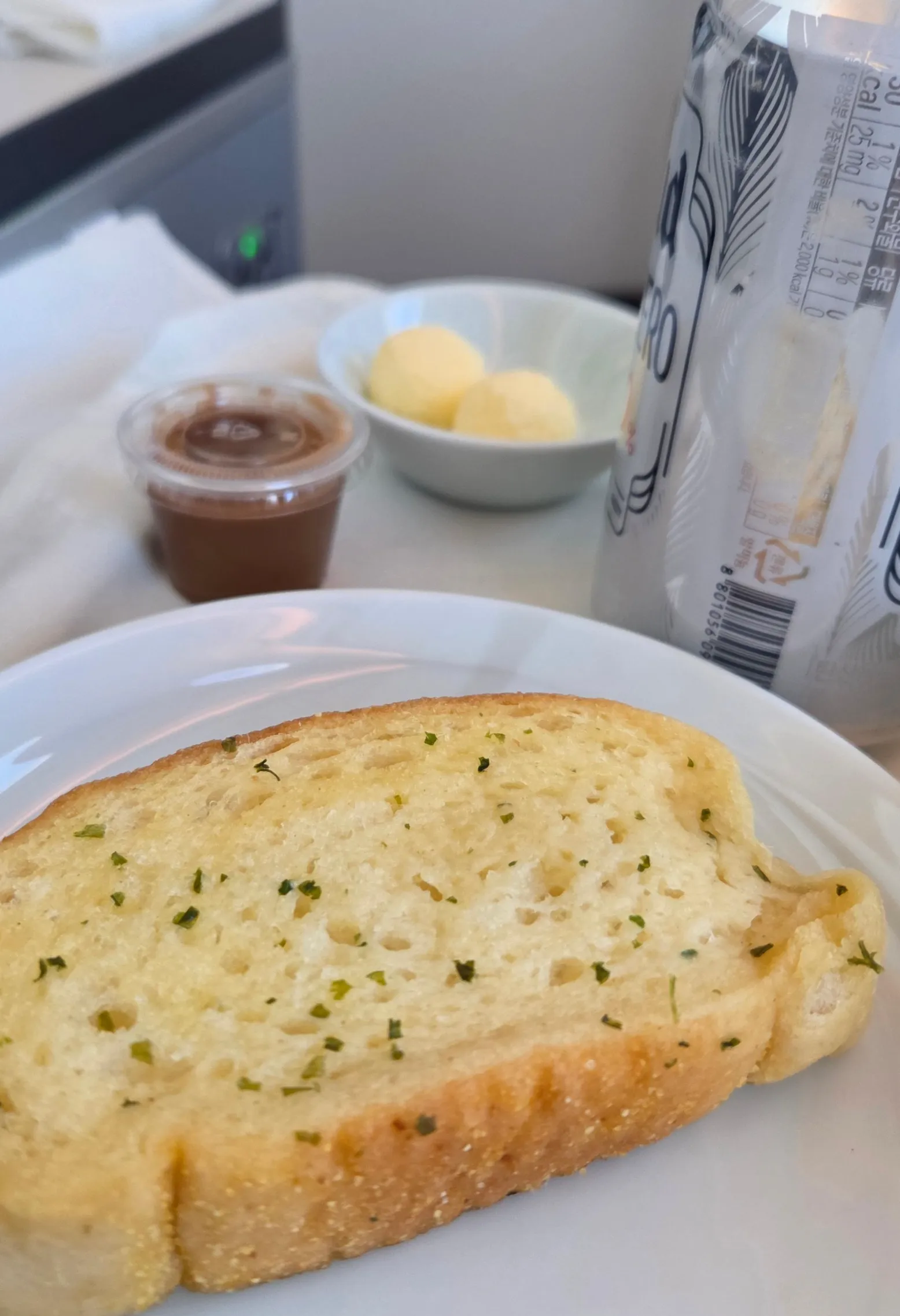
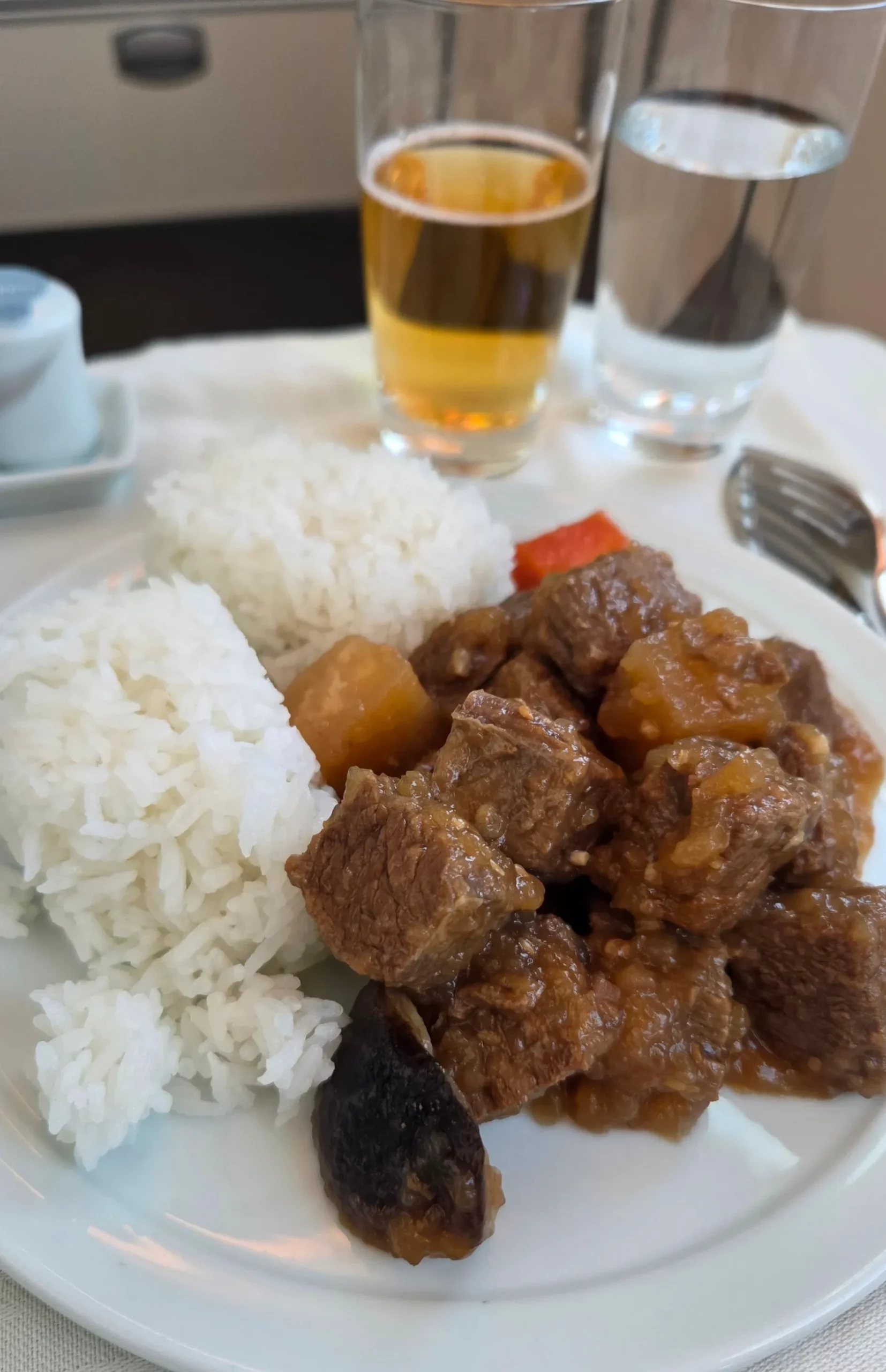
The final meal was served about two and a half hours before arrival. The choices differed slightly from the printed menu again. I could choose galbijjim with rice, ricotta-stuffed chicken breast with mashed sweet potatoes, or cod in tomato sauce. I went with the galbijjim, or Korean braised short ribs. The crew started with water and juice, then served salad and bread and offered drinks. The salad came with mozzarella and the same lemon honey mustard dressing as the earlier appetizer. I would have liked a different dressing this time. I chose garlic bread, which felt a little soggy, possibly because there was too much garlic spread. The galbijjim came with rice.
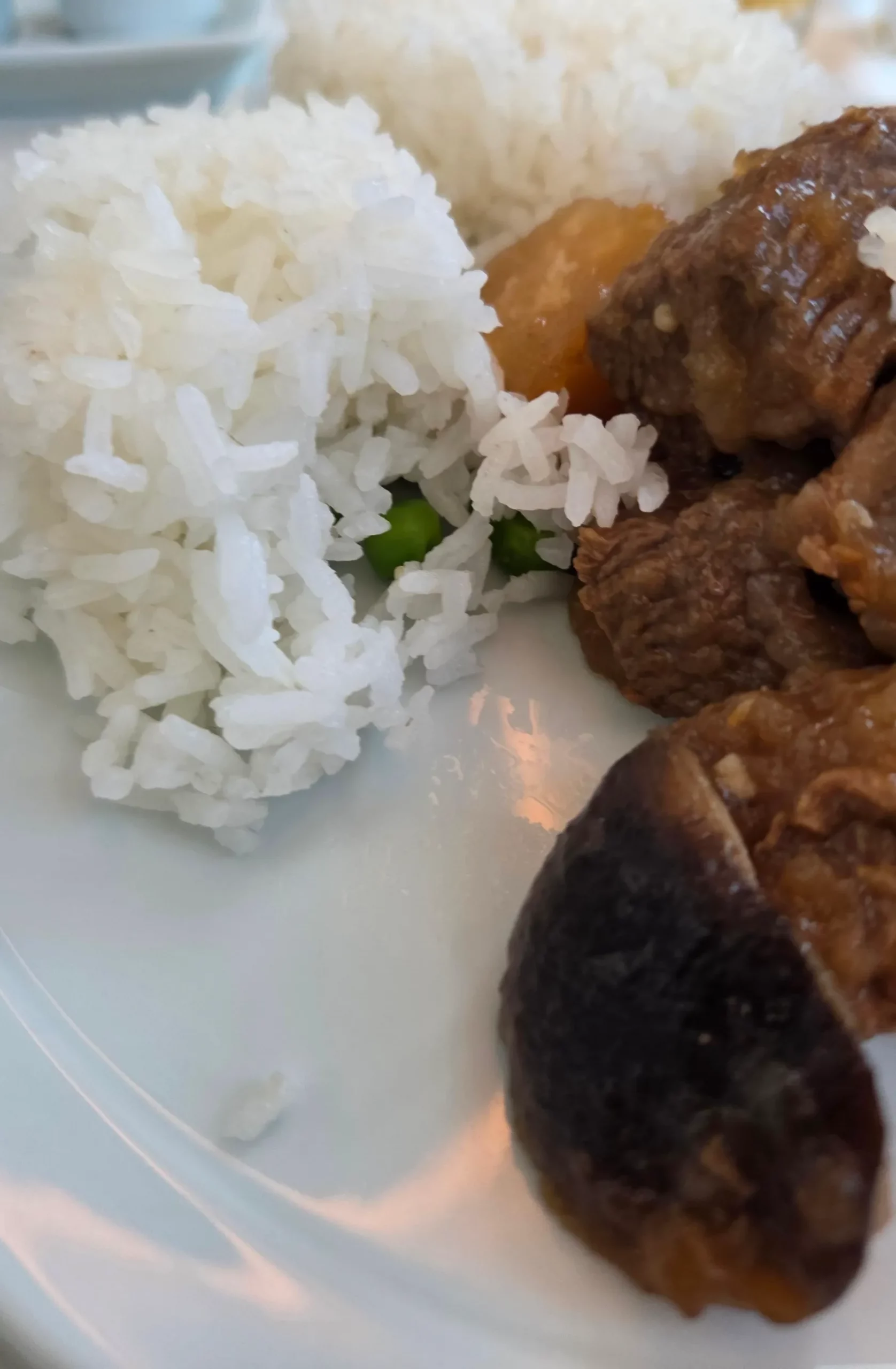
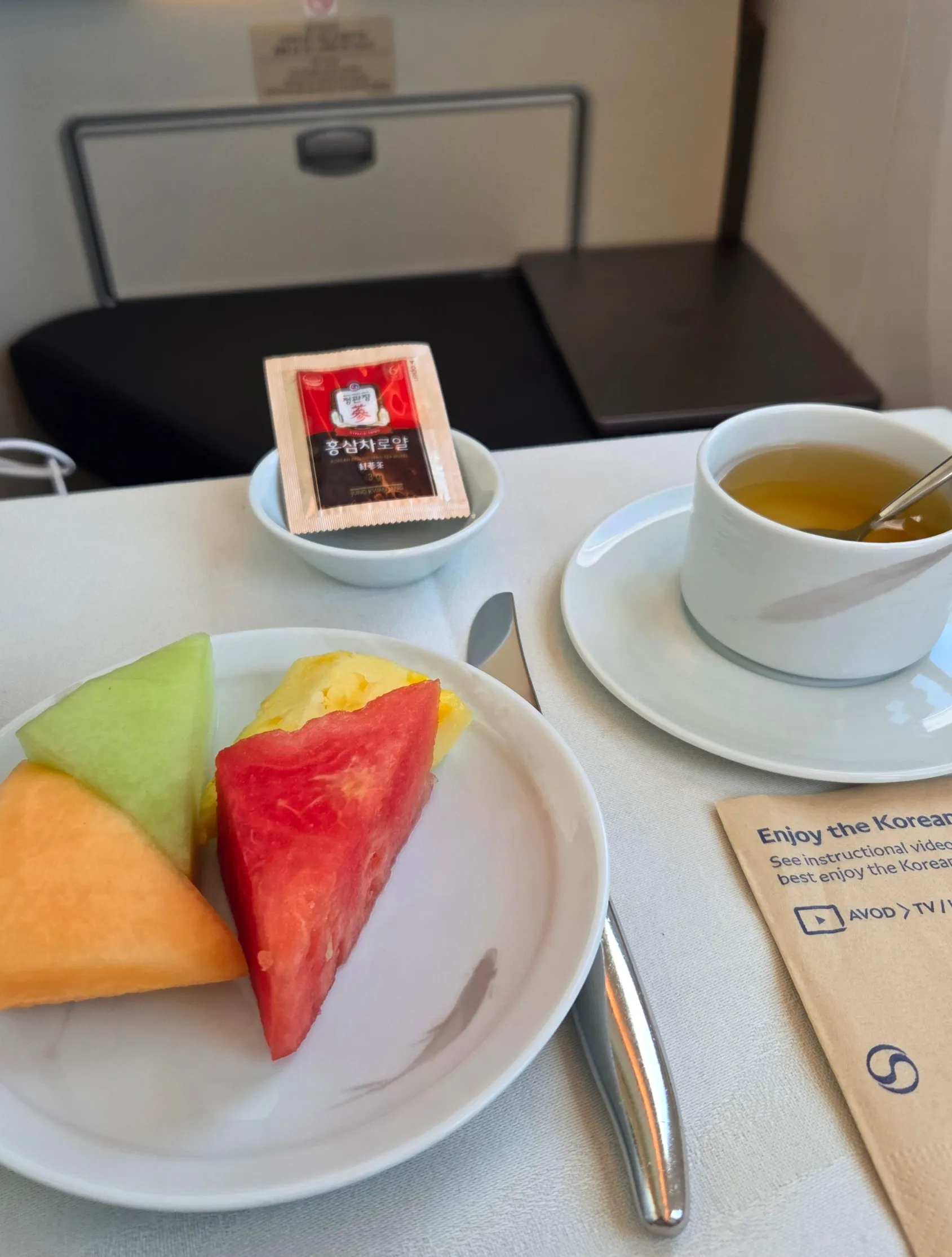
Korean Air KE32 Prestige Class main course and dessert before landing
The galbijjim came as cubes of boneless beef that were a little tough. It tasted as though the beef had been seasoned and cooked separately, then topped with a sauce thickened with starch. I’d expected more of the flavor you get when the meat braises in the sauce. The carrots and radish came on the side. I was surprised that the radish still had some crunch and was seasoned all the way through. There were green peas with the rice, but I didn’t see them at first. It looked like the rice had been turned out onto the plate with the peas underneath. I think it would have looked more appetizing with the peas on top of the white rice. The meal ended with a similar plate of fruit, this time with watermelon, cantaloupe, melon, and pineapple. The fruit was disappointing overall. Maybe it had something to do with the flight leaving from the U.S., but I preferred the Western meal I had earlier. I ordered red ginseng tea and was served Jung Kwan Jang. The flight attendant brought me a second packet, explaining that some passengers find one packet too weak. She was right. With two packets, I could finally taste the ginseng.
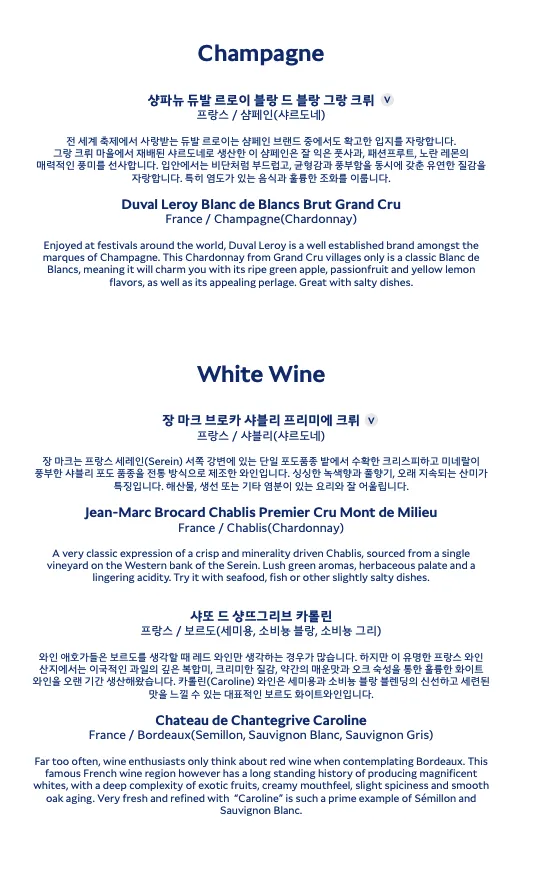
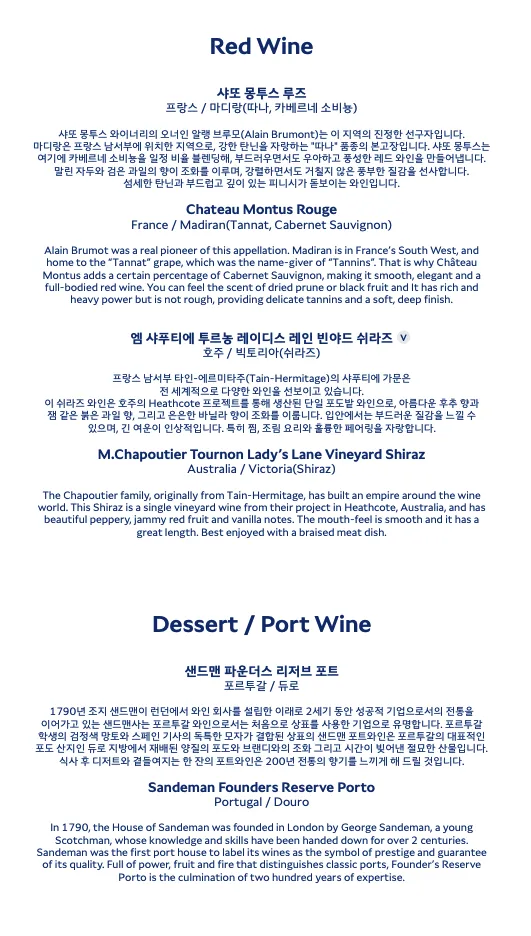
Korean Air KE32 Prestige Class alcoholic drinks menu
Korean Air’s drinks list was about what I’d expect in Prestige Class. There was one Champagne, two reds, two whites, and one port. The spirits included single malt and blended Scotch, bourbon, rum, gin, vodka, and XO Cognac, the most expensive spirit on the menu. The beer selection was pretty good, with a lager, an ale, and a nonalcoholic option. The cocktail list covered basics like a highball, gin and tonic, martini, screwdriver, and Bloody Mary. I ordered a highball and really liked how it tasted. It was simply whiskey and tonic water over ice, and the presentation was a little plain. These days, more airlines are introducing signature cocktails and putting some thought into their color and garnishes. Even a small slice of lemon would have made the highball look a little more inviting. STARLUX’s bright blue signature cocktail, for example, stuck in my memory.
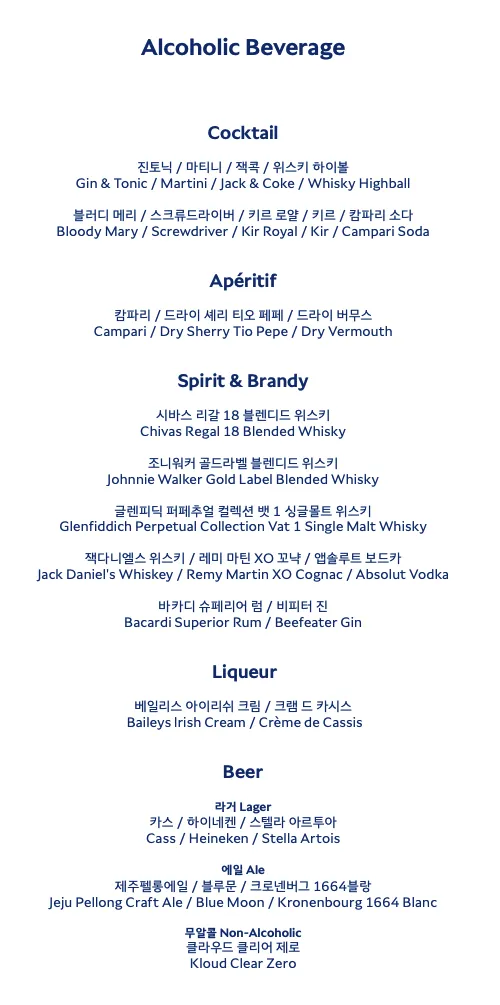
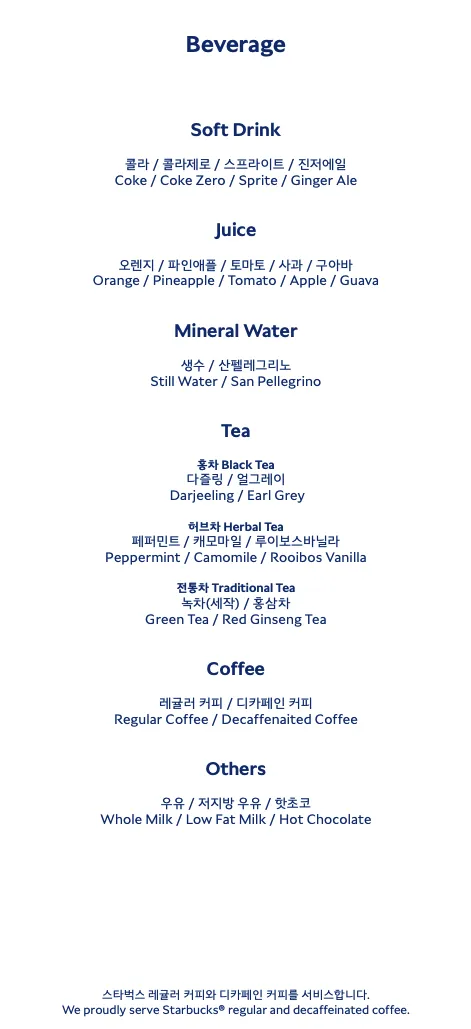
Korean Air KE32 Prestige Class wine and beverage menus
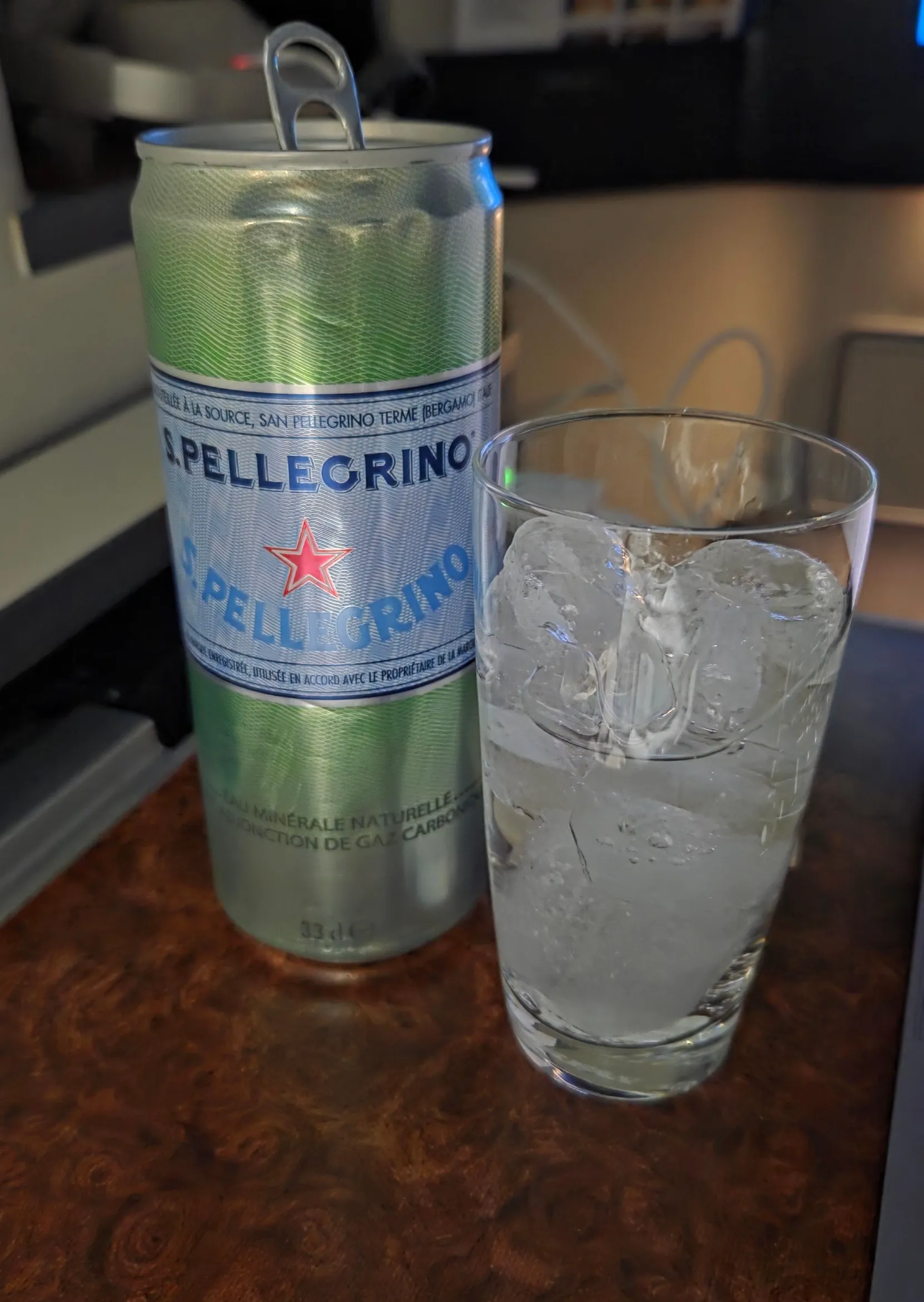
I was happy with the nonalcoholic selection, too. There were soft drinks including Coke Zero, plus orange, pineapple, tomato, apple, and guava juices, and sparkling water. The tea selection included green, black, herbal, and red ginseng tea. Milk, regular coffee, and decaf were also available. The glasses were fairly small, so if you drink a lot, you may find yourself asking for refills more often. You could get soft drinks and sparkling water by the can, which helped.
14. In-flight Entertainment & Wi-Fi
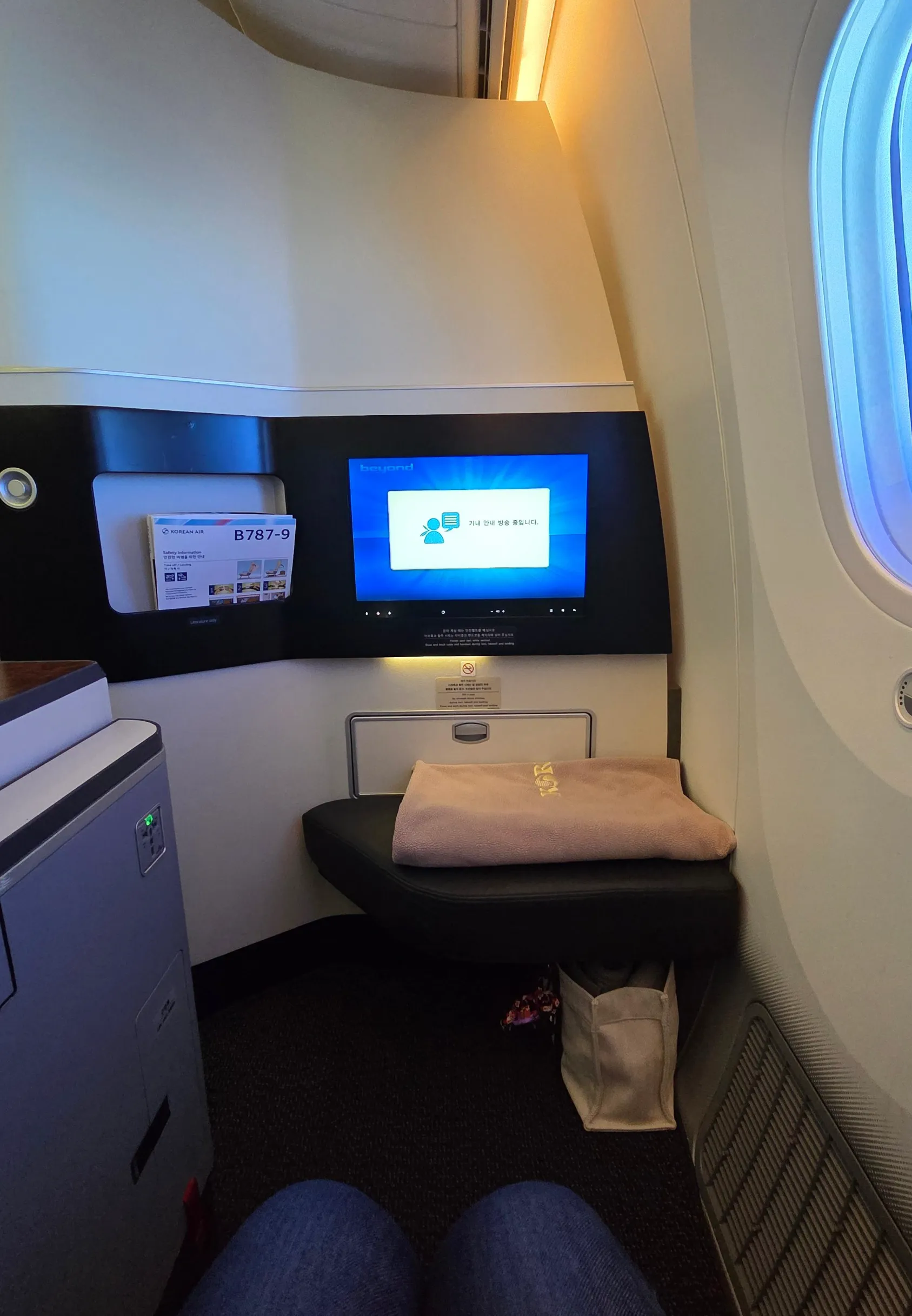
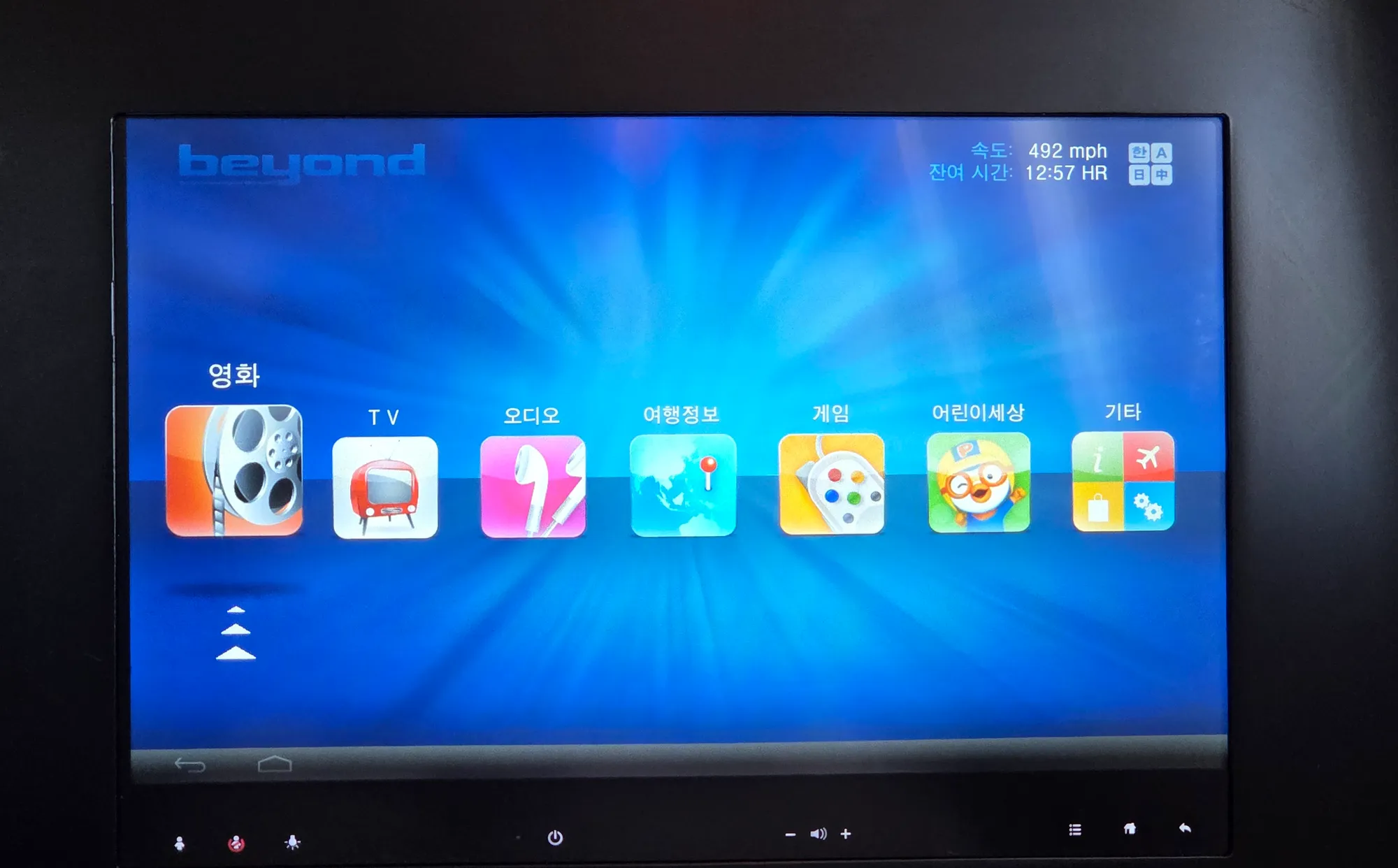
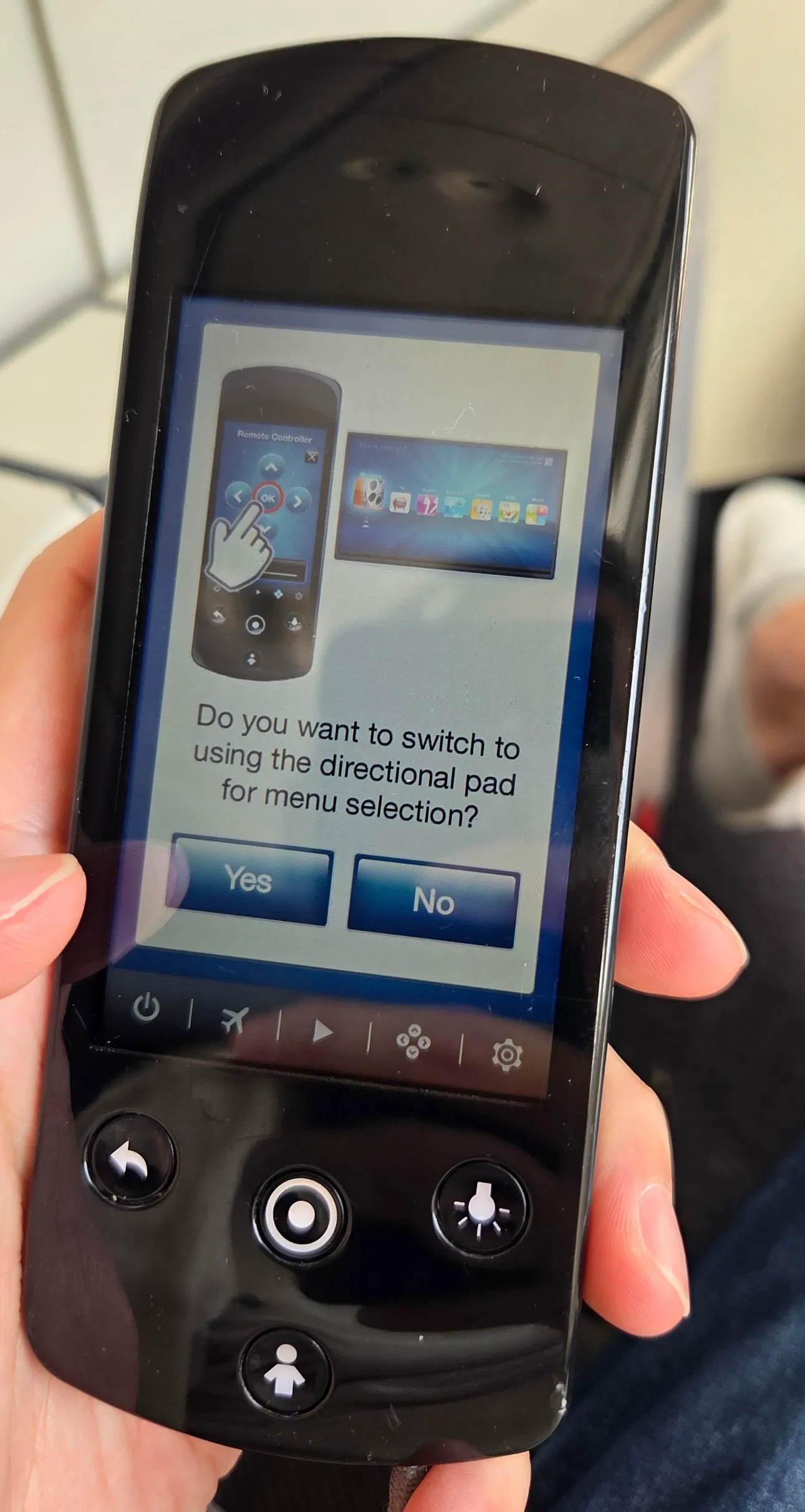
Korean Air Boeing 787-9 inflight entertainment system 1
The inflight entertainment was one of the weaker points of the Prestige Suite for me. It’s a seat design that’s been around for more than a decade, and the screen is small to begin with. It also sits at the far end of the seat by your feet, farther away than on the Prestige Suite 2.0, so it looks even smaller. The touchscreen remote made it easy to control the system from my seat, though the slight lag made it frustrating at times. The system on this 787-9 felt far behind what I’d used on the Airbus A321neo and Boeing 787-10 aircraft Korean Air had introduced in the previous three to four years.

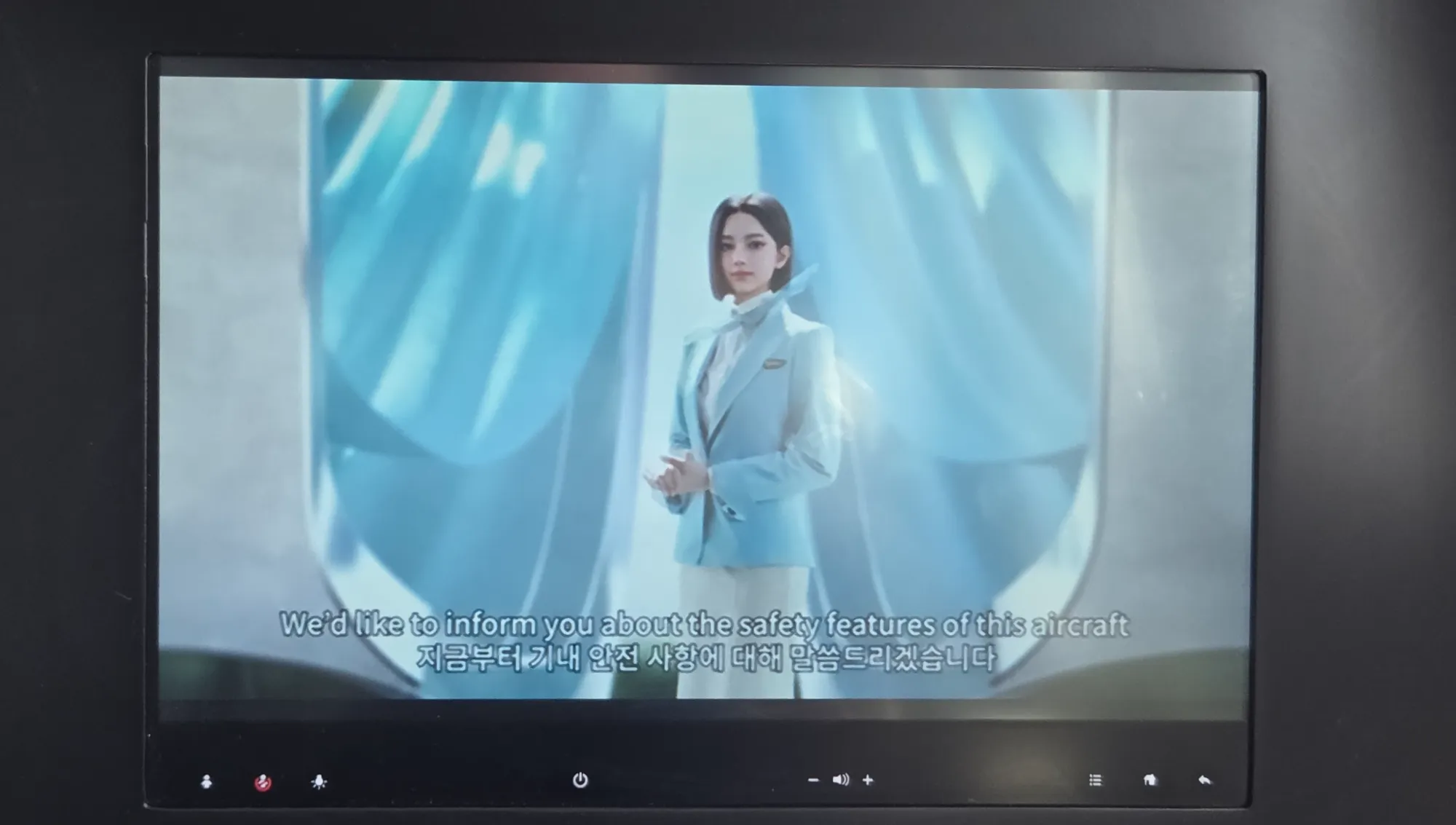

Korean Air Boeing 787-9 inflight entertainment system 2
The aircraft still ran Korean Air’s older Beyond entertainment system, complete with the old branding. There was plenty to watch, including a good selection of Korean movies and dramas. When I fly Korean Air regularly, though, only about 10 to 20% of the selection seems new from one flight to the next. I’ve gotten into the habit of downloading videos to my own device. If you fly less often, there’s enough variety to keep you occupied. The moving map also showed its age and was less intuitive than newer versions, and the Games section was still empty.
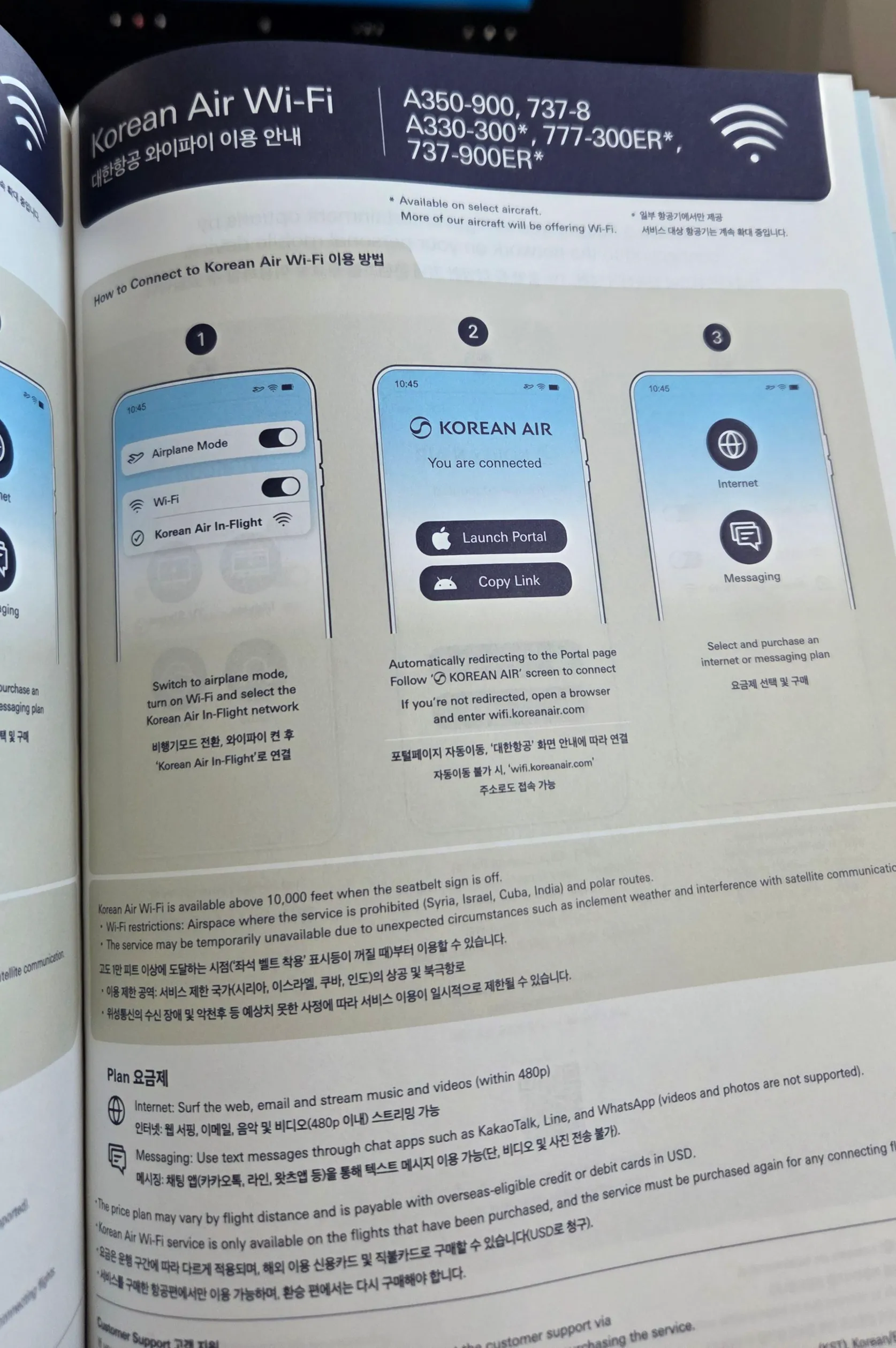
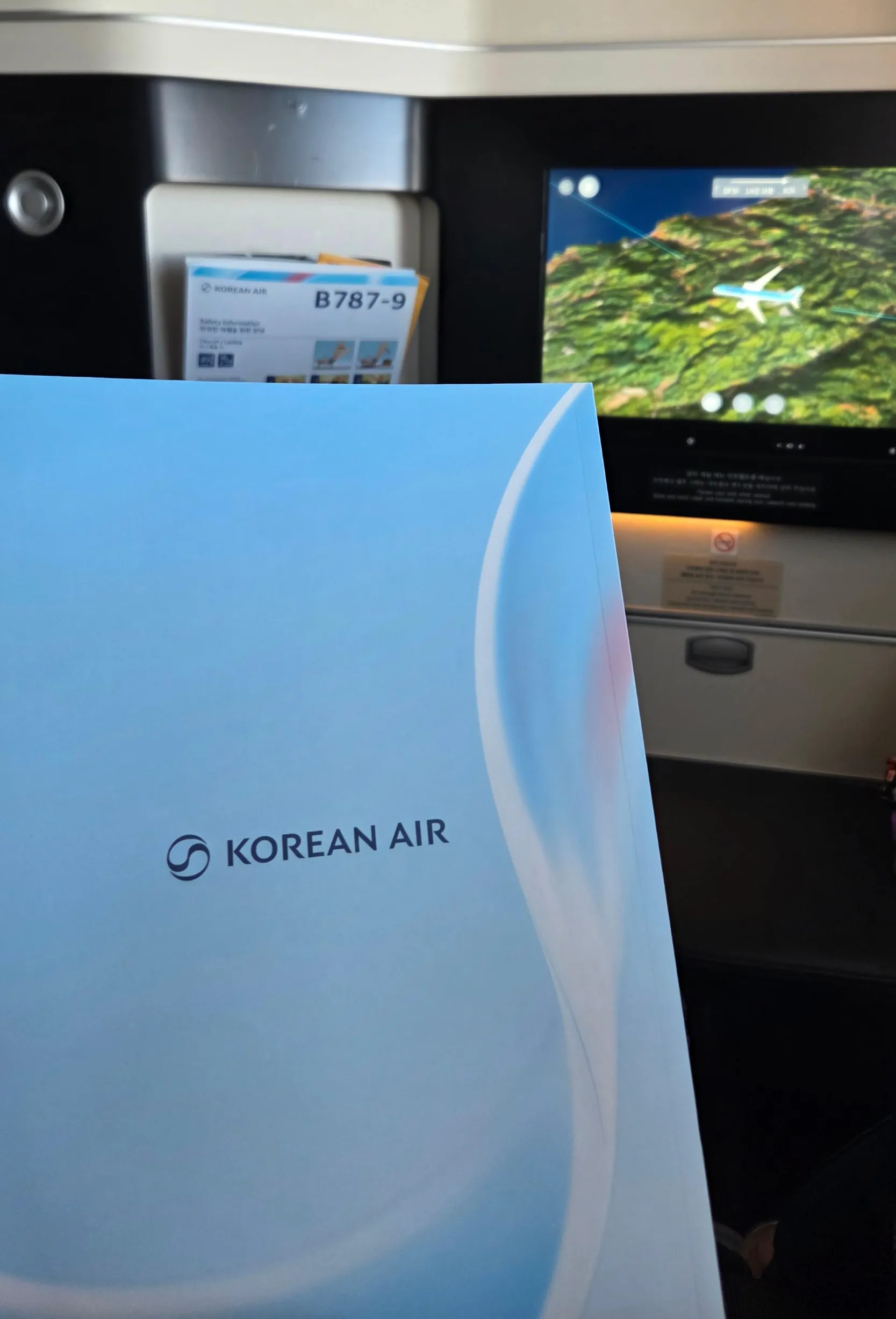
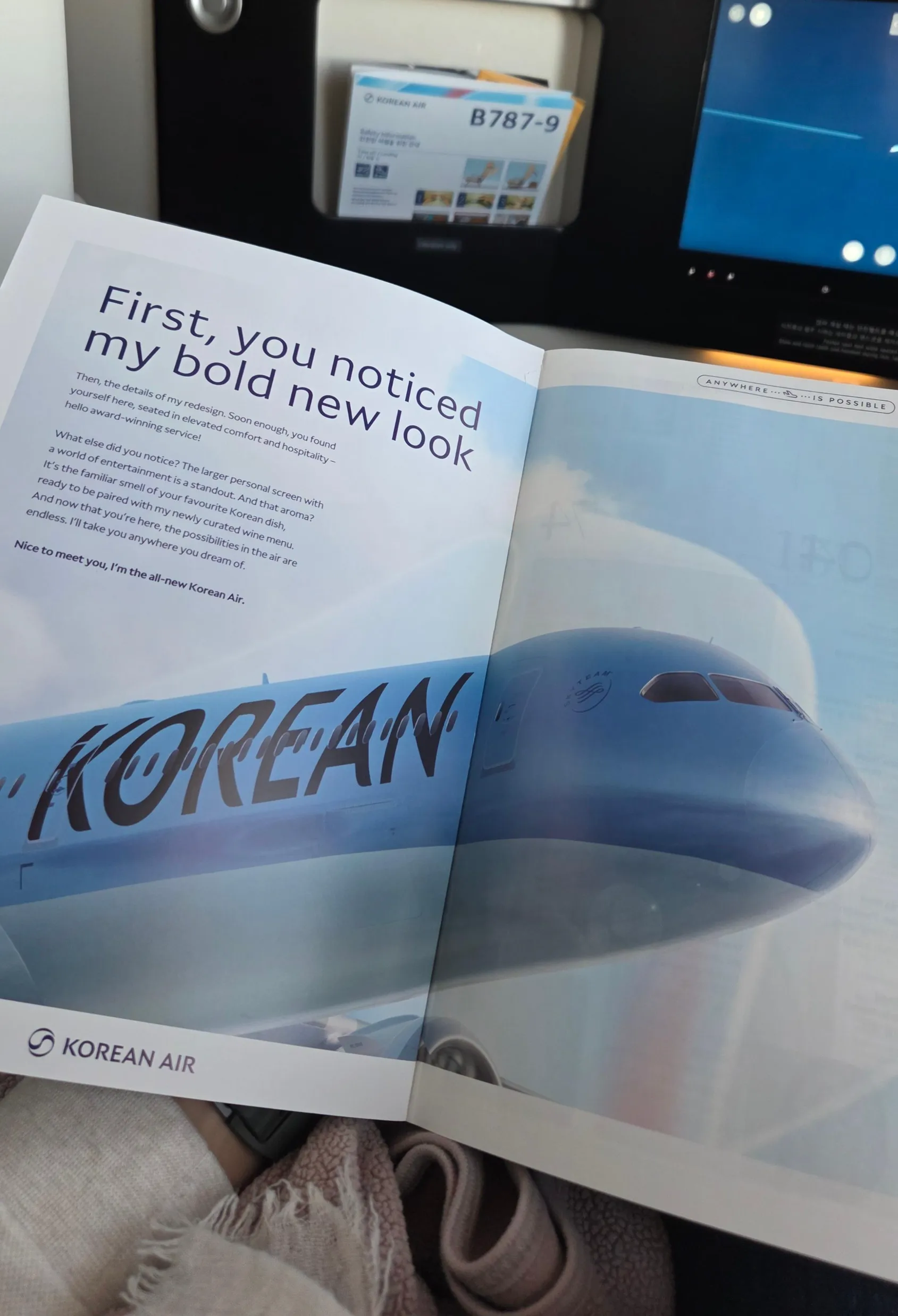
Korean Air inflight magazine
The lack of inflight Wi-Fi was another disappointment. Plenty of airlines already offered it when Korean Air introduced the Boeing 787-9, but Korean Air brought these aircraft into service without it. They were still flying without Wi-Fi when I took this flight. Korean Air had started installing Wi-Fi on newer aircraft, but it was frustrating to go without it on aircraft the airline relies on for medium- and long-haul routes, including the Boeing 777-300ER, 787-9, and 747-8i, and the Airbus A380-800.
15. Landing & Immigration
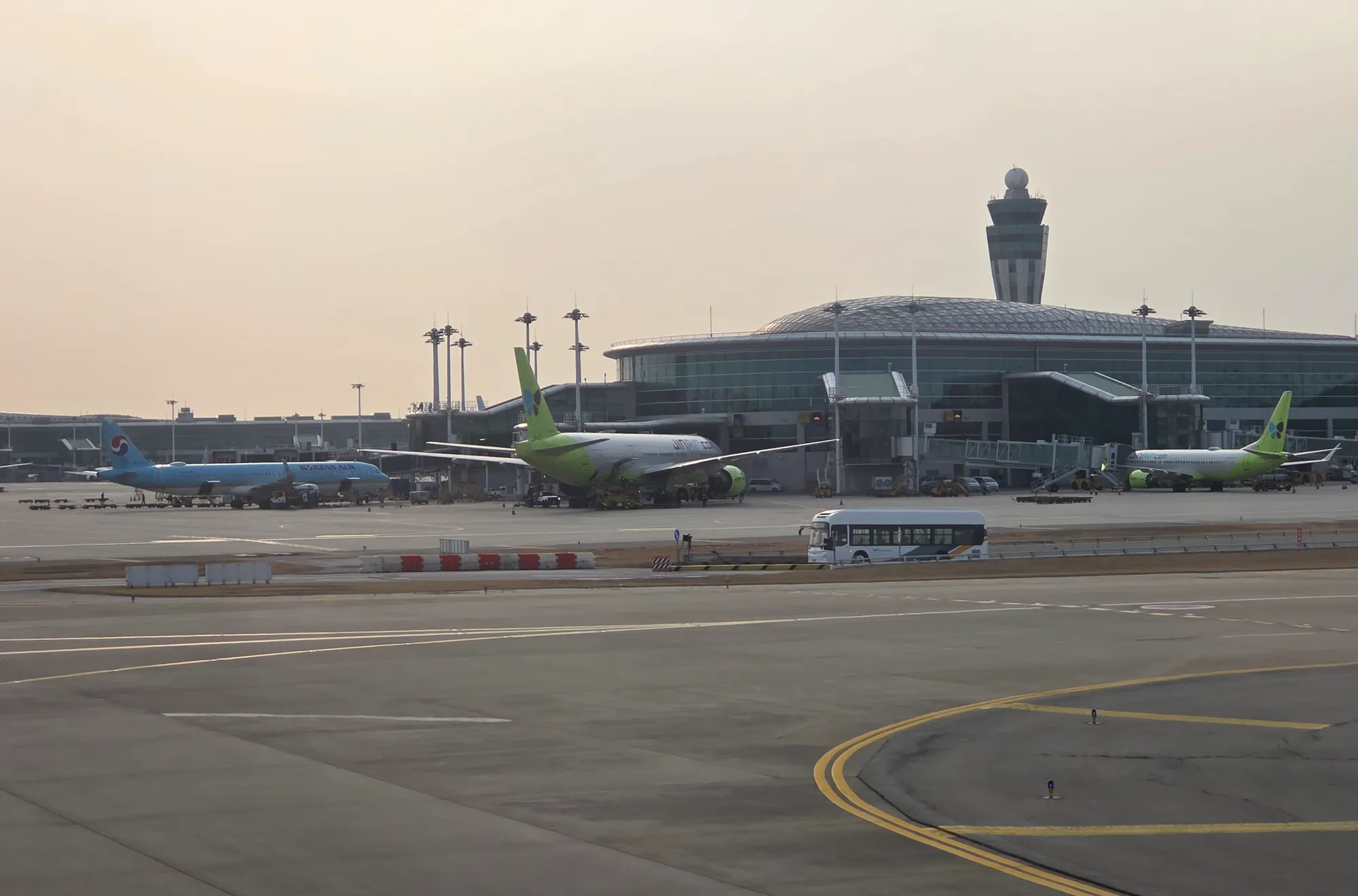
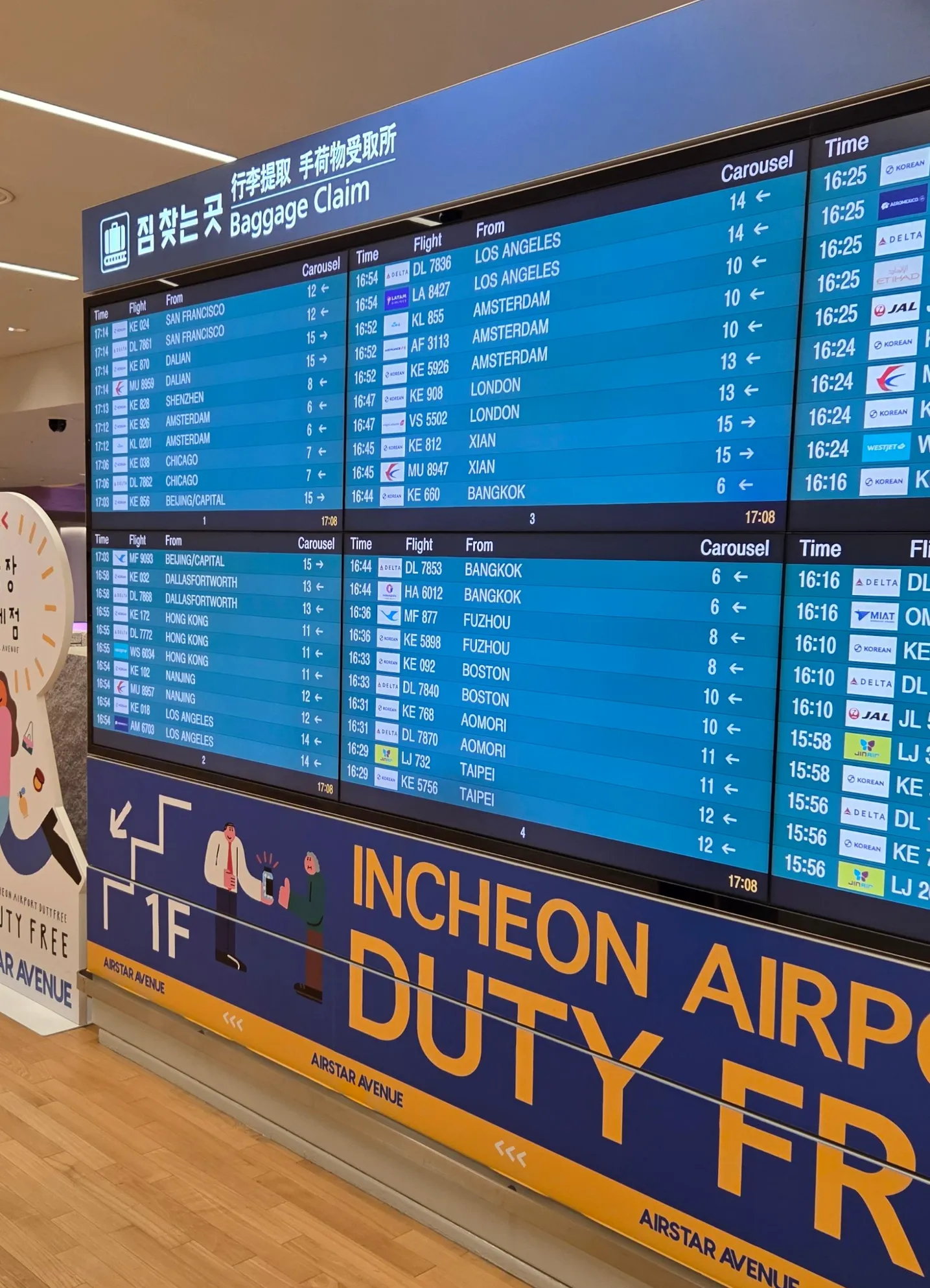
Incheon International Airport and baggage claim signs
My flight, KE32, touched down at Incheon at 4:52 p.m. local time after about 14 hours, as expected. Daylight saving time had started a few days earlier, shifting our scheduled departure from Dallas Fort Worth an hour later on the local clock while keeping the same scheduled arrival time in Incheon. After landing, we taxied to Terminal 2 and parked at the gate farthest from immigration. Only the front left door, L1, was connected to a jet bridge, so everyone got off through that door.
Around 5 p.m., when KE32 arrives, is a busy time for arrivals at Incheon. Several large aircraft from London, Los Angeles, Hong Kong, and elsewhere had arrived around the same time, and the immigration hall was crowded. If the automated immigration gates for Korean citizens have a long line, it’s worth checking the line for the staffed Korean passport booths. That line can be shorter. I went through a staffed booth and reached baggage claim at 5:10 p.m., 18 minutes after touchdown. I collected my bags and was landside around 5:30 p.m. Baggage delivery took a little while, possibly because so many flights had arrived at once, but my bags were the first out thanks to priority handling.
16. What Could Be Better
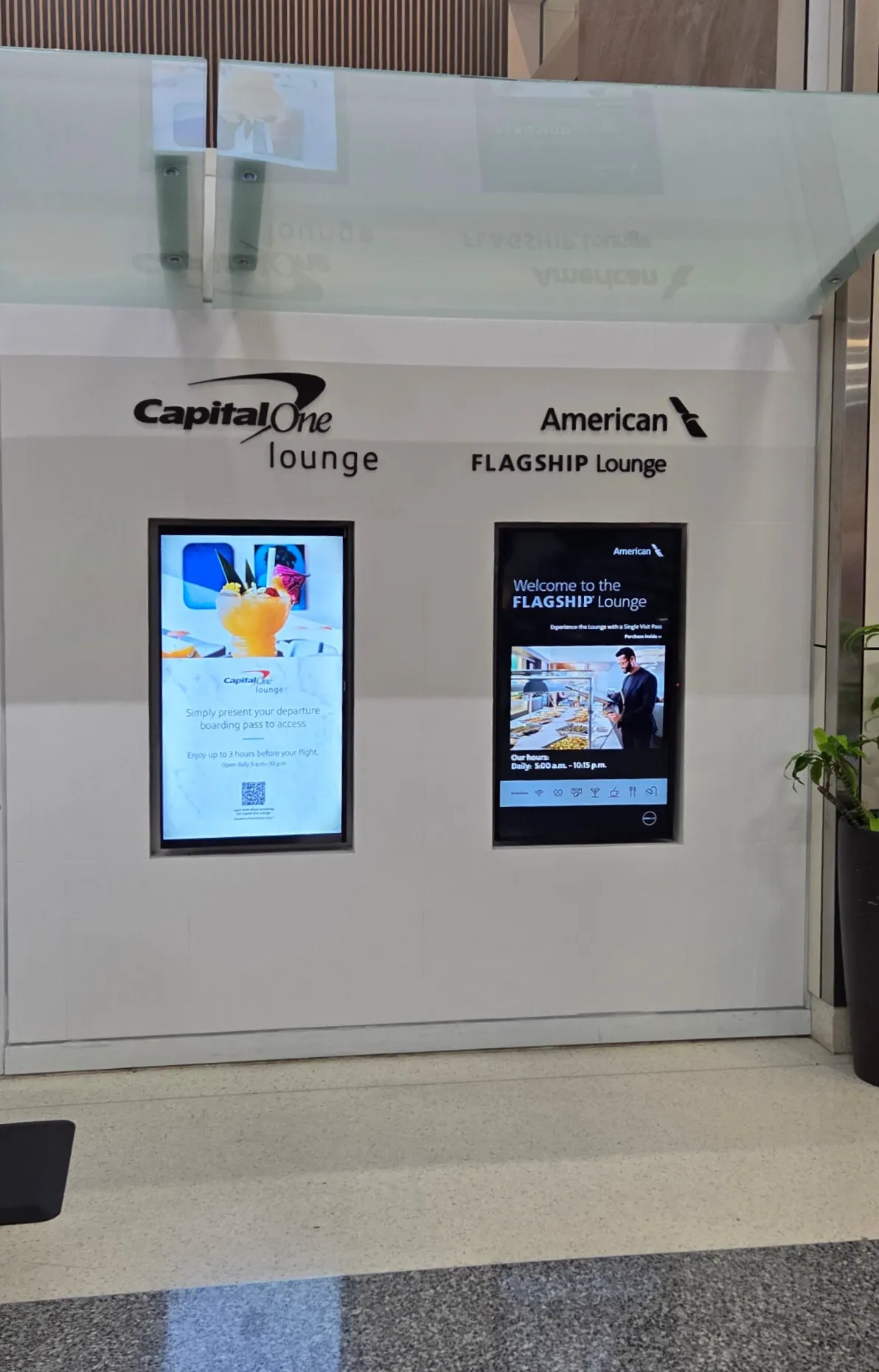
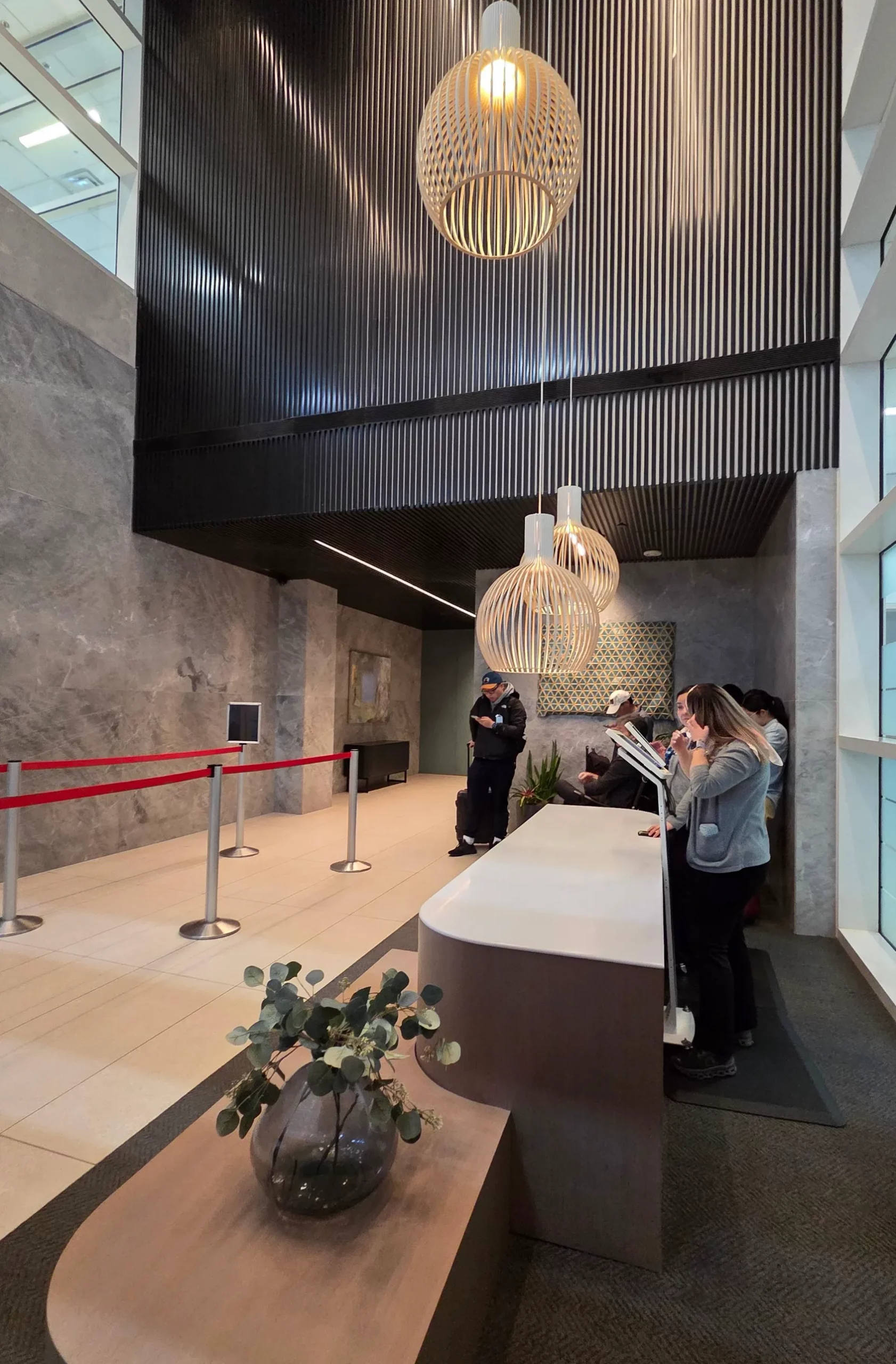
Entrance to the Capital One Lounge at Dallas Fort Worth International Airport
The lounge was easily my biggest disappointment. I’ve found Korean Air’s own KAL Lounges at Incheon, Tokyo, New York, and Los Angeles underwhelming, too. At least I can get into those lounges without waiting more than 30 minutes. At the Capital One Lounge in Dallas Fort Worth, I waited that long just to get in. It’s hard to count on having time to sit down, grab a bite, or enjoy a drink before your flight. The restaurant the lounge offers as an alternative is handy, but it can only cover part of what you’d get from a lounge. At the time, no SkyTeam airline operated its own lounge in Terminal D, which may explain the arrangement. I still think Korean Air needs to take the long wait seriously.
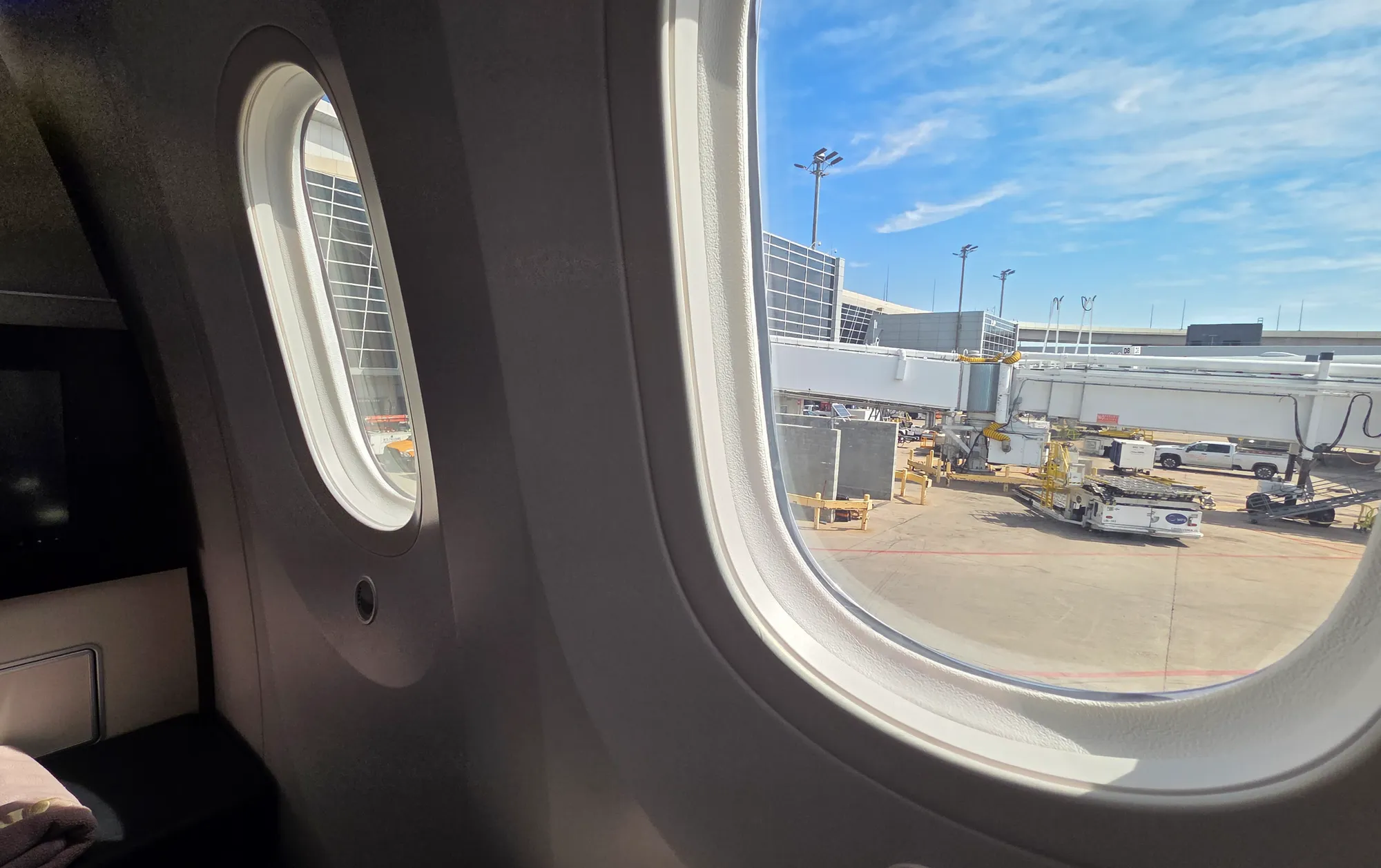
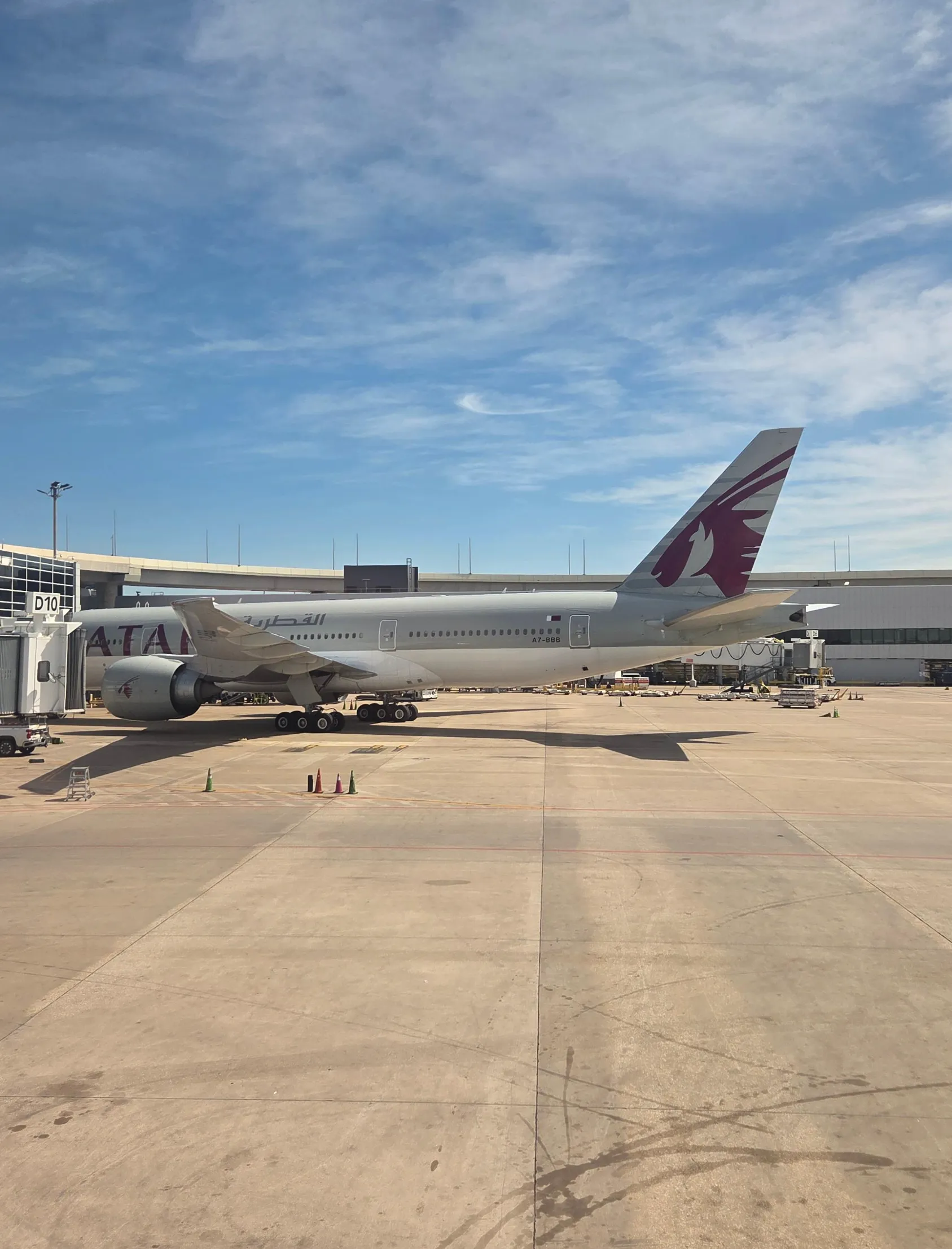
Korean Air Boeing 787-9 parked next to a Qatar Airways Boeing 777-200LR at Dallas Fort Worth International Airport
I also missed some of the personal touches I’ve come to appreciate in the best business classes. On some airlines, the flight attendant looking after your seat stops by during boarding, greets you by name, and introduces themselves. Before landing, they might come by again to thank you, ask how the flight went, or offer a small chocolate. I missed those touches in Korean Air’s Prestige Class. I can have a good flight without them, but they help make the service feel more personal. If Korean Air wants to compete with the best business classes in the world, I think those details are worth considering.
The lack of inflight Wi-Fi was another big disappointment. Korean Air offers it on newer aircraft such as the Airbus A321neo and A350 and the Boeing 787-10. Many of the aircraft it relies on for long-haul flights, including the Boeing 777-300ER, 787-9, and 747-8 and the Airbus A380, were still flying without it. Korean Air says it’s expanding Wi-Fi across its fleet, and I hope more aircraft get it soon. I’d also like to see an updated entertainment system with larger, higher-resolution screens.
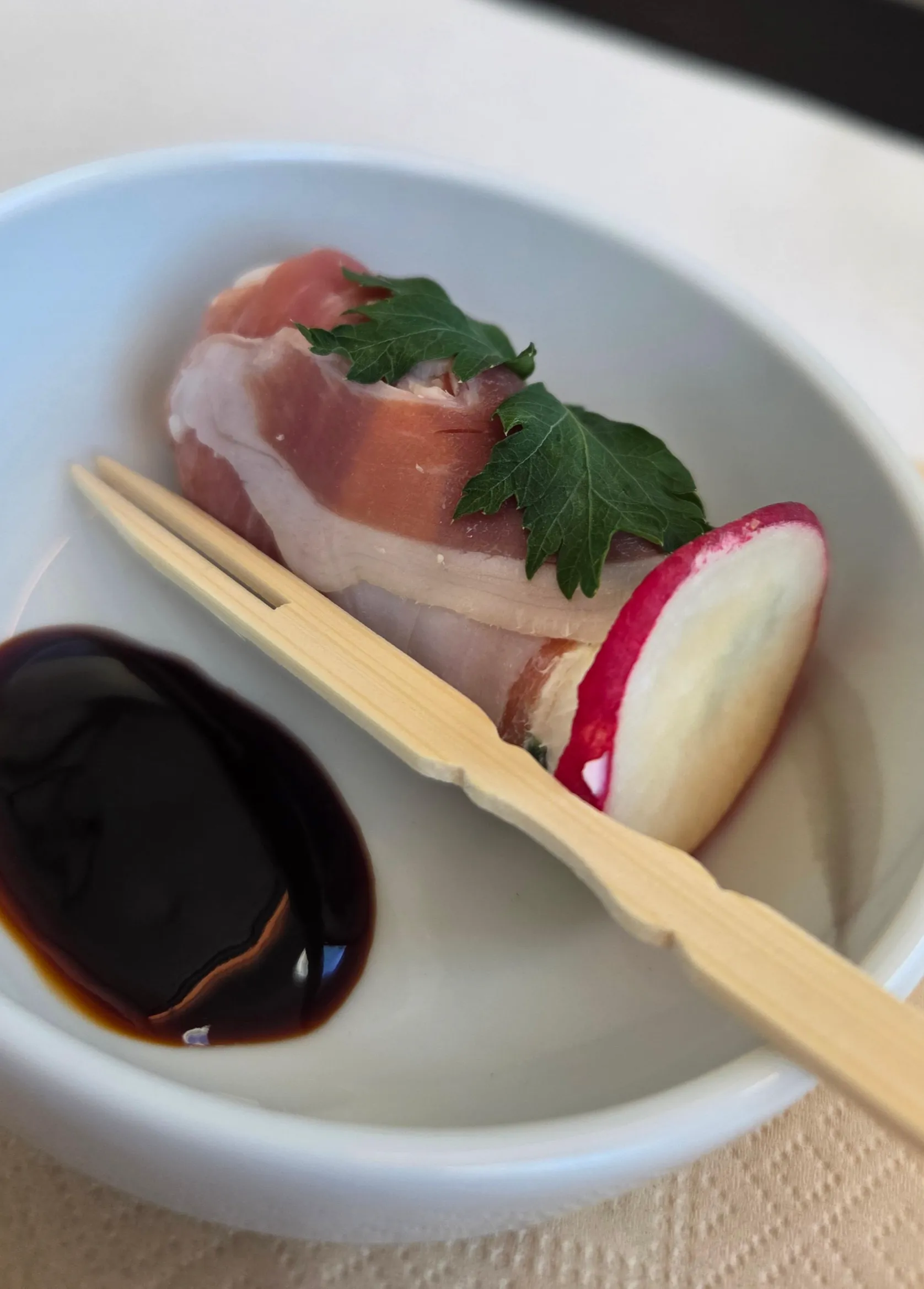
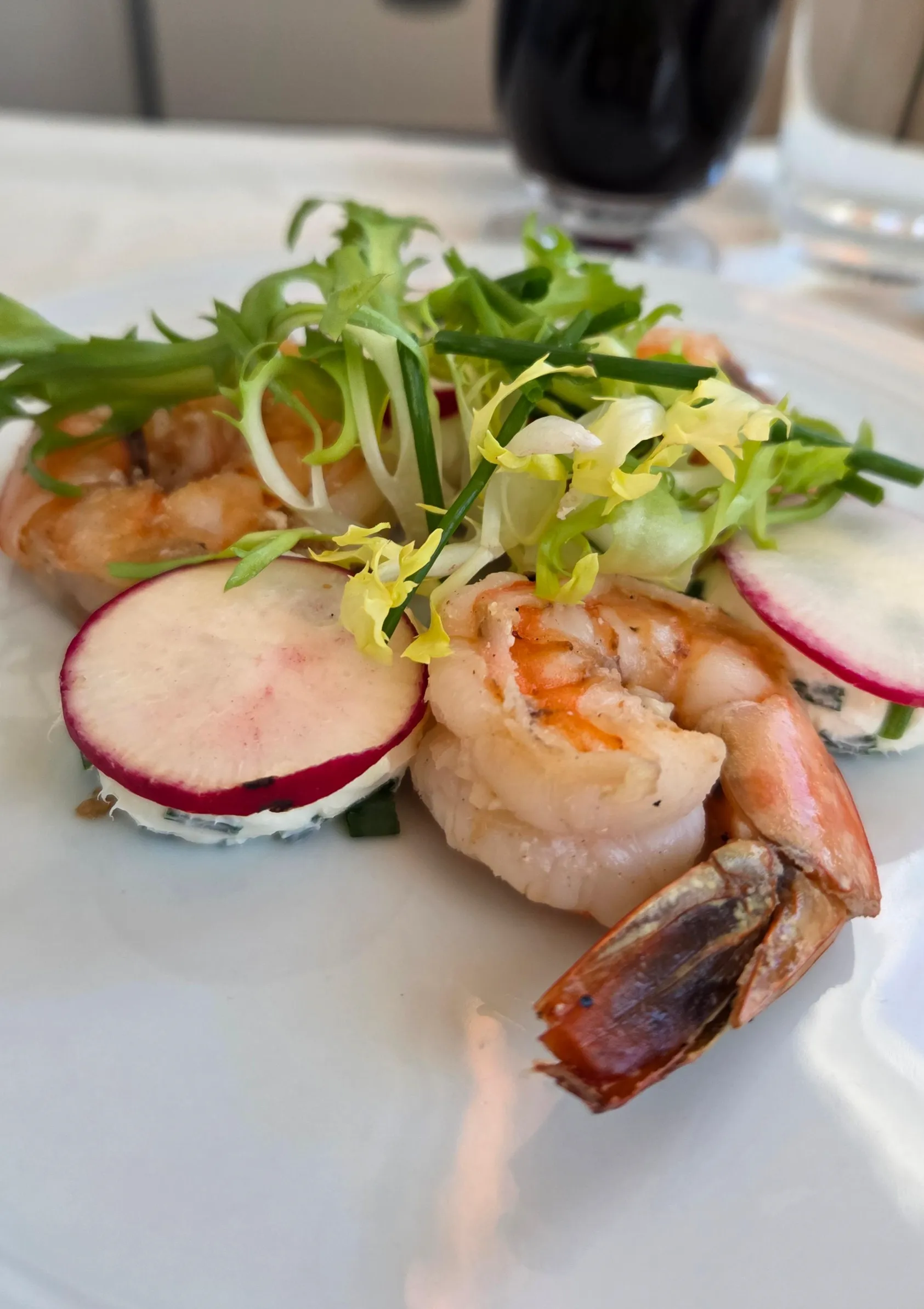
The amuse-bouche and appetizer had a lot in common
The meals were decent overall, but some of the courses felt too similar. The cream cheese from the prosciutto amuse-bouche turned up again in the appetizer, this time without the prosciutto. Every salad on the flight came with the same dressing. I’d welcome new and improved main courses, and a little more variety in the ingredients from one course to the next would make a difference, too.
I had a good experience in Prestige Class. These are the areas where I think Korean Air still has work to do if it wants to offer one of the world’s best business classes. I’d already put Korean Air’s Economy Class among the best in the world, which makes the gap more noticeable when flying up front. If the airline is aiming for a solid business class at its current level, these details may matter less.
17. Final Thoughts & Conclusion
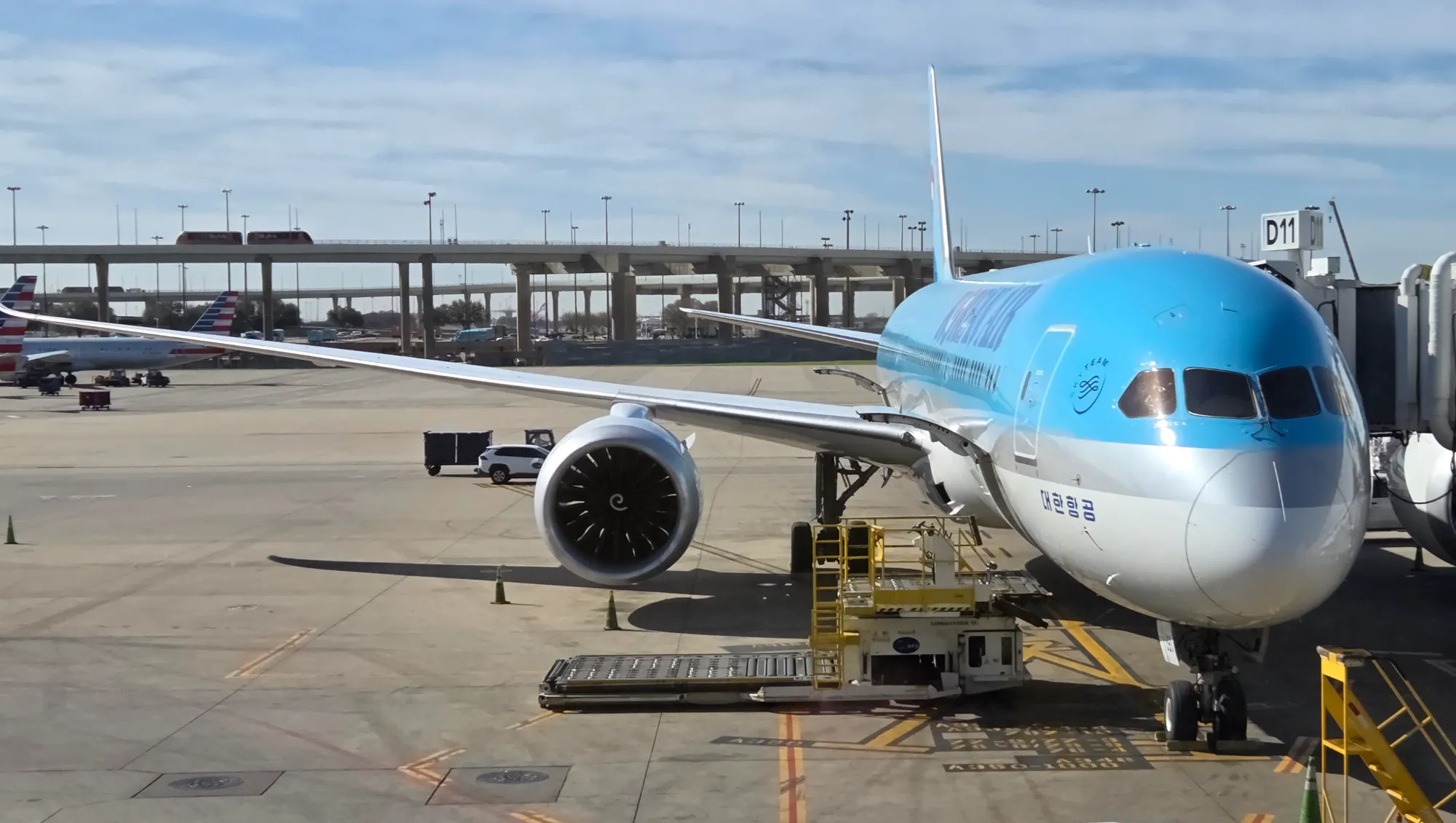
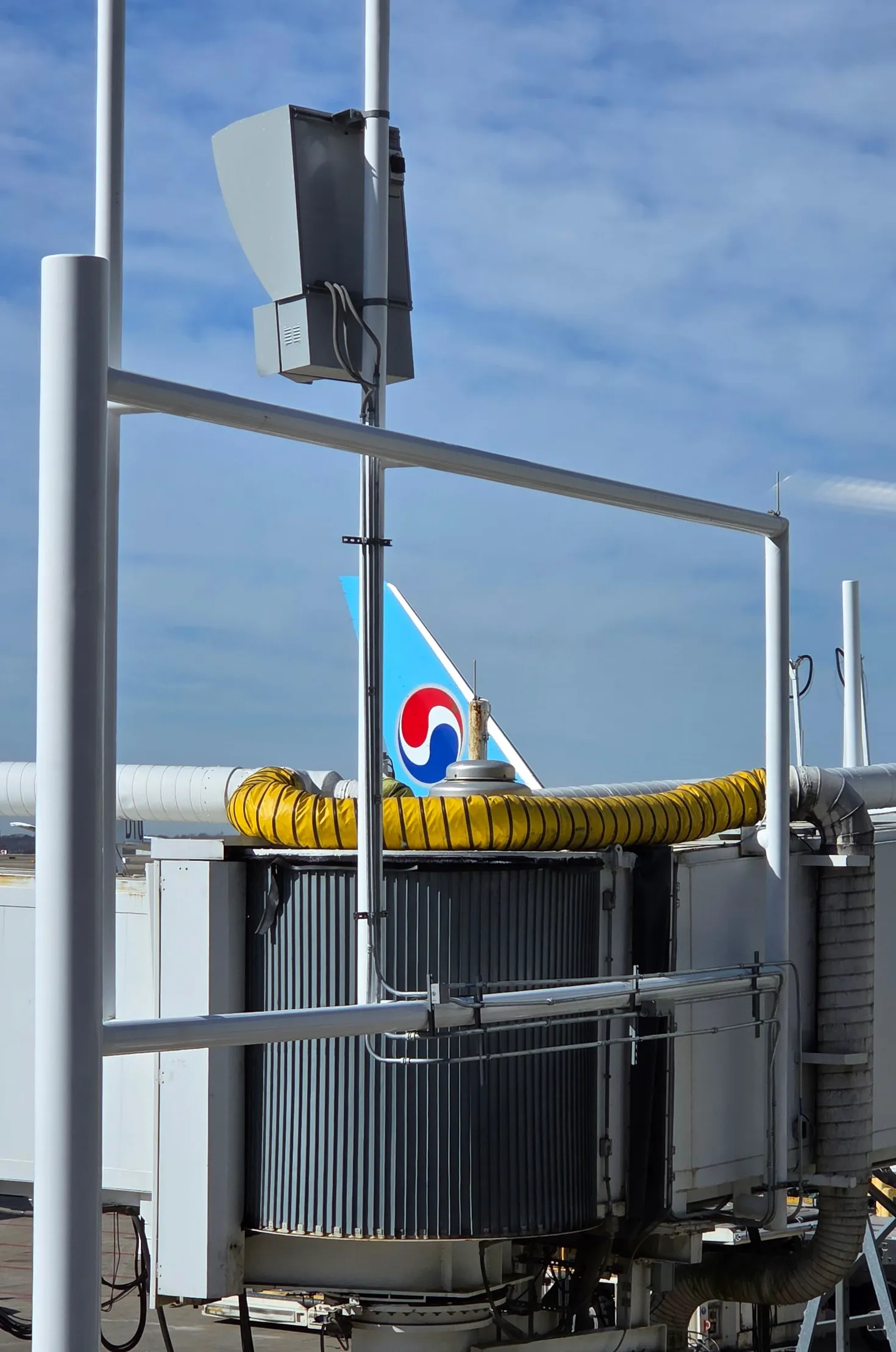
Korean Air Boeing 787-9 in its outgoing livery at Dallas Fort Worth International Airport
This was my first long-haul flight in Korean Air Prestige Class in a while. For Korean travelers, there’s a real comfort in flying with a crew who speak your language and share your culture, and in having Korean food on the menu. I’d rate Prestige Class as a good business class, with room to catch up to the world’s best. For my parents and older generations of Korean travelers, though, I’d still recommend Korean Air over airlines with even the most highly rated business classes.
The Editor Behind This Journey: Heejung

Have any questions or similar experiences? Please feel free to share them below.
Share this story to inspire another journey.
More Journeys to Explore
🗓️ Nov 2025 Flight | 💺 Economy | ✈️ A320-200
6/10 (🌕🌕🌕🌑🌑) It was a direct flight but a unique one with a stopover in Rovaniemi. The service was simple, just water and blueberry juice, but thanks to the row 1 bulkhead seats and a crew that carefully prioritized safety, it was an acceptable short-haul European flight with no major inconveniences.
🗓️ Apr 2026 Visit | 🛋️ Business Class Lounge
9/10 (🌕🌕🌕🌕🌗) The spacious lounge, varied seating, excellent food, and attentive service were all very impressive, but limited barista and bartender service hours fell a little short of expectations for Singapore Airlines’ flagship business lounge.
🗓️ Feb 2026 Flight | 💺 Prestige Sleeper | ✈️ B777-300ER
7/10 (🌕🌕🌕🌗🌑) Korean Air's signature service, Korean-style meals, and convenient lounge boarding were satisfying, but it was a flight where the limitations of the older B777-300ER and Prestige Sleeper seats were clear. Even within the same Prestige Class, the gap in quality depending on the aircraft and seat type was very noticeable.
🗓️ Nov 2024 Flight | 💺 Economy | ✈️ A321-200
6/10 (🌕🌕🌕🌑🌑) It was a European domestic economy flight that covers the basics but nothing more. The chaos of a small airport, simple in-flight service, and disappointing priority baggage handling remained, but thanks to the bulkhead seats, blueberry juice, and personal device entertainment, I was able to travel without major inconveniences.