
Table of Contents
- Overall Rating: 9/10 (🌕🌕🌕🌕🌗)
- Summary:
- An exceptional Business Class experience that even a delay couldn’t spoil.
- Route:
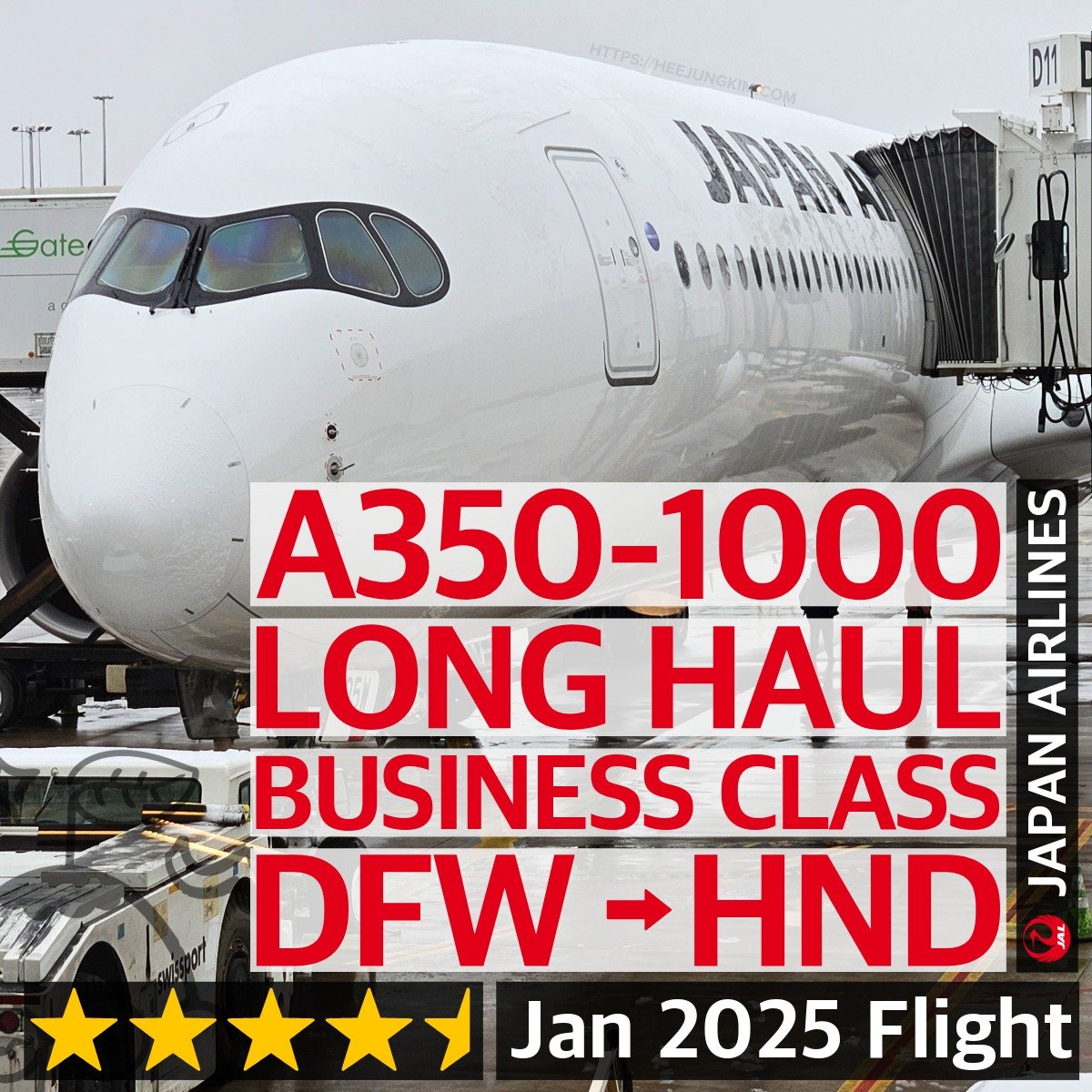
- DFW (Dallas Fort Worth International Airport) → HND (Tokyo Haneda Airport), JL11, 10:45 → 15:25 (+1), Flight time 13h 35m
- Aircraft: Airbus A350-1000, JA05WJ (Aug 2024 delivered, 6-month-old)
- Ticket price: 60,000 American Airlines AAdvantage miles + US$5.60 in taxes and fees
- Seat: 5D, Business Class aisle seat (A350-1000)
- Check-in & Baggage Allowance
- Departure Lounge (American Airlines Flagship Lounge)
- Boarding Process
- Cabin & Seat Detail
- In-flight Service
- Amenities & Lavatory
- Food & Beverage
- In-flight Entertainment & Wi-Fi
- Landing & Immigration
- What Could Be Better
- Final Thoughts & Conclusion
7. Check-in & Baggage Allowance
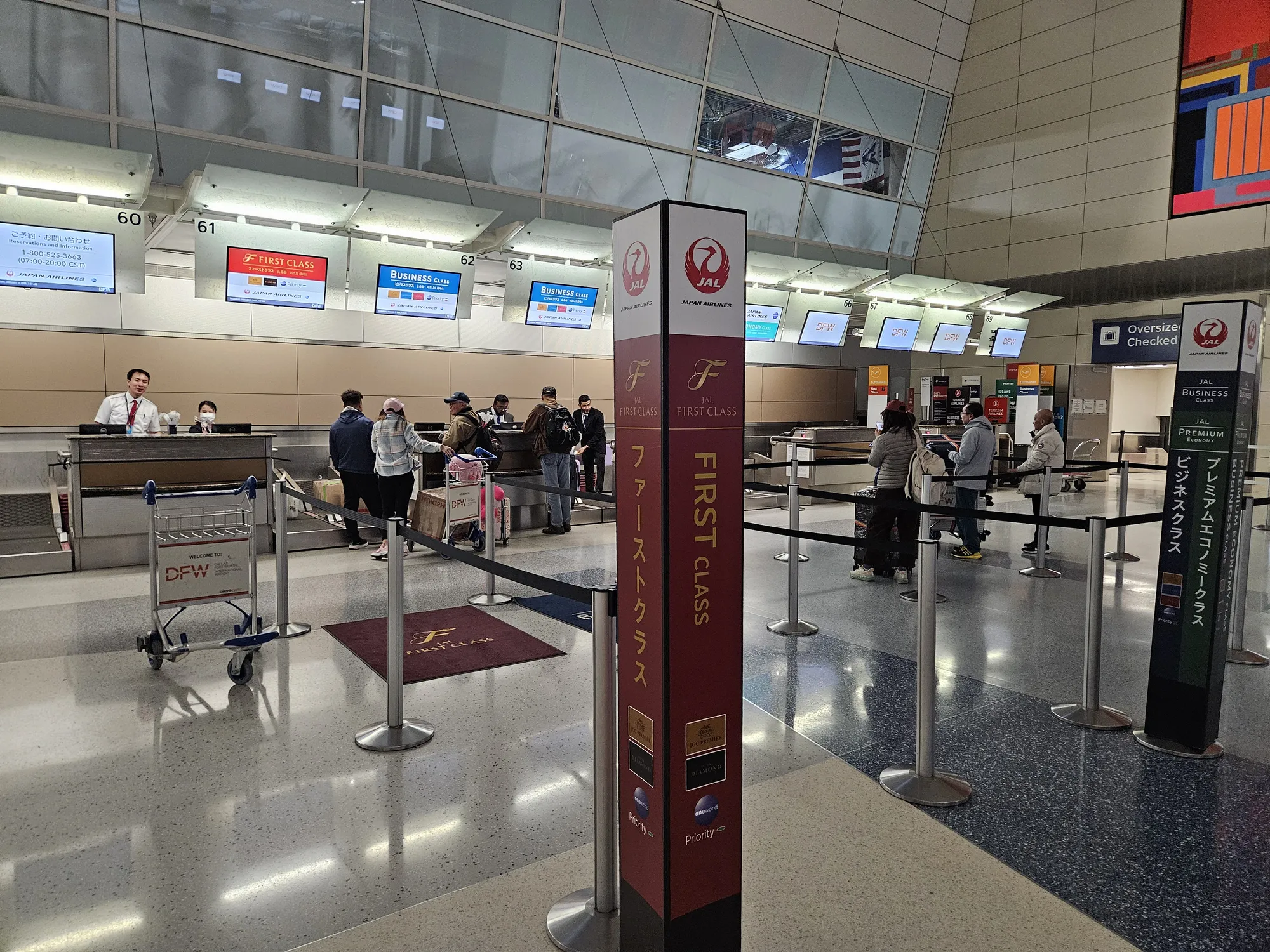
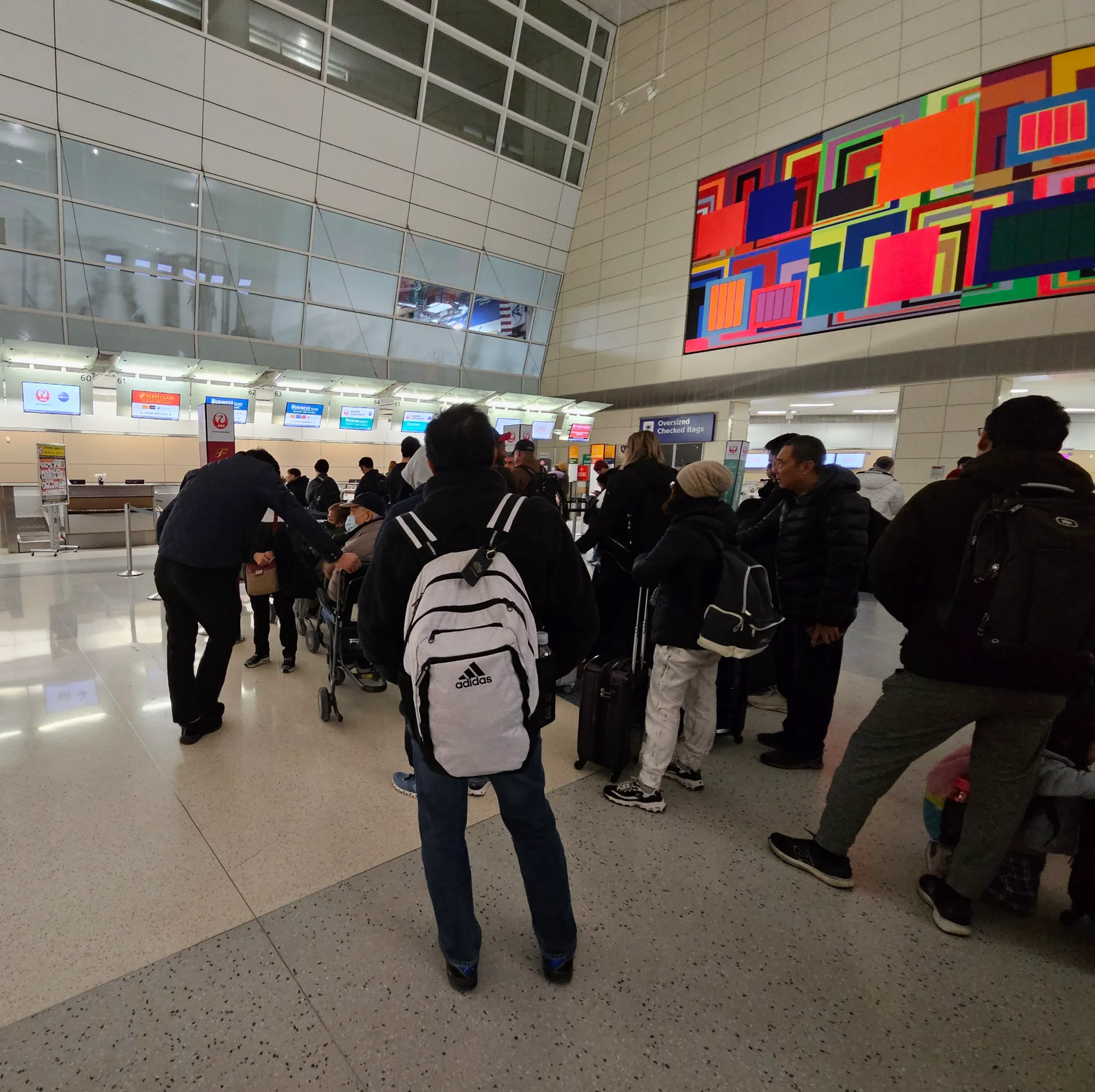
Japan Airlines check-in counters at Dallas Fort Worth International Airport on January 9 (left) and January 10 (right)
Japan Airlines uses counters 60–65 in Terminal D at Dallas Fort Worth International Airport. Starting at counter 60 and moving left, there was one counter for passengers needing assistance, one for First Class, two for Business Class, one for Premium Economy, and one for Economy. First Class and passengers needing assistance shared one line, and Business Class and Premium Economy shared another. In practice, that meant two counters for the first line, three for the second, and one for Economy. Sharing a line with Premium Economy can mean a longer wait in Business Class. The A350-1000 on the Dallas–Haneda route seats about 240 people, so the lines usually aren’t that long. A weather delay pushed my flight to the following day, and everyone was checking in around the same time the next morning. I waited about 10 minutes. The lines got tangled enough that some First Class passengers ended up in the Business Class line.
Japan Airlines Business Class passengers on U.S. routes can check three bags weighing up to 32 kg each at no extra charge. Apart from some African carriers, I can think of few airlines with a checked baggage allowance this generous. If you have a U.S. domestic flight, a Japan Airlines flight between the U.S. and Japan, and a flight within Asia on the same ticket, the U.S. route allowance applies throughout. In Business Class, that means you can still check three bags of up to 32 kg each.
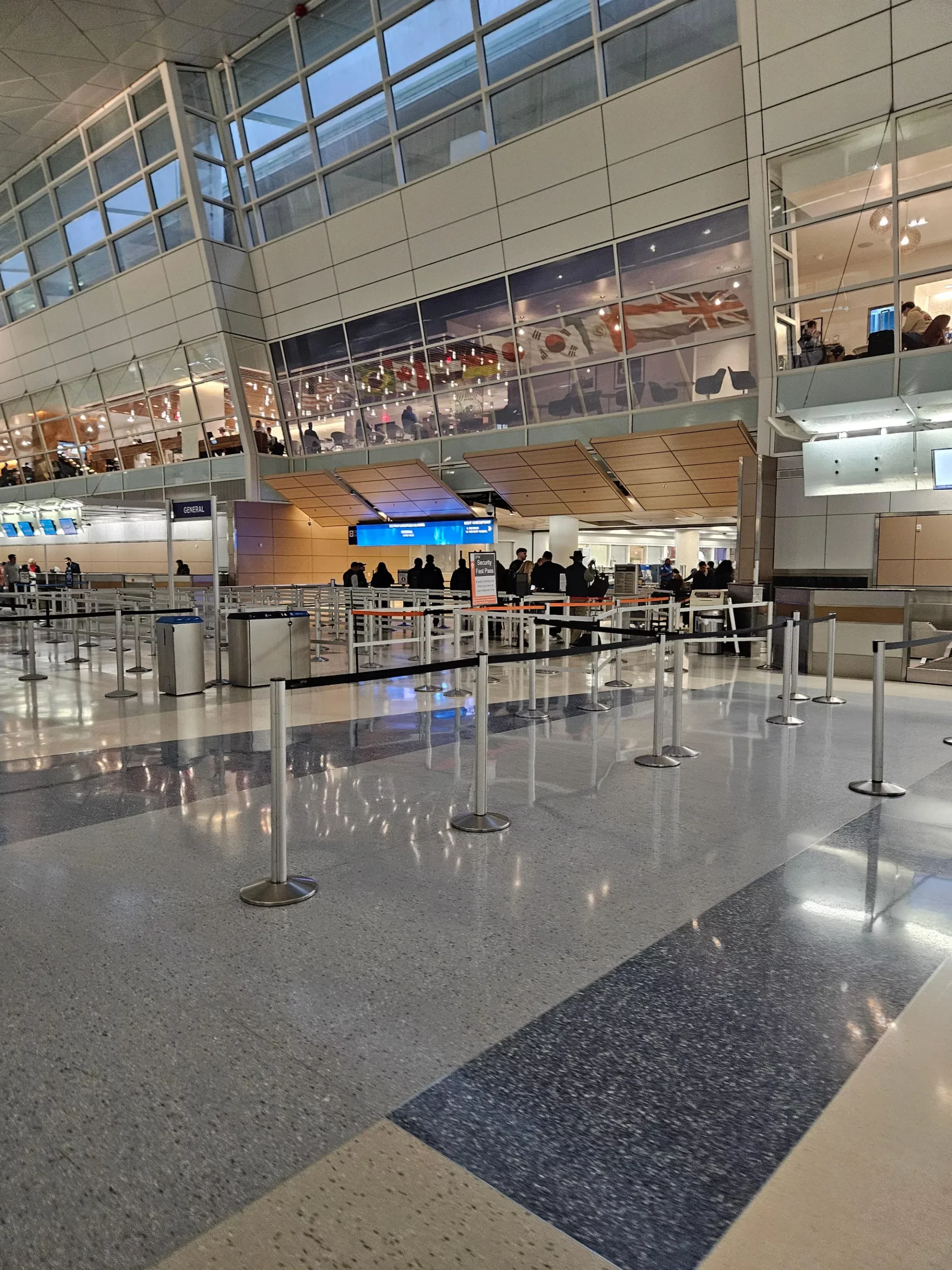
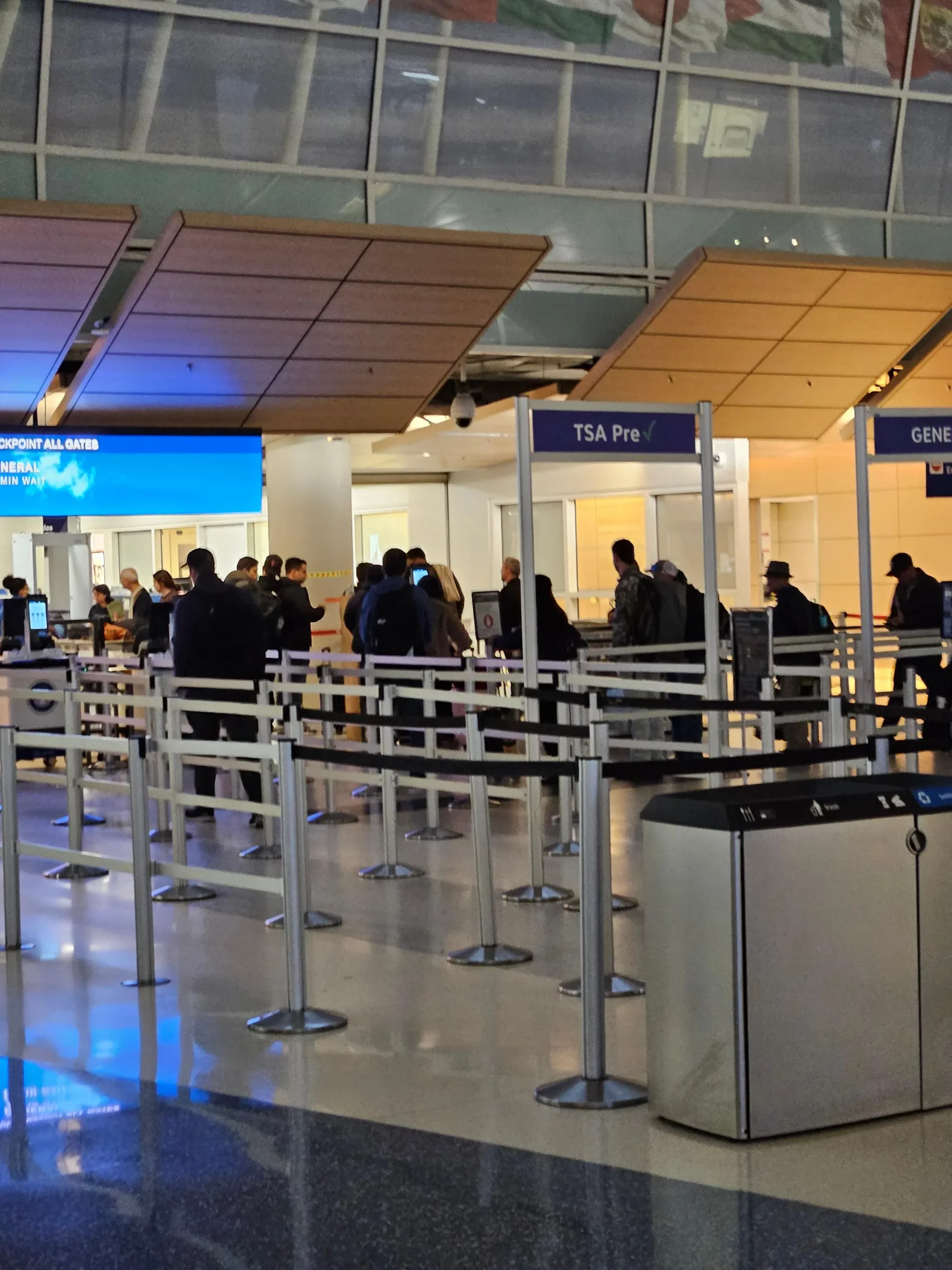
Security checkpoint to the left of the Japan Airlines check-in counters (left) and the TSA PreCheck checkpoint in the center of Terminal D (right)
At DFW Terminal D, the TSA PreCheck lanes are at the central security checkpoint. Passengers using standard screening can go through the checkpoint next to the check-in counters. The dedicated PreCheck lanes may be closed early in the morning or late at night. When that happens, eligible passengers using the standard line at the central checkpoint may receive a card at the ID check. Showing it at screening lets you keep your shoes on and leave your laptop and liquids in your bag.
For international departures from the U.S., you go straight to the airside area after security. The airline submits passenger information to U.S. authorities for departure records, so there’s no separate exit passport control checkpoint.
8. Departure Lounge (American Airlines Flagship Lounge)
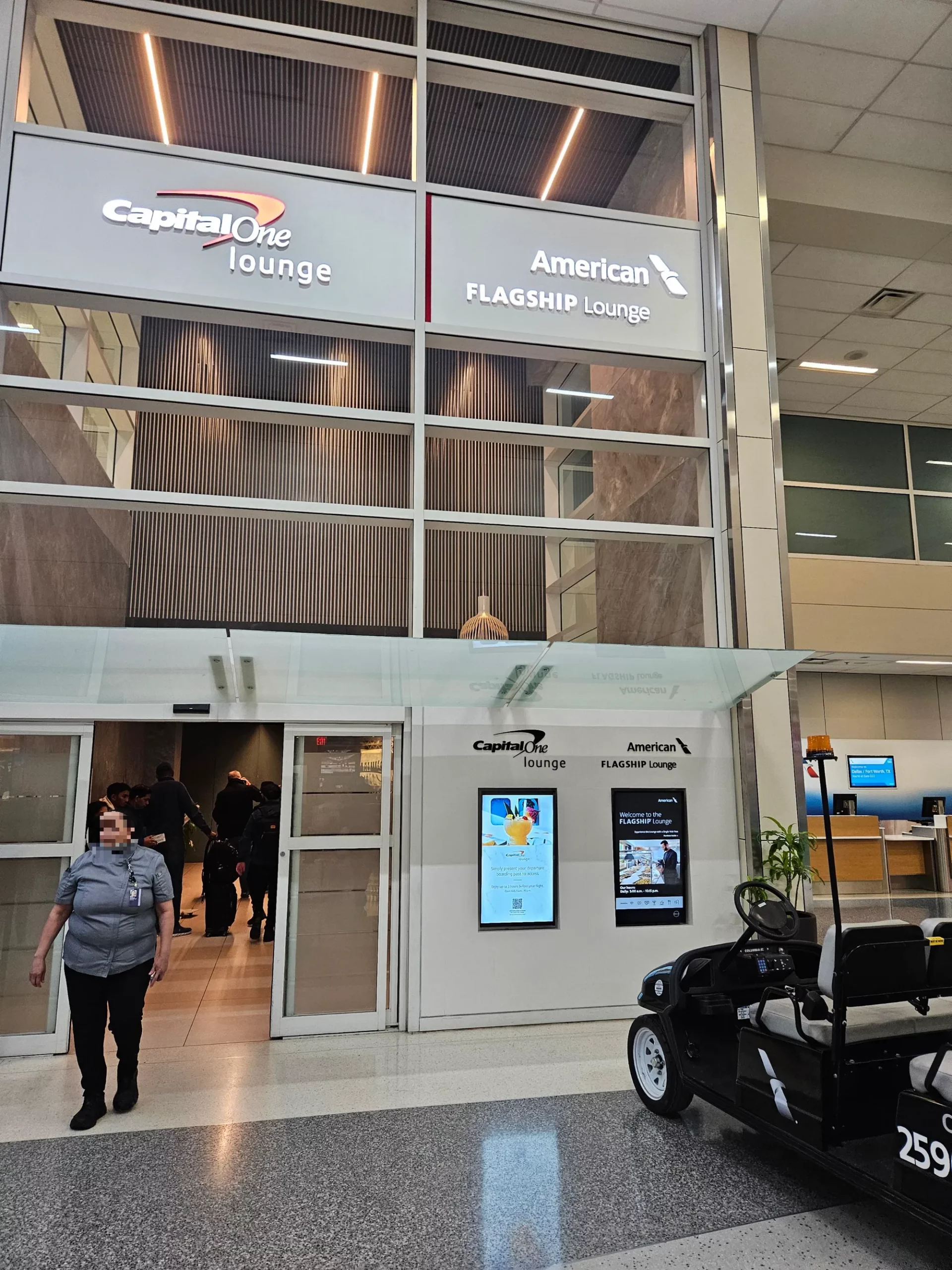
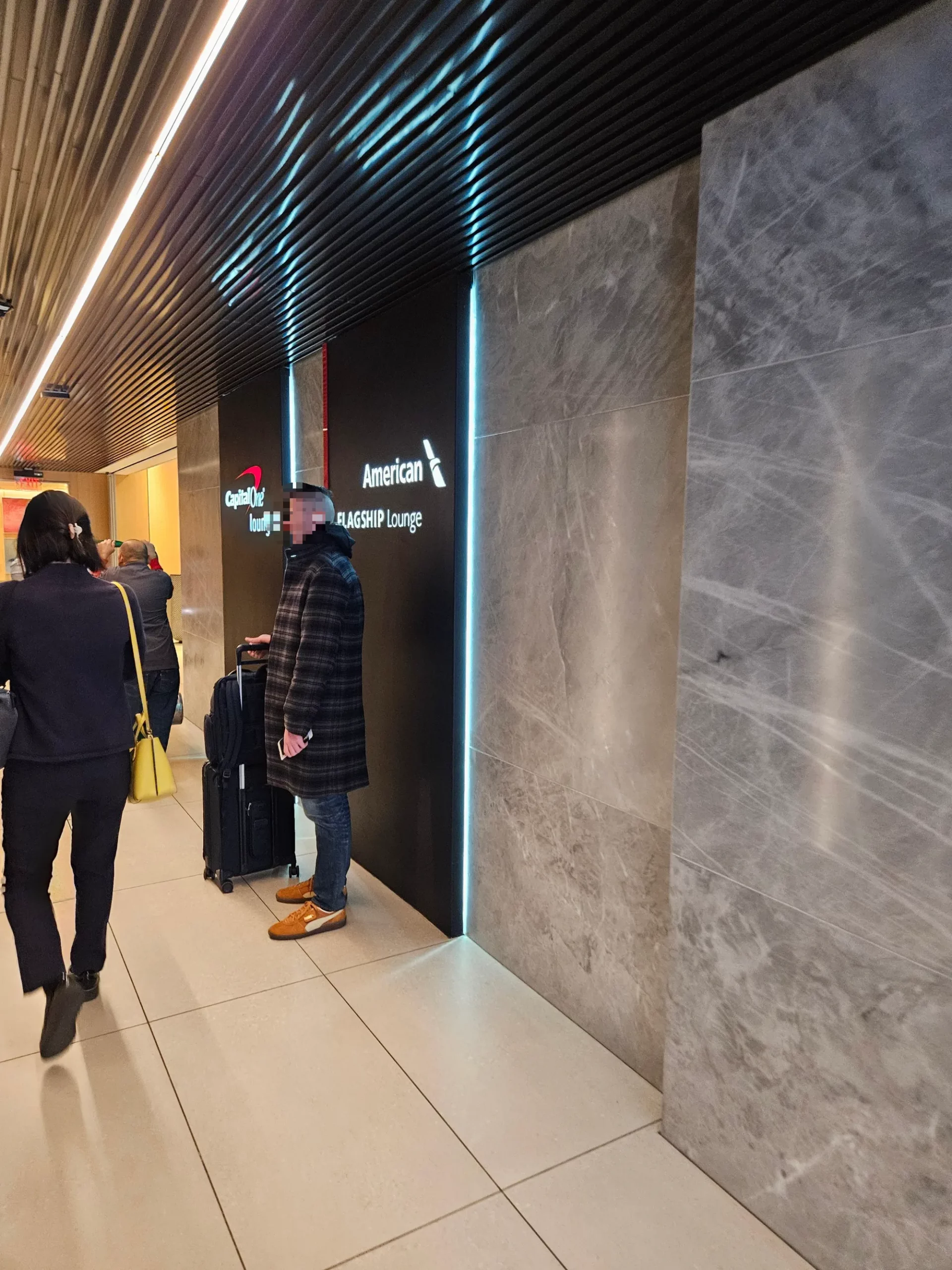
American Airlines Flagship Lounge entrances on the third floor (left) and fifth floor (right)
First and Business Class passengers on Japan Airlines flight JL11 can use the American Airlines Flagship Lounge. Premium Economy passengers and those on full-fare Economy tickets booked in Y can use the Admirals Club. A JAL First Class ticket doesn’t include access to Flagship First Dining inside the lounge. The Flagship Lounge is near Gate D22 in Terminal D at Dallas Fort Worth International Airport and shares an entrance with the Capital One Lounge. Take the elevator to the fifth floor and turn right. I only had to scan my boarding pass to get in.

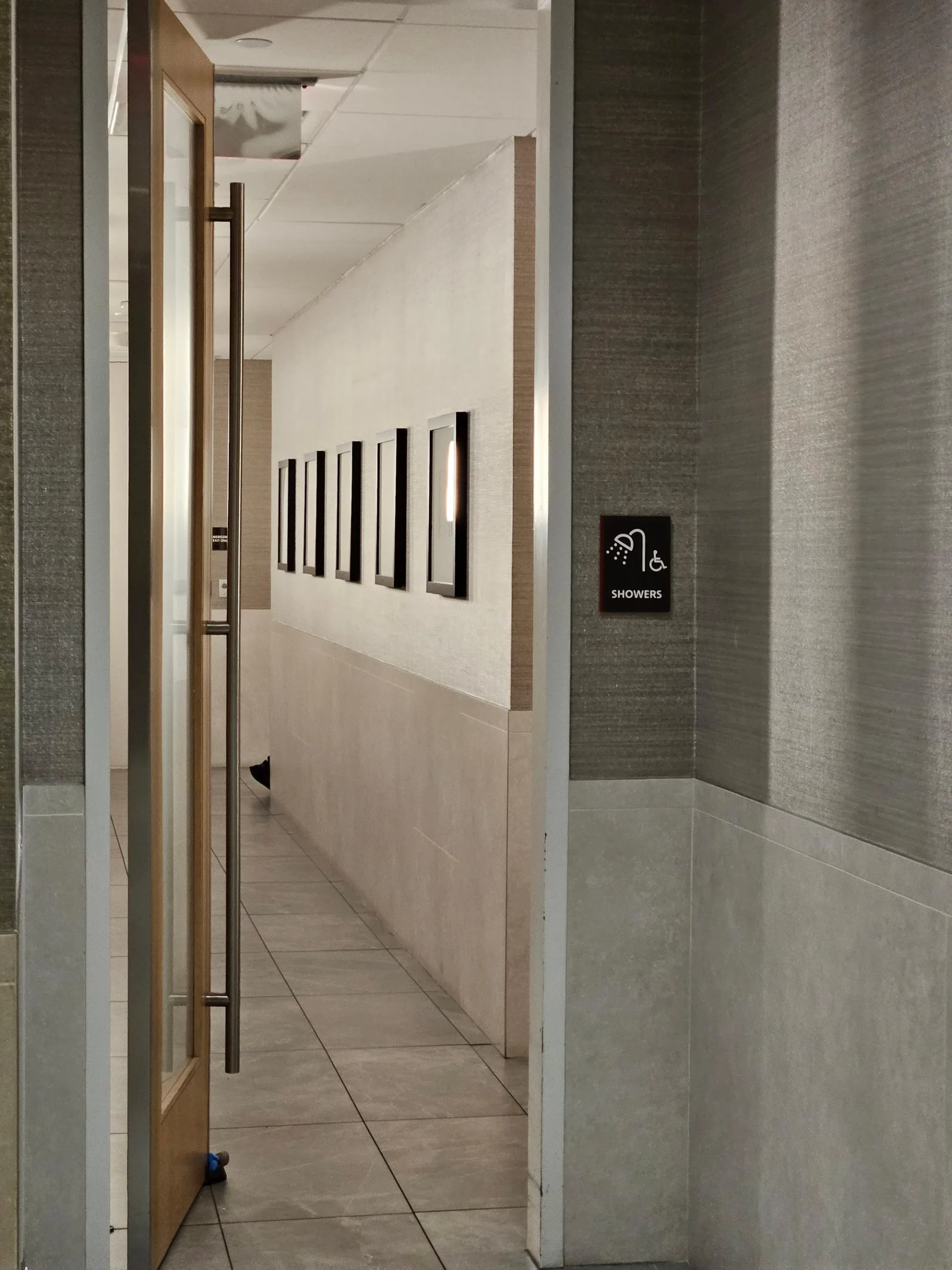
American Airlines Flagship Lounge dining area (left) and shower entrance (right)
The Flagship Lounge is one of American Airlines’ highest-tier lounges. It serves First and Business Class passengers on eligible medium- and long-haul flights operated by American or other oneworld airlines. Piper-Heidsieck Champagne is offered as a welcome drink beside the reception desk, and you can get a glass inside the lounge as well. The DFW lounge has hot food, a bar, showers, restrooms, and a business center. It’s also larger than many other lounges at DFW, with plenty of seating.
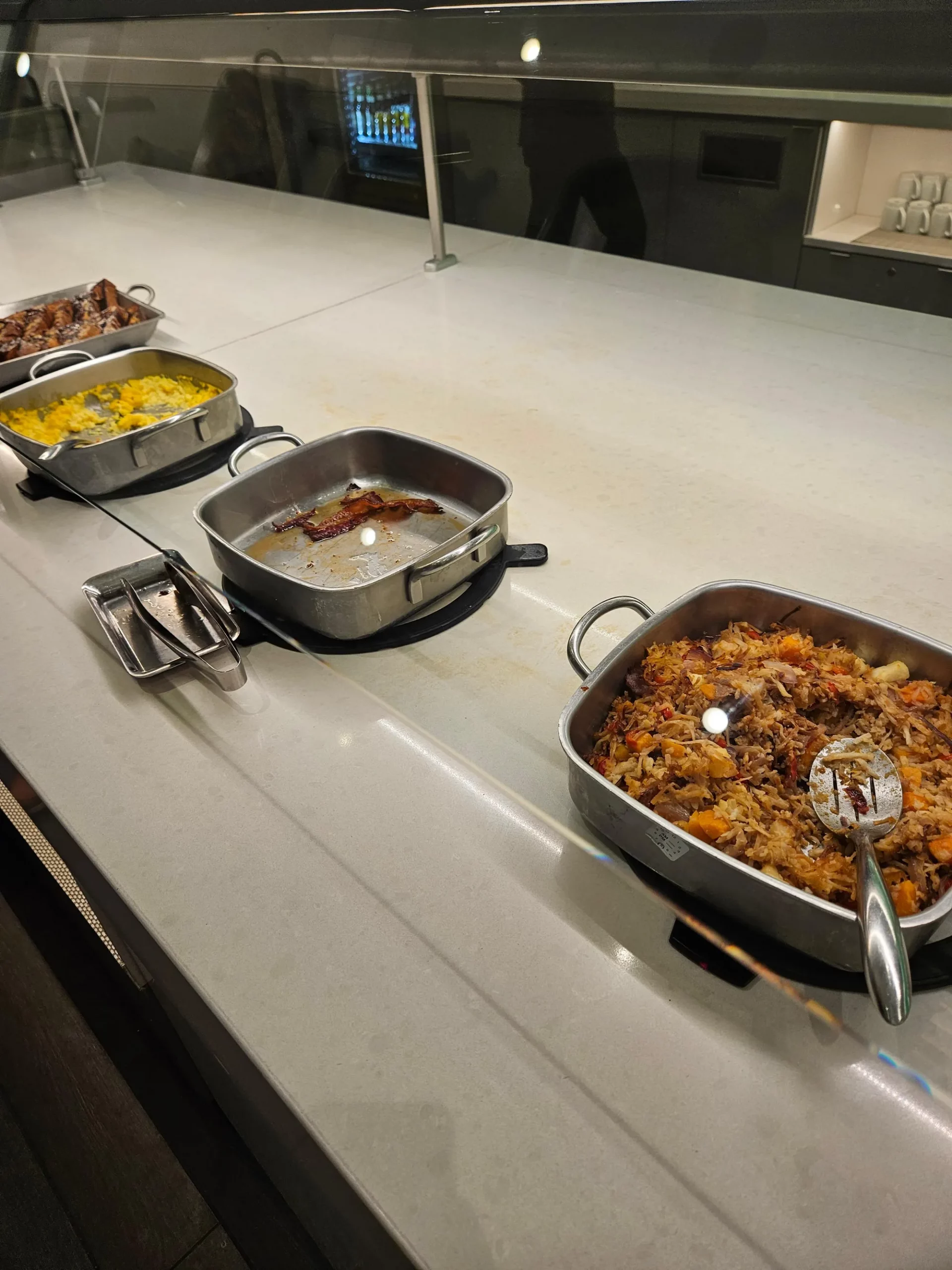
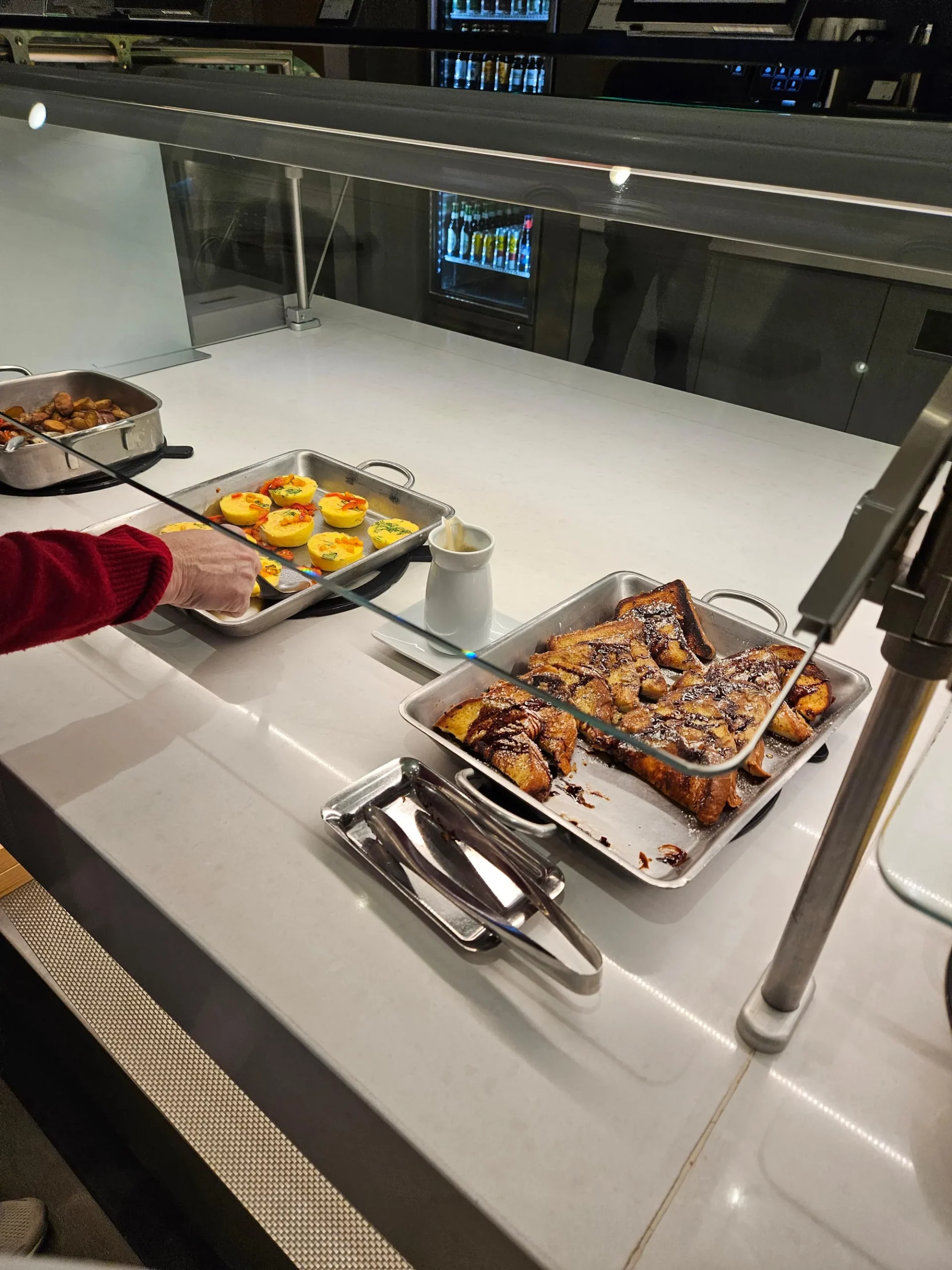
Food at the American Airlines Flagship Lounge 1
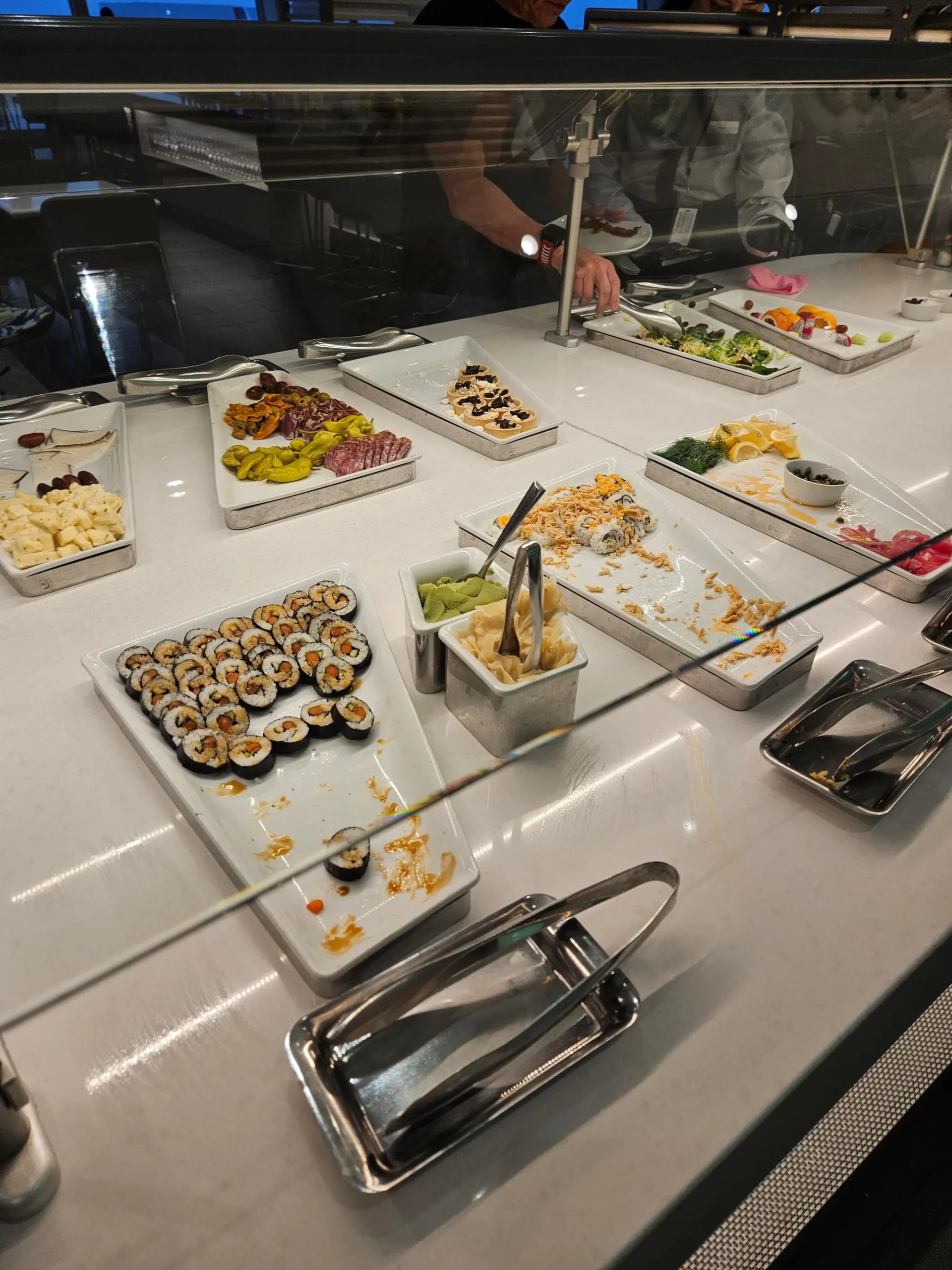
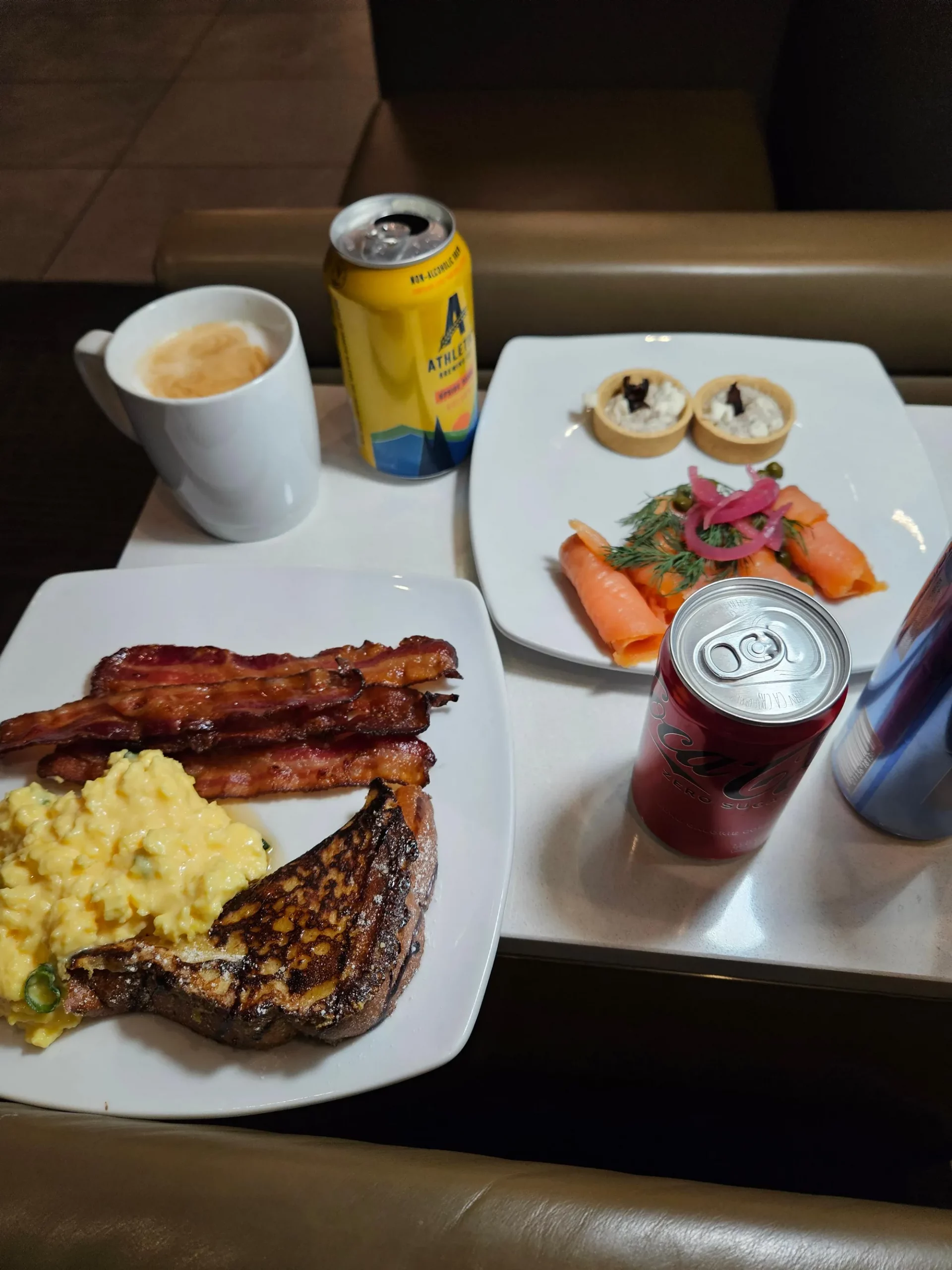
Food at the American Airlines Flagship Lounge 2
Because of the delay, I visited on two consecutive mornings. The breakfast menu was the same both days. Hot options included a DIY noodle bar, an egg station, bacon, scrambled eggs, and pumpkin hash browns. The cold selection included a vegan mushroom tart, smoked salmon, salads, ham, and cheese. The bar had standard spirits such as whisky, gin, vodka, and tequila, along with red and white wine, Champagne, and beers including Shiner, Samuel Adams, and Michelob. All drinks were complimentary. Some lounges sell premium drinks separately, but the Flagship Lounge had no paid selection. I was glad to see beer from Athletic Brewing, my favorite nonalcoholic beer brand. If you’ve never tried nonalcoholic beer, I’d give it a go.
There’s a customer service desk inside the Flagship Lounge that can help with delays and cancellations. The line is usually much shorter, and the agents are often better equipped to help sort things out. If you have lounge access and your flight is disrupted, that’s where I’d go first.
9. Boarding Process
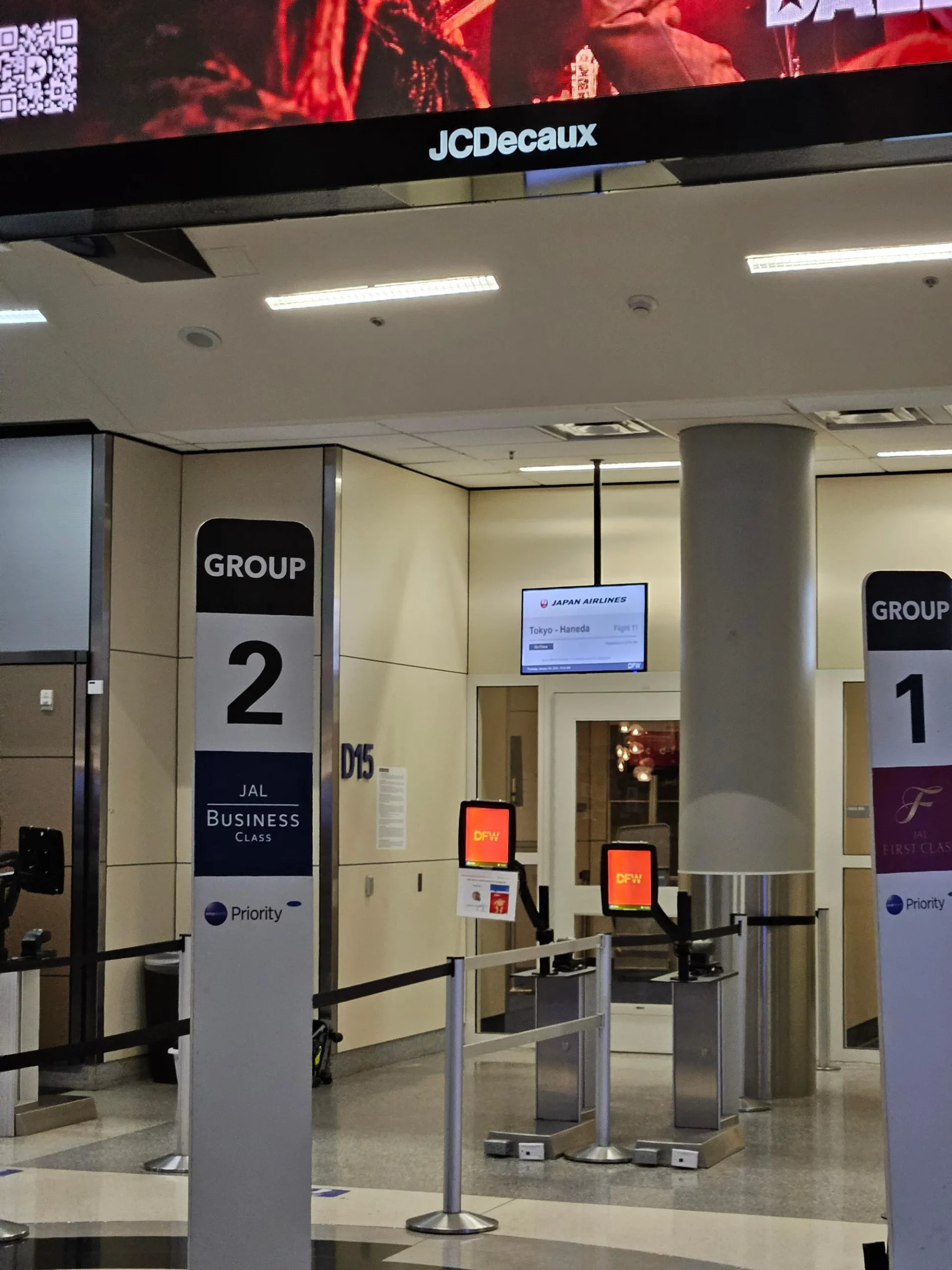
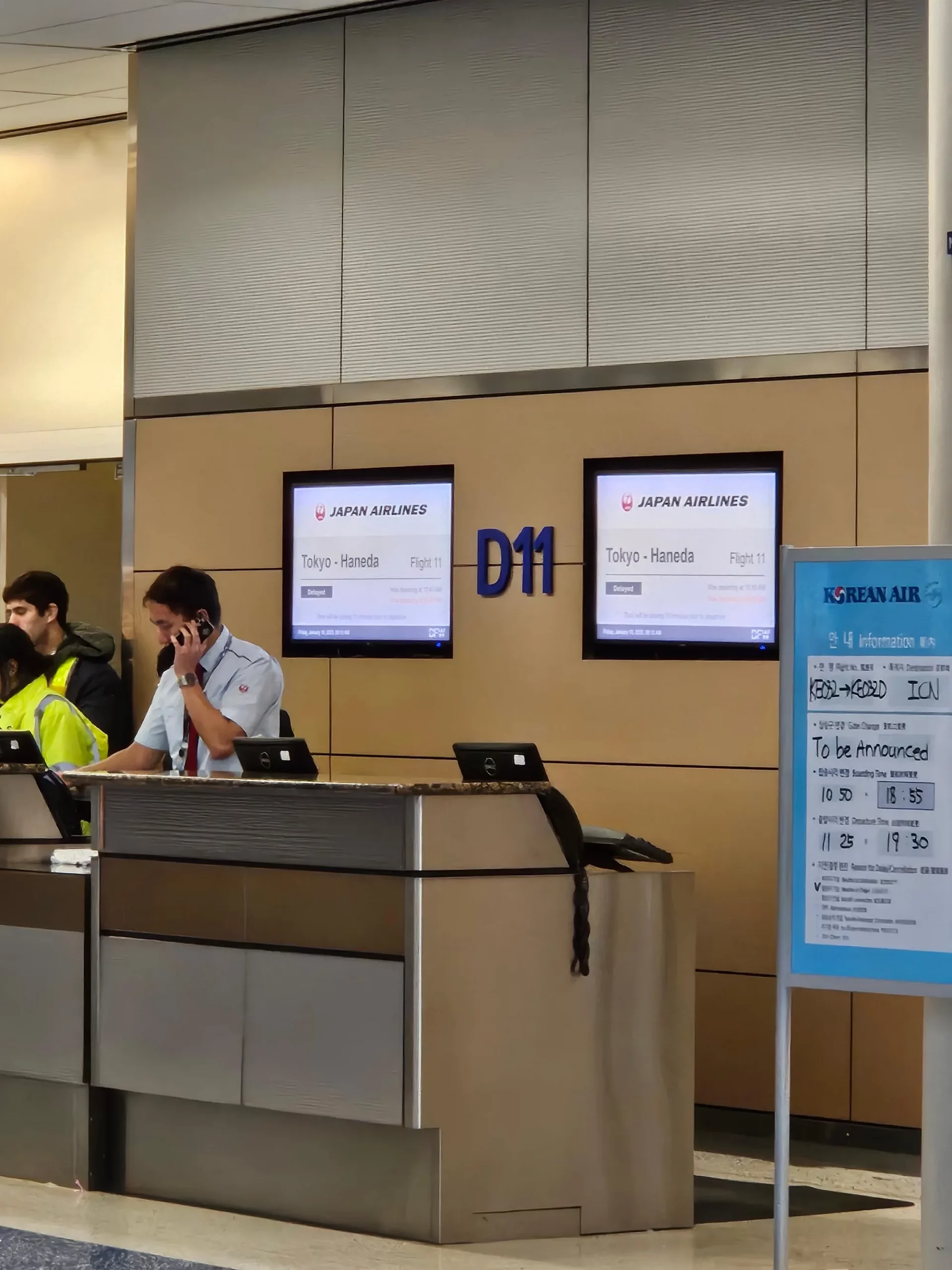
Gate D15 for the January 9 departure (left) and Gate D11 for the January 10 departure (right)
Boarding for my original January 9 departure took place at Gate D15. After the flight was delayed overnight, we boarded at Gate D11 on January 10. Japan Airlines normally uses D15 for JL11, so that’s where I’d expect the flight to board. Gate D11 is usually used by Korean Air flight KE32, which is scheduled to leave around the same time. Weather delayed KE32 by nearly 10 hours on January 10, which seems to have freed up the gate for our flight.
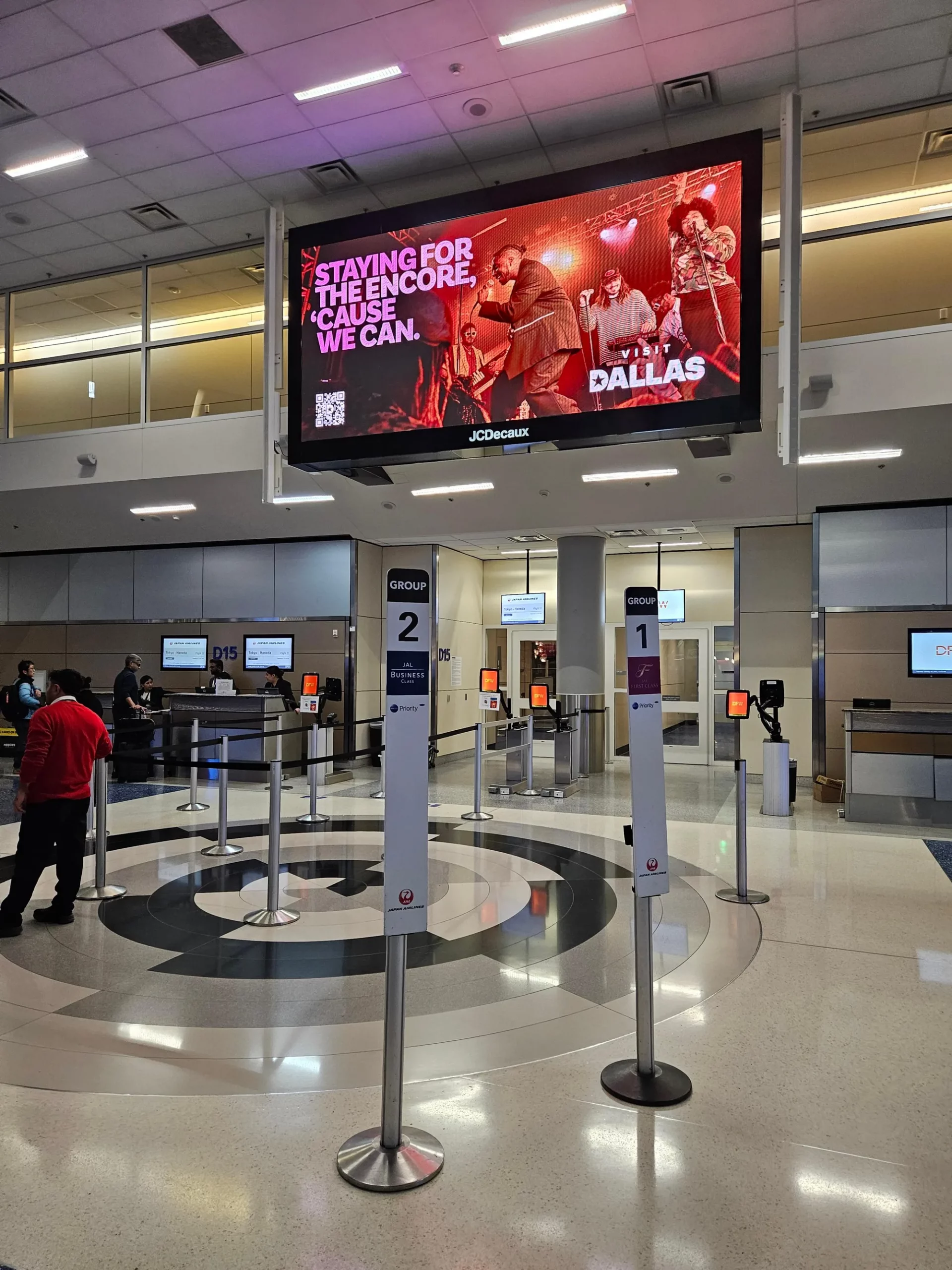
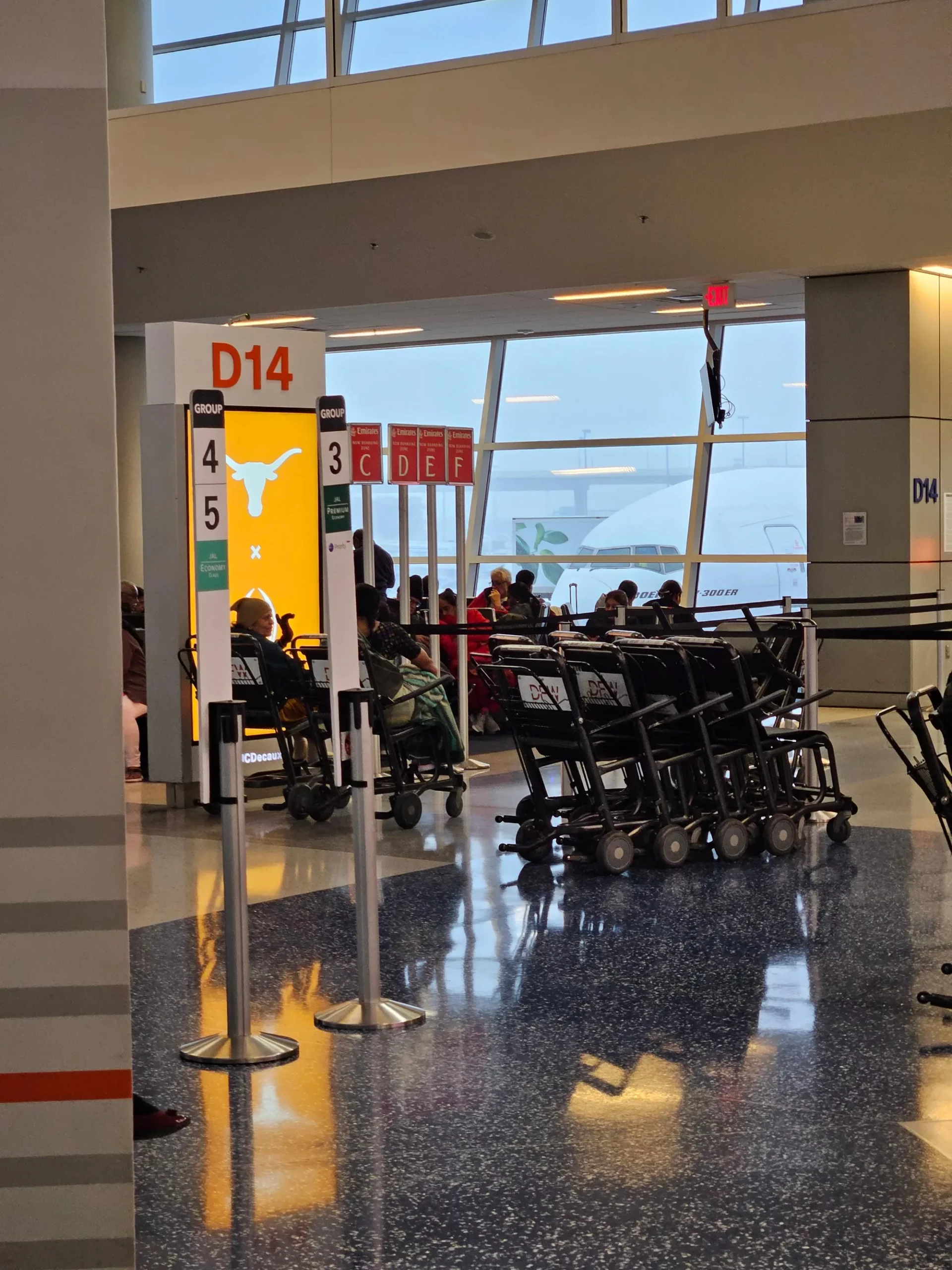
Japan Airlines boarding Groups 1 and 2 (left) and Groups 3, 4, and 5 (right)
Boarding started with preboarding for passengers needing assistance. Group 1 was for First Class passengers and oneworld Emerald members, Group 2 for Business Class passengers and oneworld Sapphire members, and Group 3 for Premium Economy. Economy passengers boarded in Groups 4 and 5. Japanese airlines are known for having a lot of members in their top two status tiers. That can put far more people in Groups 1 and 2 than there are seats in First and Business Class, so both lines can get long.
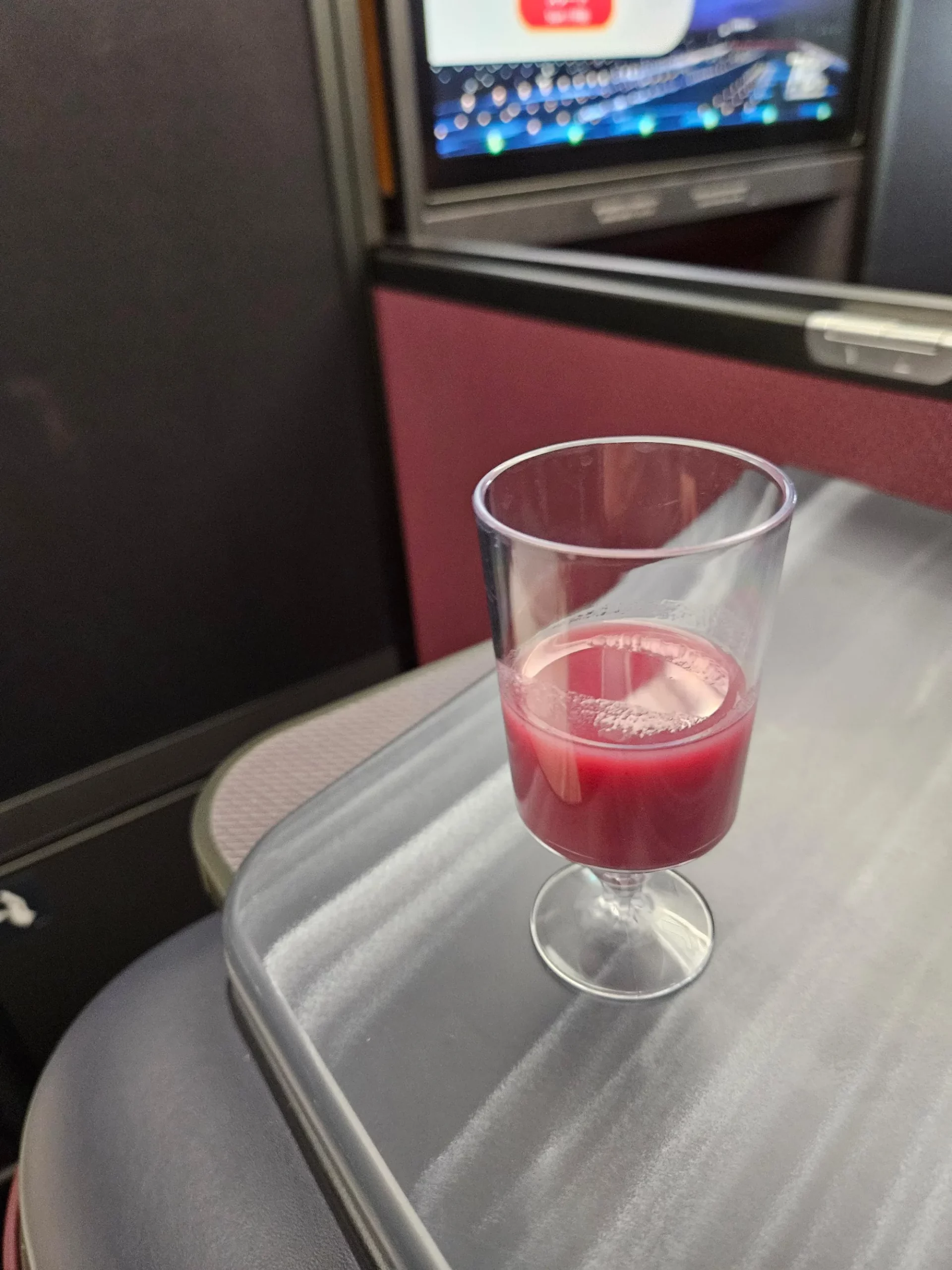
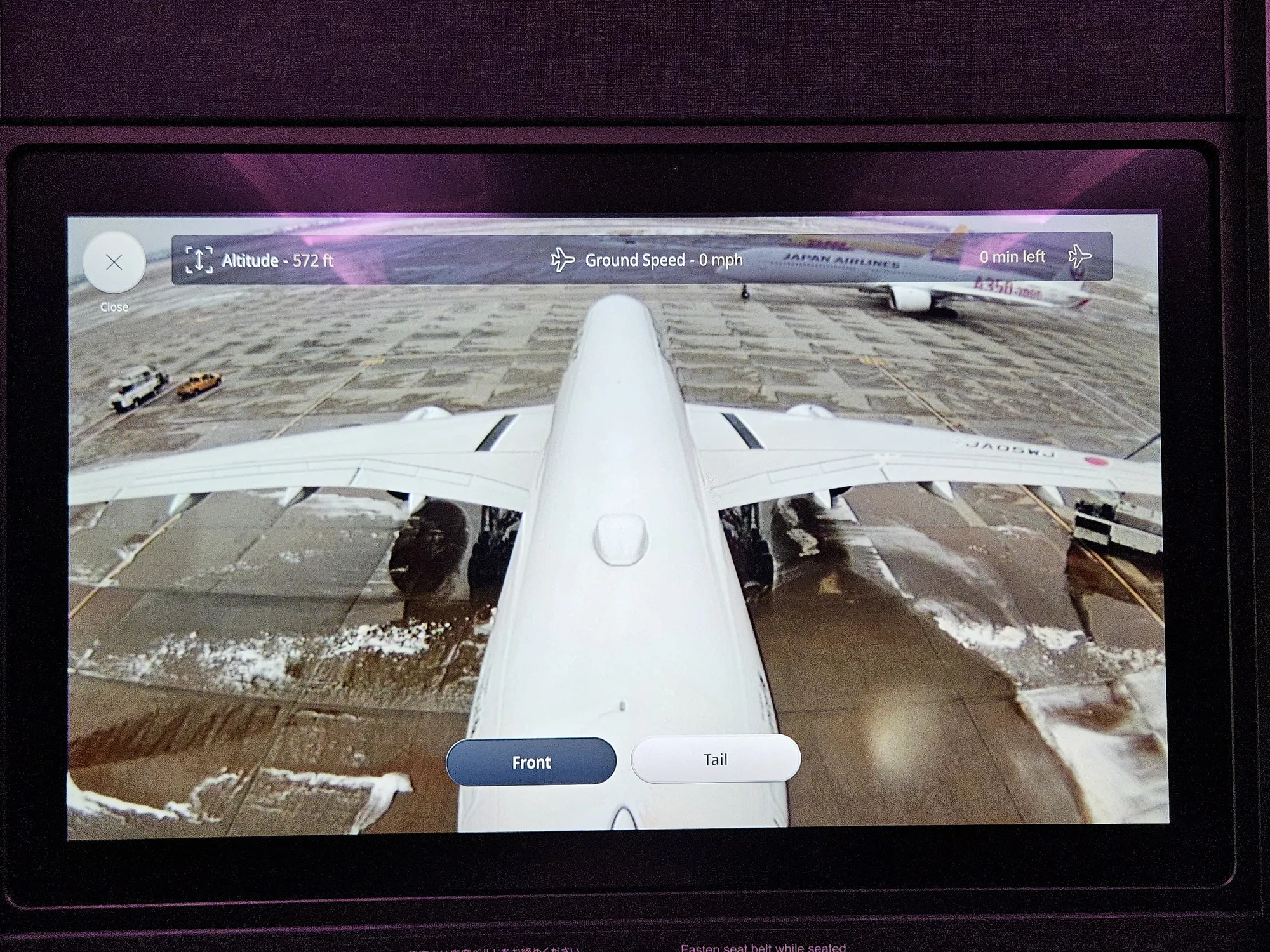
Japan Airlines Business Class welcome drink (left) and another JAL aircraft passing in front of ours during deicing (right)
The crew offered a welcome drink shortly after I boarded. I was served blueberry juice, and maybe I was still spoiled by Finnair’s version, but I didn’t enjoy this one as much. Once boarding was complete, the crew took meal orders from First and Business Class passengers for the service after takeoff. It was still snowing at DFW, so our aircraft needed to be deiced, and we took off about an hour behind schedule. The regularly scheduled January 10 JL11 didn’t need deicing and ended up departing about 10 minutes before us, even though our flight had been due to leave a day earlier. Watching the other JL11 head out on our aircraft’s external camera feed brought up some mixed feelings.
10. Cabin & Seat Detail
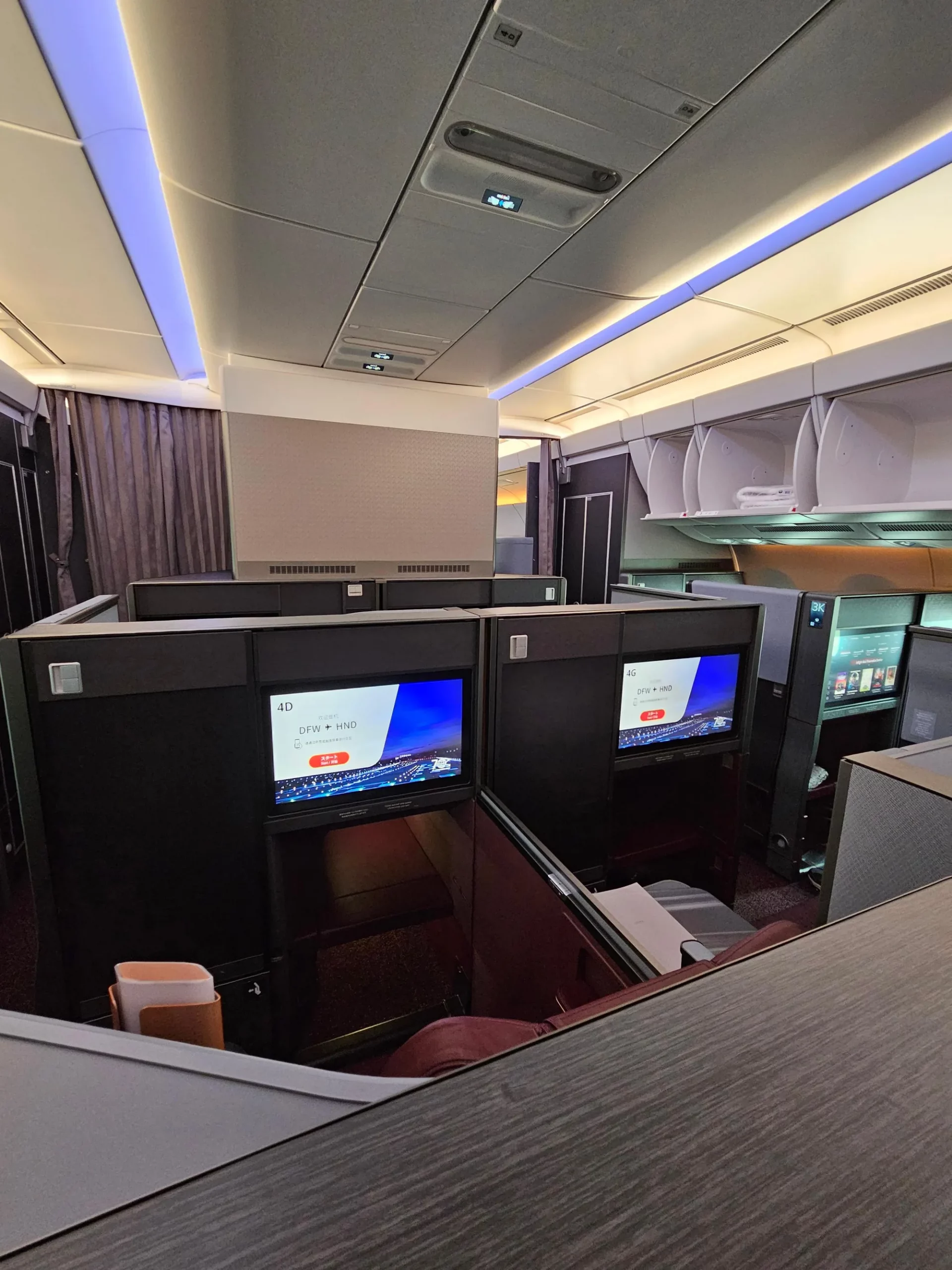
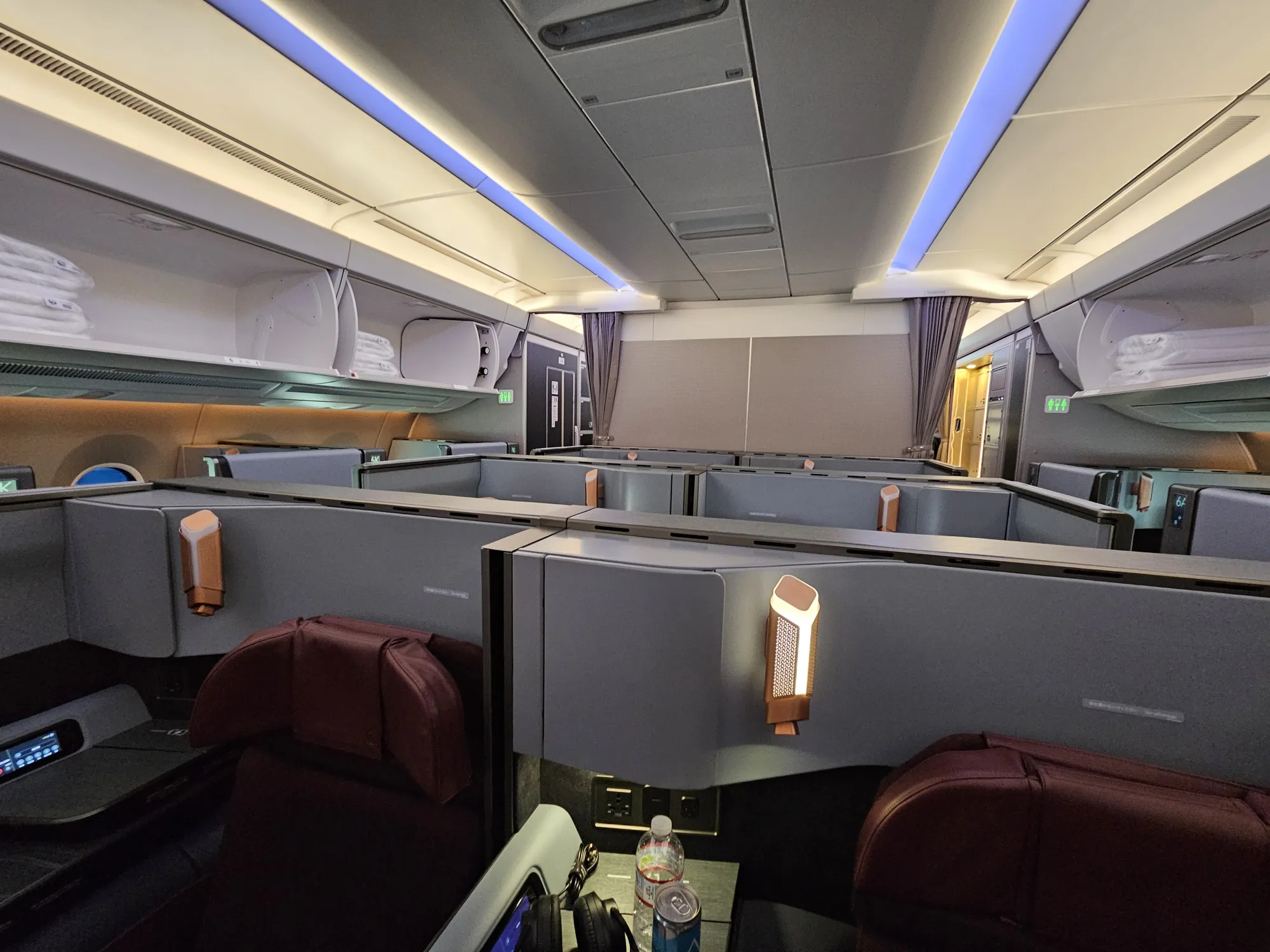
Japan Airlines A350-1000 Business Class cabin
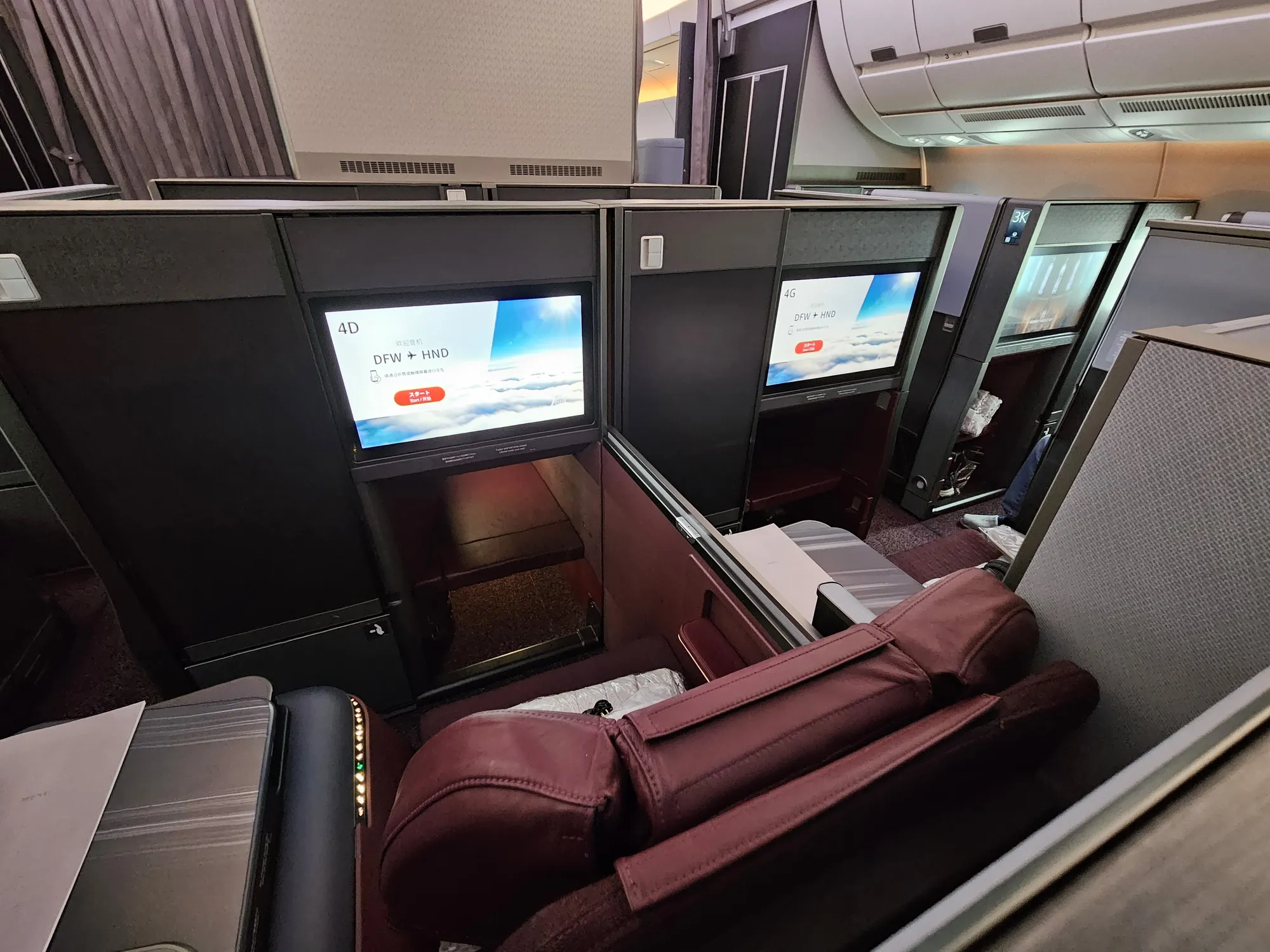
I sat in 5D, and my travel companion was in 5G, so we had the two center seats in the same row. Japan Airlines uses Safran Unity seats in a staggered 1-2-1 layout on its A350-1000. Each seat has a sliding door for privacy. The door rattled in turbulence, and I would have liked it to stay more securely in place. With no overhead bins above the center seats, the cabin felt open and airy.
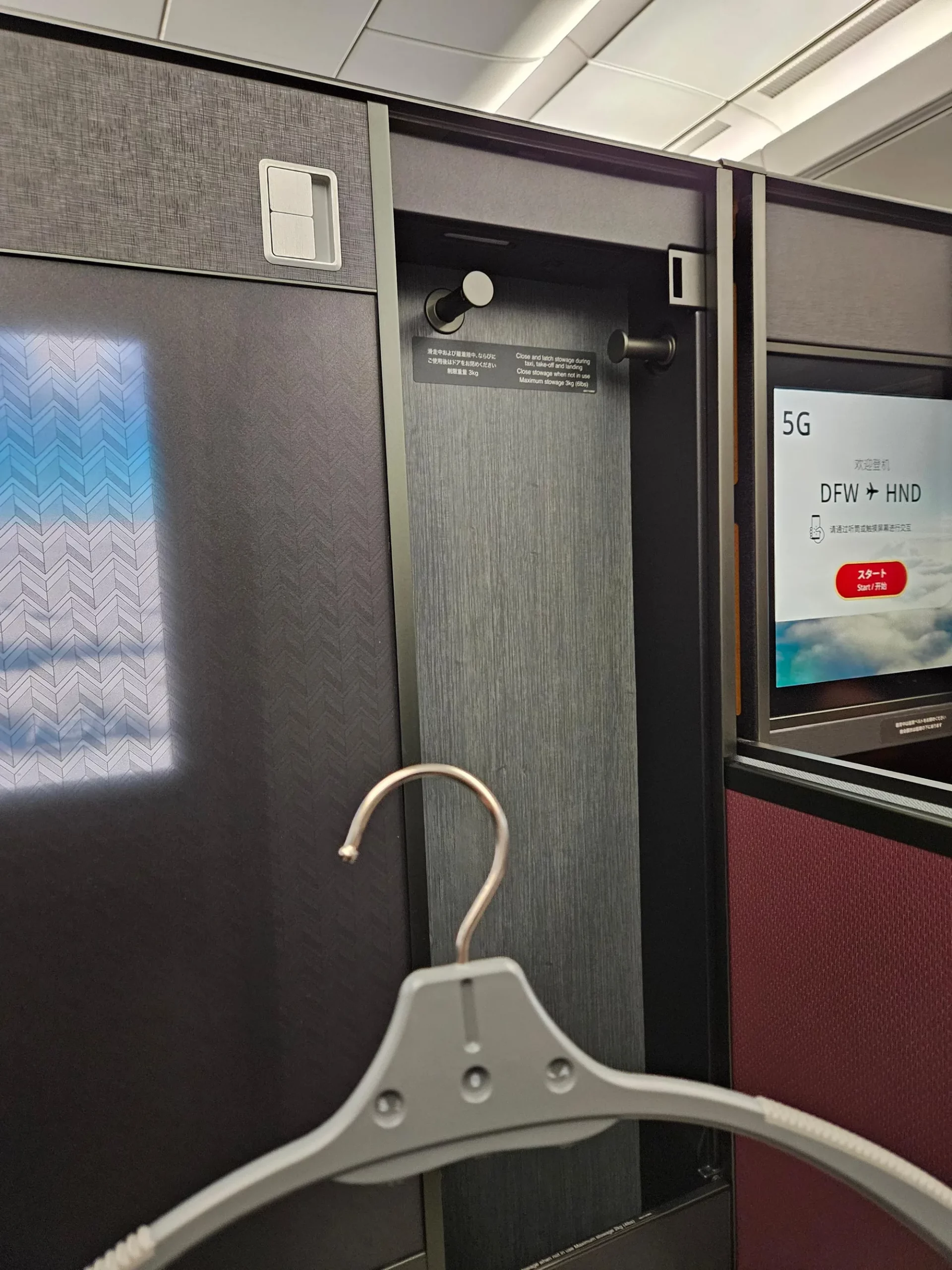
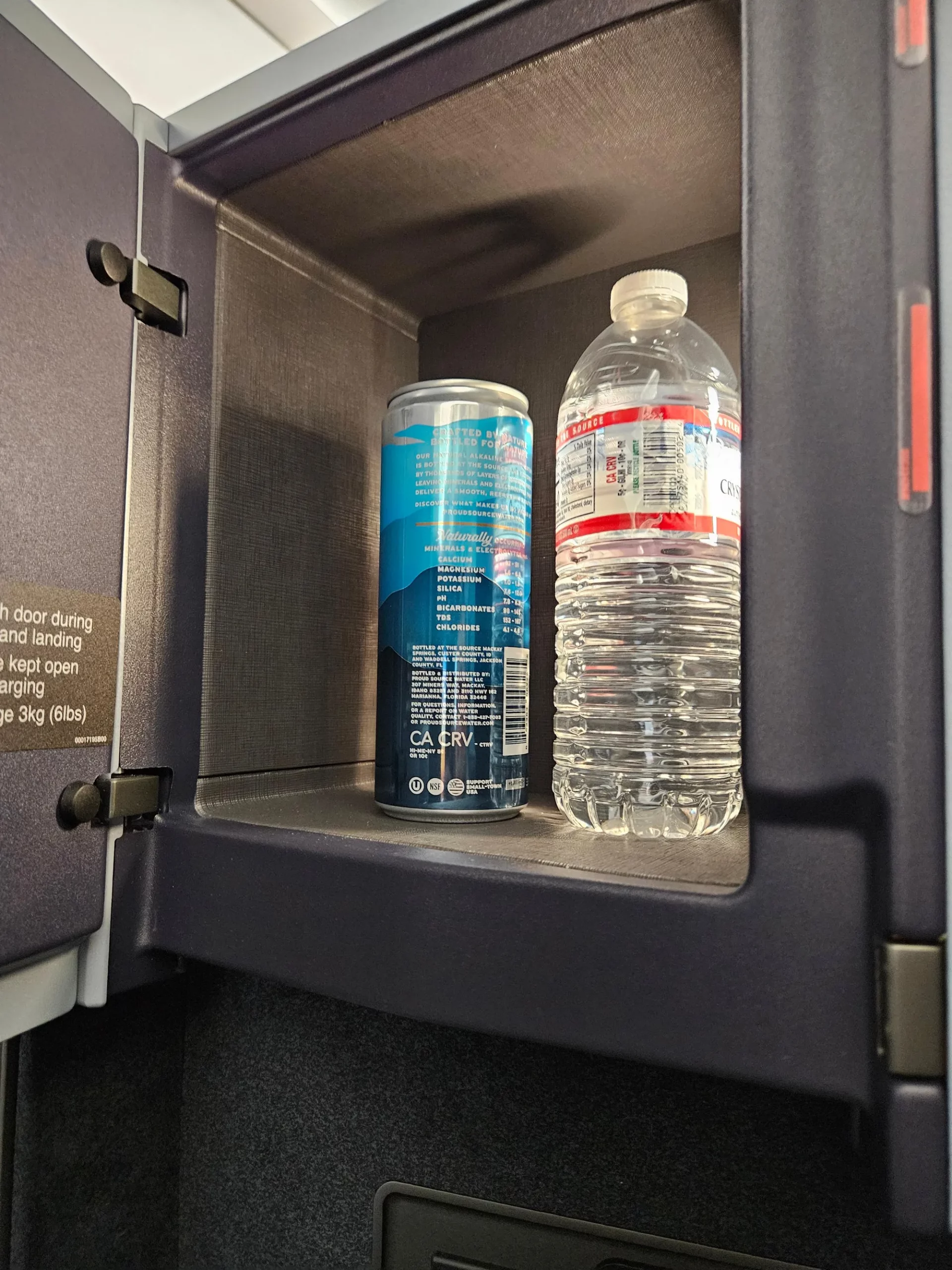
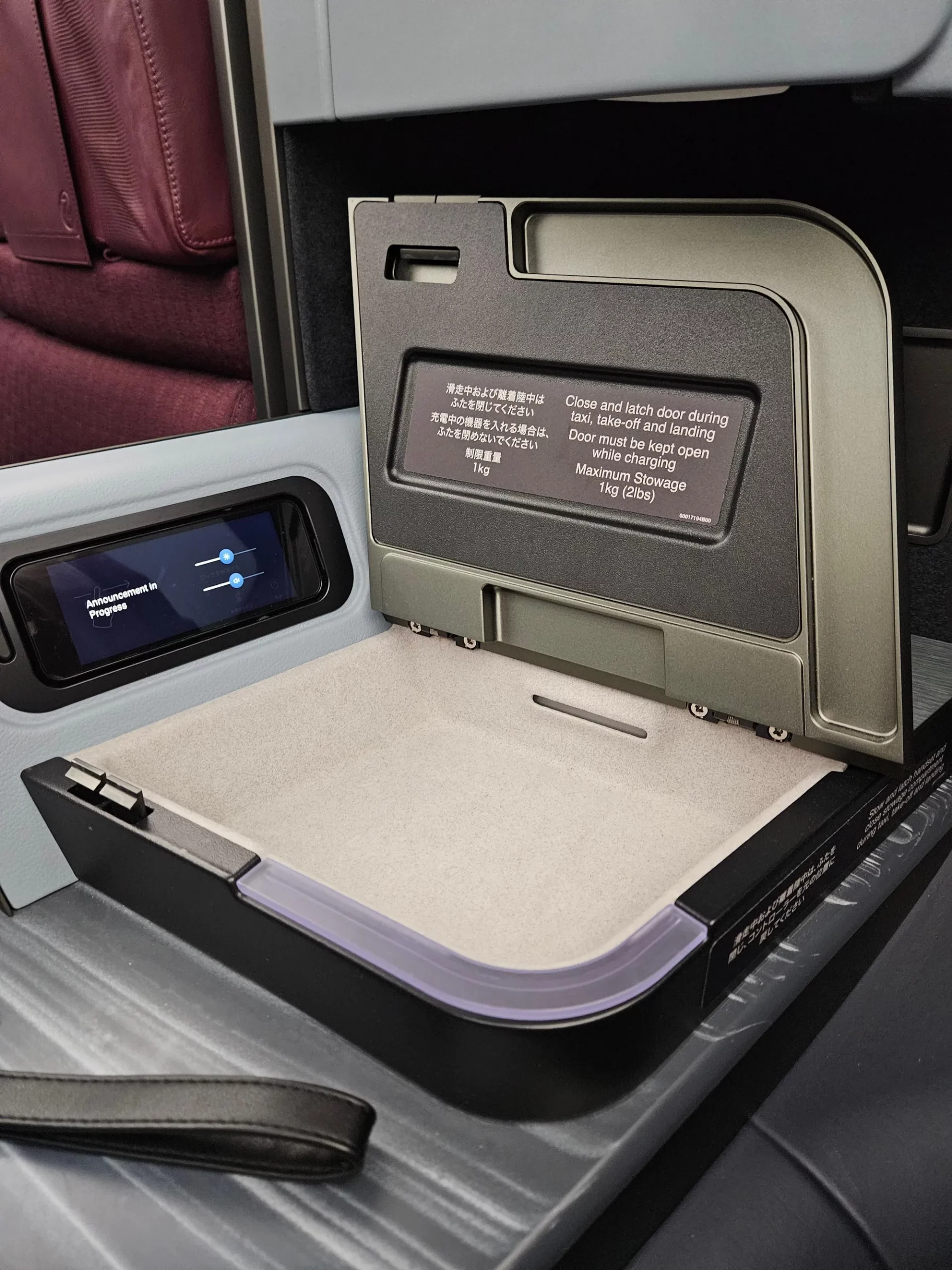
Japan Airlines A350-1000 Business Class storage 1
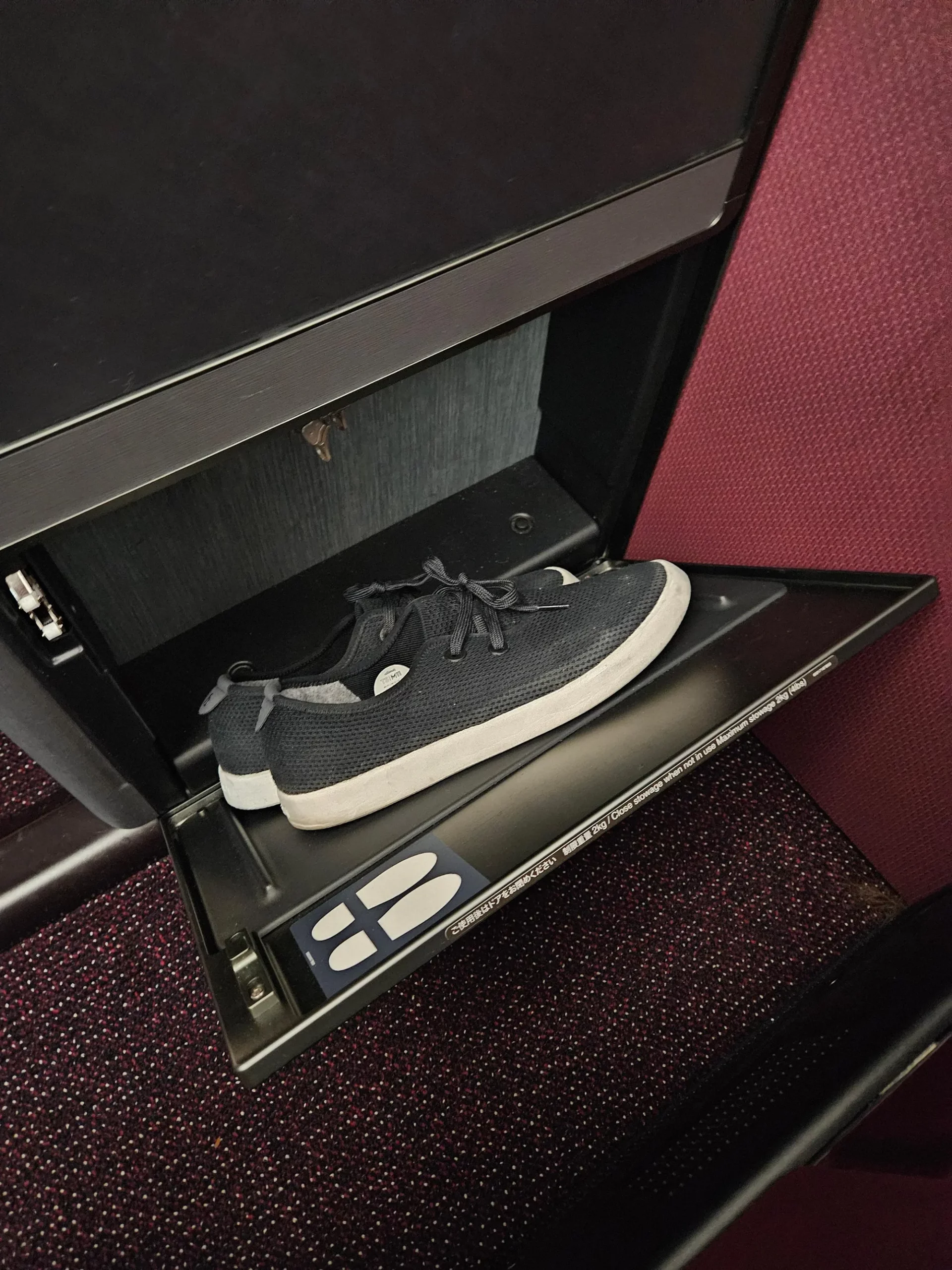

Japan Airlines A350-1000 Business Class storage 2
Before the A350-1000, JAL’s latest Business Class seat was the Sky Suite. It gave me plenty of bed length and legroom, but the seat itself took up most of the available space, leaving little room to stow things. Storage was one of the biggest improvements on the A350-1000. There was enough room for a carry-on suitcase under the ottoman, a small compartment by the side shelf, and a spot for the water bottle and headphones. Beside the screen was a personal closet for a jacket, though it was too shallow for a bulky down coat. There was also a separate space underneath for shoes. I had room for everything I wanted to keep nearby, which made the suite much easier to use than the older Sky Suite.
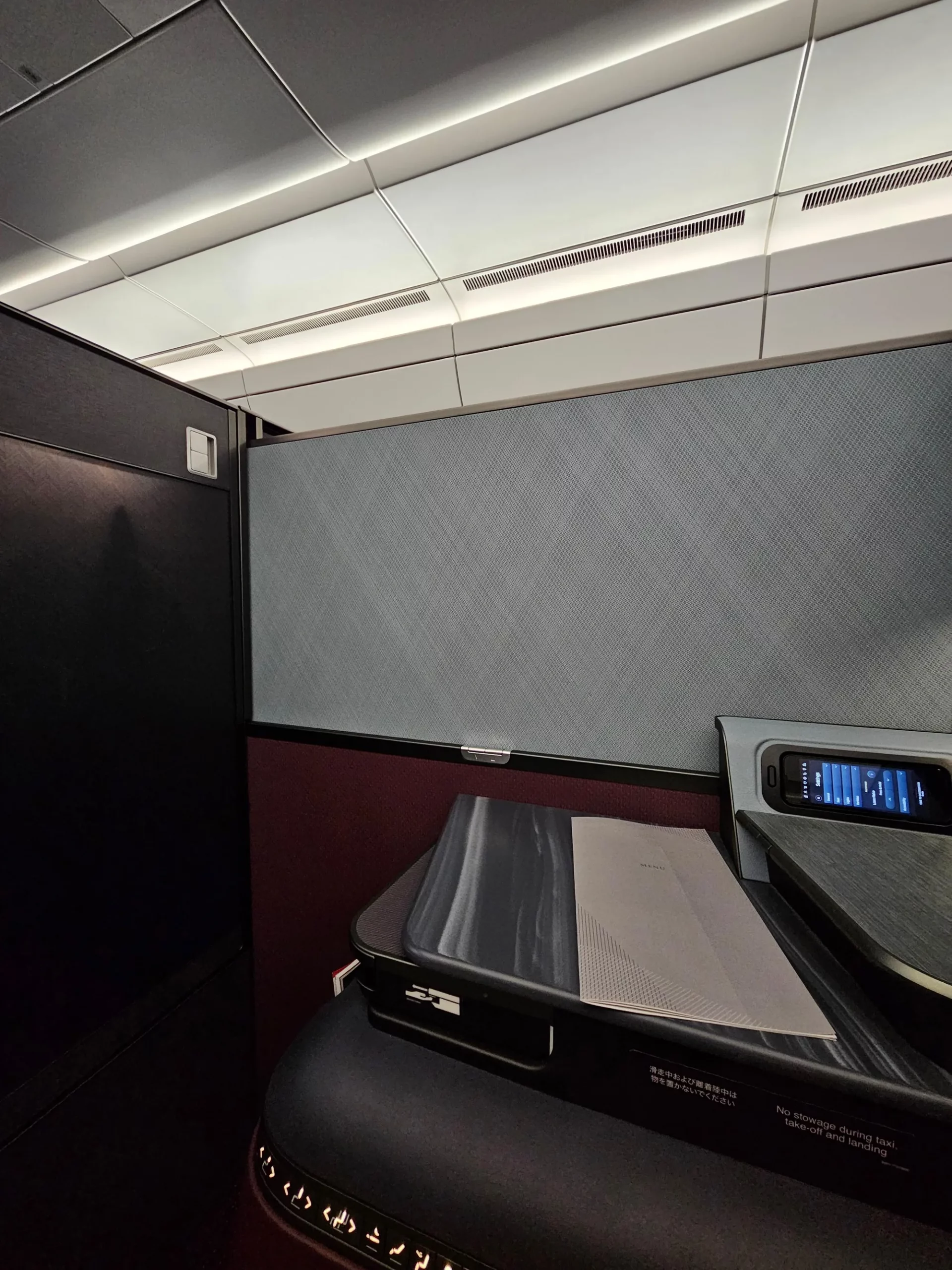
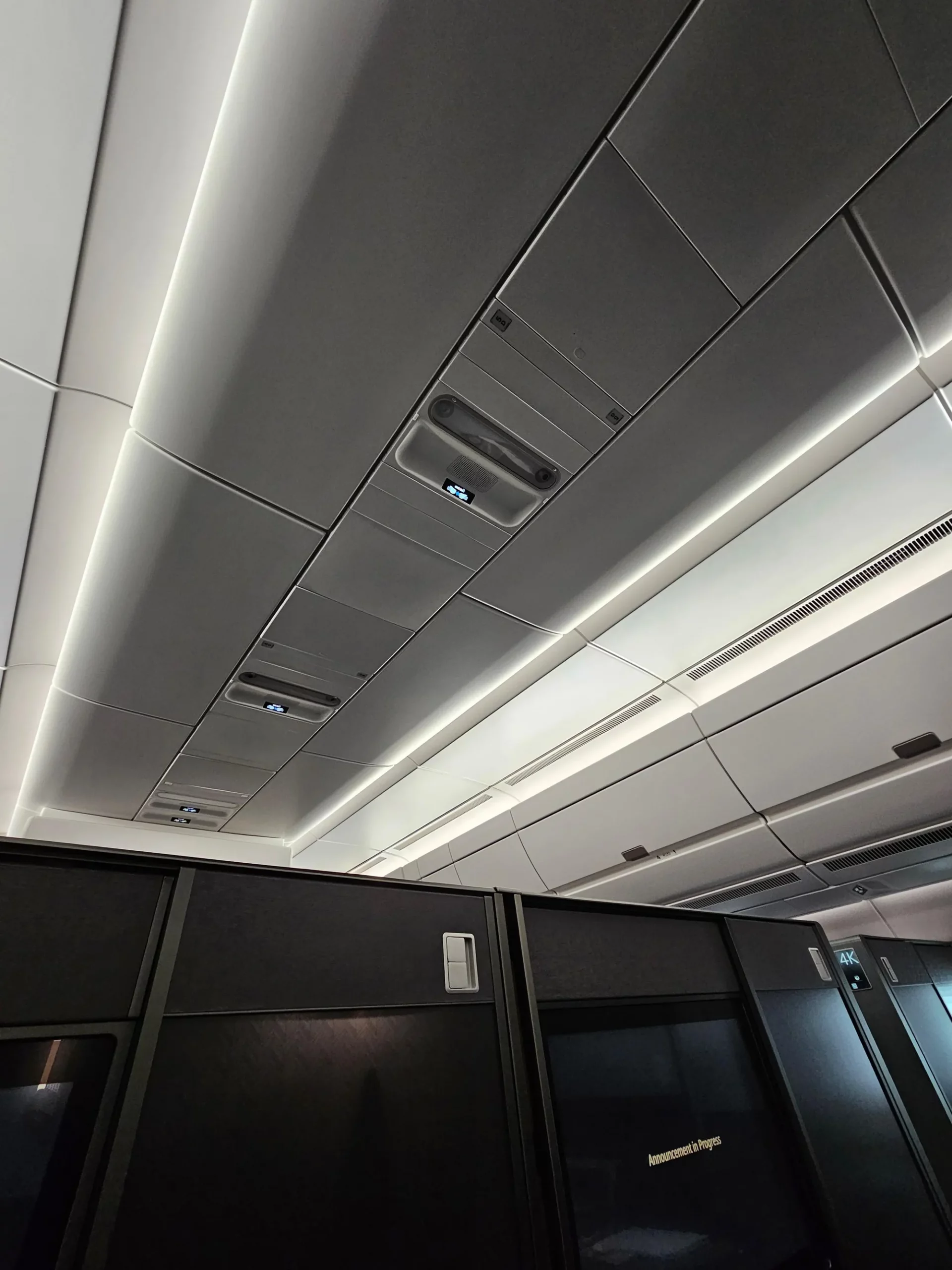
Japan Airlines A350-1000 Business Class center-seat divider (left) and cabin ceiling (right)
japan-airlines-a35k-business-jl11-dfw-hnd-en-28
Japan Airlines A350-1000 Business Class center seats
Even with the center divider lowered all the way, the fixed partition was high enough that it was hard to see or talk to my companion once we reclined. I would have liked to see JAL bring the center seats closer together and use a lower divider, as Qatar Airways does with its Qsuites, so companions could face each other while lying down. Lowering the divider still made a difference. With no overhead bins above us, the two suites felt surprisingly open even with the doors closed.
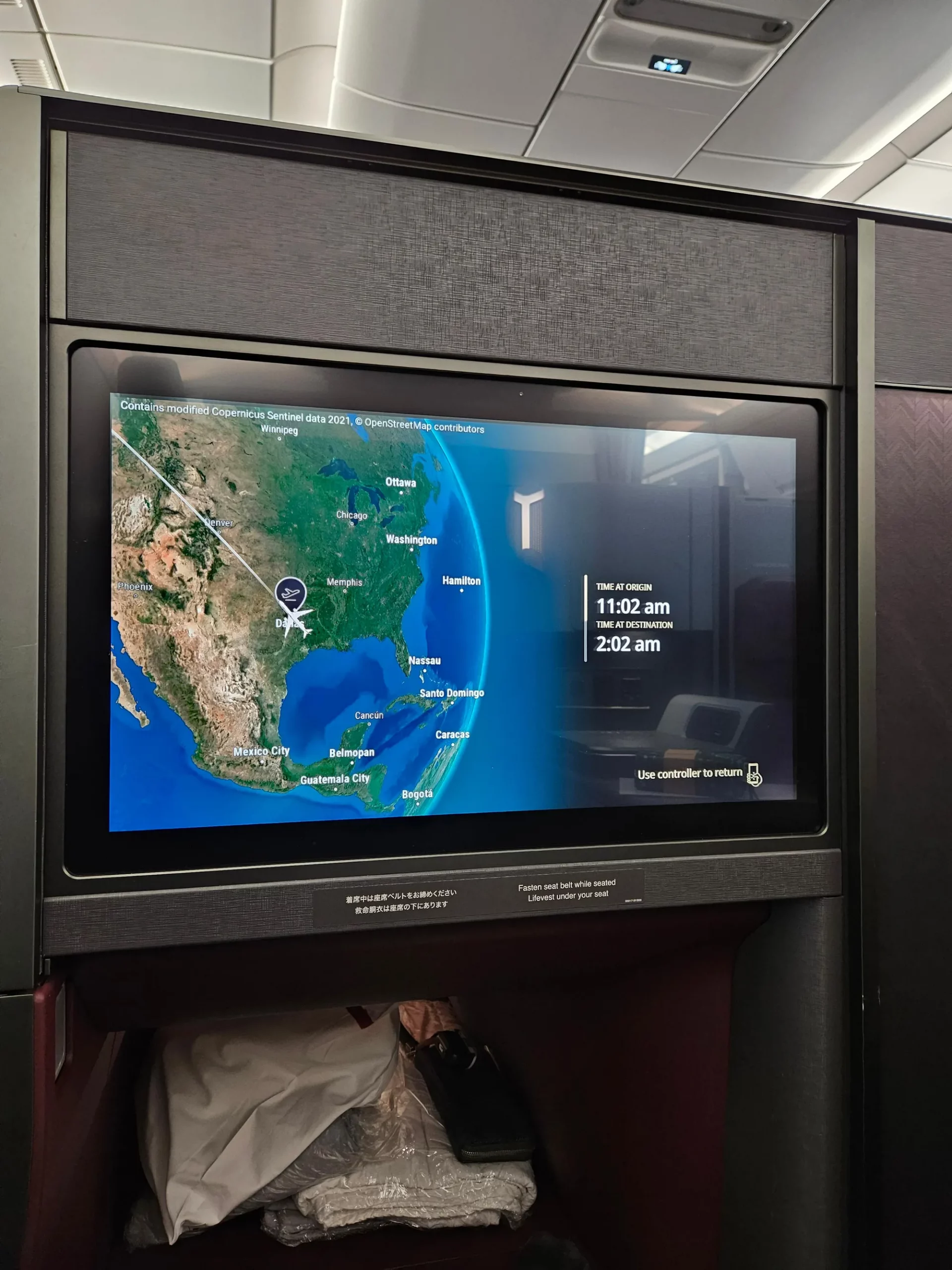
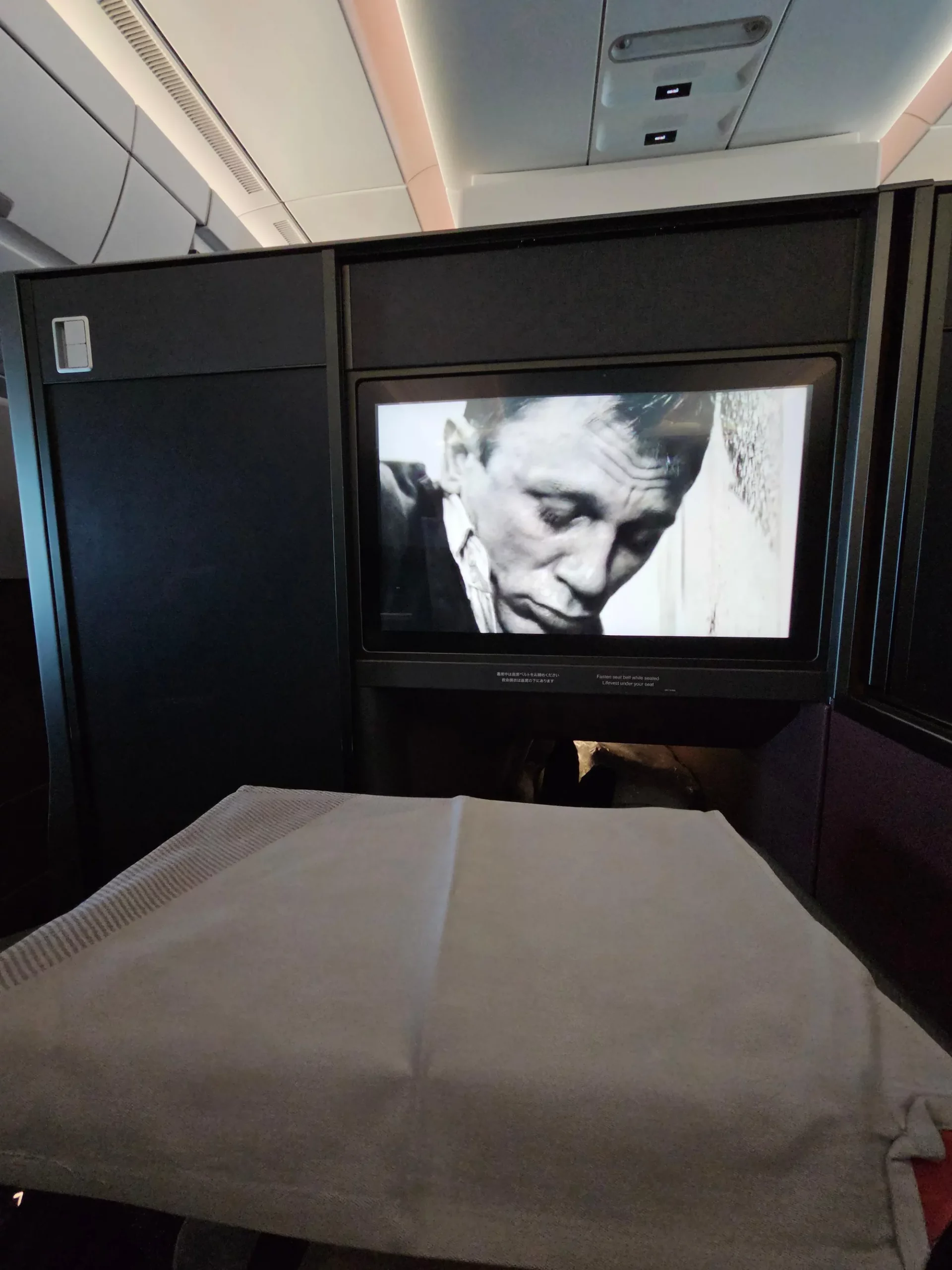
Japan Airlines A350-1000 Business Class 24-inch 4K screen
The 24-inch 4K screen was noticeably brighter and sharper. The older JAL Sky Suite had a 23-inch screen at the foot of the bed, where it looked much smaller than the measurement suggested. On the A350-1000, my lower body extended into the space beneath the screen, so in bed mode the display sat roughly above my thighs or waist. That made it look much larger. I could also reach the touchscreen easily while lying down, so I rarely needed the remote.
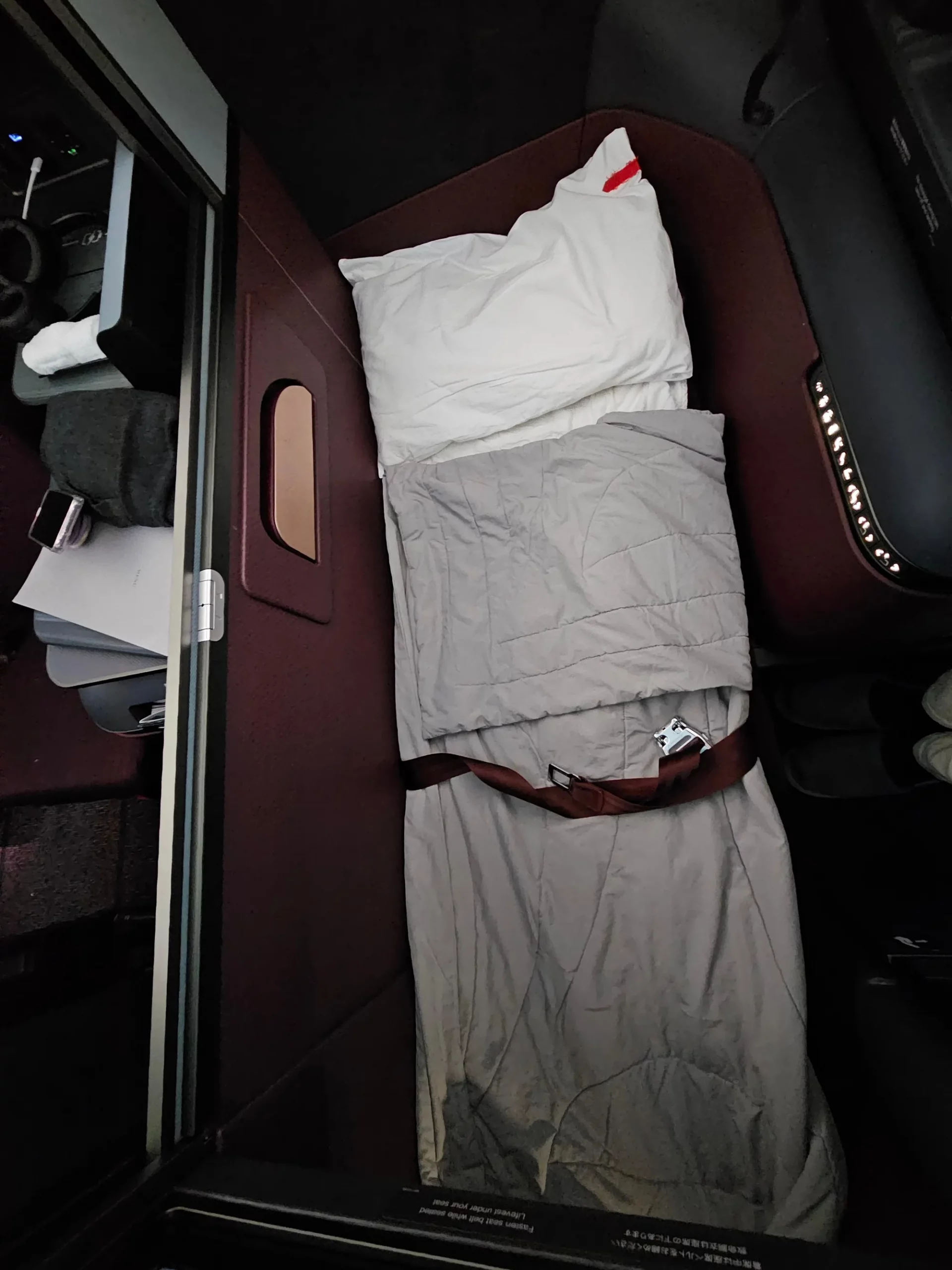
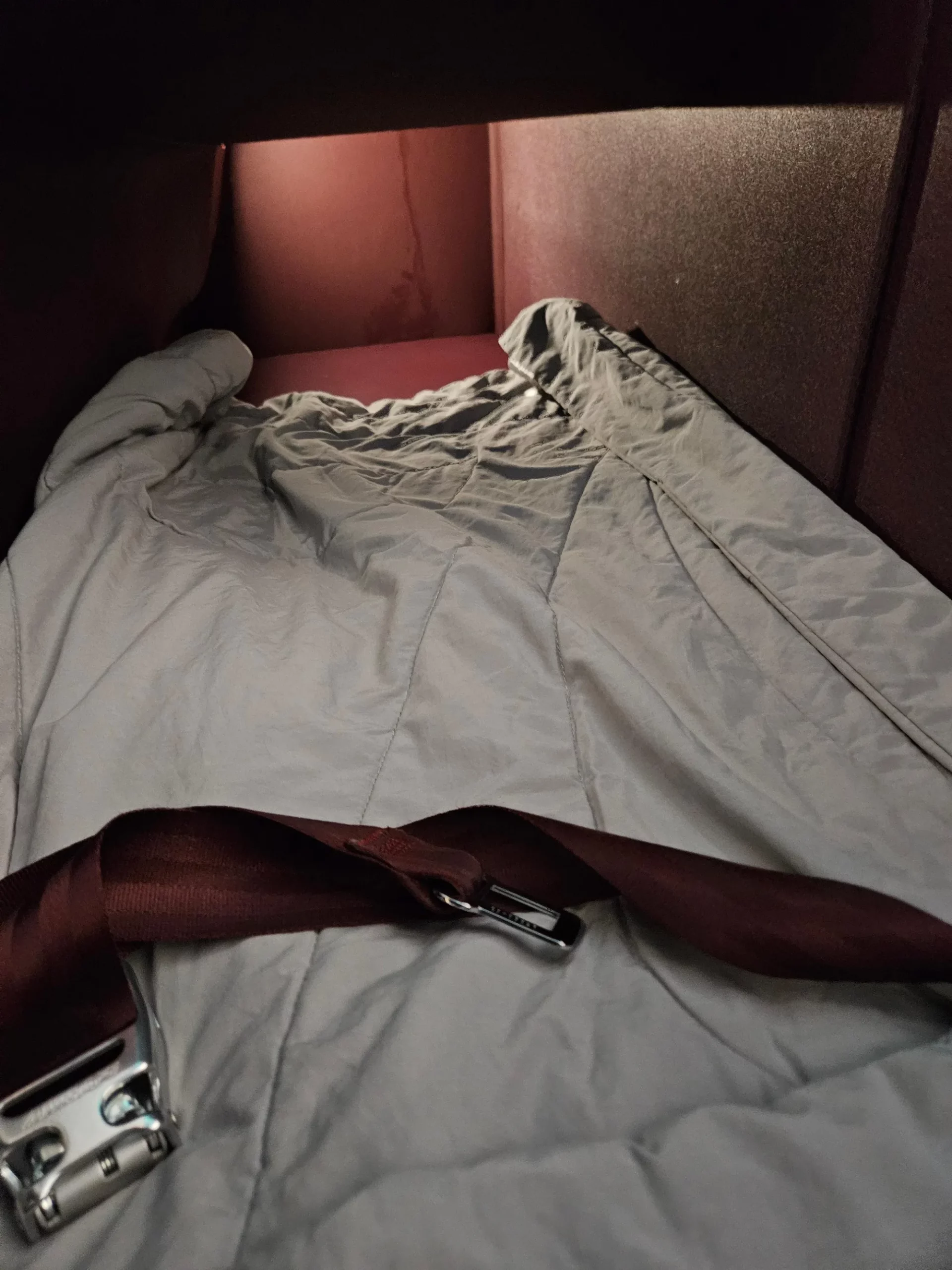
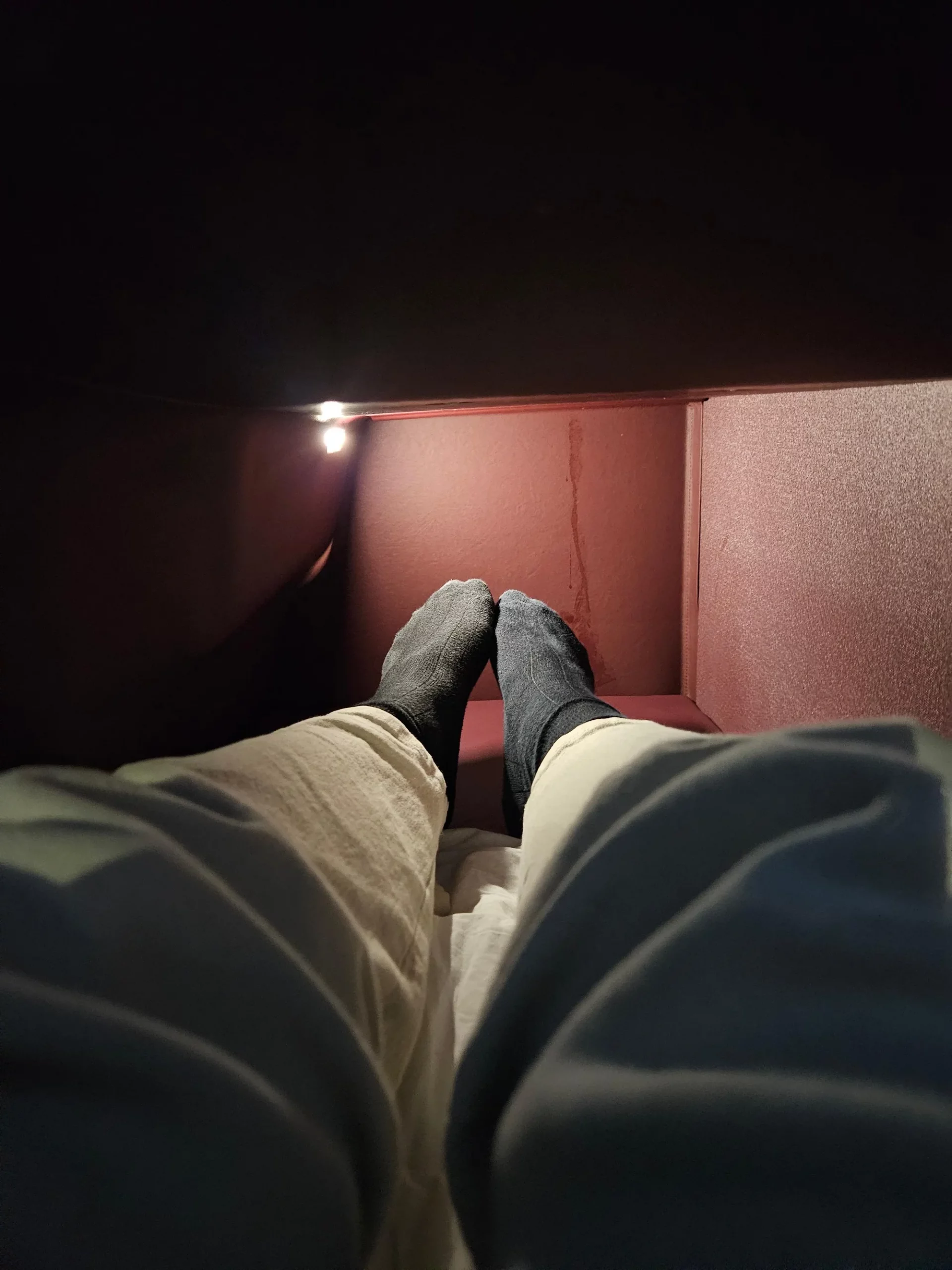
Japan Airlines A350-1000 Business Class seat in bed mode (left) and legroom (center and right)
The space around my legs was another highlight. On a staggered seat, your feet usually fit into a space beside the seat ahead, which limits how wide the footwell can be. I tend to find herringbone and reverse herringbone layouts even tighter. JAL’s own Sky Suite III has the most cramped footwell I’ve experienced in Business Class. The A350-1000 suite had more legroom than any other staggered Business Class seat I’ve tried. The bed was 198 cm long, so at over 180 cm tall, I could stretch out comfortably.
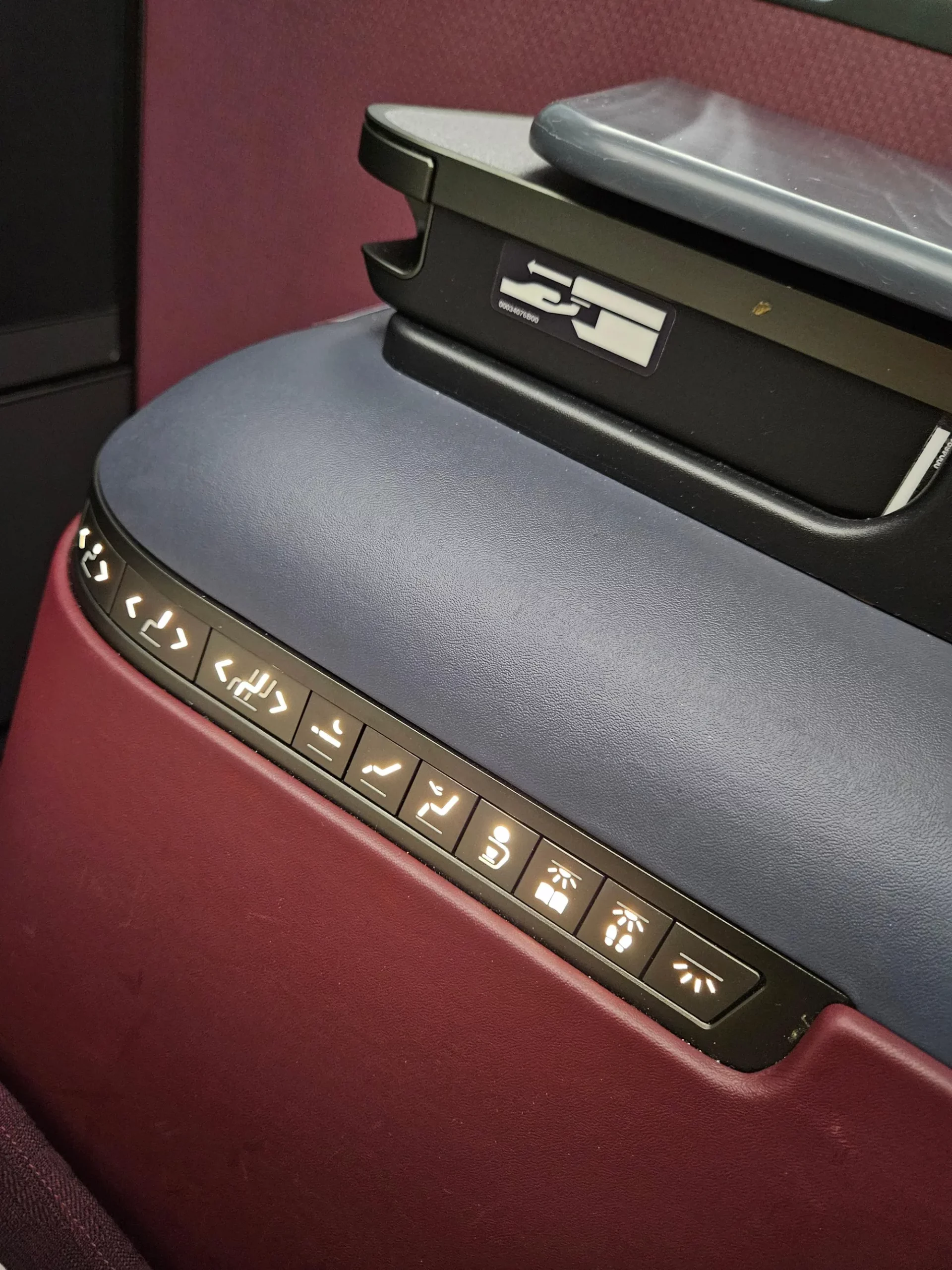

Japan Airlines A350-1000 Business Class seat controls (left) and center divider controls (right)
The seat controls allowed finer adjustments, including sliding the seat forward and back. The tray table was large and sturdy enough that I could lean on it without it wobbling much. There was a folding armrest on the opposite side from the seat controls. I could also raise or lower the center divider using either the button on the divider itself or the seat controller.
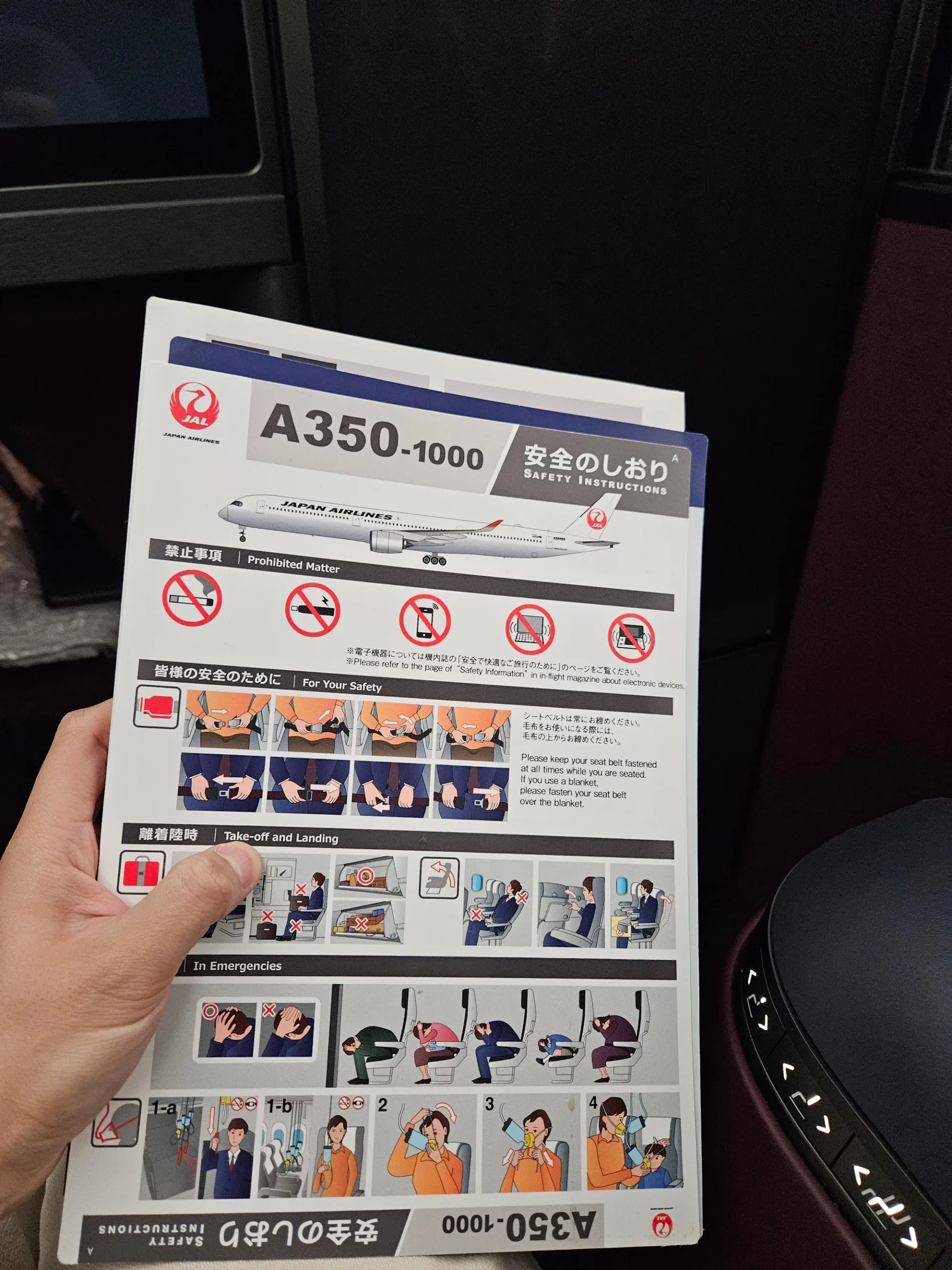
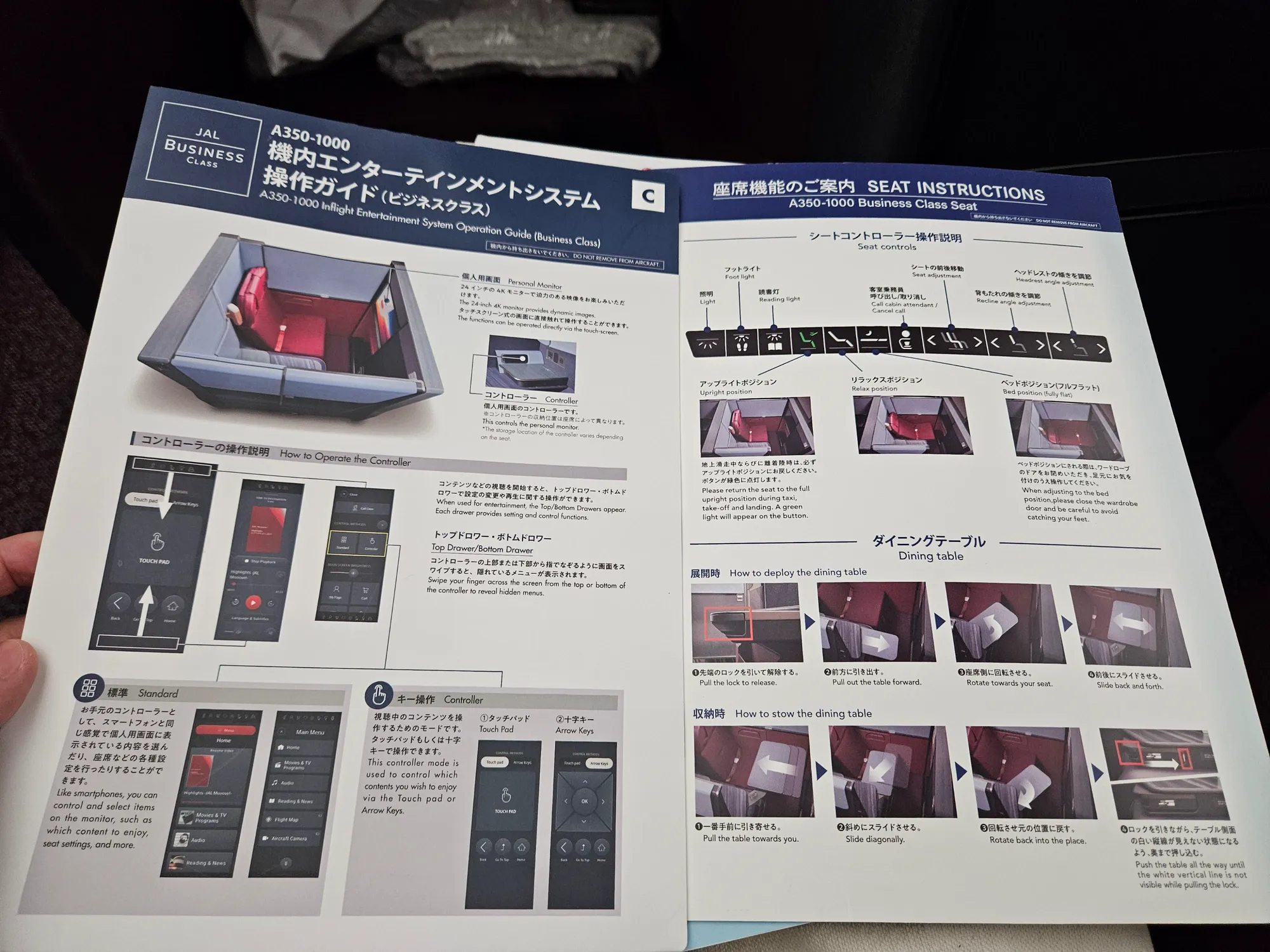
Japan Airlines A350-1000 safety card (left) and Business Class seat guide (right)
I found the suite comfortable and thoughtfully designed. The storage and controls made it easy to settle in, though a few details surprised me on an aircraft only six months old. Some of the seat buttons stayed stuck after I pressed them, and the entertainment system froze repeatedly, so I had to change seats. I also found bits of trash in the gaps and behind the seat, where they seemed to have been missed during cleaning. Small items can slip behind the seat once it’s partly reclined, so I’d keep an eye on anything loose. (I wish I hadn’t learned that firsthand. At least it was easy to get mine back.)
11. In-flight Service
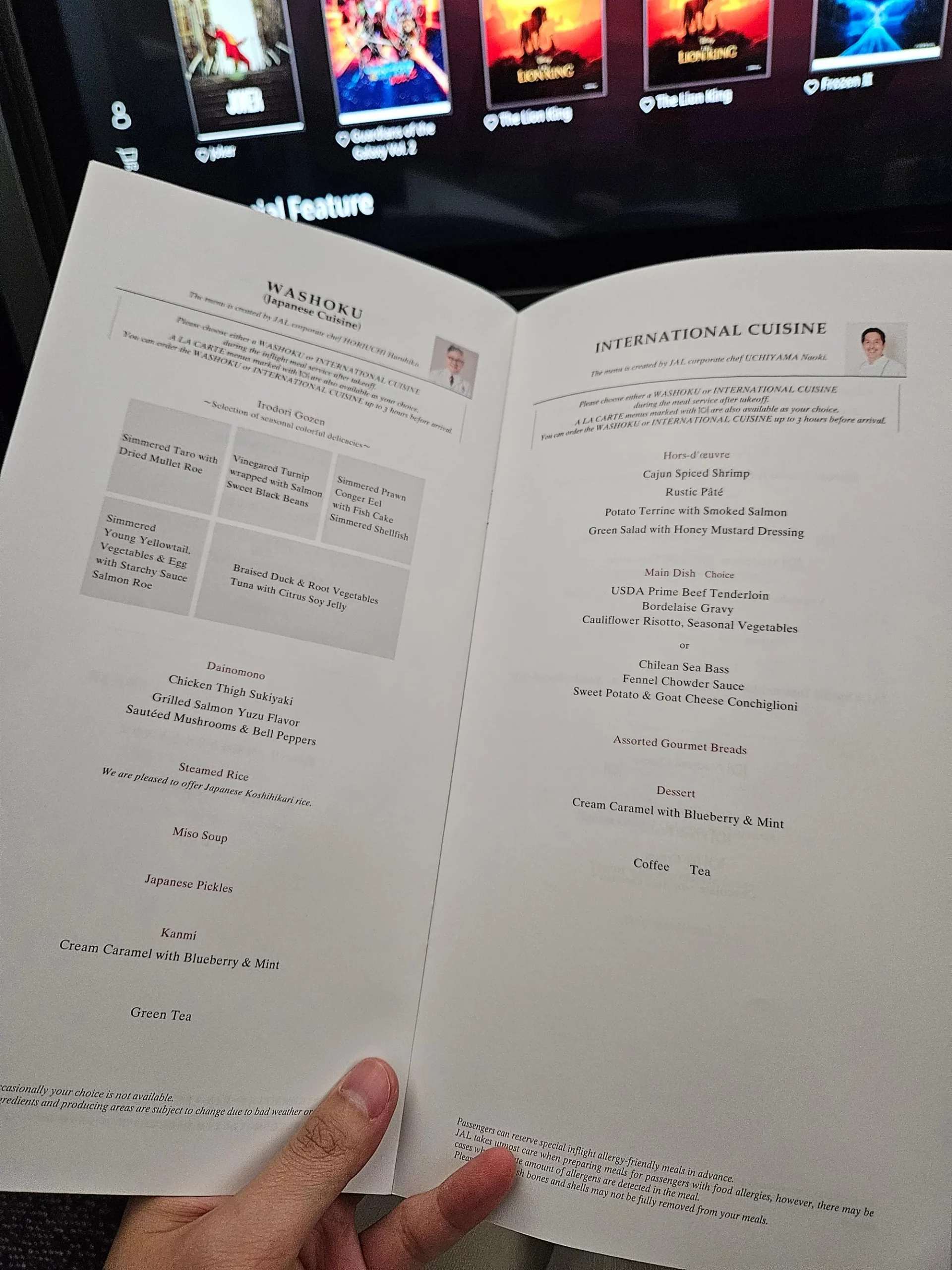
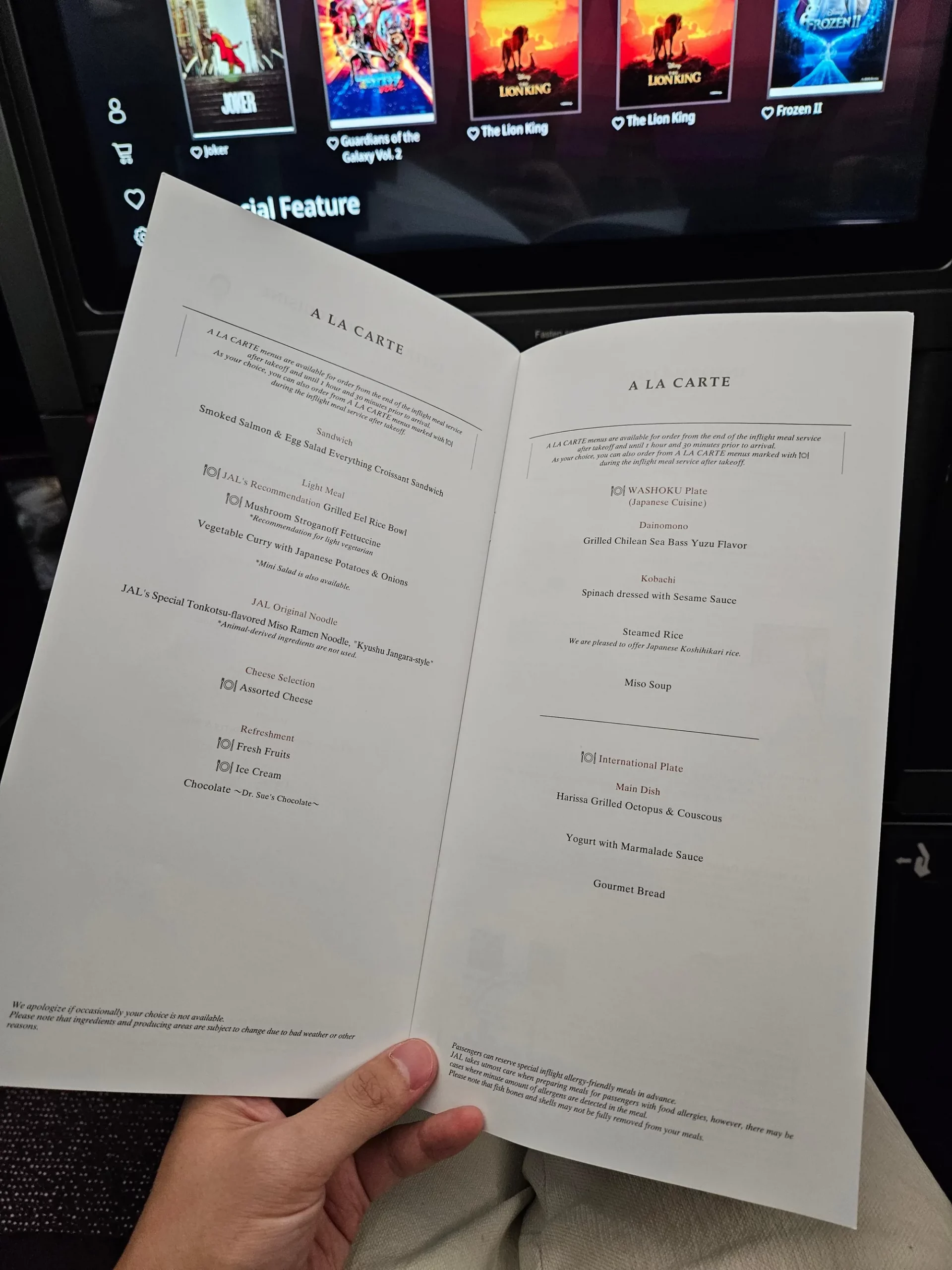
Japan Airlines A350-1000 Business Class menu for the first meal (left) and à la carte menu (right)
On Japan Airlines’ U.S. routes, service starts before takeoff when the crew takes orders for the first meal. After takeoff, the meal begins with an amuse-bouche, followed by an appetizer, main course, and dessert. Once the meal is over, the crew explains that you can order from the à la carte menu until 90 minutes before landing, then turns off the cabin lights. The menu includes set meals that passengers usually have before landing, though you can order them anytime during the à la carte service.
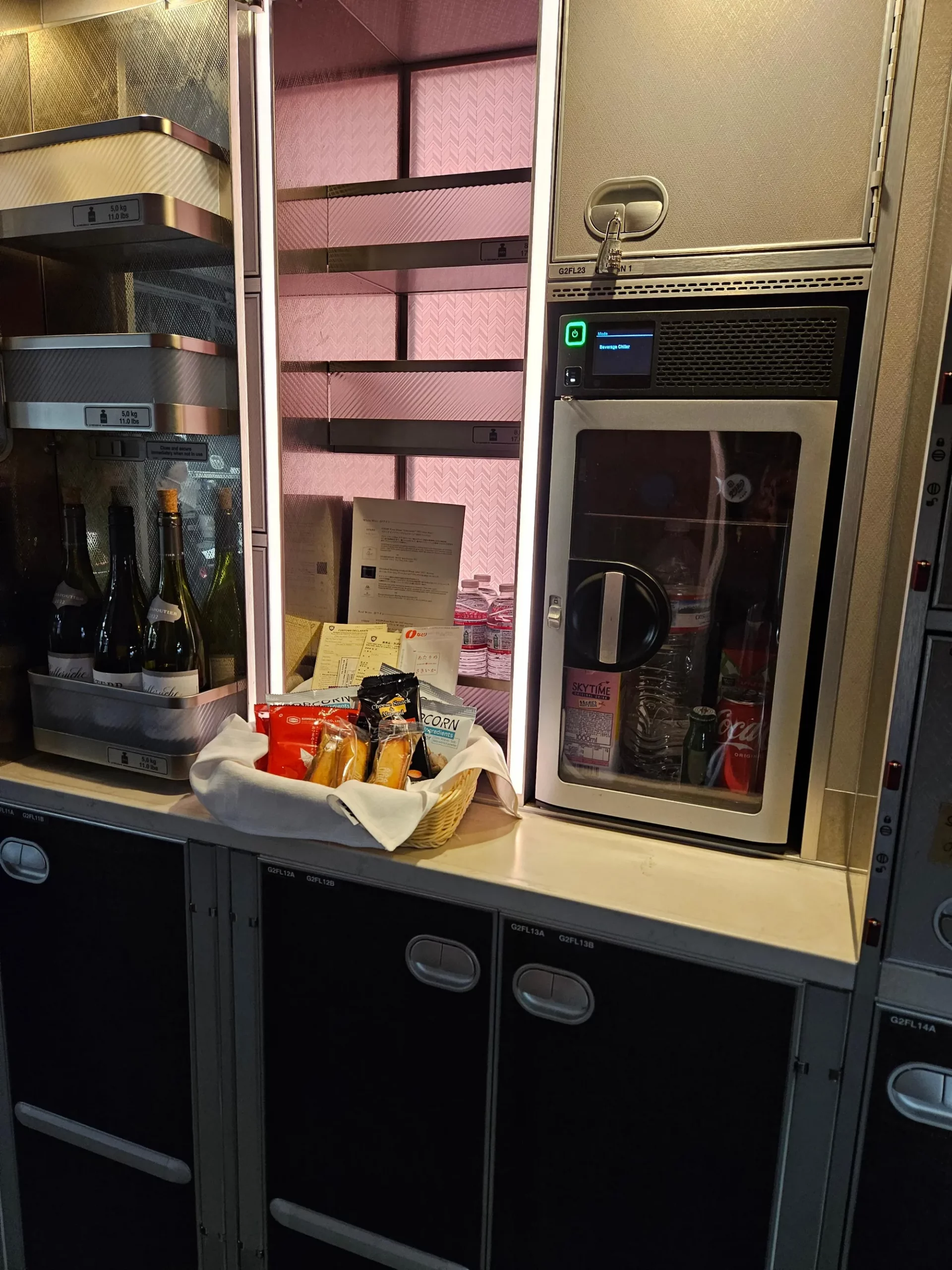
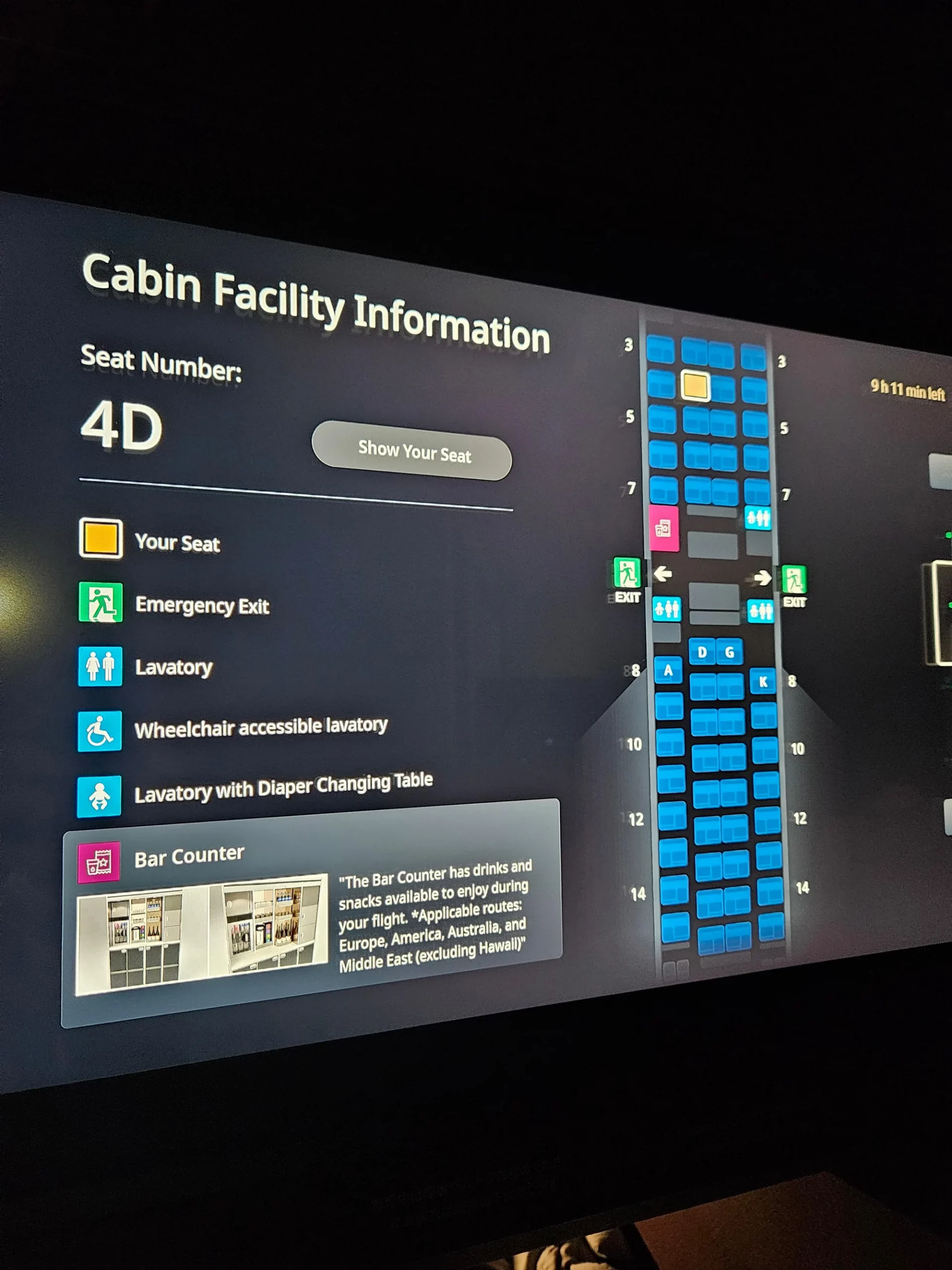
Japan Airlines A350-1000 Business Class self-service bar (left) and Airplane Layout screen (right)
There’s a self-service bar near door L2, where we boarded. You can help yourself to popcorn, rice crackers, bread, and other snacks, along with alcoholic and nonalcoholic drinks, anytime during the flight. The drinks are listed on the menu, so you can also ask the crew to bring you one. The snacks vary and aren’t listed individually, so if you’re curious, I’d take a short walk over to L2 to see what’s there. It’s marked “Bar Counter” in the “Airplane Layout” section of the inflight entertainment system.
12. Amenities & Lavatory
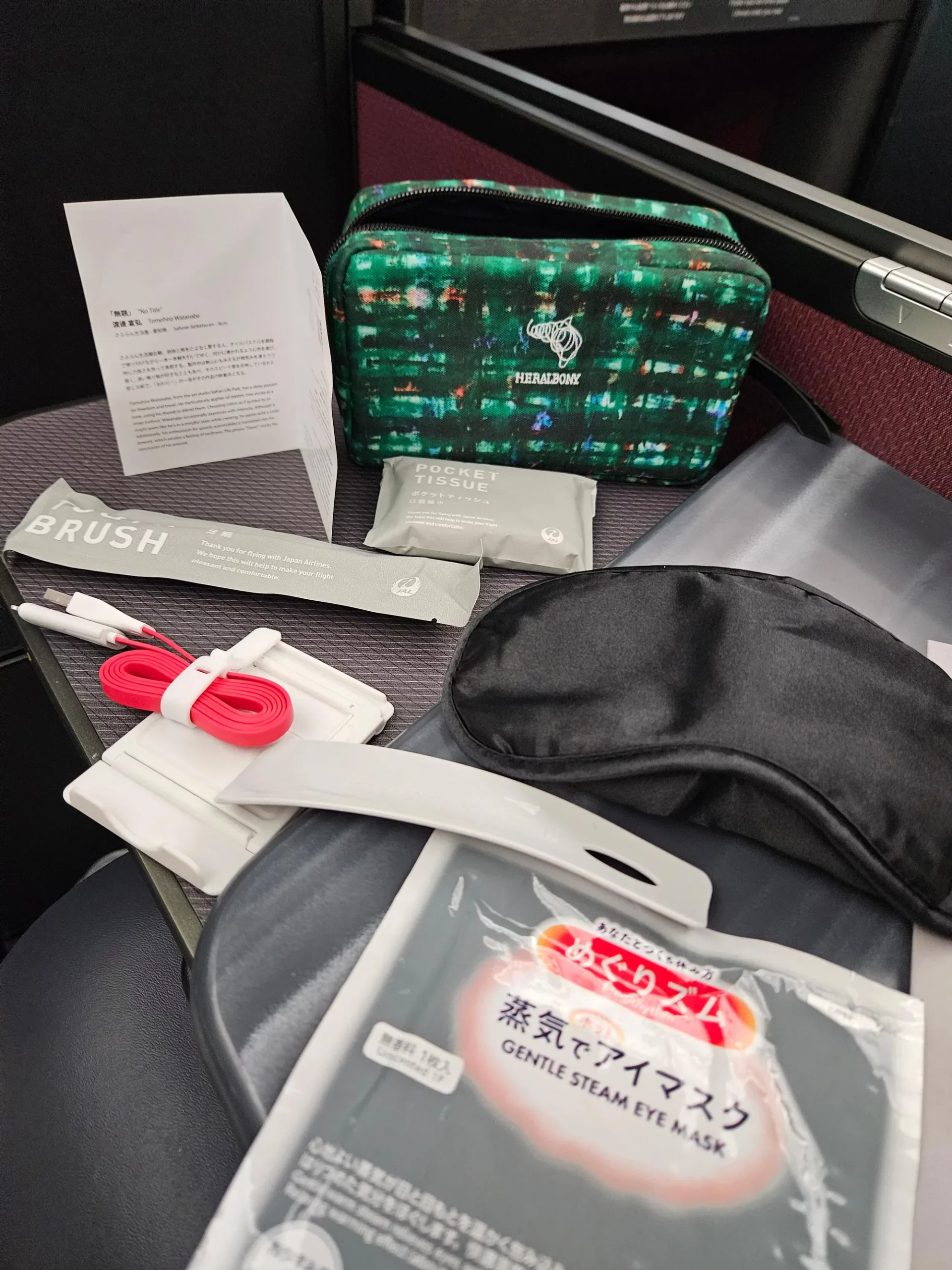
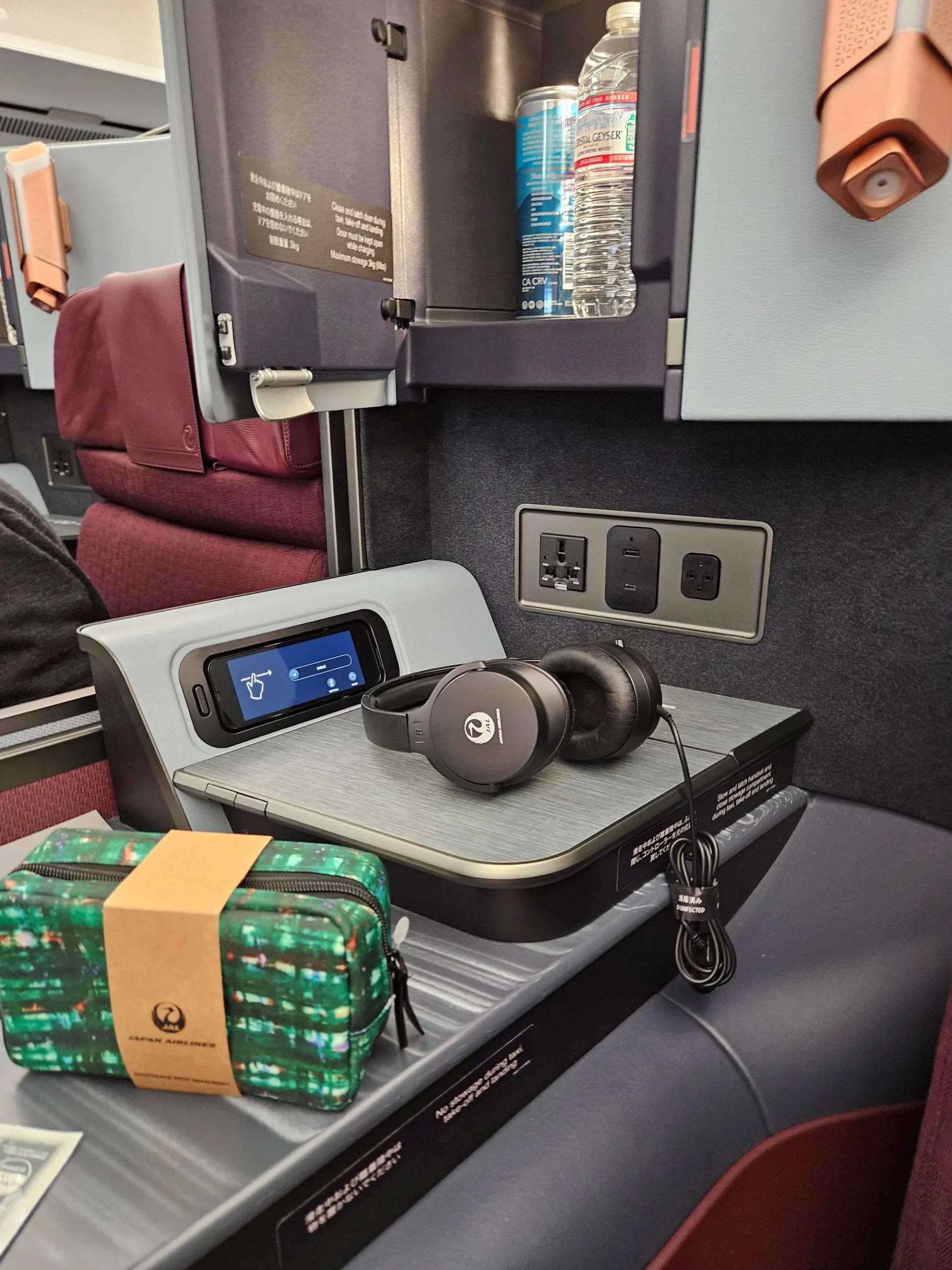
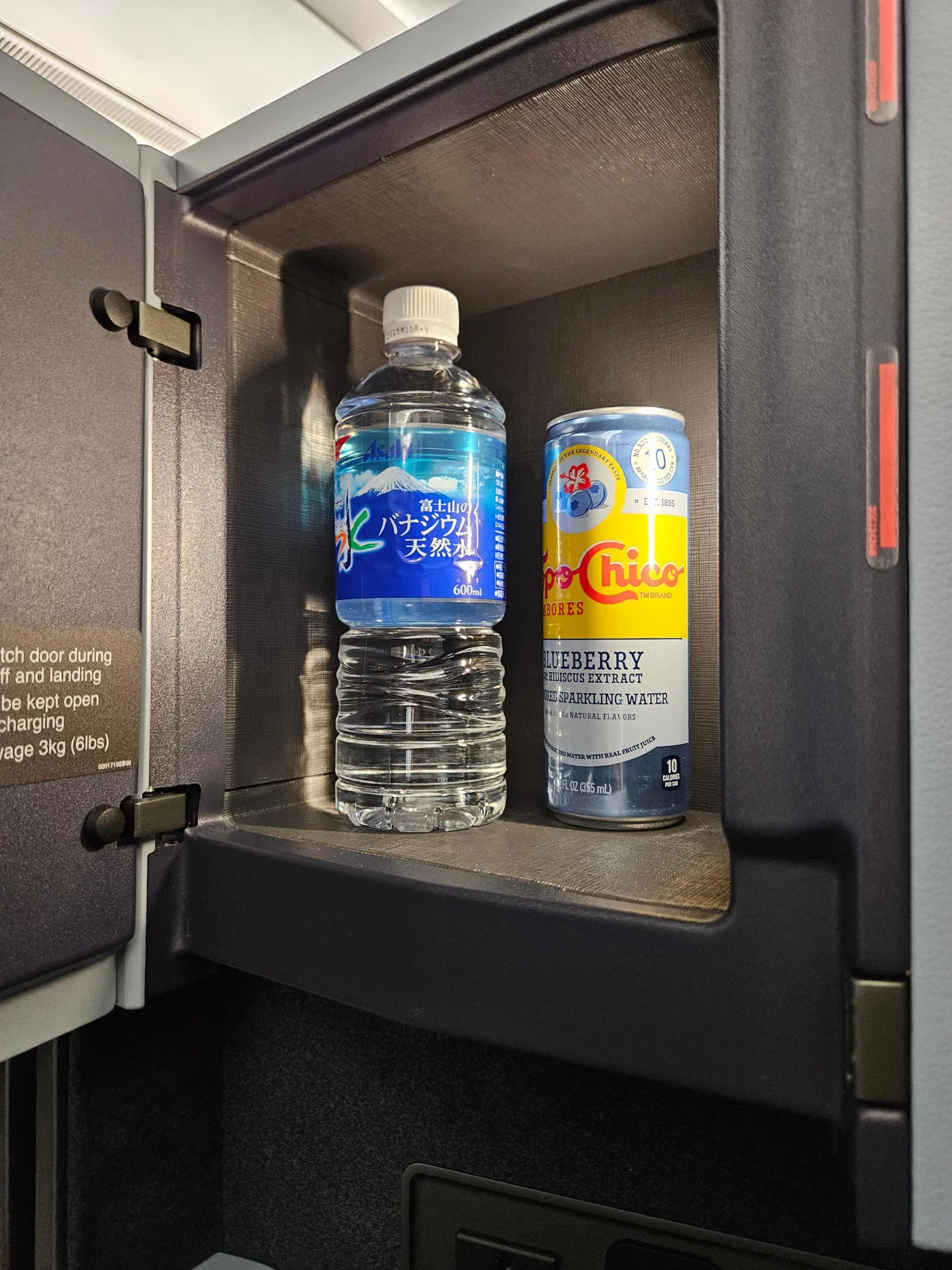
Japan Airlines A350-1000 Business Class amenities
Japan Airlines provides a HERALBONY amenity kit in Business Class. The pouches come in several designs, and the one you get can vary by flight. (I’m not sure how many designs there are.) Inside were a phone charging cable, a phone stand, a toothbrush and toothpaste, tissues, an eye mask, and earplugs. JAL also provided slippers, a separate eye mask, and bottled water. JAL’s slippers are my favorite among those I’ve tried in Business Class. They’re well cushioned and come with a mini shoehorn, which is handy if you’re traveling in dress shoes. On some flights, the eye mask is handed out around landing, so I appreciated getting it before takeoff when it could actually help me sleep. The bottled water was from the U.S. the first time I boarded. When I boarded again after the delay, it was from Japan. (I brought the Topo Chico in the photo on board from the lounge.)
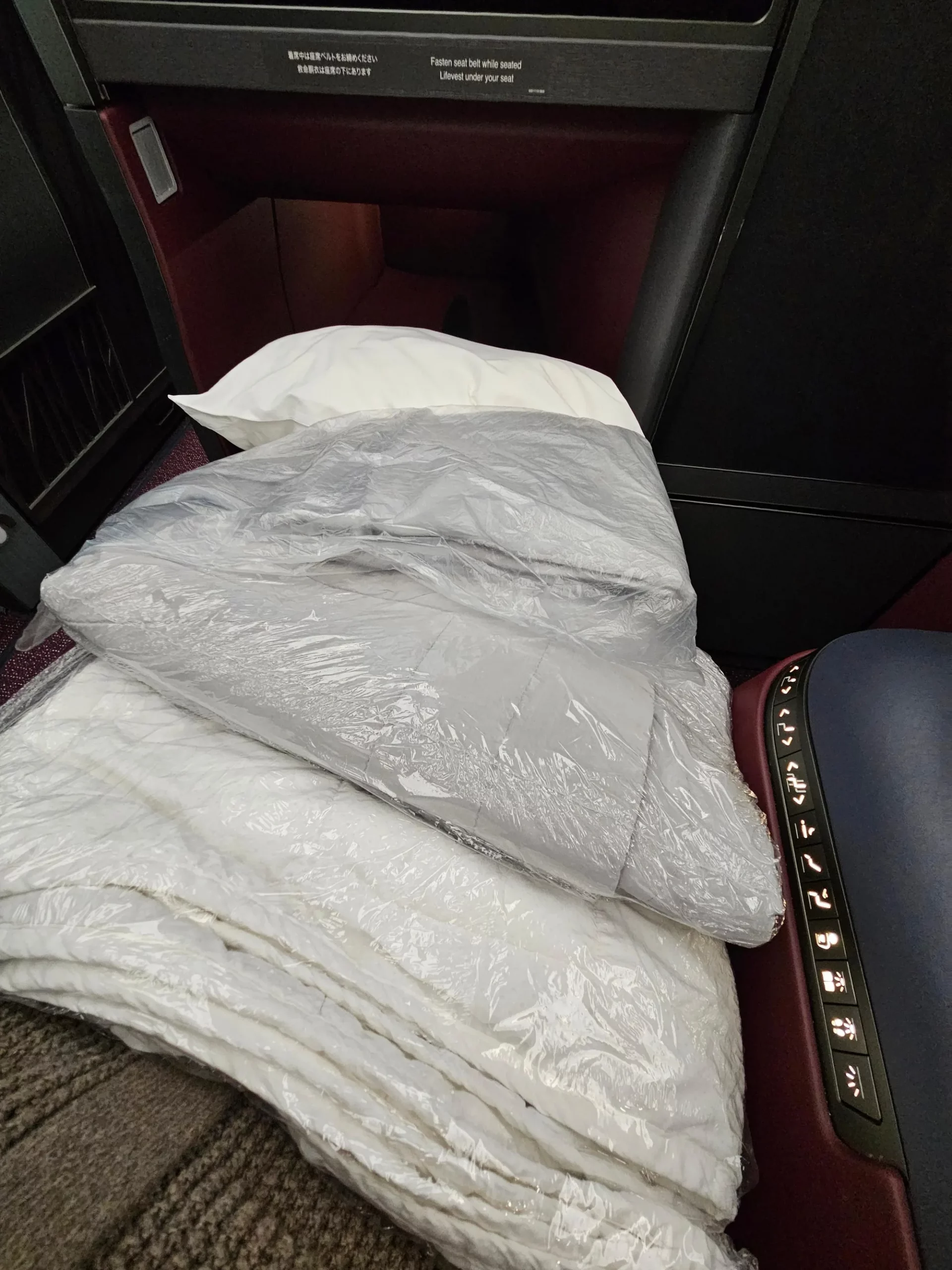

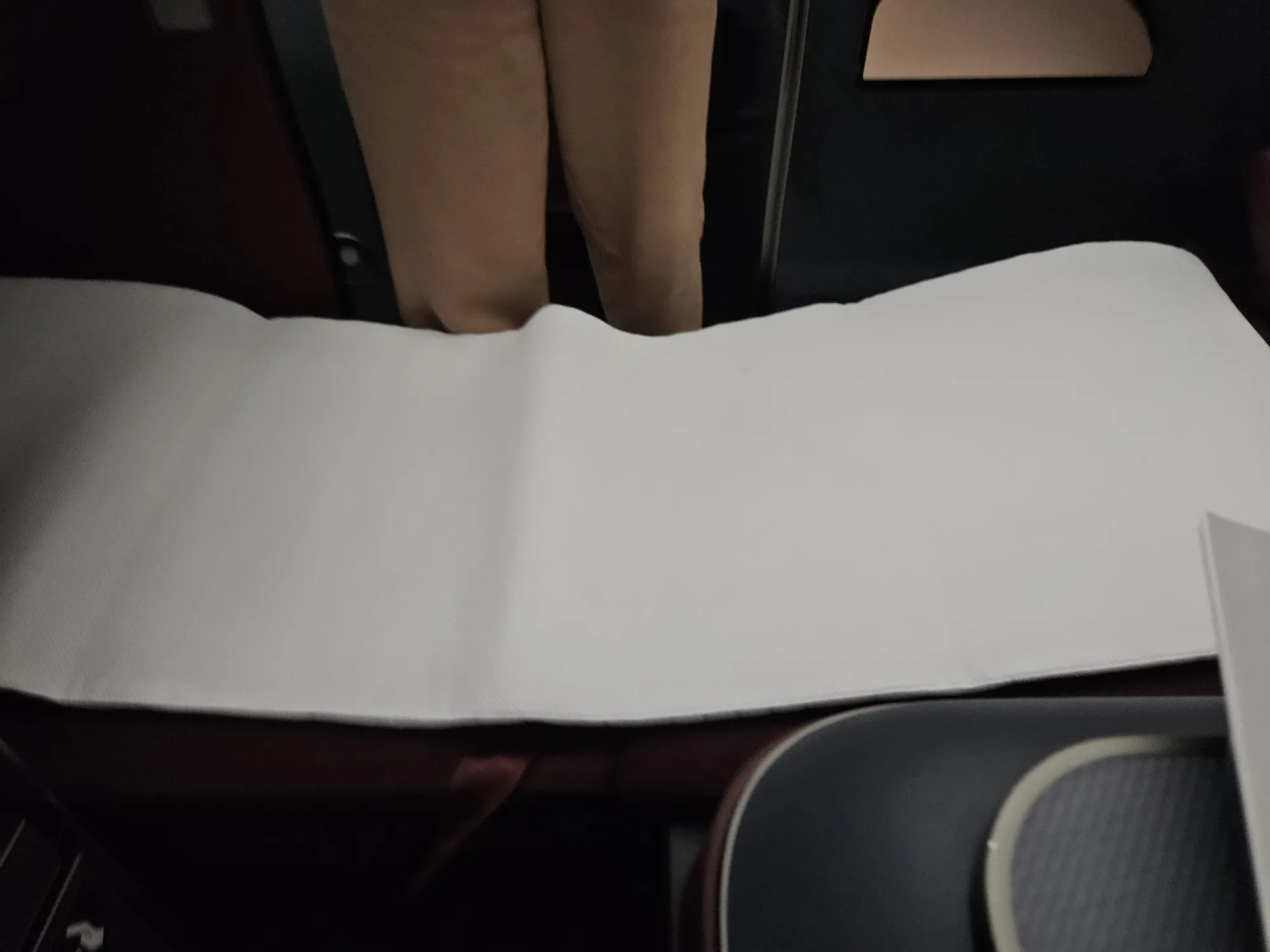
Japan Airlines A350-1000 Business Class amenities
JAL also provides what I’d call a mattress topper. A flight attendant can lay it out for you on request, though most passengers seemed to set it up themselves. There was also a sheet to go over the topper, a fairly thick duvet, a pillow, and a top to change into made from fabric that felt like a bathrobe. You can also borrow a cardigan on request.
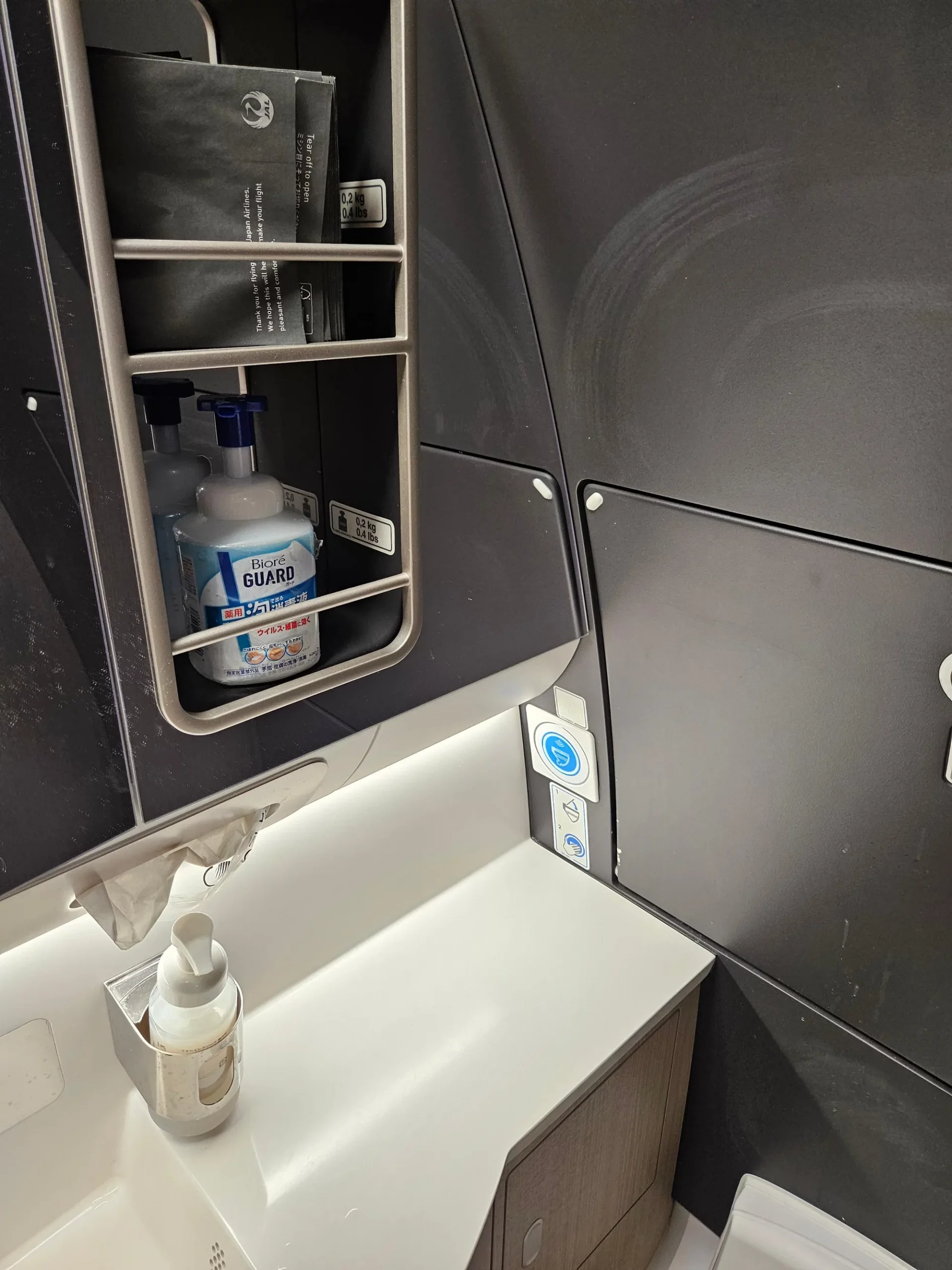
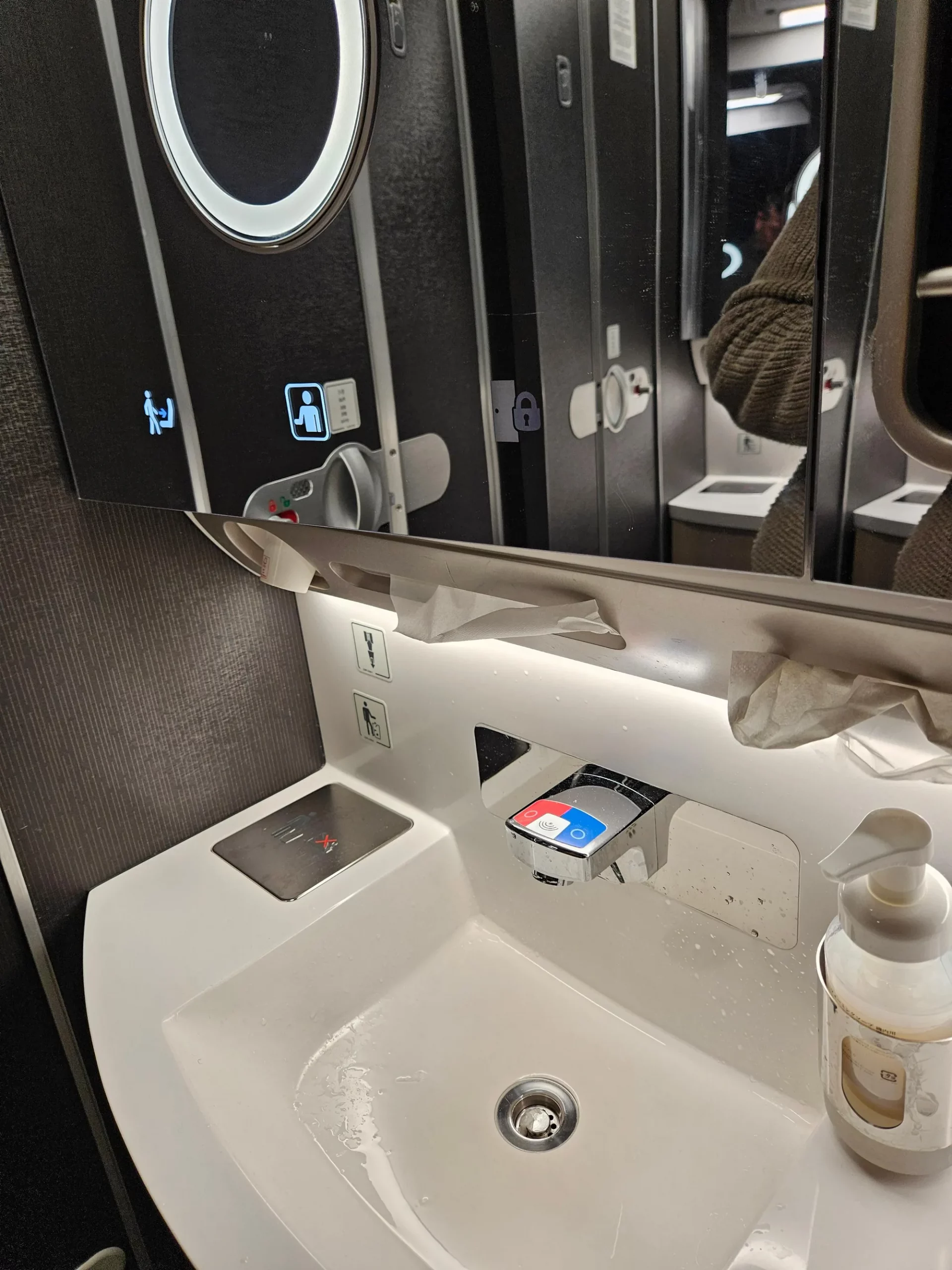
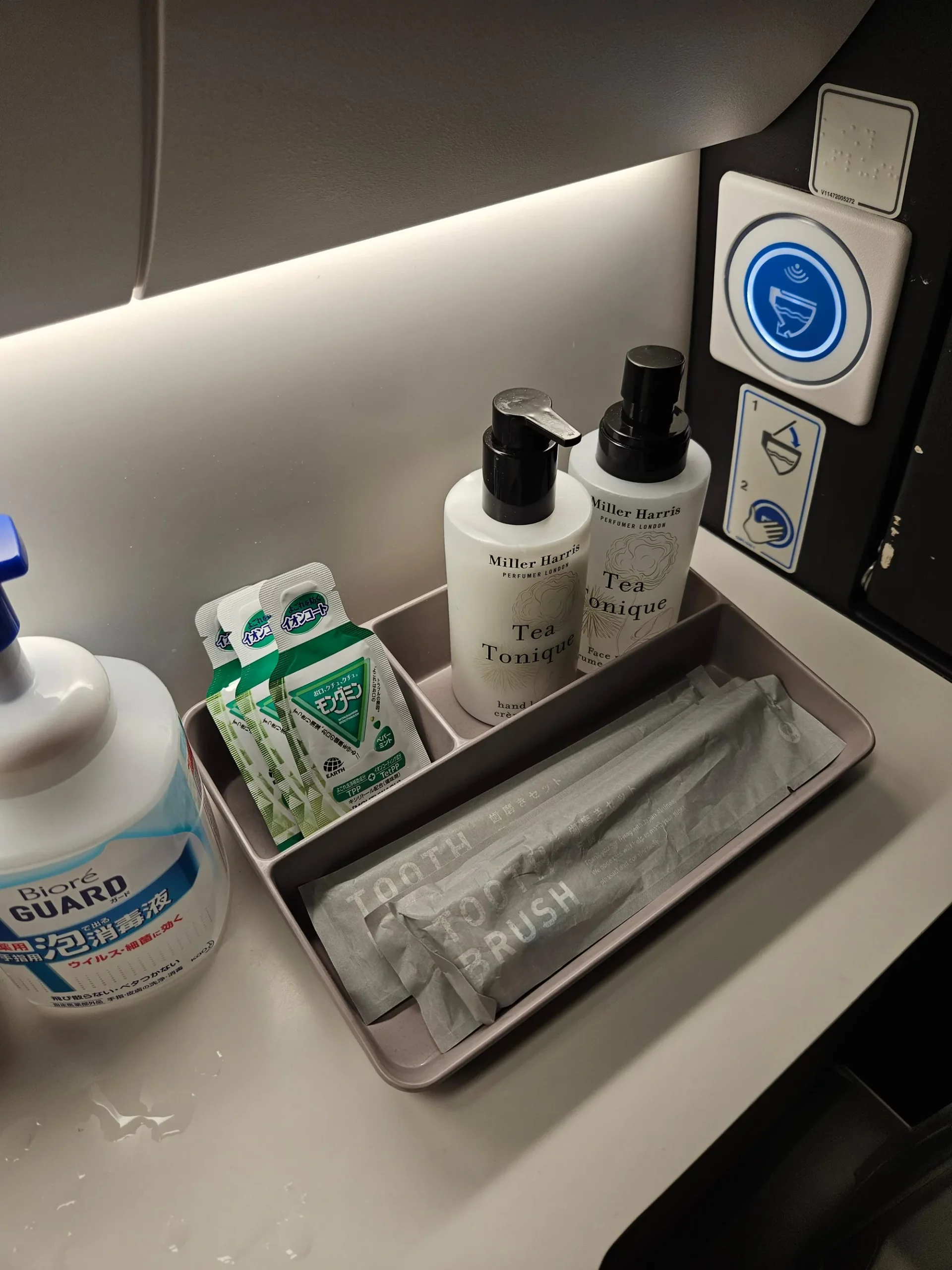
Japan Airlines A350-1000 Business Class lavatory (left and center) and amenities (right)
The Business Class lavatory was fairly standard in size. Before takeoff, it had hand sanitizer and hand soap. Once we were in the air, the crew put out lotion, mist, mouthwash, and toothbrushes. There was a bidet, too. (I can’t imagine ever using it, though.) The crew cleaned the lavatories regularly, with mixed results.
13. Food & Beverage
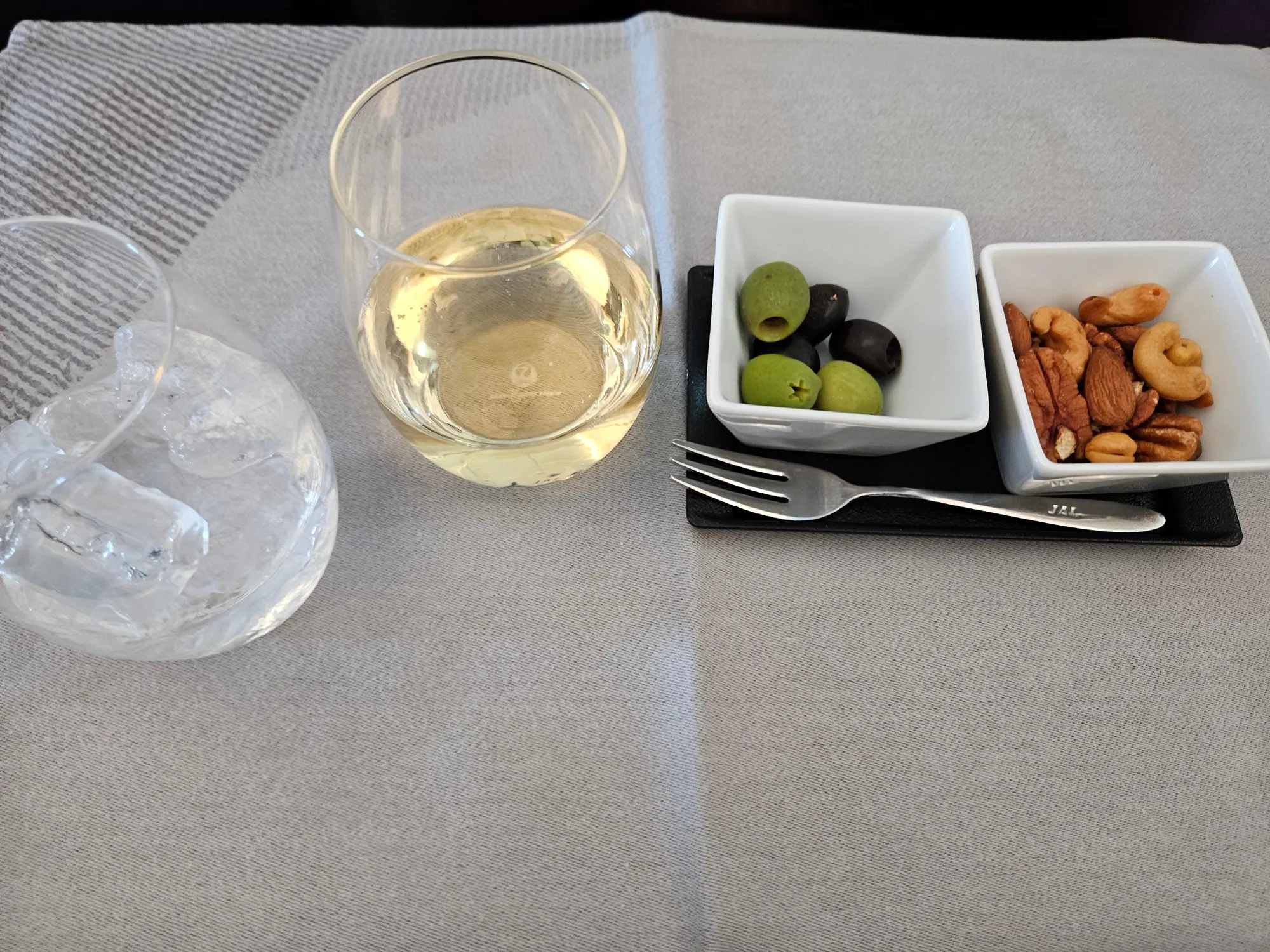
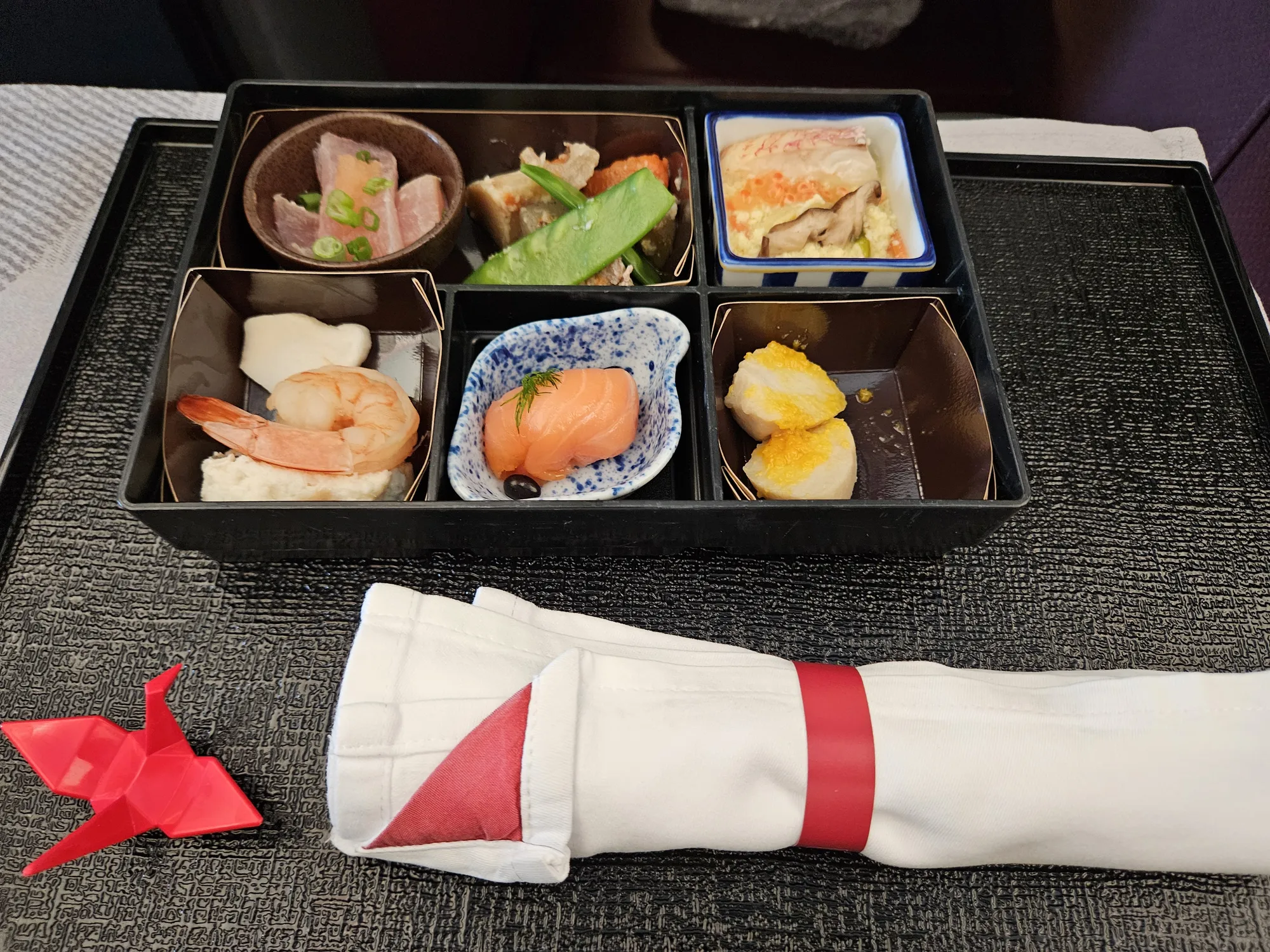
Japan Airlines A350-1000 Business Class aperitif (left) and appetizers (right)
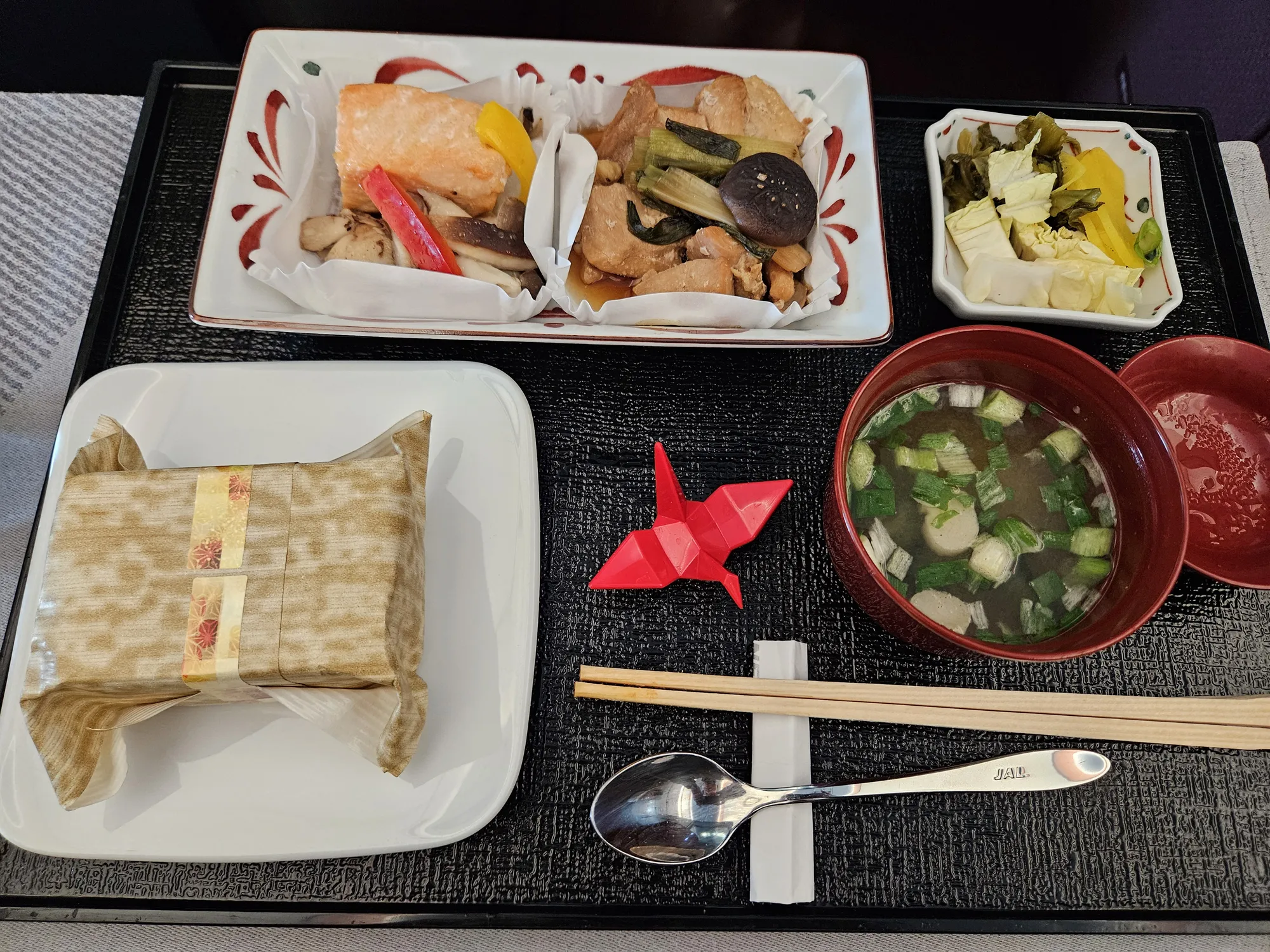
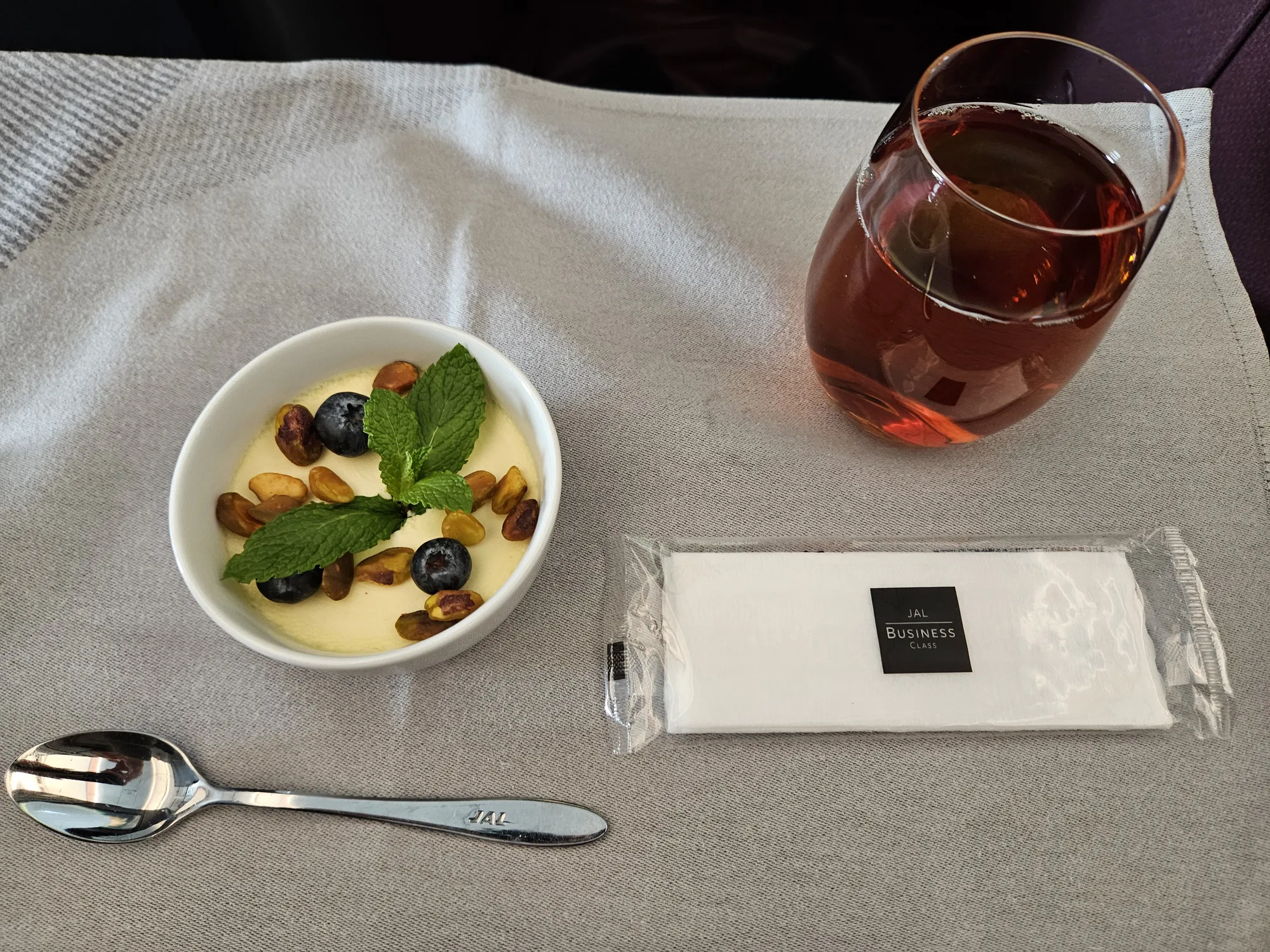
Japan Airlines A350-1000 Business Class main course (left) and dessert (right)
For the first meal after takeoff, I could choose between Japanese and Western menus. I went with the Japanese meal. It started with olives and nuts as an amuse-bouche, served with an aperitif. Six appetizers followed in a rectangular serving dish. The Japanese meal on my San Francisco–Narita flight last October had come without sashimi, so I was happy to see tuna and salmon sashimi this time, along with steamed shrimp and eel. There was also steamed sea bream topped with salmon roe and some steamed taro. The green beans were particularly crisp and tasty. I usually keep my expectations for seafood in check on JAL flights out of the U.S., so this was a pleasant surprise. The main course came with chicken thigh in sukiyaki sauce and yuzu-flavored salmon, served with Japanese pickles, rice, and miso soup. Both were good, though I’m not sure I’d call the chicken itself sukiyaki. (That’s why I’ve described it as chicken thigh with sukiyaki sauce.) The salmon was cooked well, and I would have liked a little more yuzu flavor. The Japanese pickles were crisp and refreshing, as always. For dessert, I had crème caramel topped with blueberries. It was rich and just sweet enough, with a refreshing finish from the blueberries and apple mint. The menu paired it with green tea, but I could choose another drink, so I asked for hojicha. JAL serves it hot in First Class, but I was told only chilled hojicha was available in Business Class. I suspect it was a bottled tea, and it tasted fine.
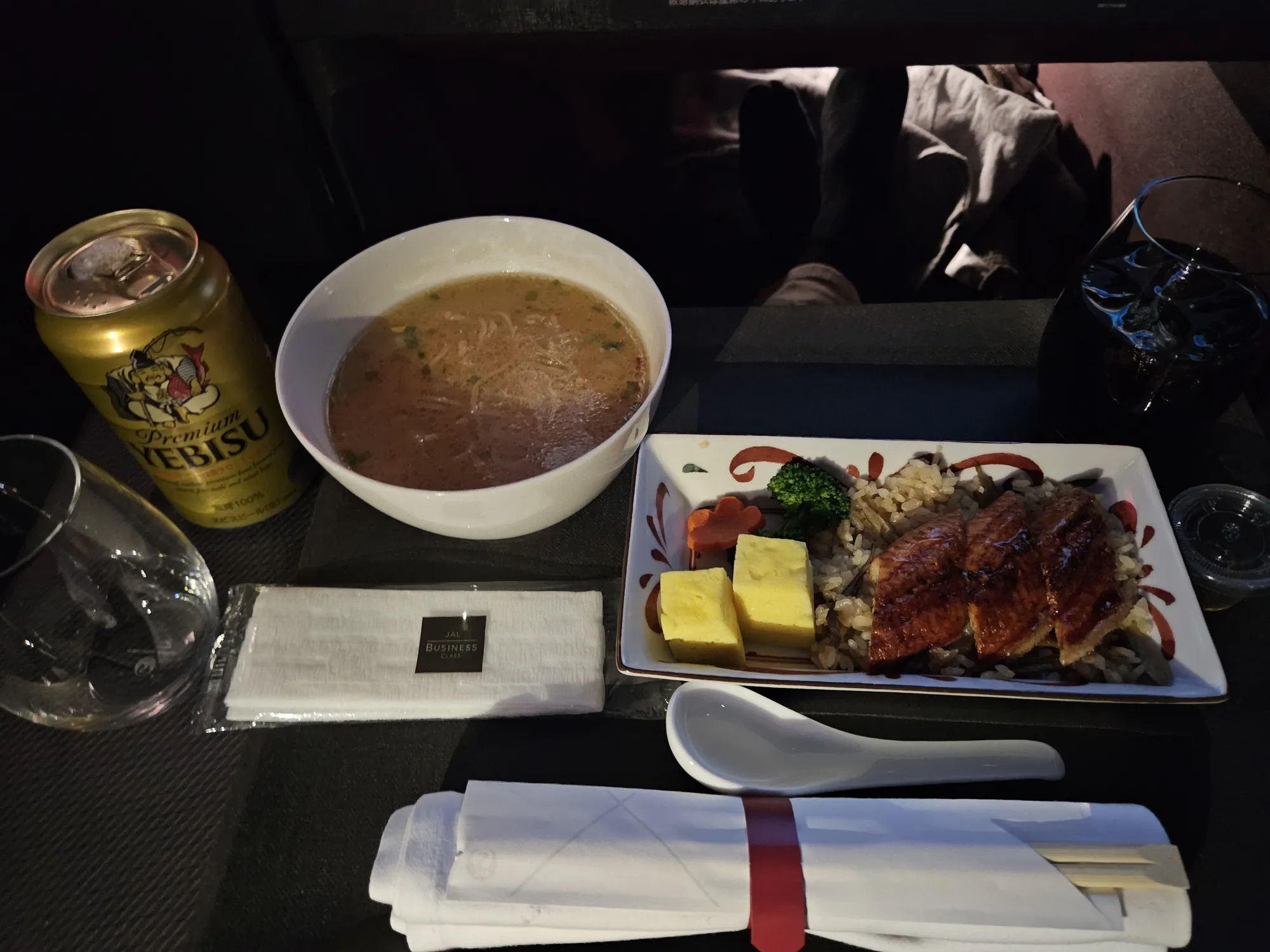
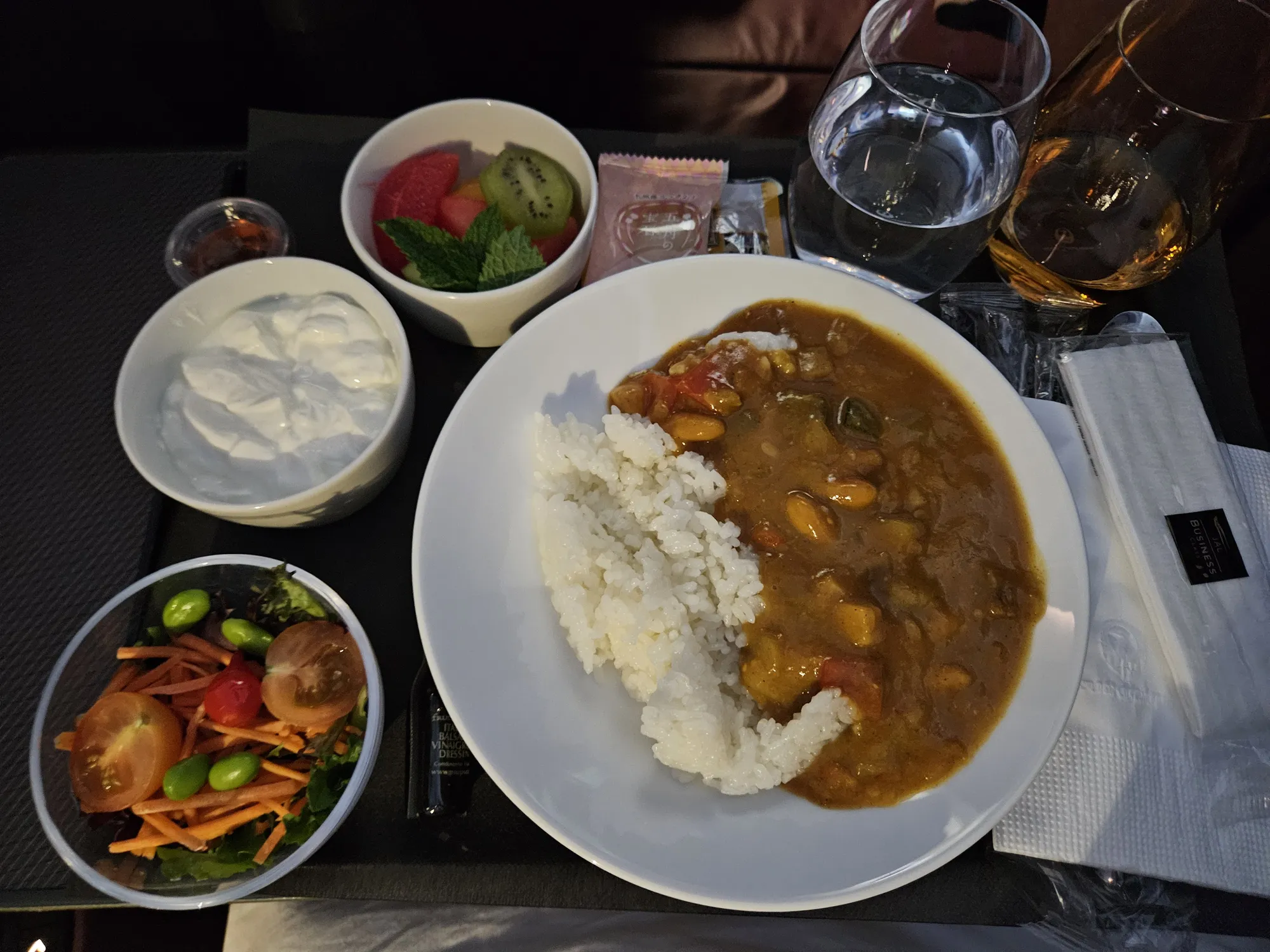
Japan Airlines A350-1000 Business Class ramen and grilled eel rice bowl (left) and vegetable curry (right)
The à la carte menu included a grilled eel rice bowl, vegetable curry, fettuccine, a salmon and egg croissant sandwich, and Kyushu-style tonkotsu-flavored ramen. I ordered the eel, ramen, and curry. The eel bowl came with three pieces of grilled eel, boiled broccoli and carrots, and two slices of Japanese rolled omelet. The eel was fairly light, and the lightly seasoned rice went well with it. I liked it more than the mushroom and egg rice bowl I’d had before. The ramen was still good. The menu calls it tonkotsu-flavored because it recreates the flavor without using actual pork bone broth, and it comes pretty close. Last time, I didn’t stir it well enough and ended up with bland broth at the top and salty broth at the bottom. A good stir took care of that this time. The vegetable curry was fairly basic. I prefer the beef curry served in JAL’s lounges in Japan. The curry came with individually packaged Japanese pickles and rakkyo. I also got a small salad and fruit and asked for some yogurt.
japan-airlines-a35k-business-jl11-dfw-hnd-en-57
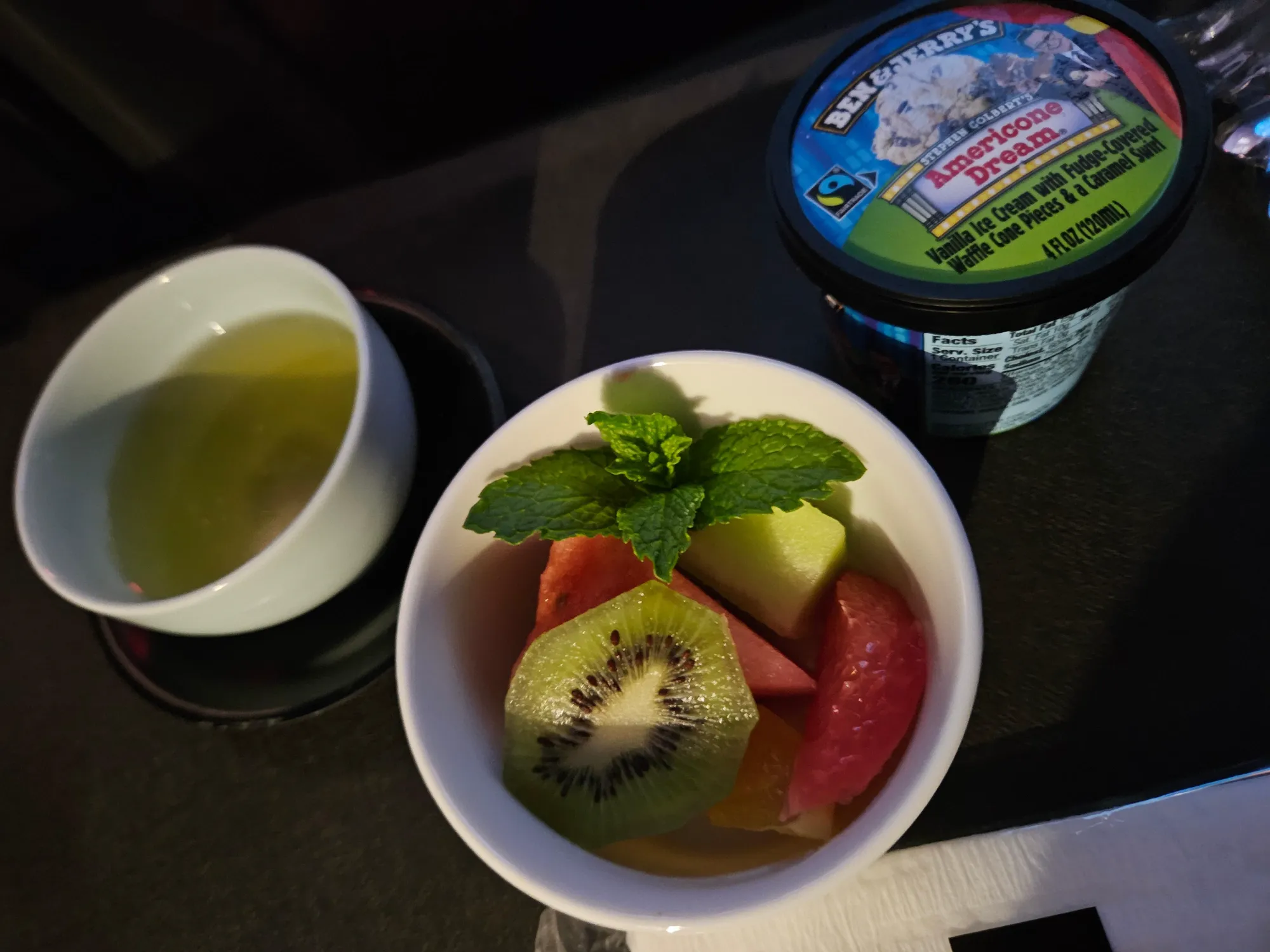
Japan Airlines A350-1000 Business Class ice cream and fruit
The à la carte dessert choices were fruit, ice cream, and chocolate. I ordered fruit and ice cream. The fruit came in a small bowl with kiwi, watermelon, melon, orange, grapefruit, and a sprig of apple mint. The grapefruit, orange, and melon were the best of the bunch. I’d expected Häagen-Dazs, which I associate with JAL, but this time it was Ben & Jerry’s. It’s one of my favorite ice cream brands, so I was happy with it. Yogurt wasn’t listed on the menu, but you could get it with honey on request.
japan-airlines-a35k-business-jl11-dfw-hnd-en-58
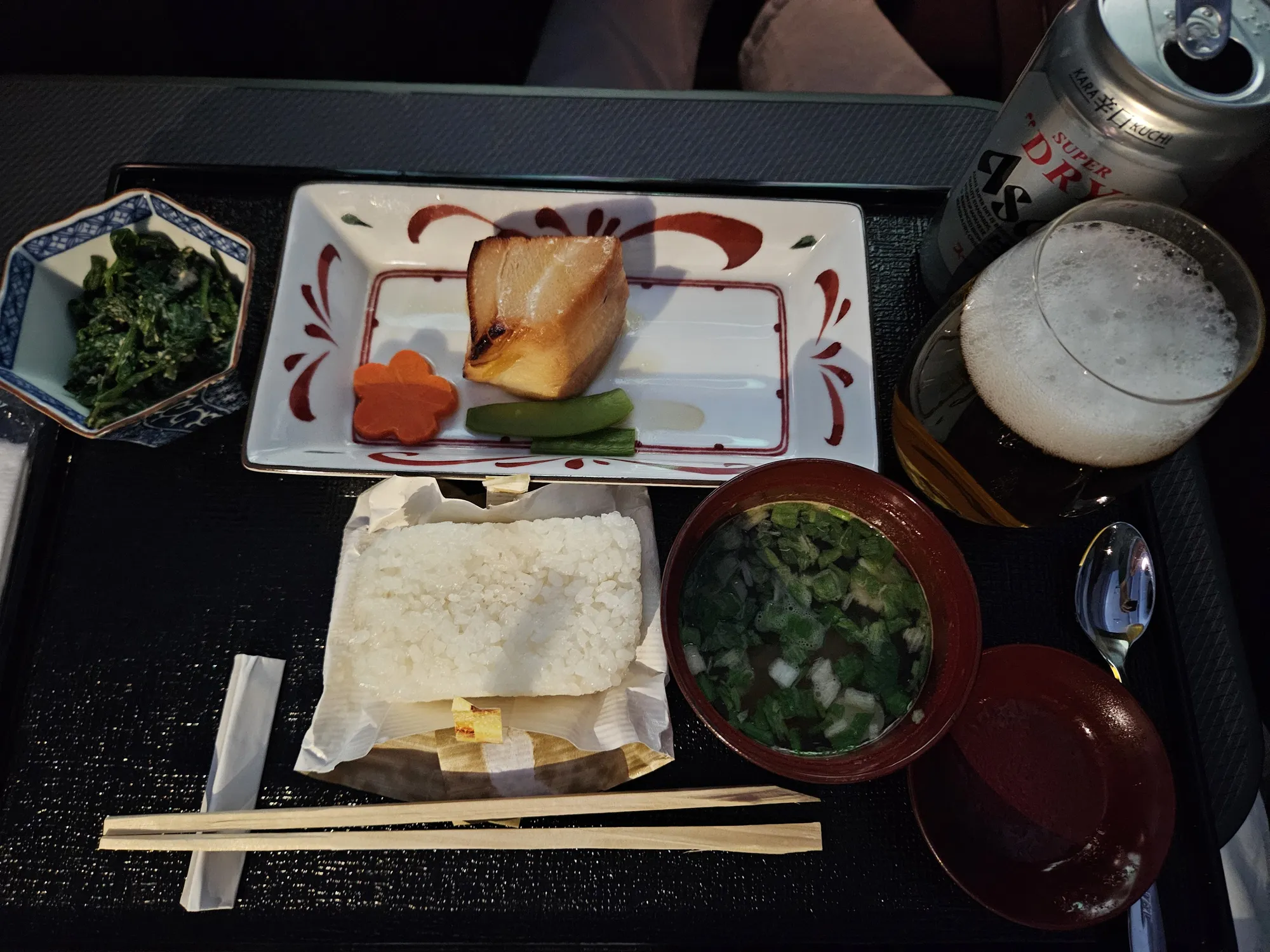
Japan Airlines A350-1000 Business Class à la carte set meal
I ordered the à la carte set meal about four hours before landing. (I stayed awake the whole flight and kept getting hungry again.) There was a choice of Western or Japanese, and I went with Japanese again. The set came with rice, miso soup, grilled Chilean sea bass with yuzu, and sesame-dressed spinach. I had an Asahi with it. The sea bass was the best thing I ate on the flight. It was cooked evenly and stayed moist all the way through. The fish had a lovely richness, and the soy and yuzu sauce kept it from feeling heavy. Even the carrots served alongside it were cooked just right. If the fish had been available on its own, I could easily have ordered three or four portions.
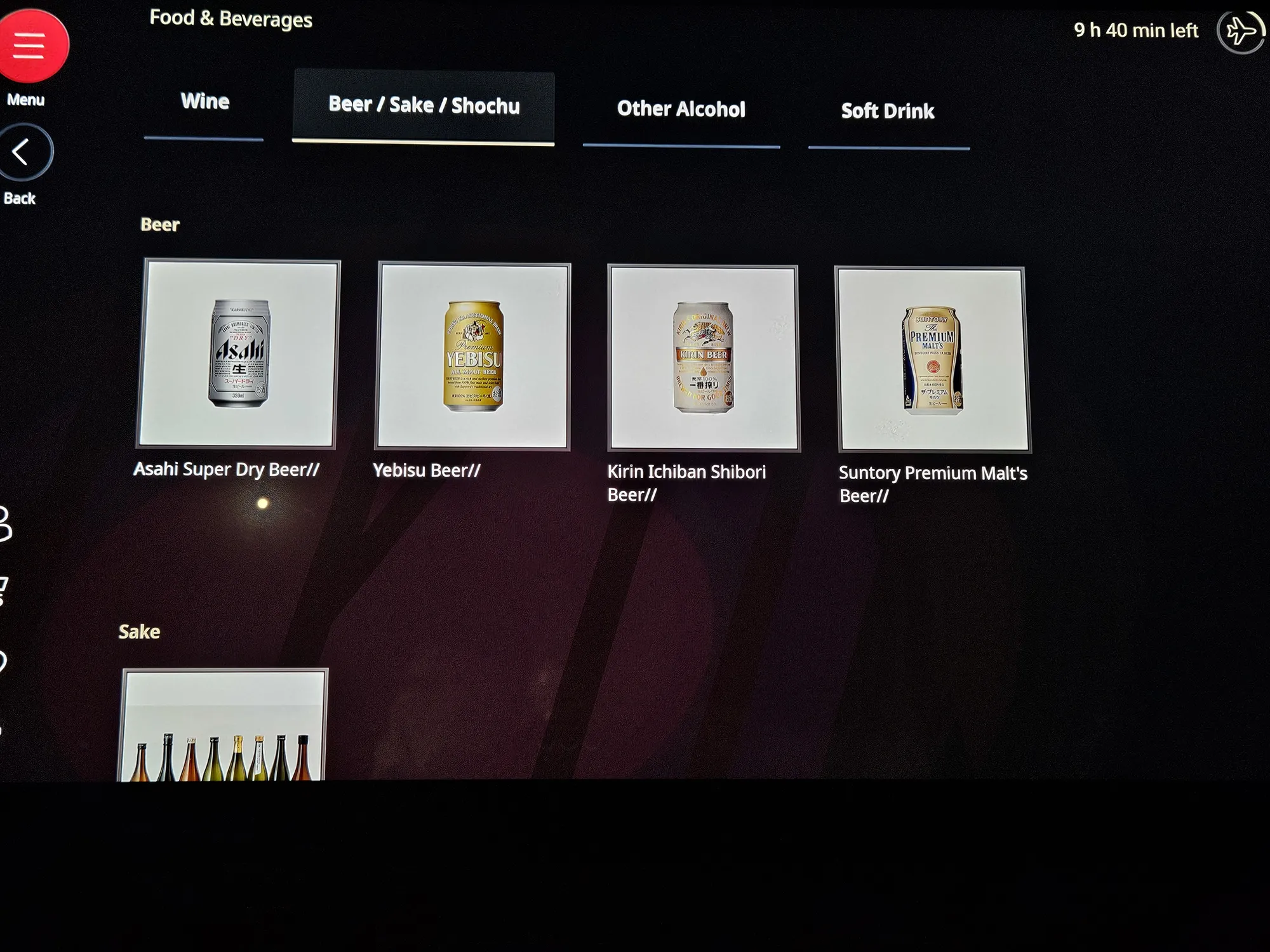
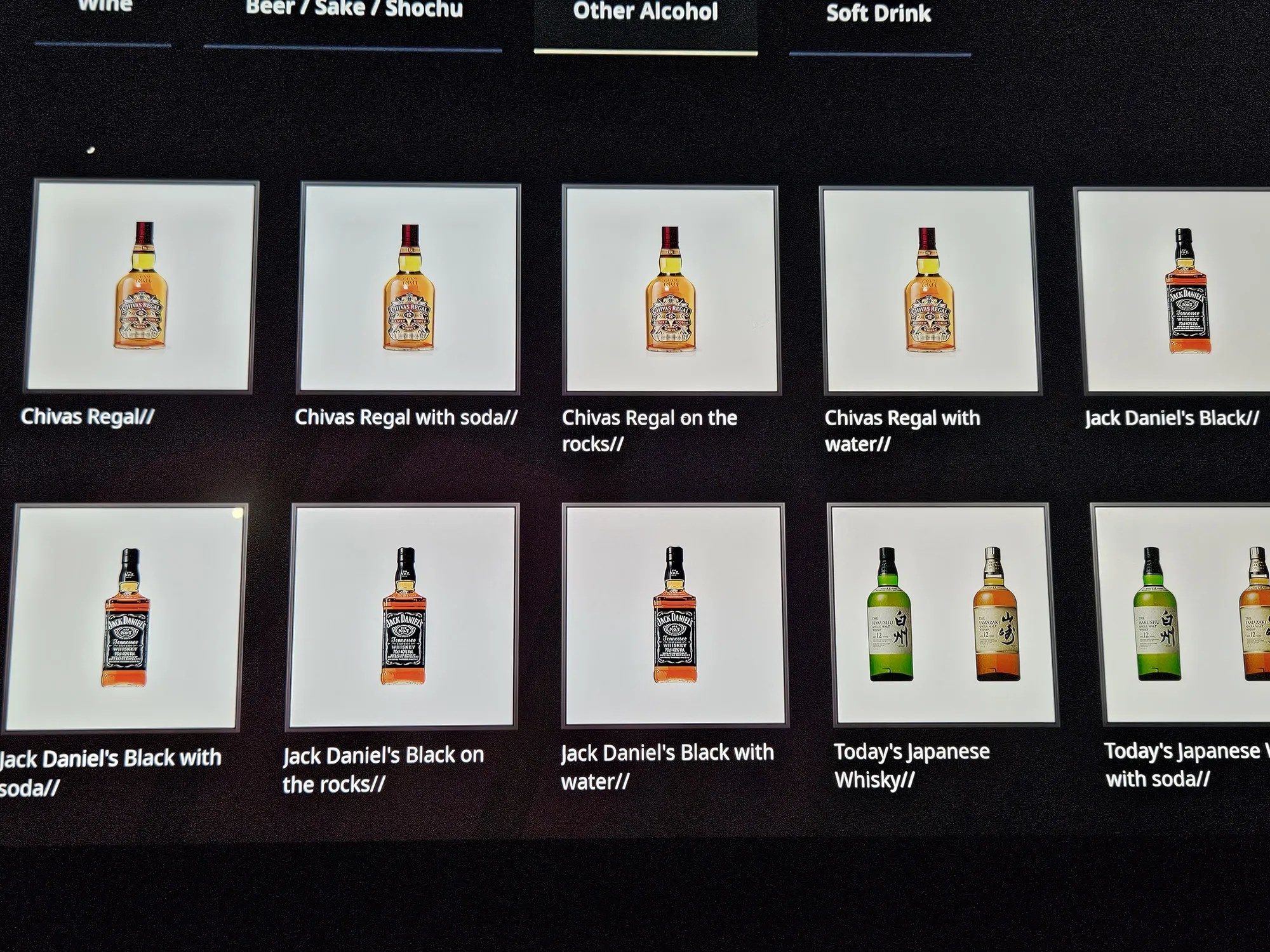
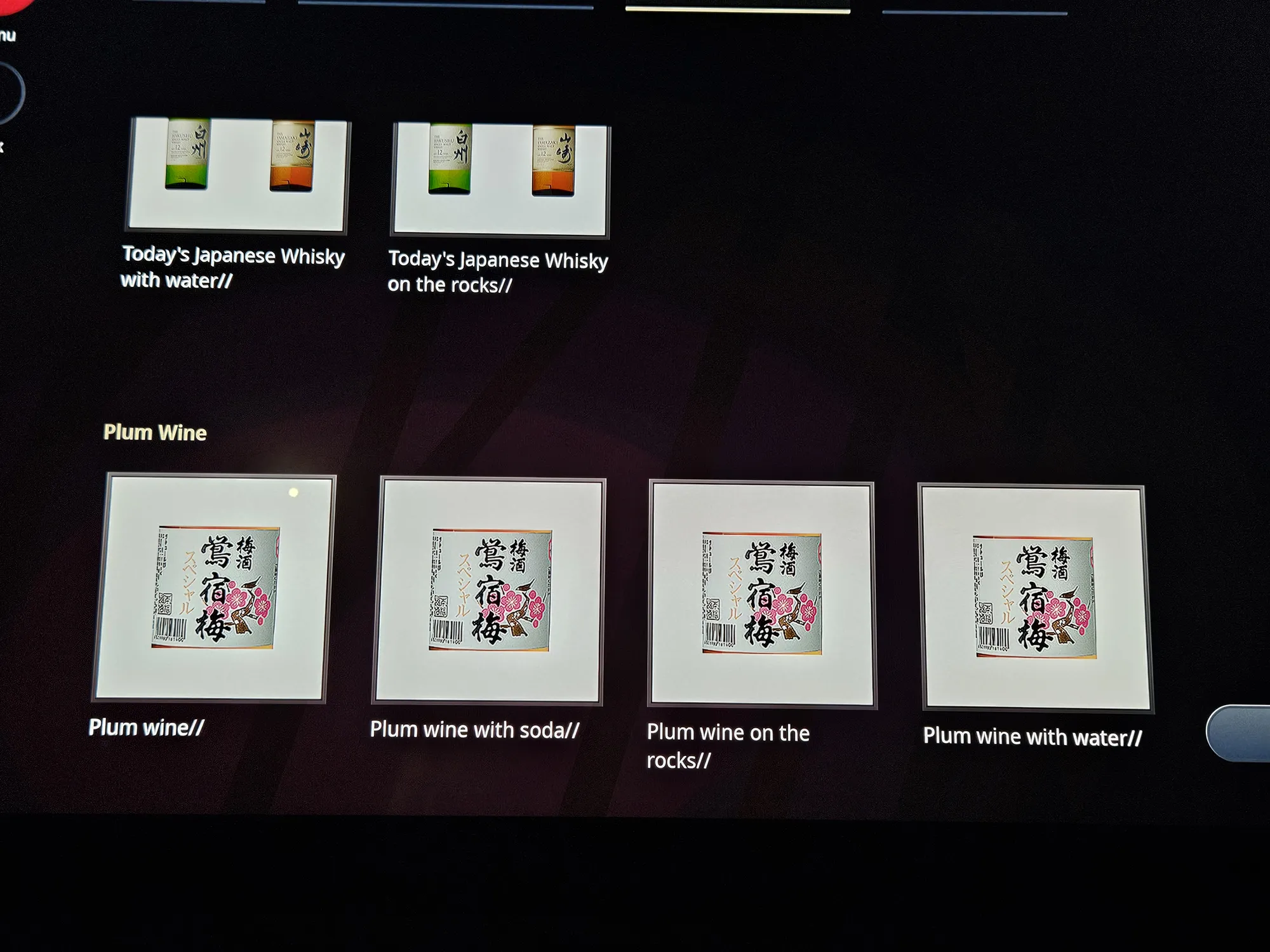

Japan Airlines A350-1000 Business Class drinks menu
The drinks menu had one Champagne, two reds and two whites, one plum wine, two sakes, two shochus, and one Japanese wine. The spirits and liqueurs covered the basics, with Chivas Regal, Jack Daniel’s, Rémy Martin VSOP, Bombay Sapphire gin, Absolut vodka, and Campari. I missed having port. There were also the usual soft drinks, along with green tea, coffee, decaf coffee, hojicha, and herbal tea. Classic cocktails included the Bloody Mary and martini. The mocktails included a Peach & Grape Fizz made with Sky Time and tonic water, and an Apple Cooler made with apple juice and ginger ale.
I tried the Japanese wine this time. It had a strong aroma and tasted clean and dry, with very little sweetness. For my taste, it lacked depth and came across a little flat. I’d be curious to try another Japanese wine if the opportunity came up, though I probably wouldn’t buy one myself. Japan has plenty of other drinks I’d be happy to spend money on.
The menu listed only “Japanese whisky,” so I asked the crew and found out they had Yamazaki. I don’t know Yamazaki well enough to identify the bottling by taste. Given that the First Class Lounge at Haneda serves Yamazaki 12 Year Old, my guess is that this was the no-age-statement version. I thought it was pretty good.
JAL’s Business Class drinks menu did the basics well. I could still feel the distinction JAL makes between its First and Business Class drinks menus, something I’d noticed on earlier flights too. I had enough to choose from, though I’d still have liked a glass of port and a cup of hot hojicha.
14. In-flight Entertainment & Wi-Fi
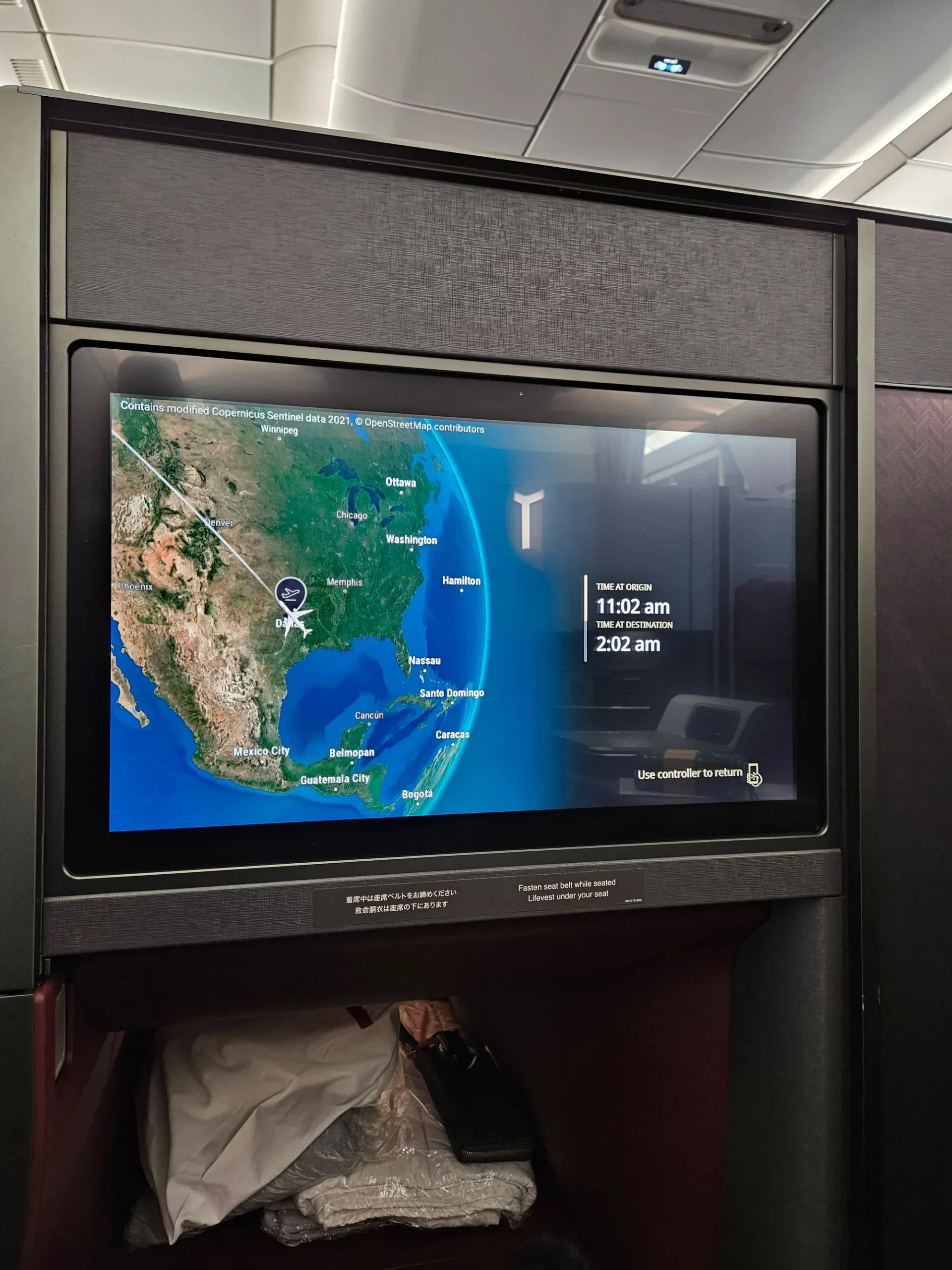
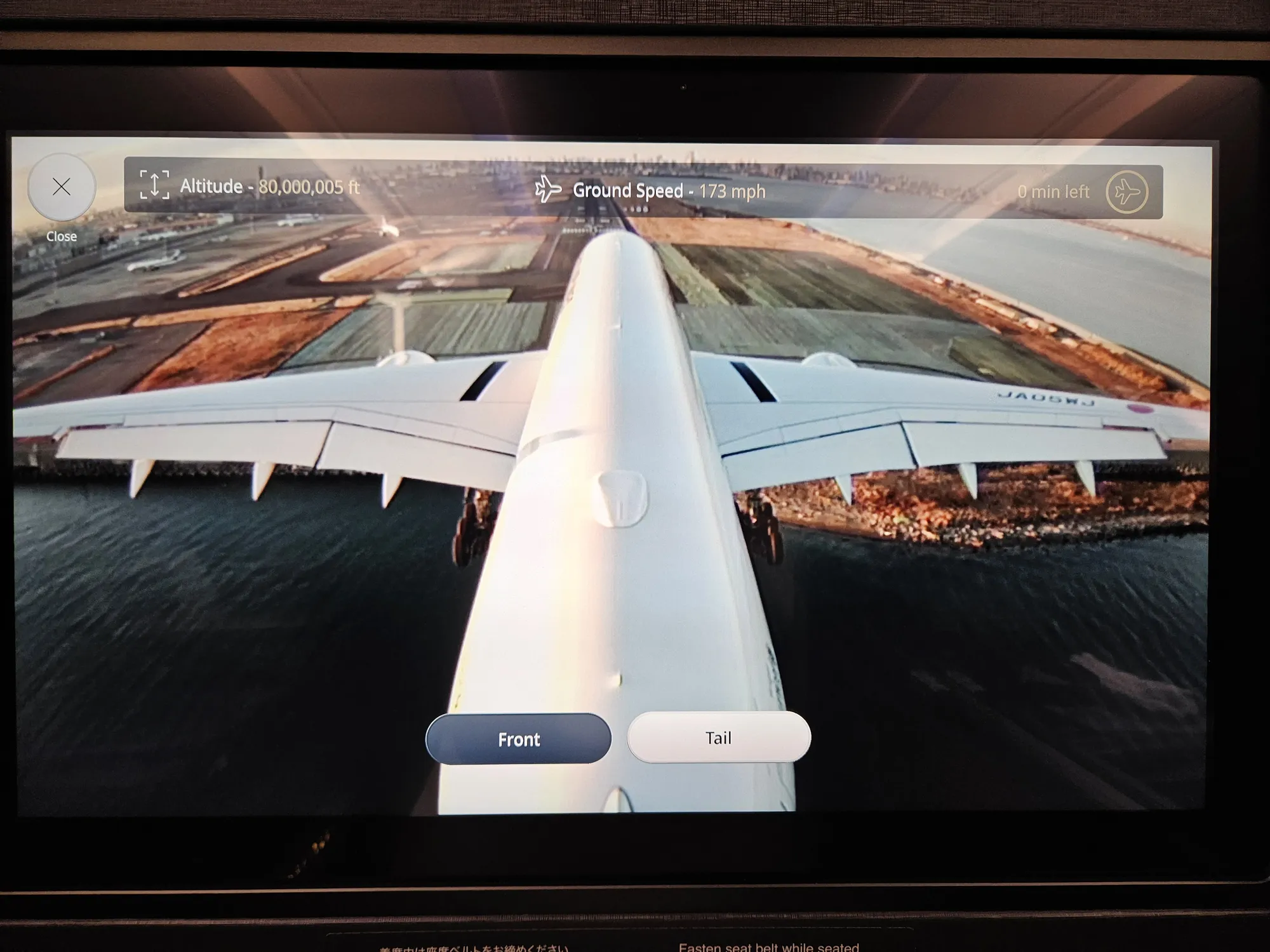
Japan Airlines A350-1000 inflight entertainment flight map (left) and external camera feed (right)
The entertainment selection is one of the things I usually find disappointing on Japan Airlines, even though the hardware is excellent. It had only been three months since my last JAL flight, which may explain why there was so little new to watch. I put on the nearly 20-year-old Casino Royale and eventually switched to the flight map. The map uses Panasonic’s Arc system, and just as on my previous JAL A350-1000 flight, I found it hard to fault. There are also live feeds from cameras on the tail fin and beneath the fuselage. During the weather delays on January 9 and 10, I kept the tail camera on and listened to ground ATC at Dallas Fort Worth to follow what was happening in real time.
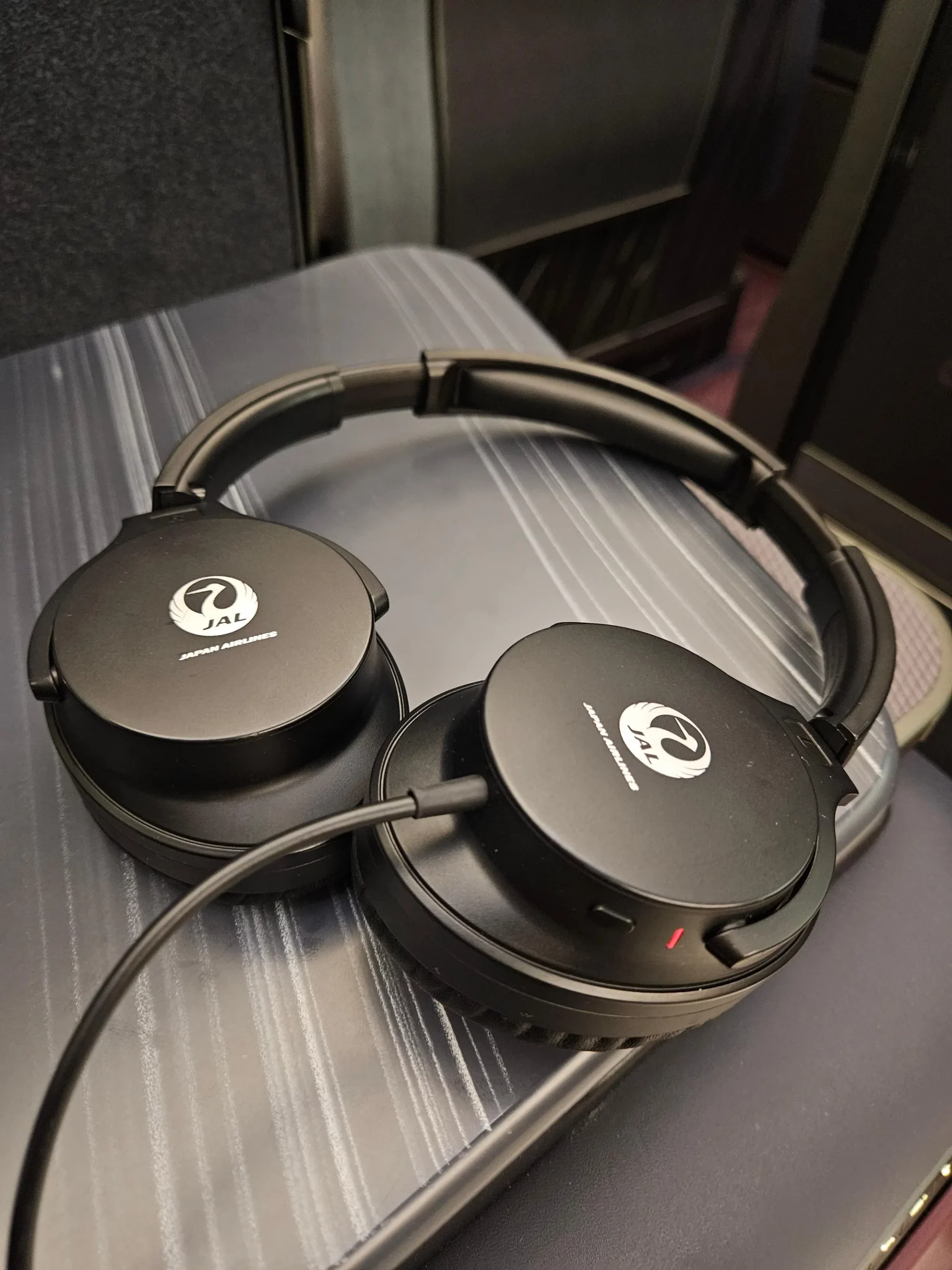
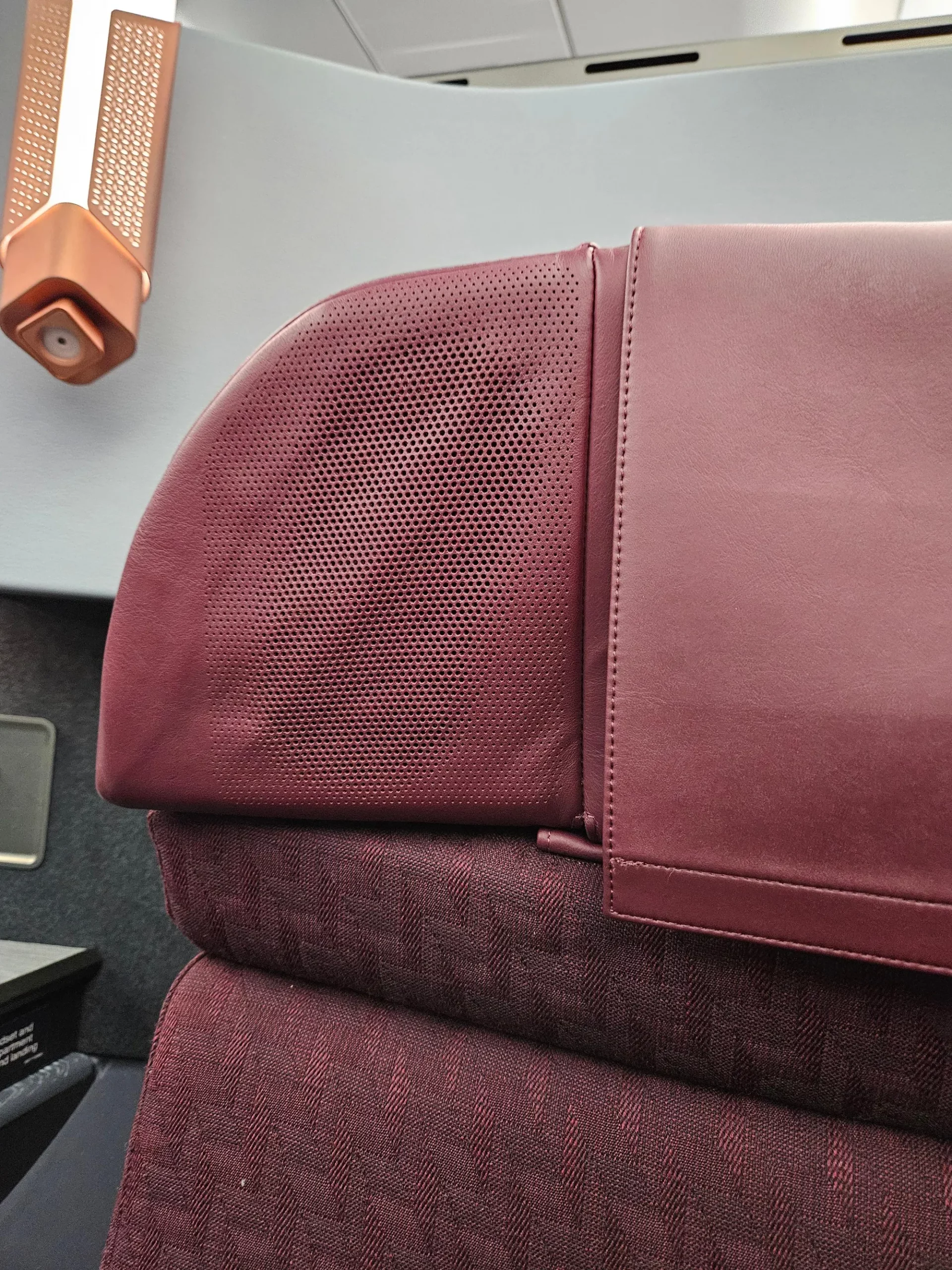
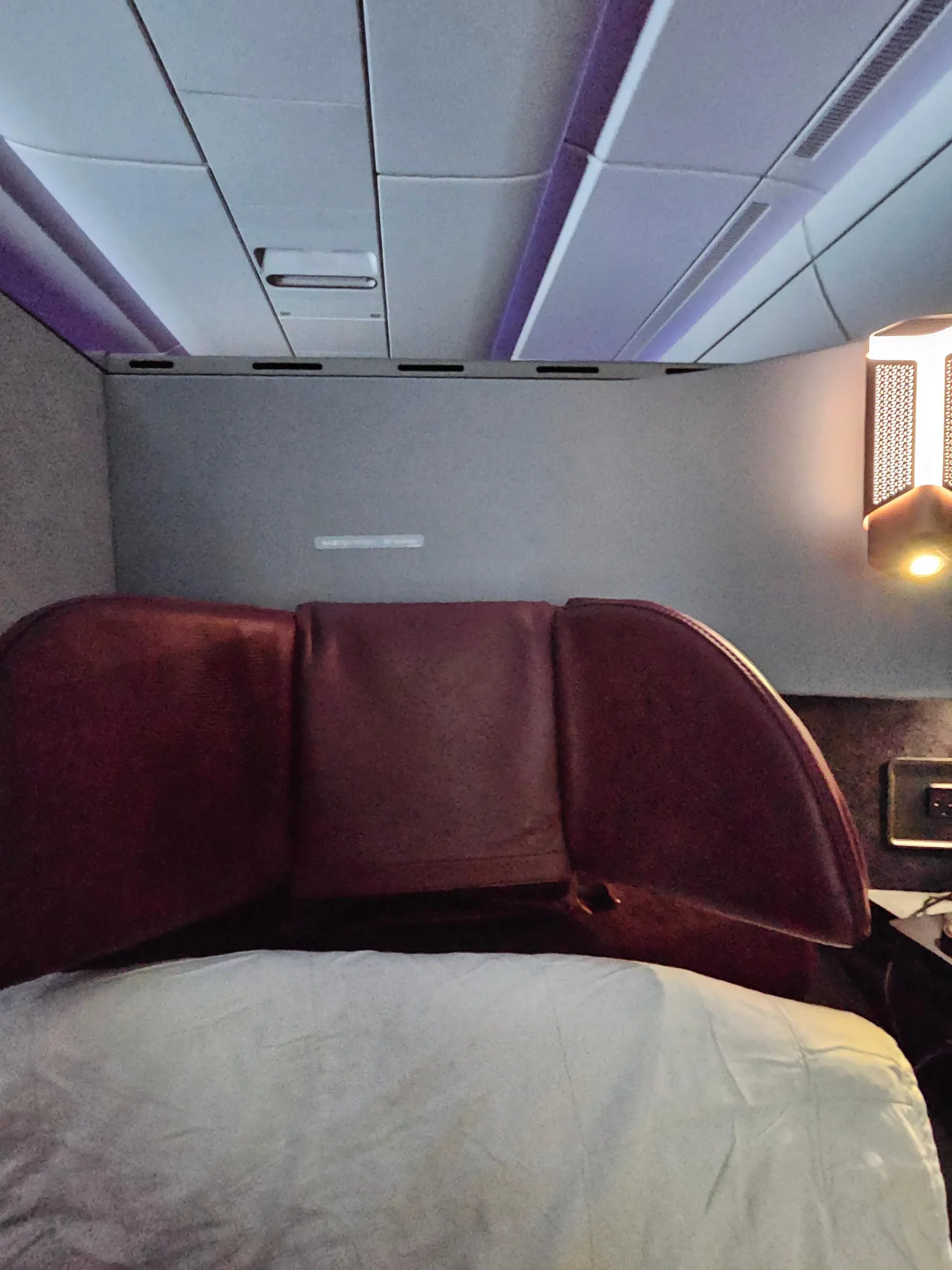
Japan Airlines A350-1000 Business Class headset (left), seat speaker (center), and mattress topper pulled down to leave the speaker uncovered (right)
The seat speakers were convenient, and I liked being able to connect my own Bluetooth device. On the ground with the engines off, you could hear the speakers from the next seat at full volume. At cruising altitude, the sound didn’t carry the same way. The speakers were harder to hear in bed mode because the mattress topper covered them. I ended up using headphones or a Bluetooth device when lying down. There was also a slight delay in the speaker audio, so it didn’t quite match what was on screen. The 4K picture looked sharp, and because the screen was so close, it felt much bigger than 24 inches. (I would have liked screen mirroring so I could watch my own content on it.) The instrumental music I’d mentioned in my last review was still good. The system did keep freezing, though. It would reset itself after a while, and even without much I wanted to watch, it was frustrating when it stopped working. I found it froze less often if I waited a few minutes after each reset before using it again.
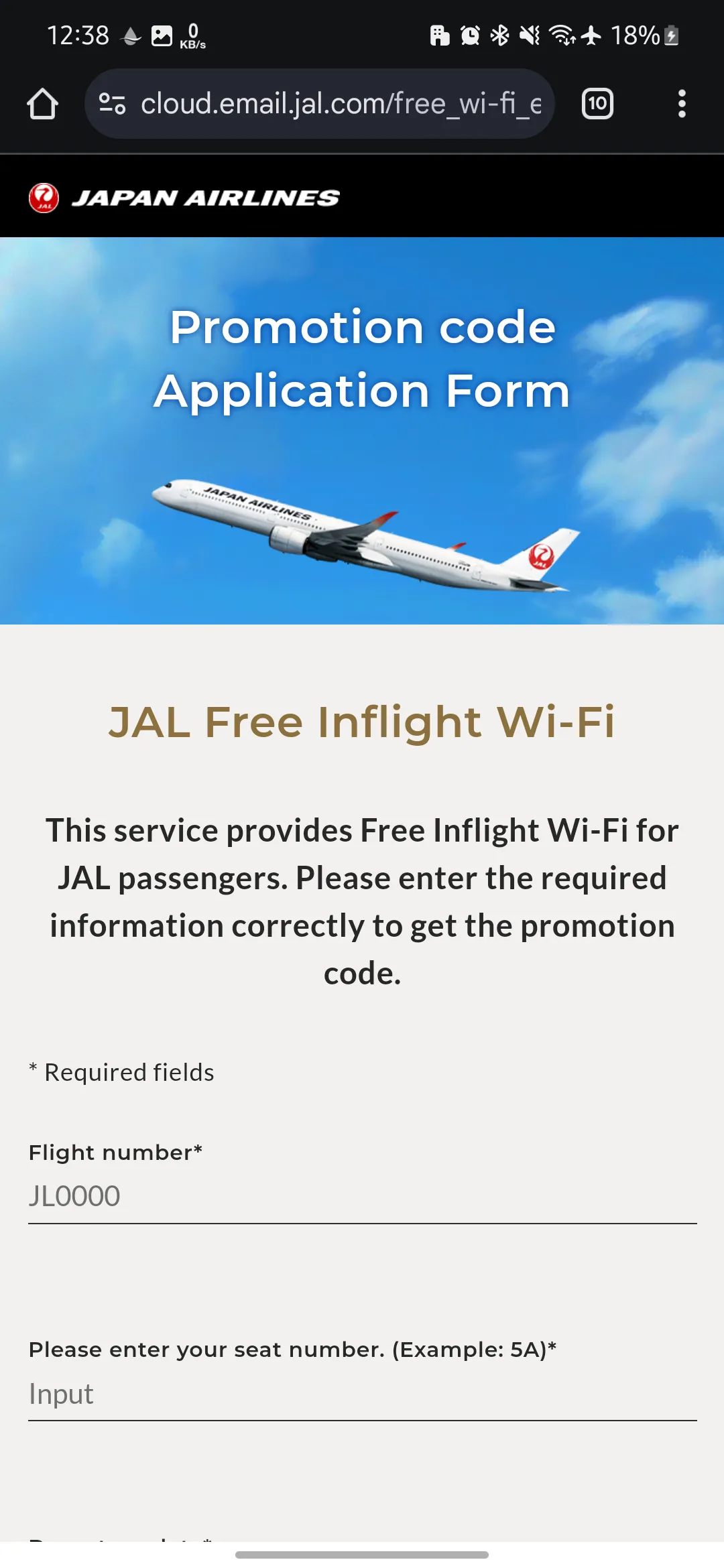
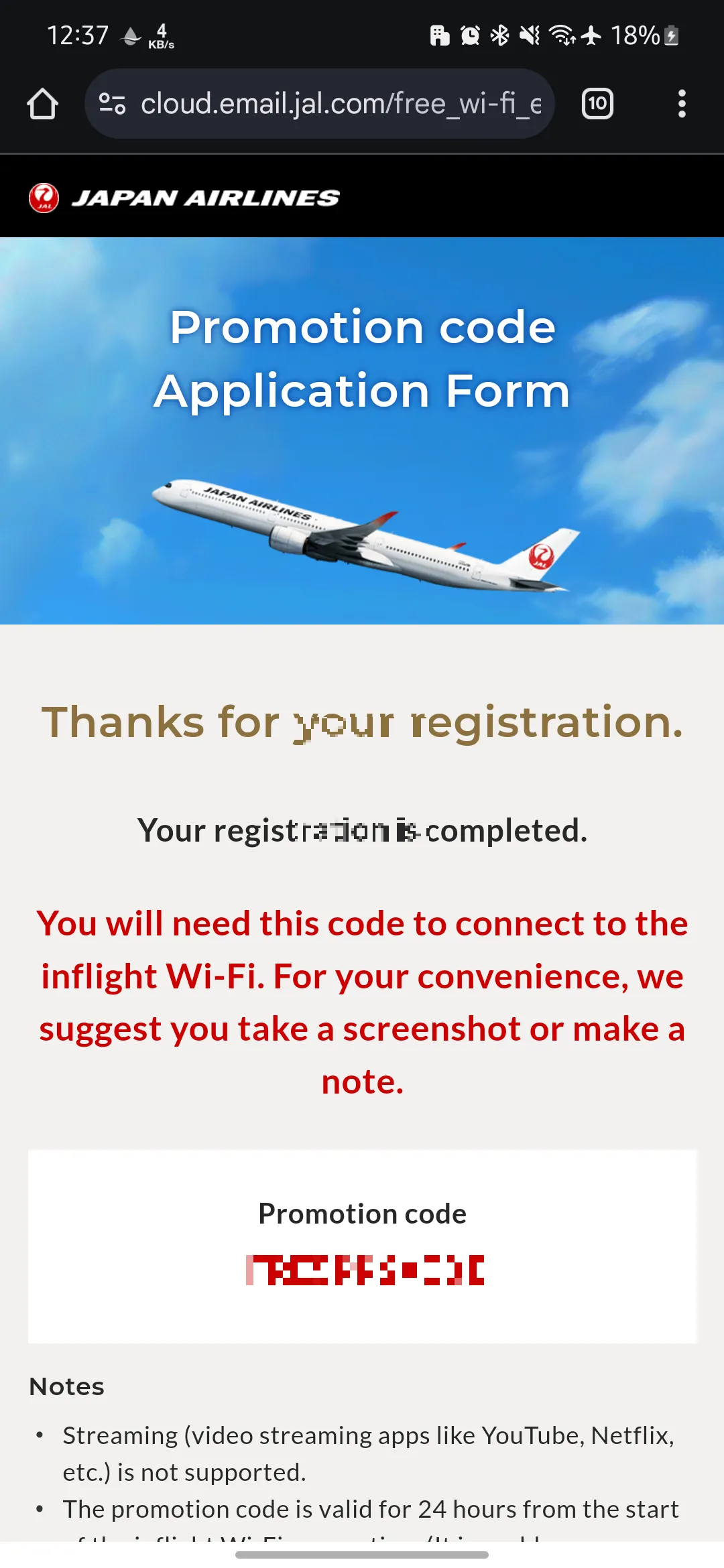

Japan Airlines A350-1000 Business Class complimentary Wi-Fi (left and center) and speed test (right)
Wi-Fi was complimentary in Business Class, though getting connected the first time took a few steps. If you plan to use more than one device, create an account when you first connect. That way, you can sign back in with your username and password. Otherwise, you’ll need the original access code, and if you’ve lost it, you’ll have to request a new one. I measured download speeds of around 1.0–1.3 Mbps, which was too slow for streaming. You can switch between devices, but connecting a new one disconnects the previous one. Only one device can be online at a time.
15. Landing & Immigration

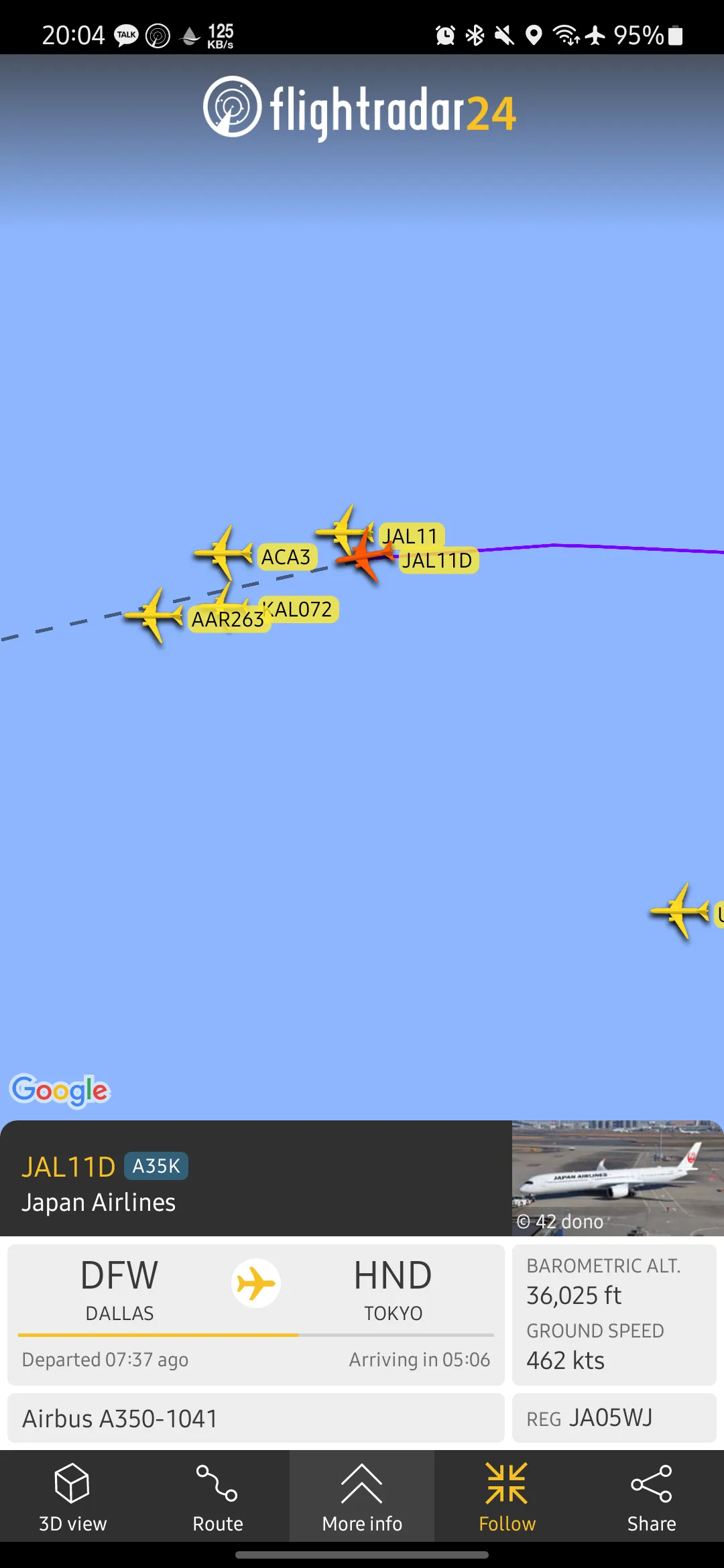
Two JL11 flights on January 10, 2025
My JL11 was delayed by more than 24 hours, so it used the callsign JL11D to distinguish it from the regularly scheduled JL11 departing the following day. Both aircraft flew almost the same route as far as Alaska, at different altitudes. The regularly scheduled JL11 left first, but my flight, JL11D, ended up arriving about 10 minutes earlier.
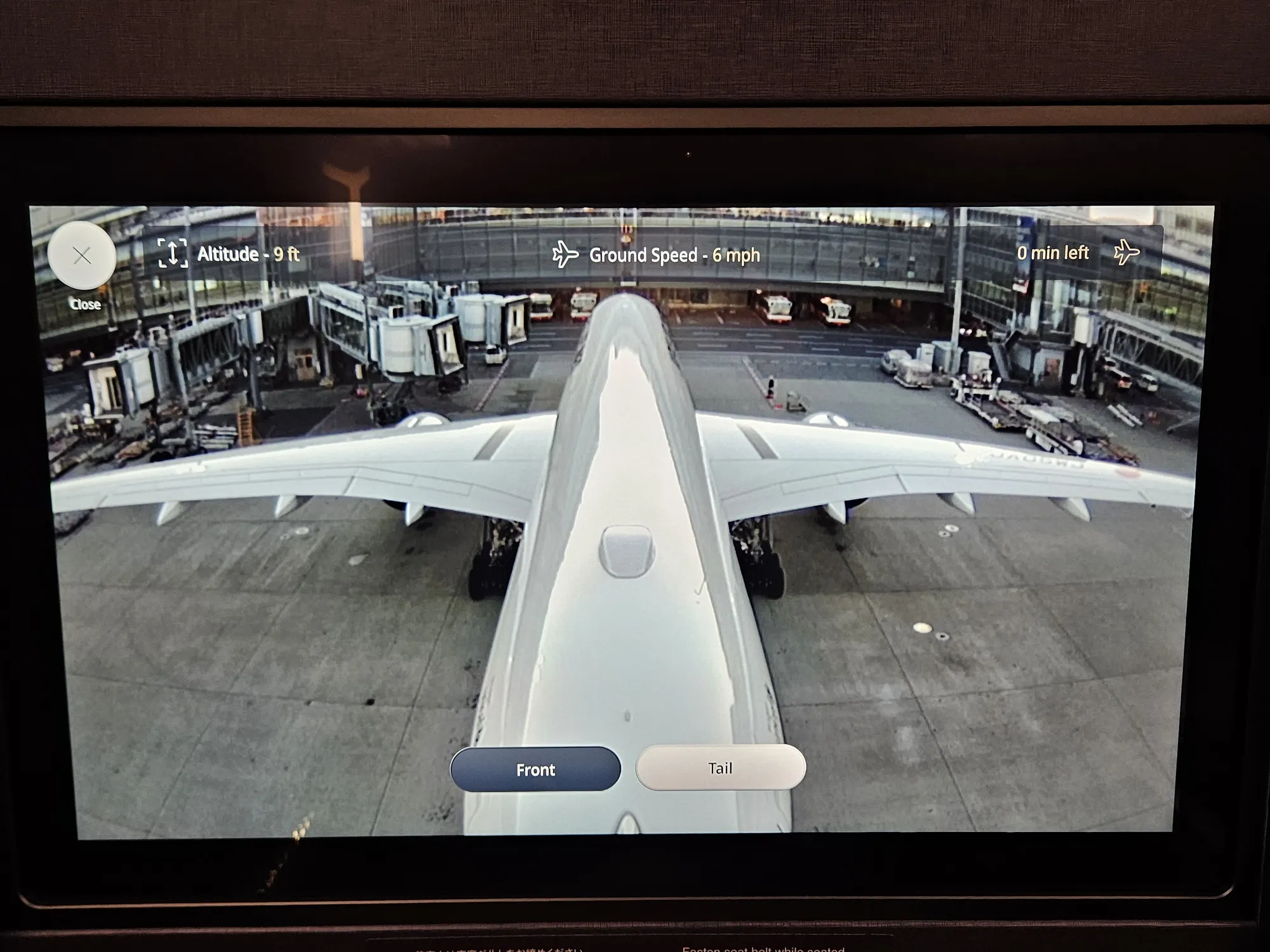
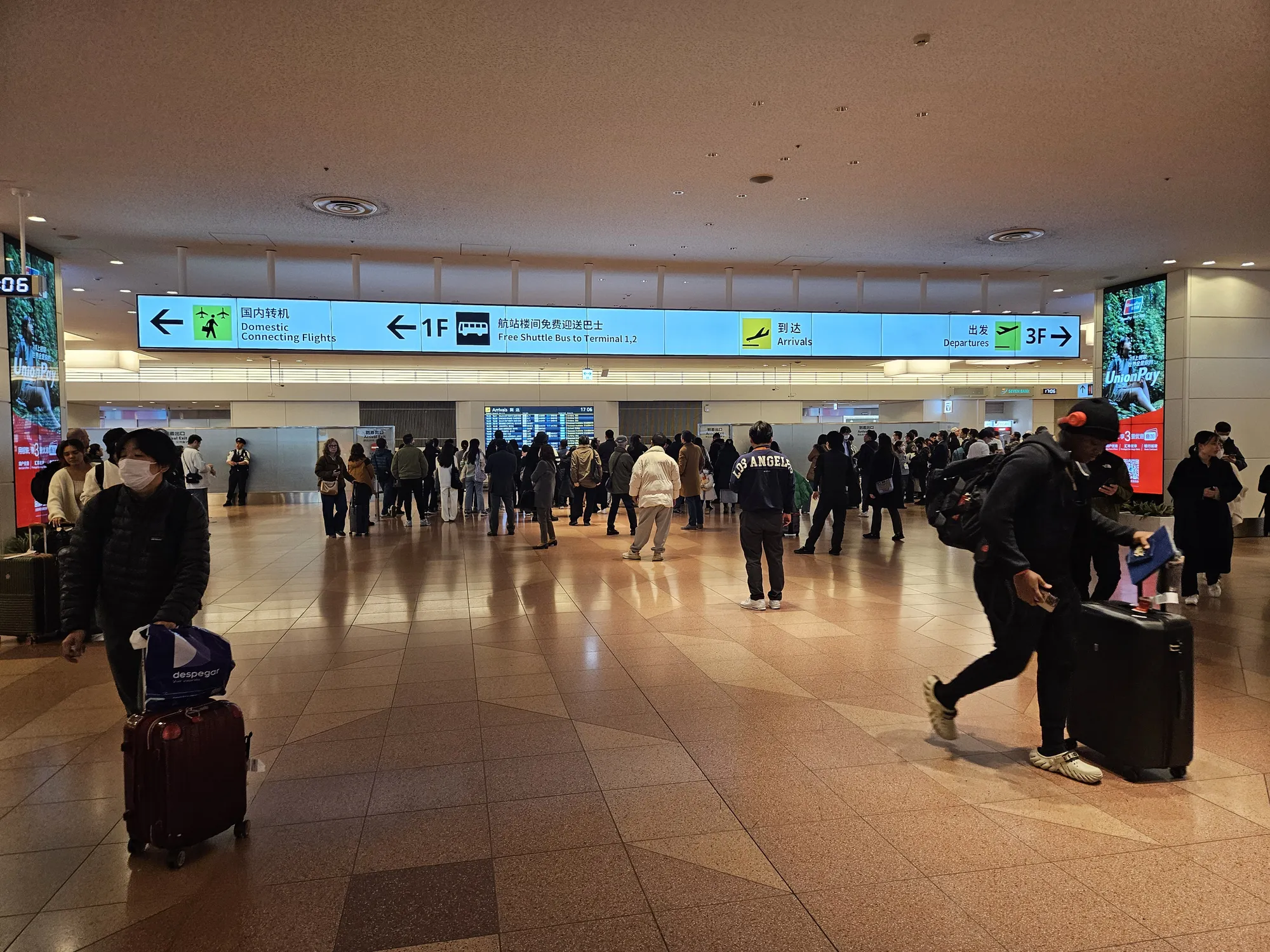
Japan Airlines A350-1000 after arrival at Haneda Airport (left) and the arrivals level at Haneda Airport (right)
Passengers got off in order from First Class to Business Class, Premium Economy, and then Economy. I was sitting in the Business Class cabin right behind First, so I got off through the forward door once First Class passengers had left. It was around 4:40 p.m., and I went straight through immigration without waiting. On a previous trip, I’d flown Korean Air’s 6:40 p.m. flight from Gimpo to Haneda and waited more than an hour and a half, so this felt incredibly fast. In the foreign passport line, a staff member helped me scan my passport and both index fingers at a machine. I then went to the immigration desk and scanned my Visit Japan Web QR code. Since I got through so quickly, I waited about 10 minutes at baggage claim. Luckily, my bag came out right after the First Class bags. While I waited, I scanned my passport and QR code at a kiosk in the baggage claim area to submit my customs declaration. Once I had my bag, I went through the electronic customs gate on the left, where facial recognition completed the process.
16. What Could Be Better
I had very little to complain about on the flight itself. The meals were better than on my previous JAL Business Class flight, and the seat and cabin had everything I’d expect from a new aircraft. It was a little disappointing to see some seat controls already acting up on a plane that was only six months old. I also would have liked Champagne as a welcome drink, which JAL still didn’t offer on this departure from the U.S.
A 25-hour delay is still a lot to deal with. I understood that it was weather-related, but it cut into my trip and meant changing reservations. JAL provided hotel and meal vouchers even though the delay was caused by weather, and I thought the airline did what it could for us. I still kept thinking about Korean Air flight KE32 to Incheon, which waited it out for four or five hours and managed to take off in the snow that same day. One small consolation was that we landed 10 minutes ahead of the regularly scheduled January 10 JL11, even though it took off before us. Without the delay, this could easily have been a 10/10 flight for me.
JL11 was originally scheduled to depart at 10:45 a.m. on January 9, 2025. The weather pushed our departure from Dallas Fort Worth back to around 12:25 p.m. on January 10, a delay of nearly 26 hours. We arrived at Tokyo Haneda Airport at 4:30 p.m. on January 11, about 25 hours behind schedule.
Snow was forecast for the Dallas–Fort Worth area from the morning of January 9 through noon on January 10. Many airlines issued travel advisories allowing passengers to change or cancel their trips if needed. Japan Airlines didn’t issue a travel advisory for this route. (Korean Air issued one covering the period from midday on January 9 to midday on January 10.)
I’d booked my early flight from Austin to Dallas on a separate ticket. Fortunately, the flights scheduled to leave Austin at or before 7 a.m. were still taking off and landing as usual, and I made it to Dallas. All later Austin–Dallas flights were canceled until around noon the following day. Missing that separately booked flight would have thrown much of the rest of my itinerary into disarray, so I was relieved to make it that far.
Check-in and boarding went fairly smoothly, apart from boarding starting about 20 minutes late. We then sat on the aircraft for about two and a half hours before JAL announced a 22-hour delay. While we waited, the crew brought Business Class passengers a light snack and cold green tea, and the lavatories stayed open. When I told the crew my travel companion was experiencing symptoms of low blood sugar, they brought us some chocolate. By then, Dallas Fort Worth had shut down completely. Aircraft at the gates, on the taxiways, and on the deicing pads all had to stop where they were. The decision to delay our 10:45 a.m. flight came around 1:30 p.m. It took another half hour or more for the ground staff to get everything ready. We then got off in order, starting with First Class, followed by Business Class, Premium Economy, and Economy.
Airlines generally don’t have to offer compensation for weather delays, but JAL provided some on its own. Business Class passengers received a Visa gift card with US$190, including US$40 for meals and US$150 toward a hotel. We could collect our checked bags if we wanted, and we had to arrange our own hotel and transportation. The next morning, while waiting for an Uber at my hotel, I met a passenger from American Airlines flight AA281 to Incheon, one of the many departures disrupted that day. They told me American hadn’t offered them anything for the delay. Korean airlines also tend to offer limited assistance when weather disrupts flights, so I was impressed by how JAL handled it. My Business Class ticket may have made a difference in the amount I received. (I saw Economy passengers get gift cards too, though I don’t know how much they received.)
More than 70% of departures from Dallas Fort Worth were canceled that day, and more than 20% were delayed. The only flights that got out on time were the early-morning departures. Korean Air’s KE32 to Incheon was scheduled for 11:25 a.m. and managed to take off sometime after 3 p.m. It was one of just seven aircraft that took off around that time. There hadn’t been a departure for two or three hours before that, and after those few planes got out, takeoffs stopped again. It looked as though the airport might have closed again. KE32 still had to stop at Narita to swap pilots and cabin crew because of pilot duty-time limits. It reached Incheon about five or six hours late. American Airlines flight AA281 to Incheon left its gate, returned, and ended up delayed by 24 hours. American canceled the January 10 departure and appeared to combine passengers from both flights on one aircraft. Its flight to Tokyo Narita took off after a delay of several hours.
The next morning, January 10, there were no takeoffs until around 7:30 a.m. After that, flights started getting out one by one. The aircraft that had been waiting at DFW needed deicing, and there wasn’t nearly enough equipment to keep up. Waiting for a turn added more than two hours to some delays. Aircraft that arrived that morning could turn around quickly and take off without deicing. That included the regularly scheduled January 10 JL11. A flight that was supposed to depart 24 hours after mine ended up leaving 10 minutes before us.
I had a three-night reservation at Conrad Tokyo. When I called the hotel and explained the situation, they directed me to Hilton customer service to change the booking. Hilton said I could cancel for free and get my points back. The room I’d booked was no longer available on points, though, so Hilton couldn’t rebook it for just two nights. I went back to the Conrad, explained what had happened, and spent a few hours going back and forth with the hotel. They eventually canceled the original reservation and booked me into the same room on points. The rate had gone up from 95,000 to 100,000 points per night, so I paid 100,000 points for each of the two nights. I’ll go into more detail in my Conrad Tokyo review.
17. Final Thoughts & Conclusion
japan-airlines-a35k-business-jl11-dfw-hnd-en-75
Japan Airlines A350-1000 Business Class menu on JL11
Last October, I flew First Class on JL12 from Tokyo Haneda to Dallas Fort Worth. I enjoyed it so much that I wanted to see what Business Class was like on the same route. After flying JL11 in the other direction, I’d confidently put JAL’s A350-1000 Business Class among the best in the world. With so many airlines looking for ways to cut costs and squeeze more seats into Business Class, I admire JAL for giving passengers this much space. The weather threw off my travel plans, but I still came away very happy with the flight.
The Editor Behind This Journey: Heejung

Have any questions or similar experiences? Please feel free to share them below.
Share this story to inspire another journey.
More Journeys to Explore
🗓️ Jan 2026 Flight | 💺 Delta Main Basic | ✈️ A220-100
7/10 (🌕🌕🌕🌗🌑) With wide seats, a personal monitor, free Wi-Fi, and two beverage services, it was a quite satisfying economy flight for a U.S. domestic route. The seat selection restriction on the Basic fare was a bummer, but I could feel why Delta is considered a premium airline.
🗓️ Nov 2024 Flight | 💺 Economy | ✈️ A321-200
6/10 (🌕🌕🌕🌑🌑) It was a European domestic economy flight that covers the basics but nothing more. The chaos of a small airport, simple in-flight service, and disappointing priority baggage handling remained, but thanks to the bulkhead seats, blueberry juice, and personal device entertainment, I was able to travel without major inconveniences.
🗓️ Apr 2026 Flight | 💺 Business | ✈️ A350-900
9/10 (🌕🌕🌕🌕🌗) STARLUX Airlines’ A350-900 Business Class delivered a polished premium experience with stylish seats, excellent service, and an extensive food and beverage selection. The snack policy and a few other details could have been better, but the flight was highly satisfying overall.
🗓️ Mar 2025 Flight | 💺 Prestige Suite 1.0 | ✈️ B787-9
7/10 (🌕🌕🌕🌗🌑) The spacious and comfortable Prestige Suite seat, friendly service, and familiar Korean inflight meals were all satisfying. However, the lounge wait, lack of Wi-Fi, outdated entertainment system, and repetitive meal service were disappointing. It remains a comfortable choice for Korean travelers, but falls short of the world’s best business-class products.